Record Store Day 2026 preview: 1960s & 1970s rock, pop, folk & country


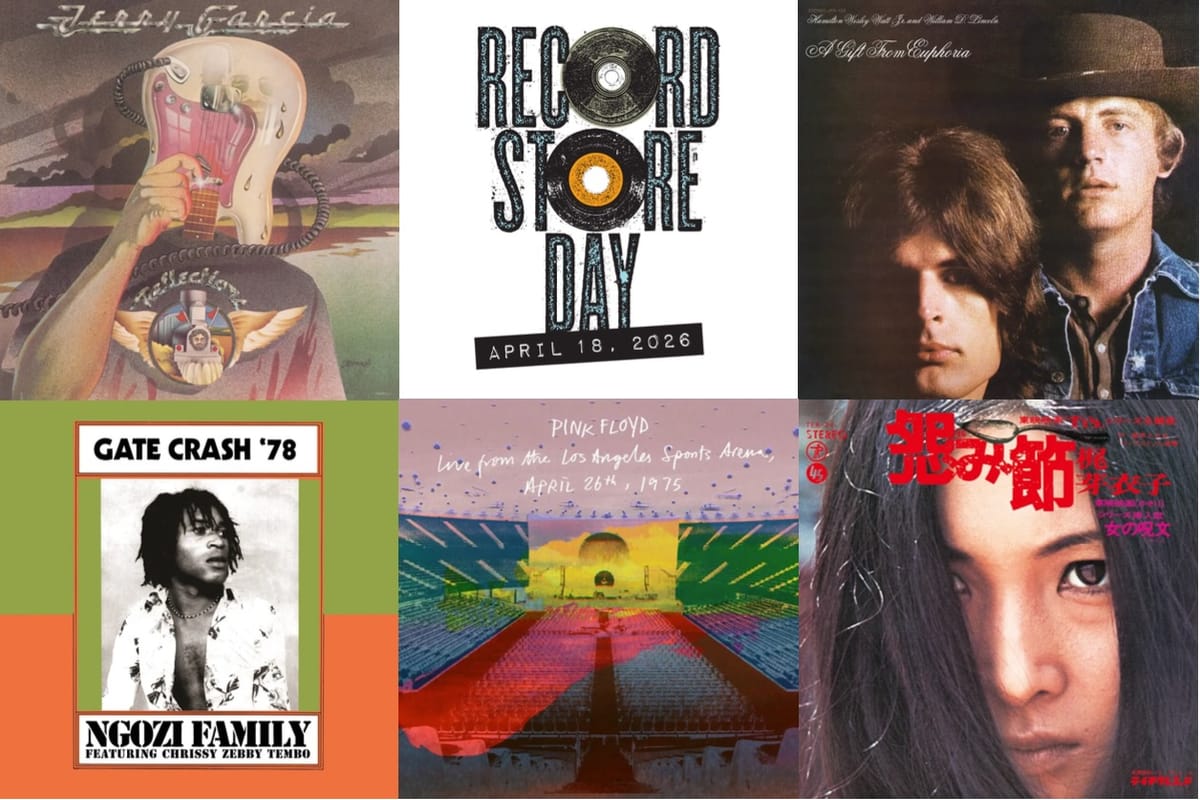
Our Record Store Day preview continues with what you might call the “classic rock” reissues, although we also touch upon the pop, folk, and country reissues from that same period—in this case, the 1960s and 1970s.
If something from that era is missing from this rundown, we might have covered it in one of our previous preview posts.
- Record Store Day 2026 preview: Hip-hop, soul, R&B & reggae
- Record Store Day 2026 preview: Hard rock, punk & metal
- Record Store Day 2026 preview: Jazz, blues & Latin
But here’s where you’ll find the dad rock, the prog, the vintage psychedelia, and the FM radio favorites, with a couple of international releases tossed in. It’s a long one today, so let’s get to it.
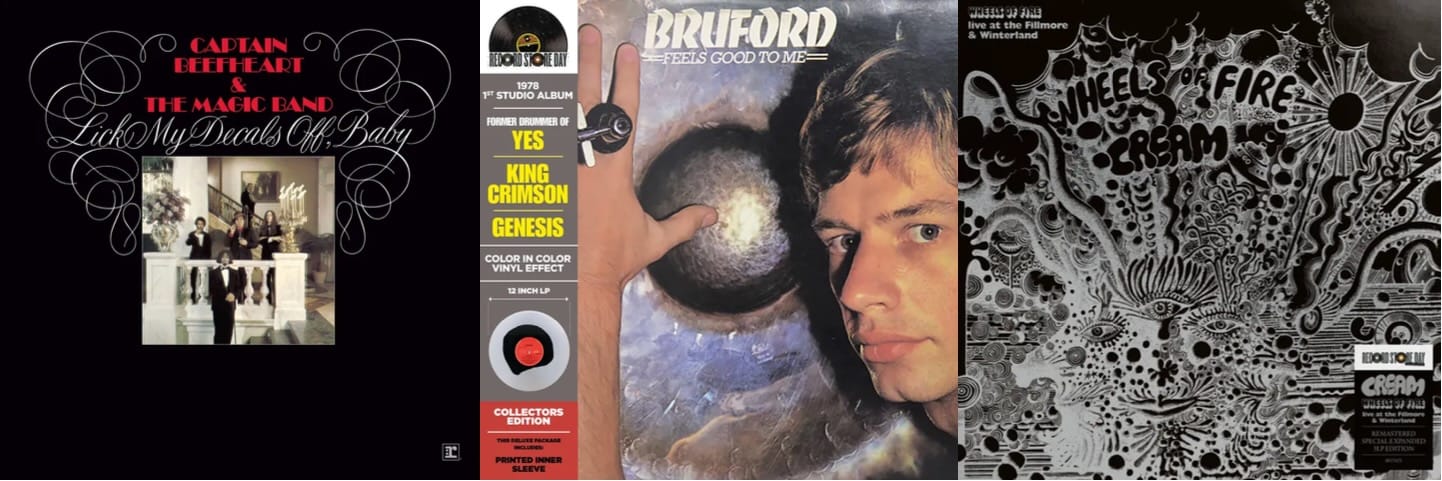
Captain Beefheart and the Magic Band: Lick My Decals Off, Baby deluxe edition [Rhino]
The discombobulating, deconstructed blues of Captain Beefheart and the Magic Band reached its apex with 1970’s Lick My Decals Off, Baby, which was the follow-up to 1969’s groundbreaking Trout Mask Replica double album and is considered by some to be a refinement and improvement of that album’s truly out-there musical ideas. For some, the Magic Band’s fragmented riffs, dislocated chords, and tumbling rhythms are impenetrable, but repeated exposure allows these songs to reveal hidden side tunnels into the rock ’n’ roll goldmine, and occasionally songs like “I Love You,You Big Dummy” groove along in familiar ways, with Beefheart’s Howlin’ Wolf–derived bark proving irresistible. The RSD deluxe edition features an analog pressing of the main album, newly recut from tape by Bernie Grundman, plus a second disc of instrumental versions and outtakes. NL
Bruford: Feels Good to Me [Culture Factory]
Solo albums by drummers are always a dicey proposition, but this appears to be a fully integrated band effort, with former Yes/King Crimson drummer Bill Bruford writing the songs, holding down the drum throne, and giving the band its name. But guitarist Allan Holdsworth, bassist Jeff Berlin, and keyboardist Dave Stewart are integral parts of the ensemble, and the album’s intrigue comes from the intense chemistry the group got from playing Bruford’s tangled, jazz-fusion compositions. The great Annette Peacock even turns up as a vocalist for a couple of songs. This clear blue vinyl reissue comes from Culture Factory, who are not the most reliable for pressing quality, but with colored vinyl having improved in recent years, it might be worth giving this one a shot. NL
Cream: Wheels of Fire: Live at Fillmore Auditorium & Winterland Ballroom [UMR/Polydor]
The original Wheels of Fire double album from 1968 consisted of one studio disc—Cream’s best work, in this listener’s opinion—and one live disc, which featured distended live jams recorded at the Fillmore Auditorium and the Winterland Ballroom in San Francisco in March 1968. Seven more songs from those concerts turned up on 1970’s Live Cream and 1972’s Live Cream Volume II; this triple LP collects all the live stuff in one place, with an additional previously unreleased track, “We’re Going Wrong.” So there’s not a lot here that’s new for diehards, but it does make sense to have all of the live stuff in one place. NL
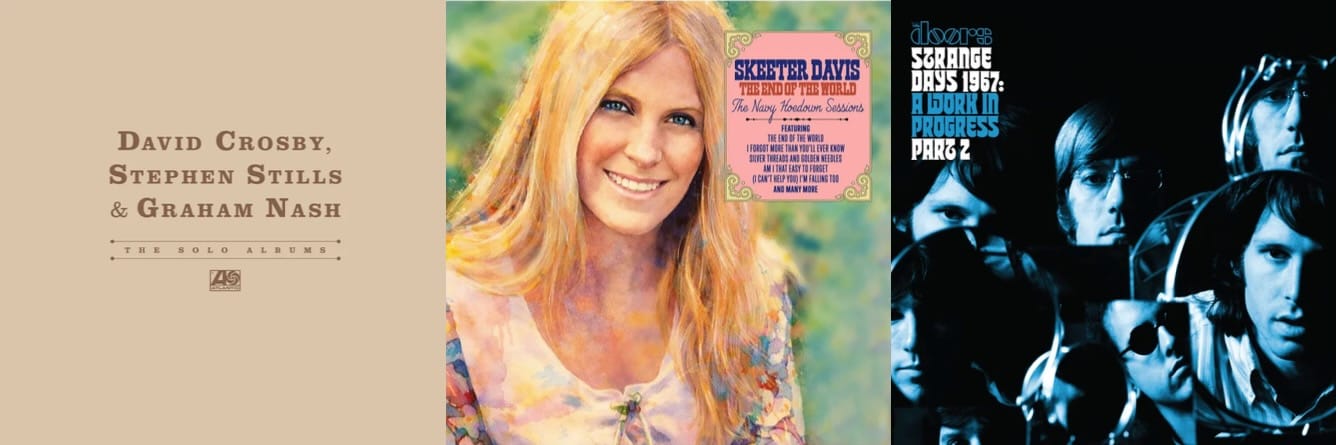
Crosby Stills & Nash: The Solo Albums [Rhino]
This is a weird one: Since Crosby, Stills, Nash & Young were unable to reconvene for a timely follow-up to their 1970 blockbuster album Deja Vu, their solo albums became the follow-up. With After the Gold Rush, junior member Neil Young took the lead and never looked back (“we just ate his dust, man,” Croz once said), but the other three each delivered what are probably to this day their best solo albums. David Crosby’s If I Could Only Remember My Name from 1971 is a gorgeous, hazy, cosmic dreamscape, haunted by the recent death of his girlfriend Christine Hinton. Graham Nash’s 1971 album Songs for Beginners is a light but well-crafted collection of folk-pop tunes, highlighted by “Military Madness” and “I Used to Be a King” but consistent all the way through. And Stephen Stills’s 1970 self-titled debut is his most tolerable before the drugs and ego fully took hold, with contributions from Jimi Hendrix, Eric Clapton, and Ringo Starr. Those three albums are being packaged together for the first time as a box set with a fourth disc of demos and outtakes from all three album sessions. I said it was a weird one. NL
Skeeter Davis: The End of the World: The Navy Hoedown Sessions [Country Rewind]
Country-pop singer Skeeter Davis had a huge hit with 1962’s “It’s the End of the World,” and she remained a presence on the country charts up through the ’70s. In 1975, she made a double album of re-recordings of some of her biggest hits as part of a US Navy recruitment campaign. Here’s that album, condensed to a single LP (it was quite short for a double) and pressed to pink vinyl. To the best of our knowledge, listening to it will not actually compel the listener to join the Navy, and Davis’s songs contain no references to the Strait of Hormuz. NL
The Doors: Strange Days 1967: A Work in Progress, Part 2 [Rhino]
Like clockwork, Rhino has another archival release by the Doors set to drop this Record Store Day. This time around, it's a further chipping away at the recording sessions for the band’s 1967 album Strange Days. I'm particularly interested in the raw, pre-overdubbed backing tracks for future classics like “Love Me Two Times” and the title track. I'm less interested in the two takes on “When the Music’s Over” that take up Side 2 of the transparent turquoise vinyl release. RH
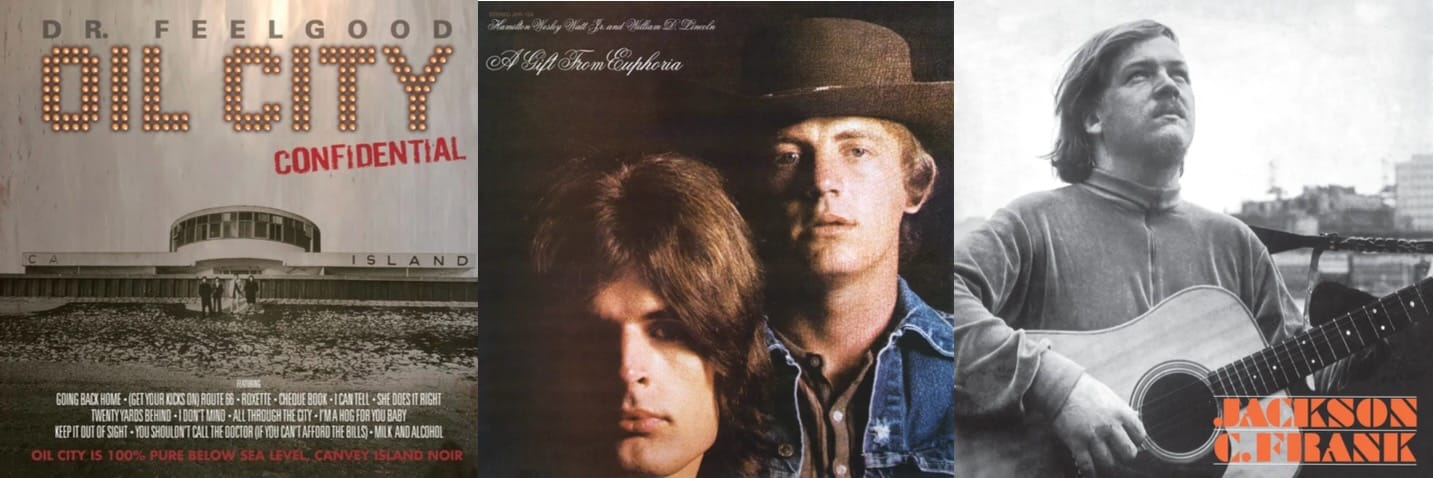
Dr. Feelgood: Oil City Confidential soundtrack [Rhino]
1970s Essex pub-rock band Dr. Feelgood essentially paved the road for punk rock to careen down, with an anarchic sound and an indefatigable live show, highlighted by Wilko Johnson’s madman guitar and singer/harmonica player Lee Brilleaux’s natty getup. Director Julien Temple made a documentary about the band in 2009 called Oil City Confidential, and this is the soundtrack album, which provides a useful overview of Dr. Feelgood’s criminally overlooked oeuvre, with some crucial live tracks in the bargain. This is its first time on vinyl. NL
Euphoria: A Gift From Euphoria [Jackpot]
This lost gem from 1969 is a hodgepodge in the best possible way, with hard-twang country-rock, gossamer baroque classical-pop, and blown-out bloozy psychedelia all finding common ground. It’s the work of a pair of songwriters, Wesley Watt and William Lincoln, who after some time in the Houston garage-rock scene, found a benefactor who funded the recording of this supremely ambitious collection, with contributions from the pickers ’n’ grinners at Nashville studio Bradley’s Barn, the seasoned assembly-line pop purveyors at London’s Pye Studios, and some 70-odd members of the Los Angeles Philharmonic for good measure. It was eventually released by Capitol Records but was almost predestined to become a rarity and an expensive crate-digger’s delight. For Record Store Day, Jackpot Records is reissuing it via an all-analog cut from Kevin Gray and pressed to black vinyl. For a certain strain of ’60s-psychedelia-loving record collector, this is the must-score of the day. NL
Jackson C. Frank: Jackson C. Frank [BMG]
The self-titled debut of Buffalo-born folksinger Jackson C. Frank, recorded in London with Paul Simon producing, has been in and out of print over the years, but it’s one of the finest folk albums of the 1960s, with Frank’s cut-to-the-bone delivery of his starkly gorgeous songs presaging the songwriter’s tragic life in chilling ways. It’s back on vinyl, which is good news, although this has always been a pretty poor-sounding recording, and heaven knows what happened to the masters after the album sank without a trace in 1965. This looks to be a rehash of a 2001 CD from Sanctuary—with that version’s five bonus tracks added onto a second LP—so if that’s the case, it will likely use the same digital master, which is not a sonic revelation but gets the job done. NL
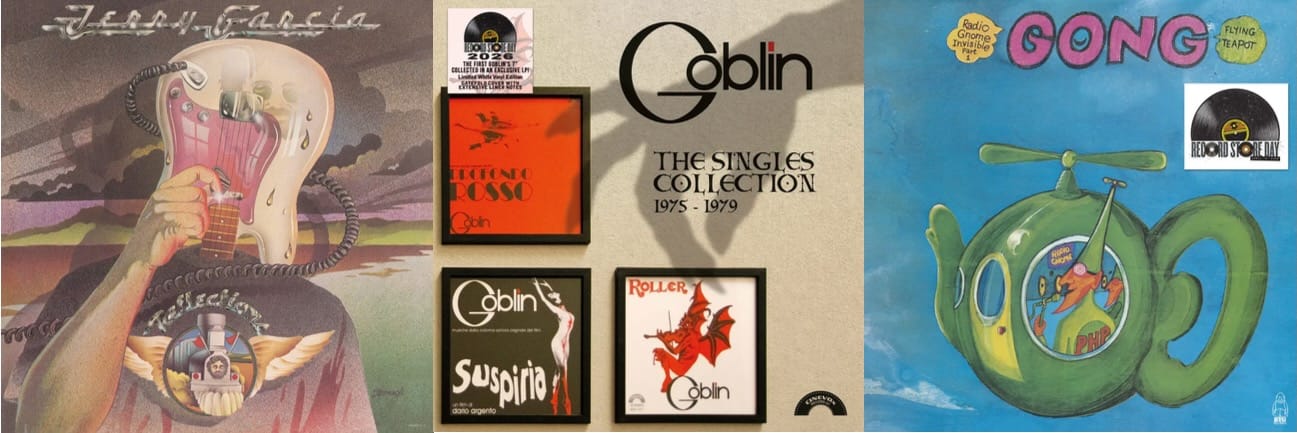
Jerry Garcia: Reflections 50th anniversary [Round/ATO]
Releases like this are the reason fools like me get in line outside my favorite shop before the sun is up on Record Store Day. Reflections, the third solo album from Grateful Dead co-founder Jerry Garcia, is getting a deluxe reissue for its 50th birthday. The 3-LP set includes a remastered version of the original album, which Garcia recorded with both his eponymous backing band and his pals in the Dead, studio outtakes and jams that appeared in a 2004 CD box set, and four previously unreleased live tracks from the era. This RSD First release arrives in a limited run of 5,000. RH
Goblin: The Singles Collection 1975–1979 [Cinevox]
This LP collects the singles that Italian horror soundtrack maestros Goblin released during the second half of the ’70s. It looks to be a mix of “hits” from their acclaimed soundtracks for films like Profondo Rosso and Suspiria and some one-offs that they recorded for television. This is the uncommon release that looks like it holds equal appeal for diehards and newbies, in that some of the tracks are obscure non-album releases while others are very much highlights from the band’s creepy, atmospheric catalog. NL
Gong: Flying Teapot [Charly]
Gong’s third album, Flying Teapot, was released in May 1973 and is a fine exemplar of the Canterbury proggers’ whacked-out approach to music-making, with equal parts virtuosic shredding and eccentric, goofball humor. This was their first installment in their Radio Gnome Invisible trilogy, which laid out a bizarre Gong mythology. Among other bands in the wildly creative Canterbury scene, Gong injected an element of the avant-garde into progressive rock. This reissue comes from a half-speed master made at Abbey Road Studios from a digital transfer and includes a 16-page booklet. NL
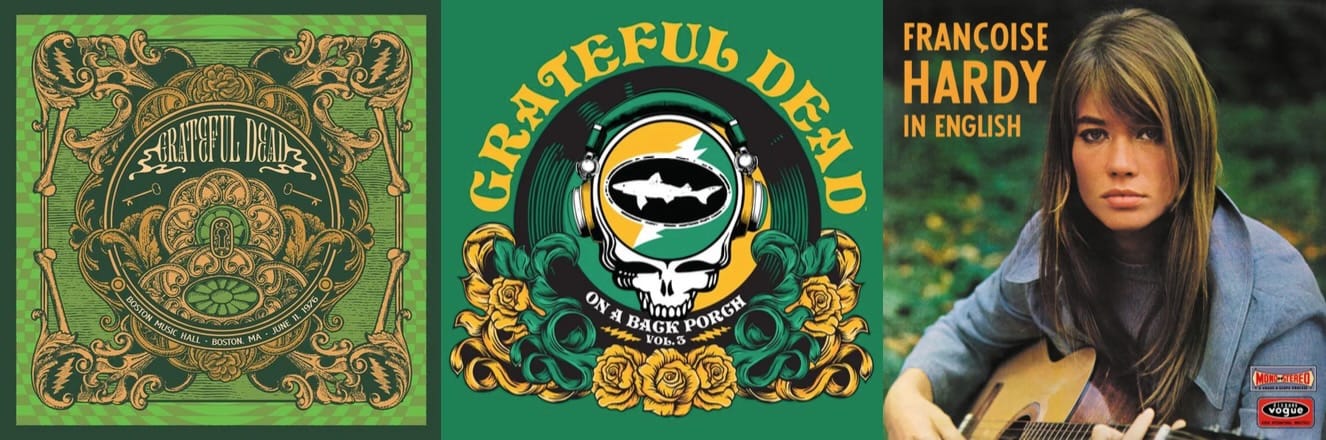
Grateful Dead: Boston Music Hall, Boston MA 6/11/76; On a Back Porch, Vol. 3 [Rhino]
If the Jerry Garcia solo album wasn't enough to convince you Deadheads to skip that last bong hit and get a good night's sleep before RSD this year, this pair of releases might do the trick. The main attraction is a 5-LP breakout of the complete performance by the Dead in Boston that was part of a 1976 tour they undertook after a long hiatus, originally issued as part of Rhino’s June 1976 CD set. With second drummer Mickey Hart back in the fold, the band mixes up new material and old faves, including a new arrangement of Aoxomoxoa classic “St. Stephen.” The audio for this set has been remastered for audio by Jeffrey Norman, a job that included Plangent tape restoration and speed correction, so it certainly is going to sound better than ever. Perhaps less exciting is the next installment in a series of compilations meant to promote a Dead-themed beer from Dogfish Head Brewery. The six-song disc pulls from a variety of live dates that emphasizes the group’s more easygoing side. RH
Françoise Hardy: Francoise Hardy in English [Omnivore]
This slightly puzzling release looks to be a repressing of the French chanteuse’s 1966 album, in which several of her songs were translated into English; Hardy went to London’s Pye Records studio to re-record them with the Charles Blackwell Orchestra. This re-release adds six bonus tracks to the album’s original 12, but bizarrely, also includes a repress of her first French-language EP, which dates from four years earlier and has nothing to do with those English-language recordings. However, since the EP contains classics like “Tous les garçons et les filles” and “J’suis d’accord,” I suppose it’s a nice enough bonus to have. This was not the last word in Hardy’s English-language career: She would go on to record a lot more material in English, including 1968’s En Anglais, 1969’s One-Nine-Seven-Zero, and 1971’s absolutely wonderful 4th English Album aka If You Listen. NL
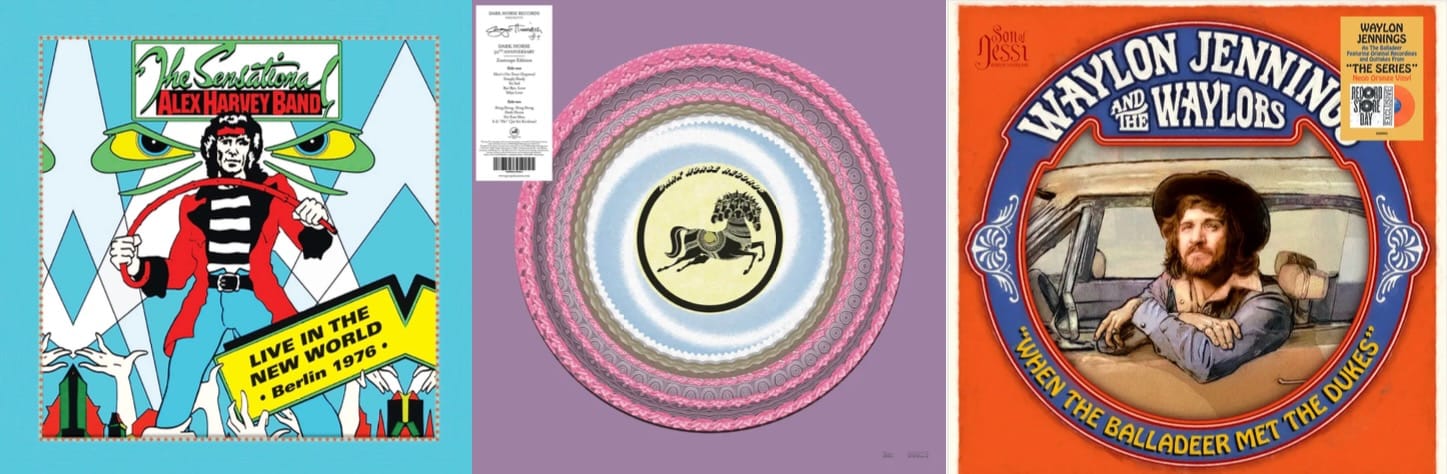
The Sensational Alex Harvey Band: Live in the New World: Berlin ’76 [Madfish]
A week after the release of a massive 21-CD box set of live recordings by theatrical rock outfit the Sensational Alex Harvey Band, a breakout vinyl set of one of those shows arrives in the UK for their Record Store Day. The LP features a previously unreleased tape of the group playing at Berlin’s Neue Welt concert hall in support of their 1976 album SAHB Stories. You can expect plenty of blues bluster, a healthy dose of glam stomp, and the deliciously over-the-top vocals of Alex Harvey himself. RH
George Harrison: Dark Horse zoetrope; Extra Texture zoetrope [Dark Horse]
More of George Harrison’s solo albums are getting zoetrope picture-disc releases; this time, we’re getting 1974’s Dark Horse and 1975’s Extra Texture. Neither of these are thought of as among his best; the former in particular has suffered a poor reputation due to being released at the time of Harrison’s heavily criticized American tour, during which he contracted laryngitis and relied heavily on Ravi Shankar’s solo spots to fill out the evening. The album is not as bad as is typically remembered, although it’s weirdly frictionless and forgettable. Same goes for Extra Texture, which Harrison recorded in the US with musicians like Leon Russell, Jesse Ed Davis, and Gary Wright. These picture discs feature zoetrope patterns that look like primitive animation when you film them with your phone, but the visual component won’t do the sound any favors. NL
Waylon Jennings and the Waylors: The Balladeer Meets the Dukes of Hazzard [Thirty Tigers]
Waylon’s son Shooter Jennings found some recordings his dad made for the first season of The Dukes of Hazzard, which premiered in 1979. Side 1 contains line readings Waylon made as the show’s narrator, complete with bloopers and outtakes. Side 2 contains 16 minutes of instrumental music Waylon recorded for the show’s first season. Thankfully, an image of the show’s trademark orange Dodge Charger, the General Lee—which had a Confederate flag on the roof—is not incorporated into the album artwork. NL
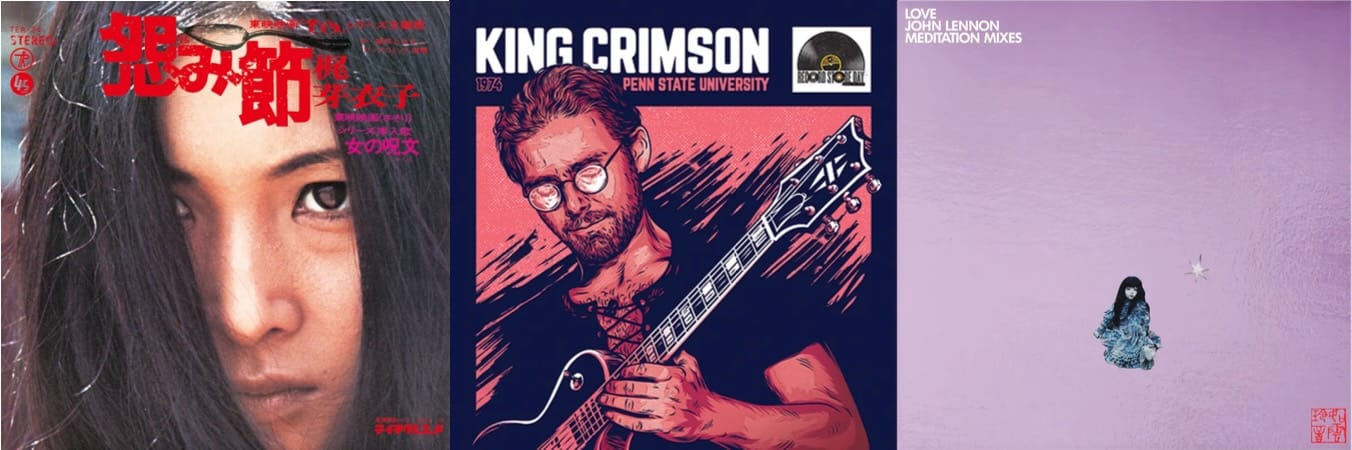
Meiko Kaji: “Urami Bushi”/“The Flower of Carnage” 12-inch [Teichiku/Toyokasei]
This 12-inch EP collects four songs sung by Japanese actress Meiko Kaji. “Urami Bushi” was the theme song from the 1972 film Female Prisoner #701: Scorpion, while “Shura no Hana” (translated to “The Flower of Carnage”) was the theme for 1973’s Lady Snowblood. But those two tracks are probably best known to Western audiences from their use in Quentin Tarantino’s Kill Bill movies. These are atmospheric pop ballads with a European feel, but listeners who want to dig deeper should try to track down the series of Meiko Kaji reissues from French label Wewantsounds, who have done a superb job collecting her work. NL
King Crimson: 1974 Penn State University [DGM Live]
This one raised a red flag for me solely because of its atrocious cover art, a possibly AI-generated, cutesy-pie drawing of Robert Fripp with tufts of chest hair poking through his lace-up tunic. The minimal info on the Record Store Day site further rang warning bells. But a little more research shows that this show—recorded at Penn State in June 29, 1974—first appeared in part on King Crimson’s The Great Deceiver box set from 1992, so we can rest assured that the recording isn’t of microphone-under-a-trenchcoat quality. This was the Fripp-Bruford-Wetton-Cross lineup, and the show features some improvisations that are treasured by Crimson fans. The double-vinyl release comes with liner notes by Sid Smith and is pressed on needlessly thick 200-gram vinyl, so make sure to warm up those lifting arms before you tote this one home. NL
John Lennon: Love Mediation Mixes [UMR]
Beatles fans have it rough this Record Store Day. Apart from the George Harrison zoetropes (see above), the only other Beatle-related offering is this triple-LP set that Sean Ono Lennon made of “nine re-imagined Meditation Mixes of John Lennon’s classic 1970 ballad, ‘Love,’” While the delicate, acoustic “Love” is a decided highlight of the classic Plastic Ono Band album—a calm respite in that album’s agitated storm—I can’t imagine listening to three LPs’ worth of remixes for it. This release is meant to pair with a meditation app called Lumenate, which uses your phone’s flashlight to blink patterns at your closed eyes; getting the Lennon add-on costs extra. Ay yi yi. For a release that was designed to calm people down, this one’s got me pretty irritated. NL
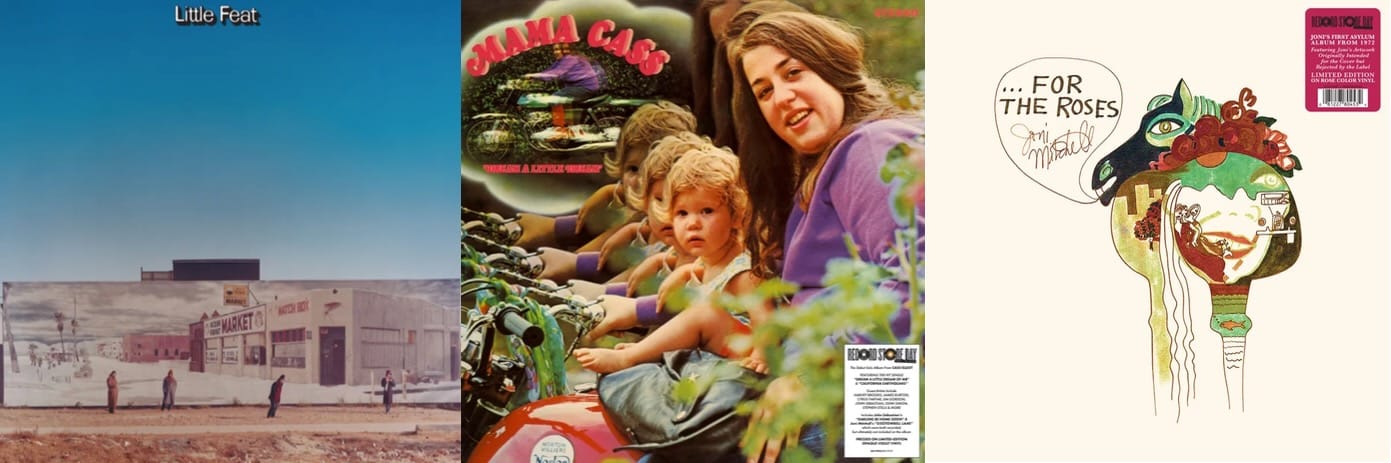
Little Feat: Little Feat deluxe edition [Rhino]
Little Feat’s 1971 self-titled debut album didn’t make much of an impression at the time, but it shows the Los Angeles band at their best. Featuring former members of the Mothers of Invention, the quartet wielded a virtuosity that they put to good use on post-psychedelic, country-inflected rock ’n’ roll, which would evolve over the years to include New Orleans R&B influences and jazz fusion. But the ace up their sleeve was the songwriting of guitarist/singer Lowell George, who wrote tremendous tunes about truckers, junkies, and losers, containing equal parts pathos and gallows humor. This first effort, containing songs like “Truck Stop Girl” and their first version of “Willin’,” has been bestowed with a new all-analog cut and a bonus disc of outtakes. This marks its first time back on vinyl since the early ’80s, apart from a Mobile Fidelity release and an Italian pressing from a few years ago—with the analog cut, it might well be the new definitive edition of the album. NL
Mama Cass: Dream a Little Dream [Geffen]
Cass Elliot’s first solo album was based on a re-recording of her last big hit with the Mamas and the Papas, a cover of the 1930 jazz standard “Dream a Little Dream.” The 1968 album is an encapsulation of the Laurel Canyon scene at the time, featuring members of the famed Los Angeles session musician group the Wrecking Crew as well as notable guests like Stephen Stills, John Sebastian, and Brenda Holloway. I’ve always found the title track to be insufferably saccharine, but the rest of the album is a fine LA pop album of the era, with tinges of psychedelia and country rock—and, of course, Elliot’s tremendous voice in the bargain. Original copies are still quite easy to come by, so for the RSD reissue, two bonus tracks have been appended, with a pressing on violet-colored vinyl that will presumably match what Elliot is wearing on the cover. NL
Joni Mitchell: For the Roses [Rhino]
The original cover art Joni Mitchell designed for her 1972 album was a painting of a horse’s ass, meant to reflect her feelings about the music business. (God, she’s the best.) It was rejected by Asylum label head David Geffen, so she then tried to get a photo of her own bare ass on the cover. That failed too (her ass eventually showed up inside the gatefold), but now Joni’s original horse’s-ass cover has been reinstated for this RSD reissue. The rose-colored pressing should be the same Bernie Grundman–mastered version that appeared on the 50th anniversary edition from 2022 and in the Asylum Albums 1972–1975 box set from the same year. NL
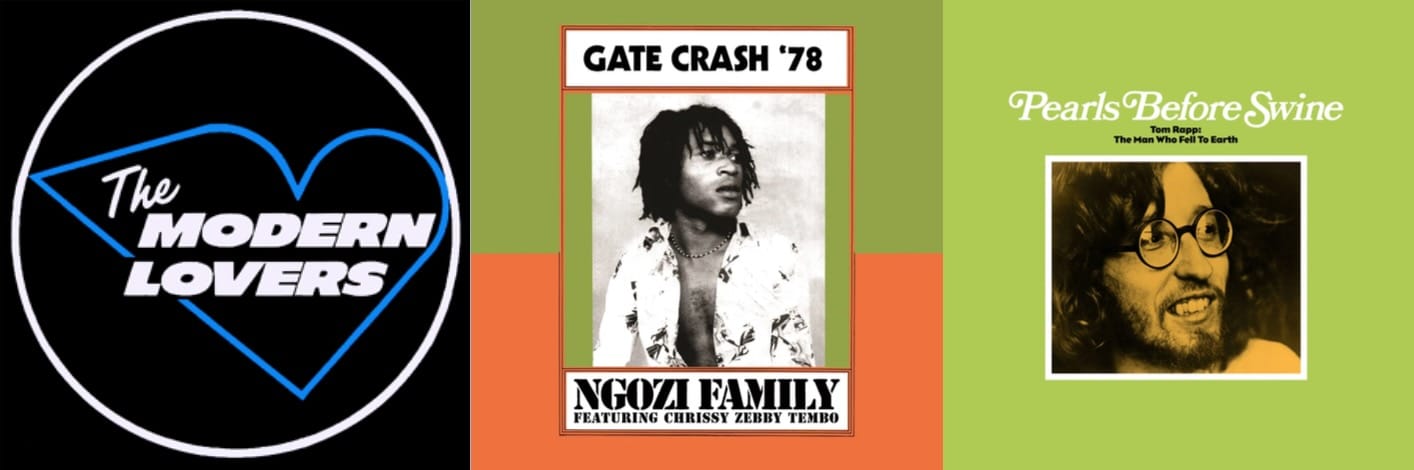
The Modern Lovers: The Modern Lovers picture disc [BMG]
While picture discs are almost never ideal from a sonic perspective, getting the Modern Lovers’ absolutely essential debut on vinyl has never been a straightforward endeavor. Originals are absurdly expensive, and the occasional repressings are limited editions that go out of print within a matter of months. And since you must own this album in order to be a self-respecting music listener, scoring a brand-new RSD picture-disc version is a better option than having no Modern Lovers at all. The seminal album, featuring Jonathan Richman and Jerry Harrison and produced by John Cale, was actually recorded in 1972 but nevertheless sounded prescient on its eventual 1976 release, pointing the way forward to new wave, post-punk, and ’80s college rock. We haven’t heard anything about this most deserving album getting a proper 50th-anniversary reissue yet, so this might be all we get. Let’s hope it sounds okay. NL
Ngozi Family: Gate Crash ’78 [Now-Again]
A lost slab of Zamrock is coming courtesy of Now-Again Records, who have done a terrific job of reissuing the work of Paul Ngozi, Chrissy Zebby Tembo, Ghost, and other Zambian rock bands. This RSD release purports to be a lost album from Ngozi Family—featuring Paul Ngozi and Chrissy Zebby Tembo—and the title suggests it was recorded in 1978, but not a whole lot of other details are forthcoming. Still, any chance to hear something new from the amazingly fertile ’70s Zamrock scene is self-recommending, where their nuanced take on psychedelia was simultaneously relaxed and urgent. Add in the promise of an eight-page booklet with liner notes and photos, and careful sourcing from the best available sources (some of them will be needledrops, so be warned), this should be at the top of your list. The two preview tracks online (“Gate Crash” and “Poem Writer”) are absolutely killer. NL
Pearls Before Swine: Tom Rapp: The Man Who Fell to Earth [Earth]
The RSD UK list often has many, many releases that wind up on my shopping list, and the top spot this year has been taken up by this fantastic-looking disc. The very limited release (500 copies!) collects 10 home recordings made by Pearls Before Swine leader Tom Rapp more than 50 years ago. Most of these stripped-down psych-folk tunes have never been released and all have never been issued on vinyl before. I don't expect them to sound great, but getting a glimpse behind the curtain as this one-of-a-kind artist works out new material is worth putting up with some tape hiss and flutter. RH
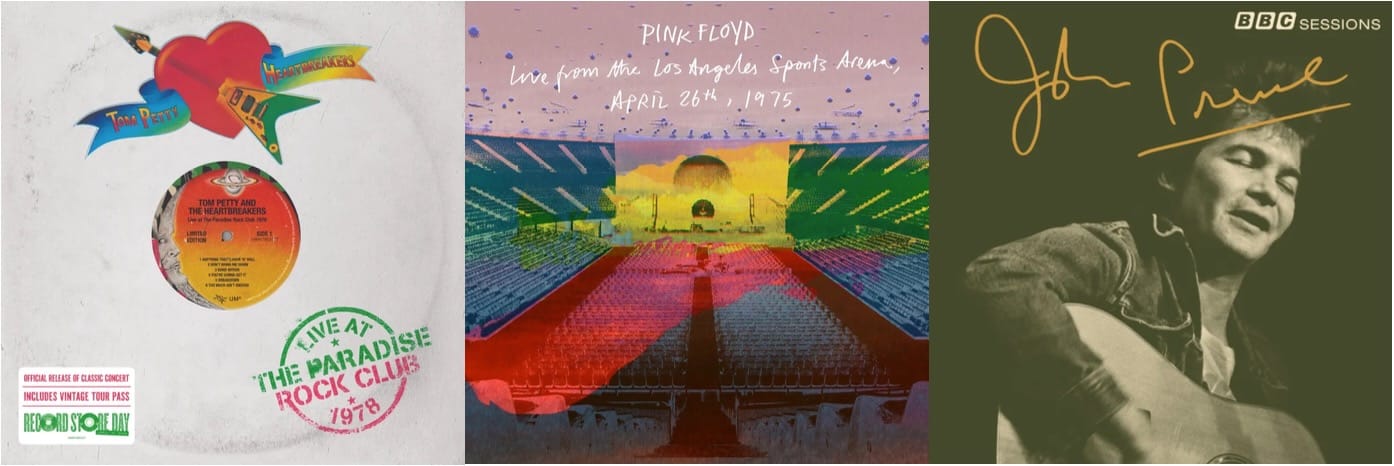
Tom Petty and the Heartbreakers: July 16, 1978 - Paradise Theater, Boston, MA [UMe]
This live show from Tom Petty and the Heartbreakers comes from the tour supporting their second album, 1978’s You’re Gonna Get It!, and this disc features that album’s title track and “Too Much Ain’t Enough.” But most of the setlist is made up of covers that the Heartbreakers were playing at that time, including the Animals’ “Don’t Bring Me Down,” the Crickets’ “I Fought the Law” (by way of the Bobby Fuller Four), and the Isley Brothers’ “Shout.” This excellently raucous performance was recorded to two-track and broadcast on Boston radio station WBCN, and the audio quality is pretty solid, good enough to have made the bootleg rounds over the past few decades. But it looks like four songs have been trimmed off in order to fit on a single disc, which is a shame. Petty archivist Ryan Ulyate handled the audio, so it should sound the best it ever has. Maybe the missing tracks will turn up somewhere else. NL
Pink Floyd: Live from the Los Angeles Sports Arena, April 26th 1975 [Legacy]
As part of the Wish You Were Here 50th anniversary box set (read our review here), a bootleg cassette of one of their April 1975 concerts in Los Angeles was included on the Blu-ray, with spruced-up audio by Steven Wilson. Not that it needed a ton of help—this was a show recorded by legendary taper Mike Millard, whose bootleg recordings were the gold standard among tape traders for years. Now the show is being released separately on quadruple-disc clear vinyl (and double CD as well). While it is far from an audiophile recording, it may be the clearest representative we’ll ever get of live Floyd during the run-up to the release of 1975’s Wish You Were Here, with early working versions of “Shine On You Crazy Diamond,” “Have a Cigar,” and two songs that would later be reworked for Animals: “Raving and Drooling” (which became “Sheep”) and “You’ve Got to Be Crazy” (later known as “Dogs”). There’s also a complete live version of The Dark Side of the Moon as well. NL
John Prine: BBC Sessions [Rhino]
Here’s a vintage recording that Chicago singer/songwriter John Prine made at the BBC’s Radio 1 in April 1973, while he was touring for his second album, Diamonds in the Rough. The recording finds Prine performing solo and acoustic, letting his straightforward delivery and potent songwriting come to the fore. Even at this point, most of his setlist is made up of songs from his classic 1971 debut. There’s even one song, “Your Flag Decal Won’t Get You into Heaven Anymore,” that seems to have eluded bootleggers. NL
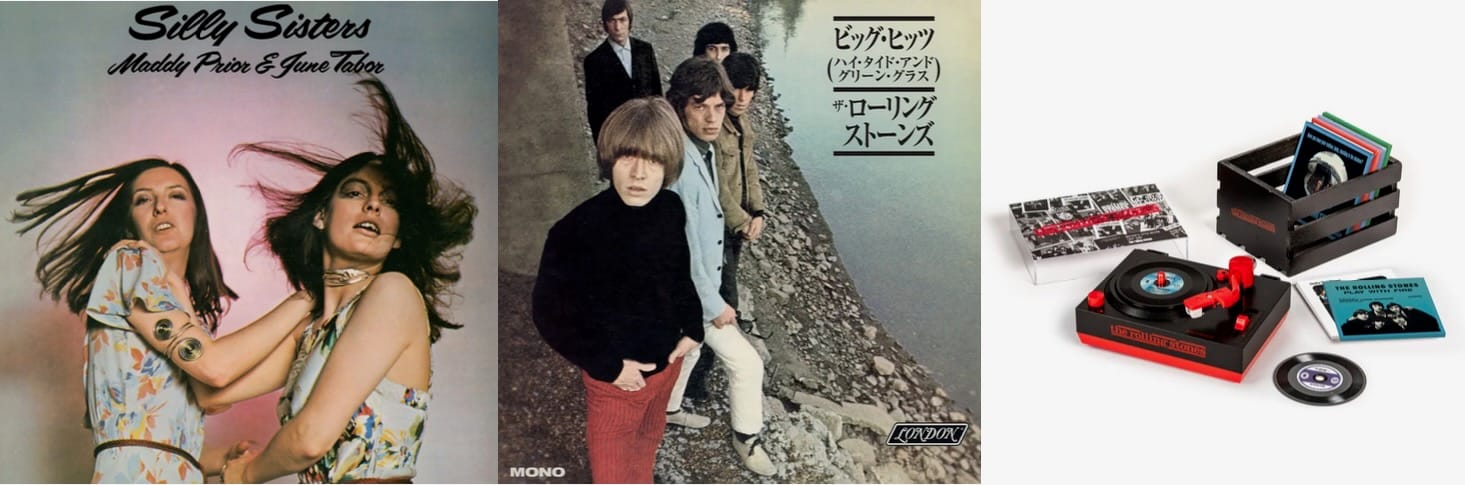
Maddy Prior & June Tabor: Silly Sisters [Chrysalis]
Though singers Maddy Prior and June Tabor met in the ’60s in the UK folk club circuit, the pair waited until 1976 to work together. Their debut collaboration Silly Sisters (a name they would adopt for future albums) is a sheer delight: a bawdy, political, goofy, and, at times, breathtaking collection of traditional folk tunes that spotlights the wonderful harmonies of these brilliant vocalists. The album has been out of print on vinyl since 1984, so this RSD UK release, remastered from the original tapes, is a very welcome development indeed. RH
The Rolling Stones: Big Hits (High Tide & Green Grass) Japanese edition; The Rolling Stones RSD3 Mini-Turntable & 3-inch singles [ABKCO]
It’s become a tradition: an unnecessary Rolling Stones RSD release prepared by ABKCO without the band’s input, serving solely as collector bait for the terminal Stones fan. This year we have multiple releases, actually: First is a theoretical replica of the Japanese pressing of their first best-of release: 1966’s Big Hits (High Tide & Green Grass). However, this RSD version (thankfully in mono) uses the American version’s cover art and tracklist; the actual Japanese release of Big Hits used the substantially different British tracklist and cover photo. So it’s unclear what this actually is. Then we have the Stones-branded Crosley mini-turntable and the six 3-inch Stones singles you can play on it: “Heart of Stone,” “Play with Fire,” “Get Off of My Cloud,” “Mother’s Little Helper,” “Have You Seen Your Mother, Baby, Standing in the Shadow?” and “Honky Tonk Women.” You can get the Lilliputian singles individually or get the turntable, which includes all six, plus a mini-storage crate to hold them. I’m sure these teensy-tiny turntables—which have become another daffy RSD tradition at this point—are making certain people happy, and I wish them well. NL
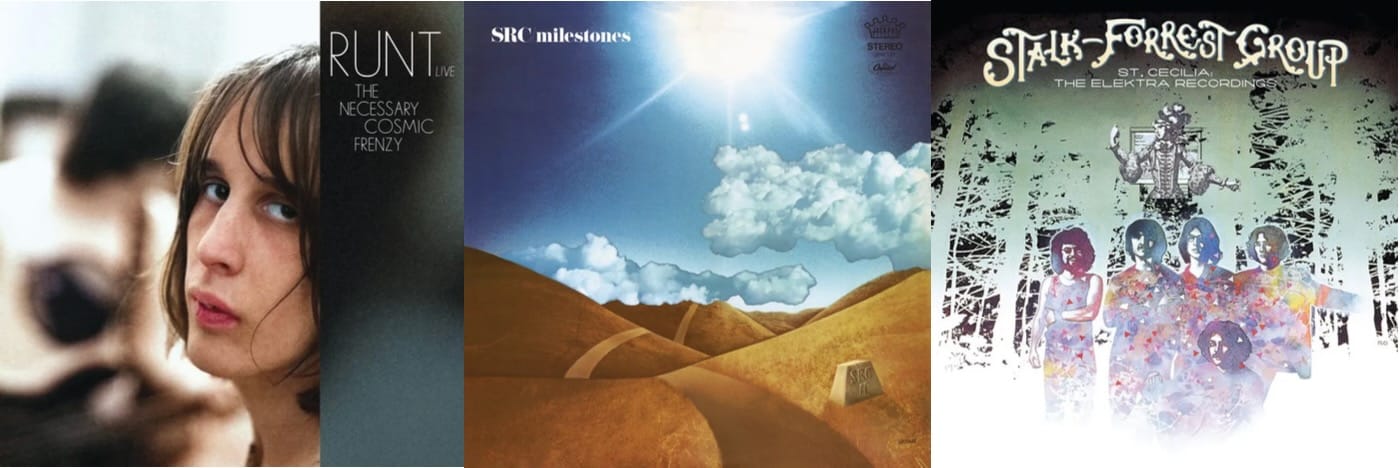
Todd Rundgren & Runt: The Necessary Cosmic Frenzy [Rhino]
After having left the Nazz and recording his first solo album, 1970’s Runt, Todd Rundgren wasn’t sure if he’d return to live performing. It wasn’t until after he’d recorded the follow-up, 1971’s Runt. The Ballad of Todd Rundgren, that he decided to put a live band together. Their first concert was more of an in-the-studio performance, at Philadelphia’s Sigma Sounds on June 30, 1971 and broadcast over Philly radio station WMMR. Portions of that set has popped up on various releases over the years, but here is a good chunk of it, pressed to transparent light blue vinyl. NL
SRC: Milestones [Jackpot]
Detroit psych band’s second album, 1969’s Milestones, contains elements of their established psych-pop sound as well as the hard-rocking influence of the greater Detroit scene, but it also suggested the band was starting to evolve into a prog act, with rock interpretations of Grieg’s “In the Hall of the Mountain King” and Ravel’s “Bolero” (by way of Jeff Beck and Jimmy Page) predating the first Emerson, Lake & Palmer album by several months. Jackpot Records reissued SRC’s first album as part of 2024’s Record Store Day, and like that reference-quality reissue, this one features all-analog mastering by Kevin Gray, assuring it will sound top-notch. NL
Stalk-Forrest Group: St. Cecilia: The Elektra Recordings [Rhino]
Long Island psych group Soft White Underbelly were signed to Elektra Records and changed their name to Stalk-Forrest Group after receiving a bad review. They recorded two albums’ worth of material for Elektra but for some reason the label didn’t release any of it; in the end, only a 7-inch marked the Stalk-Forrest Group’s tenure with the label. The band went on to great success after changing their name to Blue Öyster Cult, which makes discovering the Stalk-Forrest Group material a lovely surprise. This is inventive psych-rock, not bearing the heavier sounds the group would later take on but full of energetic playing, sweet harmonies, and fully-formed songwriting. This stuff has been released before in various guises, but this double-LP compilation includes the first 1969 Elektra album cut from tape by Chris Bellman, accompanied by alternate mixes of songs from the 1970 album (most of them repeats from the first effort) and the one single that Elektra actually released back in the day. NL
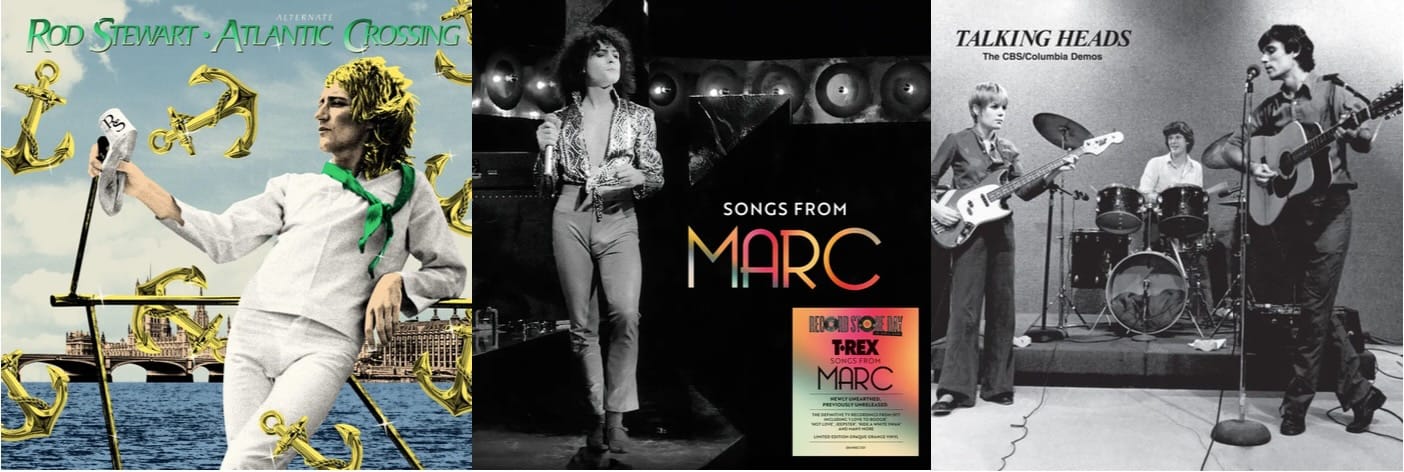
Rod Stewart: Alternate Atlantic Crossing [Rhino]
By the time of 1975’s Atlantic Crossing, most true believers recognized that Rod Stewart—the throaty, spike-haired singer for the Faces and lad behind some truly stellar solo records in the early ’70s—had evolved into something else, something bigger, something far more pop-friendly and far less interesting. As such, no one is looking at Atlantic Crossing as one of Rod the Mod’s more essential releases. Nevertheless, we’re getting an alternate version of the entire album, made up of early takes and alternate mixes. By this point Stewart—having quit the Faces and newly emigrated to Los Angeles, hence the album’s title—was more of an interpreter of other’s songs than a songwriter in his own right. This one contains his hit covers of the Sutherland Brothers’ “Sailing” and the Isley Brothers’ “This Old Heart of Mine,” plus his take on Danny Whitten’s “I Don’t Want to Talk About It,” from the first Crazy Horse album. NL
T. Rex: Songs from “Marc” [Demon]
Before his death in 1977, Marc Bolan was on the verge of a comeback; his glam-defining band T. Rex was the biggest thing in Britain in the early ’70s but Bolan and the band’s subsequent fortunes markedly declined after those very heady years at the top of the pops. In August 1977, Bolan debuted his new television show, Marc, which featured performances by some of the up-and-coming bands of the day, like the Jam, Generation X, and the Boomtown Rats. Bolan himself would also perform with T. Rex, often miming to prerecorded tracks. This somewhat dubious collection gathers up 10 of those performances, delineating them as the “original Marc studio versions,” although I don’t know how many of them are unique performances. Nevertheless, Marc’s six episodes proved to be significant in their timing; Bolan would be killed in a car crash on September 16, 1977, right in the middle of the series’ run. NL
Talking Heads: The CBS/Columbia Demos [Rhino]
In February, Rhino released a 3-CD set of early Talking Heads material that predated their 1977 debut (which was called 77, in case you’ve forgotten). They teased the release on Black Friday last year with the first disc on vinyl. Now here comes the second disc on vinyl, which collects the 15 demos the nascent band—still a three-piece at this point, with Byrne on acoustic guitar—recorded for CBS. This tape has circulated among Talking Heads fans for years, and it’s a crucial document in their development, finding the band nervously running through much of their earlier material, which adds to their fidgety energy. Joe Nino-Hernes has cut this one at 45 RPM across two LPs. NL
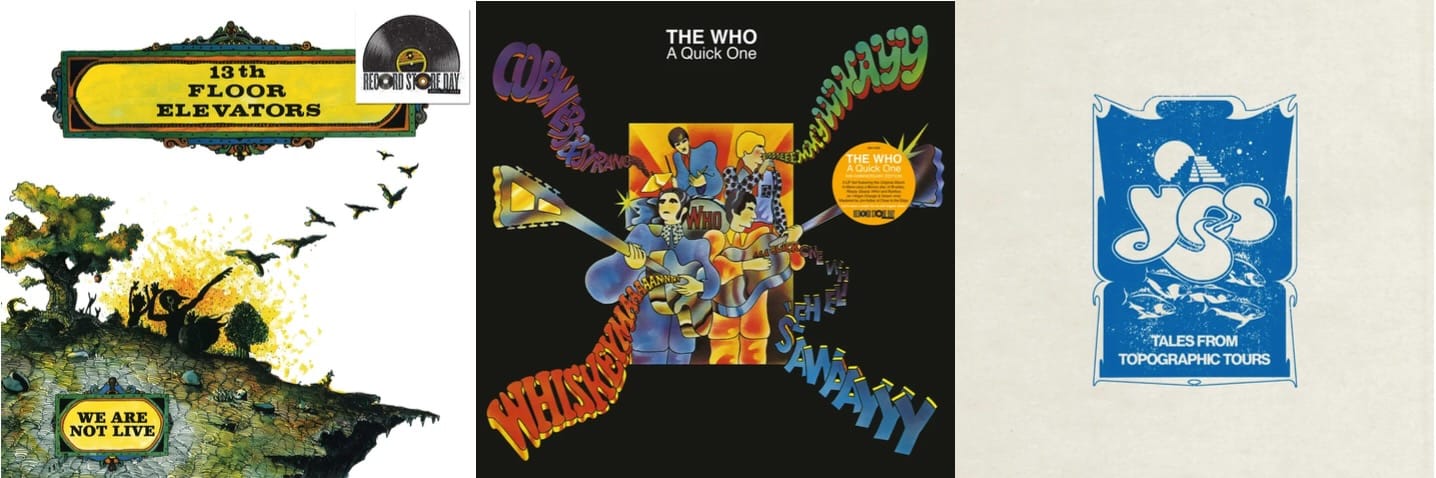
13th Floor Elevators: We Are Not Live [Charly]
The 13th Floor Elevators’ 1968 Live album is notorious for being an utter fake: The record label slapped some crowd noise on top of studio outtakes, alternate mixes, demos, and even released album versions. To make matters worse, the label took the overdubbed crowd noise from a boxing match, making for a particularly jarring listen. Now those studio recordings, sans fake crowd, are being issued for the first time, which should present the Elevators in a much better light. The sound on Live has always been terrible, so hopefully that wrong has been righted as well. NL
The Who: A Quick One [UMR/Polydor]
The Who’s 1966 album A Quick One—their sophomore effort, and known as Happy Jack here in the States—may be one of the weaker LPs the Who released before the death of drummer Keith Moon in 1978. Featuring songwriting contributions from the entire band in a failed attempt at achieving creative democracy, the album also comes between the titanic achievements of their debut, My Generation, and 1967’s groundbreaking The Who Sell Out. That said, it’s still a terrific album, with tunes like “So Sad About Us,” “Boris the Spider,” and their first-ever mini rock opera, “A Quick One, While He’s Away.” This 2-LP edition (on orange and green colored vinyl) includes the original mono version of the British tracklist, with a jam-packed second disc of non-album singles, EP tracks, and alternate versions from that time period. When that means it includes classics like “Substitute,” “I’m a Boy,” and “Disguises,” the bonus disc may be an even greater enticement than the main event. Regular Who remasterer Jon Astley did the mastering from a digital source. NL
Yes: Tales from Topographic Tours [Rhino]
Yes’s notorious 1973 double album Tales from Topographic Oceans is the poster child for prog-rock bloat, but adventurous listeners know that it contains moments of excitement and beauty within its four 20-minute suites, and a recent deluxe box set expanded its parameters to 12 CDs (plus 2 LPs and a Blu-ray) of pure Yes indulgence. This triple-disc live set comes from the material in that box, with concert recordings taken from shows in Zurich and Manchester in 1973 and 1974, including a full live version of Tales plus takes on “And You and I” and “Close to the Edge.” While the audio quality is not pristine—it sounds like a direct-to-board mix—it does contain a raw energy that you might not expect from the crown princes of prog at their most tumescent. NL