Reviews: Record Store Day 2026, Batch 2

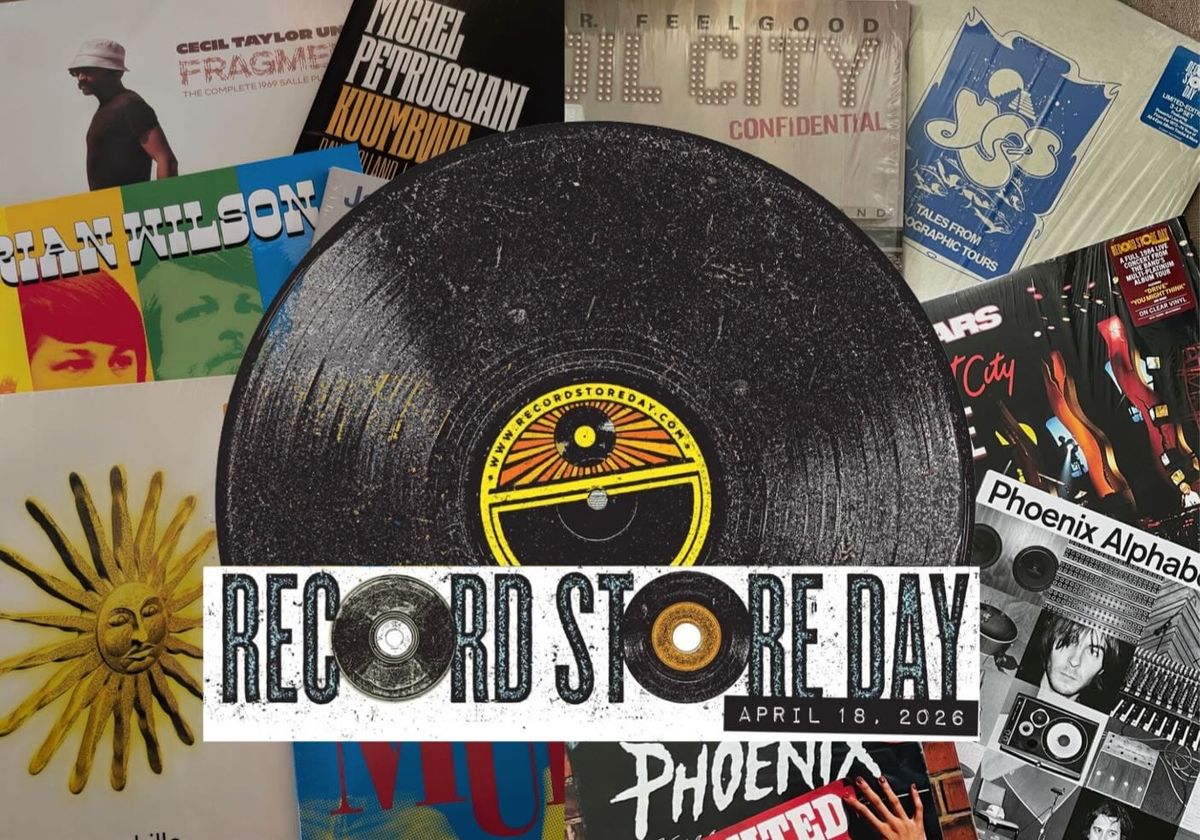
Including Brian Wilson, Yes, the Cars, the Muffs, Cecil Taylor, Phoenix, the Chills, Dr. Feelgood, Jane Weaver, and Michel Petrucciani.
It’s time for round two of our in-depth reviews for Record Store Day 2026, in which we listen to a boatload of exclusive Record Store Day vinyl and let you, dear reader, know what we think. Today’s batch is another big one:
- The Cars: Heartbeat City Live
- The Chills: Sunburst
- Dr. Feelgood: Oil City Confidential
- The Muffs: Live at Fort Apache
- Michel Petrucciani: Kuumbwa
- Phoenix: United; Alphabetical
- Cecil Taylor Unit: Fragments: The Complete 1969 Salle Pleyel Concerts
- Jane Weaver: Intianni Kesä
- Brian Wilson: On Tour 1999–2007
- Yes: Tales from Topographic Tours
That’s a lot to read, so we’ll let you get to it. But first, a quick reminder that I (Ned) will be on Steve Westman’s Live Audiophile Roundtable tomorrow, Saturday, April 11, at 12 noon Eastern time/9 am Pacific time. We’ll be discussing Record Store Day vinyl as well as all the other great new reissues that have recently been pressed. The livestream will appear at this link and can also be watched anytime after the fact. But it’s much more fun if you tune in live and throw in some comments, so set a reminder and join us!
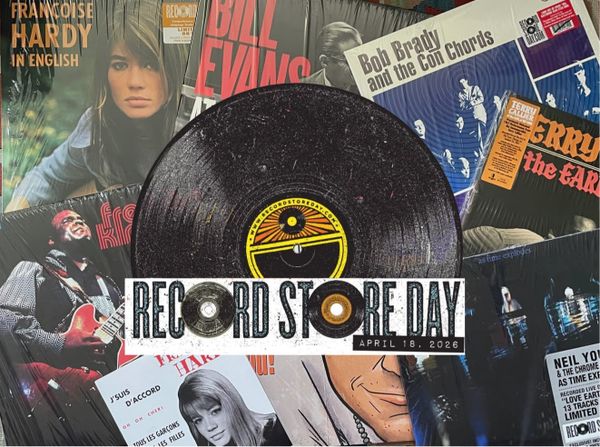
Lastly, if you missed Batch 1 of our Record Store Day reviews, make sure you check ’em out. You can catch up by clicking right here:
 Ned Lannamann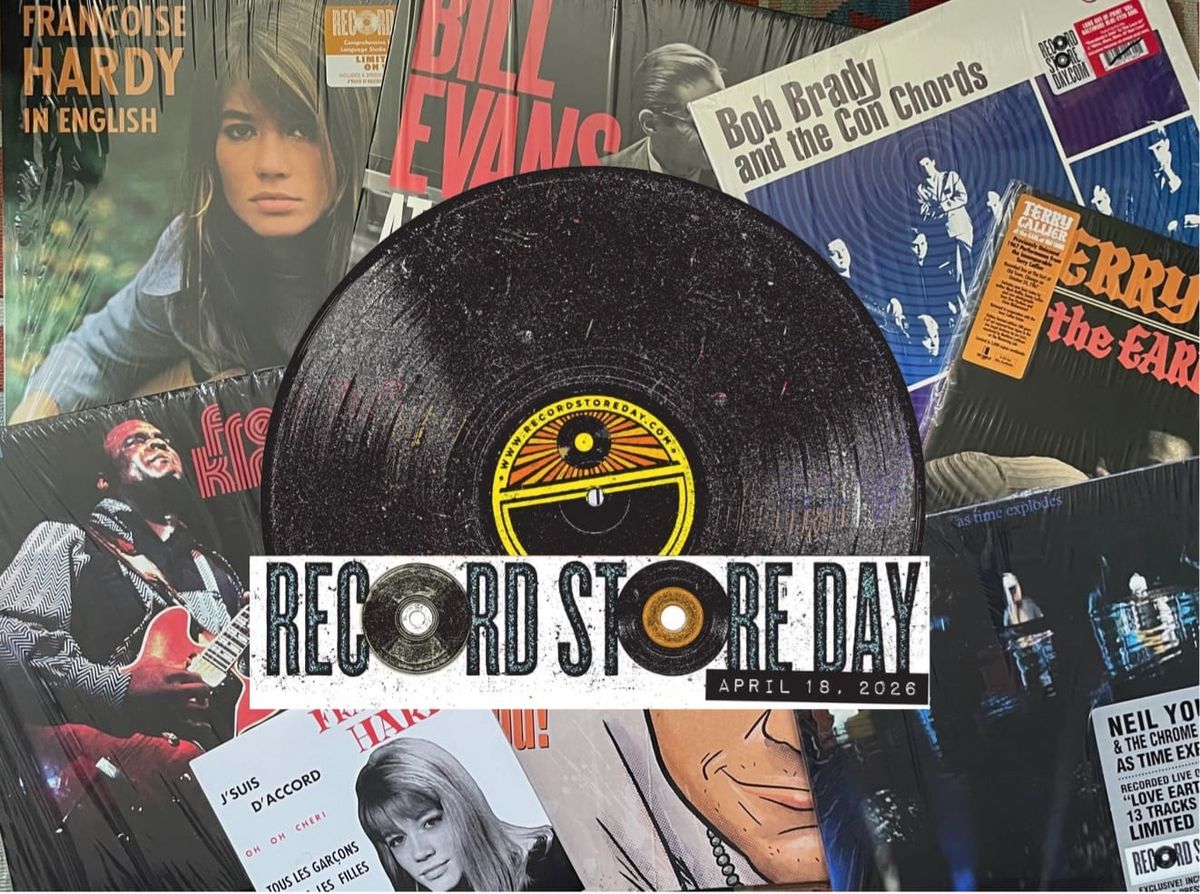
That similarly massive collection of reviews includes:
- Bob Brady and the Con Chords: Love-In: The Chariot Records Recordings
- Blur: Live at the Budokan
- Terry Callier: At the Earl of Old Town
- Bill Evans: At the BBC
- Françoise Hardy: In English
- Freddie King: Feeling Alright: The Complete 1975 Nancy Pulsations Concert
- Adam Sandler: They’re All Gonna Laugh at You!
- Buster Williams: Pinnacle
- Neil Young and the Chrome Hearts: As Time Explodes
Still not enough? We aim to please. We’ll be posting even more Record Store Day reviews all through next week, leading up to the big day on Saturday, April 18. We’re putting in overtime to make sure you have a good sense of what is worth picking up and what is probably fine to skip. And hey, if you like what you read and want to support our work, please do so by signing up for a paid subscription. Heck, even if you don’t like what you read, we still could really use your support.
Thanks as always, and let’s jump in!
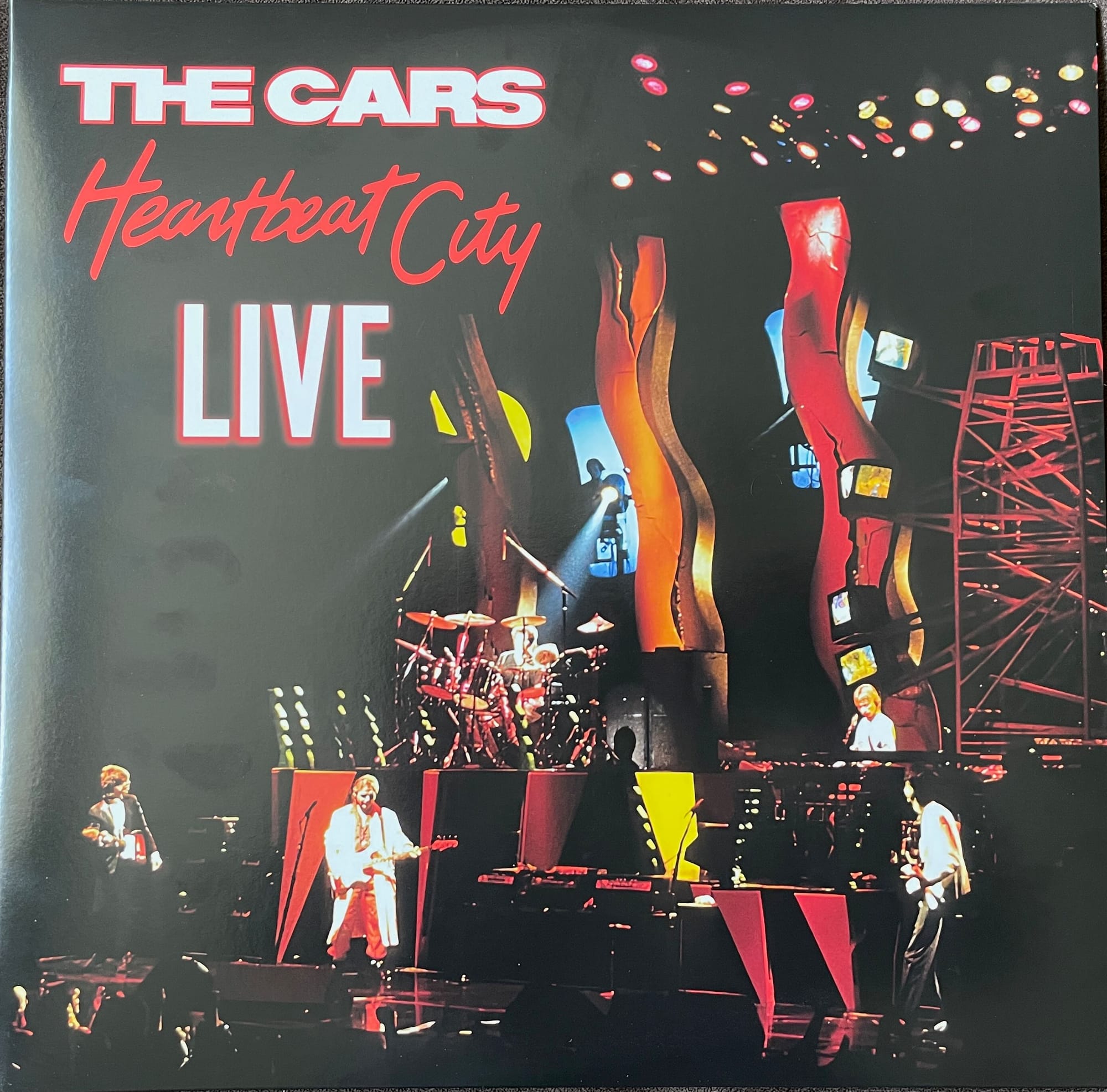
The Cars: Heartbeat City Live
Review by Ned Lannamann
The Cars’ live show has always had a notorious reputation for being inert, but you certainly can’t tell by the ecstatic audience reaction to this 1984 live show, recorded in Houston during the tour for Heartbeat City. This was when the Cars were at their commercial peak; if their 1978 self-titled album has since become their defining work and biggest seller, Heartbeat City was the bigger hit at the time, thanks to the MTV omnipresence of the videos for “You Might Think,” “Drive,” and “Magic,” positioning the Boston group not just as the godfathers of the new-wave boom that was just cresting, but also as forward-thinking audiovisual artists at the vanguard of ’80s trends.
It didn’t last. Heartbeat City became a sort of swan song for the Cars, although they kept it together for 1987’s weirdly dejected-sounding Door to Door and did a reunion stint in the 2010s. It was one of those cases where the band became so big, there was nowhere left to go but down. Their first two brilliant albums had firmly established their chops, and primary songwriter Ric Ocasek was effective at incorporating power-pop and new-wave tropes into his endless hooks. Heartbeat City, then, was the group achieving their final, most accessible, and poppiest form, heavy on the synths and programmed rhythms but still full of quirk and melody. And the Cars did all this while still upholding the rock ’n’ roll end of the bargain.
That ability to rock is on full display on this double live disc, which is big, brash, and meant to be blasted. Recorded at the end of a two-month stretch on the road, the performance is fully greased and deliciously bulletproof. By this point drummer David Robinson was using triggers and electronic drums in his kit, and the massed backing vocals that appeared on the Mutt Lange–produced Heartbeat City are somehow magically reproduced for the live setting. Indeed, the Cars hew quite close to their recorded versions, although Panorama’s “Touch and Go” sounds extra squirrely here, and the familiar opening synths of “Drive” are livened up by some firecrackers in the crowd. Ocasek somehow talked the band into doing “Jimmy Jimmy,” a song from his 1983 solo album Beatitude, but otherwise, this is a generous helping taken from the Cars’ entire hit-strewn catalog, albeit leaning predominantly on The Cars and Heartbeat City, as one might expect.
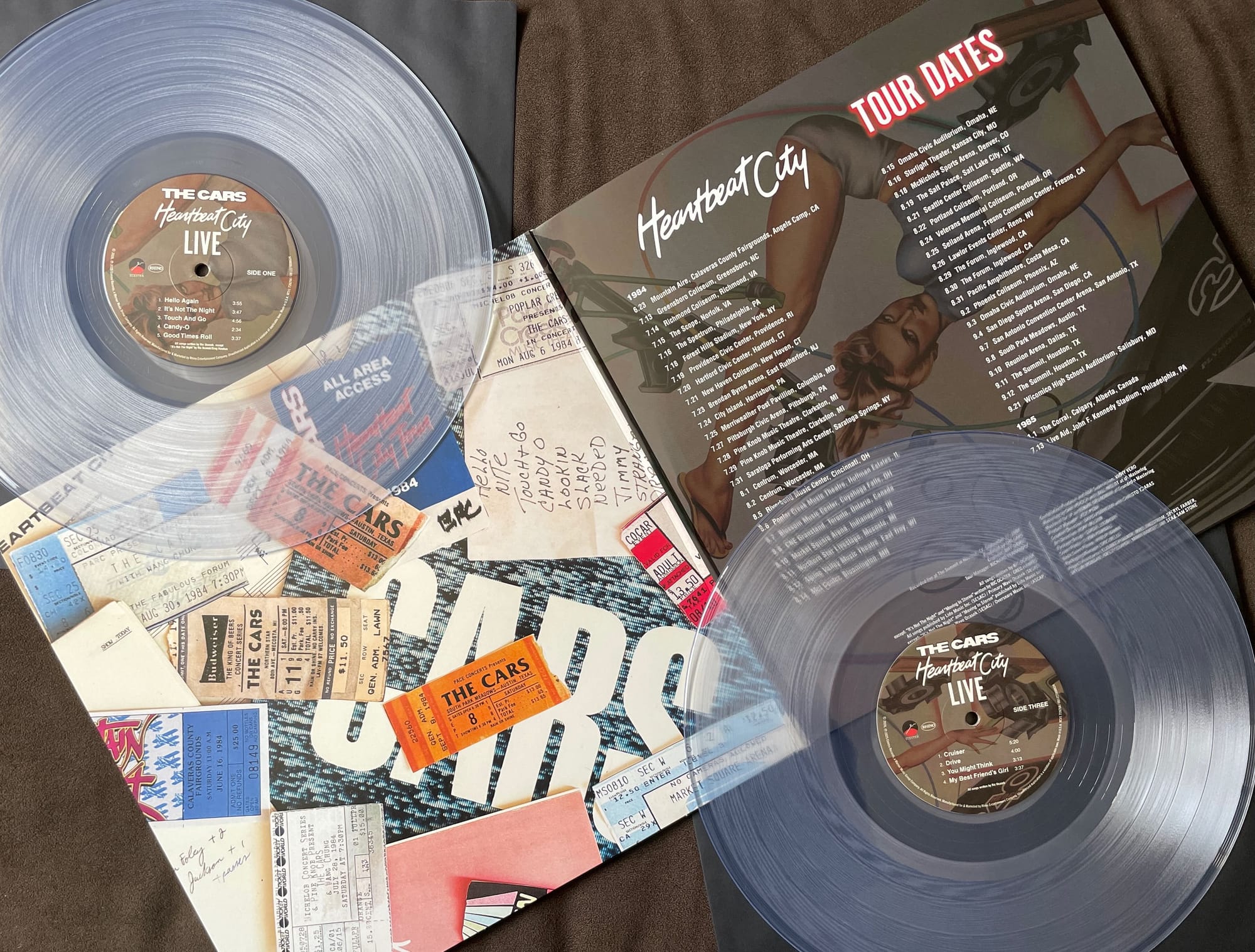
The recorded sound is massive and dense but not impenetrable. You can close your eyes and feel like you’re in the crowd, with the band’s volume pushing pleasingly against your chest; the instruments are generally centered, and the crowd noise is sprinkled across the stereo spectrum. Benjamin Orr’s bass is firm and persistent, Elliot Easton’s lead guitar growls appealingly, and the band’s chemistry is fully on display—aurally if not visually. With the natural limitations of live sound and with the tastes and techniques of 1984 recording methods in full flower, the record is a punchy and fun listen, light on subtlety but dead-on in terms of what it must have been like to be there.
The mastering is a bit more mysterious. Joe Nino-Hernes at Sterling Sound cut the lacquers—his initials are in the deadwax, so that part’s not up for debate. And the credits point to usual Rhino suspects Dan Hersch and Bill Inglot at d2 Mastering, who likely handled the deluxe 4-CD/1-LP Heartbeat City box set from last year that contained this show on Disc 4; they probably prepared the digital file that Nino-Hernes cut from. But the credits also say, “Mastered for LP by Bernie Grundman at Grundman Mastering,” which has me confused. Did Grundman also finesse the digital file before it went to Sterling, or is that an erroneous credit? I at first thought it might be left over from the 2025 box set, which included a vinyl copy of the Heartbeat City album. But that disc was cut by Ryan K. Smith (also at Sterling), so that doesn’t appear to be the answer. Anyway, if both Grundman and Nino-Hernes had their hands on this thing, that means two world-class mastering engineers were dispatched to prepare it—and that’s after it was dealt with by Hersch and Inglot at d2.
It doesn’t sound quite good enough to justify the extra hands, but it doesn’t need to. This is a memento from when the Cars were slugging it out for the title of Biggest Band on Earth, and on the night in question they were probably holding the belt.
Elektra/Rhino 2-LP 33 RPM clear vinyl
• Vinyl release of the Cars’ September 11, 1984, live show at the Summit, Houston, TX, originally broadcast on radio in November 1984; also released (in part) on videocassette in 1985 and in its entirety on CD as part of the Heartbeat City super deluxe box set in 2025
• Jacket: Direct-to-board gatefold
• Inner sleeve: Black poly-lined
• Liner notes, insert, or booklet: None; the Cars’ 1984–85 tour itinerary is listed on inner gatefold
• Source: Digital
• Mastering credit: “Mastering by Dan Hersch with Bill Inglot at d2 Mastering,” Los Angeles, CA; “Mastered for LP by Bernie Grundman at Grundman Mastering,” Hollywood, CA
• Lacquer cut by: Joe Nino-Hernes at Sterling Sound, Nashville, TN; “JN-H” in deadwax
• Pressed at: GZ’s Memphis Record Pressing, Memphis, TN
• Vinyl pressing quality (visual): A
• Vinyl pressing quality (audio): B+ (the end of each side has minor surface noise, a common issue with Memphis-pressed vinyl)
Additional notes: None.
The Chills: Sunburst
Reviewed by Robert Ham
Even within the mercurial discography of the Chills, 1996’s Sunburst feels like an outlier. That’s all down to the circumstances under which it was recorded. The previous Chills lineup had imploded after their US label Slash Records pulled their support for 1992’s Soft Bomb, even while the group was on tour. The band’s only constant member, singer/guitarist Martin Phillipps, returned home to his native New Zealand and laid low for a few months, playing music with his pal David Kilgour in a pair of projects and demoing some new material.
After relocating to Auckland, Phillipps put together a new lineup of the Chills and decamped to London to make a new album. The musicians made it to Heathrow Airport but were immediately sent back home due to issues with their visas. Phillipps opted to soldier on, assembling a pickup group of UK studio musicians to get the album recorded. And what a group: Dave Gregory of XTC took up the bass for the session, Fairport Convention’s Dave Mattacks joined on drums, and the keyboard and guitar parts that Phillipps didn’t play were handled by producer Craig Leon.
Even with new players in the mix, the music on Sunburst sounds like the next evolutionary step for the Chills following 1990’s Submarine Bells and 1992’s Soft Bomb. There’s no one song with the immediate delights of “Heavenly Pop Hit” or “The Male Monster from the Id,” but the dreamy pop sound Phillipps had been cultivating blooms beautifully here. Lyrically it sounds as though Phillipps was trying to talk himself out of some dark times and sifting through the pieces of a broken relationship, but musically the mood is light and frothy. Phillipps and Leon choose some of the goofier presets on their synthesizers, the guitars jangle and chime, and the rhythm section plays with a lovely bounce in their collective steps.
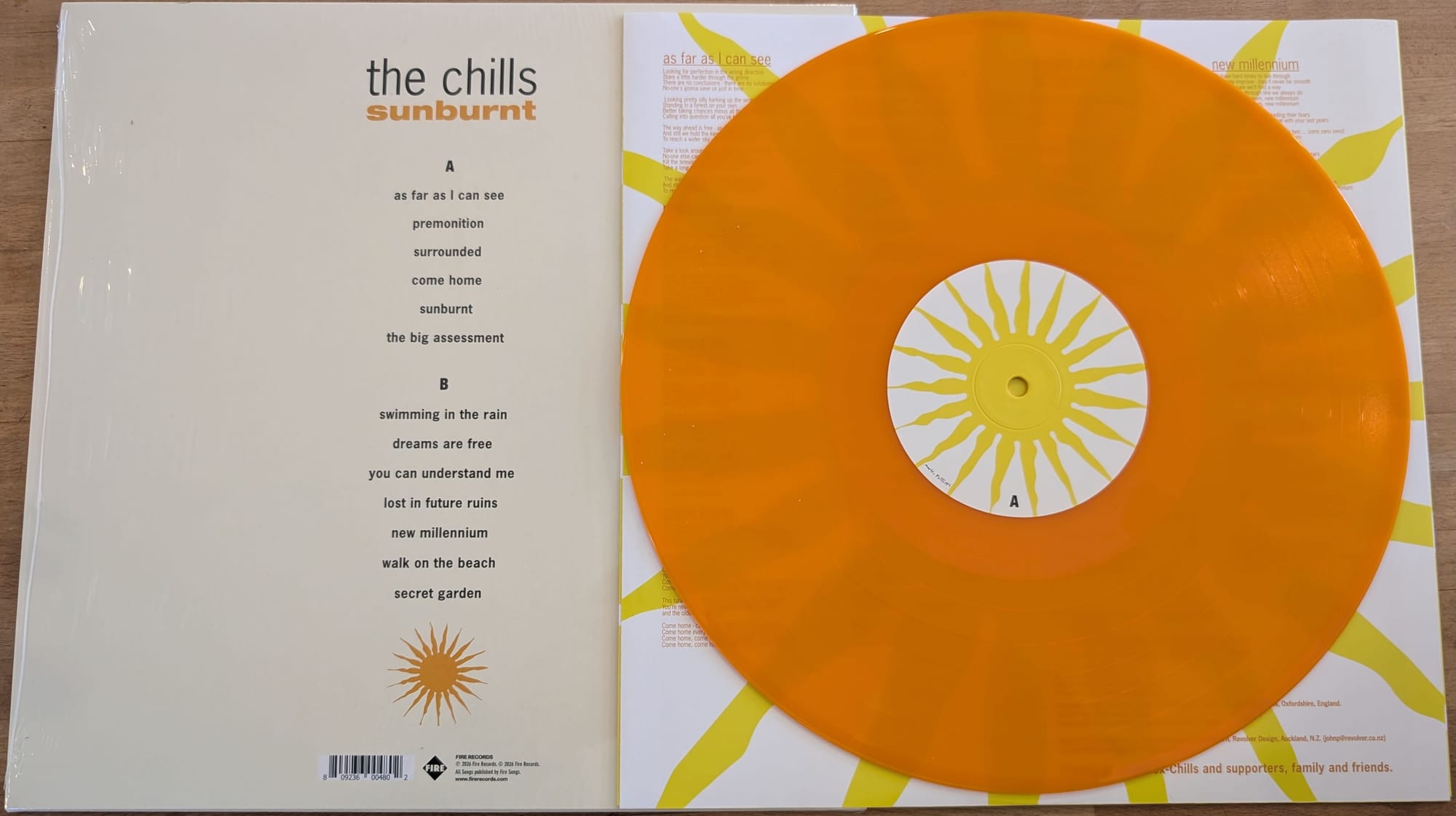
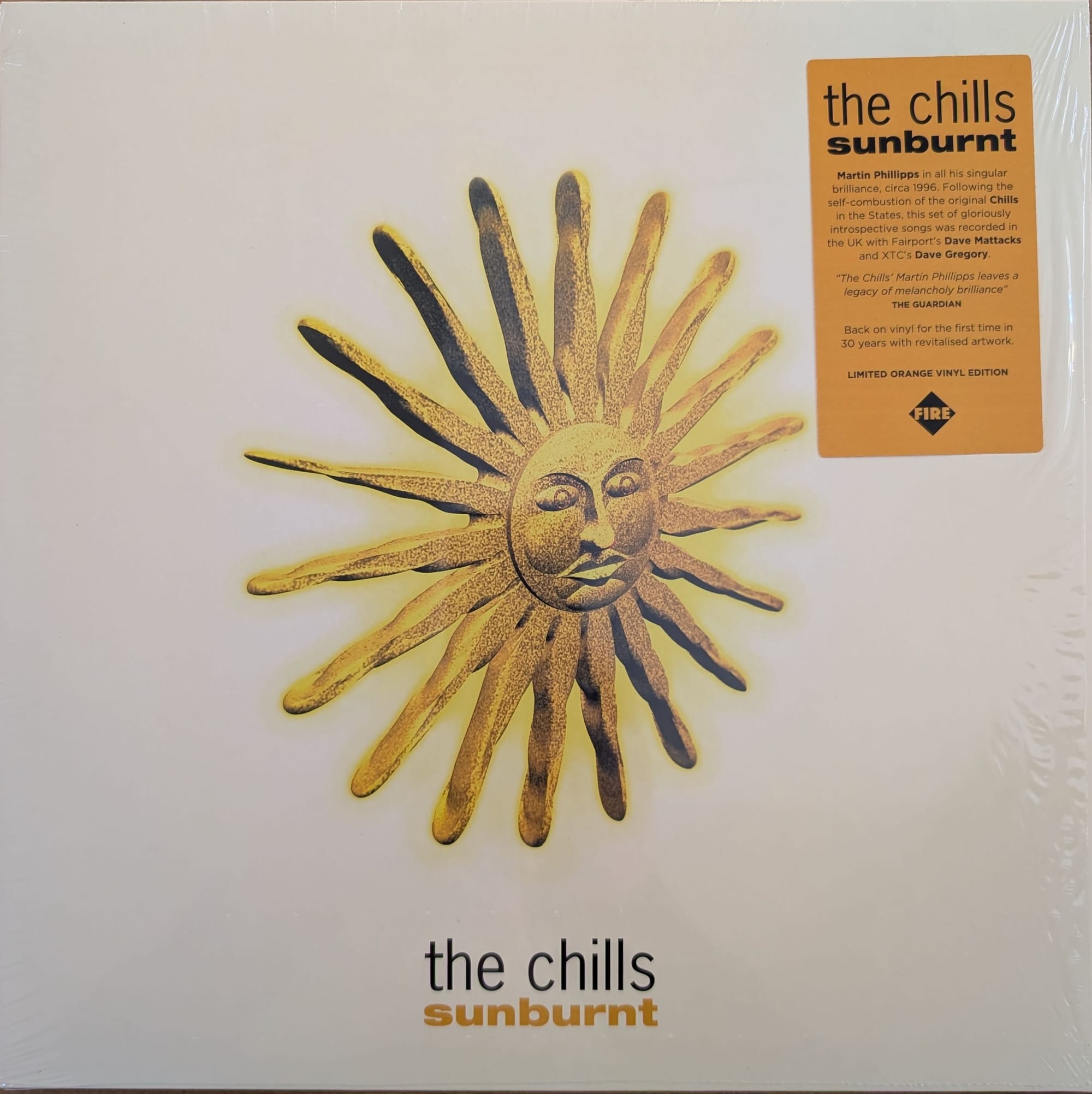
Originally credited to Martin Phillipps and the Chills, Sunburnt was only released on vinyl in New Zealand, so this reissue for Record Store Day in the UK and EU is especially exciting. Fire Records, which released the last three studio albums the band made before Phillipps’s untimely death in 2024, is responsible for this new edition, and they’ve opted to re-credit Sunburnt to just the Chills and give a slight overhaul to the artwork. As for what the label did for the music, details are scarce. My suspicion is that the original sessions were recorded digitally, as it has a muted quality redolent of modern vinyl pressings. It’s not enough of a concern for me to suggest leaving this in the racks, as these lovely songs shine out even within the slightly murky audio of this new pressing.
Fire 1-LP 33 RPM orange vinyl
• Record Store Day reissue of the Chills’ 1996 album with updated artwork
• Jacket: Direct-to-board single-pocket
• Inner sleeve: Printed paper with lyrics and album credits
• Liner notes, insert, or booklet: None
• Source: Unknown, assumed digital
• Mastering credit: “Gordon Vickery, Townhouse Studios, London”; this refers to the original 1996 master
• Lacquer cut by: Unknown
• Pressed at: Optimal Media, Germany
• Vinyl pressing quality (visual): A
• Vinyl pressing quality (audio): A
• Additional notes: Album was originally credited to Martin Philipps and the Chills.
Dr. Feelgood: Oil City Confidential
Review by Ned Lannamann
Of all the British acts that never made a dent in the American consciousness, Dr. Feelgood could well be the most significant. The Essex group have retroactively become the standard-bearers for pub rock, an eclectic genre describing the back-to-roots movement that came right before punk exploded in 1976. Although the term pub rock can encompass bands as wildly different as Brinsley Schwarz, Ducks Deluxe, and Kokomo, it’s true that Dr. Feelgood were, for their part, firmly in the old-school rock-’n’-roll revivalist tradition. Their rip-snorting, hard-charged R&B really did pave the way for English punk, and their explosive live show inspired countless young bands to turn up the volume.
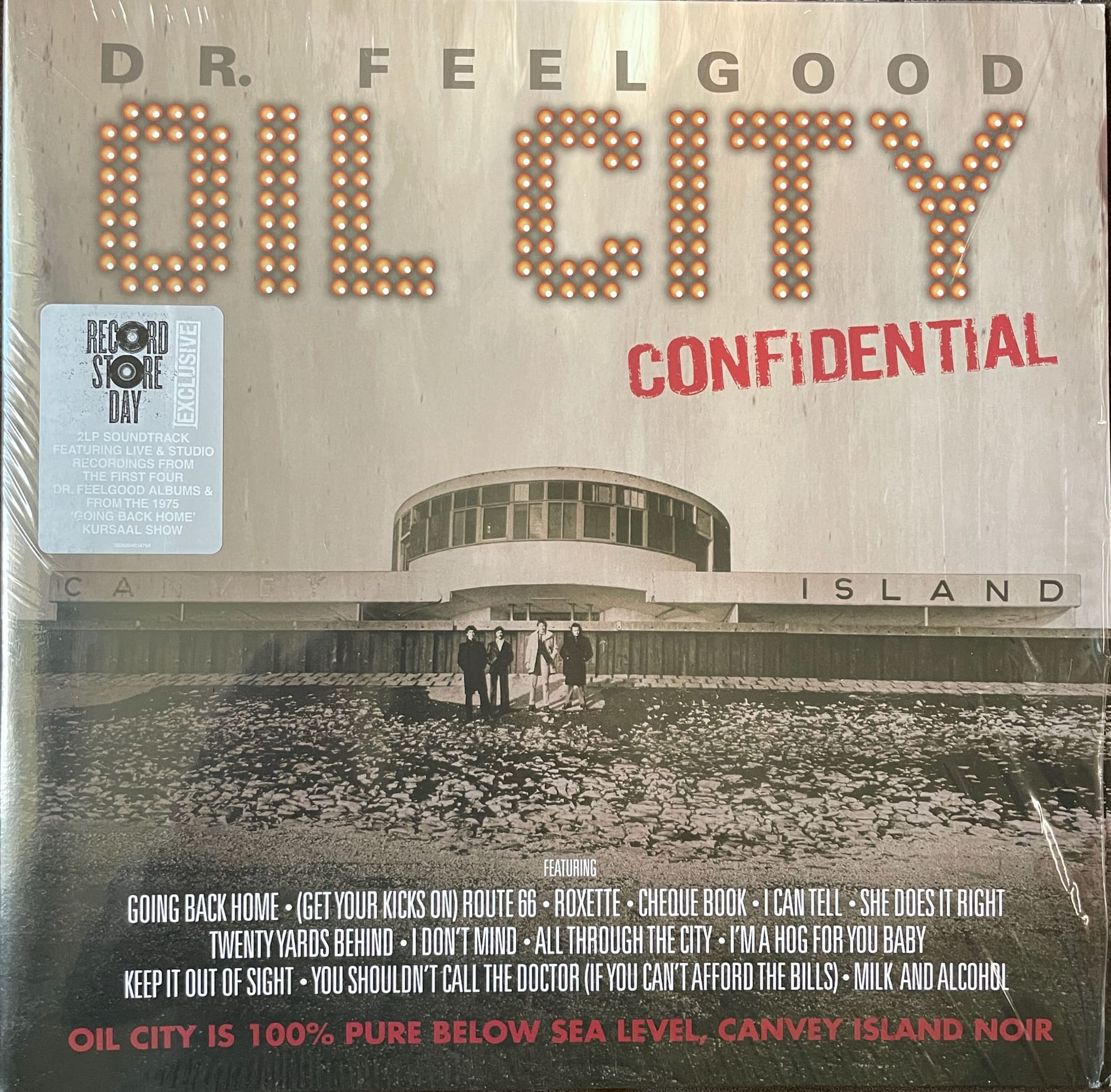
Julien Temple’s 2009 documentary about Dr. Feelgood, Oil City Confidential, focused on the band’s early years, when guitarist/songwriter Wilko Johnson was a member. Johnson’s marvelous hack-and-slash guitar style allowed the band to incorporate ’50s-style rock ’n’ roll, ’60s R&B, and even a tinge of ska into their sound. The soundtrack for Oil City Confidential came out on CD in 2009 and collected eight songs from the band’s first three studio albums, Down on the Jetty and Malpractice, both from 1975, and 1977’s Sneakin’ Suspicion, as well as two tracks from the band’s 1976 live album Stupidity, which went to number one in the UK. The group’s biggest hit, “Milk and Alcohol”—from their 1978 post-Johnson album Private Practice—is also included. The selection is augmented by nine tracks from a concert at the Kursaal (a former amusement park) in Southend-on-Sea on November 8, 1975, which was released as a DVD/CD combo in 2005 called Going Back Home. Rounding out the collection are three tracks from ’60s bands that were formative influences on the band: two from Johnny Kidd and the Pirates and one from the Paramounts, who would go on to become Procol Harum.
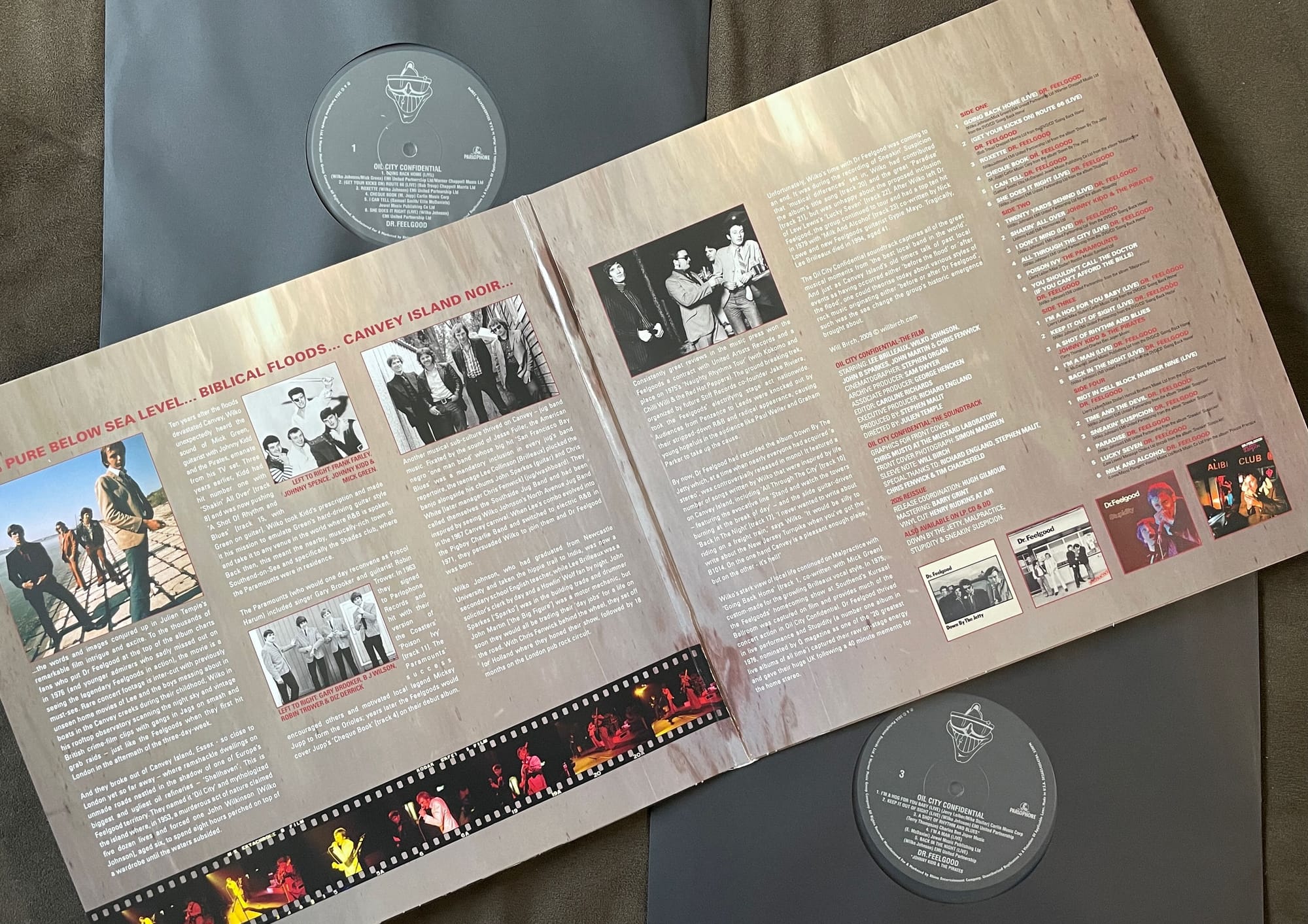
I haven’t seen Temple’s film, but it’s now vaulted to the top of my watchlist. And as it turns out, the Oil City Confidential soundtrack is a perfect primer for Dr. Feelgood, capturing their stampeding energy and ferocious live sound. And there’s good news for the curious: Oil City Confidential has been pressed to vinyl for the first time for Record Store Day. The Kursaal live tracks sound absolutely incredible, as if they were recorded yesterday, and the studio stuff sounds just as vital; everything about the package, from the mastering to the pressing, is fully satisfying. Wilko Johnson left Dr. Feelgood in 1977, and the group carried on for many years after, but this overview of his tenure feels like a Rosetta Stone for understanding the seismic shift that took place in the British music scene in the ’70s.
Parlophone 2-LP 33 RPM black vinyl
• Soundtrack to the 2009 documentary about Dr. Feelgood, compiling album tracks from 1975 to 1978 with live songs from a November 8, 1975, concert plus two tracks from Johnny Kidd and the Pirates and one from the Paramounts; the soundtrack was released on CD in 2010
• Jacket: Direct-to-board gatefold
• Inner sleeve: Black poly-lined
• Liner notes, insert, or booklet: Essay by Will Birch on inner gatefold
• Source: Digital
• Mastering credit: “Barry Grint; Vinyl cut: Henry Rudkins at AIR”
• Lacquer cut by: Henry Rudkins at AIR Studios, London, UK; “H.R” in deadwax
• Pressed at: GZ’s Memphis Record Pressing, Memphis, TN
• Vinyl pressing quality (visual): A
• Vinyl pressing quality (audio): A
• Additional notes: None.
The Muffs: Live at Fort Apache
Review by Robert Ham
Fort Apache Studios, the Boston-area recording house opened by a quartet of rock lifers in 1986, reached critical mass during the alt-rock boom of the mid-’90s. Thanks to the work that in-house engineers Sean Slade and Paul Kolderie had done on albums like Dinosaur Jr.’s Bug and Pixies’ Come On Pilgrim, the new crop of modern guitar bands (among them, Radiohead and Hole) chose to make their records there. Local radio stations WBCN and WFNX, both of which had their studios nearby, came calling as well, broadcasting live performances by local artists and touring acts from Fort Apache’s live room.
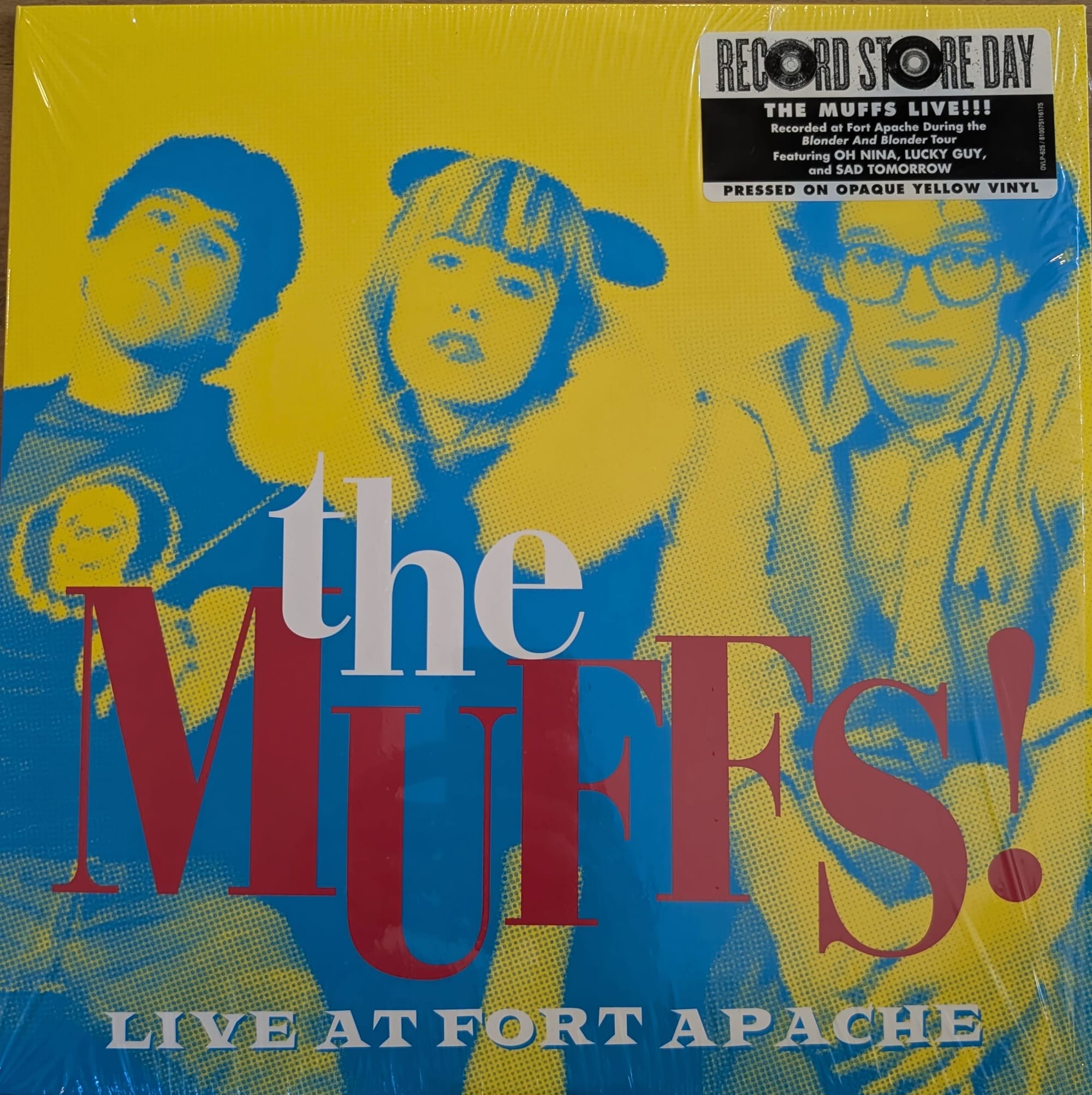
Some of those sets by Belly, Billy Bragg, and Radiohead were cherry-picked for the 1995 compilation This Is Fort Apache, but few have been officially released in full. There is some cause for celebration, then, that Omnivore Recordings are offering up the complete, unedited 1995 performance by LA pop-punk trio the Muffs on wax for Record Store Day. And I do mean “unedited.” After the first song—a rip-roaring rendition of “Agony,” the opening track from the band’s recently released Blonder and Blonder album—singer/guitarist Kim Shattuck loudly and lewdly complains about her stage monitors not working. Once that gets sorted, the band plows forward like a high-speed train, easing off the throttle only briefly as they knock out 14 songs from the group’s already-healthy discography. In those brief moments between songs, Shattuck drops a few more FCC no-nos and insists that someone bring some booze to the small audience in attendance. You practically hear the sweat beading up on the forehead of disc jockey Troy Smith as he nervously reads a station ID.
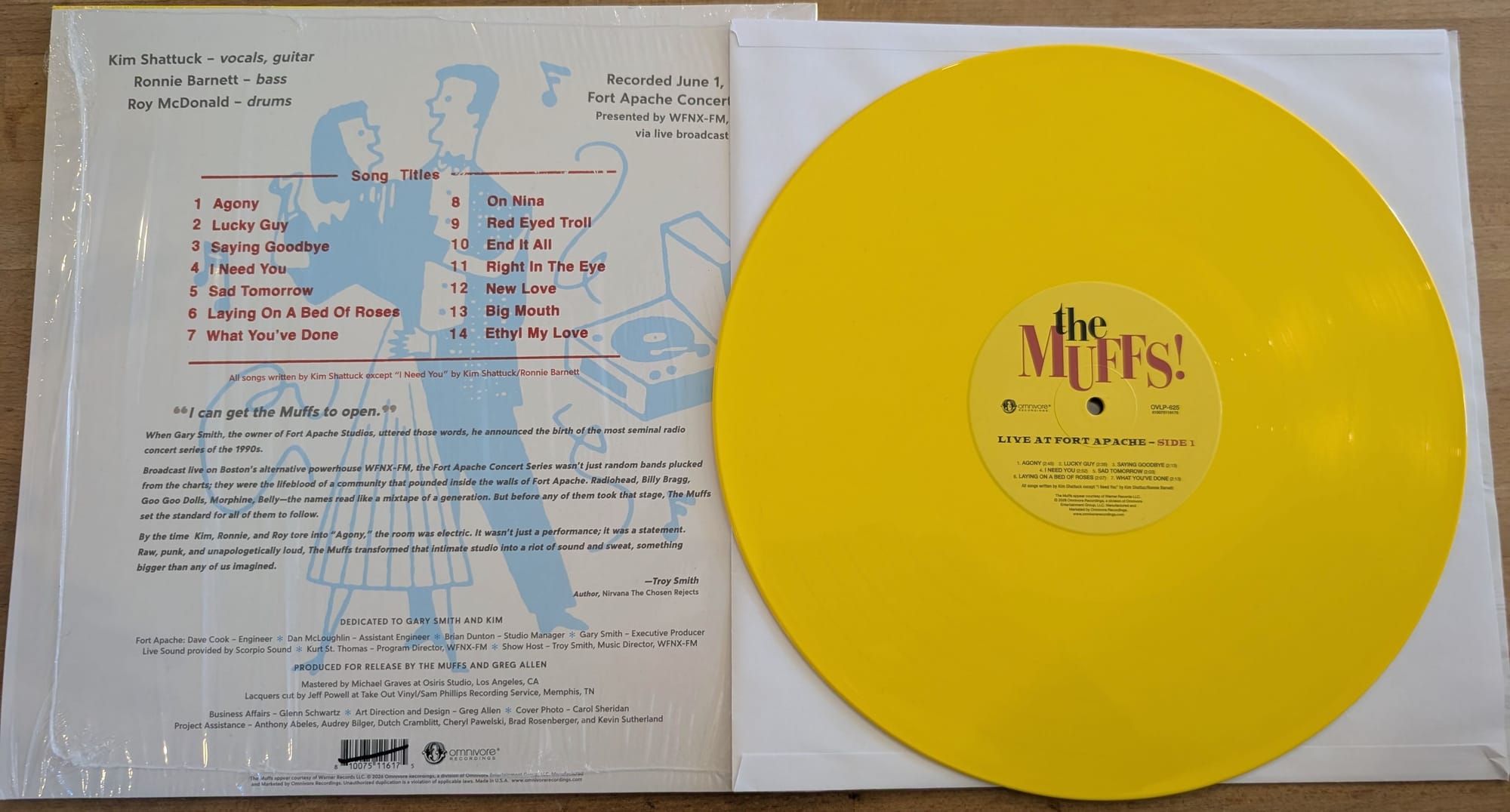
What this LP doesn’t offer is a “you were there”-type listening experience for listeners. Rather, it plays like: “You were at home listening to the radio and wishing you were there.” The audio sounds like it was sourced from a home recording of the live broadcast rather than a tape made at Fort Apache itself. There’s a second-generation haze to the whole set that somewhat diminishes the blunt force of a band that was at the peak of their creative powers and road-right after weeks of touring. Mastering engineer Michael Graves of LA’s Osiris Studio does a good job keeping everything in focus and balance, but I couldn’t get past the feeling that I was listening to a good bootleg rather than a great live album.
Omnivore 1-LP 33 RPM “opaque yellow” vinyl
• First vinyl release of 1995 live performance by the Muffs broadcast on WFNX
• Jacket: Direct-to-board single-pocket
• Inner sleeve: White poly-lined
• Liner notes, insert, or booklet: Liner notes from Troy Smith and album credits printed on back cover
• Source: Unknown, assumed digital
• Mastering credit: Michael Graves, Osiris Studio, Los Angeles, CA
• Lacquer cut by: Jeff Powell, Take Out Vinyl, Memphis, TN; “J POWELL” in deadwax
• Pressed at: Copycats Pressing Plant, Osseo, MN
• Vinyl pressing quality (visual): A
• Vinyl pressing quality (audio): A
• Additional notes: None.
Michel Petrucciani: Kuumbwa
Review by Robert Ham
Pianist Michel Petrucciani accomplished much in his limited time on Earth. He recorded with greats like Joe Lovano and Lee Konitz, traveled the world accompanying saxophonist Charles Lloyd, and as writer Thierry Pérémarti puts in the liner notes for this UK and EU Record Store Day release, spent his adult years in Brooklyn “living large and fast.” Though robbed of his ability to walk without assistance due to osteogenesis imperfecta, a genetic condition that left him with brittle bones and a short stature (he grew to only three feet tall), the French pianist’s energy never seemed to flag, nor did his enthusiasm for playing music.
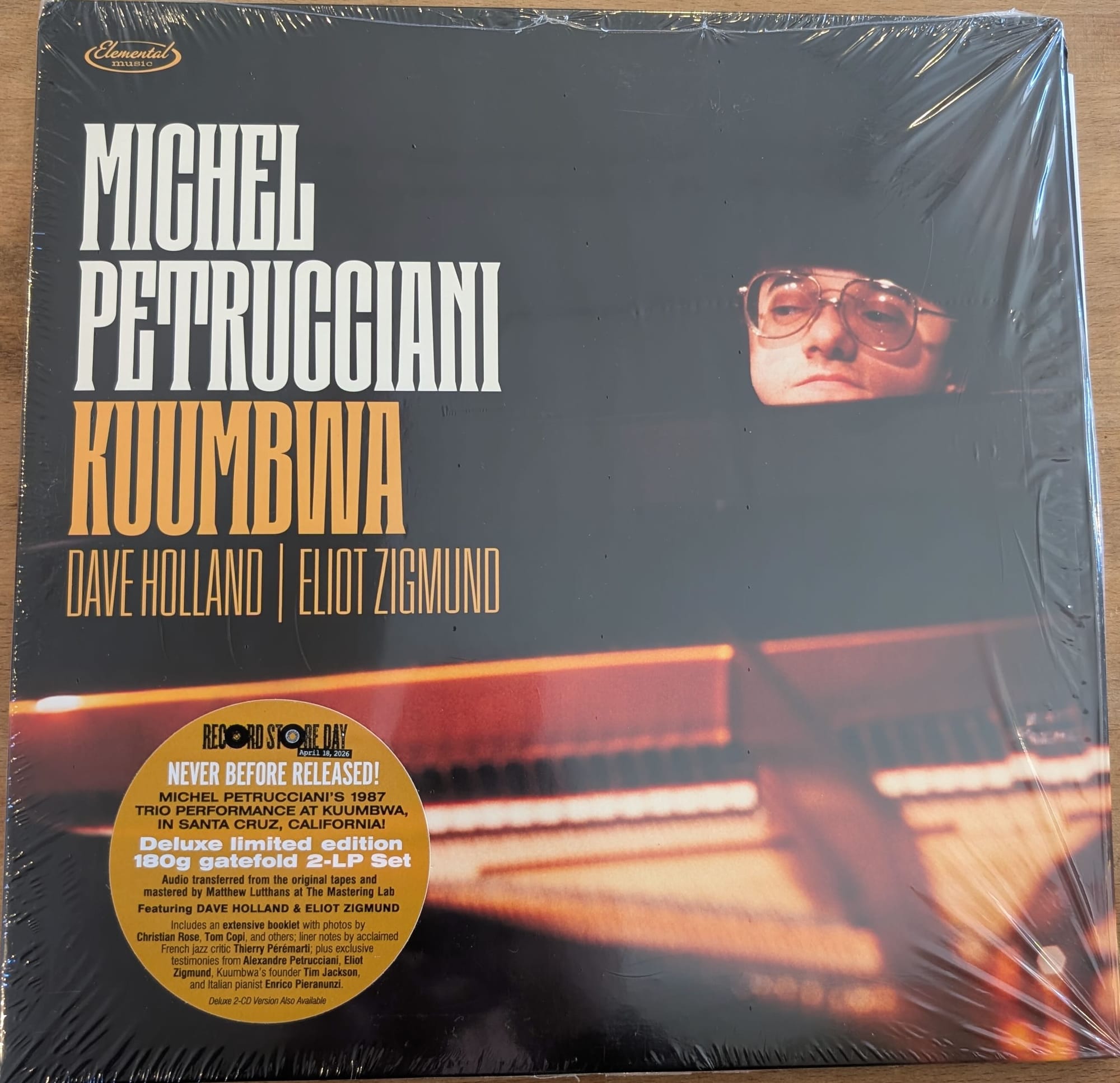
Petrucciani’s indefatigable spirit and personality comes across beautifully on this live recording made when he performed at the Kuumbwa Jazz Center in Santa Cruz, California, in May 1987. Joined by bassist Dave Holland and drummer Eliot Zigmund, the pianist takes some sturdy jazz standards—”My Funny Valentine,” “Stella by Starlight,” and “Autumn Leaves” among them—and a handful of originals and pulls them joyously apart. The core melody of these pieces are recognizable, but Petrucianni comes at them from odd angles and with fleet runs that made me reconsider them anew. And every song is steeped in the pianist’s deep love for the blues that he learned by transcribing his favorite Duke Ellington and Bill Evans recordings.
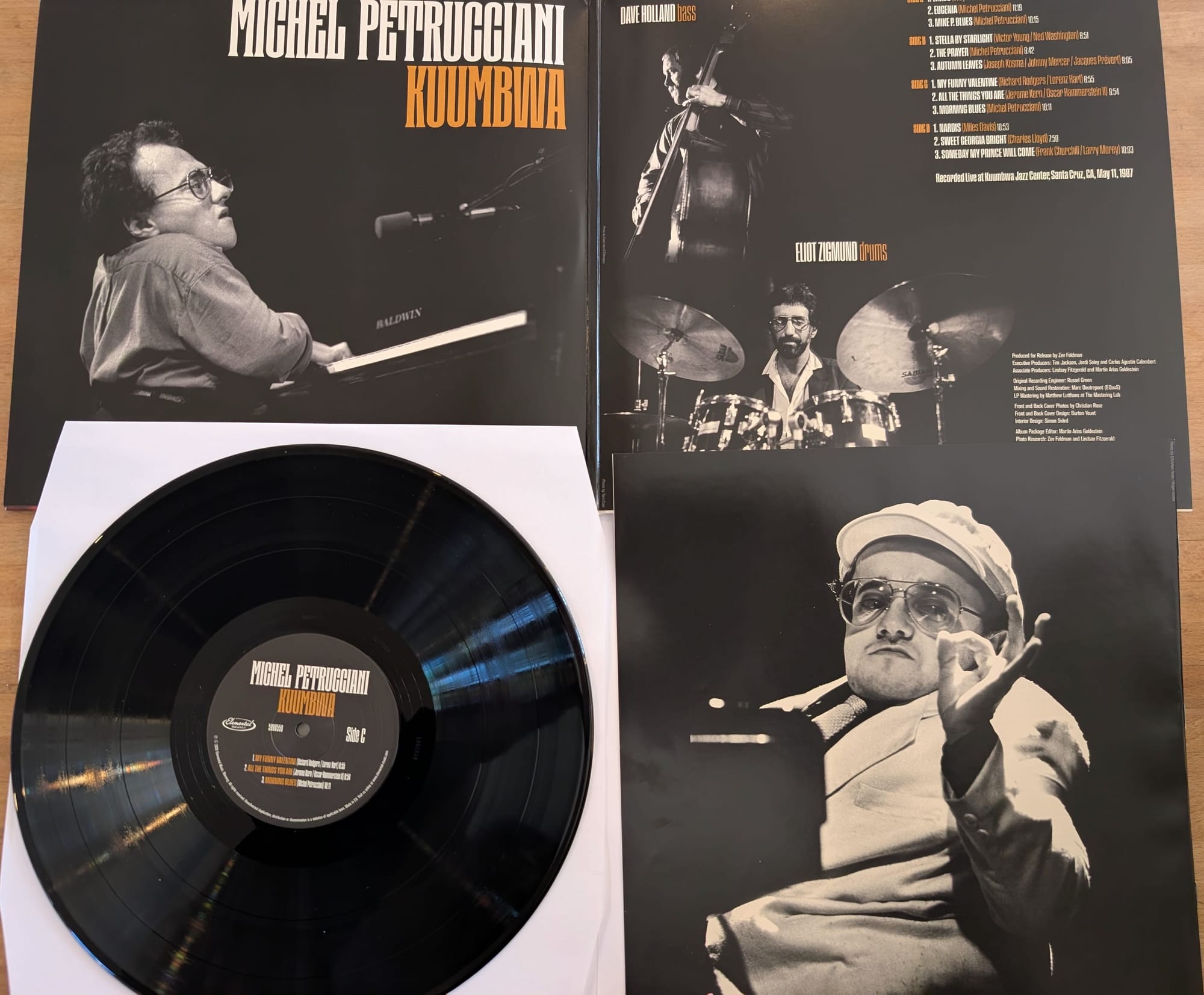
Petrucciani’s rhythm section on this set are the perfect foils for his playful, nimble playing. Holland seems especially game, taking similarly wild swings in his rubbery solos and engaging in a lovely push-pull with the piano. Zigmund is a sturdy if understated presence throughout but gets ample opportunity to cut loose, as he does on the trio’s rendition of the Miles Davis tune “Nardis.” The drummer’s extended solo bursts forth with intense tom-tom rolls and snare barrages worthy of Keith Moon.
As with most Elemental releases I’ve encountered in my years of buying and reviewing Record Store Day releases, the vinyl itself for this 2-LP set is as good as it gets: flat, free of noise or pressing issues, and perfectly centered. I was, however, surprised at how oddly unbalanced the music sounded. Outside of Zigmund’s splashy solos, the drums were tucked away into the background of this recording, keeping the tempo but not really making their presence known sonically. I wonder how much that had to do with the source tapes, because I tend to trust the ability of mastering engineer Matthew Lutthans to bring every element in line with everything else. I still very much enjoyed listening to this set, but for much of the time, I kept wanting just a little more low end to help lift the whole performance even higher.
Elemental Music 2-LP 33 RPM 180g black vinyl
• Previously unreleased recording of the Michel Petrucciani Trio performing live on May 11, 1987 at Kuumbwa Jazz Center, Santa Cruz, CA
• Jacket: Direct-to-board gatefold
• Inner sleeve: White poly-lined
• Liner notes, insert, or booklet: Eight-page booklet featuring liner notes by jazz critic Thierry Pérémarti, statements from Alexandre Petrucciani, Kuumbwa founder Eliot Zigmund, Tim Jackson, and pianist Enrico Pieranunzi, and archival photos
• Source: Digital; “Audio transferred from the original tapes”
• Mastering credits: “Mixing and sound restoration by Marc Doutrepont (EQuuS)”; “LP mastering by Matthew Lutthans at the Mastering Lab”
• Lacquer cut by: Matthew Lutthans at the Mastering Lab, Salina, KS; “MCL” in the deadwax
• Pressed at: GZ Media, Czech Republic
• Vinyl pressing quality (visual): A
• Vinyl pressing quality (audio): A
• Additional notes: Limited to 2,500 copies worldwide. A CD version will be available on April 24.
Phoenix: United; Alphabetical
Review by Ned Lannamann
I don’t know what it’s like to live in the French town of Versailles. It’s probably a bit well-to-do and surely reliant on tourist dollars—er, Euros—but otherwise I bet it’s a fairly normal Parisian suburb. But there’s something about actually coming from Versailles that suggests a certain innate prestige, a sense of preciousness, nobility, and extravagance.
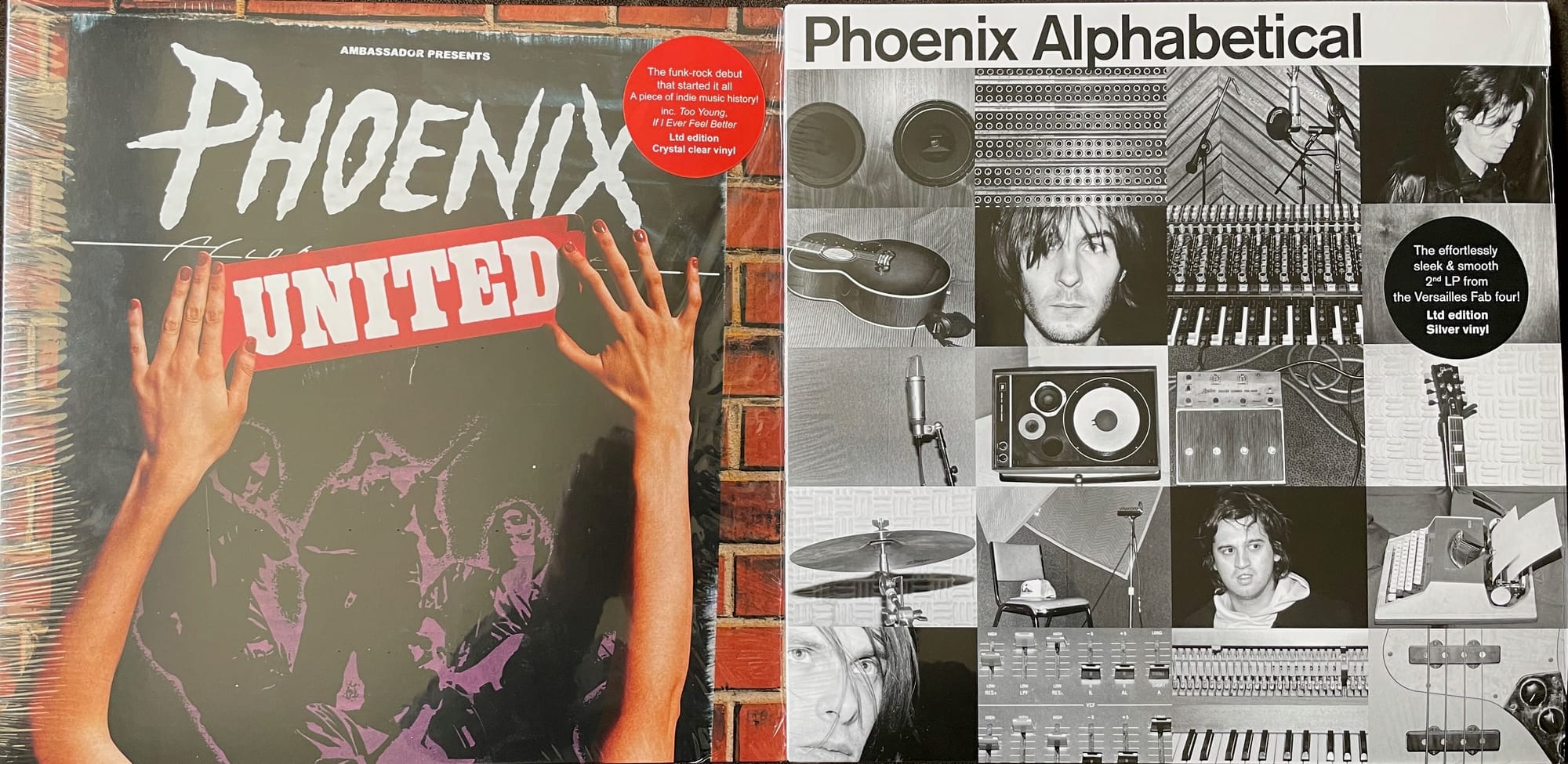
The French band Phoenix come from Versailles. And while it may be a coincidence, their music sounds like Versailles—a sleek, well-heeled brand of continental pop, imparting champagne elegance to what are otherwise fairly standard pop-rock tunes, running the gamut from sophisticated synthpop to gently funky comedown numbers to the occasional punk-informed (but still quite frothy) discharge. Their first two albums have been repressed for Record Store Day—2000’s United and 2004’s Alphabetical—and while they’re less refined than their big hit album from 2009, Wolfgang Amadeus Phoenix, they still are very much in keeping with the group’s chic sound.
The debut, United, has a bit more personality, as the four-piece was still game to try on a few more odd-fitting styles before their identity was codified. The easygoing disco of “If I Ever Get Better” clearly points the way to Phoenix’s future, but along the way, the loungey “Embuscade” bears the hangover from when Phoenix served as Air’s backing band, while the Strokes-y “Party Time” is as punk as the group ever got. Meanwhile, the three-piece suite “Funky Squaredance” dabbles in country music, ’80s rap, and hard rock and features a guest appearance by the Hector Berlioz Choir; it’s a 10-minute experiment that rarely works, but it’s a blast to hear the young group try to pull it off.
Alphabetical finds Phoenix’s sound all of a sudden tailor-fit and almost intimidatingly competent. What the band lacks in ingenuity, it makes up for with panache and taste. The songs are handsomely produced, with each synth patch tweaked just so and each programmed drum loop calibrated to get one’s head almost imperceptibly nodding while simultaneously lowering one’s blood pressure. “If It’s Not with You” is a lifelike simulacrum of neo-soul, while “Everything Is Everything” marries ’70s-soundtrack intrigue to ’00s indie-pop.
Apart from the color of the vinyl, the new versions are exactly the same as their previous pressings from 2015, which featured lacquers cut by Benjamin Joubert at Biduloscope and pressings from Optimal. The runout markings are identical, suggesting that Optimal took the old plates out of storage and whipped up a fresh batch. Joubert’s mastering on United is rich and full, offering realism and dimension. Alphabetical, however, sounds incredibly digital; self-produced in Phoenix’s basement, it may have been the victim of a desktop recording job by a band overly reliant on plug-ins, or perhaps the original mastering—undertaken by Brian “Big Bass” Gardner at Bernie Grundman Mastering during the height of the loudness wars—is to blame. Regardless, all of the different sounds are welded together in an inseparable and aggressive mix designed for iPods and contain nothing in the way of subtlety, nuance, or space.
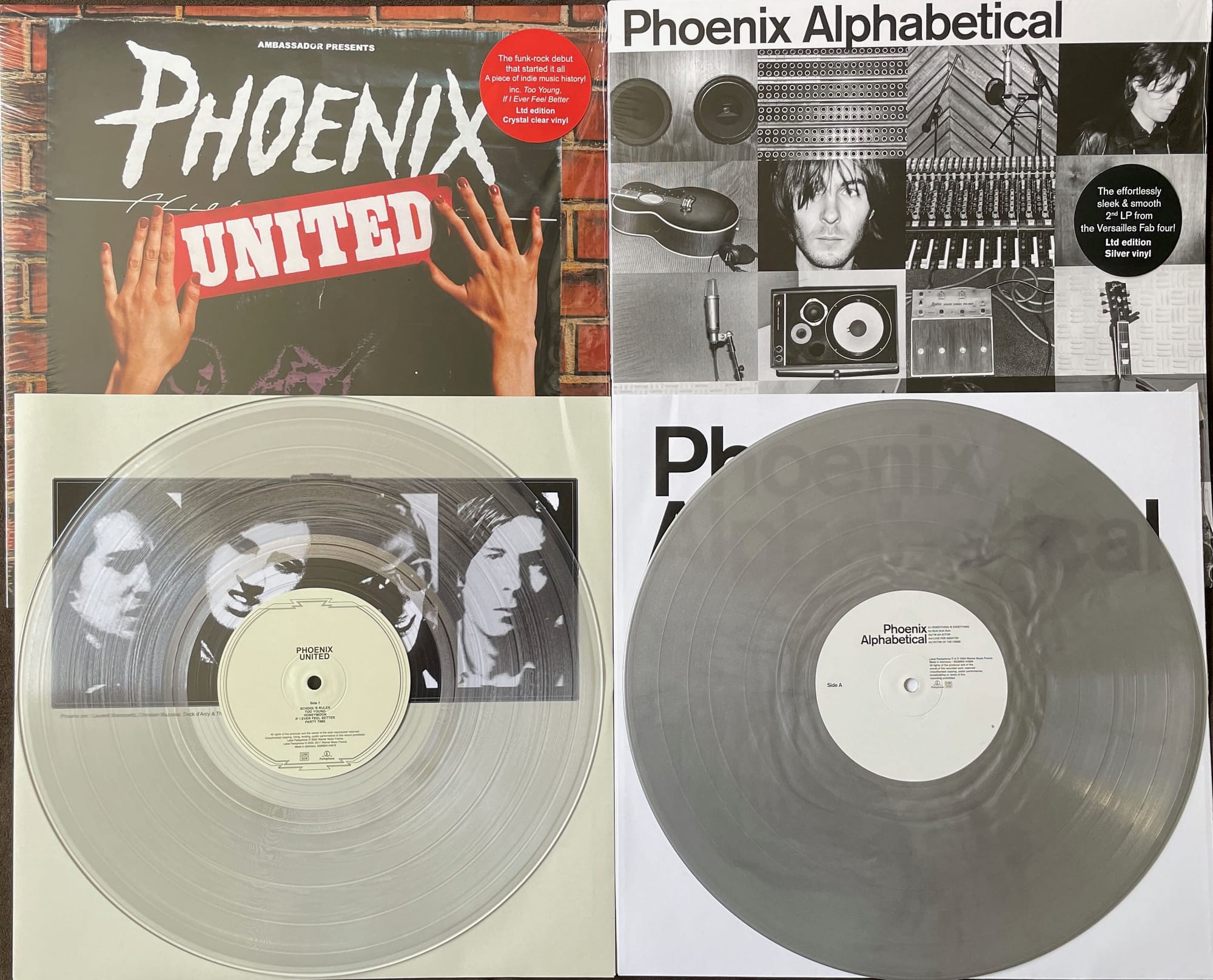
It gets worse: The clear vinyl pressing for United is decent enough, with a small bit of incidental noise but nothing too troubling, while the mottled gray-silver of Alphabetical is a flat-out disaster, rife with constant noise and clicks and even the occasional touch of non-fill. Colored-vinyl boosters say that it’s now every bit as consistent and clean as black vinyl, but this pressing of Alphabetical torches those arguments to ash. My own theory is that solid colors of vinyl are generally okay, but when multiple shades are blended together, that’s where the trouble starts. The different colors don’t melt together seamlessly under the heat of the press, resulting in bad joins that make awful noise under the needle. Somewhat comically, this vinyl pressing of Alphabetical includes all of the silence before the album’s instrumental bonus track, meaning that near the end of Side 2, you’ll get three minutes of hearing your stylus wander through a sea of pops, cracks, and crinkles before the music continues.
Phoenix would go on to great success and even greater polish with future efforts, but this early work is plenty satisfying, even if Phoenix never really figured out how to inject some heart into their carefully tousled sound. It’s fascinating to hear the group in the years before they had perfected their formula, when they were still willing to try things like “Funky Squaredance” or the jagged “I’m an Actor.” United is really the one to look for; my wretched pressing of Alphabetical might be a fluke, but I have a feeling that I won’t be the only one disappointed by it. Nevertheless, these are fun albums to revisit, making a case for Phoenix as, if not one of the more compelling bands of the 21st century, at least one of the most confident and consistent.
United: Parlophone 1-LP 33 RPM “crystal clear” vinyl
• Repressing of the 2015 remaster of Phoenix’s 2000 debut album
• Jacket: Direct-to-board single pocket
• Inner sleeve: Printed paper with credits
• Liner notes, insert, or booklet: None
• Source: Digital
• Mastering credit: “Mastered by Mike March at the Exchange,” London, UK
• Lacquer cut by: Benjamin Joubert, Biduloscope, Paris, France; “CUT BY BNJ” in the deadwax
• Pressed at: Optimal Media, Germany
• Vinyl pressing quality (visual): A
• Vinyl pressing quality (audio): B (minor noise)
• Additional notes: Limited edition, per hype sticker.
Alphabetical: Parlophone 1-LP 33 RPM “silver” vinyl
• Repressing of the 2015 remaster of Phoenix’s 2004 album
• Jacket: Direct-to-board single pocket
• Inner sleeve: Printed paper with lyrics and credits
• Liner notes, insert, or booklet: None
• Source: Digital
• Mastering credit: “Mastered by Brian ‘Big Bass’ Gardner at Bernie Grundman Mastering,” Hollywood, CA
• Lacquer cut by: Benjamin Joubert, Biduloscope, Paris, France; “CUT BY BNJ” in the deadwax
• Pressed at: Optimal Media, Germany
• Vinyl pressing quality (visual): A-
• Vinyl pressing quality (audio): D (loud clicks, repeating ticks, and surface noise)
• Additional notes: Limited edition, per hype sticker.
Cecil Taylor Unit: Fragments: The Complete 1969 Salle Pleyel Concerts
Review by Robert Ham
In the fall of 1969, a caravan of American jazz artists crossed the Atlantic for a series of shows put together by promoter George Wein under the banner of The Newport Jazz Festival in Europe. The main attraction was Duke Ellington and His Orchestra, the venerable ensemble led by the then-70-year-old pianist and composer. But joining this rather traditionalist group on the bill each night were two far more progressive bands: the Miles Davis Quintet and the Cecil Taylor Unit.
The combination of sounds and approaches to playing were wild, with Ellington bringing the big-band swing and Davis’s group working in the electric fusion mode of the recently released Bitches Brew. Meanwhile, Taylor and his ensemble, which at this point included saxophonists Sam Rivers and Jimmy Lyons and drummer Andrew Cyrille, brought thunder and lightning to their sets.
At the time, the Unit was playing an original called “Fragments of a Dedication to Duke Ellington” that Taylor had conceived in honor of the titular artist. Ellington had been a family favorite in the Taylor household, and Duke’s playing and compositions had been a major influence. The piece itself is about as far away from the sound of “Take the ‘A’ Train” or “East St. Louis Toodle-oo.” The quartet maintains a steady roar from the jump, with Taylor attacking the piano with furious runs and thrashing chords, sometimes punctuated with the downward whomps of his elbows and forearms on the keys. Rivers and Lyons swoop in with tempests of drones and dissonance, while Cyrille punishes his trap kit with furious rolls and booming hits of his floor tom. It’s as if someone had taken an Ellington LP, played it at 78 RPM, and then kept lifting and dropping the needle at random.
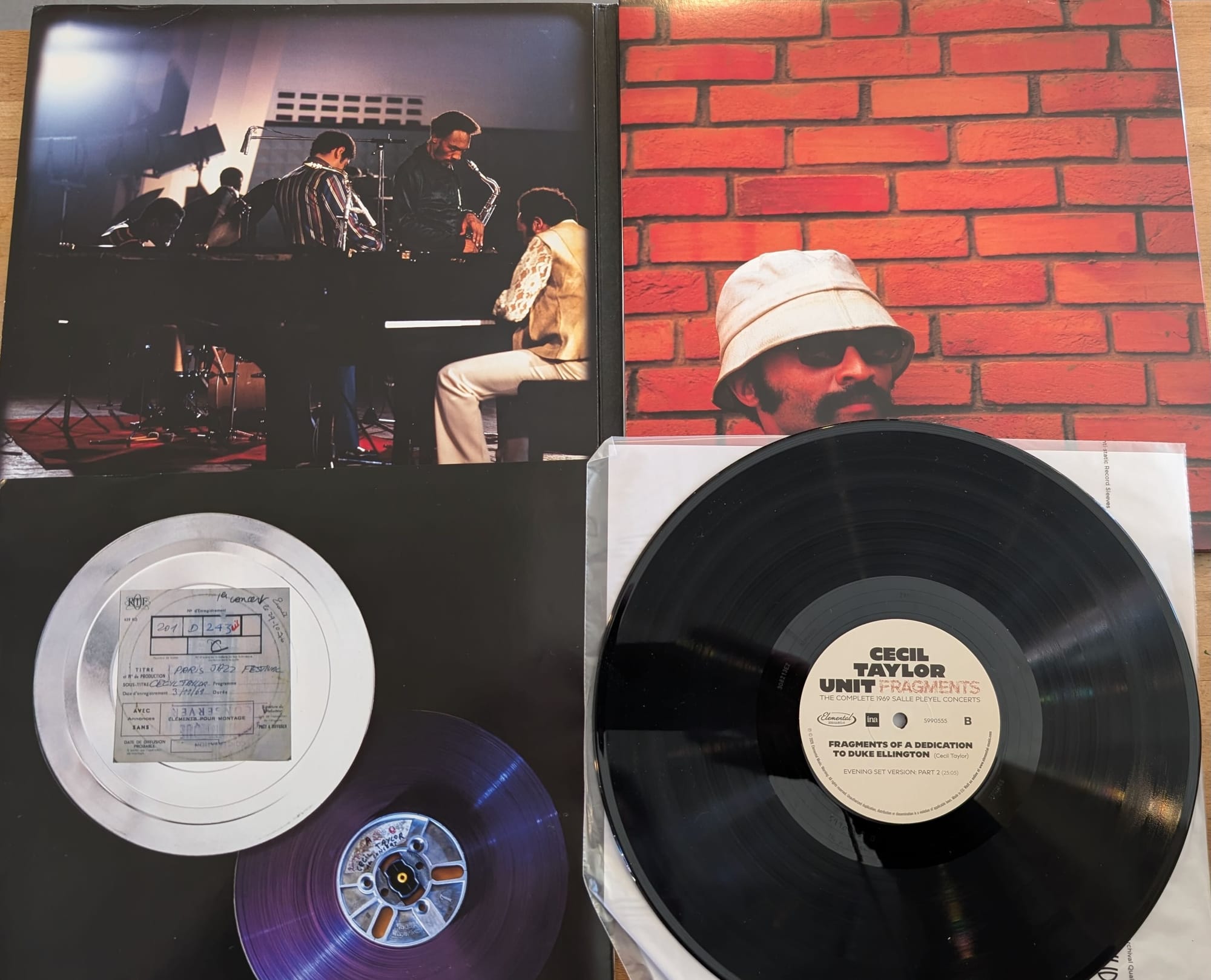
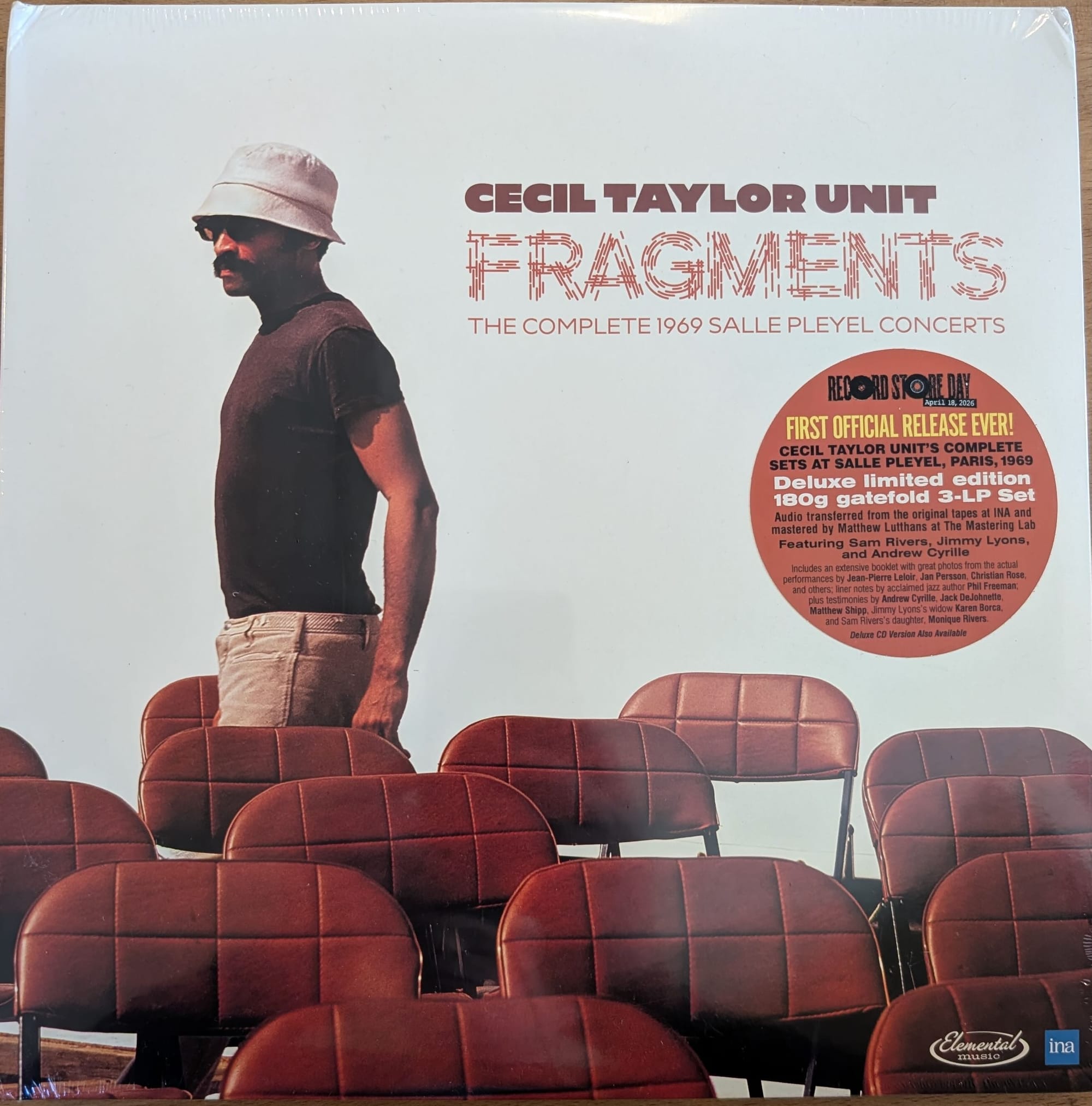
The 3-LP set being released on Record Store Day features two renditions of Taylor’s “Fragments” taken from afternoon and evening performances by the Unit as part of the eighth Paris Jazz Festival on November 3, 1969. Both sets were filmed for broadcast by ORTF, the national TV and radio agency of France, and the reels of that film have been part of the archives at Institut National de l’Audiovisuel (INA). Though footage from these sets has made its way into the world via video bootlegs and YouTube clips, the audio has never been officially released until now. The audio engineers at ORTF did a remarkable job of harnessing the power of these performances. For music that could have been marred by audio smearing or distortion, every note and drum thwack is heard loud and clear. But let’s not forget the work of Matthew Lutthans, who mastered this set from a transfer of the original tapes. It loses nothing in the translation, with every instrument kept in balance throughout, even during those stretches where Cyrille eases off the throttle to make space for Taylor’s next solo fusillade.
This is still a difficult listen due to the fact that these extended pieces had to be broken up to fit on the sides of these clean, flaw-free LPs. The evening set was a continuous 50-minute wave of sound, while the afternoon set raged for more than 90 minutes. As overjoyed as I am to have this music on vinyl, I’m likely going to spring for the forthcoming 2-CD version of Fragments so I can get fully lost in its thickets free of interruption.
Elemental Music 3-LP 33 RPM 180g black vinyl
• First official release of live recording of two sets by Cecil Taylor Unit at the Salle Pleyel in Paris on November 3, 1969
• Jacket: Direct-to-board tri-fold gatefold
• Inner sleeve: White poly-lined
• Liner notes, insert, or booklet: 16-page booklet featuring essay by journalist Phil Freeman, statements from Andrew Cyrille, Jack DeJohnette, Karen Borca, Monique Rivers, and Matthew Shipp, and many archival photos
• Source: Digital; “Audio transferred from the original tapes at INA”
• Mastering credits: “INA [Institut national de l'audiovisuel]: Digitization in high resolution, restoration & mastering by Stéphane Rives”; “Mixing and sound restoration by Marc Doutrepont (EQuuS)”; “LP mastering by Matthew Lutthans at the Mastering Lab”
• Lacquer cut by: Matthew Lutthans at the Mastering Lab, Salina, KS; “MCL” in the deadwax
• Pressed at: GZ Media, Czech Republic
• Vinyl pressing quality (visual): A
• Vinyl pressing quality (audio): A
• Additional notes: Limited to 2,500 copies worldwide. A CD version will be available on April 24.
Jane Weaver: Intianni Kesä
Reviewed by Robert Ham
Not long after Jane Weaver released her 2010 phantasmagorical folktronic album The Fallen By Watch Bird, the Liverpool artist was tapped by designer/filmmaker Paola Suhonen to appear in and provide the soundtrack for Intianni Kesä, a short film made for an art exhibition at the Amos Rex museum in Helsinki, Finland. It’s a trippy affair with saturated shots of Weaver and other women wandering through various landscapes, wearing the latest garments from Ivana Helsinki, the fashion house that employed Suhonen.
For a corporate gig like this, Weaver doesn’t compromise one iota of her well-established hypnagogic sound. Her score renders these often bucolic images in a much darker light. The music centers on her wordless, reverbed vocals floating along like an alluring siren song that will surely result in you crashing your ship on some rocky shore. But through the 25-minute work, Weaver layers in piano lines, tubular bells, synth drones, and the occasional guitar, all treated by effects to add to the ghostly, desaturated mood.
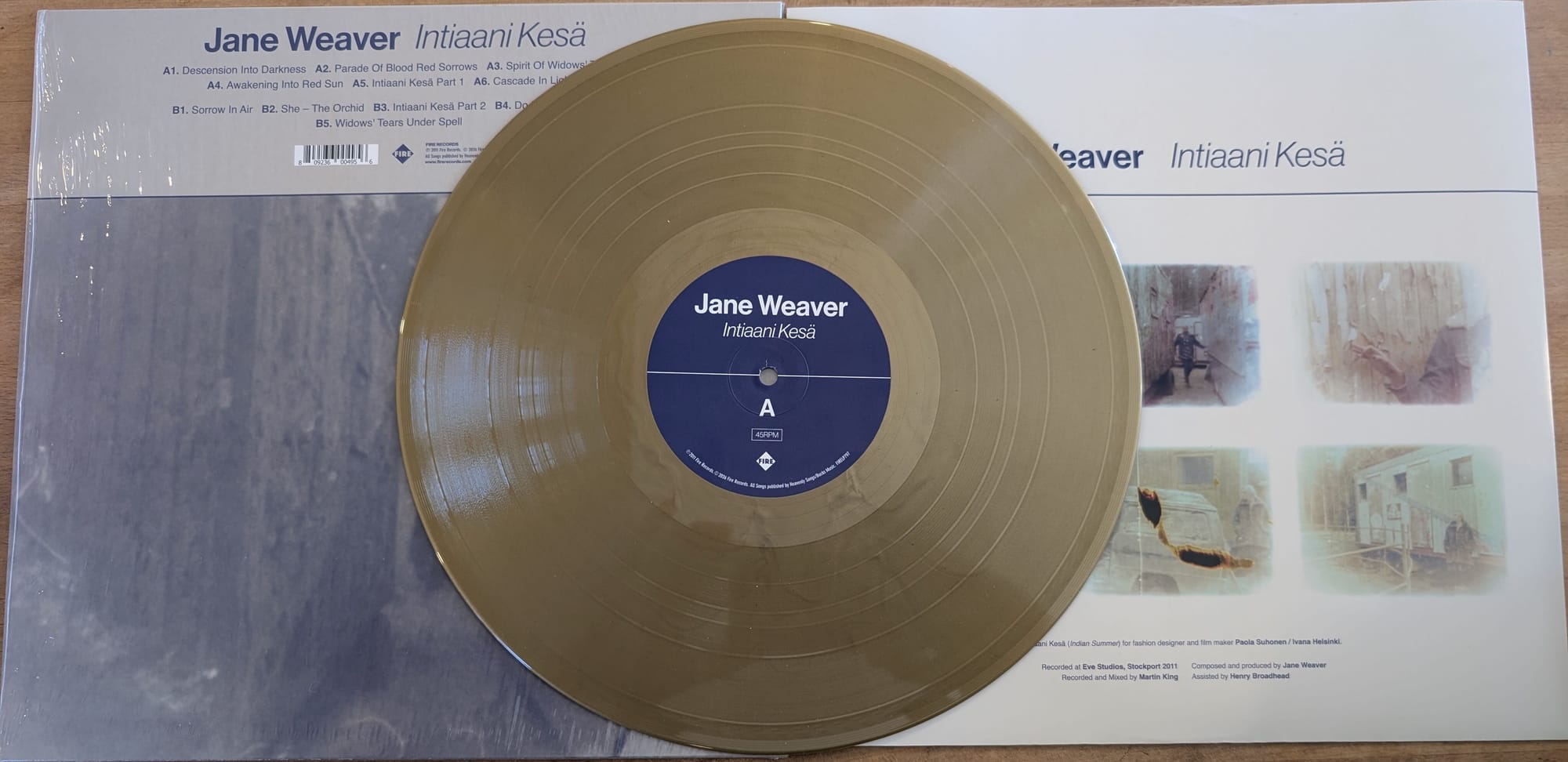
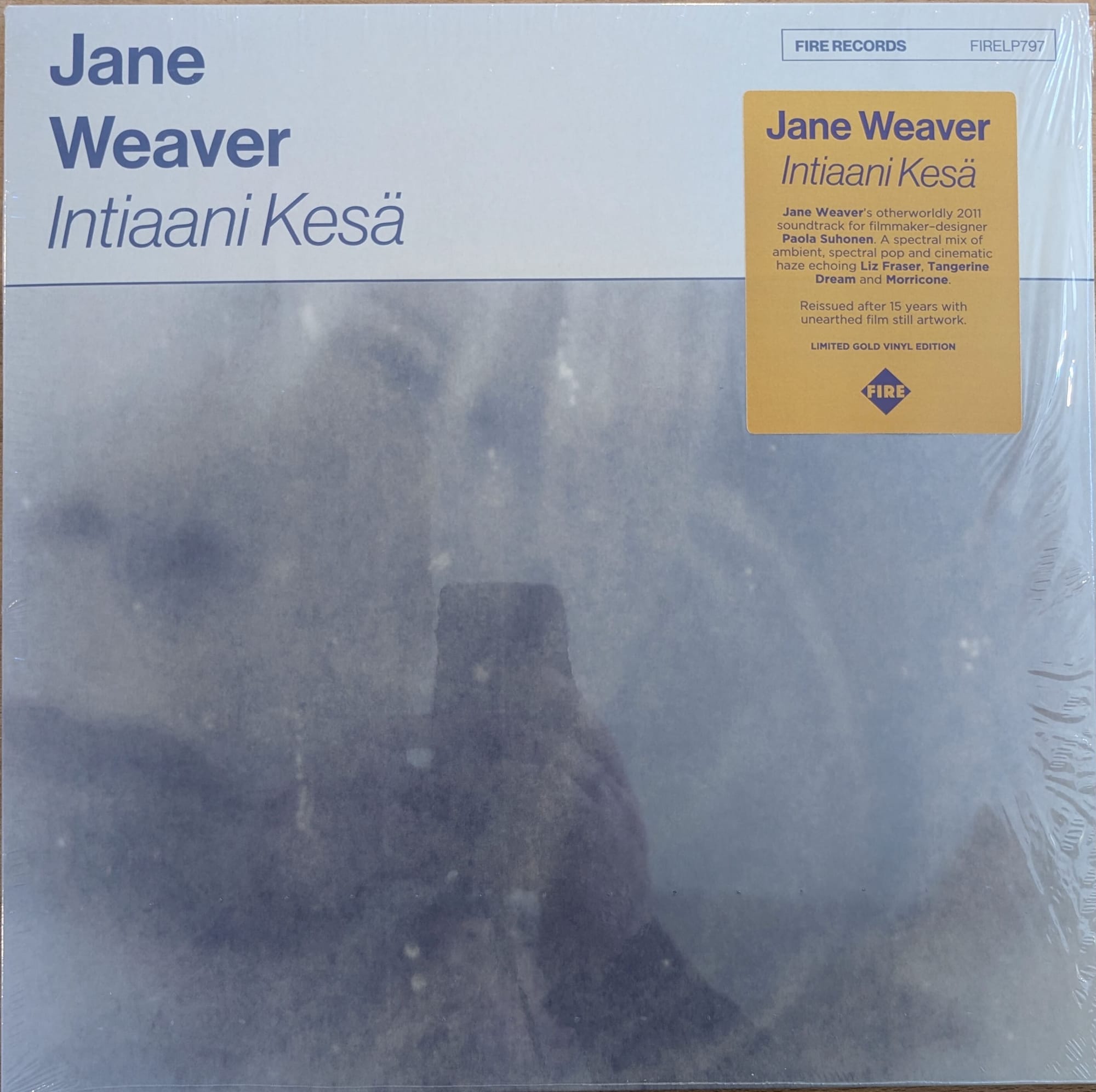
The Intianni Kesä score was previously issued on vinyl in 2013 as part of a subscription series by Finders Keepers sublabel Disposable Music. That release was a split LP with composer Pierre Raph’s score for Jean Rollin’s 1973 film La Rose de Fer. It was an equally haunting match for Weaver’s work, but it is wonderful to have her score being released on its own for Record Store Day in the UK and EU. Weaver’s current label Fire Records has treated the music very thoughtfully, cutting it at 45 RPM and spreading it across both sides of an LP to help draw out the low drones and the insinuating undertones that got somewhat buried in the original release. The music becomes even more of a spectral affair that works equally well as the background music for an unhurried Sunday morning or as part of a Halloween soundtrack.
Fire 1-LP 45 RPM gold vinyl
• Reissue of Jane Weaver’s 2011 soundtrack for the short film Intianni Kesä
• Jacket: Direct-to-board single-pocket
• Inner sleeve: Printed paper with album credits and still photos from the film
• Liner notes, insert, or booklet: None
• Source: Digital
• Mastering credit: None
• Lacquer cut by: Martin Krafft at Optimal Media, Germany; “KR” in the deadwax
• Pressed at: Optimal Media, Germany
• Vinyl pressing quality (visual): A
• Vinyl pressing quality (audio): A
• Additional notes: None.
Brian Wilson: On Tour 1999–2007
Review by Robert Ham
With the passing of Brian Wilson last year, I’m starting to fear that the late artist’s estate is going to do with his solo music what the various stakeholders have done with the recorded legacy of his band the Beach Boys: find every which way to release and repackage it from now until the end of time. The concern has only grown with the arrival of this nice but inessential collection of live recordings dropping on Record Store Day.
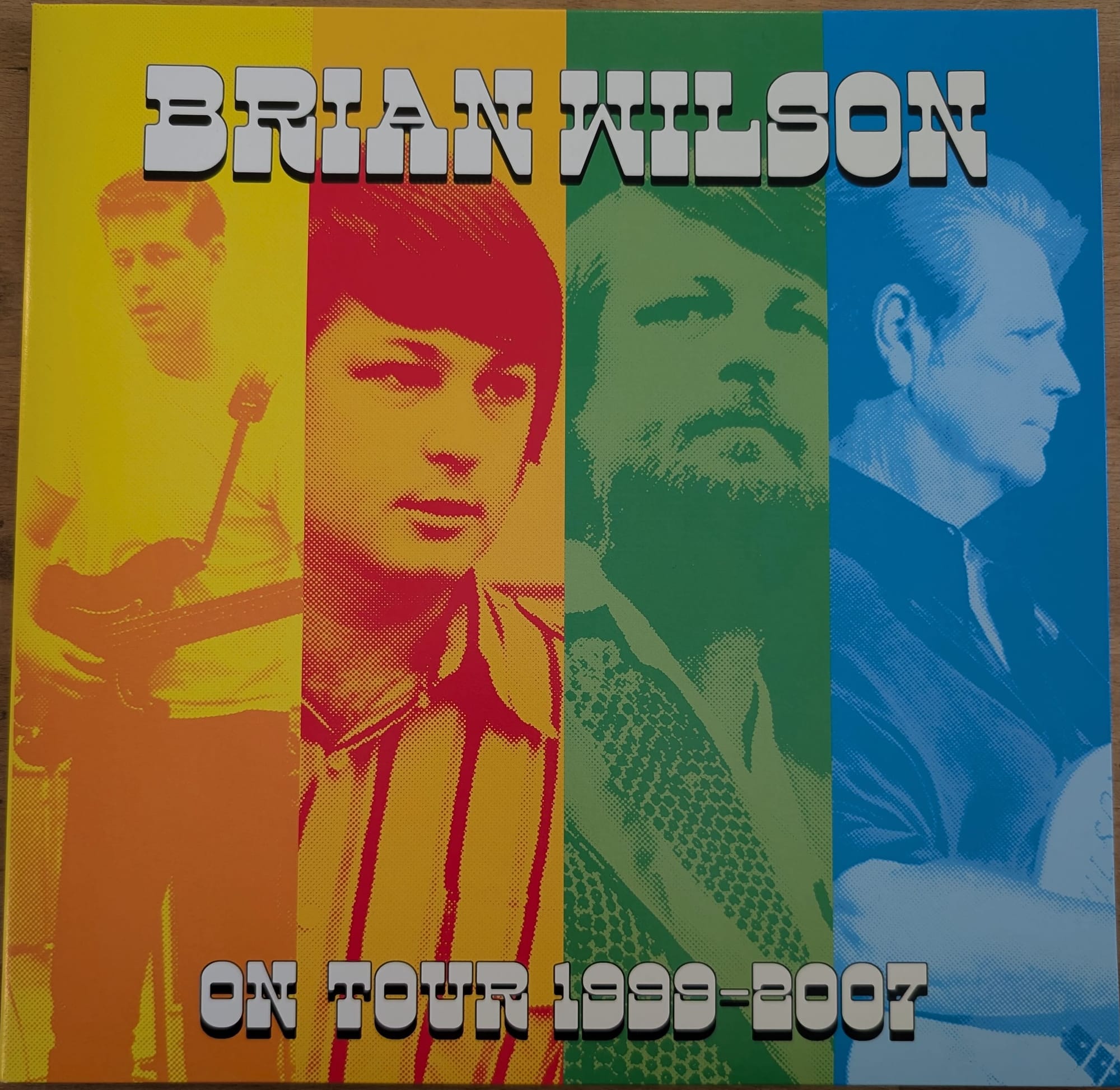
As the title spells out, this compilation plucks from various performances Wilson gave over an eight-year stretch. It kicks off with a warm rendition of “This Could Be the Night,” a Brian Wilson homage written by Harry Nilsson and Phil Spector that Wilson himself recorded for a 1995 Harry Nilsson tribute album. From there, it meanders with no rhyme or reason through performances of deep cuts and oddities ranging from “Busy Doin’ Nothin’,” the song from the Beach Boys 1968 album Friends whose lyrics include directions to Wilson’s house, to a take on the Beatles’ “She’s Leaving Home,” to “Melt Away,” a track from his 1998 self-titled solo LP.
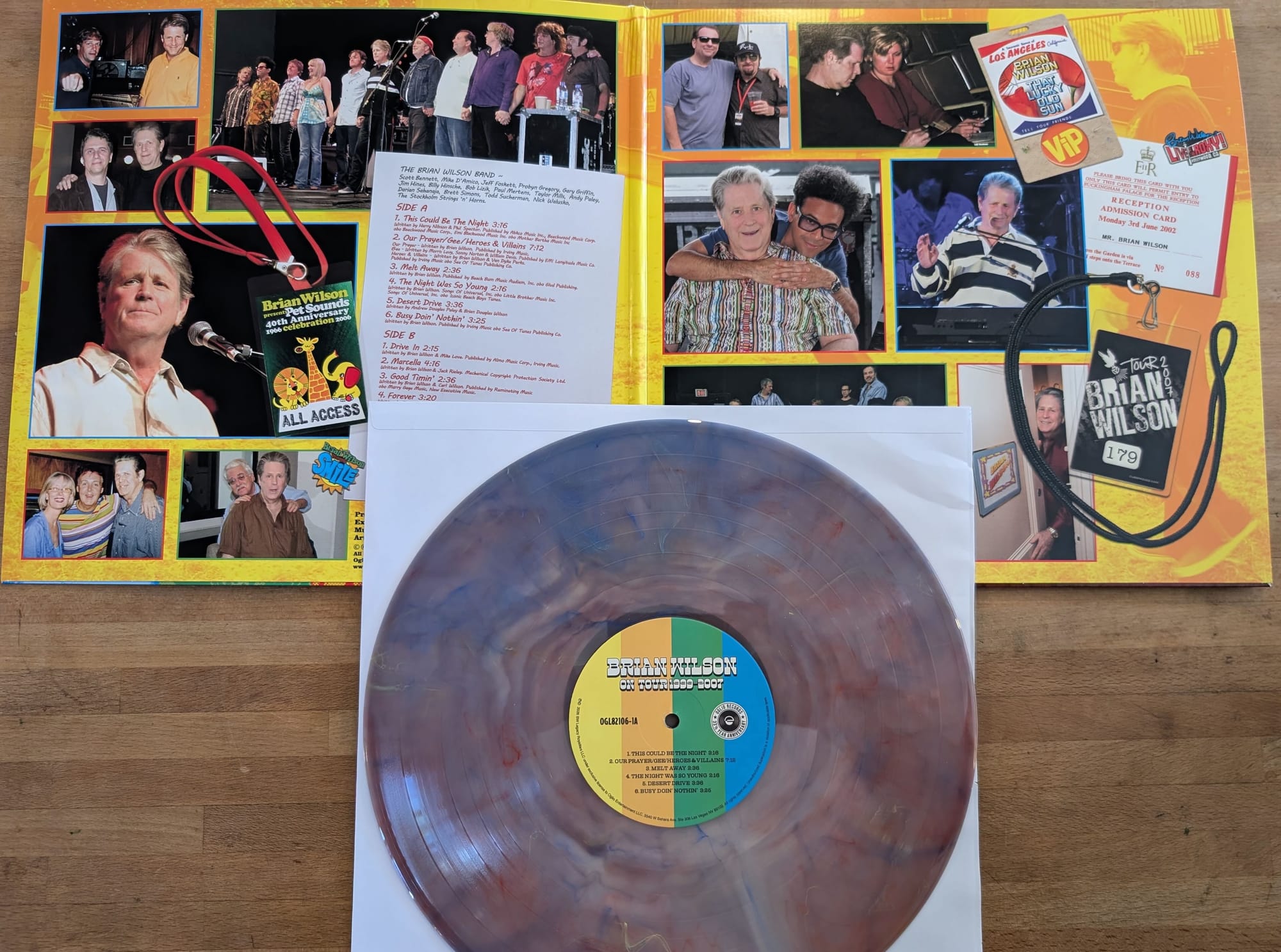
The good news is that Wilson is in fine form throughout, years away from the anodyne sets he would dutifully plod through toward the end of his life. He performs each song on this collection with enthusiasm and audible joy. Some moments of stage banter make their way into the mix, often with Wilson thanking the audience profusely and directing the crowd’s attention to his onstage band. To that point, the musicians backing him up are as good as Wilson says, exactingly capturing the details of the studio versions of these songs, particularly on their faithful run-through of “Our Prayer/Gee/Heroes & Villains” from Smile.
Outside of serious Brian Wilson fanatics, though, I’m not sure there’s an audience for this. The casual Beach Boys lover is hardly going to recognize the material here. And I’m sure most Wilson heads would rather have the full set from one of these shows rather than this scattershot selection. My guess is that those folks will be skipping over this release and putting a copy of Wilson’s 1998 solo album Imagination, also dropping on RSD, in their shopping baskets instead.
Oglio 1-LP 33 RPM clear marbled vinyl
• Live recordings of Brian Wilson from 1999 to 2007
• Jacket: Direct-to-board gatefold
• Inner sleeve: White poly-lined
• Liner notes, insert, or booklet: Photos and album credits inside gatefold
• Source: Unknown, assumed digital
• Mastering credit: Harrison Hunt, Well Made Music, Bristol, VA
• Lacquer cut by: Harrison Hunt, Well Made Music, Bristol, VA; “HJH” in the deadwax
• Pressed at: Unknown
• Vinyl pressing quality (visual): A
• Vinyl pressing quality (audio): A
• Additional notes: None.
Yes: Tales from Topographic Tours
Review by Ned Lannamann
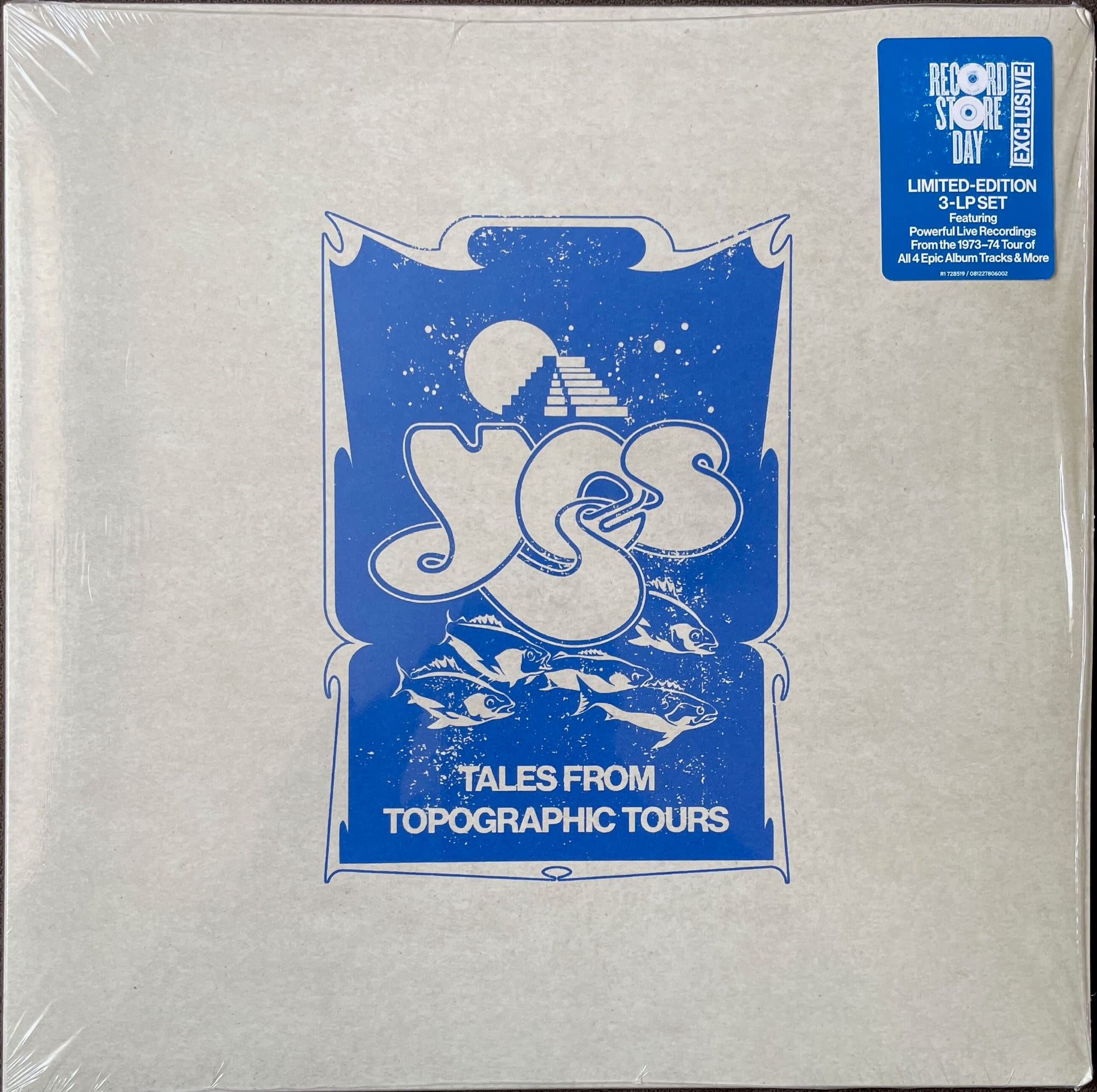
Yes’s 1973 double album Tales from Topographic Oceans has become shorthand for prog excess, but its expansive indulgence is, in my mind, all part of the silly fun. Sure, Sides 2 and 3 are not nearly as strong as Sides 1 and 4, but the bizarre avenues of musical excursus and cosmic gobbledegook that the members of Yes travel down are sui generis and, in this day and age, almost breathtaking in their sheer, pigheaded extravagance. Rhino Records have been revisiting the English prog band’s back catalog via a series of huge super-deluxe editions, and in February, they released the hugest and most super-deluxe of them all: a 12-CD expansion of Tales from Topographic Oceans that also included the album on two pieces of vinyl and a multichannel Blu-ray disc.
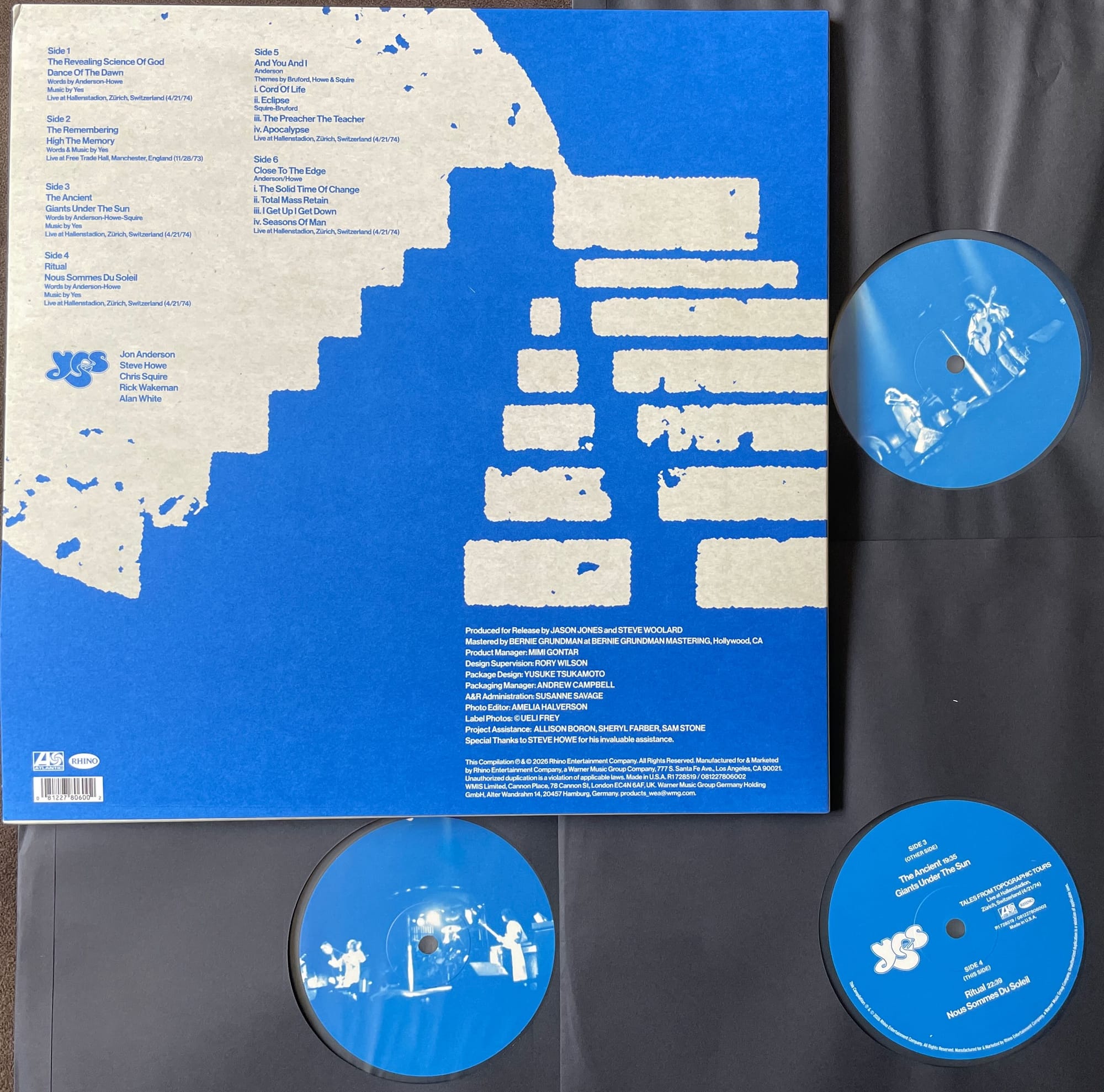
Three of those CDs contained live recordings from the Tales from Topographic Oceans tour, and now a good chunk of those live recordings come to vinyl for Record Store Day. The 3 LPs contain all four side-long pieces that make up the Topographic album, plus renditions of two songs from their previous studio album, 1972’s Close to the Edge. All of the performances, except one, come from a show at Zürich’s Hallenstadion on April 21, 1974; “The Remembering” comes from a November 28, 1973, show in Manchester, England, that was played before the album’s release date (“The Remembering” was cut from the setlist before the tour made it to Switzerland).
Dyed-in-the-wool Yes fanatics have likely heard the CD versions of these live recordings by now, so they already know that they’re not particularly fantastic-sounding. It sounds to me like they come straight from the soundboard, rather than from a multi-track recording. The audience vanishes at times—particularly during guitarist Steve Howe’s solo showcase on “The Ancient”—and the sound can get washy, as during drummer Alan White’s solo on “Ritual,” when the cymbals eat up all the high frequencies. “The Remembering,” from Manchester, has slightly inferior sound to the Zürich tracks, too, sounding like a very good bootleg or radio broadcast. In all, it’s a mediocre recording, although it’s not really a whole lot worse than their 1973 live album Yessongs, which is also strangely poor-sounding. (The archival live shows that Yessongs was taken from actually sounded wonderful when they were remixed for the Progeny box set.)
Recording limitations aside, it’s a hoot to hear Yes take on this mammoth, zany work in front of a crowd. There are moments of graceful beauty, as on “Ritual,” and some prog-rock zazz, as on “The Revealing Science of God,” but you can also hear how these guys use the same building blocks as every other rock band to make their mystical-sounding music: a synth overheats and goes out of tune here, or a vocal harmony is fluffed there, or a particularly heroic guitar run doesn’t quite make its mark. But the band is already on to the next section, plowing ahead earnestly on their vast undertaking. Side 3’s track, “The Ancient,” is the most digressive and uninteresting stretch on the studio album, but it’s maybe the highlight here, where the band really explores the outer limits of this whole rock ’n’ roll thing. Perhaps playing the piece night after night allowed them to understand how to tame its wildness and make it work for them, as they did on 1974’s brilliant “The Gates of Delirium,” from their next album Relayer, perhaps their most progressive and rewarding album.
The package is—I hope—designed to look like a bootleg. All three LPs slide into a barebones single-pocket unfinished jacket with a minimalist blue-and-gray design. This feels weirdly skimpy for such excessive music, although I suppose one could argue it allows the listener to focus on the music and accept it at face value, something that works in Topographic’s favor. Still, some legible band photos (there are murky ones on the record labels) and relevant liner notes would have been nice. Mastering is credited to Bernie Grundman, who worked on the CD box set and likely prepped the digital files used here; there are no initials in the deadwax. One of my discs was dished enough to require a record weight to keep it spinning correctly, but otherwise the pressing was decent enough. Due to the sound of the recording and the, um, efficient packaging, this won’t be mistaken for a major statement in the Yes catalog—and maybe a great live record can’t be made from the existing Topographic tour recordings. But this music is a kooky, otherworldly place to spend a couple of hours in, even with all of these compromises. And for everyone who ever said the overly extended, absurdly ambitious Tales from Topographic Oceans could’ve used some compromises, well, here you are.
Rhino 3-LP 33 RPM black vinyl
• Live recordings from Yes’s 1973–74 tour, with five tracks recorded on April 21, 1974, in Zürich, Switzerland, and one from November 28, 1973, in Manchester, UK; these were released on CD on 2026’s 12 CD/2 LP/1 Blu-ray super-deluxe edition of Tales from Topographic Oceans
• Jacket: Direct-to-board single pocket
• Inner sleeve: Black poly-lined
• Liner notes, insert, or booklet: None
• Source: Digital
• Mastering credit: “Mastered by Bernie Grundman at Bernie Grundman Mastering, Hollywood, CA”
• Lacquer cut by: no markings in deadwax; likely an anonymous DMM cut made at GZ Media, Czech Republic
• Pressed at: GZ’s Precision Record Pressing, Burlington, Ontario, Canada
• Vinyl pressing quality (visual): B (disc 3 was badly dished)
• Vinyl pressing quality (audio): B+ (some minor noise)
• Additional notes: Limited edition, per hype sticker.
Ned's listening equipment:
Table: Technics SL-1200MK2
Cart: Audio-Technica VM540ML
Amp: Luxman L-509X
Speakers: ADS L980
Robert's listening equipment:
Table: Cambridge Audio Alva ST
Cart: Grado Green3
Amp: Sansui 9090
Speakers: Electro Voice TS8-2