Reviews: Woo | Cub

Hello, and happy Wednesday to you and yours. For the first time in over a week, we’ve got reviews of some fresh reissues that are not part of the Rhino Reserve series. Today we’re digging into a couple re-releases that hit record store shelves this past Friday, and are both worthy additions to your vinyl library.
Before you scroll down to check out these reviews, we would be remiss if we didn’t mention that they just recently announced the date for this year’s Record Store Day. Make your plans now to line up in front of your favorite local indie shop on the morning of April 18, 2026. What we can’t tell you is what special releases are dropping that day, but if the past is any indication, that big reveal on those will likely come in early February. We’ll be sure to update you as soon as we have that information on hand.
Finally, you might be sick of this, but we can’t let you forget about this month’s vinyl giveaway. If you are part of our paid subscription tier, you are eligible to enter the contest that could net you test pressings of Universal’s Definitive Sound Series releases of R.E.M.’s Chronic Town EP and Murmur. If you don’t want to miss out, click below.
 Ned Lannamann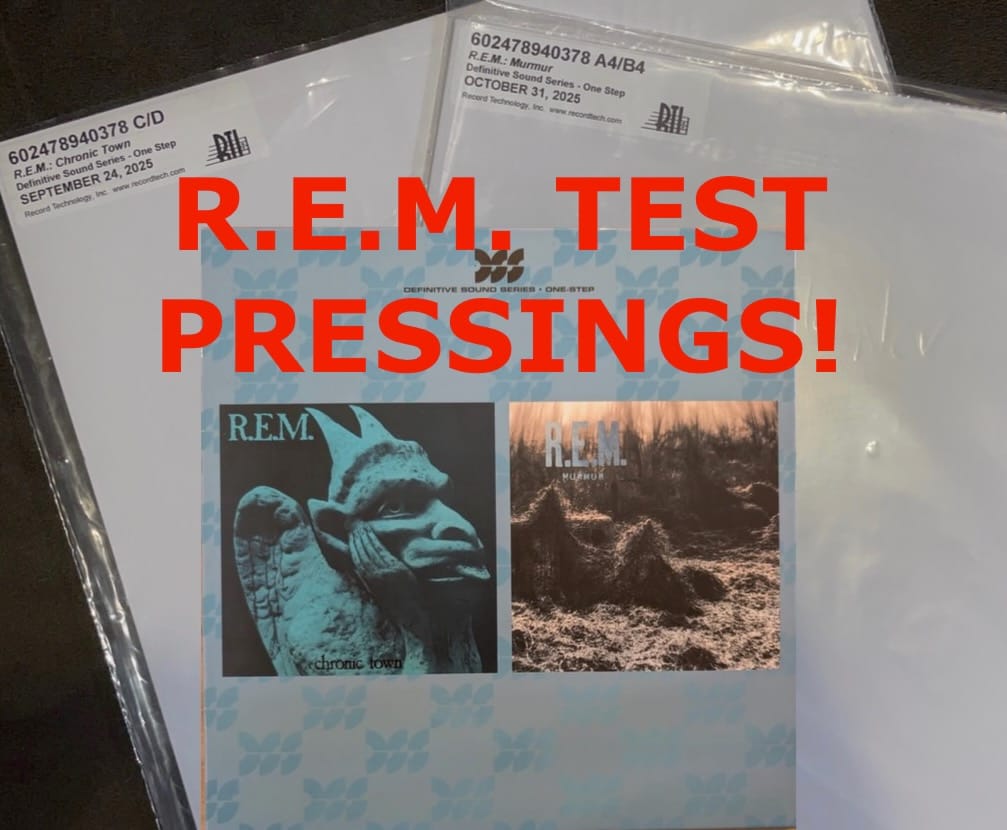
Can you dig it? I know that you can. And with that out of the way, let’s get into some reviews.
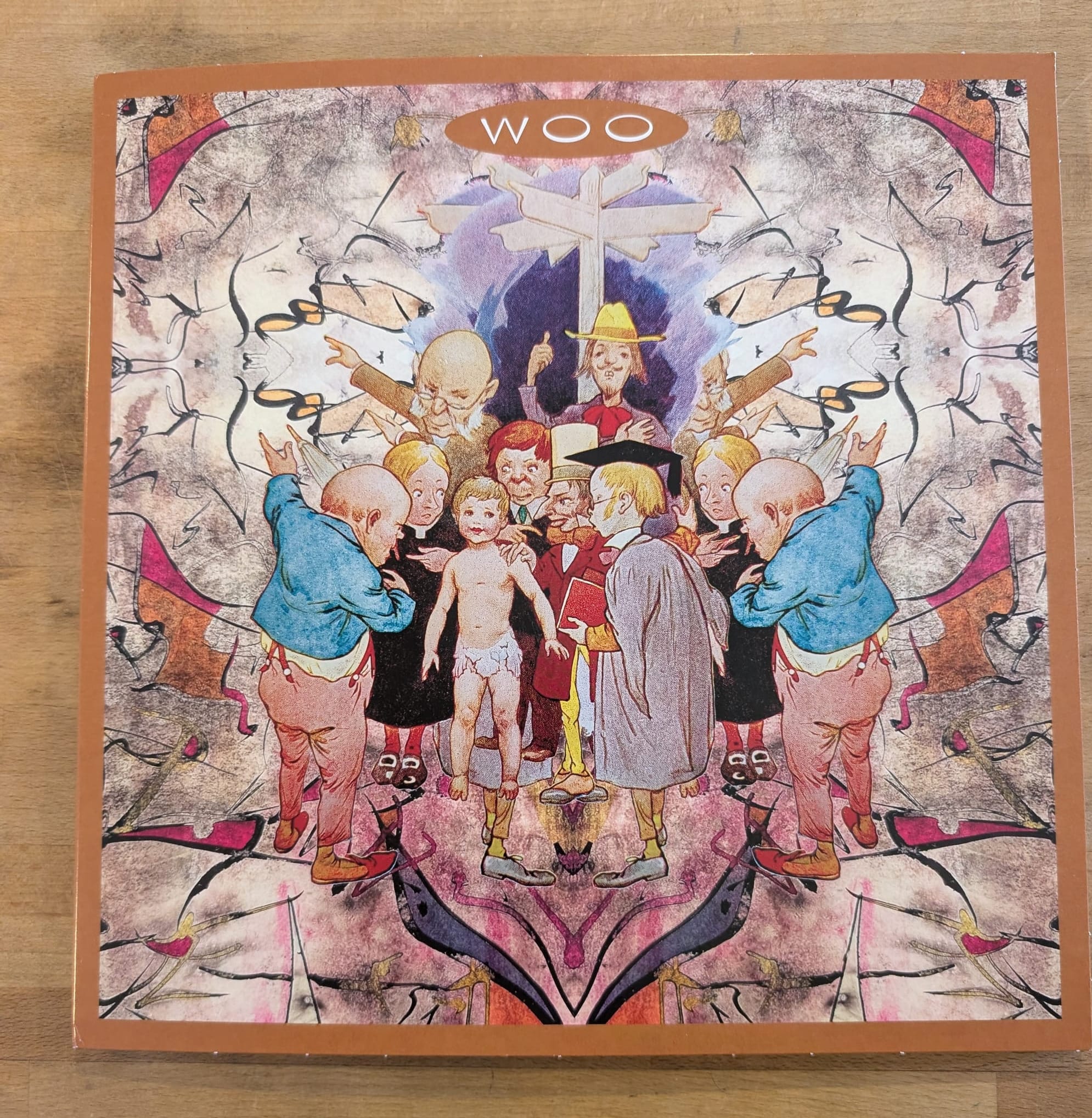
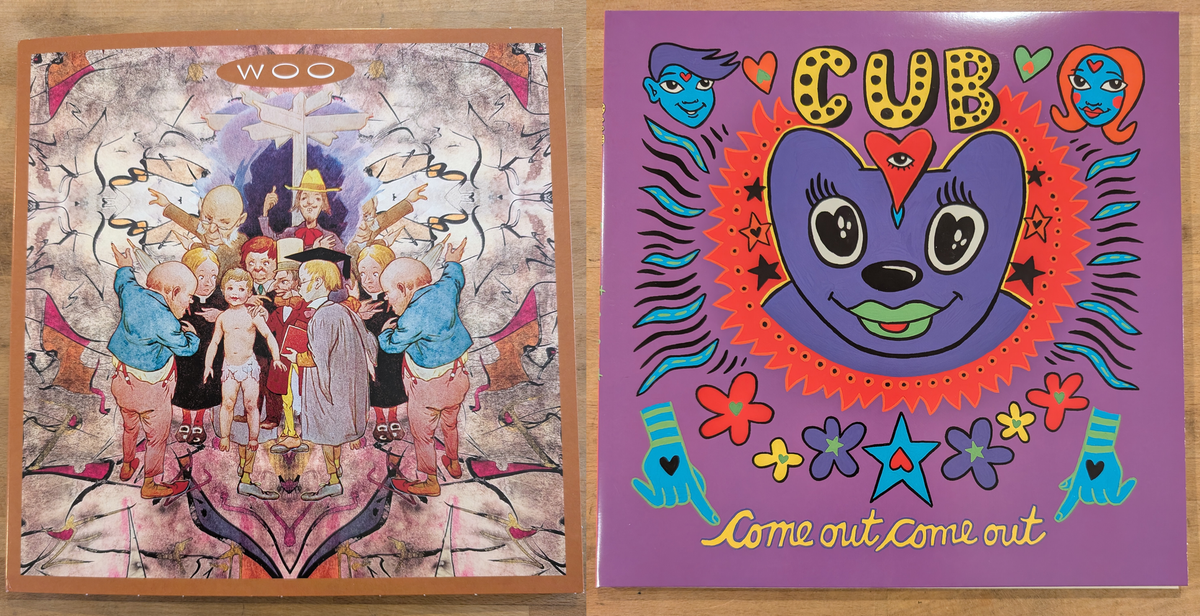
Woo: Whichever Way You Are Going, You Are Going Wrong
We may have a put-upon neighbor to thank for the sound of Woo, the musical project of brothers Clive and Mark Ives. According to Camilla Aisa’s liner notes for this deluxe reissue of the group’s 1982 debut album Whichever Way You Are Going, You Are Going Wrong, when the two men shared a studio space in southwest London’s Putney district, they had a downstairs neighbor who would express her displeasure at the volume of the pair’s music by knocking on her ceiling with a broom handle. “Drums became triangles, clarinets were played real breathy, guitars were plucked, not strummed,” Aisa writes. “Even hitting the keyboards too hard had to stop.”
Whatever the circumstances behind the creation of Whichever—available once again on remastered vinyl with a bonus 12-inch EP of rare tracks—the music sounds like it was made on the sly not in an upstairs flat, but in a candlelit room tucked away behind a bookcase in a manor house. With each track, I feel like I’m being let in on a little secret , as if I found a handmade cassette in a dusty box rather than on a mass-produced LP set.
In one aspect of Woo’s history, I’m not far off. The Ives brothers spent the better part of five years recording rough ideas and more fully fleshed-out songs onto a TEAC four-track tape machine in that Putney flat, some of which they’d collect onto hand-dubbed compilation tapes that they’d offer to friends and family. One such associate was an unnamed A&R rep who was a pal of Clive Ives and played some of Woo’s home recordings to Mike Alway, the future founder of indie label él Records. Alway flipped over what he heard and visited the Ives boys, offering his help. Together, they culled the best 12 tracks from the musicians’ archives and released Whichever Way You Are Going on Woo’s own The Sunshine Series imprint.
Though taken from a variety of different session dates between 1978 and 1981, the album feels surprisingly cohesive. The brothers’ first musical north star was the Beatles, which comes through on tracks like “A Wave” and the title track, although the rest reveals a wider scope of influence, including trad jazz, the psych-folk of Fairport Convention and the Pentangle, and early electronic music. On the appropriately titled “Wah Bass,” the titular instrument is surrounded by a wash of funk guitar licks, synth swells, and Bert Jansch-like acoustic guitar plucking. “Razorblades,” meanwhile, lets a minimalist drum machine pattern roll along while Mark Ives honks away on a clarinet and Clive hits a few chords on a Roland SH-3A modular synth. It’s a hypnagogic state made musical, and the kind of haunting sound that presaged Vini Reilly’s earliest efforts as Durutti Column and the bulk of the Ghost Box catalog.
The pieces on the bonus disc included in this set span a wider time period than the material on Whichever, including tracks recorded as recently as 1990, but they were well chosen as a complement to the album. Anyone of them could have been worked into the running order of Whichever without upsetting the vibe. If anything, they have a bit of a sonic advantage, as the bonus tracks are cut at 45 RPM, giving them a nice low-end boost and a broader soundstage.
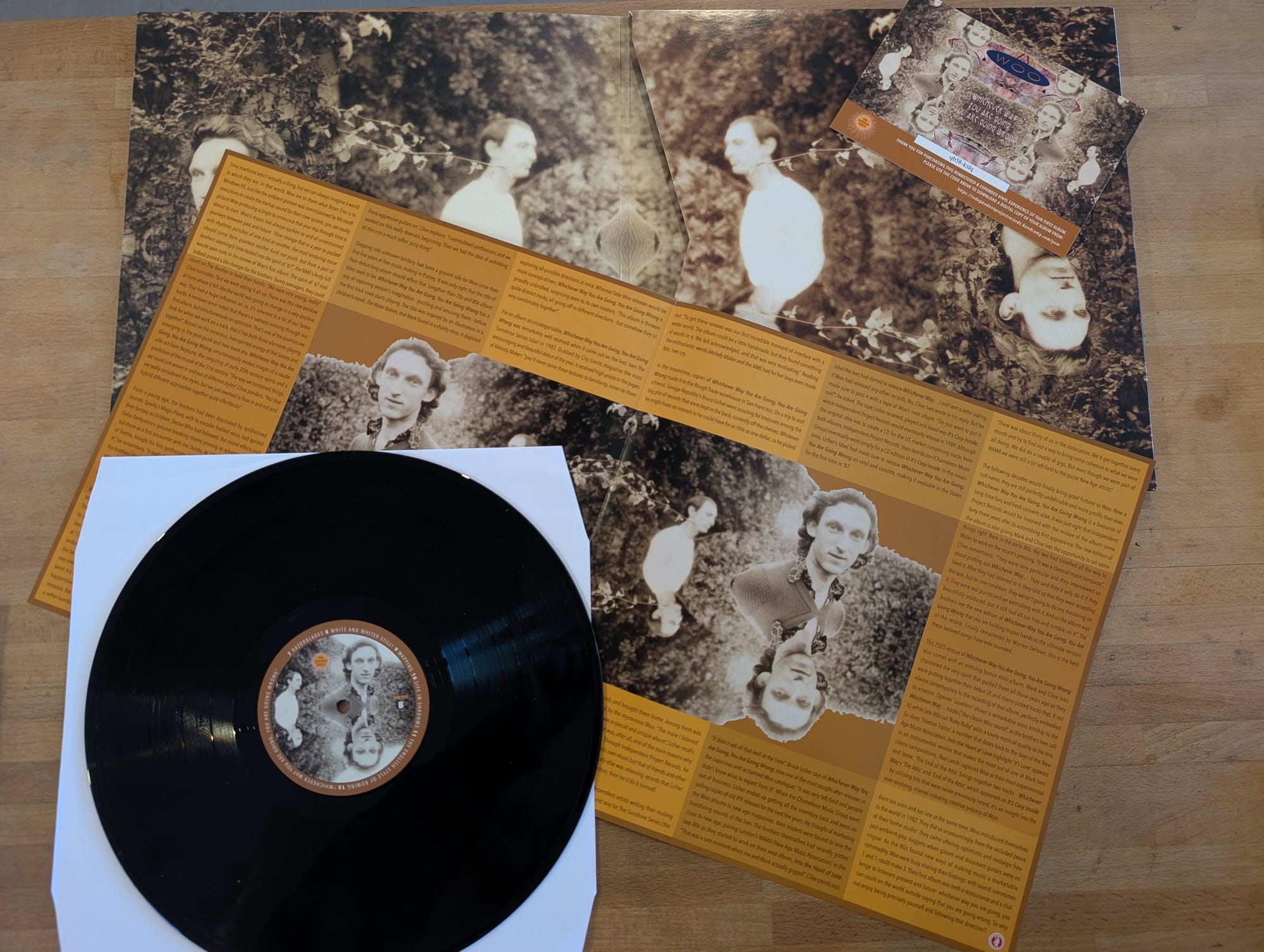
I only wish I knew who to thank for how well all of the music is presented on this reissue. The insert for the reissue includes credits for the admittedly fantastic art and design for this deluxe package, but nothing for the person who remastered the audio or who cut the lacquers. All I could suss out from the matrix numbers in the deadwax was that it was pressed at GZ Media in Czechia. Whoever was responsible deserves a hell of a lot of credit. The album was re-released by Independent Project Records back in 1987 with Wally Traugott using the original tapes, but I have to imagine that all this material has been digitized in the ensuing years for CD issues that have arrived in 2003 and 2013. Whatever the provenance of the tracks on this new version, the remaster is absolutely lovely, maintaining the lo-fi haze of the original recordings while giving it a nice balanced lift that helps peel back some of the layers of overdubs to let individual instrumental performances drift into focus.
The re-release of Whichever Way You Are Going, You Are Going Wrong is, without question, perfectly done. The music is presented in a thoughtful remaster on flat, noise-free vinyl and the records themselves are packaged in a gorgeously designed sleeve. And they top it off with liner notes that put it all in the proper historical context. It's the fitting way to honor artists that continue to be a still-growing influence on fellow experimental musicians and home-recording prodigies—downstairs naysayers, be damned.
The Sunshine Series/Independent Project Records 1-LP 33 RPM/1-LP 45 RPM black vinyl
• Expanded reissue of Woo’s 1982 debut album with second disc of previously unreleased rarities
• Jacket: Direct-to-board gatefold
• Inner sleeve: White poly-lined
• Liner notes, insert, or booklet: Four-panel insert with liner notes by Camilla Aisa
• Source: Unknown, assuming digital
• Mastering credit: Unknown
• Lacquer cut by: Unknown
• Pressed at: GZ Media, Czechia
• Vinyl pressing quality (visual): A
• Vinyl pressing quality (audio): A
• Additional notes: Clear vinyl version also available
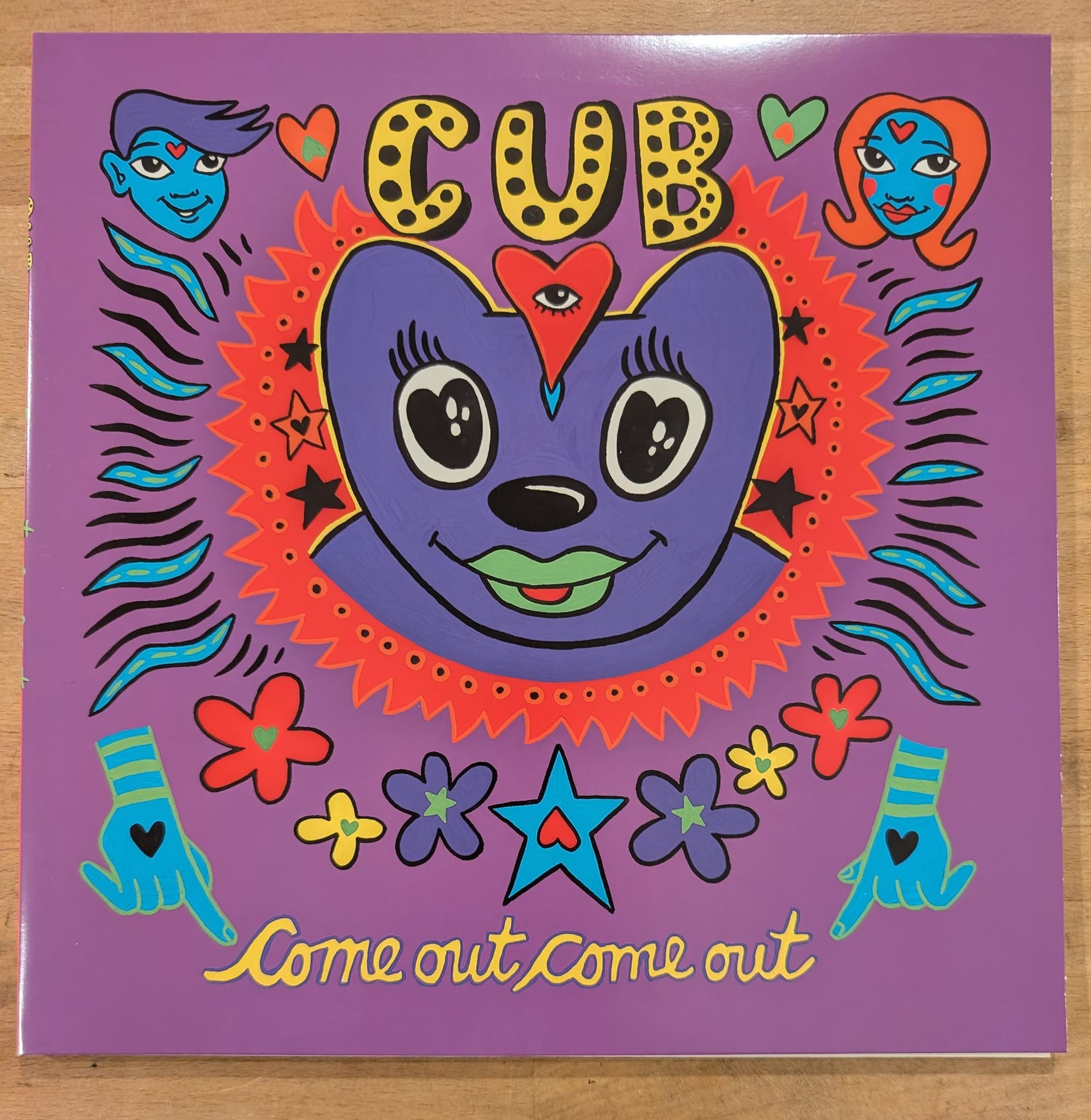
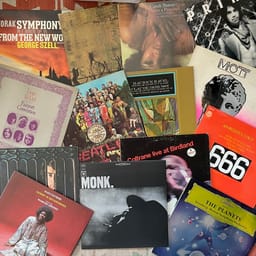
Cub: Come Out Come Out
The deadwax for each copy of Mint Records’ reissue of Come Out Come Out, the 1995 album by Canadian trio Cub, features the usual matrix numbers and pressing plant info, but also includes a single word: “cuddlecore.” If you’re unfamiliar with the term, it came about in the ’90s as a genre descriptor for a small faction of indie artists whose sound and aesthetic ran counter to the hyper-masculine approach of celebrated acts like Fugazi, Nation of Ulysses, and the Afghan Whigs. Cuddlecore bands were formed from the same punk and underground roots as those all-male squads but were equally inspired by the ’80s jangle pop on UK labels like Sarah and Postcard and ’60s girl groups like the Cookies and the Blossoms.
Cuddlecore was a decent enough catchall term for bands like the Softies, Tullycraft, and Cub, and the artists that fell under its umbrella seemed to embrace it, but it always felt infantilizing to me—an easy way to dismiss the music out of hand for being too cutesy or twee. What the word misses out on is the grit and darkness that often wends its way through much of the work of these acts.
Cub embraced that duality, especially on Come Out Come Out. Alongside sweet-as-candy love songs like “New York City” and “I’m Your Angel” are tracks like “My Flaming Red Bobsled,” which uses the titular winter sports vehicle as a metaphor for singer/bassist Lisa Marr’s deep-seated anger, the lovers-on-the-lam anthem “Life of Crime,” and the revenge fantasy of “Voracious.” Make no mistake, this is pure pop music through and through, but it's all cut with a bracing acidic tang.
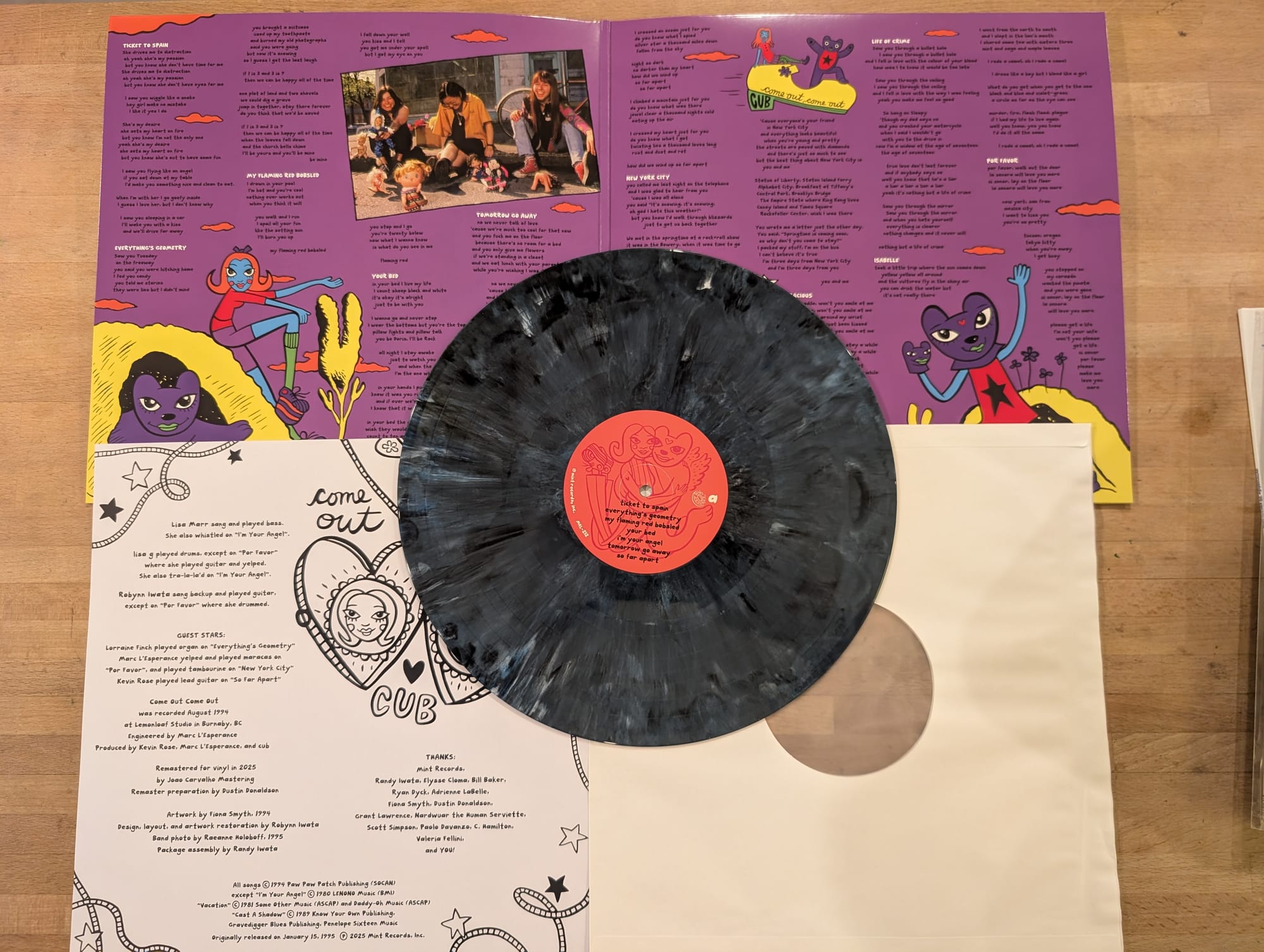
The music sounds better than ever on this new edition of Come Out Come Out. Mint Records thoughtfully opted to not recreate the album’s original format of a triple 7-inch single set, and instead pressed this up as a single LP. The decision meant reconfiguring the running order of the songs to better fit the 12 album tracks and a fun bonus track (a cover of Beat Happening’s “Cast a Shadow” performed live with an unknown Italian harmonica player) over two vinyl sides. The decision may mess with the nostalgic memories of fans familiar with the original vinyl edition or its CD counterpart, but it is all to the benefit of the album. The shifts in tempo and mood flow much more smoothly here, culminating in the perfect pairing of their fuzzy original “Por Favor” and a hopped-up cover of the Go-Go’s “Vacation.”
João Carvalho, the engineer responsible for the remaster of Come Out Come Out, deserves a share of the credit here as well. The previous editions of the album were pleasant enough but rather slight-sounding. The emphasis was on Robynn Iwata’s guitar and vocals, with Lisa Nielsen’s drums often sounding like they were made out of cardboard and Marr’s bass dulled in the mix. Carvalho balances everything out perfectly, bringing the rhythmic punch back to these songs and giving listeners the feeling of being in the room with these women as they pounded out these fantastic songs.
The only thing missing is a reproduction of the original insert folded in with each copy of the original triple 7-inch release, which includes copious acknowledgements and, notably, a photo of Cub hanging with Fugazi’s Ian MacKaye. The picture served as a reminder of how much respect even the least cuddly musicians had for these women. A snapshot like that might be just the thing to help turn some naysayers on to Cub. But even without it, this wonderfully produced reissue of one of the band’s best records will likely be enough to seal the deal.
Mint Records 1-LP 33 RPM blue splatter vinyl
• Reissue of Cub’s 1995 album with rearranged tracklisting
• Jacket: Direct-to-board gatefold
• Inner sleeve: White poly-lined
• Liner notes, insert, or booklet: Single-page insert with album credits
• Source: Unknown, likely digital
• Mastering credit: João Carvalho at João Carvalho Mastering, Toronto, Ontario
• Lacquer cut by: Unknown
• Pressed at: GZ Media, Czechia
• Vinyl pressing quality (visual): A
• Vinyl pressing quality (audio): A
• Additional notes: Originally released as a triple 7-inch set.
Listening equipment:
Table: Cambridge Audio Alva ST
Cart: Grado Green3
Amp: Sansui 9090
Speakers: Electro Voice TS8-2