Review: Pink Floyd in 1975

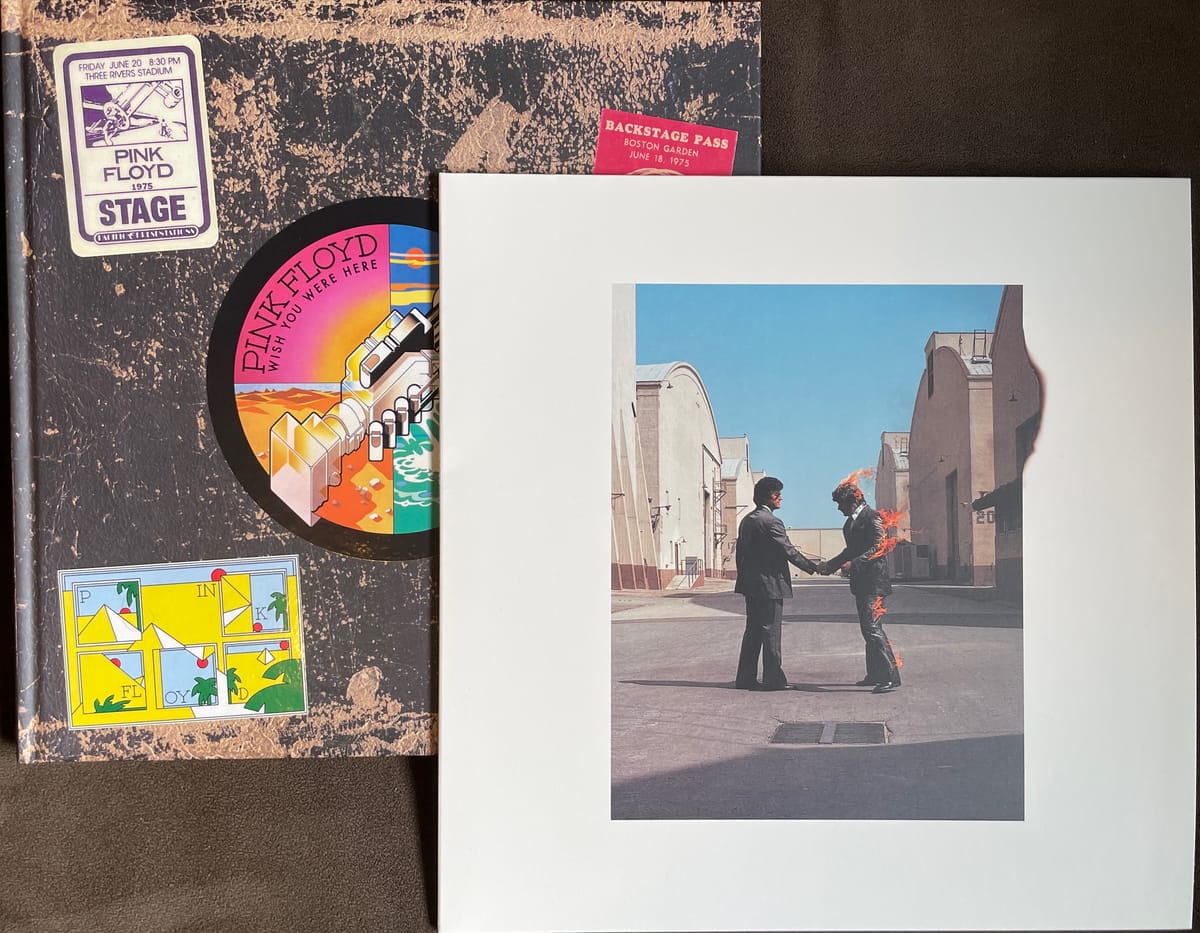
We shake hands with the 50th anniversary deluxe edition of Wish You Were Here.
The new year is plowing along, but we’ve still got some last flashes of 2025 to catch, including the new deluxe reissue of Pink Floyd’s Wish You Were Here. I’ll get to that in a second, but first I wanted to announce our January vinyl giveaway for paid subscribers!
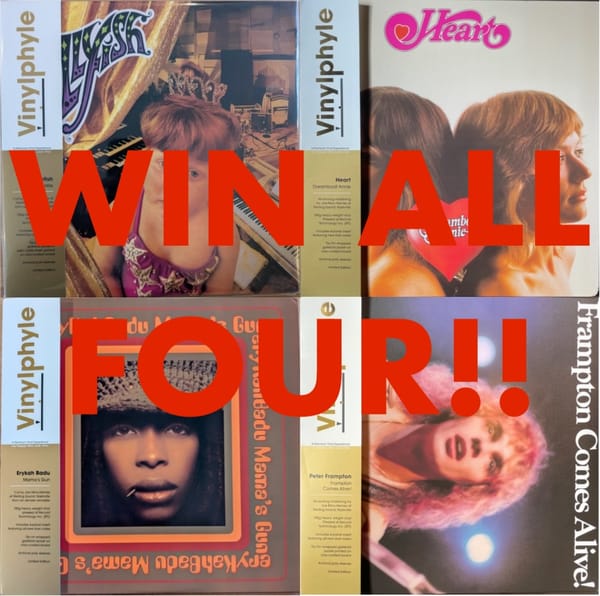
Every month, we’re giving away some choice vinyl to one lucky subscriber on our paid tier. Last month we gave away a killer Neil Young box set. And for January, we’re giving away a set of test pressings for the amazing, all-analog one-step pressings of REM’s Chronic Town and Murmur from Universal’s Definitive Sound Series.
This double LP has won rave reviews from every corner of the vinyl world—including right here on The Vinyl Cut—and it really is one of those things that has to be heard to be believed. We’ll have full details on the giveaway in the coming days, including how to enter, but for now we wanted to encourage anyone who might be interested to think about upgrading to our paid tier. Not only do you get the opportunity to win some pretty excellent vinyl, but you’ll support our work and always have full access to everything on the site.
And now that we’ve got the song and dance out of the way, let’s dig into today’s review.
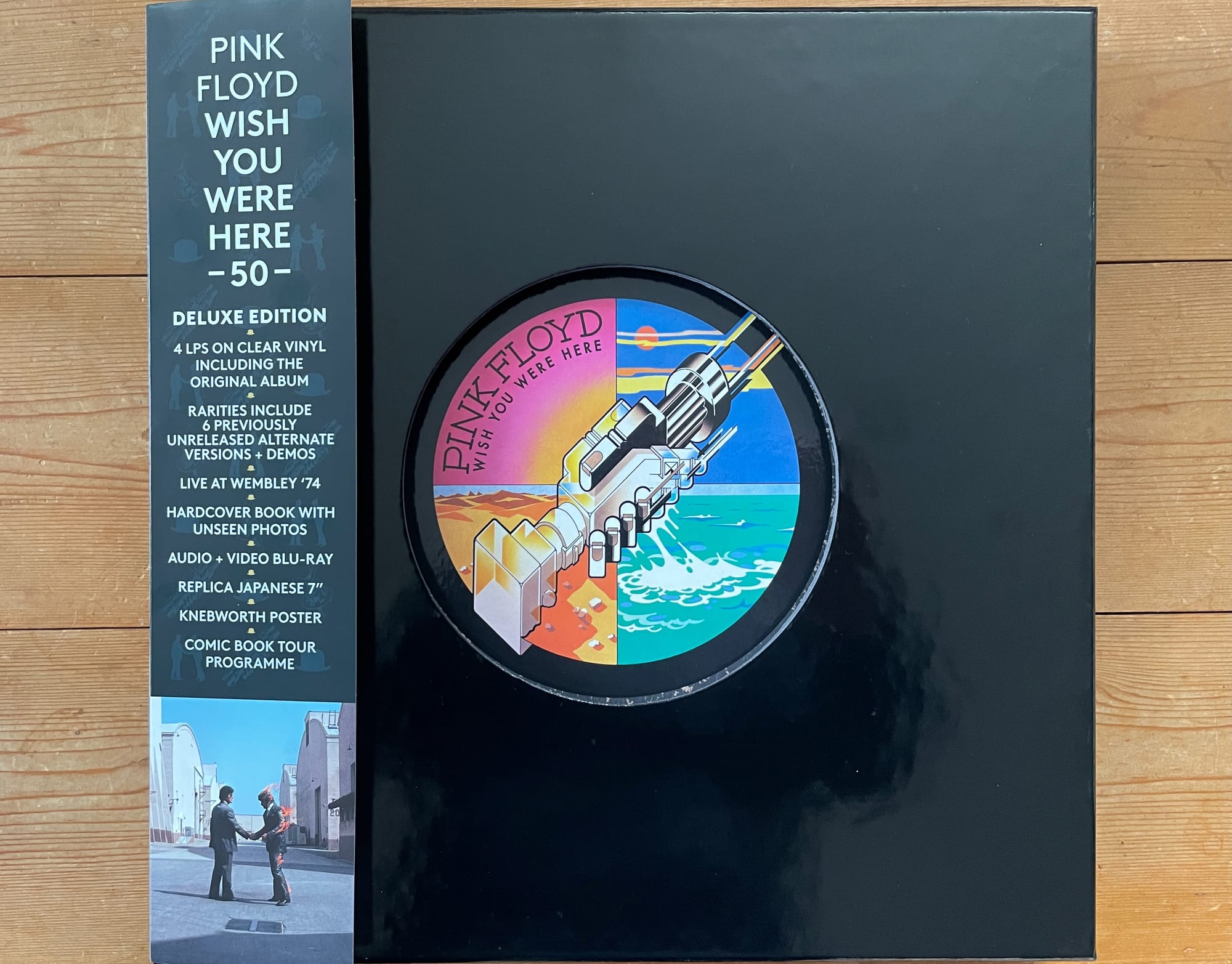
Pink Floyd: Wish You Were Here 50 (Deluxe Edition)
They say absence makes the heart grow fonder, but in Pink Floyd’s case it only seemed to make the heart more forlorn. Their 1975 album, Wish You Were Here, was a deliberate exploration of the concept of absence, explored in bassist Roger Waters’s lyrics and literalized in the album art by the Hipgnosis design team. More obliquely, the songs addressed how the band were feeling about each other and their music in the wake of the massive success of their 1973 smash, The Dark Side of the Moon: withdrawn, cynical, and isolated. With the exception of the title track, it’s a cold, almost hostile recording that can’t help but reveal the difficulty of its creation. It’s also a remarkably powerful and at times glacially beautiful album that ranks as the Floyd’s most mature work.
For Wish You Were Here’s 50th anniversary, Sony—the new rights-holders of Pink Floyd’s catalog—have released several new editions of Wish You Were Here. The largest of these includes 4 LPs, 2 CDs, a Blu-ray, a hardback book, and assorted ephemera, with some newly released archival material. The first LP includes the album itself, while two further LPs consist of studio outtakes (three of which were released on the 2011 “Immersion” edition of the album but make their first vinyl appearance here), and a fourth LP, exclusive to this mega-deluxe edition, includes two long songs from the 1974 concerts at Wembley that have been released in dribs and drabs on various Floyd sets over the years. (These particular songs were also on the “Immersion” edition, although this is their vinyl debut; a third live track from the “Immersion” set is not included here.) All of this, except for the 1974 live tracks, is also on the jam-packed Blu-ray disc, along with a new Atmos mix of the album, the 5.1 mix from the “Immersion” edition, and the 1976 quadraphonic mix. Fan-recorded audio from a 1975 live show at the LA Sports Arena is also included on the Blu-ray, captured on cassette by renowned taper Mike Millard; it’s of startlingly high quality for a bootleg recording from the 1970s.
By all accounts, Wish You Were Here’s development was tortuously slow and indulgent. Having made a genuine smash with Dark Side, the band toured the US, then took an extended period of time off to play with their newfound wealth, purchasing estates, cars, and island villas. They regrouped at the end of 1973 to explore new ideas, visiting an old concept of music made entirely from household objects, like cellophane tape, wine glasses, and rubber bands. When that sputtered after a couple of weeks, the band again took time away from each other. A looming tour of France in June 1974 motivated them to get some new material ready, which resulted in “Shine On You Crazy Diamond,” “Raving and Drooling,” and “You’ve Got to Be Crazy.” Those three lengthy songs were more or less going to make up the next album, but as Floyd fans know well, “Raving and Drooling” and “You’ve Got to Be Crazy” were eventually passed over in favor of a concept Waters was developing on the lyrical themes of “Shine On You Crazy Diamond.” (“Raving and Drooling” and “You’ve Got to Be Crazy” would linger in the setlist through 1975 but would be rewritten as “Sheep” and “Dogs” for 1977’s Animals album.)
“Shine On You Crazy Diamond” had grown into a lengthy, album-side-long piece in the vein of “Echoes,” and Waters’s lyrics explored his feelings about Pink Floyd’s founder and guiding light Syd Barrett, who was ousted from the band in 1968 due to his fractured mental health and instability, in part the result of the use of psychedelic drugs. Waters used “Shine On” to finally deal with the guilt and sadness he felt about his bandmate’s unfortunate dismissal, feelings that were probably put into sharp light after the massive success of Dark Side, which dealt with themes of mental health. As the other members of Pink Floyd were feeling disillusioned and disinterested in the process of making Dark Side’s follow-up, Waters convinced them to make their current state of mind the overarching theme of the entire album. He brought in two new screeds about the avarice of the music industry—“Welcome to the Machine” and “Have a Cigar,” both informed by the band’s recent elevation to the big time—and collaborated with guitarist David Gilmour on “Wish You Were Here,” a kinder, more humane, country-tinged song that neatly summed up the album’s concept of absence and provided the album’s beating heart. For its part, “Shine On” was broken into two sections that bookended the album, with the new material sandwiched between.
A new mix of “Shine On” on the 50th anniversary set stitches its two halves back together, to somewhat anticlimactic effect—it sounds more or less exactly as you would imagine. Far more exciting is an early instrumental runthrough, with the band’s individual instruments coming through cleanly and the performance building up a head of steam that the finished album version dispensed with in favor of a more magisterial tone. Also among the bonus tracks are two demos of “Welcome to the Machine,” one with Waters on his own and the other with band members contributing, as well as two lovely unreleased versions of “Wish You Were Here” that emphasize the instrumental backing, including a pedal steel guitar that features heavily in the quadraphonic mix but was buried on the original stereo mix. All of these are fascinating in their own way, sounding fresh and fantastic in new presentations that reveal a lot of detail. They make a fine addition to the three previously released studio outtakes from the “Immersion” edition, which include an alternate version of “Have a Cigar,” another mix of “Wish You Were Here” featuring violinist Stéphane Grappelli, and the “Wine Glasses” recording from the abandoned Household Objects project that went on to form the introduction to “Shine On You Crazy Diamond.”
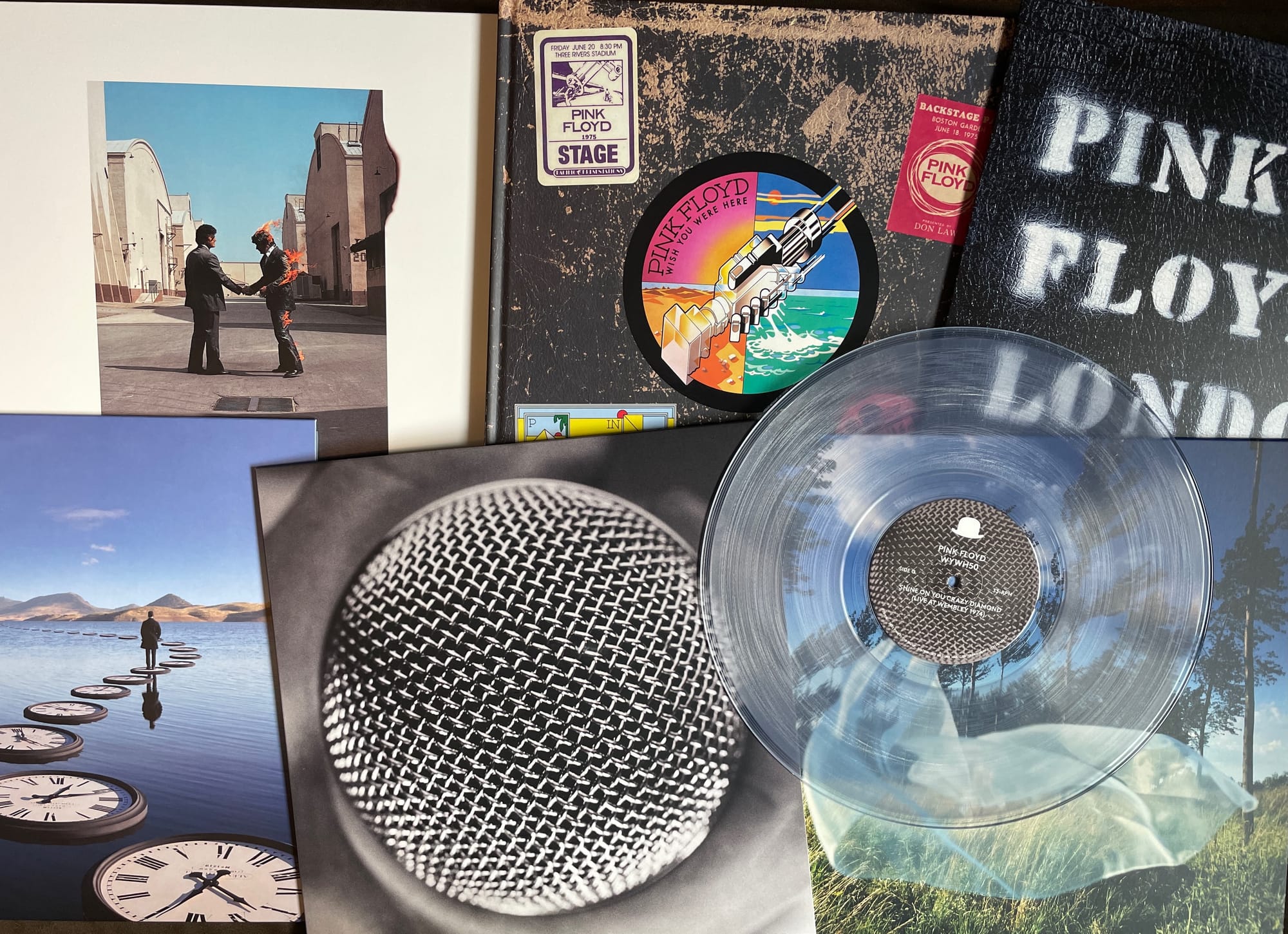
The two 1974 Wembley live tracks on this deluxe set were of course heard digitally in the “Immersion” edition, and on vinyl they make more or less the same impression. It’s interesting to hear “Shine On” and “You’ve Got to Be Crazy” in these early drafts; “Shine On” is taken slightly faster and benefits from a stripped-down live arrangement sans overdubs, while “You’ve Got to Be Crazy” sounds like more development is needed. It’s a little frustrating that two further songs from the concert, “Raving and Drooling” and “Echoes,” are still unreleased on vinyl (the former is on the Wish You Were Here “Immersion” edition and the latter is on the Continu/ation double-disc that’s exclusive to the massive The Early Years box set). The remainder of the setlist consisted of a live run-through of all of The Dark Side of the Moon that was released as part of the Dark Side 50th anniversary box and is also available as a stand-alone album. It remains to be seen whether Sony will release “Raving and Drooling” and “Echoes” on vinyl in the future, although it would make sense for them to issue a complete document of the Wembley concerts at some point, rather than have the tracks scattered over various releases.
The bootleg recording of the 1975 LA Sports Arena show is more satisfying, although it can only be heard on the Blu-ray. It contains the concert in full, uninterrupted—with all the songs that were played at Wembley in 1974 plus the addition of “Have a Cigar” slotted in the middle of “Shine On You Crazy Diamond,” now bisected into two pieces. The fan who recorded the show surreptitiously, Mike Millard, has a fascinating story of his own, and his audience recordings of shows in the LA area have become renowned as vital documents. As Pink Floyd did not manage to record their 1975 shows officially, the Millard tape may be the next best thing. It’s been restored and mastered by remixer-to-the-stars Steven Wilson, and it sounds mighty fab on the Blu-ray. Certain busier sections become muddled, and the quadraphonic effects of the live show were not really able to be captured via Millard’s incognito setup, but otherwise it’s astonishingly good, sounding close to the quality of a mid-’70s live album for much of the time. One comes to the conclusion that Sony will see fit to release it on its own at some point, either on CD or vinyl; luckily, it is available in full on all streaming services right now for anyone curious. I should also note that the Blu-ray is available as a stand-alone release, and for anyone not married to vinyl or compact disc, it contains virtually everything a devoted Floyd fan could want. It remains the most cost-effective and efficient way to get the material.
But this is a vinyl newsletter, and we’re preoccupied with the vinyl versions of everything. (We’re a little sick in the head that way.) As mentioned, all the bonus tracks sound superb on disc, which leaves the new mastering of the Wish You Were Here album itself. And that’s actually a good question: Is it a new mastering? Well… shrug? It was cut by industry veteran Bernie Grundman, who has cut the album before, from a high-res digital file mastered by James Guthrie and Joel Plante. I have seen the previous Grundman cut attributed to a 2016 release date, but a repress of a 2011 Doug Sax cut was also issued at that time, so I suspect that Grundman cut may have actually come along a year or two later. (To confuse matters, the label on the Wish You Were Here LP in this new set bears a copyright date of 2018.) The question remains whether this is a repress of that earlier Grundman cut or a new cut Grundman has made from the same digital file. I apologize for not knowing the answer to that question; however, Grundman has cut all the bonus material new to this set, so it would stand to reason that while he was at it, he might have taken another pass at the album itself. Furthermore, there’s an inverted triangle in the deadwax, the symbol Grundman etches to signify that he used the diamond-tipped lathe in his facility. This is a relatively new marking for Grundman and was not in widespread use by him until 2023 or so. That should give us the answer, but from what I can tell via the Discogs listing, the older Grundman cut also has that triangle. So… shrug? The fine folks at Tracking Angle suggest it is a new cut and that it sounds noticeably different from the earlier Grundman cut, and I’m inclined to take their word for it.
I suppose the more important question is: How does it sound? The answer is also… shrug? It actually sounds quite good, with considerable detail, a firm sound-image, plenty of clarity, and a satisfying dynamic balance. But I compared it to my US Santa Maria first pressing, which was pressed from metalwork cut in the UK by Harry Moss at EMI Studios, the very same building where Wish You Were Here was recorded in 1975. (One year later, of course, it was renamed Abbey Road.) Moss was one of the legendary EMI cutting engineers and his work is beyond reproach; many definitive cuts of Beatles albums bear his initials (“HTM”) in the deadwax. His original Wish cut is no exception; it’s full of immaculate specificity to the sound, balanced by breath, energy, and pure musical delectability. The new Grundman digital cut can’t help but suffer in comparison, with a slight remove to the overall sonic picture, almost as if it has been framed and sits behind glass.
The deluxe box is pressed on clear vinyl, in a nod to the transparent record that appears on the back cover of the original album (the theme of absence once again made literal). The North American edition of the box contains vinyl pressed at Memphis Record Pressing, and sadly, it does not live up to the high quality of the rest of the set. Even after ultrasonic cleaning, my copy is noisy, with pops and repeating clicks that are particularly irksome during the near-ambient stretches of “Shine On You Crazy Diamond” and the gentle acoustic strumming of “Wish You Were Here.” All four LPs are affected, to varying degrees, as is the bonus 7-inch single. I suspect the thick card inner sleeves are part of the problem, as they can lead to heavy scuffing, but there might be something more nefarious at work here too. European copies are pressed at Optimal Media in Germany, and those may be worth seeking out for discerning vinyl listeners, as the Memphis vinyl is sadly not up to snuff. It is a pity, given the significant price tag and how perfectly appointed everything else is inside the box.
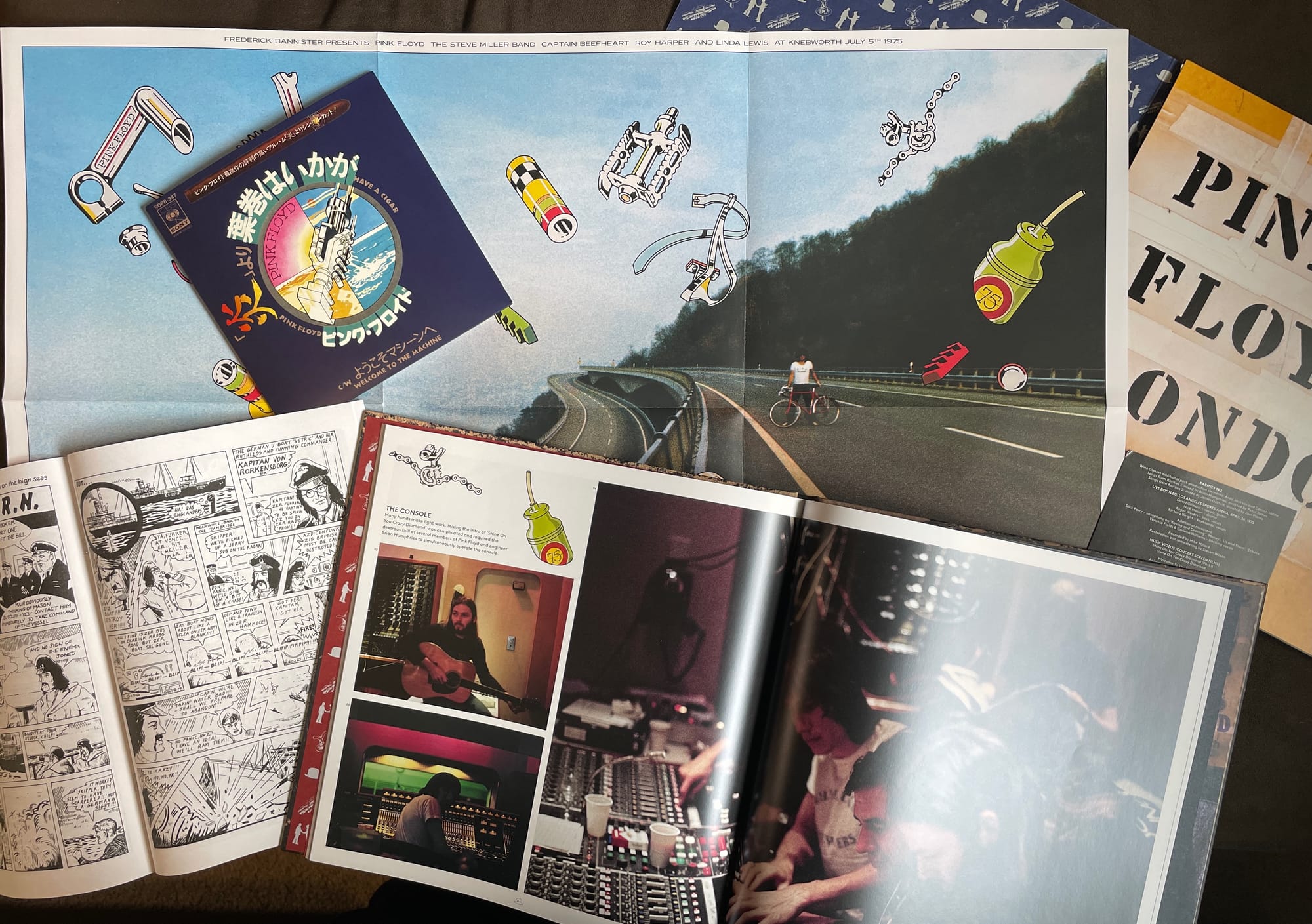
Indeed, the set is really striking, with all the visual hallmarks of a Pink Floyd release, by which I mean that design and intention have noticeably been invested into the physical presentation. The LPs all bear distinctive jackets with art direction by Hipgnosis’s Aubrey Powell, and there’s a folder that contains a replica poster for the 1975 Knebworth concert, a reproduction of a comic book that was sold as a souvenir concert program, and a 7-inch that contains edits of “Have a Cigar” and “Welcome to the Machine,” with artwork taken from the Japanese single. The gorgeous hardback book contains a panoply of photographs from the period, with live images, studio shots, and breakdowns of the original album artwork concepts by Powell and Storm Thorgerson. Particularly striking are the photos from the day Syd Barrett wandered into the studio during the mixing of “Shine On.” Having shaved his head and put on extra weight, Syd was at first unrecognized by the band, who became distressed by his mental and physical state; no one is quite sure how he turned up just as the band was finishing work on the track he inspired. The story has since become an oft-repeated piece of Pink Floyd lore, and to see actual photos from the incident is striking, to say the least. The book contains minimal text, however; a well-researched, definitive essay on the album would have been a nice addition. The lack of session details, recording dates, and other technical information is also sorely missed.
If the vinyl pressings were not as disappointing as they are, I would not hesitate to give the deluxe box a recommendation. It’s expensive, sure, and it falls shy of definitive—an all-analog cut of the album could have sweetened the pot, if the tapes are still usable. The inclusion of the missing 1974 live tracks, or a well-written essay, or perhaps even the 1975 Millard show on CD or vinyl could have also tipped this over into must-have territory. But I am pleased with what’s here, and I am happy with the time I’ve spent revisiting Wish You Were Here. For some, it is Floyd’s best, and for some, “Shine On You Crazy Diamond” is their masterpiece. I’m not in agreement with those camps, but my estimation of the album has grown through all of this recent exposure. (As has my affection for “Shine On”—I’m realizing now that the box contains five separate versions, no ill feat for a 20-minute-plus track.) I suppose my best recommendation would be to get a European-pressed copy of the 3-LP set and pray that Sony eventually releases the complete Wembley live album on its own. The stand-alone Blu-ray will also make a lot of people happy.
What isn’t diminished by any of the set’s shortcomings is the power of the Wish You Were Here album itself, which still looms tall as a significant work. All the worst things you can say about Pink Floyd are contained within: the indulgence, the solipsism, the apathy, and the sheer weariness of it all. But to my mind, Pink Floyd’s ’70s period is some of the only real work in the classic-rock canon to wrestle with those kinds of issues head-on. They don’t avoid the thorny qualities that frequently make human beings unpleasant—they acknowledge and depict those subjects, and present artistic representations of them in ways that allow us to understand them better. It’s funny that Pink Floyd are often thought of as makers of stoned, dorm-room head-trip music, because in my mind, they’re anything but escapist. And Wish You Were Here shows the band in their most unflattering light: newly wealthy rock stars struggling to get in the same room together. This box set gives us the clues as to how they managed to make the end result so compelling and so frequently beautiful. A lot of bloody work, as it turns out.
Sony 4-LP 33 RPM clear vinyl (plus Blu-ray, 2 CDs & 7-inch)
• New pressing (and possibly new cut) of digital master of the 1975 album, with two LPs of studio outtakes, one live LP, and a Blu-ray containing Atmos, 5.1, and quadraphonic mixes as well as an audience recording of the April 26, 1975 live show at the Los Angeles Sports Arena
• Jackets: Four single-pocket direct-to-board sleeves inside hard cardboard slipcase with die-cut circular hole
• Inner sleeves: Custom printed thick card inner
• Liner notes, insert, or booklet: 64-page hardcover book with minimal text, plus ephemera folder than contains six-panel poster and souvenir comic
• Source: Digital
• Mastering credit: James Guthrie, Joel Plante & Bernie Grundman; 1975 LA Sports Arena show restored & remastered by Steven Wilson
• Lacquer cut by: Bernie Grundman of Bernie Grundman Mastering, Hollywood, CA (“BG” in deadwax)
• Pressed at: GZ’s Memphis Record Pressing, Memphis, TN
• Vinyl pressing quality (visual): A- (one disc slightly dished)
• Vinyl pressing quality (audio): C- (noise, clicks & ticks throughout all discs)
• Additional notes: Single LP and 3-LP configurations are also available.
Listening equipment:
Table: Technics SL-1200MK2
Cart: Audio-Technica VM540ML
Amp: Luxman L-509X
Speakers: ADS L980