Reviews: Comet Gain | Peter Baumann


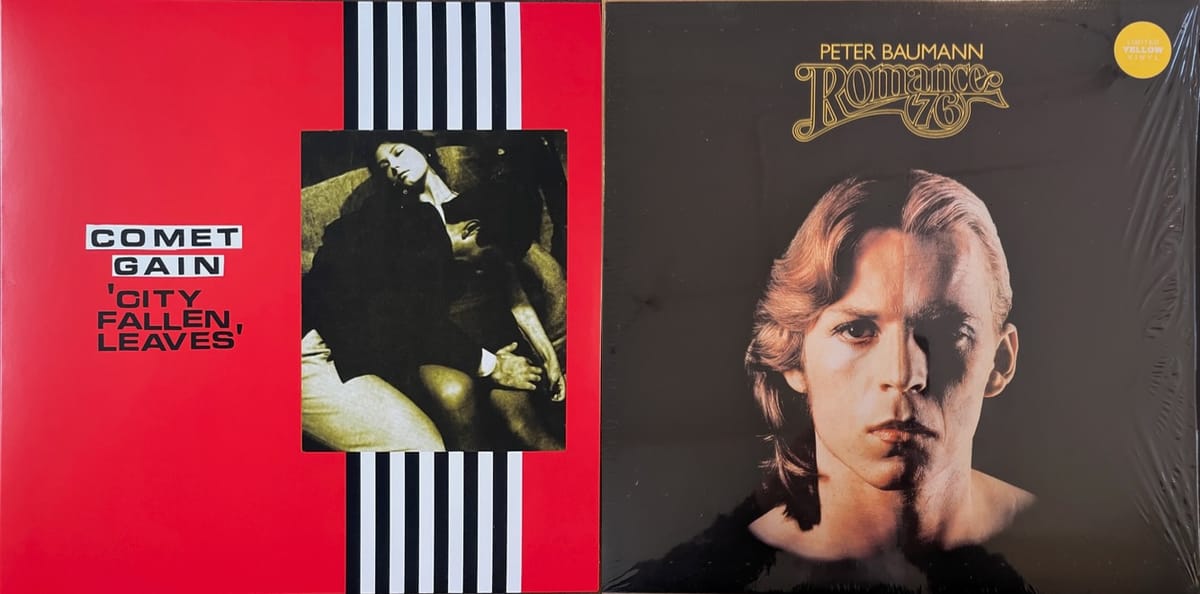
Today’s record reviews cover recent reissues from the Hamburg, Germany, label Tapete Records and its electronic-music-focused sister imprint, Bureau B. The first album is from the longtime UK band Comet Gain, who have made a virtue of their disparate sound, with acoustic folk and abrasive punk sharing groove space on their LPs. The second is the first solo album from Tangerine Dream’s Peter Baumann, in which he advanced that band’s paradigm-shifting template of electronic music into new territory.
- Comet Gain: City Fallen Leaves
- Peter Baumann: Romance 76
Before we jump in, did you see this report that said vinyl records in 2025 surpassed $1 billion in sales in the United States for the first time since 1983? That’s up 9.3 percent from the previous year, suggesting that there’s substantial life in the vinyl revival well beyond the Covid bump, when we were all stuck at home with nothing to do but play our records. Granted, a big part of this increase in revenue has to do with the jump in prices we’ve seen during the past few years. But unit sales were also up in 2025, with the RIAA reporting a 7.9 percent increase on the number of new vinyl records sold.
These sales figures may be cause for some celebration, but truthfully, at this moment it’s tough to extract any sort of prediction from that uptick. I suspect that certain global situations are going to affect vinyl prices even further—most vinyl is made from petroleum, you know. Could that then lead to an increase in eco vinyl production? Eco vinyl actually refers to two separate things: vinyl made from regrind, aka leftover vinyl from other pressings; or vinyl made from plant-based bioplastics as opposed to the petroleum-based PVC that currently fills your record shelves. Both approaches have received criticism from audiophiles, but I think we are going to see more ways for vinyl production to become less expensive and less reliant on oil.
I also think that actual unit sales will shrink going forward—perhaps not substantially, and hopefully not permanently, but today’s high prices simply mean that people have the means to buy fewer and fewer records. Maybe total sales revenue will look the same, or even increase. But I think that in the short term, customers will be more selective about what discs they throw down money for. And helping you making informed decisions about what vinyl you want to buy is part of what we’re trying to do here at The Vinyl Cut.
Bet you didn’t think you were getting some armchair market analysis as part of today’s record reviews, and I certainly didn’t mean to turn it into a sales pitch for the newsletter either. But our current global conflict means more than just pain at the gas pump—it will have an affect on vinyl manufacturing prices as well. Which, if you’re the type of person who reads The Vinyl Cut, may be even more painful.
And with that cheery outlook, let’s get into today’s reviews.
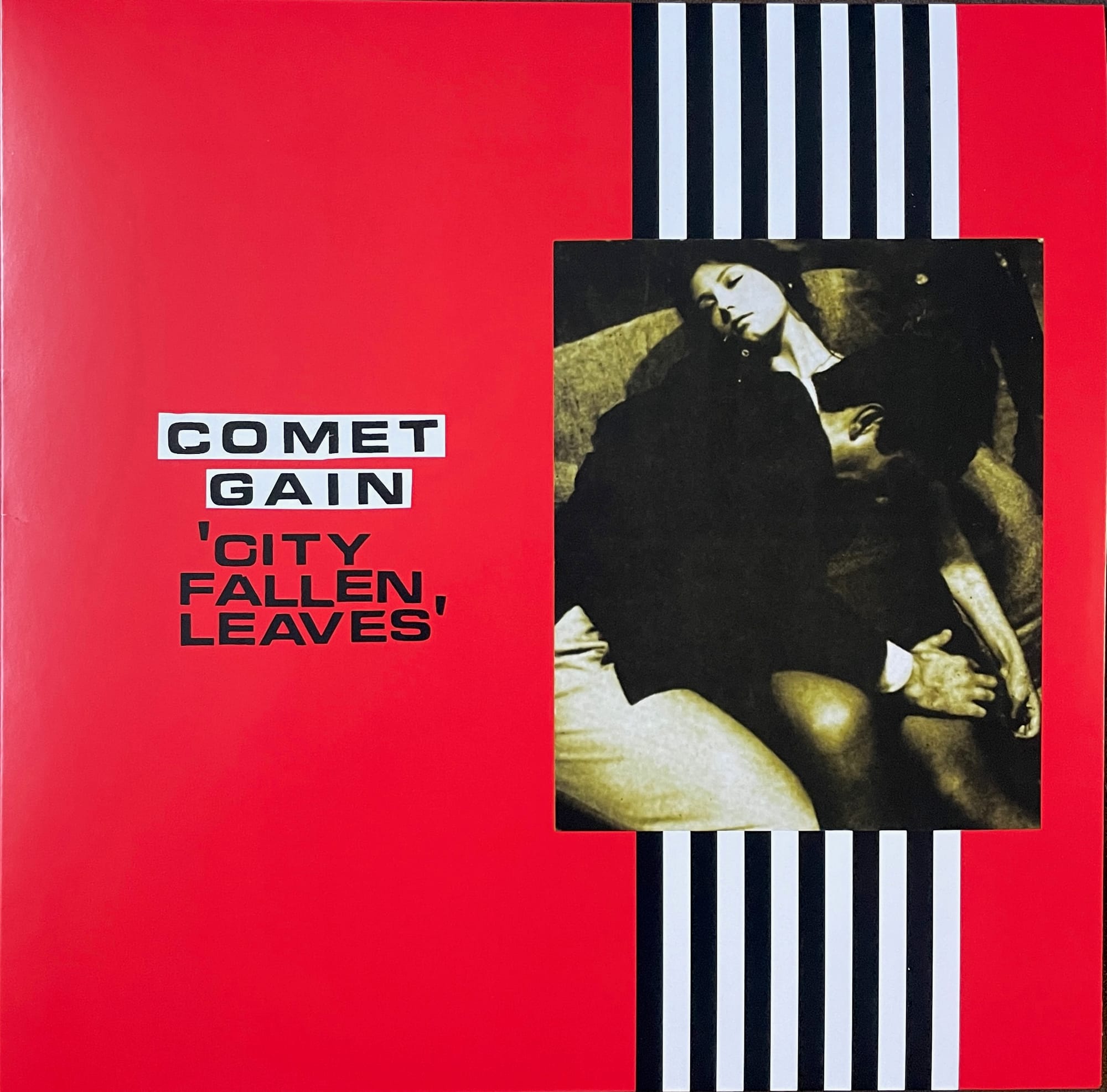
Comet Gain: City Fallen Leaves
Review by Ned Lannamann
“Just give me one more summer before I go,” sing Rachel Evans and David Christian, the two lead vocalists of Comet Gain, at about the midway point on the London band’s 2005 album City Fallen Leaves. The pair have sneers in their voices, and the major chords are casually bashed out with cranked-up guitars, so you might not listen closely enough to catch the bittersweet sentiment. But the “before I go” part wasn’t an idle threat. Christian, the group’s founder and primary songwriter—who has also gone by the names David Feck and Charlie Damage—was on the verge of checking out of the indie scene he’d been schlepping the various incarnations of Comet Gain through for the previous decade-plus, and moving with his partner Anne-Laure Guillian to her hometown of Bordeaux, France.
“This was gonna be my Forever Changes,” writes Christian in the stream-of-consciousness notes he prepared for the new vinyl reissue of City Fallen Leaves, released by the band’s current label, Tapete Records of Hamburg. “Not in scope or genius or baroque-osity but in that Arthur Lee saw it as his final goodbye—he had apocalyptic visions and thought it was his last will and testament; a lot of the wonderful words reflect that propulsion into I’m-ready-for-you oblivion.” (The edited punctuation is mine.)
City Fallen Leaves is a much more modest-sounding affair than Forever Changes, but like that album, it turns the concept of an adieu into a clear-eyed summation of an entire musical scene and ethos. (Also like that album, it wouldn’t be the band’s last word.) If someone were to take on the thankless task of defining the sound of UK indie, City Fallen Leaves might well just do the trick. And that’s because the album defies any kind of pigeonholing. Some songs are gentle and twee, while others are aggressive and punky; some sound casually tossed off and barely thought through, while others are so incisive and smart that they make you internally gasp. Some songs bear the vestiges of the various trends the band had passed through since their formation in 1992, including C86, riot grrrl, and Britpop, while other songs sound resolutely timeless. What ties them all together is the idea of buckling down and getting on with it—making music under any circumstances, with the friends you have around you and with the resources you have at your disposal.
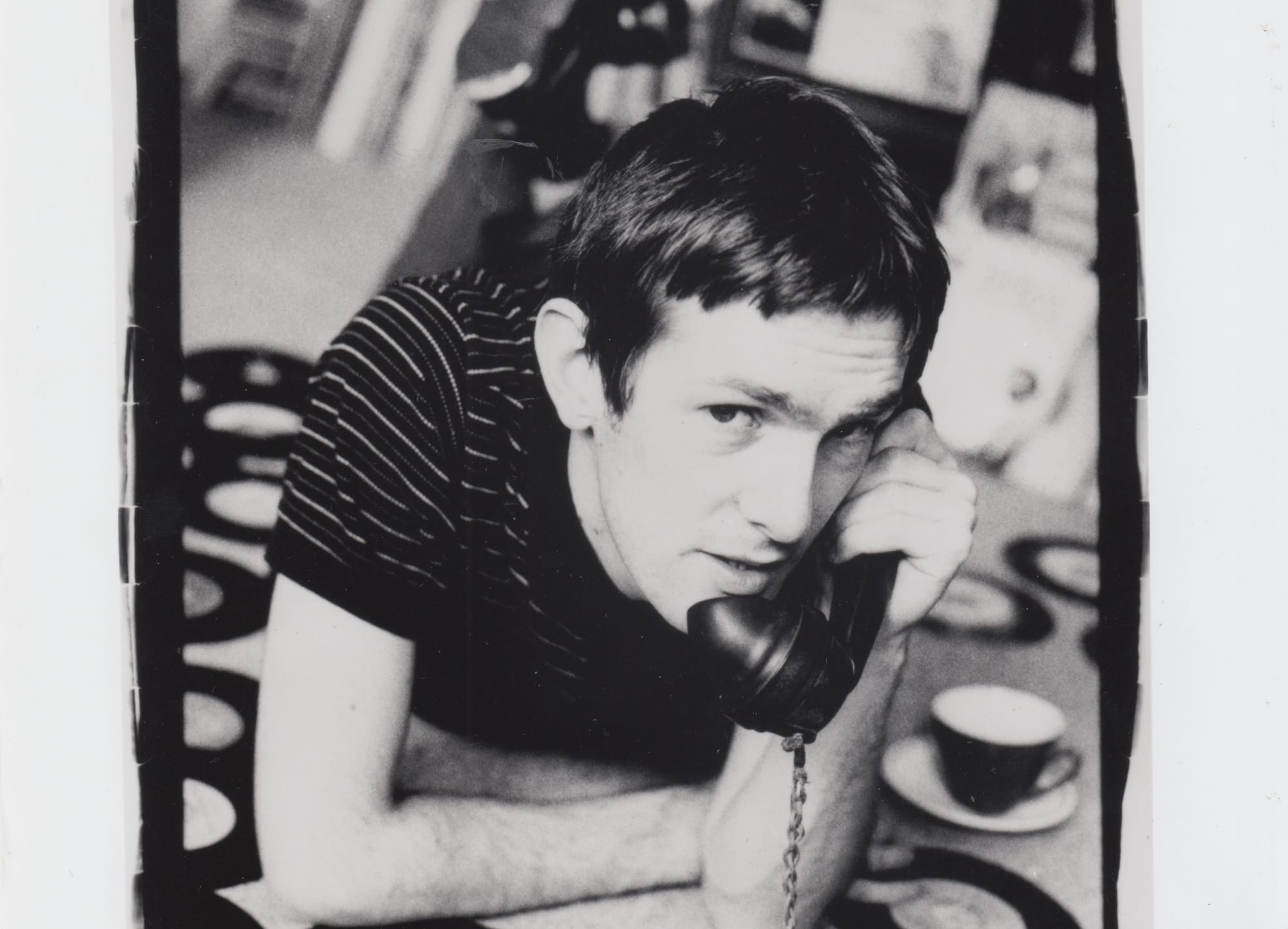
“I was reflecting on the idea of leaving my town,” writes Christian, “the one that had shaped me so much and friends and the streets and the sounds and all that glue that keeps you walking—I doubted we could continue the band so I guessed it was a fiery farewell.” (I should add that Christian’s notes are not actually included as liner notes within the new vinyl package, but they are illuminating enough that I am going to print them out from Tapete’s website and slide them in with my copy.) That fiery farewell turned out to be more of a warming hearth than perhaps Christian intended, perhaps because of the humanity inherent in his songwriting. Rather than scorched earth, he lands upon the idea of fallen leaves—a metaphor for the idea of accumulated memories that need to be left behind.
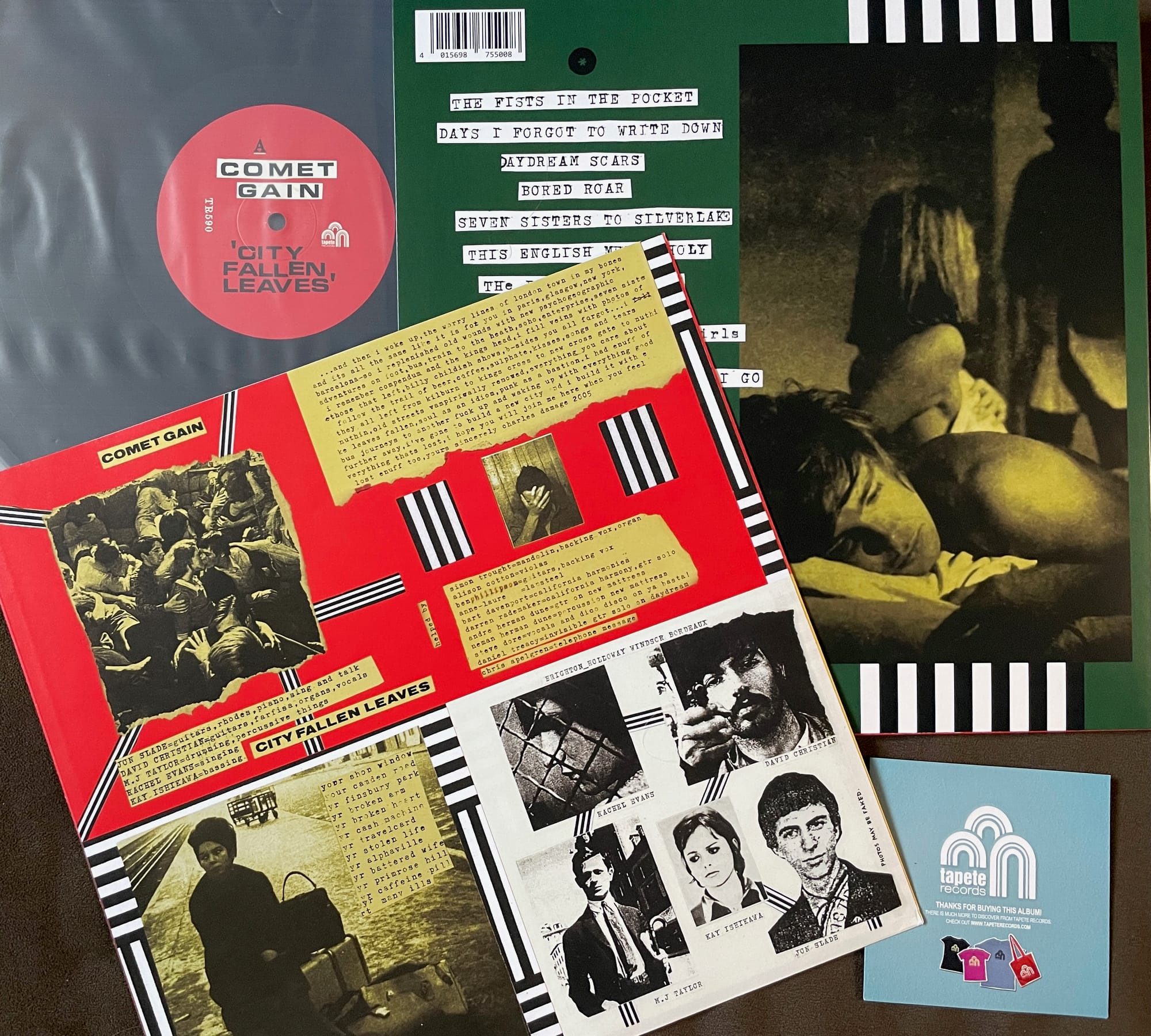
At this stage, Comet Gain was rounded out by bassist Kay Ishikawa, guitarist Jon Slade (formerly of Huggy Bear), and drummer M.J. Taylor (aka Woodie Taylor, who has also played with the Meteors, Morrissey, and Holly Golightly); many guest musicians also contributed, including Guillian, who played pedal steel on the album before becoming the band’s full-time keyboardist. The album is a patchwork of sketches, starting with the buoyant, buzzy “The Fists in the Pocket,” where the catchy chorus is offset by Christian’s repeated shouting of “I can’t take it anymore!” The mood quickly shifts for “The Days I Forgot to Write Down,” perhaps the album’s masterpiece. It’s a meditative piece played over a far more muted backing of acoustic guitar, synth-organ, and viola, looking back at all of the memories escaping from one’s brain—the fallen leaves—with just enough traces left behind for feelings of melancholy, affection, and in some cases regret.
The album also finds room for jagged noise rock, skewed folk rock, homespun psychedelia, disconnected song fragments, stunning popcraft, and other experiments. It’s rare to find a band that can put a golden-hued, autumnal ballad next to an earsplittingly rambunctious punk song and not have it sound schizophrenic. But with Comet Gain, the song itself is all that matters, played with passion rather than precision, and whatever sound comes out the other end is what the end result will be.
City Fallen Leaves was not issued on LP back when it first came out in 2005 on Track & Field Records in the UK and Kill Rock Stars in the US. It wasn’t until 2017 that the indie label M’Lady’s Records put it on vinyl, pressing the 51-minute album across two discs. That pressing was cut by Shelly Steffens at Chicago Mastering Services; it also bears the marks of RTI in the deadwax, but I can’t say for certain if it was pressed there or merely plated there. (The pressing does not quite seem to be up to the standards of RTI, making me wonder if it was actually pressed at Rainbo, although it does not have that plant’s markings in the deadwax.) Somewhat unfortunately, the M’Lady’s release also coincided with that label’s implosion, as label head Brett Lyman apparently suffered personal problems that led to him abandoning the business, and many people who had paid for copies of the album never received them. (Comet Gain’s 2002 album Realistes was also reissued by M’Lady’s at the same time.)
The 2026 Tapete release condenses it to a single piece of wax, with 25-plus minute sides. The mastering is anonymously done, as there is no credit on the sleeve or jacket nor any telltale marks in the deadwax. It’s noticeably more polite-sounding than the Steffans cut, due in part to the extended sides but also perhaps due to some digital finessing. The rough edges are tamed, and the soundstage is slightly reduced, with the disparate sound quality of the album’s varying moods somewhat unified. While I don’t like getting up to flip sides twice as often—and this album works best as an extended daisy-chain of musical ideas, à la the White Album—I slightly prefer Steffans’s mastering on the M’Lady’s version. However, that older pressing has some problems, including really dirty vinyl out of the sleeve, a few factory scuffs, and some stray noise.
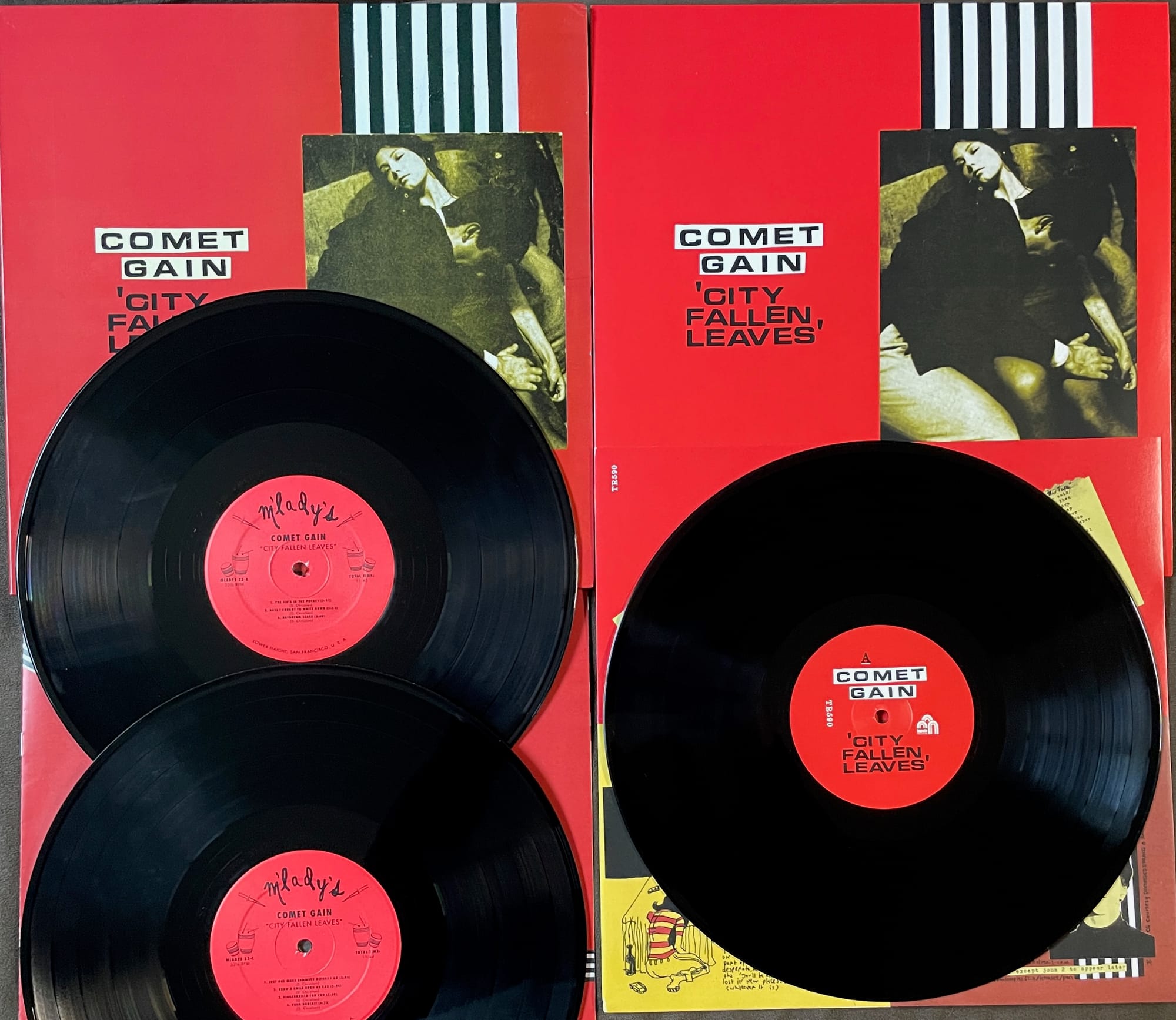
Unfortunately, the Tapete pressing has quite a bit of noise of its own, particularly at the end of Side 1, which gets very crackly. Even after an ultrasonic cleaning, I found there was enough noise to detract from the experience. Some of Tapete’s releases are pressed at Optimal, but the deadwax does not contain their usual stamper code, so I can’t point a finger at them in this case. The album is not a sonic wonder under any circumstances, but the M’Lady’s pressing has a bit more top end, which allows for a livelier sound and a greater sense of presence. The Tapete pressing is stronger on the bass end, but the overall sound is just a touch more confined, losing some of the sense of spontaneity of the performances.
However, this is a splendid album by an oft-overlooked band, and having it back on wax is a real treat; the Tapete pressing is good enough that I would urge anyone interested in Comet Gain to track down a copy. City Fallen Leaves did not turn out to be the band’s epitaph, thank heavens, although Christian and Guillian did retreat to Bordeaux for a spell before splitting their time between England and France, which allowed the band to carry on with a series of 7-inches and then, finally, another full-length in 2011. (Much more music has followed in subsequent years, too.) “Mixtapes are memories for unseen histories,” sings Christian on the album’s conclusion, “The Ballad of a Mixtape.” And we all know how esoteric mixtapes can get. But when they’re put together with care and thoughtfulness—as City Fallen Leaves is—they can sound just right.
Tapete 1-LP 33 RPM black vinyl
• New remaster of Comet Gain’s 2005 album
• Jacket: Direct-to-board single pocket
• Inner sleeve: Printed paper
• Liner notes, insert, or booklet: No liner notes; partial lyrics and other info from original CD booklet are reproduced on inner sleeve; a tiny fold-out Tapete Records catalog is also included
• Source: Unknown
• Mastering credit: None
• Lacquer cut by: Unknown
• Pressed at: Unknown
• Vinyl pressing quality (visual): A
• Vinyl pressing quality (audio): B (somewhat noisy vinyl even after cleaning; particularly intrusive clicks during “The Punk Got Fucked”)
Additional notes: None.
Listening equipment:
Table: Technics SL-1200MK2
Cart: Audio-Technica VM540ML
Amp: Luxman L-509X
Speakers: ADS L980
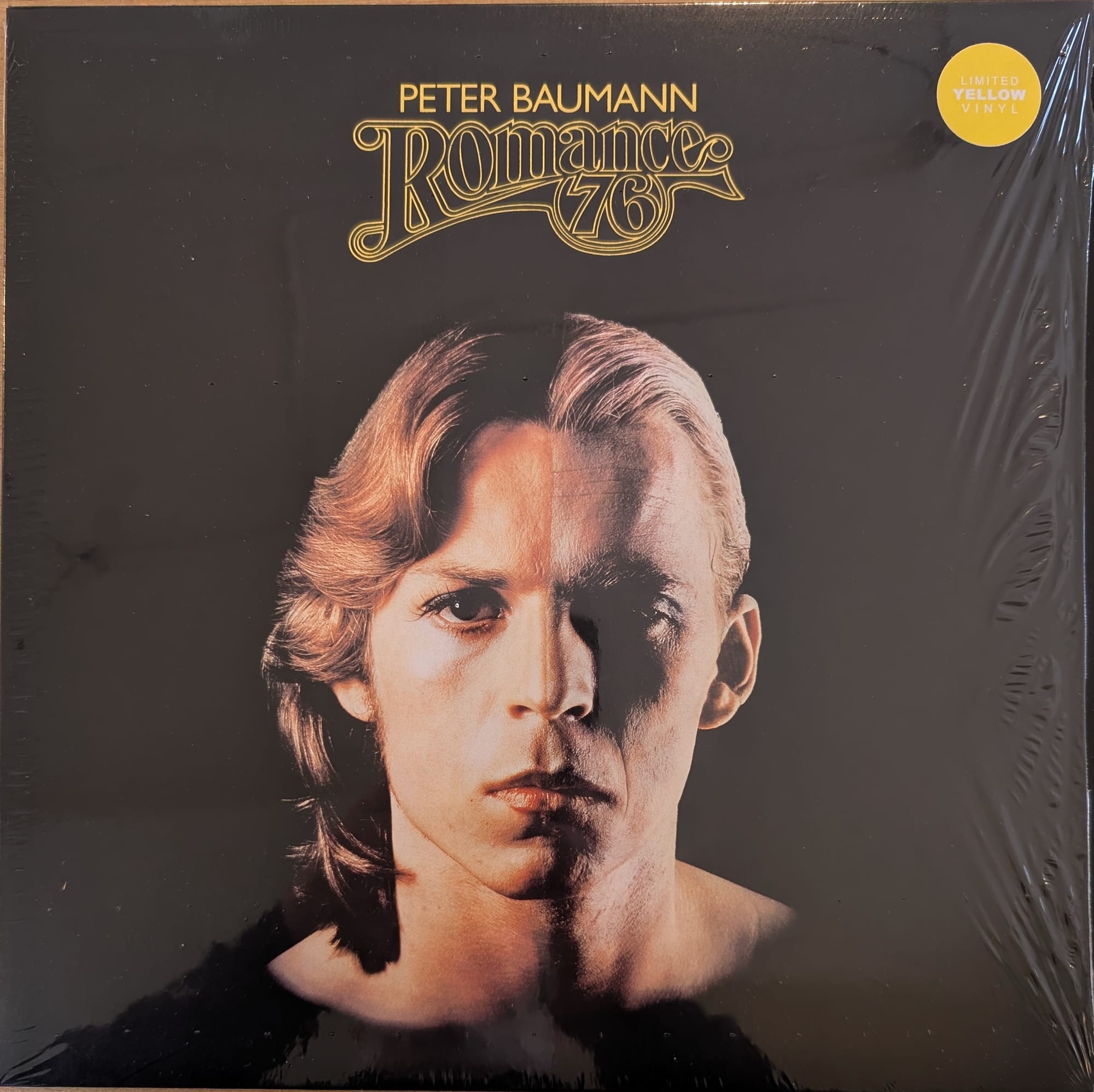
Peter Baumann: Romance 76
Review by Robert Ham
If Peter Baumann is to be believed, we have David Bowie to thank for the sound of Romance 76. The Thin White Duke didn’t perform on the album, mind you. But at the time it was being recorded in the summer of 1976, Bowie had become friendly with Baumann, then a member of Tangerine Dream. He would occasionally check in on how Baumann was progressing with what would become his first solo release. “[He] would call in while I was recording the album, listening carefully to what I was working on,” Baumann told writer Jan Casagrande for the liner notes included with recent reissues of the album. “I explained to him what still needed to be done, but Bowie suggested, ‘Leave it as is, there’s enough there already.’”
Bowie may deserve some of the credit for the sound of Romance 76—a wonderful collection of minimalist electronic music that was recently reissued on wax to celebrate its 50th birthday—but he shares it with Tangerine Dream. Baumann was invited to join the band on keyboards in the early ’70s and was part of their most commercially successful period, co-writing and playing on albums like 1972’s Zeit, 1976’s Stratosfear, and the soundtrack to William Friedkin’s 1977 film Sorcerer. Baumann developed his solo material alongside the group’s frequent tours and studio sessions, with bandmate Edgar Froese offering encouragement and the use of Tangerine Dream’s array of synthesizers.
That last detail should come as no surprise, as the music on Romance is very similar in tone to the material found on Stratosfear and 1975’s Rubycon: pitch- bent melodies played on Moogs, sequenced rhythms, and heavy Mellotron use. Those sonic details are where the connections to Tangerine Dream end. At the time, according to Casagrande’s liner notes, Baumann felt the band’s music was becoming too repetitive. (He would leave the group in 1977.) So his first solo bow was a deliberate push into new musical territory. There’s a dreamy quality to “Romance,” with its stately hooks played on electric piano amid steadily building layers of arpeggios and drones. And on “Meadow of Infinity (Part 1),” Baumann enlists the aid of members of the Munich Philharmonic, under the baton of his father Herbert Baumann, mixing together Ligeti-esque vocalizing with percussion rumbles and low string notes that call to mind late Renaissance music. It’s a striking and welcome change of pace and mood.
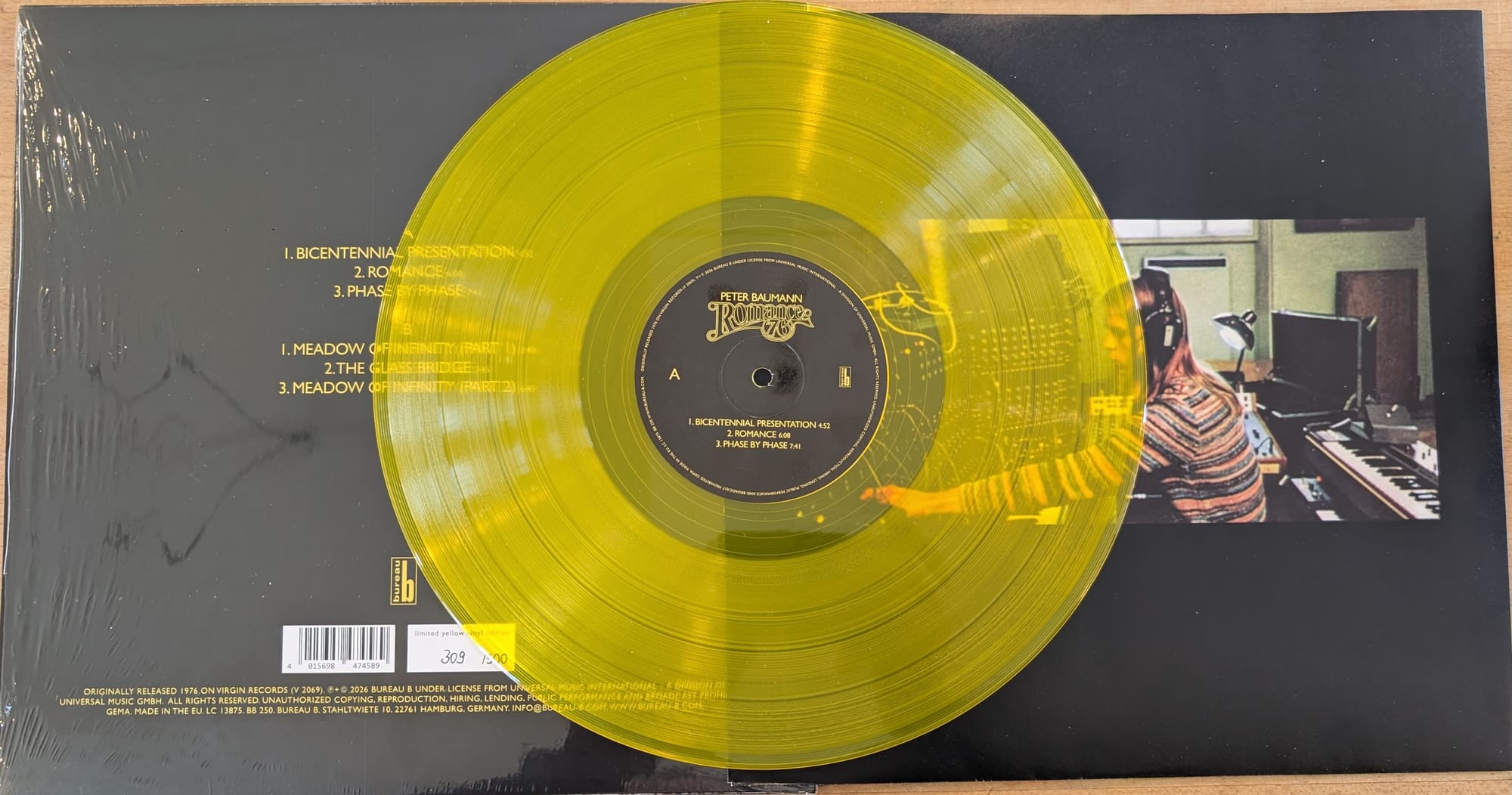
All of that comes across well on this new edition of Romance 76, which was pressed using the same lacquer cut by Martin Krafft at Optimal Media for Bureau B’s 40th anniversary reissue in 2016. There’s a nice rumble to the low end, and the many keyboards, especially the Mellotron, are presented cleanly and with fine detail. I was a little dismayed to find a scratch on my copy, which marred the opening minute of “Meadow of Infinity (Part 2),” but otherwise, it’s a solid representation of Baumann’s vision.
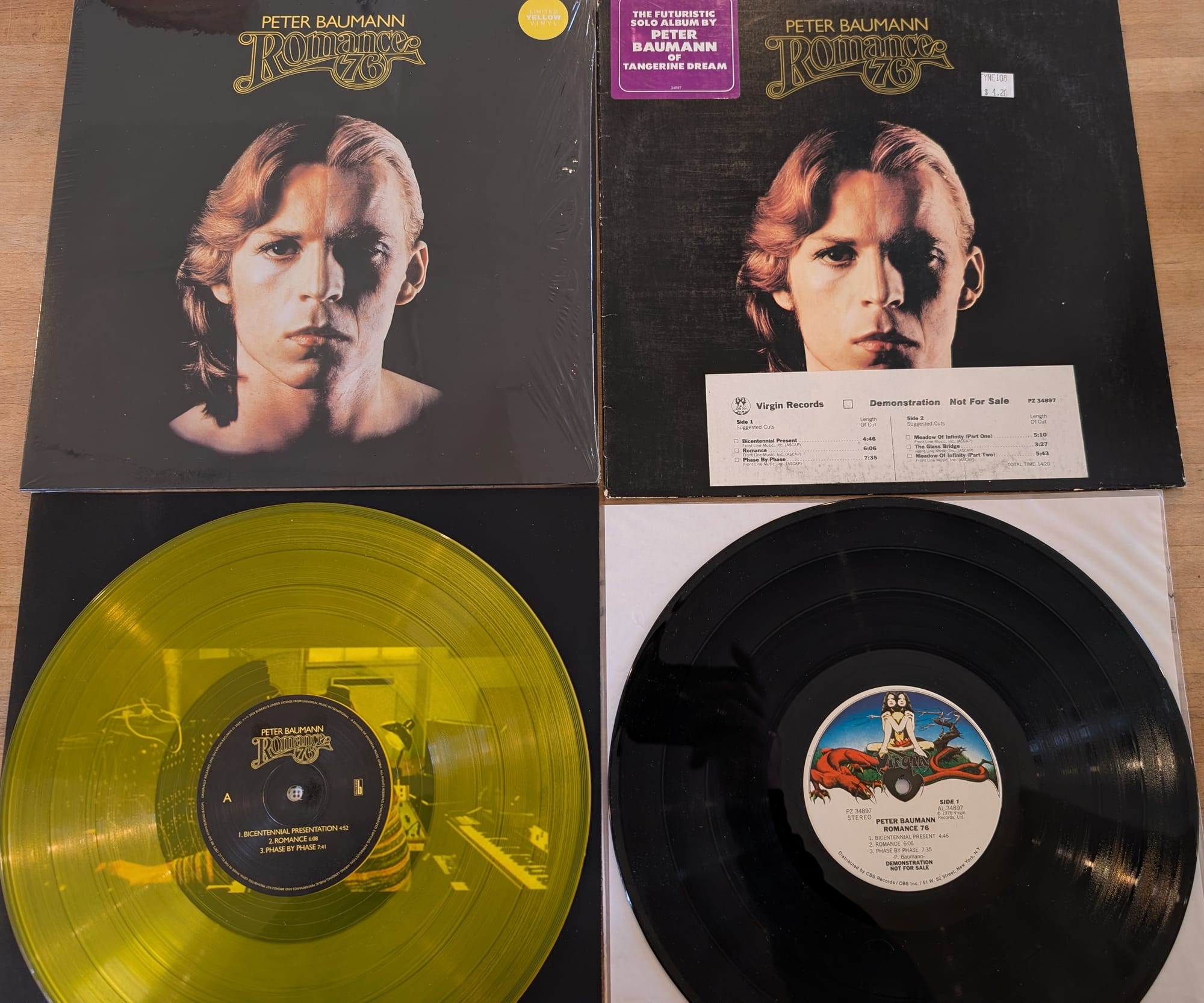
That said, when I did some A/B testing of this new version with my 1976 original US press on Virgin Records, made from a lacquer cut at Artisan Sound Recorders, the older copy won out. There was a far greater depth of field to the music that suggests vast landscapes and open air, leaving the new pressing to come across as hemmed in and narrow. I have to imagine that that could have something to do with the Bureau B reissue likely being made using a digital transfer of the album rather than the all-analog cut made four decades earlier. The tempered, at times constricted quality isn’t so bad as to render this new pressing insufficient, but it can’t help but pale in comparison to the older version.
Bureau B 1-LP 33 RPM transparent yellow vinyl
• 50th anniversary reissue of Peter Baumann’s 1976 album
• Jacket: Direct-to-board single-pocket
• Inner sleeve: Printed paper with liner notes and album credits
• Liner notes, insert, or booklet: Essay from Jan Casagrande and original album credits
• Source: Unknown, assumed digital
• Mastering credit: Willem Makkee, Greenlight Studio, Hanover, Germany
• Lacquer cut by: Martin Krafft, Optimal Media, Germany; “KR” in deadwax
• Pressed at: Optimal Media, Germany
• Vinyl pressing quality (visual): B (visible scratches on Side 2)
• Vinyl pressing quality (audio): B (scratch on Side 2 causes clicking at start of “Meadow of Infinity (Part 2)”)
• Additional notes: Limited to 500 hand-numbered copies.
Listening equipment:
Table: Cambridge Audio Alva ST
Cart: Grado Green3
Amp: Sansui 9090
Speakers: Electro Voice TS8-2