Reviews: Roland Kirk | Gordon Lightfoot | America


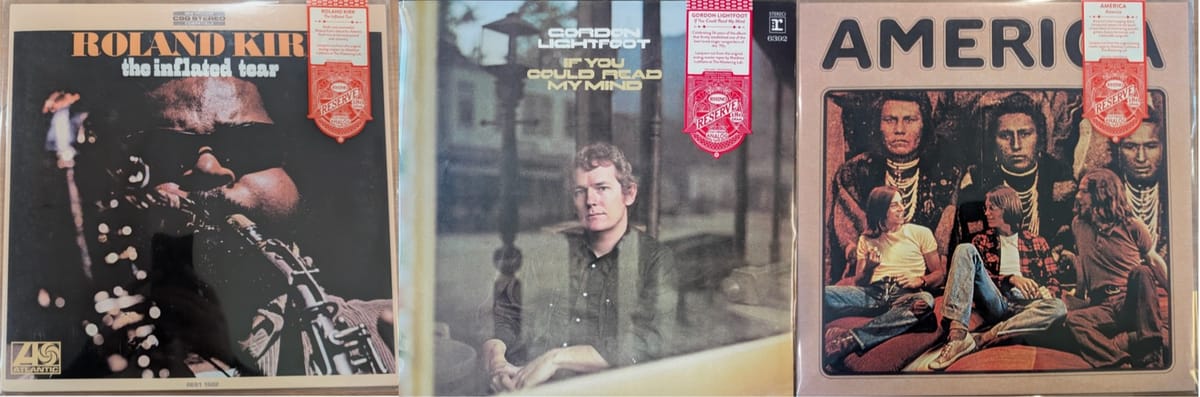
Hello again, and if you’re sick of reading our reviews about all of the new Rhino Reserve pressings—well, tough. Following up on yesterday’s newsletter and a pair from last week, we’ve got reviews of the remaining three Rhino Reserve titles that Rhino has released so far as part of their Start Your Ear Off Right campaign for the month of January.
Today we’re looking at a trio that would make for one unusual dinner party:
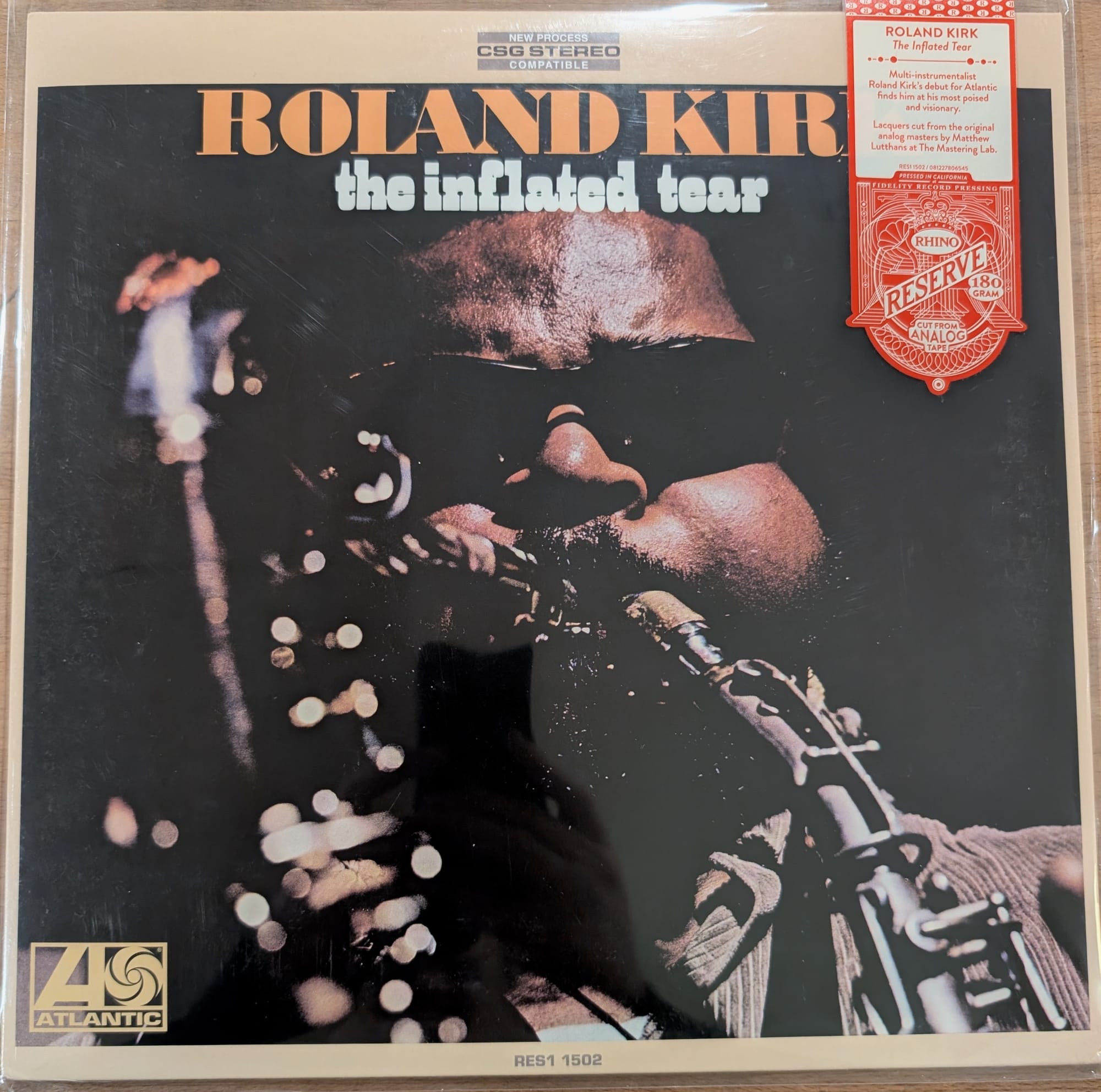
- Roland Kirk: The Inflated Tear
- Gordon Lightfoot: If You Could Read My Mind
- America: America
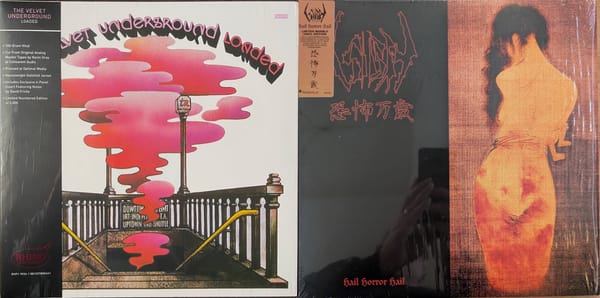
Before we get to that: The year is young, but it already seems like the record show calendar is burning up. Last weekend, I went to a small pop-up at a local brewery, and this weekend we’ve got another local one on the books (if you’re in the Portland, Oregon, area this Saturday, January 24, be sure to check out the inaugural Portland Record Show!). The multi-city VinylCon also just announced they’ll be back in Los Angeles on March 21 and 22; they’ve also got an Atlanta convention scheduled for February.
All that is to say that it seems like a good time to scour the calendar and see if there are any record conventions or shows in your area this winter and spring. (If you're looking for a comprehensive online calendar, there are a few to choose from—Vinyl Times has a good one, as does Goldmine; you can also take a look at Record Shows of America but it looks to me like they’re missing quite a few.) In our experience, record shows are not just an opportunity to score some rare finds, they’re great places to meet up with the vinyl community—not only the diehards but the folks who are more casually into record collecting or are just starting on their journey to vinyl obsession. It’s also a fine way to support the local, small-scale vinyl vendors in your area; there are more of them than you think.
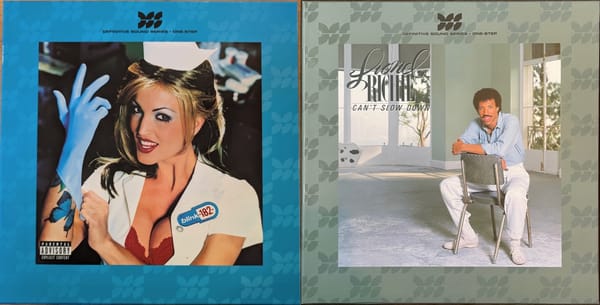
Last thing! It wouldn’t be a proper newsletter if I didn’t remind you about our monthly vinyl giveaway. If you want to win a set of test pressings for R.E.M.’s Chronic Town and Murmur—recently released as one-step pressings in Universal's Definitive Sound Series—click right over here quick-like.
 Ned Lannamann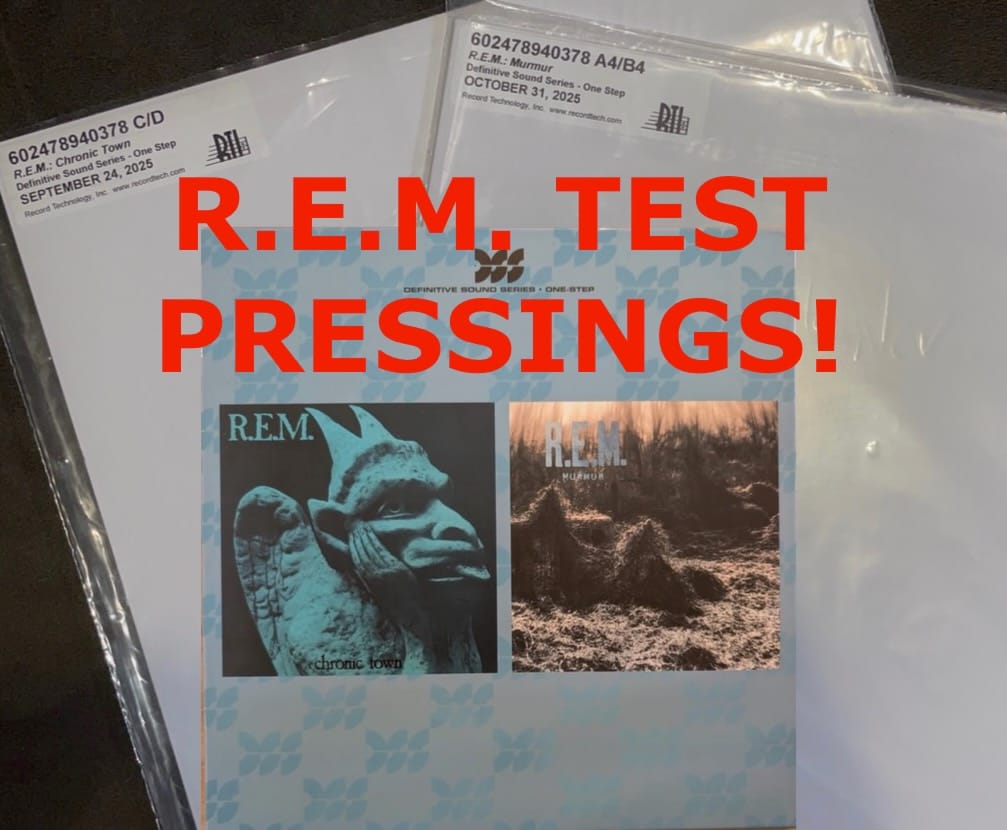
Now let’s crack open some more of those Reserves.
Roland Kirk: The Inflated Tear
Review by Robert Ham
When Roland Kirk recorded his first album as a bandleader, 1957’s Triple Threat, he was treated as something of a novelty act. The LP was named for the then-21-year-old’s ability to play multiple wind instruments at the same time, harmonizing with himself on tenor sax, stritch, and manzello. He played up his eccentricities, to be sure, hanging all manner of gewgaws and noisemakers around his neck for live gigs. But when it came to writing and performing what he called “Black classical music,” Kirk was studious and serious.
A decade later, when he settled into Webster Hall to record his second album for Atlantic Records, The Inflated Tear, Kirk was a living legend. He had blown the minds of his fellow jazz musicians for his compositional flair and his ability to turn standards and pop hits alike inside out. And the rock musicians of the day adored the Ohio-born artist. Ian Anderson, for example, was so blown away by “Serenade to a Cuckoo,” the opening track from Kirk’s 1965 album I Talk with the Spirits, that it inspired him to play flute with more force and aggression. (His band Jethro Tull would cover that song for their debut album, 1968’s This Was, but it was not terribly appreciated by its composer. “Jethro Tull plays the wrong changes on my tune ‘Serenade to a Cuckoo’ and makes probably five million dollars and I get the crumbs from some royalties,” Kirk once told an interviewer.)
The Inflated Tear, released in June 1968, was part of a transition period for Kirk as he moved from the hard bop of his earlier work into the freer, more rollicking sound heard on two of the records he released in 1965 (Rip, Rig & Panic and his first Atlantic release, Here Comes the Whistleman) and his lone Verve album, 1967’s Now Please Don't You Cry, Beautiful Edith. As with those records, The Inflated Tear is rooted in the Black classical traditions. It starts with the slow grind of “The Black and Crazy Blues” and later takes on Duke Ellington’s masterful “Creole Love Call.” In each song, the sturdy blues foundation begins to crack and warp under the weight of Kirk’s downright rude horn blurts and heated solos.
The rest of the album leans even harder into the bandleader’s joyful, spiritually grounded energy. The title track opens with a rattle of percussion before Kirk’s funereal fanfare and a slow march take over. By the end, Kirk is shouting to the heavens. “Many Blessings,” meanwhile, centers on a tenor solo that hops, zips, and spins like a supercut of chase scenes from old Road Runner cartoons. Pianist Rahn Burton tries to match Kirk's energy on his own solo but can't keep up.
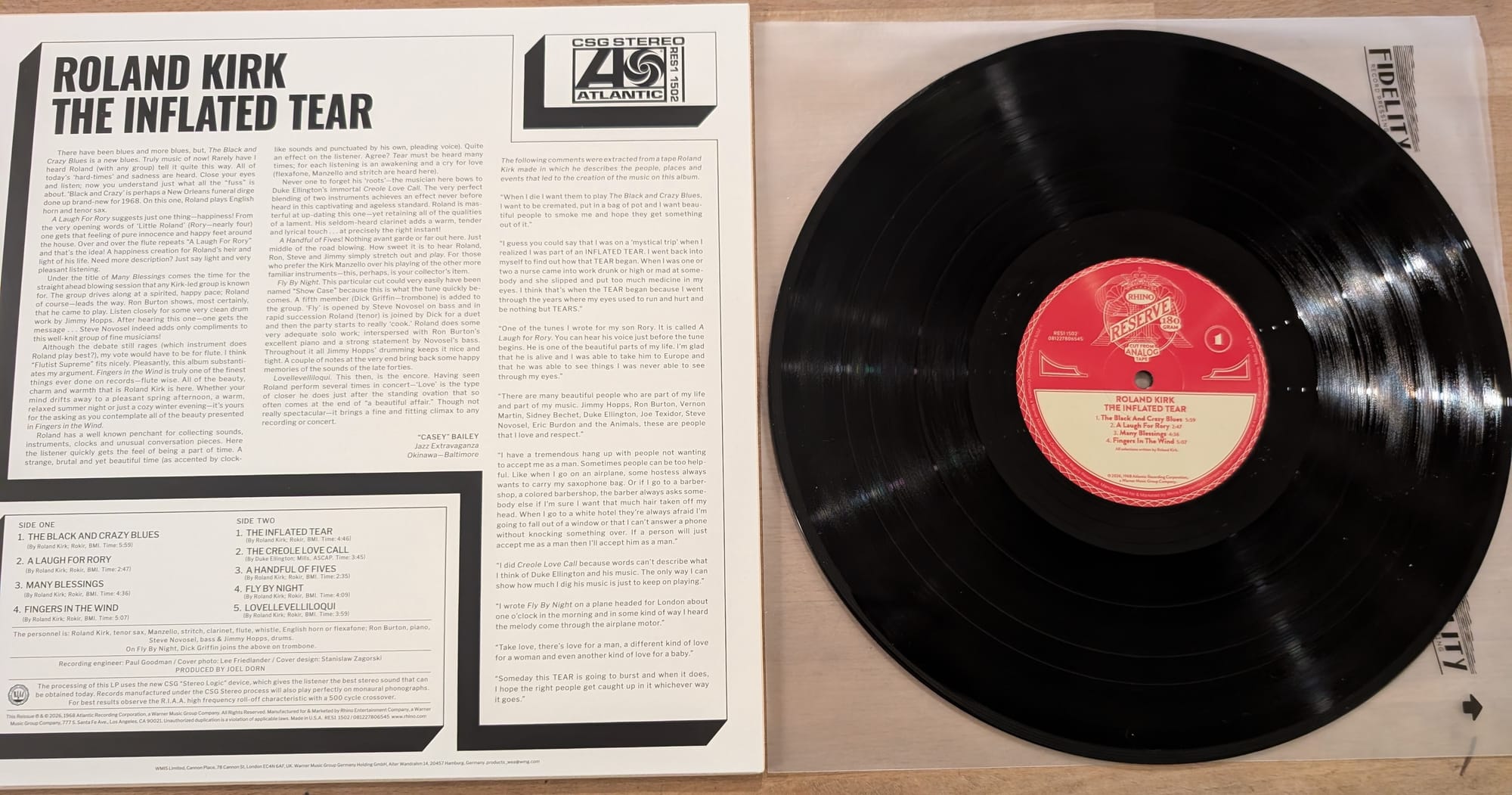
All of this sounds splendid on Matthew Lutthans’s new cut of the album. He balanced the individual instruments out nicely, pulling Burton’s playing further into focus and adding some welcome oomph to the bass work of Steve Novosel. It’s another remarkable job by the mastering engineer, but I don’t know if it’s going to be the version I’ll pull off the shelves in the future. In a shootout with my 1971 Atlantic copy (cut by Rob Grenell at Atlantic Studios and pressed at PRC Recording Company in Richmond, Indiana), the new version sounds almost too crisp and too clear. Kirk’s horn playing is rounder around the edges on the ’71 cut and, yes, a little warmer. It’s still plenty rude-sounding, but the harsher tones feel a little easier to swallow on the earlier pressing.
So while I’d recommend an original pressing from ’68 or the versions that were issued a few years later to anyone who can get their hands on them, the new Rhino Reserve edition of The Inflated Tear is still a fine way to get one’s Kirk fix. It’s also a perfect entry point into the unique discography of this truly singular artist. If you can handle this often wild journey, you’re in for a hell of a ride.
Rhino Reserve 1-LP 33 RPM 180g black vinyl
• New all-analog remaster of Roland Kirk’s 1968 album
• Jacket: Direct-to-board single pocket
• Inner sleeve: Fidelity Record Pressing–branded poly
• Liner notes, insert, or booklet: Original liner notes reprinted on back cover
• Source: Analog; “Lacquers cut from the original analog masters”
• Mastering credit: Matthew Lutthans at the Mastering Lab, Salina, KS
• Lacquer cut by: Matthew Lutthans at the Mastering Lab, Salina, KS; “MCL” in the deadwax
• Pressed at: Fidelity Record Pressing, Oxnard, CA
• Vinyl pressing quality (visual): A
• Vinyl pressing quality (audio): A
• Additional notes: Comes inside reusable poly sleeve sealed by hype sticker, as per other Rhino Reserve titles.
Listening equipment:
Table: Cambridge Audio Alva ST
Cart: Grado Green3
Amp: Sansui 9090
Speakers: Electro Voice TS8-2
Gordon Lightfoot: If You Could Read My Mind
Review by Ned Lannamann
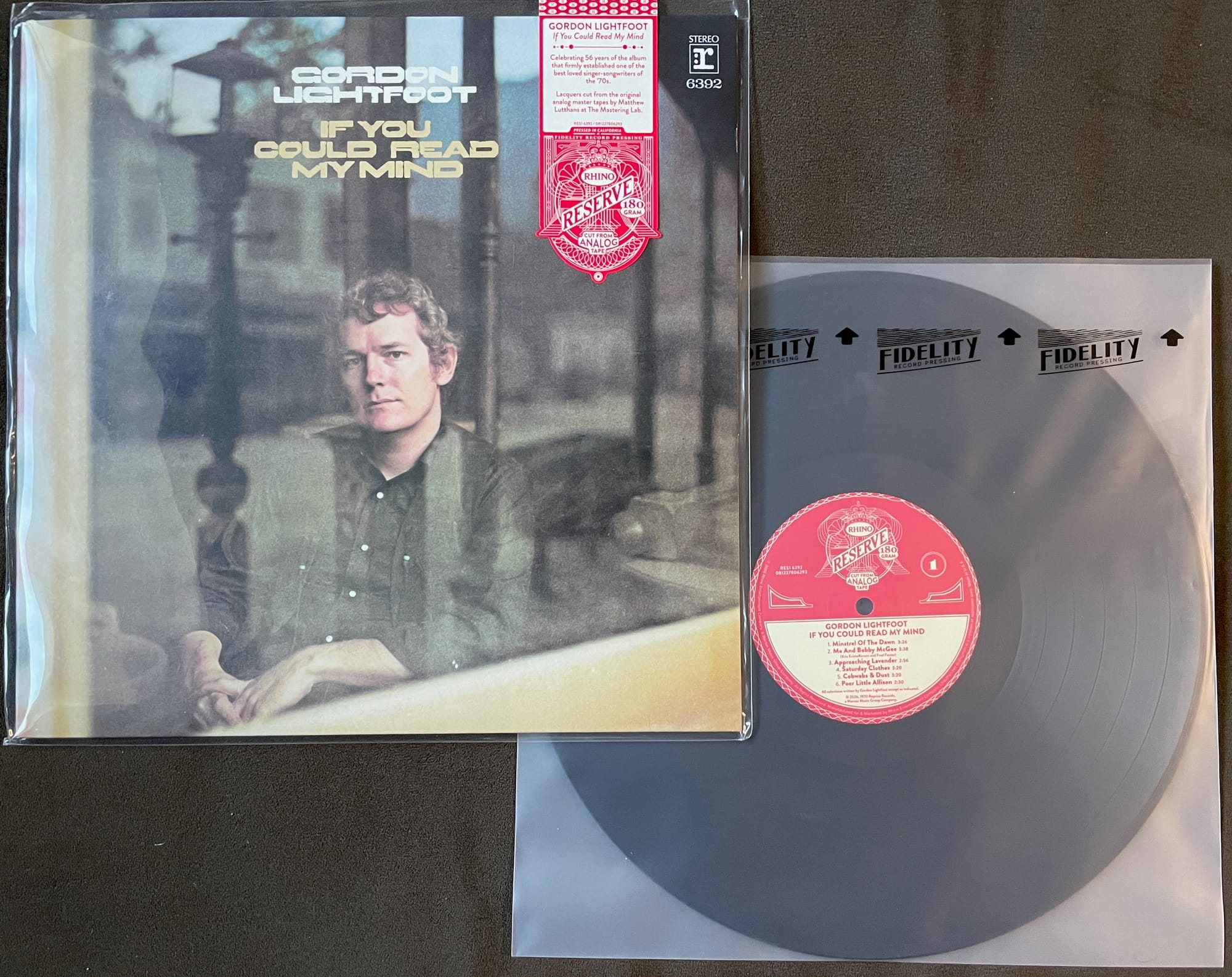
Gordon Lightfoot’s style was one of the dominant flavors of the singer/songwriter movement of the early 1970s, but the Canadian musician’s roots run deeper and his influences stretch much farther back. Older than most of his peers, Lightfoot was 27 by the time his debut album was released in 1966 and had already amassed a life’s worth of musical experience. He’d won contests and appeared on the radio as a choirboy in his childhood, studied jazz composition in LA, written commercial jingles, recorded a single in Nashville for RCA, performed on Canadian television, hosted a music TV show in the UK, and had his songs recorded by Peter, Paul and Mary and fellow Canadians Ian and Sylvia. His 1970 album If You Could Read My Mind—originally titled Sit Down Young Stranger—was his first for Reprise Records and indicated a leveling up in his music’s commercial prospects and production values.
Significantly, one of the songs on If You Could Read My Mind, “Your Love’s Return,” bears a parenthetical subtitle: “Song for Stephen Foster.” Foster was one of Lightfoot’s main influences, and this was the tradition he saw himself a part of: a long continuum of North American troubadourism and parlor song. One of the paradoxes of the singer/songwriter boom is that the songs originally came out of not just a folksong tradition but a practice of direct performance, where the songs could be played for an audience of a few people, or even just one. But the giant success of James Taylor, Carole King, and CSNY—and Lightfoot, for that matter—turned the intimate, personalized songwriting vernacular into a vehicle of mass transmission, with the stars’ contemplative musings standing in for the mood of the culture at large. Lightfoot’s easygoing, almost ego-less style was particularly well-suited for this metastasizing of the folk tradition.
If You Could Read My Mind—retitled when its namesake track became a hit in late 1970—is a parcel of sturdy little tunes, which producers Lenny Waronker and Joe Wissert have sweetened with taste and subtlety, if not exactly inventiveness. Randy Newman arranges strings on two tracks, and Nick DeCaro arranges them on two more; Ry Cooder, John Sebastian, and Van Dyke Parks all turn up for low-key contributions. The acoustic arrangements often take on the properties of a bird on the wing, with rapidly fluttering finger-picked guitars creating the sensation of more elongated, graceful motions. Lightfoot’s voice contains a pinched tonal precision, no doubt the result of his choirboy training, which gives the impression of a narrator who’s trying to impart the emotions of the story he’s telling while remaining at a slight bird’s-eye remove.
The immediately noticeable quality of the new Rhino Reserve pressing is one of utter realism. Lightfoot’s backing ensemble is a tight-knit one, with his quickstep acoustic augmented by Red Shea’s lead guitar—occasionally using what sounds like Nashville tuning—and Rick Haynes’s soothing electric bass. The thicket of plucked strings allows the string arrangements to drip down like honey and fill in the gaps. The new mastering, by Matthew Lutthans, provides a tight focus on all the component parts, scouring off some of the more dated elements of the music and making these tracks sound red-blooded and alive.
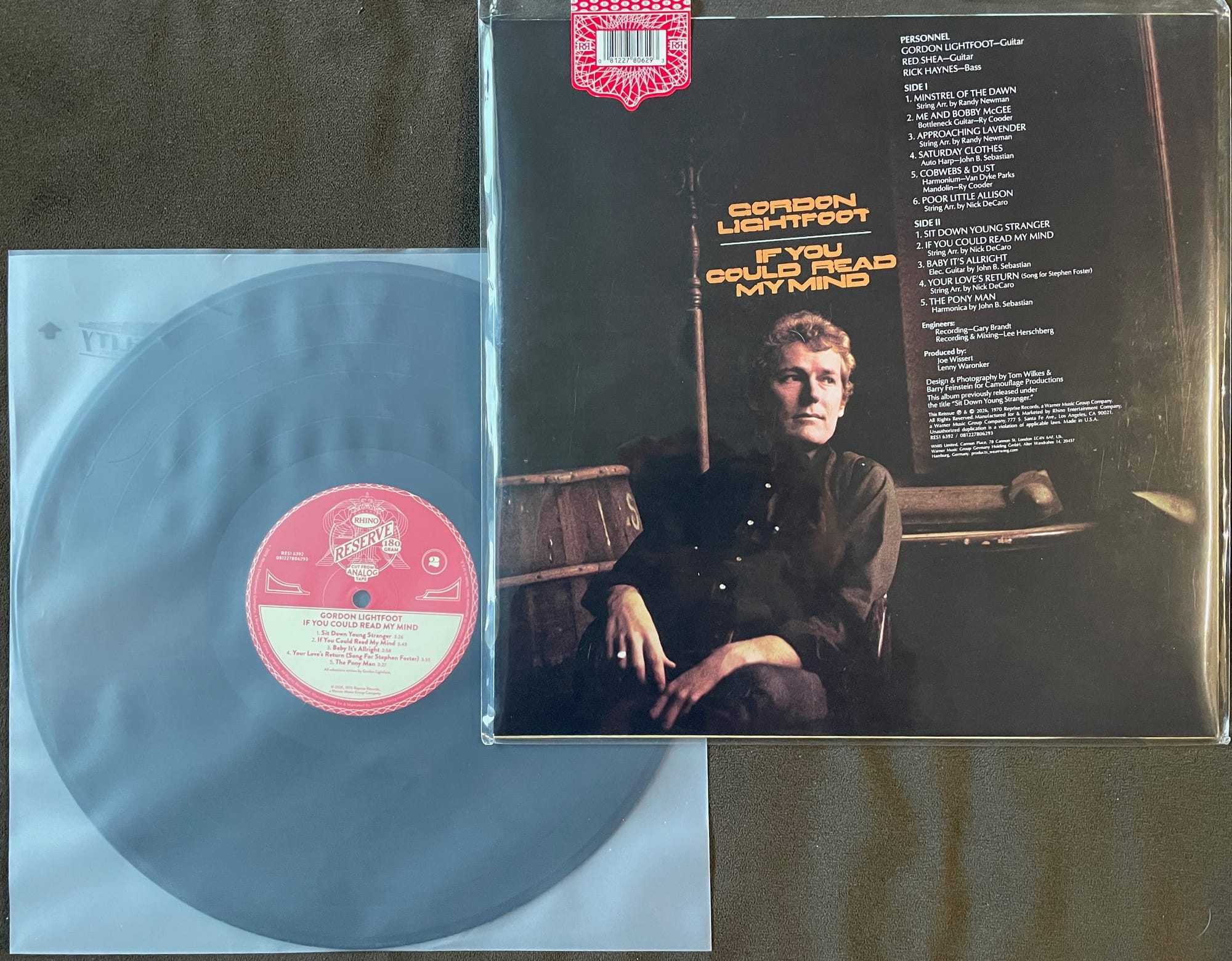
I have an earlier Reprise pressing of indeterminate origin that I believe dates from some point during the 1980s; it has markings in the deadwax from Capitol’s Winchester plant, but I think it was metalwork that was then shipped over to Specialty Records Pressing, as there’s Specialty’s telltale “EAST” stamped near the spindle hole. My point is that this is not a particularly notable mastering, but I was surprised at how well it held together. At no point did the more delicate components fall apart, and everything remained in careful balance.
Nevertheless, the new Lutthans cut is a marked improvement. Haynes’s bass actually possesses some basslike qualities, moving air in the room and not just providing barely audible counterpoint. More importantly, the overall feeling of the record is now of constant, continual motion, as if the musicians are painters quickly deploying brushstrokes before our ears. My Specialty pressing, on the other hand, is like a finished painting hanging on the wall, offering no impression of the buzz of activity. It’s a winsome, ripe-enough sound, but it feels preserved in amber—and the Rhino Reserve decidedly does not.
It’s a little odd that for this reissue, Rhino did not elect to recreate the album as it initially appeared in stores in 1970: under the title Sit Down Young Stranger and without any text on the cover. Instead, they have replicated the third-state jacket (the second-state being when it briefly bore the Sit Down Young Stranger title on the front). They likely figured most people would recognize it as If You Could Read My Mind and made a nostalgia play for as broad a base as possible. And without being too derogatory to the Canadian bard’s oeuvre, nostalgia is where a lot of Lightfoot lives for me. His sound is very much of its era, connecting the burgeoning evolutions of the early ’70s with older traditions—in Stephen Foster’s case, very old traditions—but without a whole lot of connective tissue to the musical movements that would follow. This Rhino Reserve pressing offers a glimpse at how fresh and vital this music must have sounded at the time of its creation.
Rhino Reserve 1-LP 33 RPM 180g black vinyl
• New all-analog remaster of Gordon Lightfoot’s 1970 album, which was originally titled Sit Down Young Stranger
• Jacket: Direct-to-board single pocket
• Inner sleeve: Fidelity Record Pressing–branded poly
• Liner notes, insert, or booklet: None
• Source: Analog; “Lacquers cut from the original analog master tapes”
• Mastering credit: Matthew Lutthans at the Mastering Lab, Salina, KS
• Lacquer cut by: Matthew Lutthans at the Mastering Lab, Salina, KS; “MCL” in the deadwax
• Pressed at: Fidelity Record Pressing, Oxnard, CA
• Vinyl pressing quality (visual): A
• Vinyl pressing quality (audio): A
• Additional notes: Comes inside a reusable poly sleeve sealed by a hype sticker, as per other Rhino Reserve titles.
Listening equipment:
Table: Technics SL-1200MK2
Cart: Audio-Technica VM540ML
Amp: Luxman L-509X
Speakers: ADS L980
America: America
Review by Robert Ham
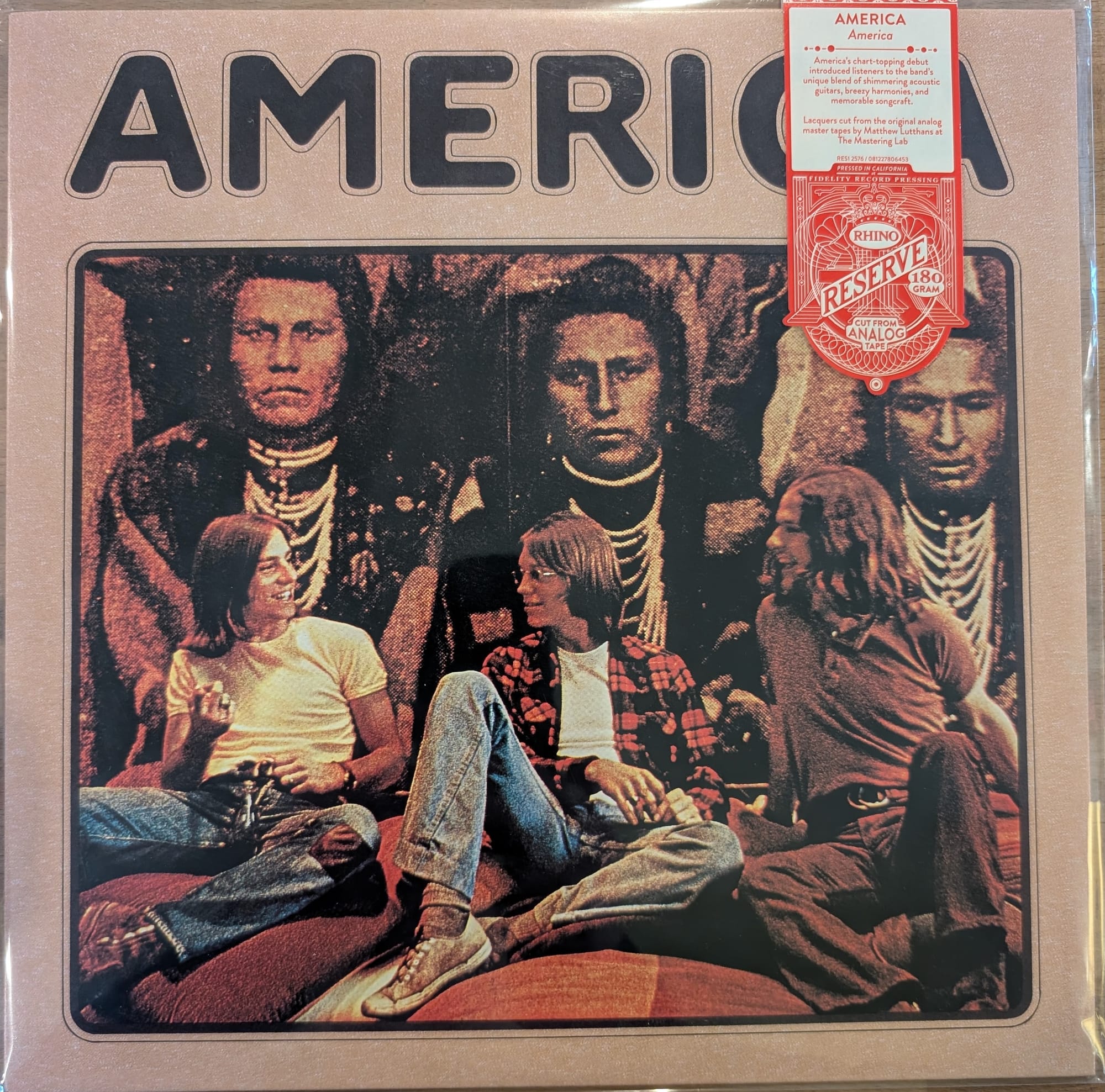
Yesterday, my colleague Ned rightly praised the Rhino Reserve series, both for the thoughtful treatment that the label gives to the titles in this series and for their decision to price these releases for the average consumer rather than the so-called audiophile. I also share his curiosity regarding some of the albums being chosen for the Rhino Reserve process. And I can think of no better example of this peculiar selection process than the recent re-release of the 1971 self-titled debut by soft rockers America.
The world isn’t hurting for readily available copies of America. A platinum seller in its original run, the album has been reissued a few dozen times over the last 45 years, including a 2013 Super Audio CD mastered by Steve Hoffman and some recent vinyl editions mastered by Friday Music CEO Joe Reagoso. And there’s even another on the way, as America is one of the first planned releases in the upcoming Acoustic Sounds 40 Series, with the album due to get the double-LP 45 RPM treatment.
Listening to this fresh Rhino Reserve pressing cut from the original analog tapes, the choice of America starts to make a fair amount of sense. Recorded primarily at London’s Trident Studios by Warner’s in-house UK producer Ian Samwell and the band’s manager Jeff Dexter with Beatles associate Ken Scott engineering the sessions, the music sounds pristine and soothing, rendered with bright colors and the precise placement of each instrument and voice. The team behind the boards help add some splashy bits of psychedelia to the mix, like feeding the backing vocals on “Here” through a Leslie speaker or the little guitar squiggles that zip through “Sandman” like the sparks of a live wire. Beyond those off-center touches, every last guitar strum and tight-knit three-part vocal harmony is just-so in the mix. Placed in the wrong hands, the reels from these sessions could become a hash of razor-like acoustic plucks and muddy low-end slop.
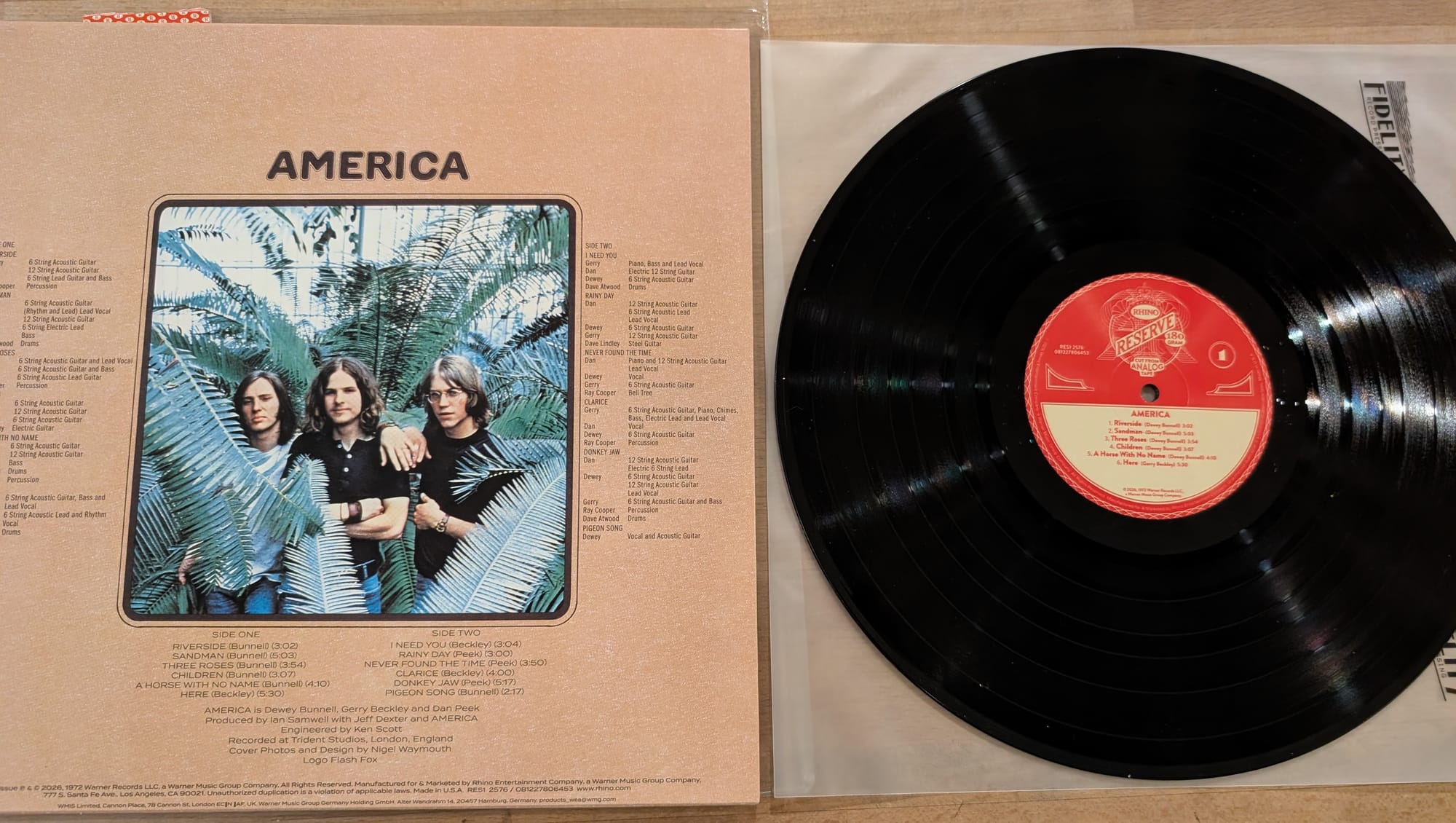
Matthew Lutthans at the Mastering Lab clearly understood the assignment. I don’t have any other physical version of America to compare this Rhino Reserve cut to, only the digital version on streaming services, but even then, I was surprised at how well this new LP comes out in comparison. The album is anchored by the vocal harmonies of founding members Gerry Beckley, Dewey Bunnell, and Dan Peek, and the interplay of their guitar playing, all of which sounds flat and crowded on the version streaming on Tidal. Lutthans’s cut lets these elements breathe, smoothing out the sharper acoustic guitar tones and beefing up Beckley’s bass work to provide a nice counterbalance to all the highs and mids. Every song billows forth with a sweet kick like a fresh batch of cotton candy. And as with all the Rhino Reserves I’ve reviewed to date, the pressing is as good as it gets: flat, noise-free, and perfectly centered.
If only the music on America felt worthy of such attentive care. The band, formed by the US-born sons of three servicemen stationed in London in the late ’60s, had the chops and pulled their influences from the right sources (CSNY, Joni Mitchell, and the Beatles) but on this debut, they didn’t offer up anything that felt immediate or grabby—at least not as the album was originally released in 1971. When America was first issued, it didn’t make any serious waves in the US or British markets. But the band followed it with the non-album single, “A Horse with No Name,” a devilishly catchy trifle that became an immediate hit. America was subsequently reissued with that chart-topping tune tacked on and quickly went platinum. To these ears, the addition of “A Horse with No Name” only emphasizes how pleasantly forgettable the rest of the album is. Listened to with intention, the lush sonics of the album provide some delights. In all other scenarios, America fades into the background like negative space or the whooshing hum of a white-noise machine.
Rhino Reserve 1-LP 33 RPM 180g black vinyl
• New all-analog remaster of America’s 1971 debut album
• Jacket: Direct-to-board single pocket
• Inner sleeve: Fidelity Record Pressing–branded poly
• Liner notes, insert, or booklet: None
• Source: Analog; “Lacquers cut from the original analog masters”
• Mastering credit: Matthew Lutthans at the Mastering Lab, Salina, KS
• Lacquer cut by: Matthew Lutthans at the Mastering Lab, Salina, KS; “MCL” in the deadwax
• Pressed at: Fidelity Record Pressing, Oxnard, CA
• Vinyl pressing quality (visual): A
• Vinyl pressing quality (audio): A
• Additional notes: Comes inside reusable poly sleeve sealed by hype sticker, as per other Rhino Reserve titles.
Listening equipment:
Table: Cambridge Audio Alva ST
Cart: Grado Green3
Amp: Sansui 9090
Speakers: Electro Voice TS8-2