Reviews: Van Morrison | The Beach Boys


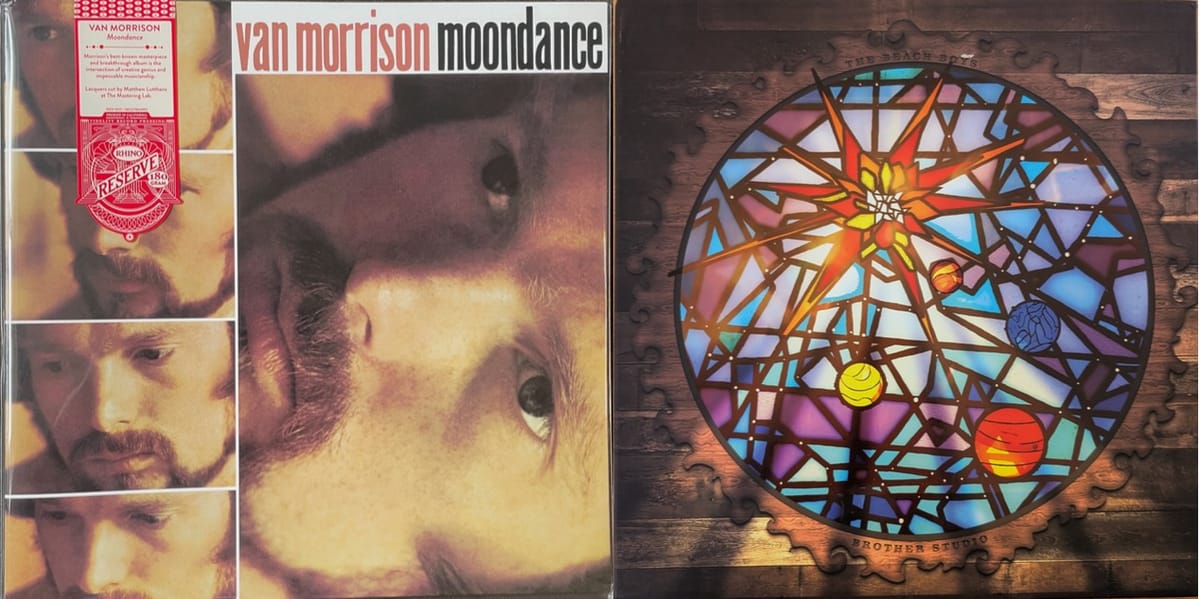
We’d like to help you ease into your weekend with some leisure reading in the form of two extended vinyl reviews. So we went long on some new releases that have been spending time on our turntables in recent weeks.
- Van Morrison: Moondance [Rhino Reserve]
- The Beach Boys: We Gotta Groove: The Brother Studio Years
Speaking of Rhino Reserves, they’ve just announced the next two in the series: They’re doing the first two studio albums from Dio, 1983’s Holy Diver and 1984’s The Last in Line, both due out on May 1. That first one in particular is a righteously rockin’ album, so it’s nice to see the Reserve line embracing the heavier and more metallic side of things. Confusingly, Rhino is about to re-release a box set of the first six Dio albums on colored vinyl, but provided you can wait for the upcoming Reserves, they’re virtually guaranteed to have better mastering and superior pressing quality. I don’t think it’s been confirmed 100 percent that they’re cut from analog tape, but it stands to reason that they will be. Like most of the Reserves so far, these will be available at brick-and-mortar stores for a bit before they go up on Rhino’s site.
In fact, I don’t think the Rhino Reserve I’m reviewing today is available at Rhino just yet, only in stores. And after the Beach Boys box set sold out during preorders, it looks like the repress has also sold out, with all outlets currently showing it as unavailable. Hopefully they press up more copies soon so that Beach Boys fanatics can get their hands on it, but it seems they dramatically underestimated demand.
Nevertheless, we’ve got these reviews for you, and we hope you’re able to track down copies of these records if you’re looking.
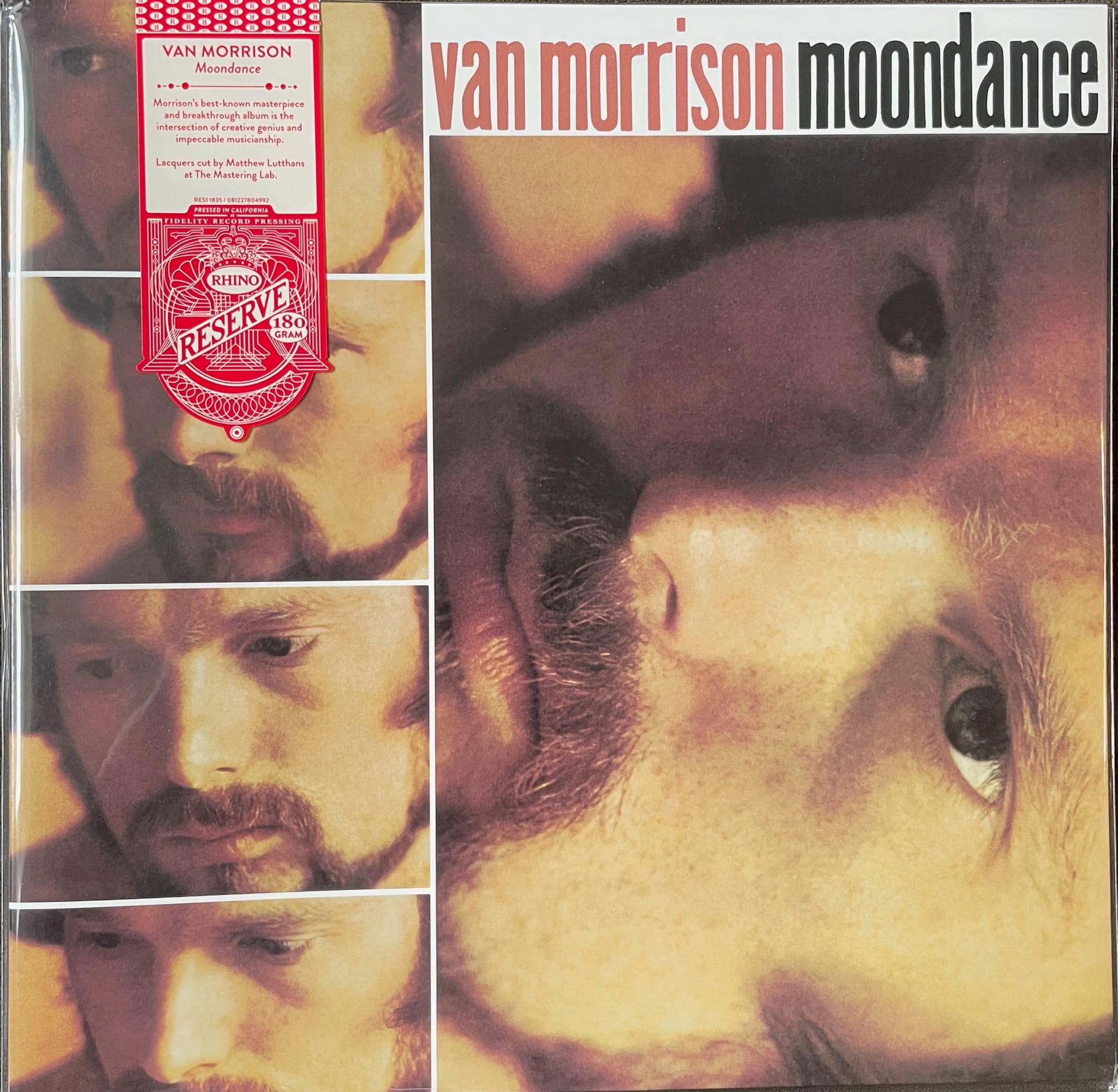
Van Morrison: Moondance [Rhino Reserve]
Review by Ned Lannamann
It’s hard to imagine now, but at the time, Astral Weeks was a flop. The 1968 album by Van Morrison—his first for Warner Bros. and his second solo album overall, following his tenure in the Belfast garage-soul band Them—is now commonly thought of as an artistic breakthrough and a masterpiece, but at the time it came close to ending Morrison’s career. So for the follow-up, Morrison was determined to succeed. He jettisoned the Boston-based musicians who had played on Astral Weeks and at his recent live shows, honed the edge of his songwriting skills, and delivered a pithy, undeniable set of 10 songs designed to right the ship.
The end result, of course, was 1970’s Moondance, the album that the bulk of Morrison’s reputation and commercial longevity is based on. It’s him at his best and most accessible, wielding his particular Irish poeticism in a watertight batch of romantic folk-soul ballads driven by bass, horns, and Morrison’s intrepid voice, which is capable of going from tender murmur (“Crazy Love”) to full-on blare (the title track). “And It Stoned Me” bears telltale traces of Stax soul, and “These Dreams of You” rolls along to a jaunty countrified groove—perhaps reminiscent of Bob Dylan and the Band, fellow residents of Morrison’s new homebase in Woodstock, New York. But songs like “Into the Mystic” are an altogether new kind of alchemy, a kind of Caledonian gospel that Morrison had first struck upon on Astral Weeks but which he now transposed to a pop-song format.
The album was recorded in New York, largely without the help of producer Lewis Merenstein, who had been the guiding force behind Astral Weeks but now found himself pushed aside as Morrison gained confidence. The recording sessions were instinctual and spontaneous, with Morrison often not coming in with more than a few chords on an acoustic guitar, but he pulled the sounds he wanted out of the musicians, some of whom were fellow Woodstock residents and ended up sticking with Morrison for years. The two horn players—Jack Schroer on alto and soprano sax, and Collin Tilton on tenor and flute—took center stage, while guitarist John Platania, keyboardist Jef Labes, and drummer Gary Mallaber kept their parts subtle. Bassist John Klingberg, meanwhile, didn’t just provide the tonal taproot for the other musicians to build on but gave Moondance its driving pulse.
It’s a phenomenally played album, and it’s always been a terrific, warm-sounding recording. But the history of the Moondance master is an exceedingly convoluted one, and I’ll see if I can explain it without letting things become tedious. First off, you should know that the new Rhino Reserve pressing is a bit unusual in that it’s cut from a high-resolution digital file and not the original analog master tapes. (This is presumably the reason why Rhino released it in their less-expensive Reserve line rather than their top-end Rhino High Fidelity series.) Apparently the tapes are no longer in workable condition, which is a bit of a shame.
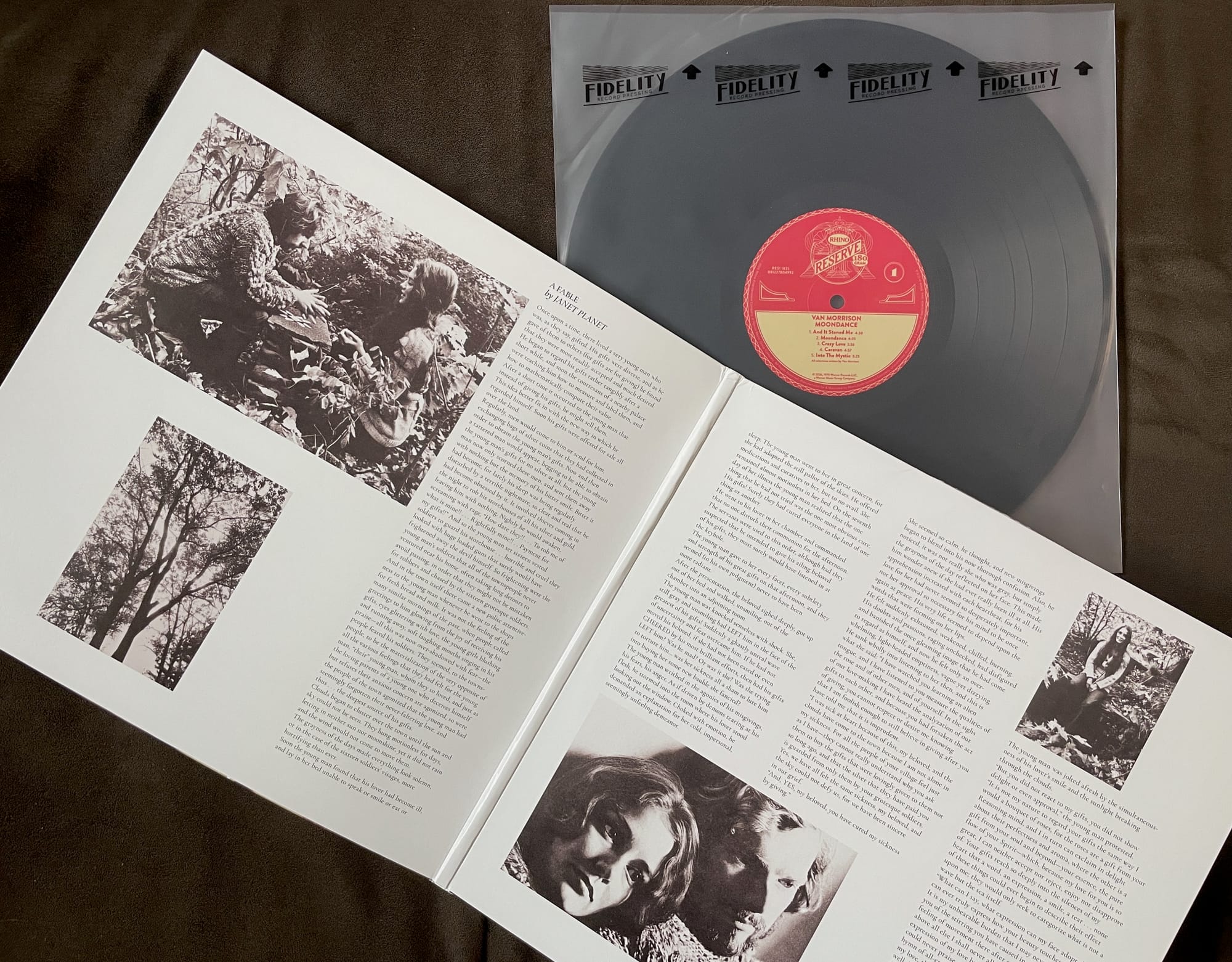
Matthew Lutthans, the mastering hand behind many of the recent, excellent-sounding Rhino Reserve albums, has done the work here as well, using the all-tube system at the Mastering Lab in Salina, Kansas. He also cut a 2-LP 45 RPM version for Analogue Productions using the same digital file, making for an interesting case study, in that the same engineer using the same source has cut both a 33 RPM and a 45 RPM of an album, allowing for easy comparison. Unfortunately, I don’t have the Analogue Productions 45 RPM version, so we’ll have to leave it to some other vinyl reviewer to provide the results of a shootout.
However, I do have a 1972 Warner Bros. green label pressing that was cut from tape, so I am able to provide a comparison of an original analog cut versus this new digitally sourced version. Before I get to that, however, I need to explain about the two different mixes of Moondance that are out there—actually, they’re entirely the same except for the song “Into the Mystic,” of which there are two noticeably different versions in circulation, one with a tambourine overdub by Morrison and one without it. The other big difference in the two “Into the Mystic” mixes comes after Morrison sings the line “when that foghorn blows,” when the saxophones and organ make a really wonderful musical imitation of a foghorn, with the organ’s rotating Leslie speaker making it sound especially evocative. On the tambourine mix, their chords do not fade in and out, but on the tambourine-less mix, they do.
The first pressings of Moondance, which have -1A, -1B, and -1C in the matrices, feature the “Into the Mystic” tambourine mix, as Morrison and Warner Bros. fully intended. But on subsequent represses, the mix without the tambourine was mistakenly used, all the way up through the 2000s, including on the initial CD versions. (For a detailed explanation of what exactly happened, I recommend Steve Hoffman’s detailed breakdown of the different mixes and how the wrong one got inadvertently swapped.) So for many years, the tambourine-less version became the commonly heard version. That has since reversed, starting with the 2008 version on vinyl; the current streaming versions also have the correct mix—in fact, the version without the tambourine is now the rarely heard one. (The Rhino Reserve, naturally, has the tambourine mix.)
It’s also worth detouring here for a quick history of Moondance’s recent pressings, on vinyl and otherwise. The 2008 vinyl pressing that reinstated the tambourine to “Into the Mystic” was mastered from analog tape by Kevin Gray and Steve Hoffman at AcousTech Mastering, with the deadwax bearing some variation of “KPG+SH@ATM” or “KPG@ATM.” Later, Kevin Gray cut a version from a digital transfer—not the tape—at his Cohearent Audio facility, with “KPG@CA” in the deadwax; that version was released in 2020 and is still currently available. There was also a deluxe CD/DVD boxset in 2013 that included many bonus tracks and outtakes, as well as a 5.1 remix by Elliot Scheiner, although a vinyl component was never released. Then in 2023, a Blu-ray edition appeared. For that, Steven Wilson did a new multichannel remix, this time for Dolby Atmos, and he also made a new stereo mix and an entirely instrumental mix. Wilson’s stereo remix came out on vinyl in 2023, in a triple-LP set that also contained some outtakes from the 2013 box set. (Yes, all the versions I’ve just mentioned have the damn tambourine.)
I mention all this to merely point out that it hasn’t been easy to keep track of which version of Moondance is in circulation, and this new digitally sourced pressing makes things even more complicated. The good news for obsessives is that there are lots of versions of Moondance to track down, and most of them have something to offer. The good news for the less-obsessive is that this latest version—the Rhino Reserve—should be readily available and affordable, and it sounds darned good.
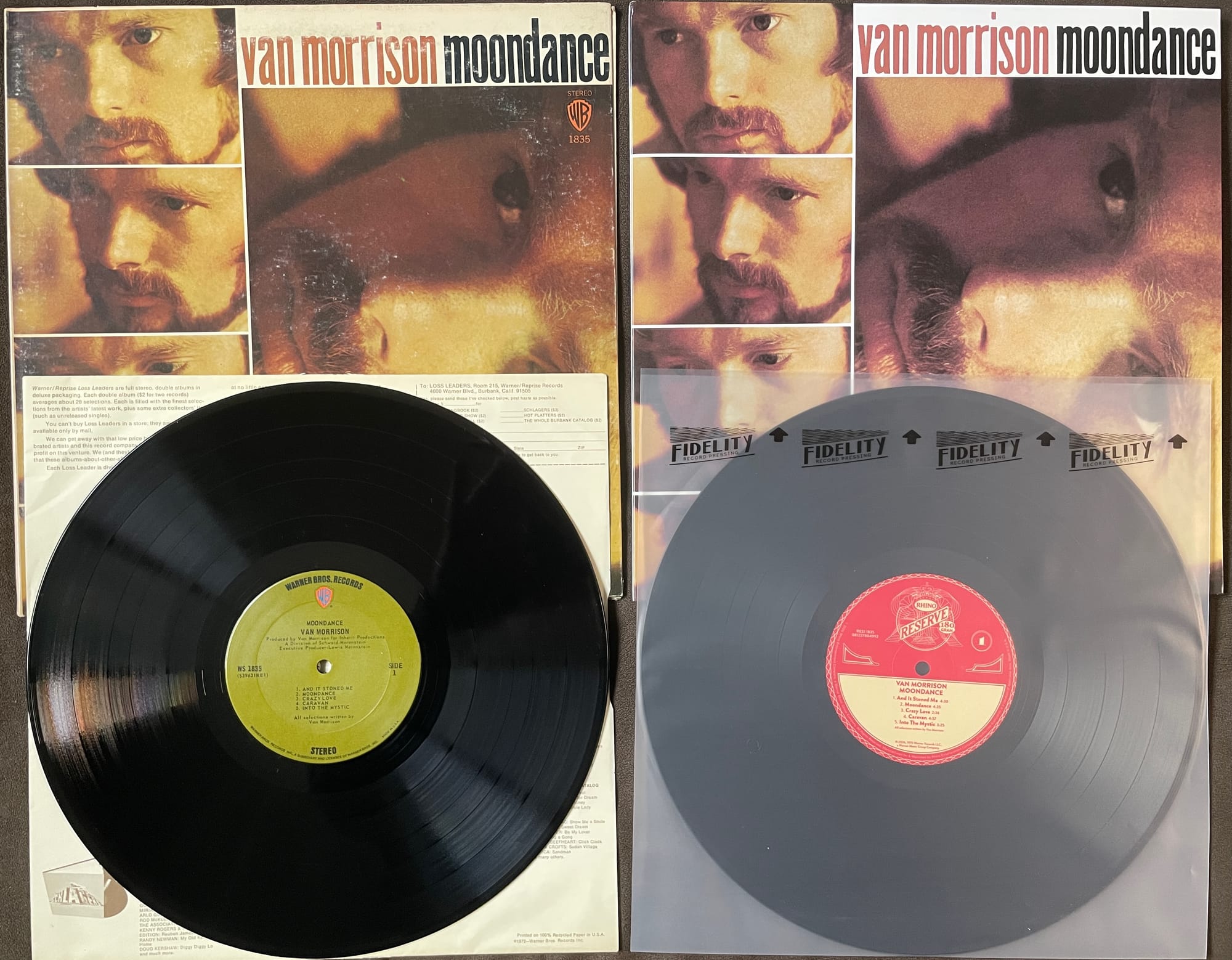
But I won’t be getting rid of my 1972 green label pressing anytime soon. (Pressed at Terre Haute, it has -1B/-1A matrices, meaning it contains the tambourine mix.) It has a spark and freshness that I really love; the snare pops, the bass soothes, and Morrison sounds wonderfully alive. There’s also a three-dimensional quality that I don’t hear on the Rhino Reserve. For example, in “Crazy Love,” the backing vocalists—Cissy Houston (credited on the jacket as Emily Houston), Judy Clay (of “Private Number”), and Jackie Verdell—are pulled down in the mix so as to not overwhelm Morrison’s cooing falsetto. On my green label pressing, they sound as if they’re watching Morrison from afar, several meters back behind the speakers. But on the Rhino Reserve, they’re merely quiet, as if they’re sharing the same space with Morrison and sound unnaturally small in comparison. This has generally been my experience with digitally sourced vinyl, even when it sounds fantastic—some of the holographic quality of the music is lost, with the music being projected on a two-dimensional field, like a movie screen. Of course, this may be due to the limitations of my setup or my own particular brain chemistry.
The Rhino Reserve pressing also draws out the reverb in a way that struck me as slightly unbalanced. I hadn’t really noticed before, but the echo chamber was heavily used in the recording; on my older pressing, the reverb is integrated into the mix, perhaps with either the mastering deemphasizing it or the limitations of the older technology swallowing it up somewhat; the properties of the vinyl itself may also be somewhat responsible. The digital transfer used on the Reserve pressing seems to have captured every last little bit of decay, making it omnipresent in certain places. This may be more accurate to the original recording, but I found that it occasionally draws attention to itself.
Otherwise, the Rhino Reserve pressing is pretty remarkable. The bass is fully saturated but not overwhelming, with an assertive, anchored presence that matches the album’s bass-driven arrangements. The definition around the players is crisp and clean, and the articulation of the different instruments is superb, removing any sense of clutter or confusion in the mix, not that there was much to begin with. The overall sound to me is a little like an album cover with a glossy finish, as opposed to a matte finish. There’s a sparkle and smoothness that occasionally gives off a distracting glint, but on the whole it’s lush, involving, and full of realism. It sounds so good that I have trouble imagining what could be bettered on the Acoustic Sounds 45 RPM version.
Best of all, the new Rhino Reserve pressing is a living reminder of why this album has experienced so many pressings and iterations over the years: It’s just a fantastic piece of work, with plenty of gentleness and beauty but also welcome hits of pep in upbeat songs like the phenomenal “Glad Tidings” and the slightly more conventional “Come Running.” (Isn’t it crazy that, out of all the future classics on this album, “Come Running” was chosen as the single?) And on tracks like “Caravan” and “Into the Mystic,” something truly magical happens, and Morrison harnesses a unique blend of soul, blues, jazz, Irish folk, and a hint of rock ’n’ roll. If Moondance was calculated to be the commercial antidote to the free-flowing, elusive Astral Weeks, it succeeded in getting listeners on Morrison’s wavelength. And the new Rhino Reserve pressing puts you right there.
Rhino Reserve 1-LP 33 RPM 180g black vinyl
• New remaster of Van Morrison’s 1970 album
• Jacket: Direct-to-board gatefold
• Inner sleeve: Fidelity Record Pressing–branded poly
• Liner notes, insert, or booklet: None; Janet Planet’s “A Fable” is reproduced inside the gatefold
• Source: Digital
• Mastering credit: Matthew Lutthans at the Mastering Lab, Salina, KS.
• Lacquer cut by: Matthew Lutthans at the Mastering Lab, Salina, KS; “MCL” in the deadwax
• Pressed at: Fidelity Record Pressing, Oxnard, CA
• Vinyl pressing quality (visual): A
• Vinyl pressing quality (audio): A (flawless; dead-silent backgrounds)
• Additional notes: Comes inside a reusable poly outer sleeve sealed by a hype sticker, as per other Rhino Reserve titles.
Listening equipment:
Table: Technics SL-1200MK2
Cart: Audio-Technica VM540ML
Amp: Luxman L-509X
Speakers: ADS L980
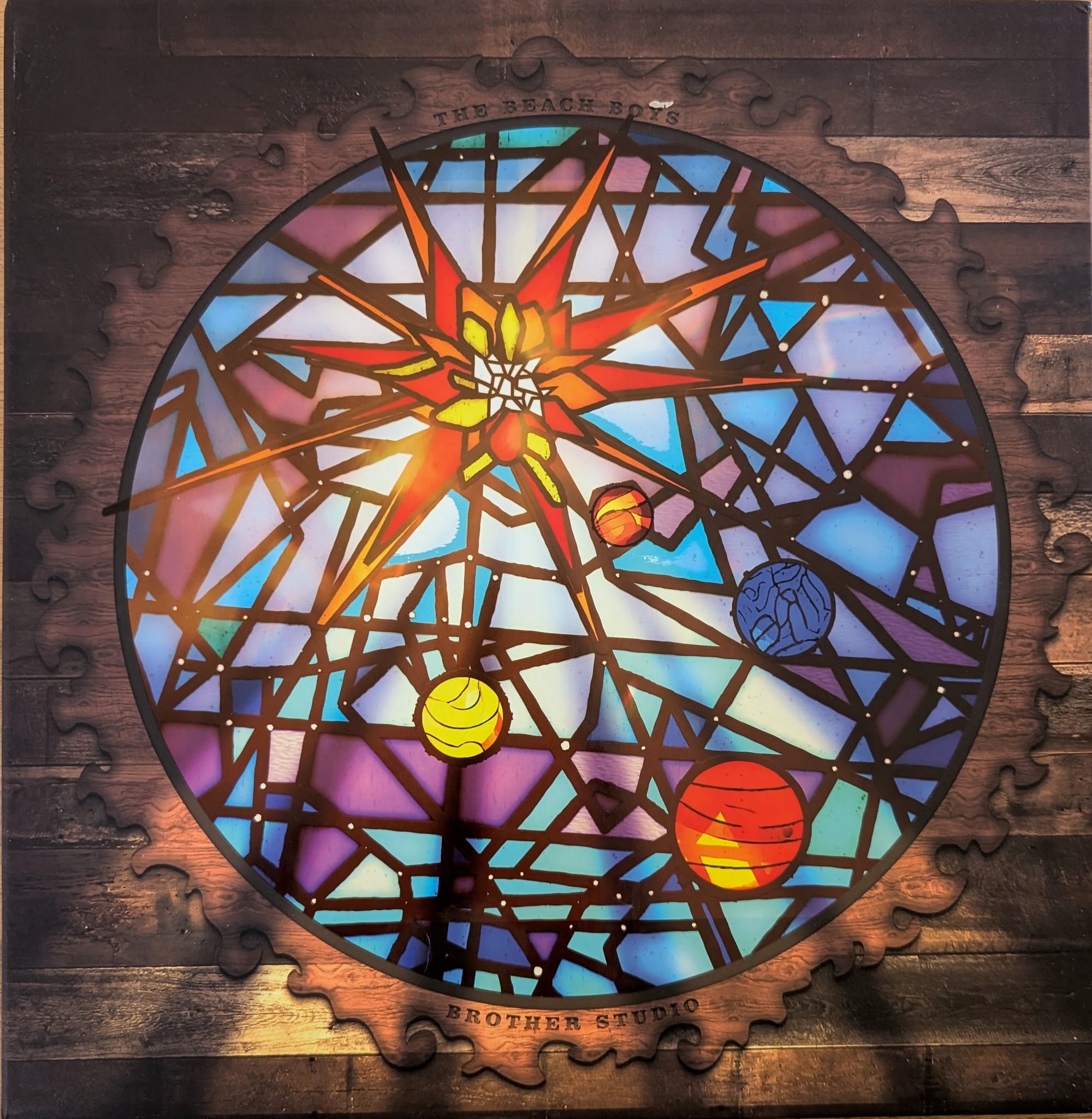
The Beach Boys: We Gotta Groove: The Brother Studio Years
Review by Robert Ham
The Beach Boys are no strangers to reissuing and recycling their recorded work. As of this writing, there are well over 500 entries in the “Compilations” section of the California pop group’s Discogs page. Many have been issued by their longtime home Capitol Records; many more have come from random imprints like Everest, Golden Circle, and Cracker Barrel’s in-house record label.
Though that practice continues to this day with almost annual Greatest Hits compilations, the band has, in recent years, been treating their recorded legacy with some well-earned respect. Since the 2013 release of The Big Beat: 1963, the copyright-extending collection of demos and recordings Brian Wilson made with artists like the Honeys and Gary Usher, Universal (the owner of Capitol) has been tracking the evolution of the Beach Boys chronologically through sets of music culled from the group’s archives, released in physical or digital form. Early entries in this series have been great, including 2018’s Wake the World: The Friends Sessions, a digital collection of fascinating outtakes and alternate versions of songs recorded for the 1968 album Friends, and the Sunshine Tomorrow series from 2017 that gathered more than 100 tracks from sessions and live dates for arguably the band’s last masterpiece, 1967’s Wild Honey.
But just as the albums after Wild Honey got exponentially weaker on a creative level, these archival releases have become less and less exciting. Tucked within 2022’s Sail On Sailor - 1972 was a fantastic recording of the band performing live at Carnegie Hall, but it was surrounded by the goopy tunes the Beach Boys were working on for 1972’s Carl and the Passions - “So Tough” and 1973’s Holland.
The soup has gotten exceedingly thin with the recent release of We Gotta Groove: The Brother Studio Years. The 3-LP/3-CD box focuses on a particularly complicated period of the band’s history in the mid-’70s. At the time, they were on a commercial upswing. In 1974, Capitol Records released Endless Summer, a double-LP set containing 20 of the group’s teenage symphonies to girls, surfing, and cars. Tapping into the nostalgic nerve stirred awake by, in part, American Graffiti, the compilation went on to sell three million copies. Capitol followed it up the next year with a second compilation, Spirit of America, which hit number eight on the Billboard chart. Lit by that spark, the Beach Boys became a huge concert draw, both at their own headlining shows and opening for Elton John and the Grateful Dead.
Naturally, the band wanted to capitalize on this favorable turn of events by releasing some new material that could keep them at the top of the charts. And the best person to take the Beach Boys there was the person whose work made them stars in the first place: Brian Wilson. The trouble was that the famed songwriter was coming out of a particularly rough patch after years of drug and alcohol abuse had left him emotionally and mentally fragile. His contributions to recent Beach Boys albums had been minimal and, even though he was healthier after receiving some dubious treatment from psychologist Dr. Eugene Landy, there was some worry whether he’d be up to the task of leading sessions for a new album.
Still, Brian’s brothers Carl and Dennis, his cousin Mike Love, and their pal Al Jardine worked to set him up for success. The band bought a former adult movie theater in Santa Monica and turned it into a recording house, Brother Studio, where they could have the run of things and record with the comforts but not the distractions of home. With their encouragement, Brian rose to the occasion… sort of. He was back to writing songs at a steady clip and steering the Beach Boys ship into projects like a planned double LP of original material and cover versions of their favorite early rock tunes. The only problem was that Brian’s new songs weren’t great. He leaned hard on the honking, wowing sounds of the Minimoog and ARP synthesizer, wrote songs for a large jazz ensemble, penned odes to late-night host Johnny Carson and transcendental meditation, and recorded a bewildering version of “Shortenin’ Bread,” a turn-of-the-century folk song that obsessed him. Brian Wilson was deep in the weeds and dragged his longtime bandmates and family members with him.
The albums that came out of this period, 1976’s 15 Big Ones and 1977’s The Beach Boys Love You, are two of the most divisive in the group’s catalog. Critics and fans at the time didn’t know what to make of them, but they’ve since gained a weird cult following. R.E.M. guitarist Peter Buck, for example, cites Love You as his favorite Beach Boys album. A following has also grown around Adult/Child, an album that was intended to be released in 1978 but was nixed when Love You flopped commercially. It has since been bootlegged and talked about rapturously by Beach Boys obsessives like Robert Dayton, who wrote in the book Lost in the Grooves, “The original numbers always dance just a step away from the cliché, dealing with simple lyrical themes that make you wonder why they had never been explored before.”
Those folks who canonize this stretch of the Beach Boys’ discography are going to be thrilled with We Gotta Groove. The multi-disc set digs deep, officially putting the Adult/Child material into the world, dusting off piano demos Brian Wilson made for Love You at Brother Studio in October 1976, and dredging up a ton of other unreleased material from the time. It’s a lot, and it’s a mess. I wouldn’t dare dismiss all of this work out of hand, as there are still some sparks of brilliance scattered throughout. Love You’s “The Night Was So Young” is a lovely midtempo expression of unrequited love sung by Carl and Brian, while “Short Skirts” and the title track for this set are both absolute gems. I’m also weirdly fond of “I’m Trying to Say,” a goofy, swinging tribute to baseball sung by Dennis Wilson that was intended for Adult/Child. The rest of the set is a hash of failed experiments and fumbled attempts at profundity that I can’t even enjoy ironically.
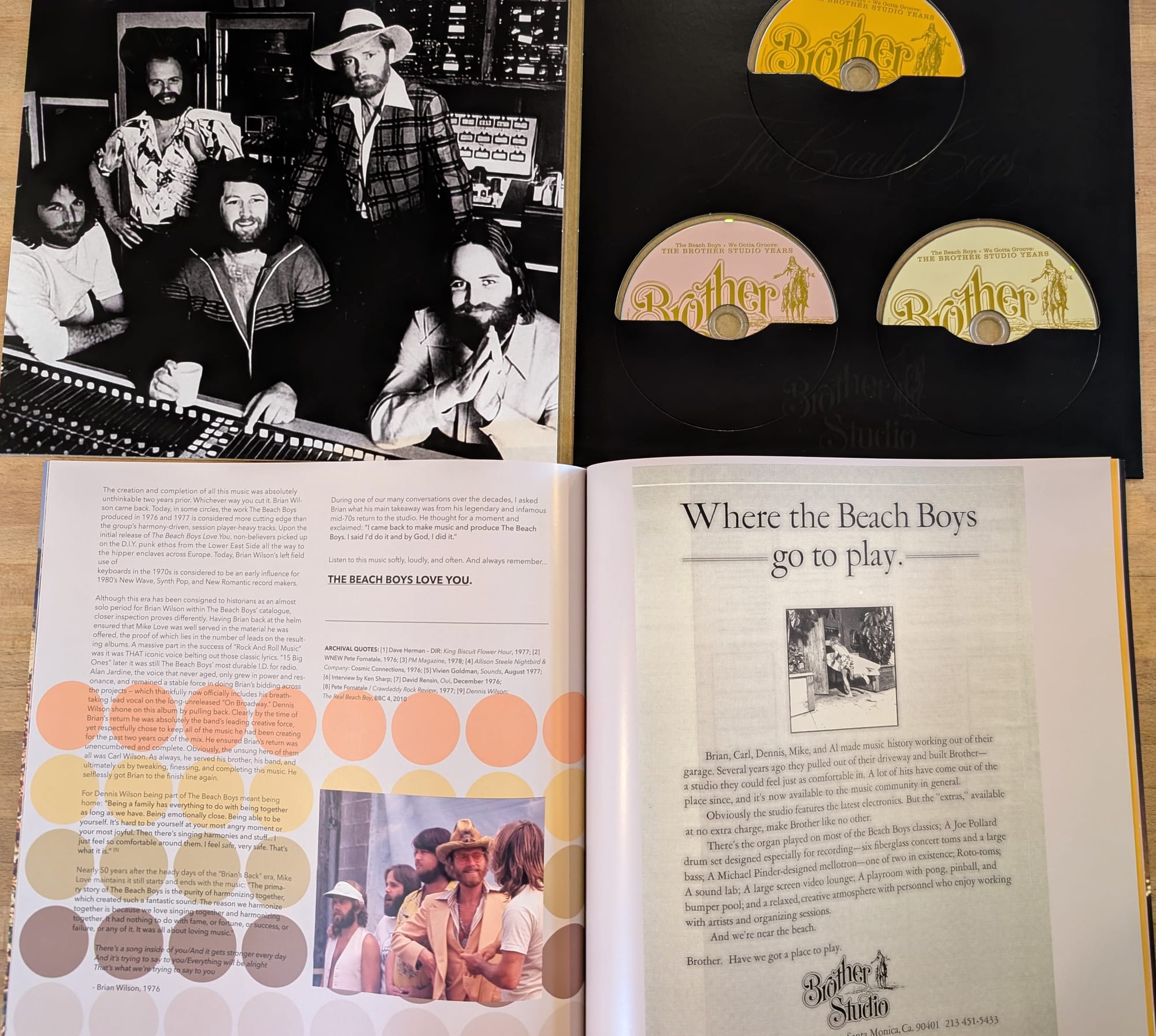
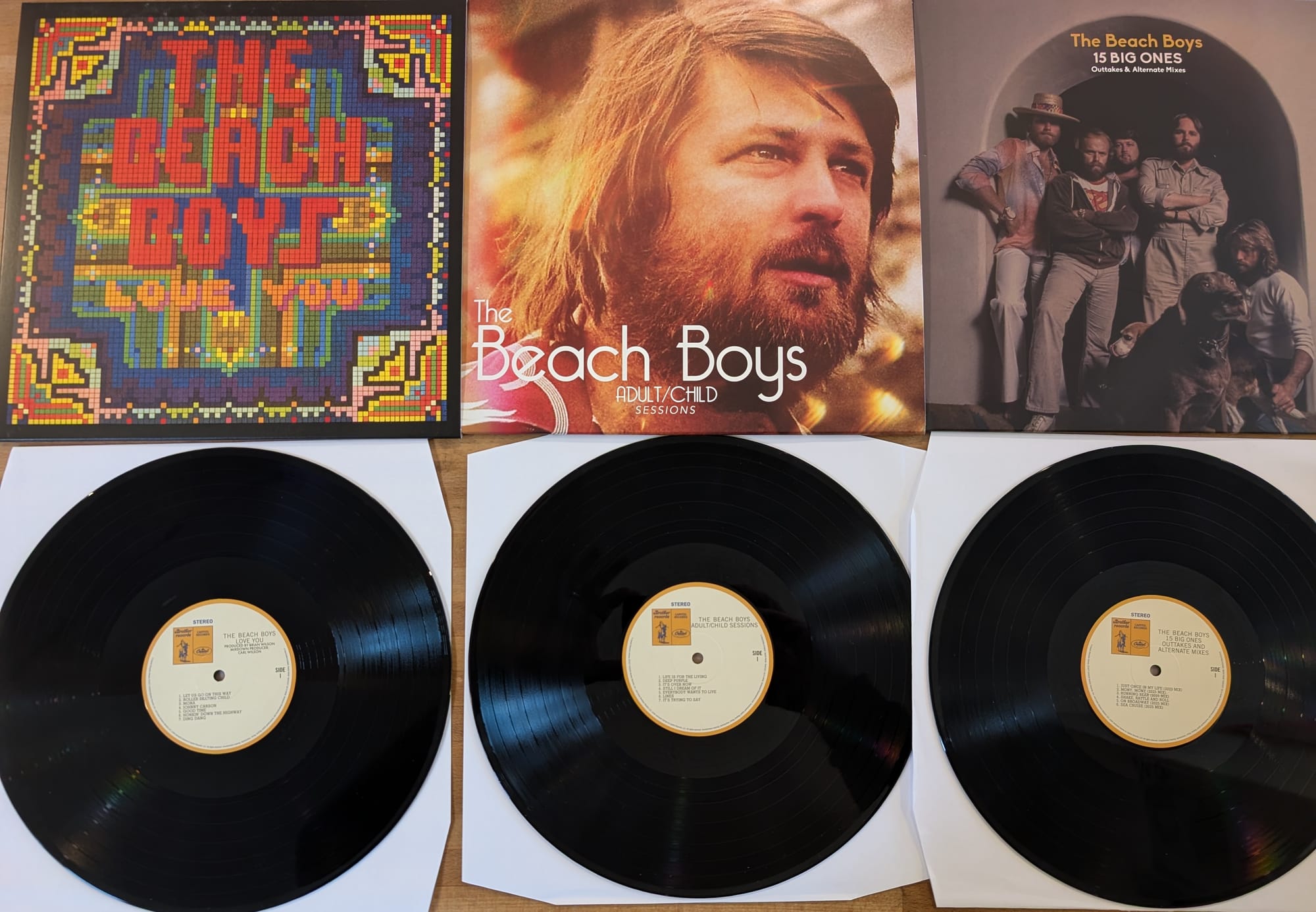
I will gladly give credit, however, to the producers of We Gotta Groove for the effort they put into producing and presenting this material in the best light possible. The three LPs in the box—the original 1977 mix of Love You, the prospective Adult/Child album, and a collection of outtakes and alternate mixes of material from 15 Big Ones—look and sound great. The vinyl is flat and centered, and the music, mastered by former Capitol mastering engineer Robert Vosgien at his studio in Burbank, California, is clear, rich, and detailed. Even in the big-band numbers on Adult/Child, each instrument is audible, and the balance of these various elements is clean and precise. I could enjoy each spin from a technical standpoint even as the music and lyrics made me cringe. And I really applaud Beach Boys expert Howie Edelson for writing an unvarnished account of the creation of these works in the liner notes. Jardine and Love do their best to justify misfires like “Life Is for the Living,” a truly wretched song Brian hoped would be recorded by Frank Sinatra, but Edelson pulls no such punches.
There’s a touch of revisionism to the set, however. For some reason, the producers opted to not include the original version of 15 Big Ones in the set, representing the album instead through instrumental backing tracks and tunes that didn’t make the cut, like their versions of Tommy James’s “Mony Mony” and the Drifters’ peerless hit “On Broadway.” Sure, this avoids the inclusion of Al Jardine’s truly off-putting “Susie Cincinnati,” but it skips over their great cover of Chuck Berry’s “Rock & Roll Music,” which was a top 10 hit in 1976.
Then there’s the disappearance of “Hey Little Tomboy” from the Adult/Child material. It’s a truly odious Brian Wilson original that today plays less like a cutesy tale of a man encouraging a boyish girl to embrace her feminine side and more like a case of grooming. I respect the decision to clip that from the historical record, even though I’d much prefer a more warts-and-all approach to reissues like this. And it’s not like the Beach Boys are out of the woods yet. “Tomboy” was eventually re-recorded by the band for their next release, 1978’s M.I.U. Album. Will they dare leave it untouched if and when they decide to put the next archival box set together? God only knows.
Capitol/Brother/UMe 3-LP 33 RPM black vinyl
• Box set containing 1977’s The Beach Boys Love You, selections from the Adult/Child sessions, and outtakes and alternate mixes of tracks from 1976’s 15 Big Ones
• Jacket: Direct-to-board single-pocket with outer slipcase
• Inner sleeve: White poly-lined
• Liner notes, insert, or booklet: 40-page perfect bound booklet featuring an essay from Beach Boys’ biographer Howie Edelson, photos, and session credits
• Source: Unknown, assumed digital
• Mastering credit: “Robert Vosgien Mastering, Burbank, CA”
• Lacquer cut by: Unknown
• Pressed at: GZ Media, Czech
• Vinyl pressing quality (visual): A
• Vinyl pressing quality (audio): A
• Additional notes: Also includes CD copies of all three albums with multiple bonus tracks.
Listening equipment:
Table: Cambridge Audio Alva ST
Cart: Grado Green3
Amp: Sansui 9090
Speakers: Electro Voice TS8-2