New vinyl reissues: January 2, 2026, plus some last-minute 2025 superlatives


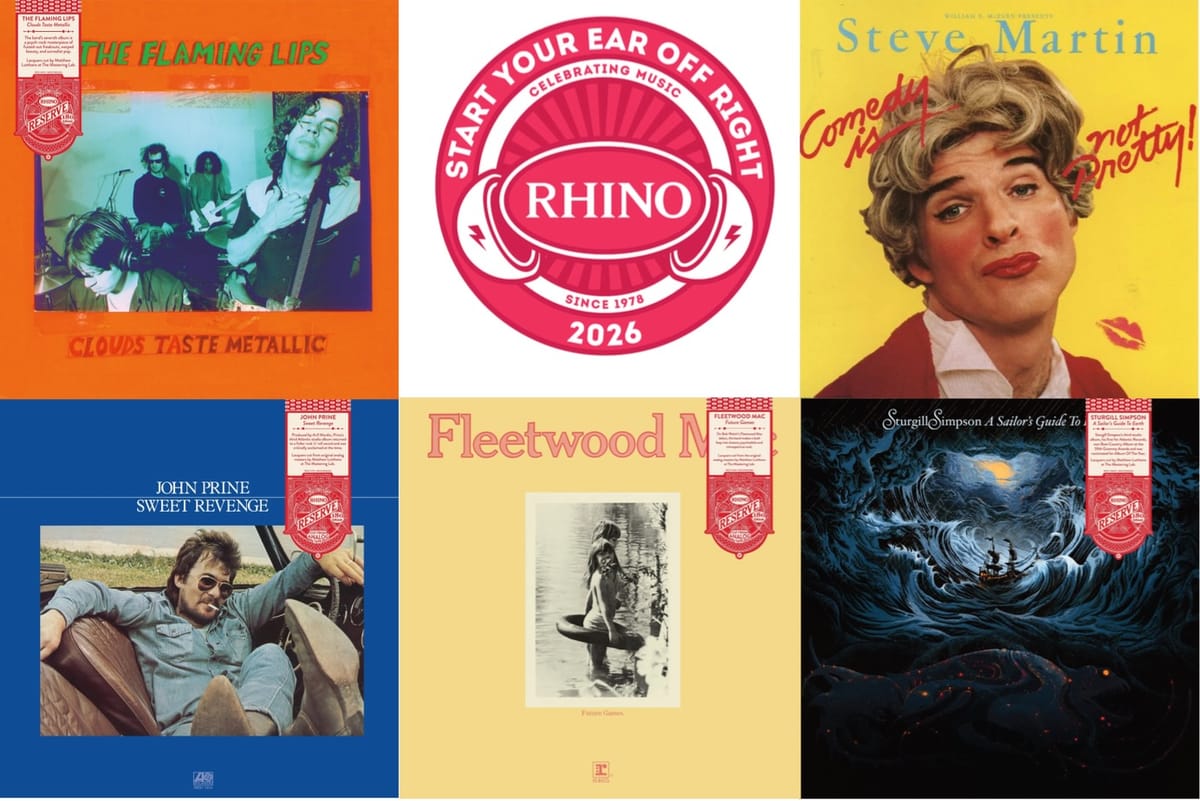
Happy New Year! For our first post of the next year of your life, we’ve got our usual weekly new-reissue roundup. But... it’s a pretty slow week. In fact, the only game in town is Rhino, who are beginning their annual Start Your Ear Off Right campaign this Friday by releasing vinyl reissues and represses to brick-and-mortar record stores, with more to follow each Friday in January. We’ll break down what the Start Your Ear Off Right (SYEOR) campaign has in store this week in the second half of this newsletter.
But since the roundup is on the slim side, we also wanted to include some last-minute superlatives for 2025. These are vinyl-related things that we didn’t get a chance to talk about in the newsletter or that predated our launch in September. It’s our last-minute look back at the things that brought joy to our turntables in 2025. Here’s to 2026!

Reissue I’m Most Bummed I Didn’t Get a Chance to Cover
Um Violão em Primeiro Plano, the 1971 album by Brazilian guitarist Rosinha de Valença, is a magical journey through all kinds of wonderment. The title means “a guitar in the foreground,” and that’s exactly what you get, as de Valença traverses MPB, bossa nova, pop, classical-style guitar, jazz, and more. It’s a record where you never know what’s coming next, like a late-night radio show from a really killer DJ. Reissued by Music on Vinyl in 2024 on green vinyl, it got a black-vinyl repress in 2025 and has become one of my most-spun scores of the year, with more-than-adequate digital mastering and a super-clean pressing from Record Industry. Considering that originals go for triple digits, and extracting one from South America would add on another hefty surcharge, I’m thrilled to have this beauty stationed next to my turntable for any and all situations. (Honorable mention: The Complete Stax/Volt Singles 1959–1968 Volumes 3–6. These vinyl renditions of the seminal 1991 CD box set are superb. They’re some of the best things I’ve spent my money on this year.) NL
Coolest Vinyl Cut Subscriber
As a father of three, I know the dangers of playing favorites. That’s why it pains me to have to say that, while I appreciate every last one of our subscribers, psych-folk singer-songwriter Jerry David DeCicca has you all beat. Why? Not long after signing up for the newsletter, Jerry kindly mailed us two albums of his original material that he recorded and released on his personal label, Sophomore Lounge: 2023’s New Shadows and 2025’s Cardiac Country. Based in Bulverde, Texas, DeCicca is a former member of the folk-rock ensemble the Black Swans and occasionally works as a record producer for fellow outsider Americana artists like Ed Askew and Ralph E. White. Since 2014, he’s been a solo act, releasing a fantastic series of albums that fit neatly within the sincere yet spaced-out strain of Americana where you’ll find artists like Wooden Wand and Cassandra Jenkins. The two records he sent to The Vinyl Cut are some of his finest work yet. New Shadows finds DeCicca tapping into the influence of the awkward ’80s work of legends like Lou Reed and Lindsay Buckingham and calling upon a murderer’s row of collaborators like guitarist Jeff Parker, saxophonist James Brandon Lewis, and fellow singer-songwriter Rosali. His most recent album Cardiac Country was made in the months before DeCicca had to have open-heart surgery to replace an aortic valve, a diagnosis that imbued these songs with defiance, fear, gratitude, and empathy. RH
Record I’m Most Thrilled I Finally Got My Hands On
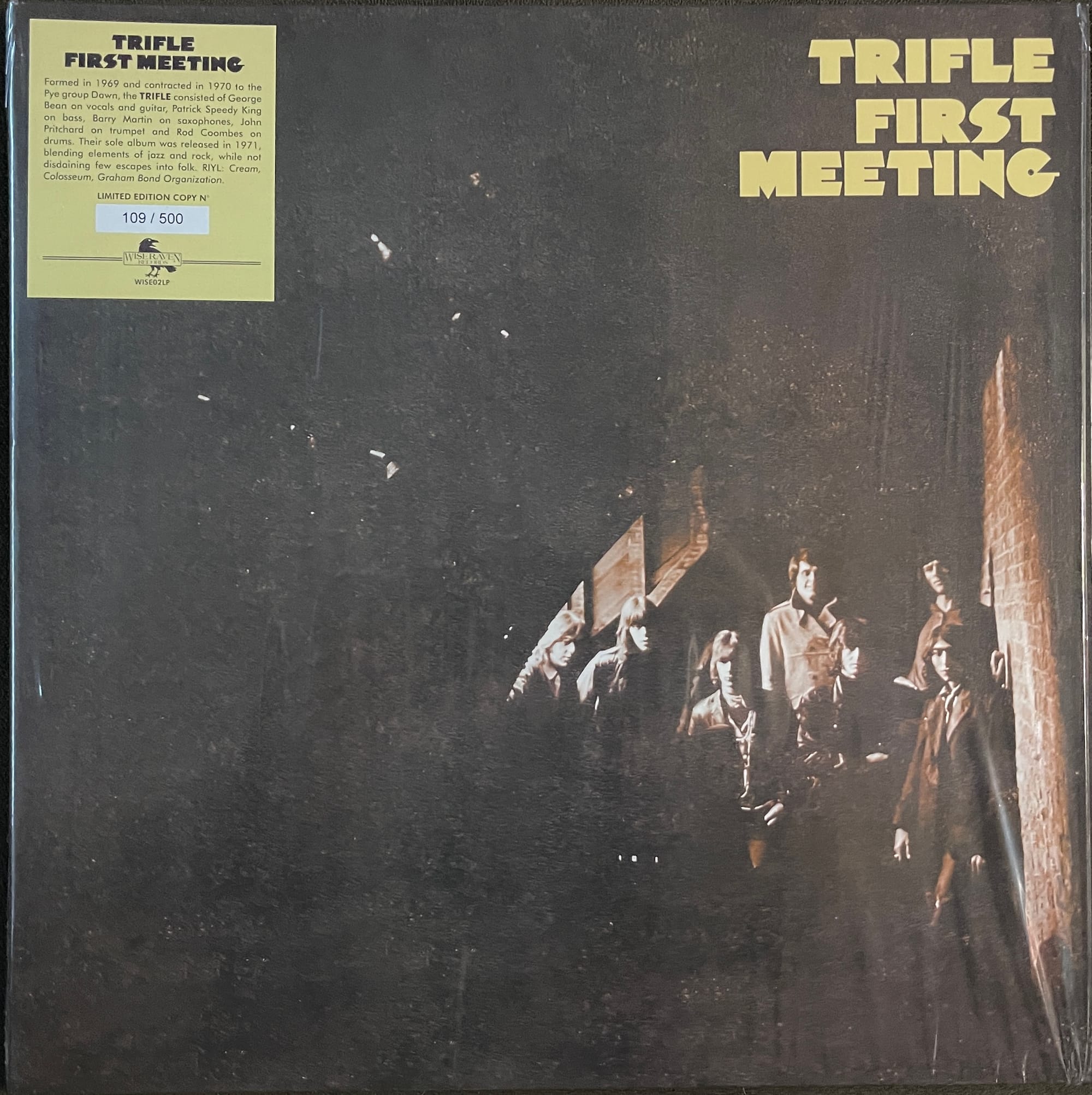
Following his performance in the 1967 film Privilege, English musician and Rolling Stones acquaintance George Bean formed Trifle as a response to the horn-heavy jazz-rock bands like Chicago and Blood, Sweat & Tears that were making waves in the States at the turn of the decade. By the time Bean’s outfit recorded its sole album, 1971’s First Meeting, it’s clear the septet was interested in operating somewhere not so well established, with one toe in the English jazz world inhabited by folks like Ian Carr and Neil Ardley, and others in the proggier groove sounds of bands like Traffic and the organ-based theatrics of Deep Purple. First Meeting contains at least two masterpieces—the trancelike, climactic “Devil Comin’” and the steady, unshakable “New Religion,” both of which build to monumental jams that point to the possibility of many hours of incredible Trifle music to come. Alas, it was not to be; Bean tragically died of encephalitis a few months after First Meeting hit the record racks. The album plunged into decades of obscurity, but in 2024 Italian label Wiseraven put it back on wax, where it rightfully belongs. And earlier this year I invited a copy into my home, where it has kept me company ever since. NL
Record I’m Most Thrilled I Finally Got My Hands On
Metal Box, the second album by John Lydon’s beautifully challenging post-Sex Pistols project Public Image Limited, is a brutalist statement piece. Released initially in 1979, it is a literal metal box: a round tin onto which the band’s eye-catching PiL logo has been stamped. Squeezed inside are three 45 RPM 12-inches, separated only by thin pieces of paper. The goal, it seems, was to inflict scuffs and potential damage on the records on their way to the turntable. I've read that Lydon hopes to emulate the sound and feel of the dub singles they were collecting, mirroring not only the bone-rattling bass and spacey production techniques on instant post-punk classics like “Memories” and “Careering,” but seasoning each disc with scuffs and wear as if they were part of a reggae sound system DJ’s crate. Metal Box has long been a grail of mine, seemingly doomed to remain in my Discogs wantlist or on the walls of record shops—tantalizingly out of reach as the price hovered just above what I was willing to pay. God bless the nice lad who had a table near mine at a record fair last year who kindly cut me a deal on the copy of Metal Box he was selling (and for keeping the records outside of the actual metal box). While I was plenty satisfied with the copy of Second Edition—the more user-friendly version of the album PiL released as a gatefold double LP set in 1980, which I've been toting around for decades—I now know what I was missing this whole time. There's a world of subsonic bass tones, jarring edits, and silvery guitar squealing on this album that was never available to me before, and it’s locked me in its assaultive, incantatory haze for the better part of six months now. And as the page turns on another year, I'm going back for more. RH
Best Free Bin Find (and It’s Not Even Close)
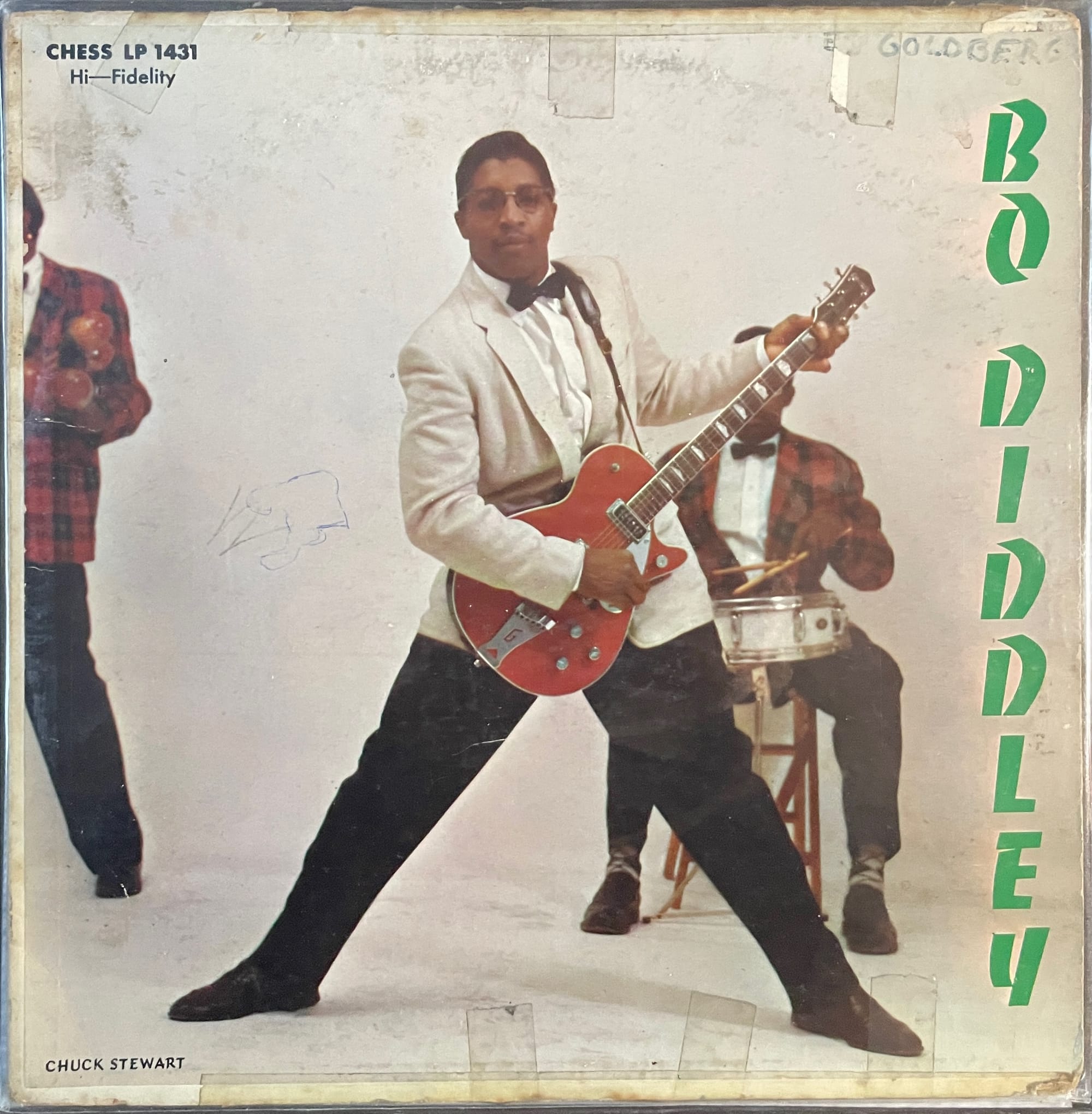
I’m not too proud to admit it. I scour the free bins. I’m usually on the lookout for classical—many of the used vinyl emporiums in my hometown don’t really know what to do with classical vinyl, and I’ve found many a fine thing that just needs a loving home. But hands down the score of the year was an original pressing of Bo Diddley’s 1958 self-titled debut on Chess Records. It’s a record I’ve been in love with for decades—“Dearest Darling” is one of my all-time favorite tunes—but I was resigned to never being able to afford an original. When I got this free-bin copy in my hands, I saw (as you can see) the jacket was in rough shape and that the vinyl would need some TLC to bring it back to life. But after a thorough cleaning, this thing sounds pretty darn great. There’s a good amount of crackle, but that’s the nature of the beast, and by engaging the mono switch I can reduce a lot of it—plus this thing was cut hot as blazes, so the music just coasts over any background noise. What was it doing in a free bin? I have no idea, but I’m not mad about it. Which free bin did I find it at, you ask? Yeah, right, I’m not revealing all my secrets. Maybe next year, daddy-o. NL
Best Vinyl-Only New Release I Spun in 2025
As you know all too well, the remit of The Vinyl Cut is to focus on reissues, but being the inveterate collectors we are, we spend an equal amount of time and energy listening to new music, on wax and otherwise. One of the best platters I dropped the needle on this past year just happens to be a limited-edition vinyl-only release by jazz saxophonist Isaiah Collier and drummer Tim Regis that was issued this past September by the Vinyl Factory. The EP, Live at the Listening Room, was recorded direct-to-tape last January at the titular London studio with both musicians joyously sparring in the spirit of Coltrane’s Interstellar Space or Makaya McCraven’s work on International Anthem. As they played, producer Sonny Daze applied echo and dub-like effects to their performances, turning the songs inside out even as they were being created. My first few spins of this disc were dizzying and almost overwhelming, but subsequent listens helped me find my sea legs and turned it into one of my favorite jazz releases of 2025. RH
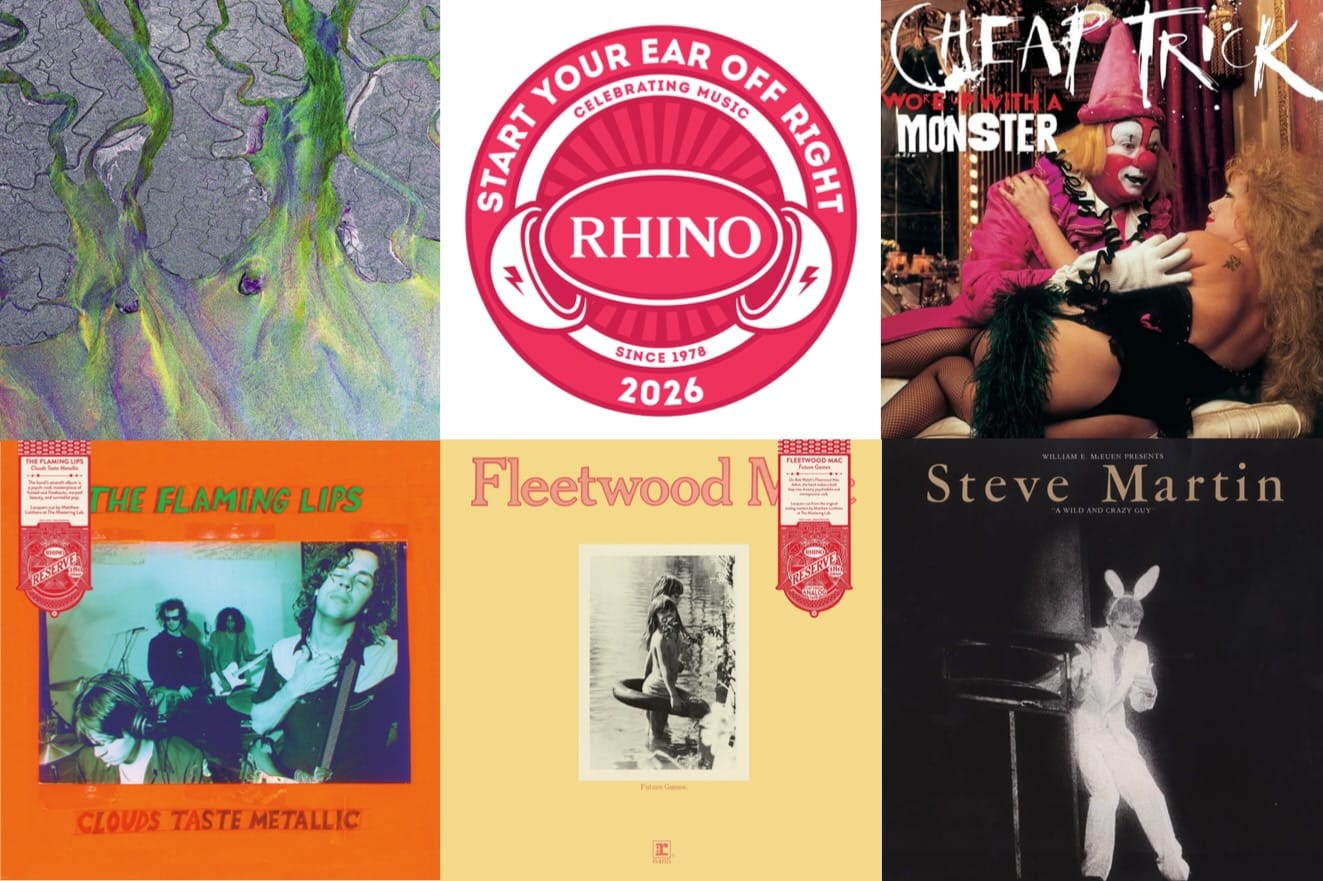
And now, on to this week’s new releases. As mentioned, Rhino is running the table with their Start Your Ear Off Right vinyl reissue campaign. They’ve got some standard represses as well as some enticing-sounding new cuts as part of their Rhino Reserve series.
alt-J: An Awesome Wave
Formed at the University of Leeds, alt-J managed to find a bit of sun in the vast art-rock shadow cast by Radiohead, making subliminally compelling minor-key music out of fractal melodic repetition, robotic cymbal-less drum patterns, and Joe Newman’s childlike mewl. Their debut, An Awesome Wave, won the Mercury Prize in 2012 and is now getting a repress on “recycled metallic” colored vinyl. Listening to it more than a decade removed from the group’s breakthrough, it’s striking how subtle the music is, devoid of any of the broad strokes or bold moves that baby bands often use to grab attention. Perhaps it’s the mutability of their sound that’s the secret to their success, allowing the listener to project one’s mood onto the sounds—upbeat or lachrymose, it’s really up to you—while the actual music churns along indifferently. NL
Cheap Trick: Woke Up with a Monster
The ’80s were kind to Cheap Trick, with the Chicago power-pop quartet closing out the decade with their first number-one hit: the power ballad “The Flame.” The next decade was a bit rockier. Though they continued to get namechecked by both hard rock groups and the alternative acts in vogue at the time, Cheap Trick struggled to find the material or the sound that would help them fit in with the grunge gang. Woke Up with a Monster is a prime example of this creative rough patch. The 1994 album was an apparent attempt to return to their rock roots, but the overheated production throughout and their uneasy mix of Beatlesesque jangle and plodding hair metal did them no favors. For Cheap Trick completists only. RH
The Flaming Lips: Clouds Taste Metallic [Rhino Reserve]
With the Flaming Lips now reduced to just Wayne Coyne and a rotating cast of backing musicians, this week’s reissue of Clouds Taste Metallic, the Oklahoma outfit’s 1995 album, is a chance to look back at a simpler time when the group was an acid-gobbling quartet that had somehow fluked its way into a major-label deal with Warner Bros. and a minor alt-rock hit with “She Don’t Use Jelly.” With a little added wind in their sails, the Lips produced a near-masterpiece fusing their psych-infused noise rock with Coyne’s growing skills as a pop craftsman, resulting in hair-raising yet catchy gems like “Christmas at the Zoo” and the explosive “Psychiatric Explorations of the Fetus with Needles.” This new vinyl edition of Clouds, part of the Rhino Reserve series, is pressed from new lacquers cut by Matthew Lutthans at the Mastering Lab from the digital album masters. RH
Fleetwood Mac: Future Games [Rhino Reserve]
In retrospect, 1971 found Fleetwood Mac in a particularly ill-defined era, even within the overall stretch between Peter Green’s departure and Buckingham/Nicks coming aboard. Future Games, then, is an odd but nonetheless enjoyable duck within their catalog, with founding guitarist Jeremy Spencer having just followed Green out the door, Christine McVie now a full-time member of the band, and guitarist/songwriter/vocalist Bob Welch newly added to the ranks. While not as dominant as he would become on 1972’s superior Bare Trees—which was also just given a Rhino Reserve pressing [review here]—Danny Kirwan is the main protagonist here, with his dreamchild songwriting and cosmic guitar playing giving shape to the band’s workmanlike approach to churning out material. Welch’s epically mellow title track fits into the landscape well, but the band is definitely drifting. However, Future Games’ slender pleasures will be given a chance to shine via a new mastering by Matthew Lutthans, cut from what I have to guess is Reprise’s US copy tape as opposed to the UK master, and an immaculate pressing from Fidelity. The Rhino Reserve album cover is the original yellow, rather than the green version that turned up on represses. NL
Steve Martin: Let’s Get Small; A Wild and Crazy Guy; Comedy Is Not Pretty!; The Steve Martin Brothers
In the late ’70s, there was no bigger stand-up comedian on the planet than Steve Martin. He filled amphitheaters and got catchphrases into the global vernacular. And he sold gobs of records. His first two LPs—1977’s Let’s Get Small and 1978’s A Wild and Crazy Guy—went platinum, and 1979’s Comedy Is Not Pretty! went gold. In other words, the secondary market is still rife with used copies of those LPs as well as 1981’s The Steve Martin Brothers, the album that featured comedy on one side and a set of bluegrass tunes on the flip. I’m of two minds about the SYEOR reissues of Martin’s first four LPs out this week. As someone who grew up cackling over these records and using “Excuuuuuuse me!” far too often in casual conversation, I am hopeful that these new pressings might delight a new generation of comedy fans. But as a consumer, I grimace at the thought of much-harder-to-find titles in Rhino’s archives that could have been re-released instead. RH
John Prine: Sweet Revenge [Rhino Reserve]
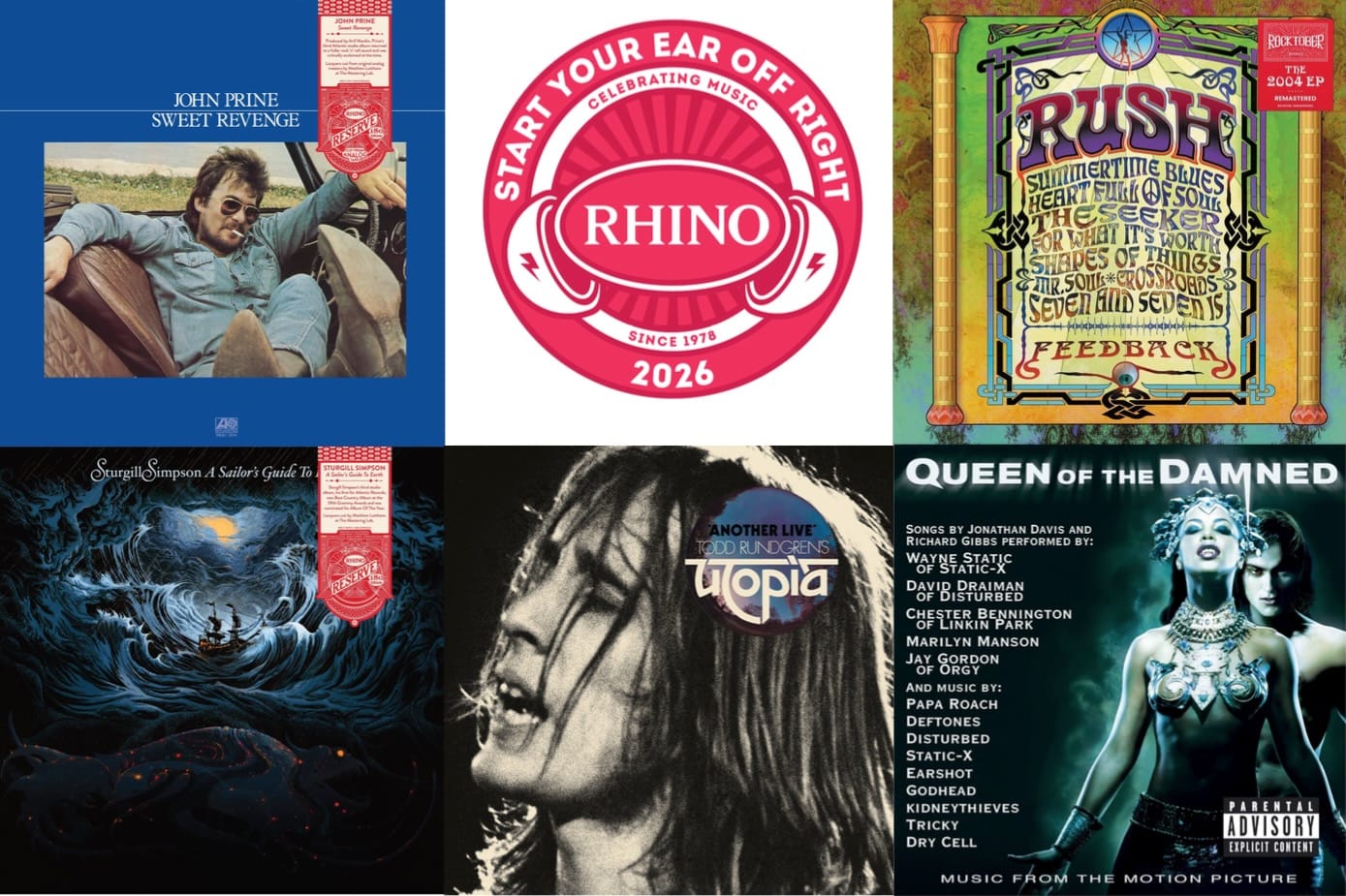
On this 1973 outing, Prine’s third, the Chicago-based songwriter starts flirting with slightly more aggressive rock ’n’ roll sounds as well as dyed-in-the-wool Nashville country, adding a weight to his sharp-eyed songwriting and cynical worldview. The record was produced by the legendary Arif Mardin, and if he typically puts a level of professional polish on much of his work, Prine remains unvarnished beneath all the gussying up. For SYEOR, Sweet Revenge gets the Rhino Reserve treatment, with a new lacquer cut from analog tape by Matthew Lutthans at the Mastering Lab and vinyl pressed at Fidelity. Interestingly, this very same album received an all-analog cut by Kevin Gray in 2018, and was released as part of Rhino’s Start Your Ear Off Right for that year. Chances are these two versions are gonna sound awfully close, but fans of vinyl shoot-outs should be ready to see who takes the plunge and pits the two against each other. NL
Rush: Vapor Trails; Feedback; Snakes & Arrows
For this year’s slate of SYEOR releases, Rhino is breaking out three of the Rush albums that were recently packaged up in the box set The Albums 2002-2012, which we reviewed as part of Rhino’s Rocktober campaign: 2002’s Vapor Trails, 2004’s covers EP Feedback, and 2007’s Snakes and Arrows. I imagine these reissues are meant for those punters who are looking to fill the holes in their Rush collection, but it does leave me wondering why the group’s final album, 2012’s Clockwork Angels, isn’t also being reissued this week. Could there be a deluxe 15th anniversary edition of that LP on the horizon? Considering the band’s habit of continuously repackaging and reissuing their recorded work, I wouldn’t put it past them. RH
Sturgill Simpson: A Sailor’s Guide to Earth [Rhino Reserve]
Following his breakthrough with Metamodern Sounds in Country Music, Kentucky songwriter Sturgill Simpson signed to a major and put the mainstream in his crosshairs. He ended up with 2016’s A Sailor’s Guide to Earth, which was recorded in Nashville and won a country Grammy but is really an explosion of genres, incorporating soul, psychedelia, rock, and more—the cherry on top being a lullabye-like cover of Nirvana’s “In Bloom.” For a minute it seemed like country music might have its moment of reckoning, with Simpson at the vanguard pressing the mainstream forward to uncharted territory. But it didn’t last; the country mainstream went back to being bland corporate pop sung in a hokey twang (and bolstered by right-wing identity politics) while Simpson went further afield looking for other peaks to climb. That brief moment of possibility that Sailor’s Guide captured, though, is being reissued as part of the Rhino Reserve series, with a new cut by Matthew Lutthans at the Mastering Lab and pressed at Fidelity. Note that this was a digital recording, so the all-analog designation doesn’t apply here, one of the few Rhino Reserves released thus far that wasn’t cut from tape. NL
Utopia: Another Live
Utopia, the prog band led by Todd Rundgren, released a live album for their second full-length, although technically a big chunk of their first LP was live too. 1975’s Another Live is a bit more fusion-y than the debut, with jazz and R&B elements incorporated into Rundgren’s all-encompassing vision, but there’s also the acoustic clap-along “The Wheel” and some really killer covers, including “Something’s Coming” from West Side Story and the Move’s indomitable “Do Ya?” which Electric Light Orchestra would attempt to reclaim a year later. I’m not sure if prog has been rehabilitated enough for this over-the-top album to get a pass in 2025, but I’ll just say it contains some really fascinating music, the likes of which you’re not going to hear anywhere else. The clear vinyl pressing has received an analog mastering job at Sterling Sound in Nashville (engineer unknown) and the album cover features the UK artwork—a photo closeup of Rundgren, as opposed to the artwork of the US version, which some might say is amateurish and embarrassing and looks like it was drawn with magic markers. To which I say: It’s charming, period-accurate, and encapsules Utopia’s absurdly ambitious sound perfectly. What are you so afraid of, Rhino? NL
Various Artists: Queen of the Damned soundtrack
When Warner Bros. produced the moody cinematic adaptation of Ann Rice’s 1988 novel The Queen of the Damned, they did what any production company in 2002 would: They tapped then-hot commodity Jonathan Davis of Korn to co-write and provide vocals for the songs to be performed in the film by the vampire Lestat. But his contract with Sony forbade him from releasing his versions of the tunes on the movie soundtrack, so Davis called on his nü-metal buddies like Wayne Static, Chester Bennington, and Marilyn Manson to sing the songs instead. Filling out the rest of the album was a batch of songs by other dark rock acts like Disturbed, Deftones, and Papa Roach. While not anything I would add to my shopping basket, this week’s reissue of the soundtrack must come as a relief to fans who missed out on the initial vinyl release in 2019, which now sells for $300+ on the secondary market. RH
OTHER REISSUES OF NOTE:
Dizzy Gillespie: Jazz Recital [Verve Record Club Subscription Series]
Melanie: There Should Have Been a Rainbow: The NY Folk Sessions 1963–1965 [Cleopatra]
Original Soundtrack: Rent [Warner]
Oz: Fire in the Brain; Ill Warning [High Roller]
We told ya, it’s a slow week! Happy 2026, everybody.