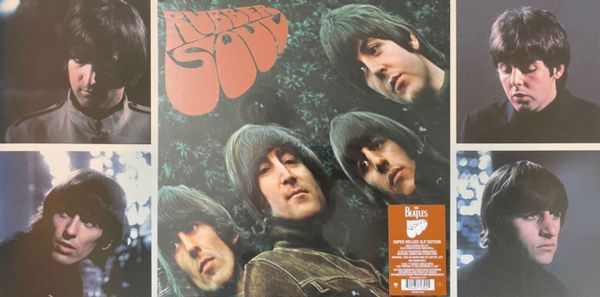
Review: Small Faces on Nice Records

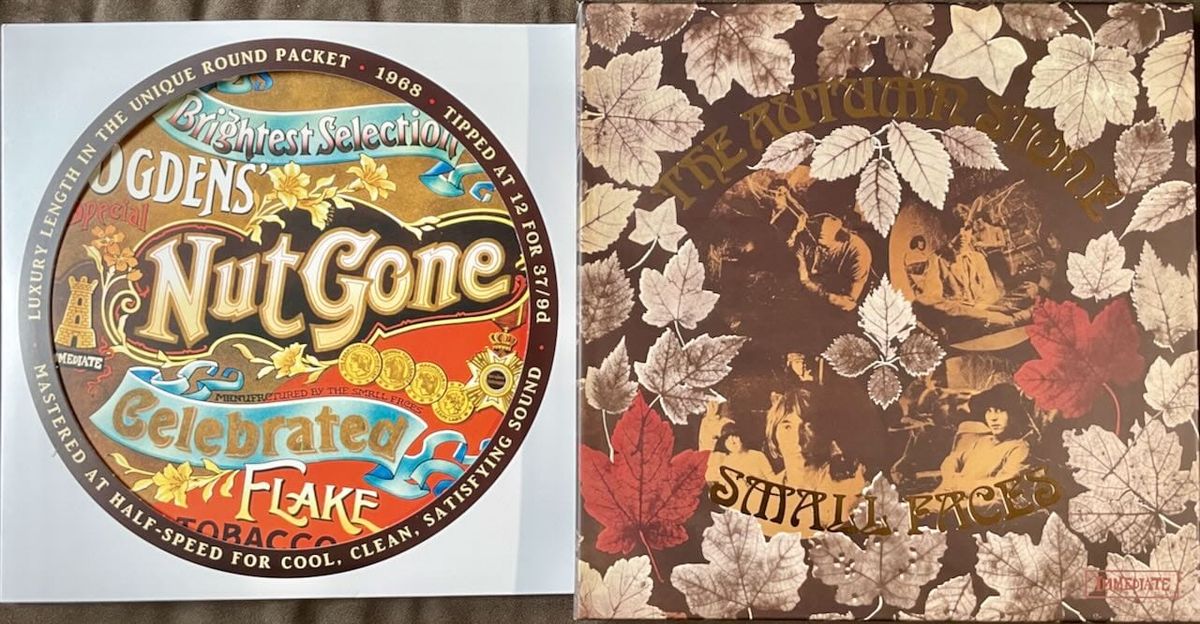
I’ve been immersing myself in some Small Faces reissues from Nice Records, the independent label started by that band’s drummer, Kenney Jones. Jones would of course also go on to drum for Faces and the Who; as the sole surviving member of Small Faces, he’s now come full circle as caretaker for the music that launched his career, having joined Small Faces in 1965 at age 16. And the plan behind Nice Records—whose name recalls the Small Faces’ 1967 classic “Here Comes the Nice”—is to be artist-forward, artist-led, and artist-driven, with the musicians who made the music having full involvement in the process.
As such, Jones and the Nice Records team have facilitated some excellent reissues of important records from the Small Faces’ heyday, which only lasted from 1965 to 1969 but resulted in a wealth of foundational rock music, influencing bands through the ’70s, ’80s, ’90s, and beyond. Nice’s latest release is Immediate Singles 1967–1969, a 7-inch box set containing the eight singles from their stint on Andrew Loog Oldham’s Immediate Records. And it seems that Small Faces are in the air these days, as their self-titled debut album, originally released by Decca in 1966, was just last week reissued not by Nice but by Fontana Records’ Thousand Club series, in a limited, signed edition of 1000 whose preorders sold out in a matter of days.
Today, though, I’m looking at Nice’s recent reissue of the band’s masterpiece, 1968’s Ogdens’ Nut Gone Flake, using the rare mono mix and half-speed mastered in an impressive package. And I’ve also got some thoughts about the deluxe edition that Kenney Jones and Nice Records put together last year for the group’s 1969 compilation album The Autumn Stone, a double album that was initially thrown together by Immediate Records as a cash-grab quickie but that has now been completely redesigned as a deluxe 3-LP box set that may well be the definitive statement on the band.
But I’m getting ahead of myself. Let’s get to this new mono version of Ogdens’ first. You can also take a gander at the Nice Records site to get a look at everything that Jones, label manager Rob Caiger, and their team have put together so far (including a couple of Humble Pie reissues!). For Small Faces fans, it’s a very nice thing indeed. And for the unconverted, there may be no better place to start than Ogdens’ Nut Gone Flake.
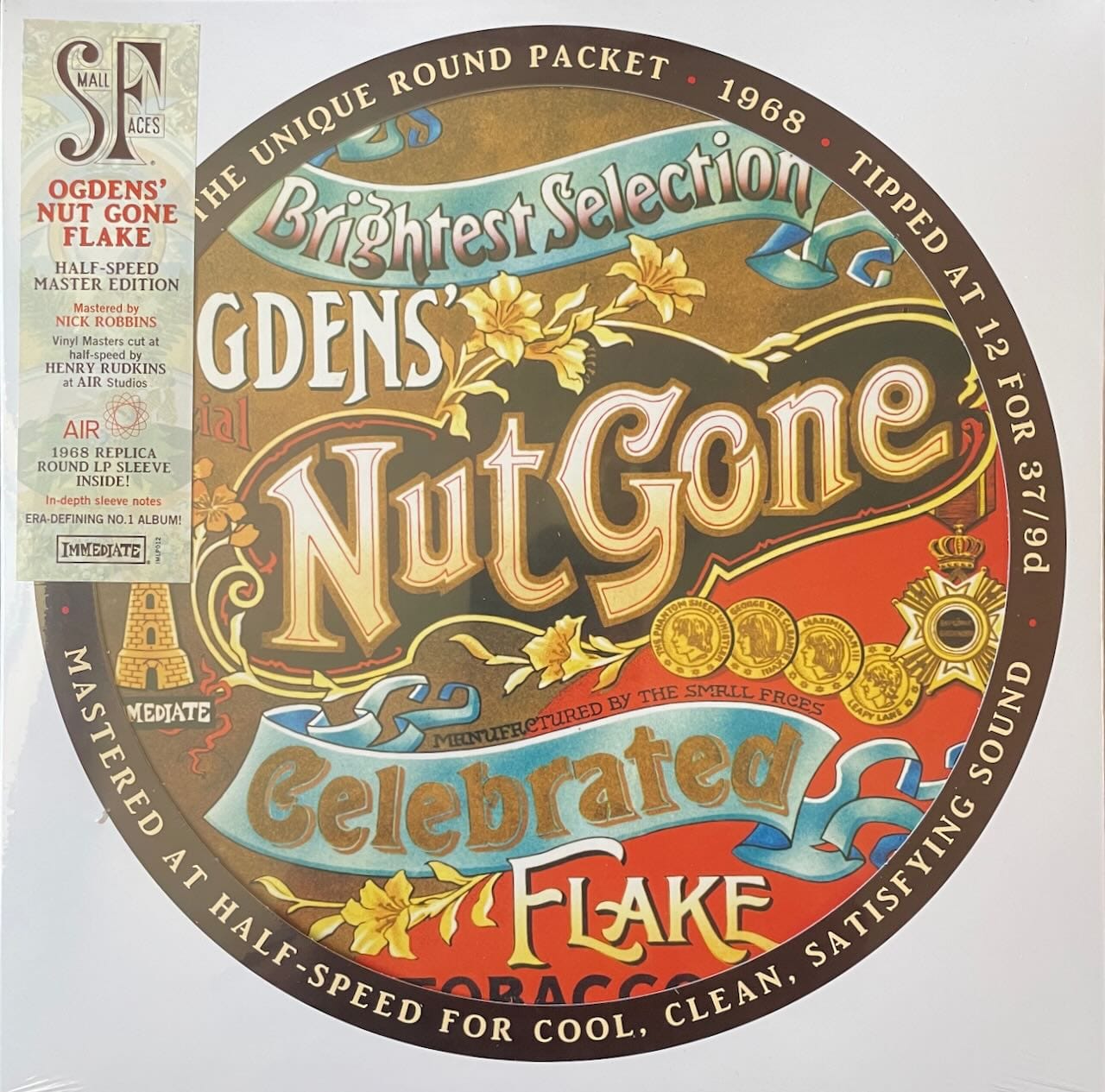
Small Faces: Ogdens’ Nut Gone Flake (mono half-speed master)
For American listeners, Ogdens’ Nut Gone Flake might still be better known for its famous circular jacket than for any of the music inside. The third full-length from Small Faces, the 1968 album found the London quartet fully dispensing with the R&B-derived mod rock of their early work and leaping wholeheartedly into psychedelia. But rather than following trends, Small Faces wrestled and reshaped the sounds of the day into their sonic image. The album had phenomenal success in the band’s home country but remains a cult object here in the States.
Those intrepid Americans who did manage to venture beyond the elaborate foldout sleeve design might have then been thrown off by the narration threaded throughout Side 2 from absurdist comedian Stanley Unwin, who—in between songs—tells a children’s story in a largely invented vocabulary that’s derived from Cockney rhyming slang, Lewis Carroll’s nonsense poetry, and Unwin’s own fertile imagination, as well as his observations of the inter-band banter between members of the Small Faces themselves. But Unwin’s story is surprisingly comprehensible to those with the patience to listen, and the Small Faces’ excellent tunes, full of both English eccentricity and hard-impact rock ’n’ roll, allow the entire thing to take flight. Coupled with an incredibly strong batch of songs on Side 1 that individually are among best the Small Faces ever released, Ogdens’ is not just a high-water mark for the band or for first-wave English psychedelia, but for the entire 1960s—a brilliant, surrealist masterpiece that fuses heavy-rocking R&B with feather-light whimsy.
Ogdens’ Nut Gone Flake has been reissued many times over the years, but the new Nice Records edition uses the lesser-heard mono mix, which eliminates the trippy panning effects that gave the stereo mix some of its neat psychedelic flavor but more consistently delivers the impact of the band’s performances, resulting in a harder-rocking sound. The disc was half-speed-mastered by Henry Rudkins at AIR Studios, using the 2018 digital mono master by Nick Robbins that was prepared for the album’s 50th anniversary box set. The mono mix was entirely new to me, but I was floored by how heavy it sounded at times—not just pointing the way forward to the more assertive sounds that Faces and Humble Pie would develop but extending to the brawny sounds of bands like Led Zeppelin. (Zeppelin famously stole—er, rewrote Small Faces’ 1966 rendition of Willie Dixon’s “You Need Loving” as “Whole Lotta Love,” a ripoff job whose brazenness is still astonishing to this day.)
Small Faces were one of those bands, like Zeppelin or the Who, where each individual member was intrinsic to the sound: remove or diminish one, and the whole structure falls apart. Guitarist/singer Steve Marriott possessed a voice that was born to sing rock ’n’ roll—one part blues belter and another part mischievous imp, with an elastic range and a jaw-dropping amount of power. Ronnie Lane was the musical center of the band, holding down the root notes on the bass while also applying harmonic complexity, acting as a perfect foil to Marriott with his harmony vocal or the occasional lead. Keyboardist Ian McLagan broadened the sound, adding Wurlitzer and Hammond that took their cues from American R&B keyboardists like Johnnie Johnson, Booker T. Jones, Ray Charles, and Otis Spann. And Kenney Jones was a powerhouse the equal of Keith Moon or John Bonham, but whose occasional side gig as a session drummer also instilled a sense of melodicism and orchestral scope into his playing.
That scope kicks off Side 1 of Ogdens’ Nut Gone Flake, with an instrumental title track that’s based on the older Small Faces song “I’ve Got Mine,” featuring Jones’s steamrolling drums, McLagan’s electric piano pulsating through a wah-wah pedal, Lane’s bass setting off small earthquakes at the center of the action, and a string section lighting off firecrackers around the edges. After a bait-and-switch busking intro, “Afterglow” becomes a showcase for Marriott, who rolls between the verse’s lilting arpeggios and the chorus’s soulful gut-punch. “Song of a Baker” is Lane’s counterargument, with Lane and Marriott belting in tandem and Jones thundering beneath like a stampede of wild mustangs. And “Long Ago and Worlds Apart” is McLagan’s turn in the spotlight, a perma-grinned slice of stoned musing. “Rene” is a music-hall send-up that mutates into passages of melting guitar feedback, and Side 1 concludes with Marriott’s “Lazy Sunday.” With Marriott’s exaggerated Cockney accent, a jauntily shuffling beat, and a heaping helping of comical sound effects, it’s an effervescent slice of youthful riotousness and a glorious bit of glazed-eyed English pastoralism in the vein of the Kinks’ “Autumn Almanac” or XTC’s “Summer’s Cauldron/Grass.”
Side 2 is a six-song psychedelic suite fastened together by Unwin’s narration. Centered on the adventures of one “Happiness Stan” and his quest to rescue the missing half of the moon, it’s a playful miniature version of the sort of sweeping conceptual pieces that would be attempted on a larger scale by the Pretty Things and the Who. It ends with Stan achieving enlightenment from a seer named “Mad John,” and the suite contains gentle, childlike passages (“The Hungry Intruder”) alongside some of Small Faces’ hardest rocking (“Rollin’ Over”) as well as their most phantasmagoric moments, such as the freeform jam at the end of “The Journey.” There’s also some folkier sections before it all ends with a knees-up music-hall pastiche in “HappyDaysToyTown.” If that all sounds too whimsical for words, it holds together brilliantly, and the “Happiness Stan” suite remains pure enchantment from start to finish, with the Small Faces displaying a sense of musical diversity, subtlety, and ambition that was scarcely evident on their early R&B bruisers.
Engineer Glyn Johns was the undersung hero for the Small Faces’ recordings. He was able to bulk up the band’s sound while simultaneously adding a sense of realism and presence to the performances. And the mono sound on the Ogdens’ half-speed master is walloping, in the best sense of the word, with the songs clocking blows inside of the highly concentrated, potent mix. There’s a slight graininess and edginess to the overall sound that I am not sure whether is part of the mono mix itself, but noticing that, I was also simultaneously taken aback by the clarity and detail of the mix, as I was hearing intricacies and instrumental passages that I hadn’t noticed during my countless listens to the stereo version. There is some notable sibilance on “The Hungry Intruder,” but the richness of the bass and the power of the overall blend throughout this entire pressing was more than a fair trade.
The album was sourced from a digital master made in 2018 by Nick Robbins at Sound Mastering from the surviving analog mono master, which was originally put together at Trident Studios back in 1968. Robbins’s master was used for the 50th anniversary edition, a triple LP set that included the mono and stereo mixes plus a disc of outtakes, all cut to lacquer by Matt Colton at Alchemy Mastering at half speed. This new mono stand-alone edition is also cut at half speed, but by Henry Rudkins at AIR Studios at Lyndhurst Hall in Hampstead, London (although his trademark “H.R” are not in the deadwax). I’m not sure why a new half-speed master was created only a few short years after the previous one—it may be as simple as a copyright issue, as the 50th anniversary set was released by Charly Records. Or perhaps there were other factors. Rudkins’ cut is superb, so it more than justifies its own existence.
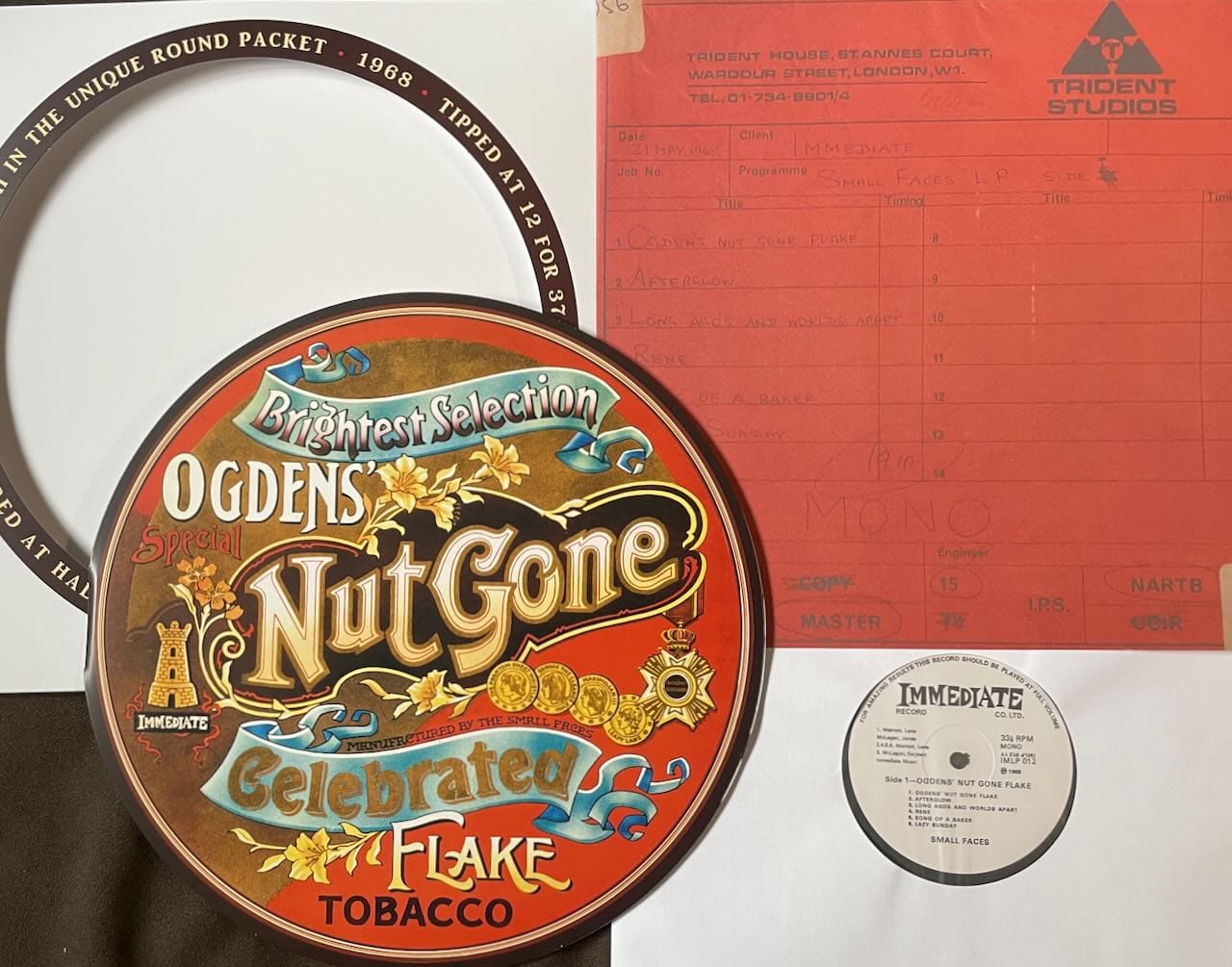
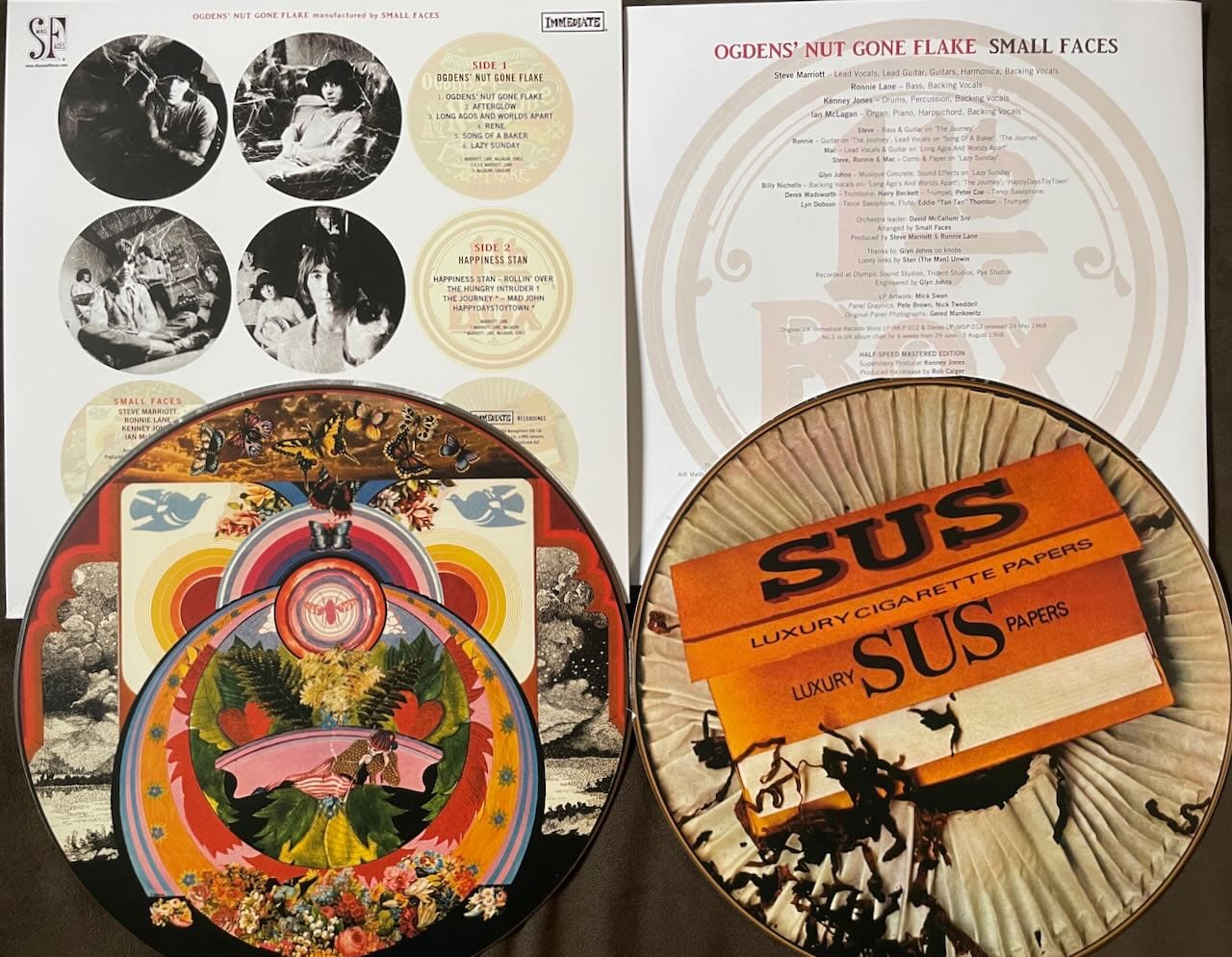
Ogdens’ Nut Gone Flake was originally released in a round cardboard jacket meant to look like an old-fashioned tobacco tin. (The Nut Gone bit in the title was meant to suggest a slightly different kind of smoking material.) It folded out into four panels, with a fifth folded over to slip the record inside. This part-ingenious, part-foolhardy design has given record collectors agita for more than half a century, as the record itself is not really able to be held inside with any degree of safety, and the tiny folds where the circular pieces connect typically get torn over the years.
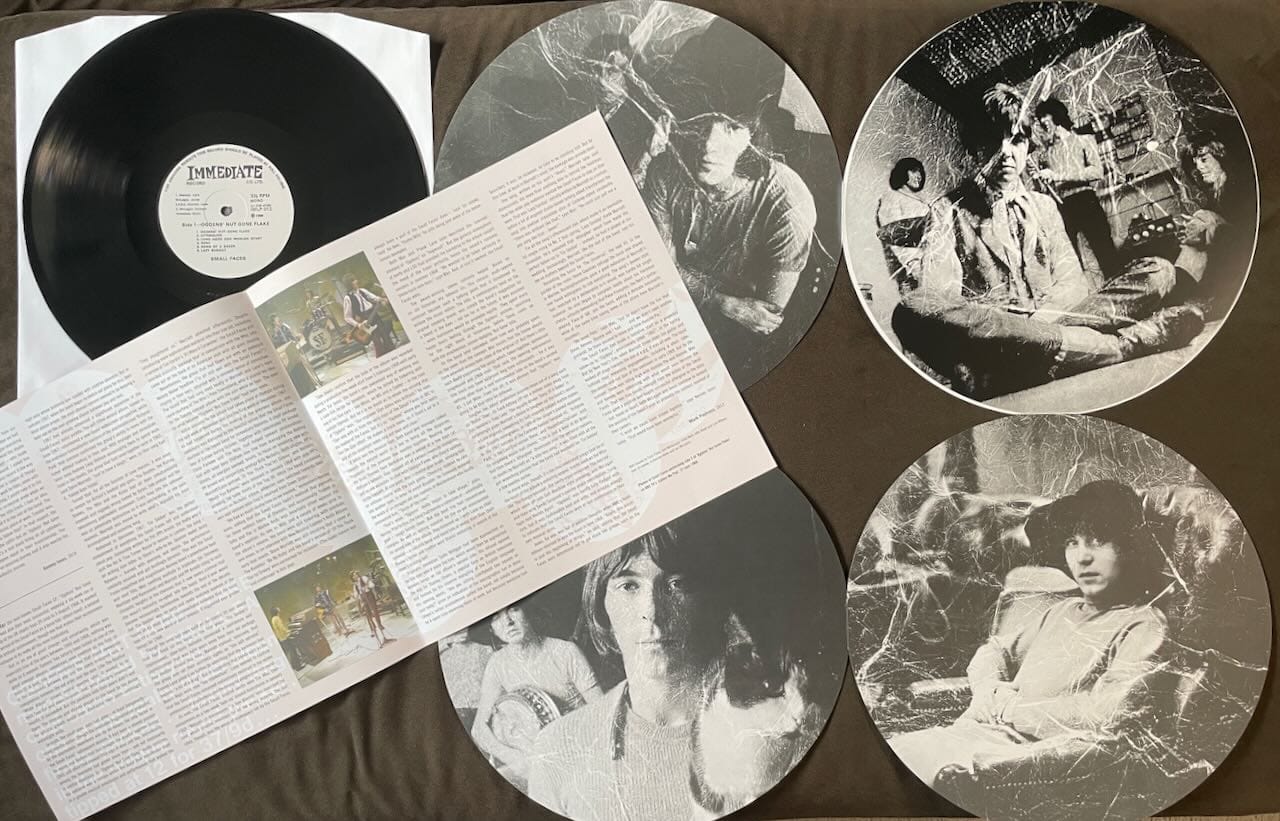
The circular jacket is re-created for this edition, right down to the original printing credit for Garrod & Lofthouse, and it looks smashing, printed on sturdy stock that will hopefully stand the test of time more easily than its predecessors have. Wisely, this jacket is just for show: It comes housed inside a larger jacket with a die-cut window to show off the original front cover, with extra room for a four-page insert and the record itself, contained inside a separate poly-lined sleeve. The pressing itself was done at the TAKT pressing plant in Poland in partnership with UK company Packaged Sounds, and my copy was close to flawless, flat and centered with silent backgrounds and no audible pressing issues. The insert contains a photo of the Trident mono master tape box and an essay by author and Mojo contributor Mark Paytress that first appeared in the 2012 Deluxe Edition triple CD.
In the States, Ogdens’ Nut Gone Flake has not been reliably available on vinyl for long stretches; pressings go in and out of print with relative rapidity. Happily, Nice Records is intending to keep their editions available on a continuous basis, and this mono half-speed master—with the replica of the wonderful sleeve—should please fans of the album, particularly those like myself who hadn’t ever heard the mono version before. I would love to see Nice also offer up the stereo version in the future, as that mix has some pleasures of its own. But for now, this powerful, pleasing edition of this classic is plenty.
Nice Records 1-LP 33 RPM 180g black vinyl
• New half-speed master of the mono mix of Small Faces’ 1968 album
• Jacket: Direct-to-board die-cut single-pocket
• Inner sleeve: White poly-lined paper
• Liner notes, insert, or booklet: Replica of original circular fold-out album cover, with complete artwork; an additional four-page insert includes liner notes by Mark Paytress and an image of the Side 1 mono master tape box
• Source: Digital; 2018 master prepared by Nick Robbins
• Mastering credit: “Mastered to vinyl by Nick Robbins, Nick Robbins Mastering, London”
• Lacquer cut by: “Lacquers cut half-speed by Henry Rudkins, AIR Mastering, London”; no initials in deadwax
• Pressed at: TAKT, Bolesław, Poland
• Vinyl pressing quality (visual): A
• Vinyl pressing quality (audio): A
• Additional notes: None.
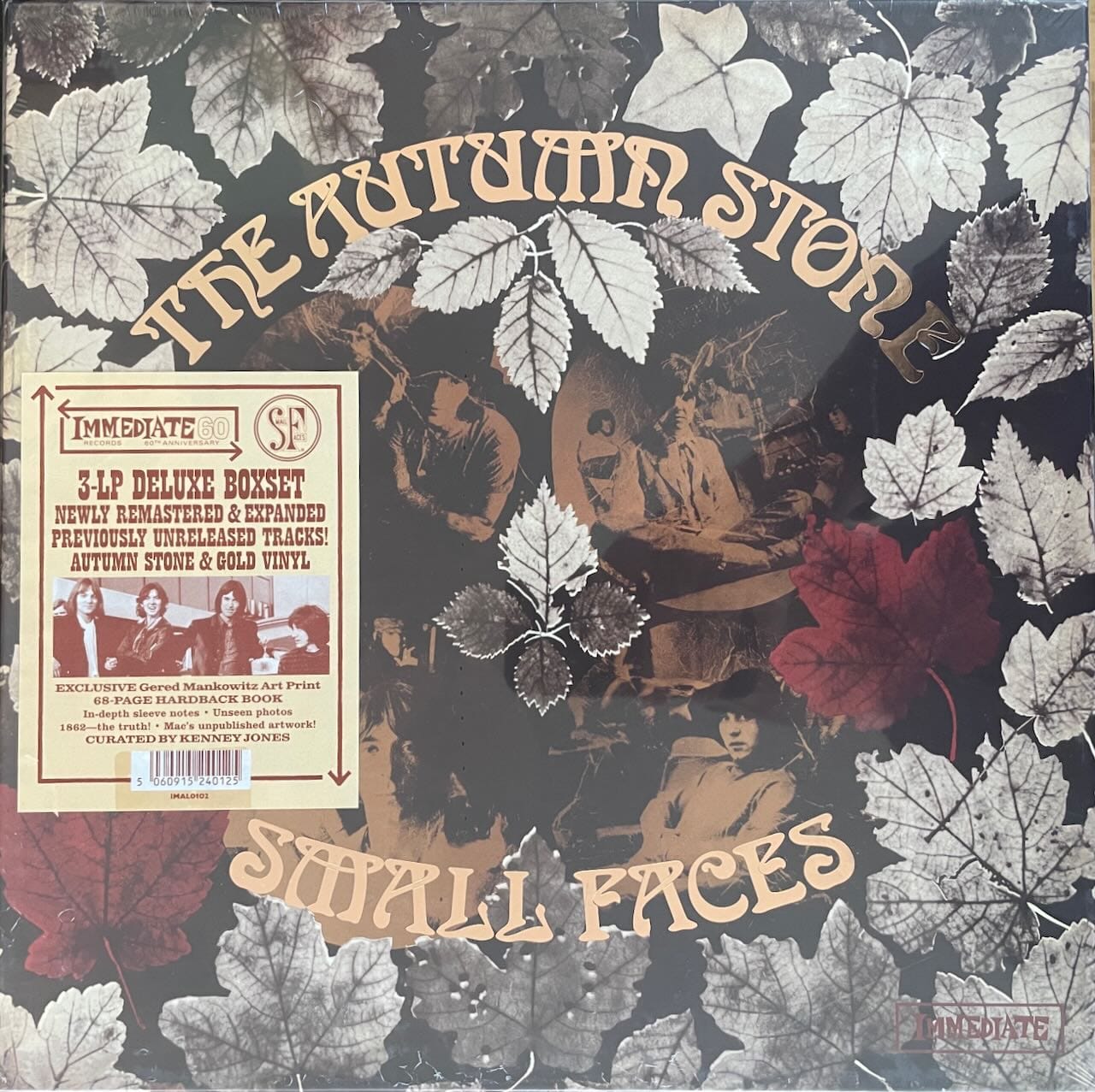
Small Faces: The Autumn Stone (expanded)
As successful as Ogdens’ Nut Gone Flake was—both artistically and commercially—it ended up nearly breaking the band. The group had been given free rein in the studio by Immediate Records and racked up countless hours shaping and perfecting the album, unaware that they were getting billed for their studio time out of their back end on record sales. So despite having a number-one album in the UK for six weeks in the summer of 1968, the band was virtually broke. It didn’t help matters that the US release was bungled somewhere along the way, suffering some sort of technological error in either the tape duplication or the mastering for the US version, with a muddled-sounding LP that buried important elements of the mix and provided a bizarrely skewed stereo image.
There was dissension within the band as well. Steve Marriott’s poppy “Lazy Sunday” was released as a single against the band’s wishes, and Marriott followed it up with “The Universal,” a lo-fi recording taped partly in his garden, which flopped in the charts. Believing it the best song he’d yet written, Marriott grew disillusioned with his role in Small Faces as well as the band’s commercial identity, while the others felt that he had overreached by putting the single together without getting enough of their input. The band was also creatively unsure what to do next, at something of a loss at how to follow up the magnificent Ogdens’.
Meanwhile, Immediate Records was falling apart. Label head Andrew Loog Oldham and his business partner Tony Calder had each signed competing distribution deals with a different US label—Columbia for Oldham, and United Artists for Calder—that resulted in expensive litigation, immeasurable headaches, and an irrevocable fracturing of their business relationship. With Oldham living extravagantly and United Artists taking them to the cleaners for breaching their contract, Immediate was quickly underwater.
It was in this environment that Immediate cobbled The Autumn Stone together without the band’s input (save Marriott, who put some overdubs onto a few unfinished tracks). In fact, by the time it finally reached record shops in November 1969, the band had already called it quits six months prior, with Marriott forming Humble Pie with Peter Frampton and releasing two albums in quick succession on Immediate, as the remaining three joined forces with Ron Wood and Rod Stewart to form Faces, who inked a deal with Warner Bros. and released First Step in March 1970.
In a desperate attempt to get the cash flowing, Immediate began releasing double compilation albums of all their artists. For Small Faces, they reused almost all of the tracks that were released on a 1969 German compilation album called In Memoriam, which included several post-Ogdens’ studio recordings in various degrees of completion—including a lovely Marriott song called “The Autumn Stone” that provided the new collection its name—and some live tracks from one of the band’s final concerts, recorded in Newcastle in November 1968 and treated to overdubs of screaming girls. In order to flesh out the Autumn Stone double album, Immediate also added the six A-sides the band had released on the label (and one B-side), plus seven choice songs originally released in 1966 and 1967 on Decca Records. This cross-licensing was unusual for its day and may have put Immediate further into the red.
By including the Decca tracks along with the cream of their Immediate material, as well as the In Memoriam tracks and a taste of what the band sounded like live, Immediate actually managed to put together a halfway-representative overview of Small Faces’ entire career. But The Autumn Stone was massively flawed: The Decca songs were all in fake stereo (in come cases with the knobs twiddled quickly, resulting in music that darted back and forth from speaker to speaker), the live tracks were transferred at the wrong speed, other tracks were taken from substandard sources, and Sides 2 and 4 were needlessly skimpy, running 14 and 13 minutes respectively. The album was further delayed by a printer mishap, and by the time it was ready to go, Immediate was essentially finished.
Kenney Jones and Nice Records have rebuilt The Autumn Stone from the ground up, expanding the tracklist, slotting in the correct mono mixes where necessary, and using the best available sources for everything else. It’s a wonderful corrective, and the set, now at three LPs, has become the grand epitaph the Small Faces deserved. The additions are subtle—such as B-sides that never made their way to proper LPs, or tracks that Jones and the band especially loved, such as “Green Circles” from 1967’s Small Faces LP—and there’s one entirely unheard song, an instrumental recorded at Olympic Studios in 1967, appropriately titled “Olympic Jam.” The live tracks are now isolated on Side 6, and Side 5 is given over to newly constructed, stripped-down acoustic mixes of several songs, presenting a mellower alternate-universe version of Small Faces that hasn’t existed on record until now.
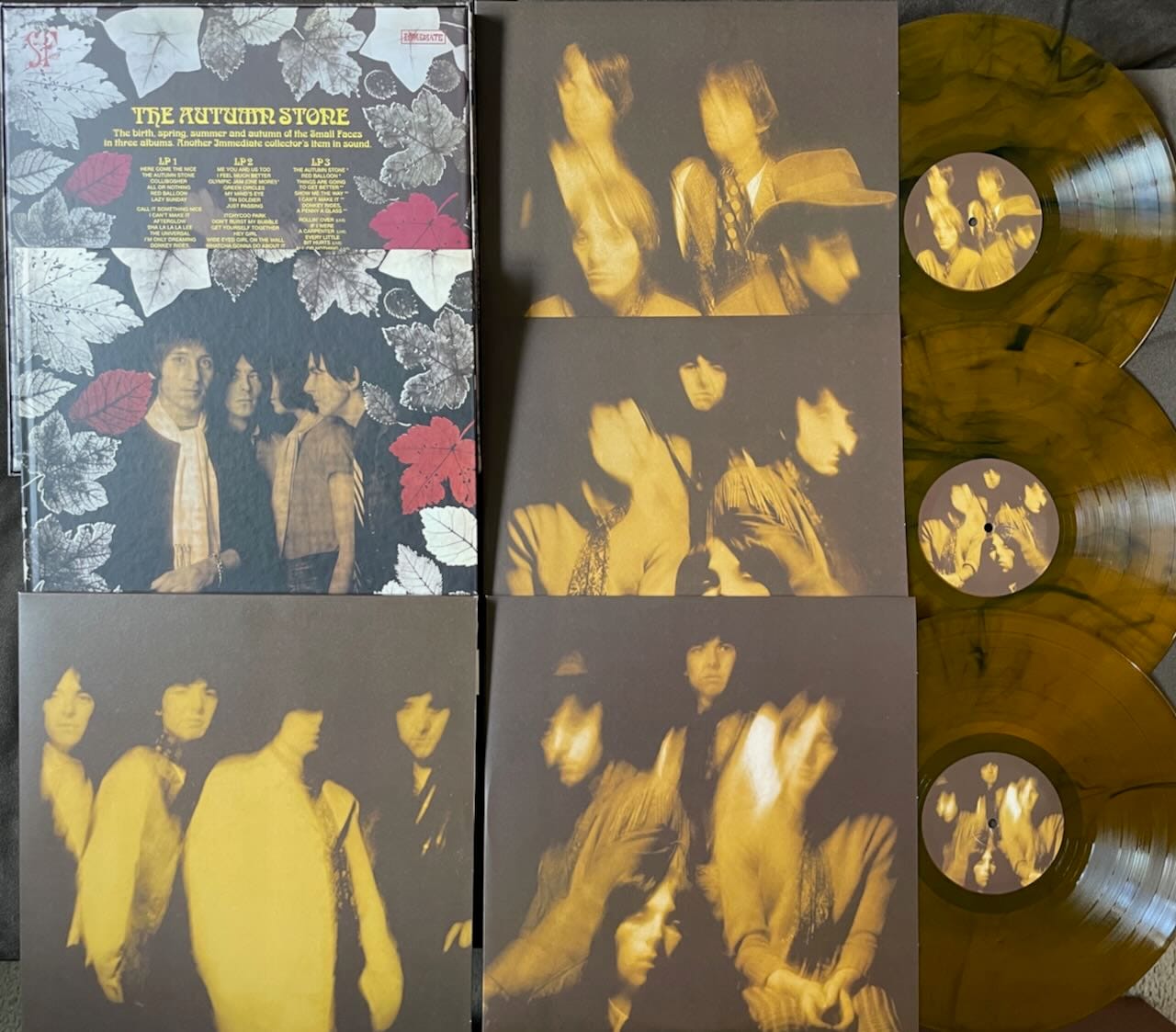
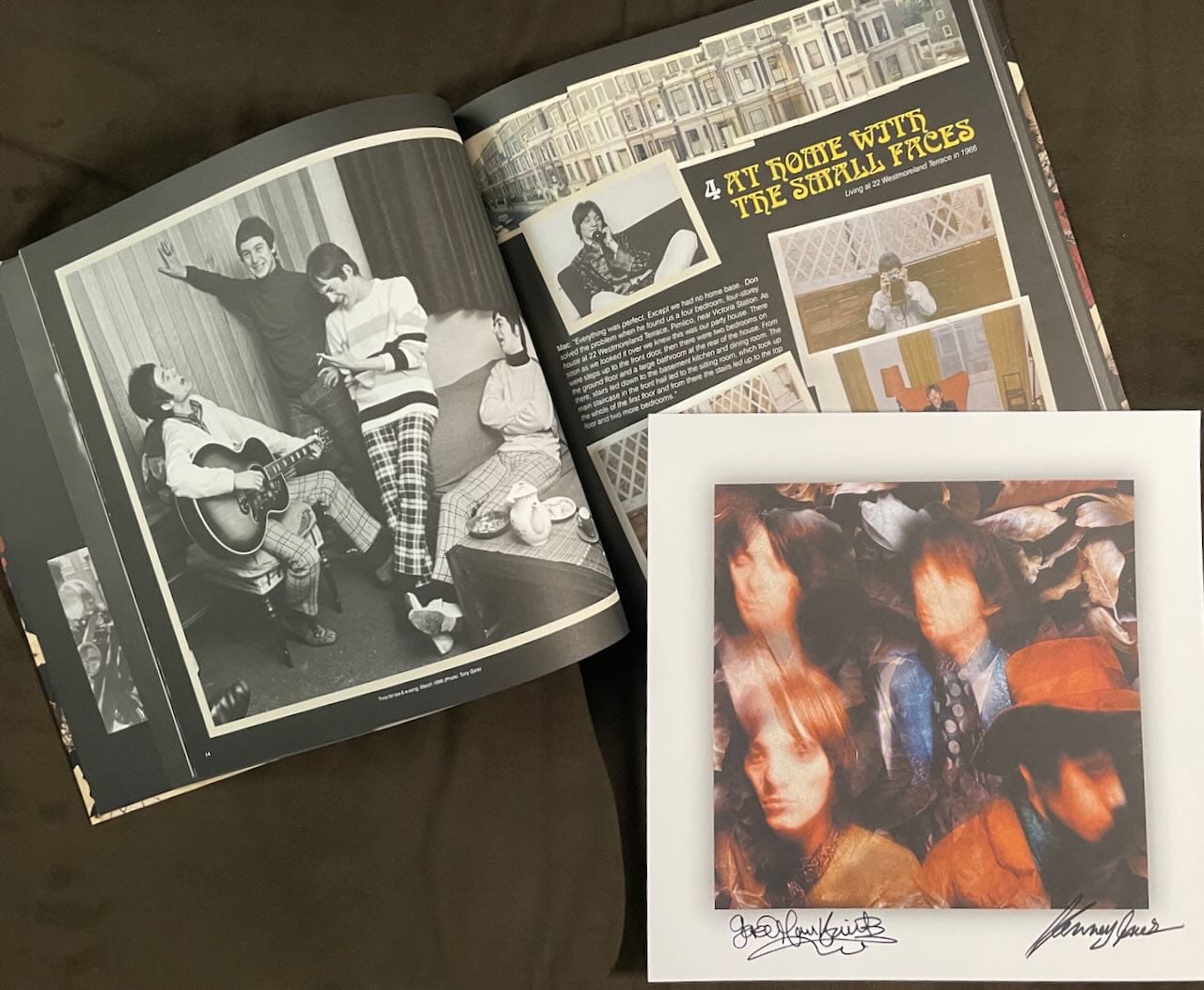
The packaging is extraordinary. The records and book come inside a sturdy box with a liftoff top, and the three LPs are pressed on marbled vinyl whose amber and dark gray matches the original cover design. (The cover itself has been altered to now include the band’s name on the front, with lettering done in gold foil.) The discs are housed in a textured paper jacket and cardstock inner sleeves that include several examples of Gered Mankowitz’s excellent photography of the band, rendered in autumnal golds and brown. The 68-page hardback book is sumptuous and detailed, with comprehensive liner notes, photographs, drawings by Ian McLagan from the period, and much more. It’s nearly the equal of the stupendous book that comes in the recent Rubber Soul box set—in other words, it more than meets The Vinyl Cut’s gold standard. The first 3000 copies of the box are numbered, and the first 750 of those come with a signed print of a Mankowitz photograph, signed by Mankowitz and Kenney Jones. The signed edition costs quite a bit extra, but the unsigned edition is remarkably affordable at the moment, considering the gorgeous packaging and the wonderful book that’s included.
Crucially, the music sounds fantastic, with perhaps the exception of the live tracks, which are important for historical context and whose compromised quality is baked-in. Finding the best sources for all the pieces was evidently a yearslong process—in some cases, multitracks were revisited for new mixes; in others, tapes were scavenged from various archives. The research paid off, and everything here has been unified via a powerful, great-sounding master assembled by Nick Robbins, with Barry Grint (aka “BAZZA”) cutting the lacquer at AIR Studios. The marbled vinyl has silent backgrounds, with only the occasional click popping up once or twice across the six sides of my copy.
Most importantly, it puts Small Faces’ best stuff alongside the material that the band was working on as everything fell apart—in other words, the songs that were never given a chance. While only two tracks from Ogdens’ Nut Gone Flake are included (necessitating that one also get a copy of that essential album to fully round out their Small Faces ’60s collection), all the other important tunes are here, including 1966’s “All or Nothing” and “My Mind’s Eye” and 1967’s brilliant, soulful “Tin Soldier,” all of which rank among the best singles of the 1960s. And with “Itchycoo Park,” “Here Come the Nice,” and the immensely promising “The Autumn Stone,” all seasons of Small Faces are represented. I was skeptical that a goosed-up box set of a quickie odd ’n’ sods compilation could be transformed into something so monumental. But thanks to the painstaking work from Jones and the Nice Records team, this handsome reworking of The Autumn Stone is damn near definitive.
Nice Records 3-LP 33 RPM 180g “autumn stone and gold” vinyl
• Expanded and remastered edition of Small Faces’ 1969 posthumous compilation album
• Jacket: Reverse-board single-pocket jacket; comes inside sturdy outer box with gold foil lettering and lift-off top
• Inner sleeve: Printed paper with photos and tracklist
• Liner notes, insert, or booklet: 68-page hardcover book with introduction by Kenney Jones, notes by reissue producer Rob Caiger, a conversation between Kenney Jones and Gered Mankowitz, drawings by Ian McLagan, countless photos and other images, track details, and more
• Source: Digital; tape transfers by Rob Keyloch
• Mastering credit: “Mastered to vinyl by Nick Robbins, Nick Robbins Mastering, London”
• Lacquers cut by: Barry Grint, AIR Mastering, London, UK; “BAZZA” in the deadwax”
• Pressed at: TAKT, Bolesław, Poland
• Vinyl pressing quality (visual): A
• Vinyl pressing quality (audio): B+ (occasional ticks on the vinyl)
• Additional notes: First 3000 copies numbered; first 750 copies come with a photo print signed by Kenney Jones and photographer Gered Mankowitz.
Listening equipment:
Table: Technics SL-1200MK2
Cart: Audio-Technica VM540ML
Amp: Luxman L-509X
Speakers: ADS L980