Reviews: Marvin Gaye | Gary Stewart

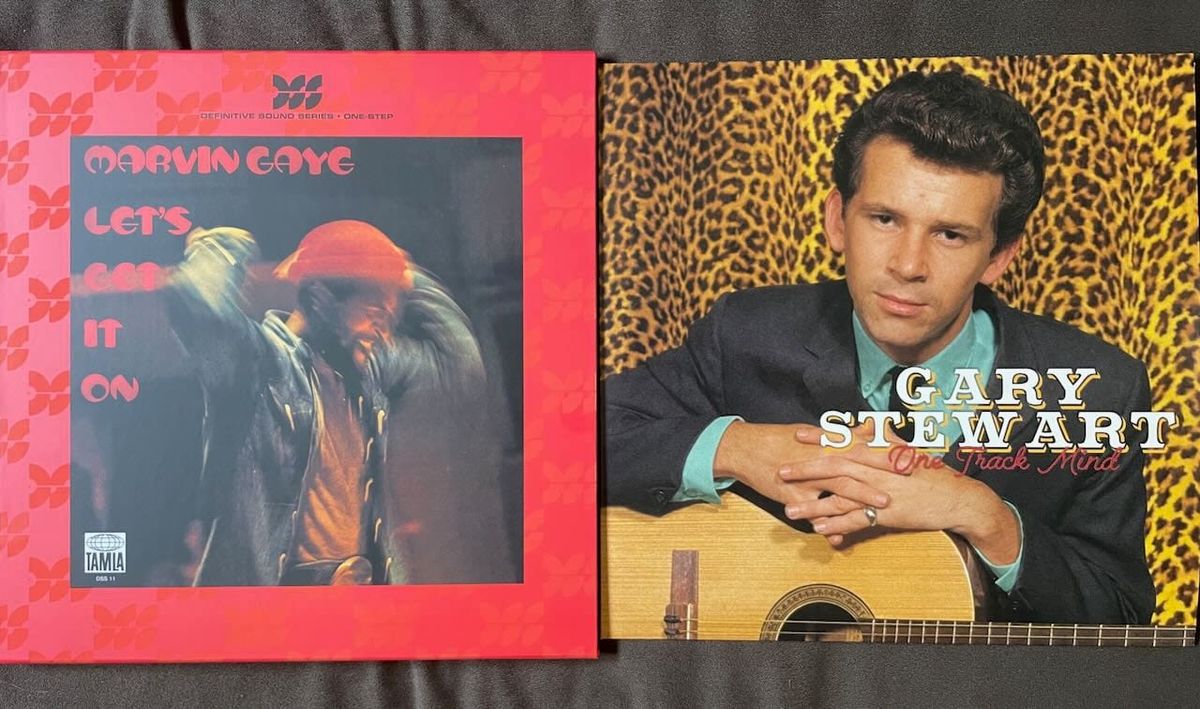
The two vinyl reviews today don’t have a ton in common, although both albums come from troubled geniuses who lived difficult lives and died before their time. Both artists transcended their genres—soul and country, respectively—by reaching their audiences on purely emotional wavelengths.
One of these is a classic album given a superlative vinyl treatment, and the other is a collection of unheard but vital early material.
- Marvin Gaye: Let’s Get It On [Definitive Sound Series]
- Gary Stewart: One Track Mind
Before we get started, here’s one last reminder of our July vinyl giveaway—it’s still open for entries until 11:59 pm on Sunday, August 2, so if you’re on our paid tier and haven’t entered yet, be sure to do so. We’re giving away a copy of Rokk Í Reykjavík, the soundtrack to the 1982 documentary on the Icelandic punk, post-punk, and new wave scene. It’s a fascinating and exciting listen, so read my review here and then upgrade to our paid tier by clicking the button below.
Then click the box below and get your entry in!
 Ned Lannamann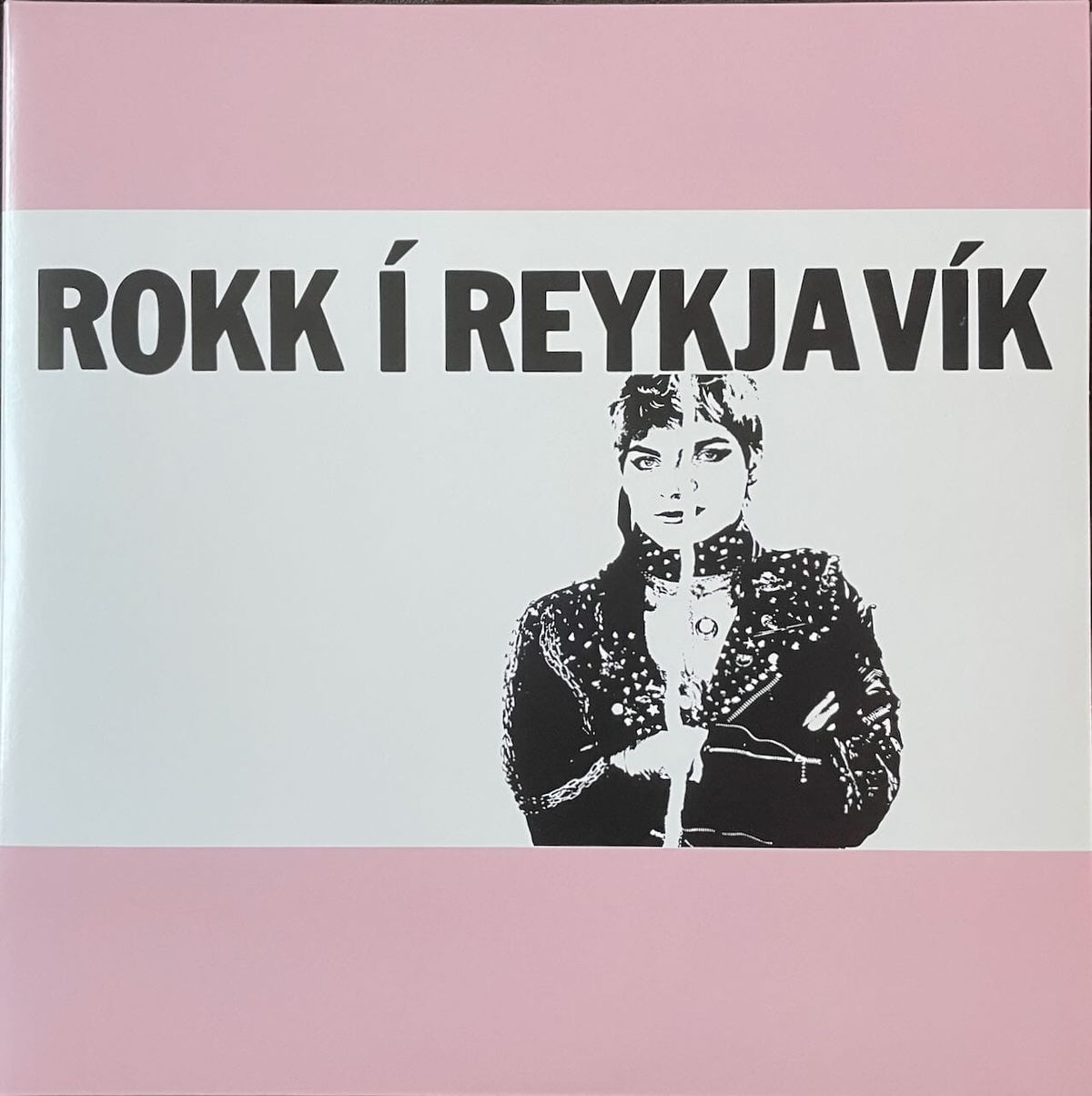
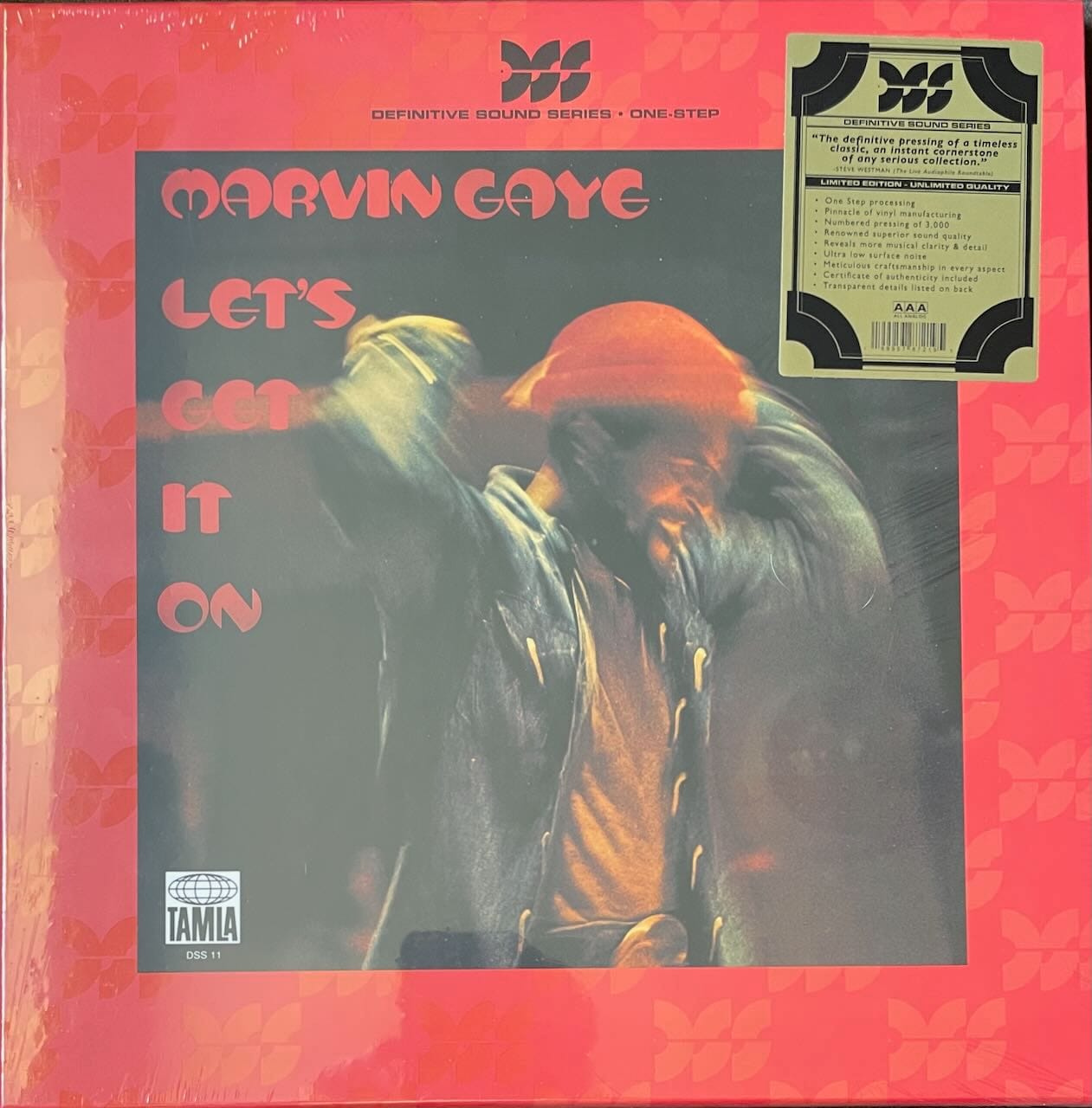
Marvin Gaye: Let’s Get It On [Definitive Sound Series]
It can’t have been easy to follow What’s Going On. Even decades before it was ranked as the greatest album of all time by Rolling Stone, Marvin Gaye’s 1971 album was recognized as a watershed—a powerful blend of Motown soul and social consciousness, wrapped up in dizzying, jazzy arrangements and delivered with the conviction of gospel. Gaye, a conflicted artist at the best of times, reeled from the album’s enormous success, pondering his next steps with indecision. He hit a dead end with the politically charged 1972 single “You’re the Man,” realizing that he wasn’t comfortable being the mouthpiece for a generation. And so Gaye flitted from idea to idea, recording more than a double album’s worth of unused material in addition to a movie soundtrack (Trouble Man) and a collection of duets with Diana Ross before having a clear sense of what he wanted his next proper studio LP to be.
The answer—and it seems so obvious now—was in the bedsheets. Gaye crossed paths with Ed Townsend, a marginally successful R&B singer in the 1950s who had recorded with Nelson Riddle and was now working as a songwriter and producer. Townsend had quit drinking and was fresh out of rehab, similarly looking for a fresh start. He and Gaye quickly devised a side-long suite of sexually charged music, fired up by Gaye’s reaction to—and eventual inhabitation of—a religiously tinged song Townsend had been working on in rehab, about getting on with life. The song, “Let’s Get It On,” shifted into a supercharged plea for physical companionship once Gaye met Janis Hunter, the 16-year-old daughter of a friend of Townsend’s who came to visit the studio. Hunter was famously present when Gaye recorded the soaring, swooning, positively rapturous vocal that ended up on the finished product.
Gaye was then inspired to go back to some older tracks he had in the can—some of them predating What’s Going On. With a theme coalescing around “Let’s Get It On” and the rest of Side 1, Gaye updated the older jams and constructed Side 2 as an examination of the various emotions that can complicate sexual connection. “Come Get to This” is a peacocking come-on, dressed as a playfully innocent throwback to the Motown sound of the ’60s, while “Distant Lover” is a longing, sorrowful lament about missed connections; “You Sure Love to Ball,” the one new song, is self-explanatory, but the album closer, “Just to Keep You Satisfied,” is the thorniest track on the album, a downtempo elegy for a failed relationship. Cut out of whole cloth from Gaye’s own life, it’s a song that was originally written by Gaye’s wife, Anna Gordy, which Gaye retooled to deal with their current situation and his newfound extramarital infatuation with Hunter.
Let’s Get It On, then, deals with earthly concerns on a spiritual level. Every song is a prayer, and every prayer is a seduction. Gaye’s personal life notwithstanding, the album is about transcending the difficulty and confusion of everyday life in order to connect with someone on an intimate level. Its depiction of sex as a type of spiritual transcendence would be picked up by everyone from Prince to Madonna to Boyz II Men to FKA Twigs, and its lavish, satin sound would virtually institutionalize the subgenre of the slow jam. Gaye’s brief notes inside the gatefold are meant to come across as a kind of universally sex-positive sermon (this was 1973, after all), but it was clear from listening that love, not bump-’n’-grind, was what was really on his mind.
As such, Let’s Get It On is a perfect companion piece to What’s Going On. That album asked questions about how we can change the world around us. Let’s Get It On asks, how can we get closer together? Gaye’s music would become coke-slick and raunchier with 1976’s I Want You, and R&B as a whole was about to be gassed up by funk and disco, but in 1973, Gaye struck a perfectly concordant balance between groove and romance.
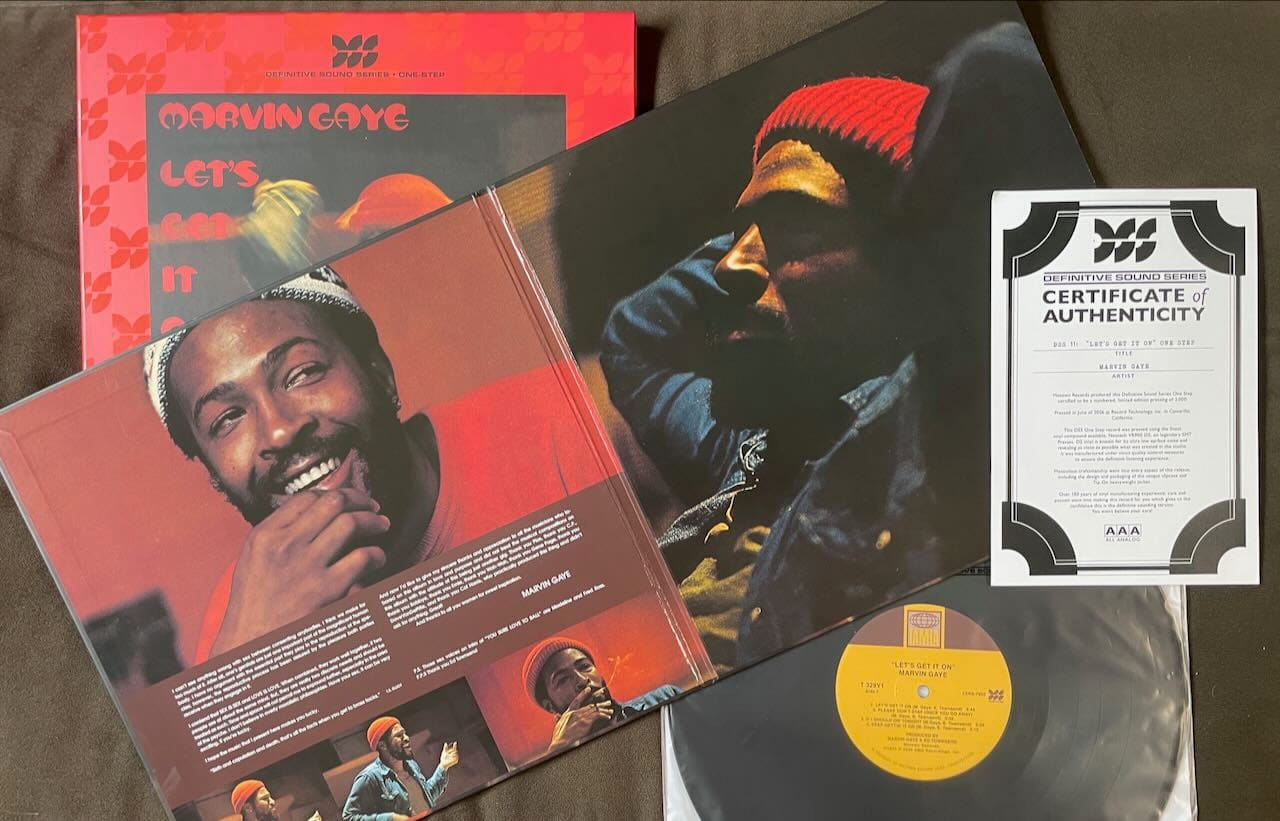
Interscope-Capitol’s Definitive Sound Series has reissued Let’s Get It On in a premium package with new analog mastering, a one-step pressing on a special vinyl compound, and a well-appointed jacket and slipcase. The most important thing here is the mastering, which was done by Chris Bellman of Bernie Grundman Mastering. Unlike with previous DSS entries, we’re not provided much detail about the pedigree of the source; “original analog master tapes” is all we’re told. Perhaps that’s enough.
The album, as first released on Tamla in 1973, was very well mastered to begin with, although neither a mastering engineer nor mastering studio are indicated on the sleeve or in the deadwax. Multiple lacquers were cut, perhaps by different engineers, and the album was a huge seller right out of the box, so there may be some variance among the ’70s pressings, but my two copies—with different lacquers and pressed at different plants—are generally pretty similar. For its reissue on the Motown label, the album was recut in the early 1980s by John Matousek and stayed in print through the decade; I haven’t heard his Let’s Get It On, but Matousek’s ’80s remasters are generally very highly regarded among vinyl listeners, so I imagine this one is no different.
In the 2000s, a new lacquer was cut by Dave Cheppa for a Scorpio-licensed reissue, which was pressed several times at Rainbo on an array of different colored vinyl. Another new version appeared in 2016 as part of the Back to Black series, pressed at GZ Media and most likely from a DMM source, using a digital file. This GZ cut has lingered in various repressings to the present day, some of them on red or orange vinyl. The other Let’s Get It On vinyl edition of note is the 2008 Mobile Fidelity pressing, which fell under their GAIN 2 Ultra Analog LP umbrella, although it was cut from a DSD64 digital file; it was half-speed mastered by Shawn R. Britton.
For this review, I compared the DSS to my 1973 Tamla original, which was pressed at New Jersey’s Superior Record Pressing, a plant partly owned by Motown back in the day. My pressing also has a “TVC” marking, from the plating done next door at Tracy-Val Corporation. (I also have a copy pressed at RCA Hollywood, but it’s seen a bit more use and sounds slightly duller, although that could be due to the condition.) The Superior pressing sounds wonderful and sweetly proportionate, with the complicated arrangements—which throw Gaye’s many vocal overdubs on top of string arrangements, lively rhythm sections, and prolific percussion parts—expertly managed on the soundstage. Nothing is out of place, and Gaye’s lead vocal radiates tenderness or heat, depending on the situation. The bass is gentle and wise, sounding especially inquisitive on “Distant Lover,” and the sonic tapestry is vibrant and colorful, down to every last instrument. It’s a fantastic-sounding disc.
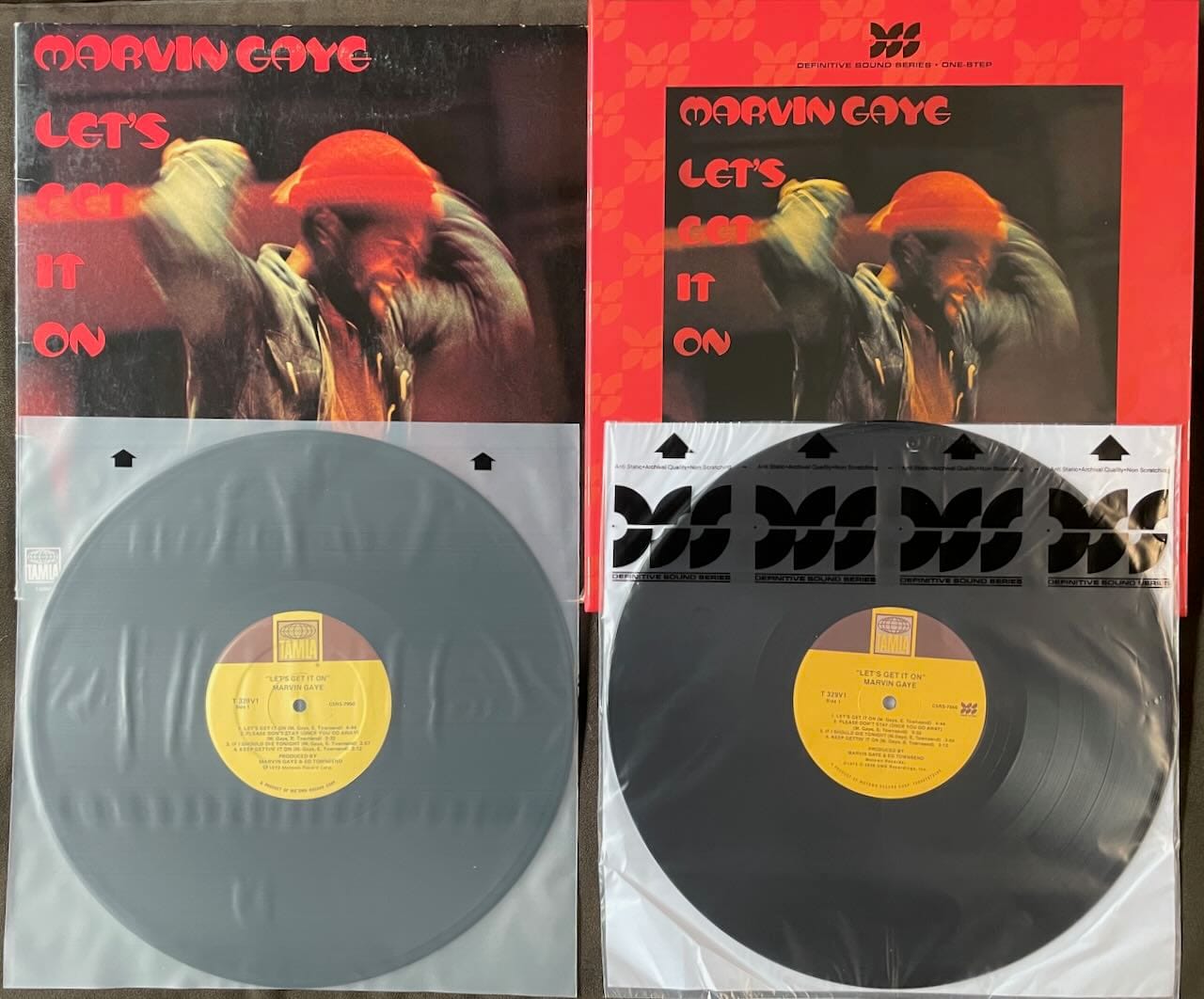
The DSS, then, pulls off a pretty astonishing feat by removing a slight layer of haze and opening up the sound to reveal a gasp-inducing vividness. Right from the four opening wah-wah guitar notes, mastering engineer Chris Bellman has extracted a startling clarity, making it sound—to use the cliché—like Marvin’s in the room with you. The snare snap on the title track has rich decay and presence, and all the other transients have pop and power. These performances sound like they’re happening in real time, not in a recording studio 50-something years ago. The slight sibilance on “Distant Lover” is attenuated, and any smeariness in the swooning layers of “You Sure Love to Ball” is tightened up. Most surprising of all, the saccharine qualities of “If I Should Die Tonight,” a song I never fully connected with, are transformed into a genuine, delectable, honeyed sweetness that had a real emotional impact on me.
The pressing is on Neotech VR900-D2 vinyl which, bolstered by the one-step process, provides a dead-black silent background, allowing for more space between the instruments and a natural airiness to bloom around the musicians. That sonic fertileness meshes fortuitously well with Bellman’s mastering, allowing you to dig things out of the mix, like the hushed vibraphone in “Let’s Get It On,” which I discovered is actually providing subliminal guide tones throughout the entire song and anchoring its chordal structure. The strings are silkier, the kick drum punches through with more assertiveness, and the soundstage is extended subtly in every direction. The bass is not goosed in any sense, staying quite true to the attitude of the original pressing, just with more definition. And Gaye himself sounds near-holographic, his voice the lifeblood that animates the entire production.
I try to stay cognizant of the fact that these expensive DSS one-step pressings are not within everyone’s budget, and I hasten to amend my enthusiasm by saying that these pressings should really be thought of as special treats, not required listening. If Let’s Get It On is not one of your all-time favorite albums and you have trouble otherwise justifying the cost, that’s perfectly okay. I went back and forth between the DSS and my Tamla original countless times, and at no point did I not love what the Tamla gave me. It’s still an outstanding listen in its own right, and my exposure to the DSS did nothing to diminish that.
The new Bellman cut on the DSS, though, is not likely to disappoint anybody who’s comfortable with laying down the scratch for it. It simply removes that last little bit of interference between your ears and the eight-song love philter that Gaye and his collaborators brewed up back in 1973. And like the best vinyl pressings, it doesn’t assault or confront the listener but rather involves and envelops them, drawing them into the theater of sound and allowing their ears the freedom to roam around its aural dimensions. For an album that was originally designed to get people into the bedroom, the new DSS pressing of Let’s Get It On is going to keep folks locked in place in their listening room’s sweet spot.
Motown/Definitive Sound Series 1-LP 33 RPM 180g semi-translucent vinyl
• One-step pressing of a new remaster of Marvin Gaye’s 1973 album
• Jacket: Tip-on gatefold with outer slipcase
• Inner sleeve: DSS-branded rice-paper-style poly
• Liner notes, insert, or booklet: None; a DSS certificate of authenticity is included
• Source: Analog; “Original analog master tapes”
• Mastering credit: Chris Bellman of Bernie Grundman Mastering, Hollywood, CA
• Lacquer cut by: Chris Bellman at Bernie Grundman Mastering, Hollywood, CA; “CB” in the deadwax
• Pressed at: Record Technology, Inc. (RTI), Camarillo, CA
• Vinyl pressing quality (visual): A
• Vinyl pressing quality (audio): A
• Additional notes: Pressed on Neotech VR900-D2 vinyl compound. Limited numbered edition of 3000.
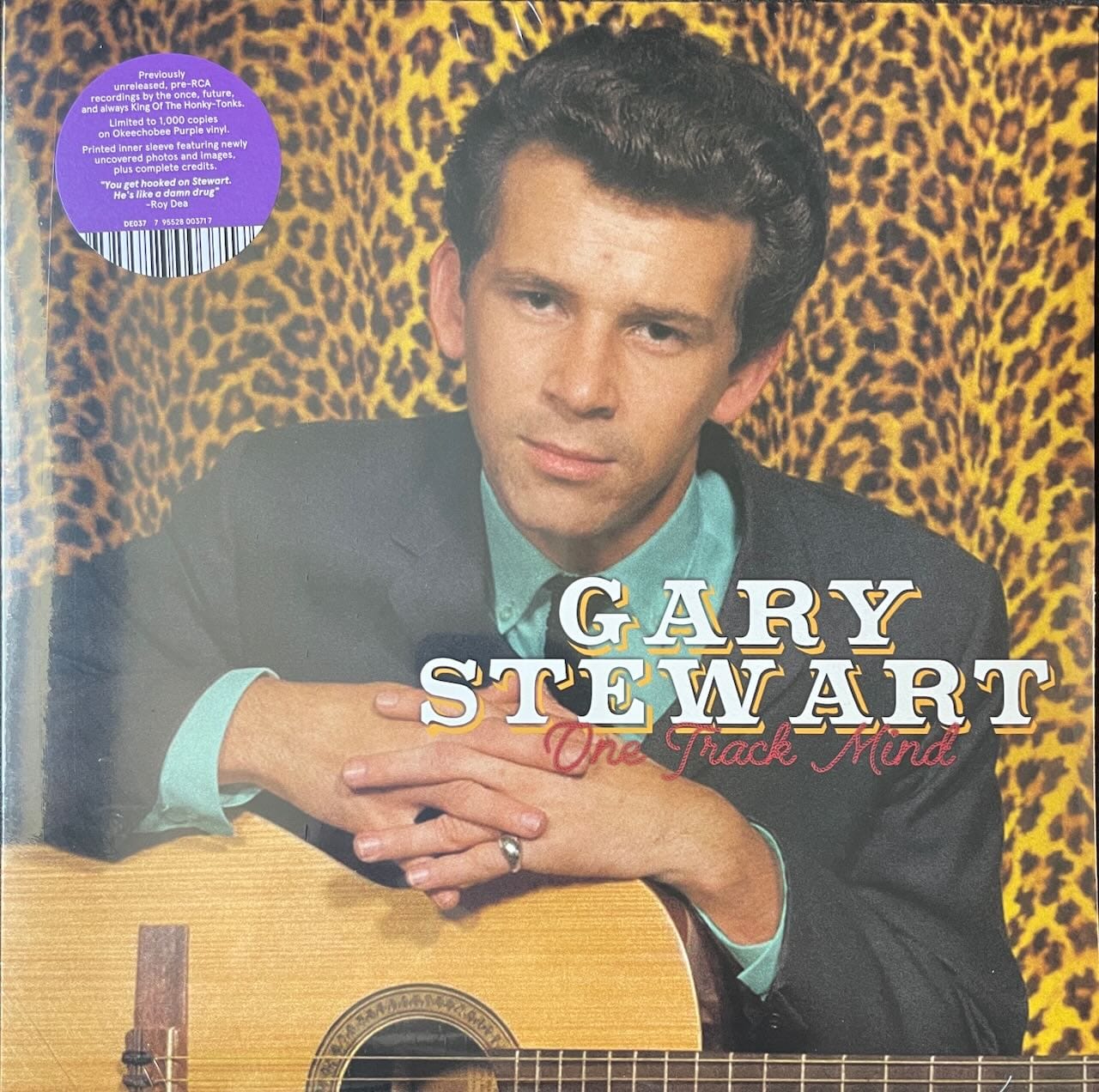
Gary Stewart: One Track Mind
The back half of Gary Stewart’s turbulent life is getting a lot of newfound attention. With the April publication of I Am from the Honky-Tonks—the well-reviewed and comprehensive biography of the country star by Jimmy McDonough (author of Shakey: Neil Young’s Biography)—and covers of his tunes coming from the likes of Ella Langley and Wednesday, interest in Stewart’s music and career has been fully reignited. And so has our fascination with his hard-livin’ ways, his rejection of Nashville, and his years of self-imposed exile before dying of a self-inflicted gunshot wound at age 59, shortly after his beloved wife’s death from pneumonia in 2003. As McDonough told Patton Oswalt during a book-tour interview at the Grammy museum, when he tried to track Stewart down years ago, one of the musician’s friends warned him, “You don’t wanna hang out with him. He’s livin’ in a trailer with the windows painted black, doin’ a lot of meth and livin’ like Count Chocula.”
A new collection from Delmore Recording Society focuses on the other half of Stewart’s life—specifically, the early part of his music career, documenting his years in the 1960s and early 1970s as a songwriter-for-hire. This was before Stewart signed to RCA in the mid-’70s and had big hits with alcohol-themed country classics like “She’s Actin’ Single (I’m Drinkin’ Doubles)” and “Drinkin’ Thing.” One Track Mind collects Stewart’s songwriting demos and other early recordings, many of them recorded with top session talent at Bradley’s Barn—the legendary Mount Juliet, Tennessee, studio where Stewart was employed as a gofer and staff songwriter for the Bradley family’s publishing arm, Forest Hills Music. The album is a trove of unreleased Stewart material that predates his better-known work, but his sly wit, self-destructive edginess, and knack for heart-slicing melodies were evident from the get-go.
Stewart never fully took to Nashville. Born in Kentucky and raised in Florida, he came to Music City at the recommendation of Mel Tillis, who saw Stewart playing at a honky-tonk in Okeechobee, Florida, and told him that the best way to break into country music was as a songwriter. Joined by his buddy and songwriting partner Bill Eldridge, Stewart spent several years in Nashville hawking songs to performers like Cal Smith, Hank Snow, and Del Reeves, and even managed to record a few singles under his own name. Stewart’s high tenor—a keen, cutting instrument that was equal parts Kentucky bluegrass, Jerry Lee Lewis holler, and nasal honky-tonk twang—couldn’t help but drip raw emotion, even in these early recordings before he had adopted his trademark quivering vibrato.
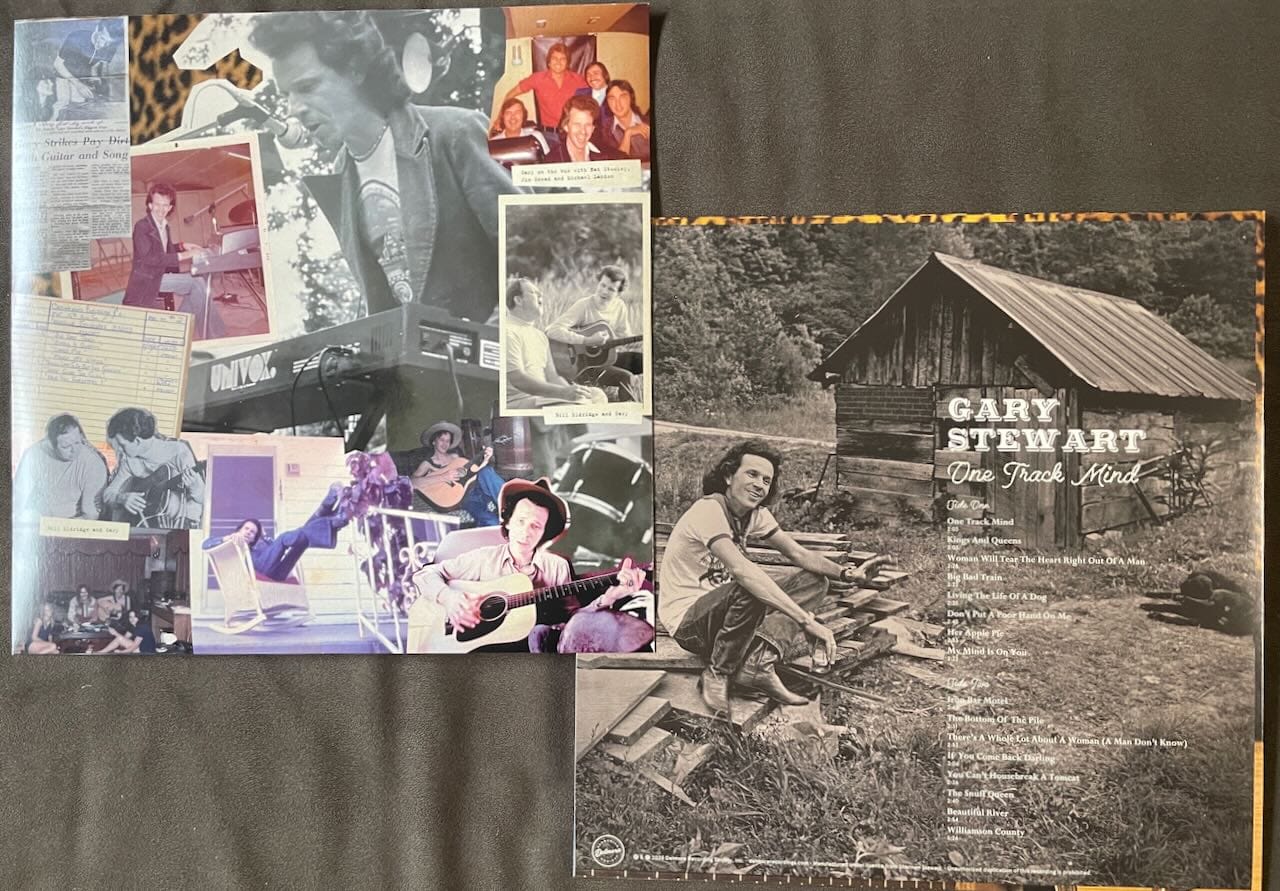
Stewart’s songs at this point were generally humorous and just a touch scandalous, and he sang them with a Cheshire Cat grin. “Iron Bar Motel” is a raucous travelogue interrupted by brushes with Johnny Law and a seductive female car-jacker, while “Living the Life of a Dog” takes the idea of living in the doghouse literally, and “Her Apple Pie” uses a familiar baking metaphor to describe the alluring qualities of a lover. These were all probably a bit too indecent for mainstream country stars to take on, but the teary ballad “There’s a Whole Lot About a Woman (A Man Don’t Know)” shows that Stewart could play it straight-faced as well. The disc concludes with an early take of “Williamson County,” a song from his first RCA album, 1975’s Out of Hand. This version is pseudo-psychedelic and hymnlike, based on a steadily strumming acoustic guitar and a deliberate backbeat before a ghostly guitar solo shepherds the whole thing into the mist. There’s some Louvinesque twang, but otherwise the sound is devoid of any Nashville signifiers, and the track thrillingly diagrams a whole other side of Stewart that never fit into any genre box.
The songs were assembled by Delmore Recording Society’s Mark Linn from vast piles of tapes that Stewart left scattered to the winds over the years, hiding in crawl spaces and in friends’ private collections. The bulk of the material came from reel-to-reels, although “The Snuff Queen” was sourced from a beat-up acetate (it sounds remarkably good, considering). The tracks were transferred digitally and then mastered by David Cheppa at Plush Vinyl Mastering. Cheppa also cut the lacquer with Plush’s Neumann VMS-70 rig, which was originally used by the first incarnation of Mobile Fidelity before the company went bankrupt in 1999. The system has since been updated with a Neumann SX-74 cutter head and Ortofon 741 cutter amps; in Cheppa’s mastering notes for the session, he wrote: “This ‘next generation’ hybrid system was specifically chosen to navigate the challenges of the original source material, revealing the depth of these previously unheard Gary Stewart performances with a musicality and presence that honors their historic importance.”
Cheppa nailed it, and sonically, most of the collection sounds as good to me as any mainstream country record from the late 1960s or early 1970s—the facilities at Bradley’s Barn and the fine playing of the musicians ensures that everything here is eminently listenable. And even when the fidelity is compromised, it’s well worth it. “Beautiful River” is an unfinished sketch that’s just the faintest wisp of a tune, recorded in Stewart’s trailer right as the inspiration was hitting him. A lovely, high-arcing melody and a few words were all he had, but it’s a spine-tingling thing to hear, as he urgently tries to capture the idea for a song as it hits him like a bolt of lightning.
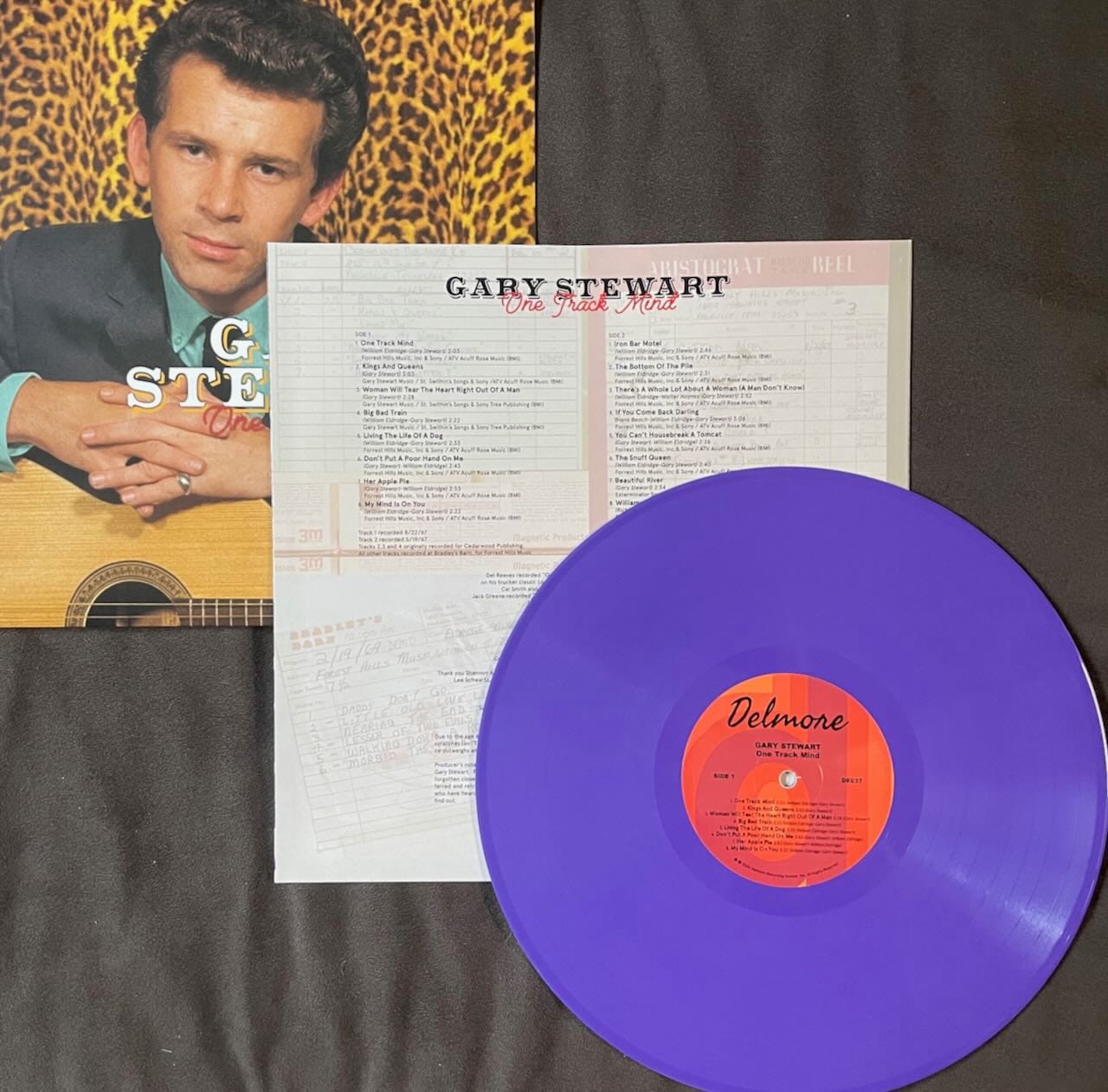
Delmore Recording Society has also issued One Track Mind in CD and streaming editions with four bonus tracks, including some twangy Motown covers Stewart recorded for hire, to see if the Detroit label’s catalog of hits could work when reinvented as country songs. While it would be nice to have everything on vinyl, what’s here is plenty, and in the brief sleeve note, Linn says that two more albums of unreleased Stewart are in the works. The LP was pressed on “Okeechobee Purple” vinyl (named for a song from 1980’s Cactus and a Rose), and my copy was flat and clean, although there were some rough edges to the disc and some very faint background noise. The paper inner sleeve left a few tiny flecks of paper that needed to be cleaned off before playing. These issues were minor and caused no interference with the enjoyment of listening.
The lack of documentation around the recordings is unfortunate—it’s not clear what year the songs were recorded, for instance, or who’s playing on them. That is likely due to the state of the tapes themselves, which presumably were missing that kind of info when Linn got his hands on them. But in some ways that frees this collection to exist on its own terms, as a never-before-heard album from a neglected talent as opposed to an archival museum piece. Even during these fledgling years, Stewart possessed a magnetic pull in his sound that makes it immediately obvious why he’s become a cult figure of fascination. Now all that’s needed is for Sony to get Stewart’s RCA albums back in circulation.
Delmore Recording Society 1-LP 33 RPM “Okeechobee Purple” vinyl
• Unreleased material from Gary Stewart dating from the 1960s and early 1970s
• Jacket: Direct-to-board single pocket
• Inner sleeve: Thick printed paper with archival photos and brief song information
• Liner notes, insert, or booklet: None, although some cursory notes are included on the inner sleeve
• Source: Digital; per Mark Linn, “Digital master was prepared from the original reel to reel demo tapes in most cases”
• Mastering credit: David Cheppa
• Lacquer cut by: David Cheppa at Plush Vinyl Mastering, Woodland Hills, CA
• Pressed at: Clampdown Record Pressing, Vancouver, BC
• Vinyl pressing quality (visual): B+ (some jagged edges on the vinyl)
• Vinyl pressing quality (audio): A- (very minor surface noise)
• Additional notes: Limited to 1000 copies.
Listening equipment:
Table: Technics SL-1200MK2
Cart: Audio-Technica VM540ML
Amp: Luxman L-509X
Speakers: ADS L980