Reviews: Marvin Gaye | Supertramp


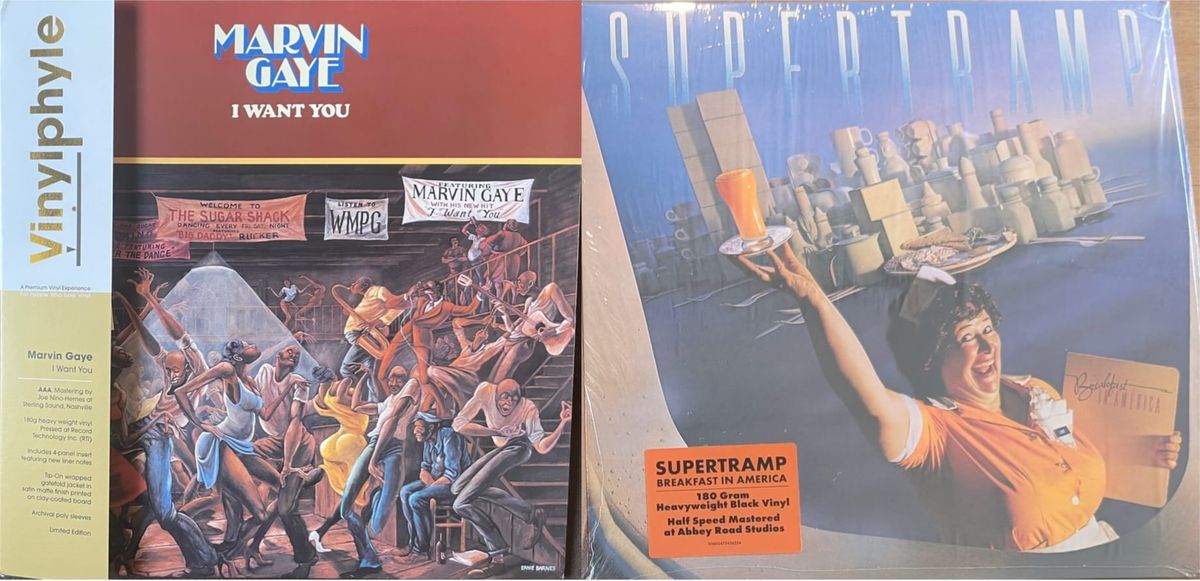
I Want You on Vinylphyle, plus half-speed masters of Breakfast in America and more.
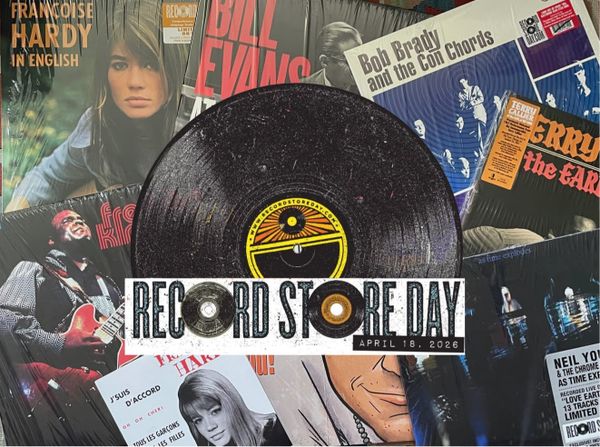
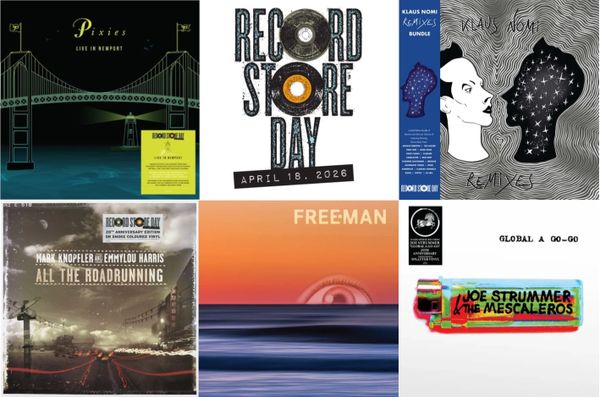
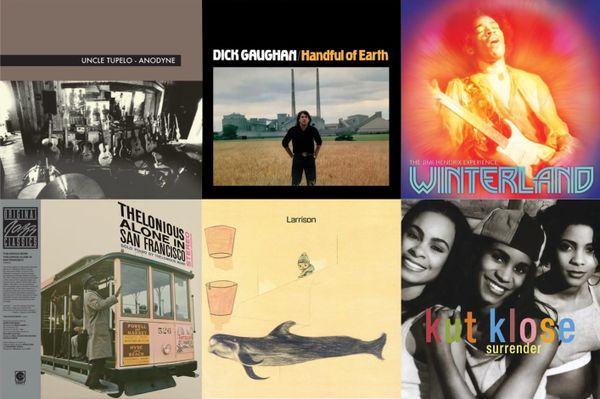
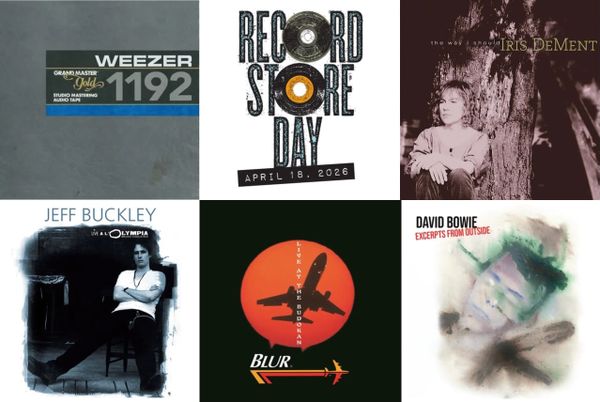
Before we get into today’s vinyl reviews, here’s just a reminder/warning that we’re in the thick of Record Store Day season. For those of you with short memories, Monday’s post contained reviews of some of the upcoming special releases, and we’ll be going at it strong until Record Store Day itself, with lots and lots more reviews of the vinyl that will be available on April 18. (Not kidding. Lots.)
But today, we’re taking stock of some intriguing reissues that landed last month:
- Marvin Gaye: I Want You [Vinylphyle]; I Want You 2
- Supertramp: Even in the Quietest Moments…; Breakfast in America; …Famous Last Words… [half-speed masters]
Two things before we get started: Rough Trade has announced the next 10 records in its Rough Trade 50 anniversary vinyl series, covering the years 1986 to 1995. You can scope those out over on Rough Trade’s site; they’re releasing custom versions of important albums—one per year—that came out during the London store/label’s first 50 years of existence, and they’ve picked some really good ones. While we don’t think the pressings are anything unique, each disc comes on colored vinyl with newly written liner notes and generally looks very handsome.
And lastly, the vinyl we're reviewing today all happens to come from the multi-tentacled international conglomerate known as Universal Music Group. Yesterday, it was reported that a billionaire hedge fund manager is making overtures to buy the company. It’s too soon to say what the implications of that proposal are—and frankly, I’m not sure that I’m qualified to discuss them—but with vinyl gaining more of a market share with each year, it’s possible that we may eventually see some ramifications if the deal actually goes through. Just something to keep an eye on. It’s not like there’s anything else going on in the world, right?
Anyway, here are our reviews. We hope you read them in good health and spirits.
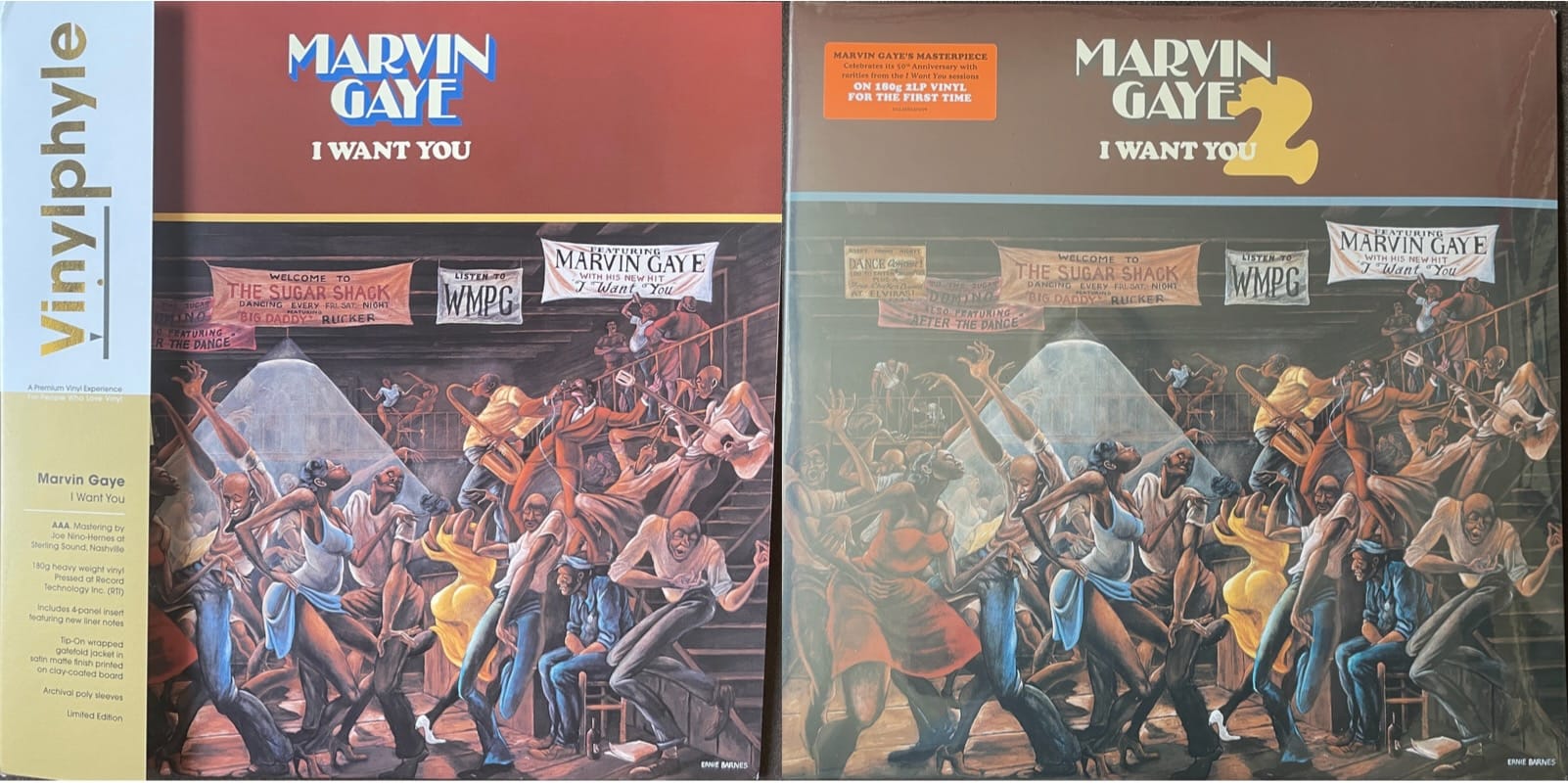
Marvin Gaye: I Want You [Vinylphyle]; I Want You 2
Review by Ned Lannamann
Perhaps the only PG-rated way to describe Marvin Gaye’s I Want You is as a rapturous ode to the physical expression of romantic love. The 1976 album was recorded while Gaye was in the throes of his affair with Janis Hunter, who would become his second wife in 1977. Released on Motown’s Tamla imprint, I Want You is bedded with lush arrangements designed for the boudoir: strings that glisten like beads of sweat, percussion that pulses like quickened heartbeats, guitars that wah-wah all night long, and Gaye’s voice swooping like a cherub through the entire nectarlike concoction. While very much an R&B record of its time, it somehow stands outside it, too. The rhythms are not as machinelike as disco, nor do they have the stank of funk; this bouquet of love songs, while tender and expressive, contain a bit too much steam for any one of them to be considered a ballad. This is music designed for—well, for activity.
And yet I always hear a trace of tragedy in I Want You, a footprint of the doomed sadness that may be the unavoidable fallout of every obsessive love affair. Sure, that could be something I’m bringing to the music, allowing my knowledge of Gaye’s biography and the circumstances of I Want You to color the experience. But I think it makes for a richer listen, where the emotions are far more complicated than Gaye’s come-hithers let on. I Want You isn’t just an album about getting some; it’s about using love and sex as places of refuge, where one can hide from the more difficult parts of life… for a while, anyway.
As madly in love as Gaye was with Hunter—they had two children by the time of I Want You—he was also trying to extricate himself from his marriage to the much older Anna Gordy, the sister of Motown’s founder, Berry Gordy. Gaye, meanwhile, was the much-older party in this new relationship, having met Hunter when she was just 17; he recorded his immortal vocal to 1973’s “Let’s Get It On” as she looked on from the control room. That single and album, Let’s Get It On, became among Gaye’s biggest successes to date, but he spent the next two years of his career drifting, unable to write and unwilling to record.
Meanwhile, songwriter and producer Leon Ware was working on a record for Diana Ross’s brother, Arthur “T-Boy” Ross, after the pair had a big success with their song for Michael Jackson, 1972’s “I Wanna Be Where You Are.” Berry Gordy heard their newest collaboration, “I Want You,” and instructed Ware to give it to Gaye instead; “All the Way Around” and “Soon I’ll Be Loving You Again” also became Gaye’s songs in the process. T-Boy sadly would be left in the dust, a casualty of the I Want You saga. He’d eventually manage to record an album for Motown in 1979, but it flopped, and T-Boy retreated from both the music business and his family, dying under mysterious circumstances in 1996.
Gaye, meanwhile, commandeered everything Ware was working on at the time, including tracks intended for Ware’s own album (eventually released in 1976 as Musical Massage). As such, I Want You is very far away from Gaye’s 1971 masterpiece What’s Going On, which was an auteur-driven project imbued with its creator’s very essence. I Want You, by comparison, is a bit of a gun-for-hire affair, with Gaye coming along fairly late in the process and casting himself as the main character. His pliant voice is treated to countless overdubs, becoming the dominant flavor and bending the opulent instrumentation to his will. In that sense, Gaye successfully makes Ware’s music his own, and his personality does things to the songs that no other musician could, but there’s also an intrinsic element to Gaye—a vernal humanity, perhaps—that is nowhere to be found on I Want You.
The title track is the album’s signature song, a minor-key fantasia that thrusts the listener into a dance party that’s well under way. The song eludes a conventional melody or chorus, creating its mood from the bottom up, dealing in impressionistic sensations rather than fully-formed ideas. The “I Want You” groove is reprised twice more on the album, and “After the Dance” is also treated to two renditions: the first features Gaye’s water-bubble synth helming the melody, while a second version with Gaye’s vocal closes the album. Even putting those repetitions aside, there is a sameness to much of I Want You. Due to the involved arrangements that deposit horns, strings, and a full artillery of R&B instrumentation onto every track, there’s little contrast from song to song. Because of that, it falls shy of cohering as a suite or a concept album in the way that What’s Going On and Let’s Get It On do. There are no changes in temperature or vibe, nor is there a sense of accumulated experiences; rather, I Want You is content to function as a 38-minute sequence of variations on a single theme.
To briefly return to the concept of tragedy in and around I Want You: Gaye and Hunter would be married once Gaye’s divorce from Anna Gordy was finalized—Gaye’s next album, 1978’s Here, My Dear, would examine the gruesome details of the divorce, with all royalties going to Anna as alimony. But Gaye and Hunter’s intense affair would quickly run its course, with the pair separating as soon as 1979 and divorcing in 1982. The rest of Gaye’s life was marred by cocaine addiction, tax evasion, stage fright, and other troubles; he would exile himself to Belgium for a stretch and spend his final months living in his parents’ house, where he was shot and killed by his father in 1984. This decline was all in spite of continued artistic and commercial success, but Gaye’s demons and self-destructive tendencies were what made his art so nerve-janglingly real. With all that in context, I think I Want You’s real power—the one that lingers after the lights come on—is how it’s actually the sound of a man setting his life on fire. It’s full of love and hope, sure, but you can also hear the desperation.
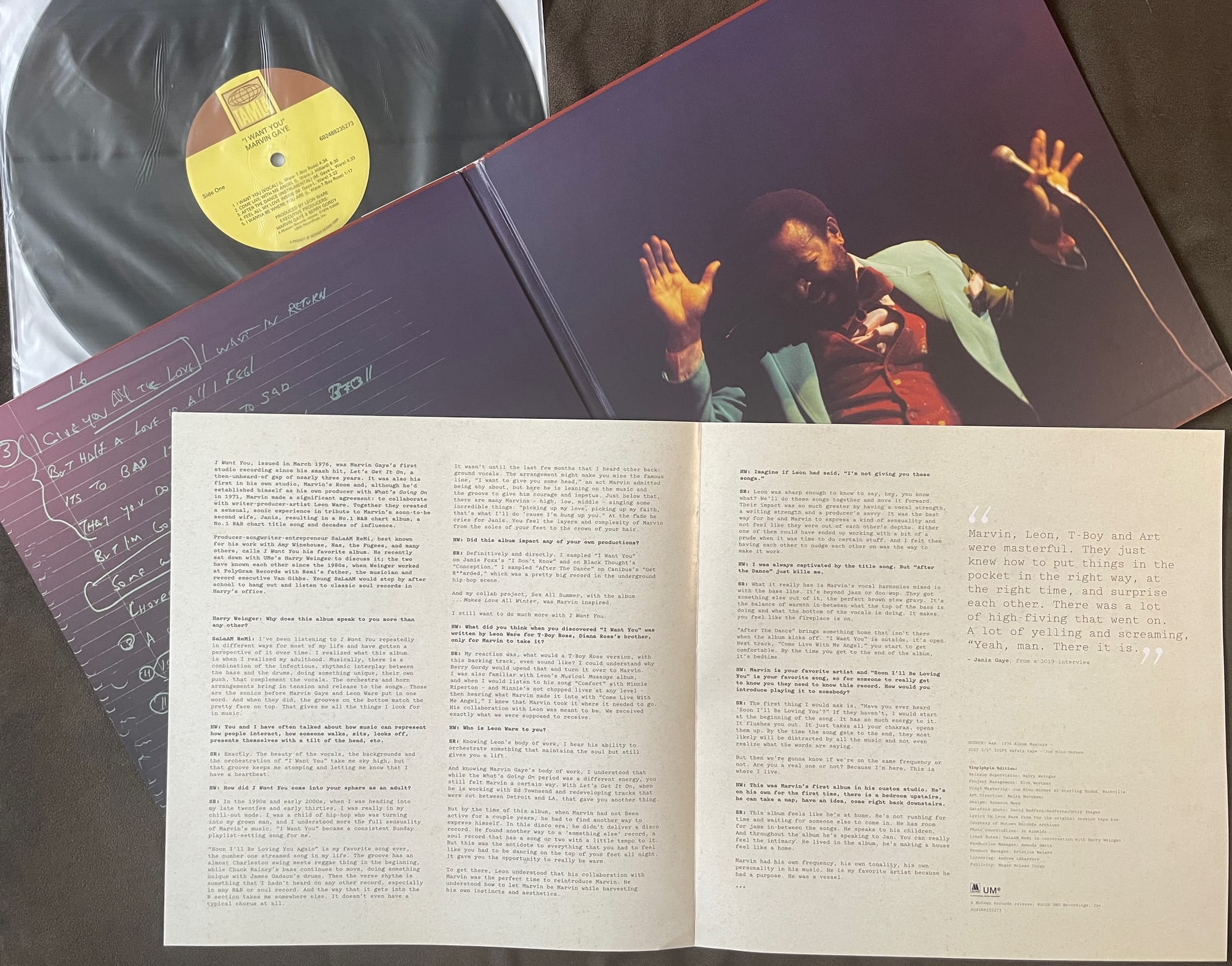
For the album’s 50th anniversary, Universal has reissued I Want You through its Vinylphyle imprint, featuring a premium pressing of the original album in a high-quality gatefold. It’s accompanied by I Want You 2, a fantastic double LP that reproduces all of the bonus material that was released on the I Want You 2-CD deluxe edition in 2003. There’s also a digital EP of new remixes floating around the internet, but let’s ignore those as best we can.
The Vinylphyle edition of I Want You is cut from a newly dubbed analog tape; it is not cut from the 1976 master but rather a “safety” copy freshly made in 2025. This is good news, and not just because it means the original master reels have not been sacrificed in the process. I believe that a 1:1 analog dub, while, yes, losing a generation, is far preferable to a digital transfer. Anything lost in a correctly done analog duplication process is minor compared to the properties that could be lost or flattened out by a digital conversion. This is just my taste and opinion, mind you, and I’m sure it’s possible that a high-quality digital capture could result in an excellent record. But to my point of sticking with analog, I’ll point you to last year’s reissue of Funkadelic’s 1970 debut album on Org/Westbound, for which the master tapes were in terrible shape. A new analog copy was made and the lacquers were cut from that; the result was one of the best-sounding records of 2025.
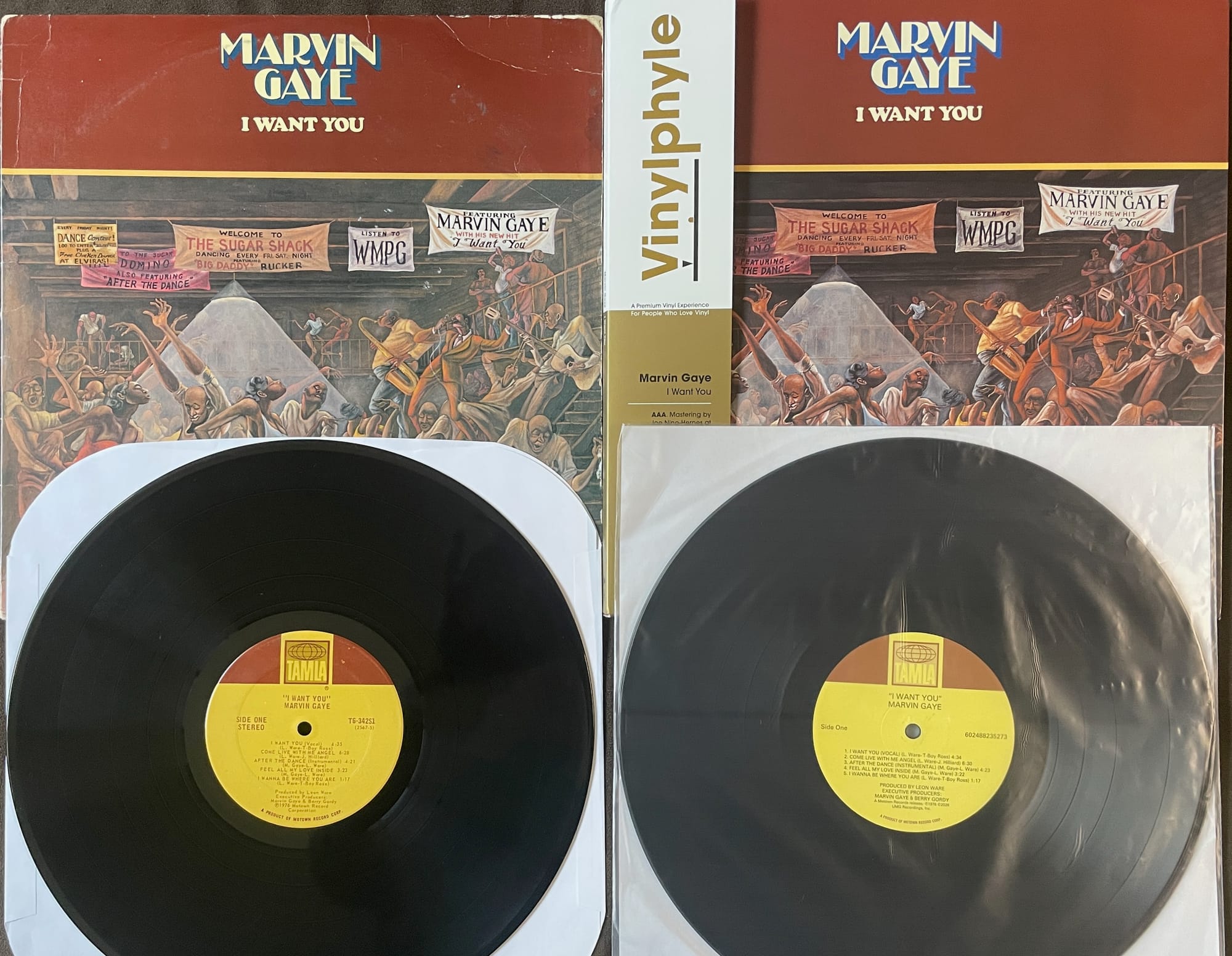
Similarly, the new Vinylphyle of I Want You sounds flabbergastingly good. The music’s humidity is only intensified, and the vast, occasionally tiring scope of the production is handled with care, creating intrigue for the ear at all times. On my original 1976 Santa Maria pressing, the sonic image is impressive, with a respectable, anchored bass and Gaye’s vocal reveries appropriately dreamlike. But the new pressing, cut by Joe Nino-Hernes, is more vivid and stabilized. Any hint of screech in the violins is ironed out, and any blur or glaze over the intricate arrangements is wiped away for a crisp, clear, steady gaze that keeps everything in perfect focus. I could have used a slightly heavier hand on the bass, but Ware’s production doesn’t lean too much on bass to begin with, and overly emphasizing it might have upset the careful balance that Nino-Hernes’s cut maintains. The pressing, by RTI, is darn near immaculate.
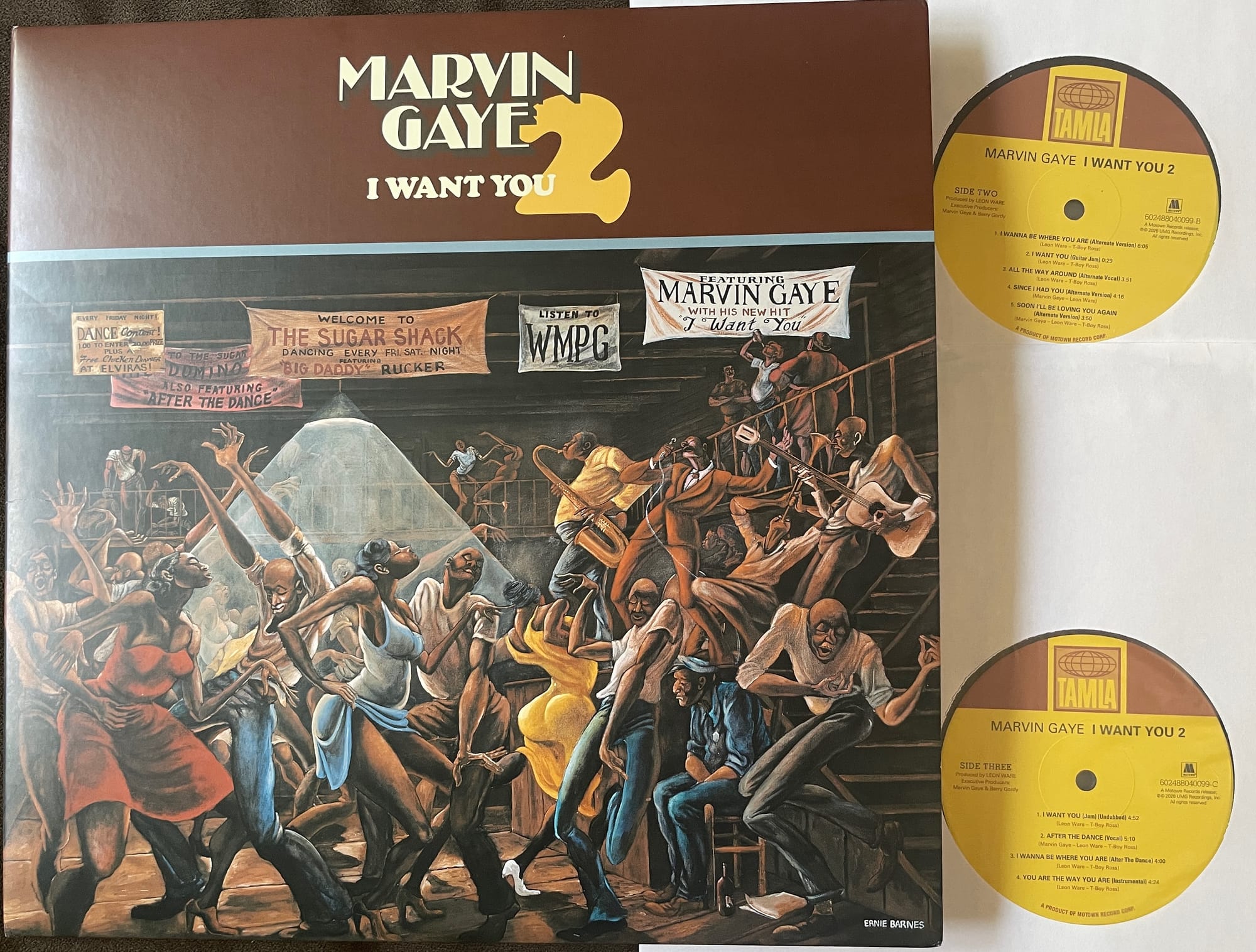
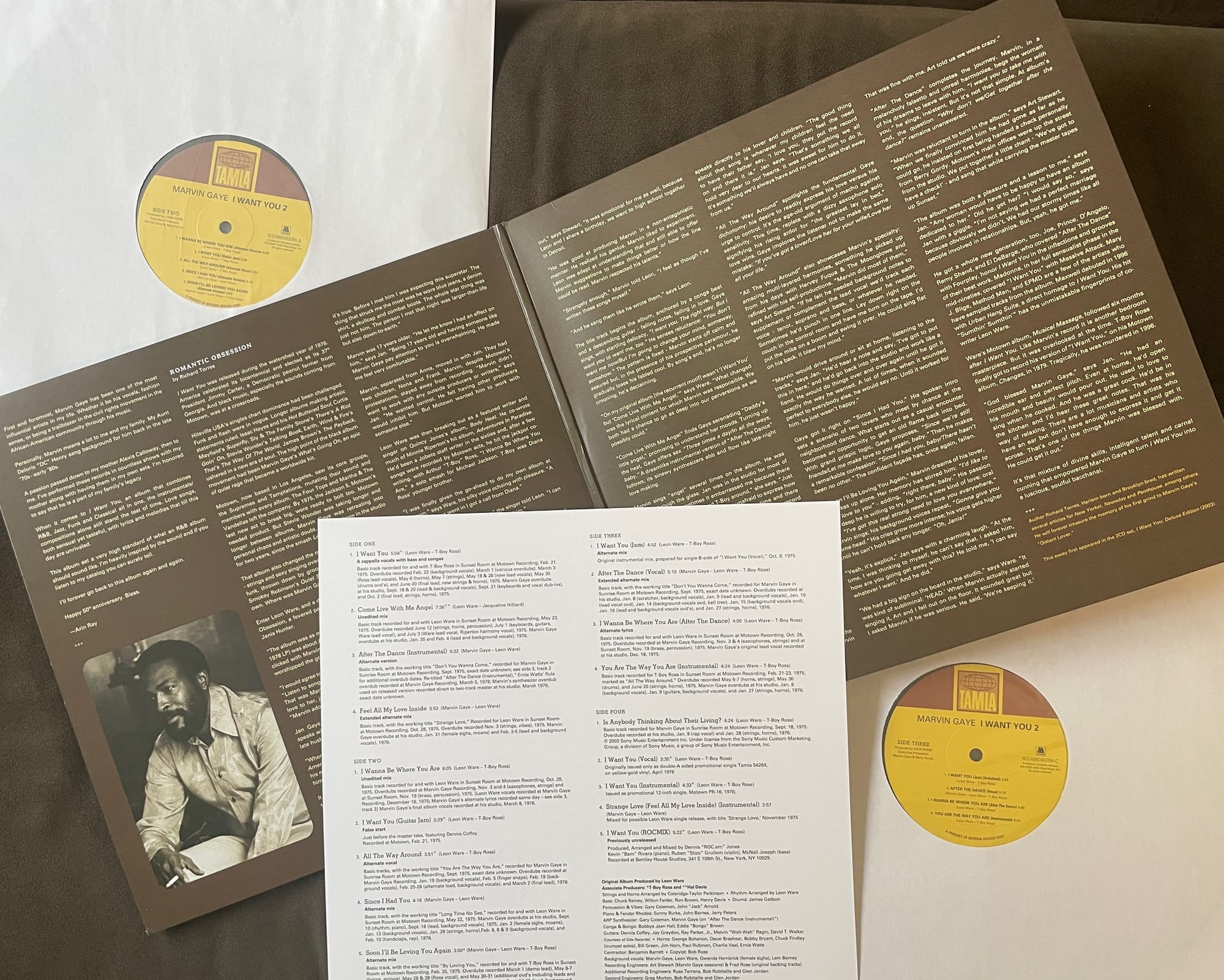
The accompanying double-LP of outtakes, I Want You 2, is surprisingly wonderful, too. For the most part, these are alternate mixes that allow the listener to hear behind the scenes of I Want You. The title track is given a mix that strips away almost everything except Gaye’s vocals, while other songs are given extended versions (the album’s abbreviated version of “I Wanna Be Where You Are” is stretched to six minutes) or entirely different vocals that show how ideas were shuttled from song to song over the course of the album’s creation. There’s also an outtake, “Is Anybody Thinking About Their Living?” that would have worked wonderfully on the album, and a promo mix of “I Want You” (sourced from a needledrop, sounds like) is included, as are a few other instrumental mixes. Weirdly, the album concludes with a newly recorded remake of “I Want You” by Dennis “ROC.am” Jones, with Gaye’s vocal track over a minimal backing of piano, violin, and bass. It doesn’t belong here. (The remake can also be heard on that digital EP of remixes I mentioned earlier, which is really where it should have stayed.) But that one track aside, I Want You 2 is an absolute joy—I’ll even go so far as to say it’s musically the equal of its parent album. The only other thing you’ll need to get the complete sonic picture is a copy of Leon Ware’s Musical Massage, which was conceived and recorded during this same time period.
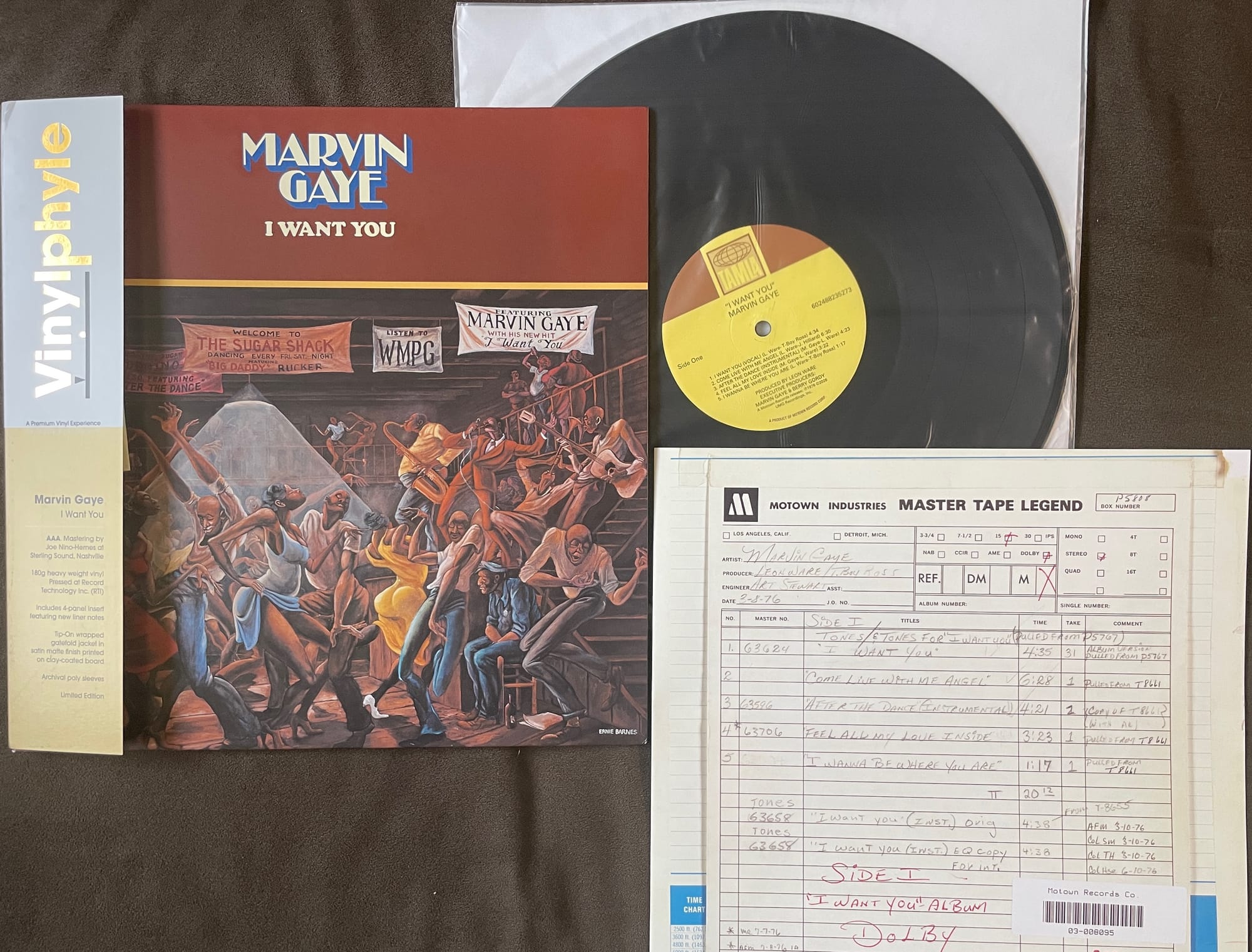
The Vinylphyle gatefold is as sumptuous as ever, with the famous cover painting wonderfully reproduced. It includes a four-page insert that includes images of the original tape boxes, and trainspotters may observe the notations of the different pressing plants the original lacquers were sent to (Monarch, Terre Haute, Santa Maria). The insert also includes an interview with a guy who had nothing to do with the album but just really likes it a whole bunch: producer Salaam Remi, whose dad worked at PolyGram and who produced tracks for Amy Winehouse, Fugees, and others. The interview is almost completely pointless, devoid of substantial information about the recording of the album and failing to provide any context for it outside of this one particular guy’s career. As strong as the Vinylphyle series has been, some of the liner notes thus far have been pretty weak. (See also: Anthony Fantano’s rote interview with Peter Frampton for Frampton Comes Alive!) However, I hasten to add that I Want You 2 reuses the liner notes from the 2003 deluxe CD, and they are comparatively spectacular, providing plenty of useful information about the making of the album.
Perhaps the most enduring triumph of I Want You is how Marvin Gaye uses music’s inherent spirituality to turn sexual obsession into an act of devotion. It’s a feat Prince spent his entire career trying to replicate, and Gaye and Ware’s work is also credited for helping spur the R&B subgenre of quiet storm, which flourished in the late ’70s and ’80s. But while its effects as an aphrodisiac cannot be denied, I Want You’s complex psychology makes it more than just a carnal ride of bump ’n’ grind. “Why don’t we get together after the dance?” Gaye sings at the album’s close. It may seem like an innocuous invitation, but it’s one loaded with insecurity and doubt. With a stunning new pressing and a bevy of alternate looks at the material, I Want You’s emotional turmoil has never been more pleasurable to soak in.
I Want You: Vinylphyle/UMe/Motown 1-LP 33 RPM 180g black vinyl
• All-analog remaster of Marvin Gaye’s 1976 album
• Jacket: “Tip-on wrapped gatefold jacket with satin matte finish, printed on clay-coated board”
• Inner sleeve: Rice-paper-style poly (unlike earlier releases in the series, the inner is not “Vinylphyle” branded; either they have stopped using them or there is a temporary shortage)
• Liner notes, insert, or booklet: 4-page insert containing photos of master tape boxes and interview with Salaam Remi by Harry Weinger
• Source: analog; “1976 album masters - 2025 1/2” 30 IPS safety tape - Joe Nino-Hernes
• Mastering credit: “Vinyl mastering: Joe Nino-Hernes at Sterling Sound, Nashville”
• Lacquer cut by: Joe Nino-Hernes at Sterling Sound, Nashville, TN
Pressed at: Record Technology Inc. (RTI), Camarillo, CA
• Vinyl pressing quality (visual): A
• Vinyl pressing quality (audio): A
• Additional notes: Limited edition per obi. Comes in a reusable outer bag with perforations.
I Want You 2: UMe/Motown 2-LP 33 RPM 180g black vinyl
• Outtakes and remixes from Marvin Gaye’s I Want You, taken from the 2003 double-CD deluxe edition and issued on vinyl for the first time
• Jacket: Direct-to-board gatefold
• Inner sleeve: White poly-lined
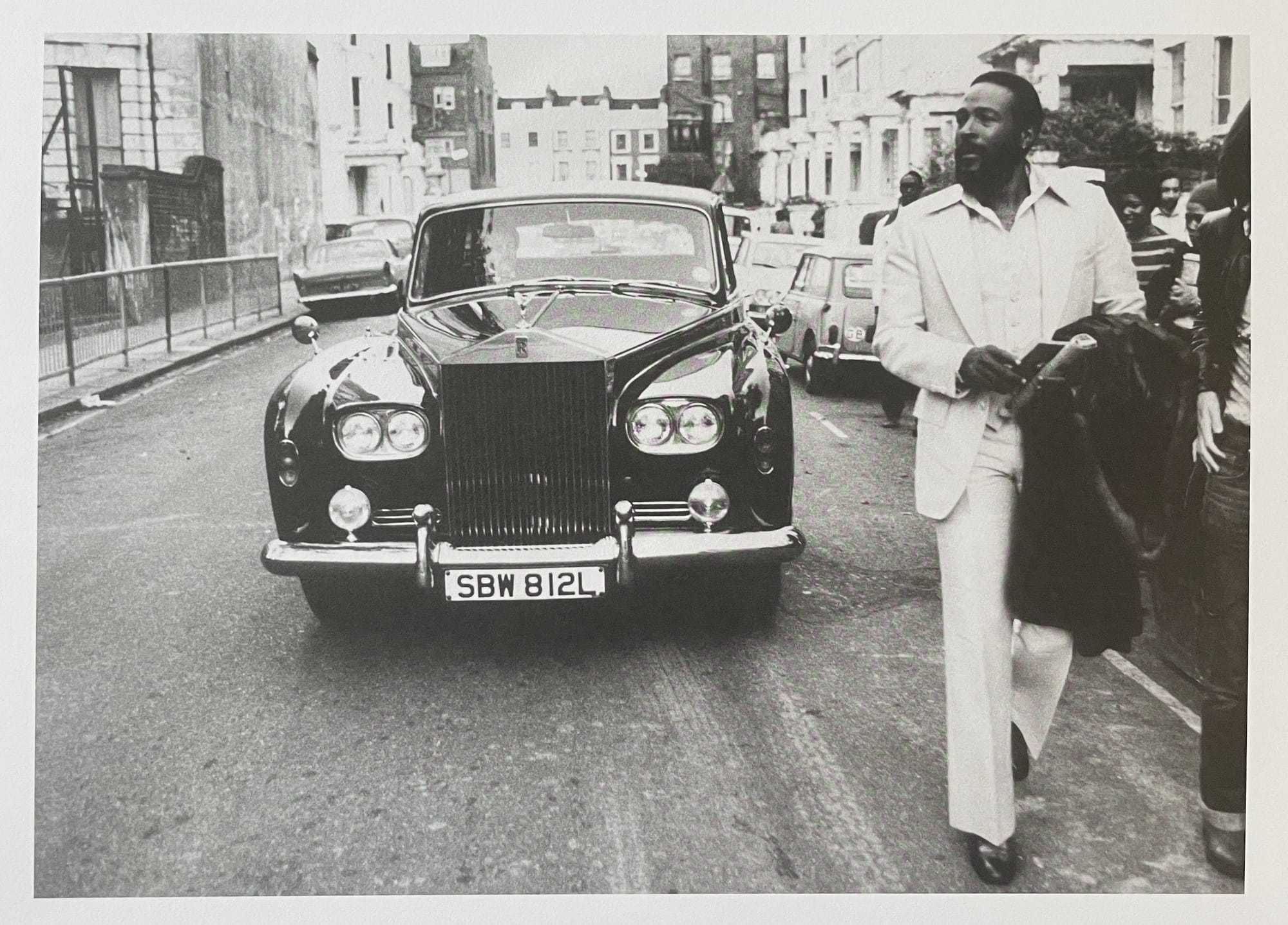
• Liner notes, insert, or booklet: Double-sided insert includes photo of Gaye and detailed track information; inner gatefold includes an essay about the making of the album by Richard Torres that originally appeared in the 2003 deluxe edition 2-CD
• Source: Digital
• Mastering credit: None
• Lacquer cut by: Unknown
• Pressed at: Conectiv, Guadalajara, Mexico
• Vinyl pressing quality (visual): A- (small embedded piece of something or other on Side 4)
• Vinyl pressing quality (audio): B+ (noise on Side 4 as a result)
Additional notes: None.
Listening equipment:
Table: Technics SL-1200MK2
Cart: Audio-Technica VM540ML
Amp: Luxman L-509X
Speakers: ADS L980
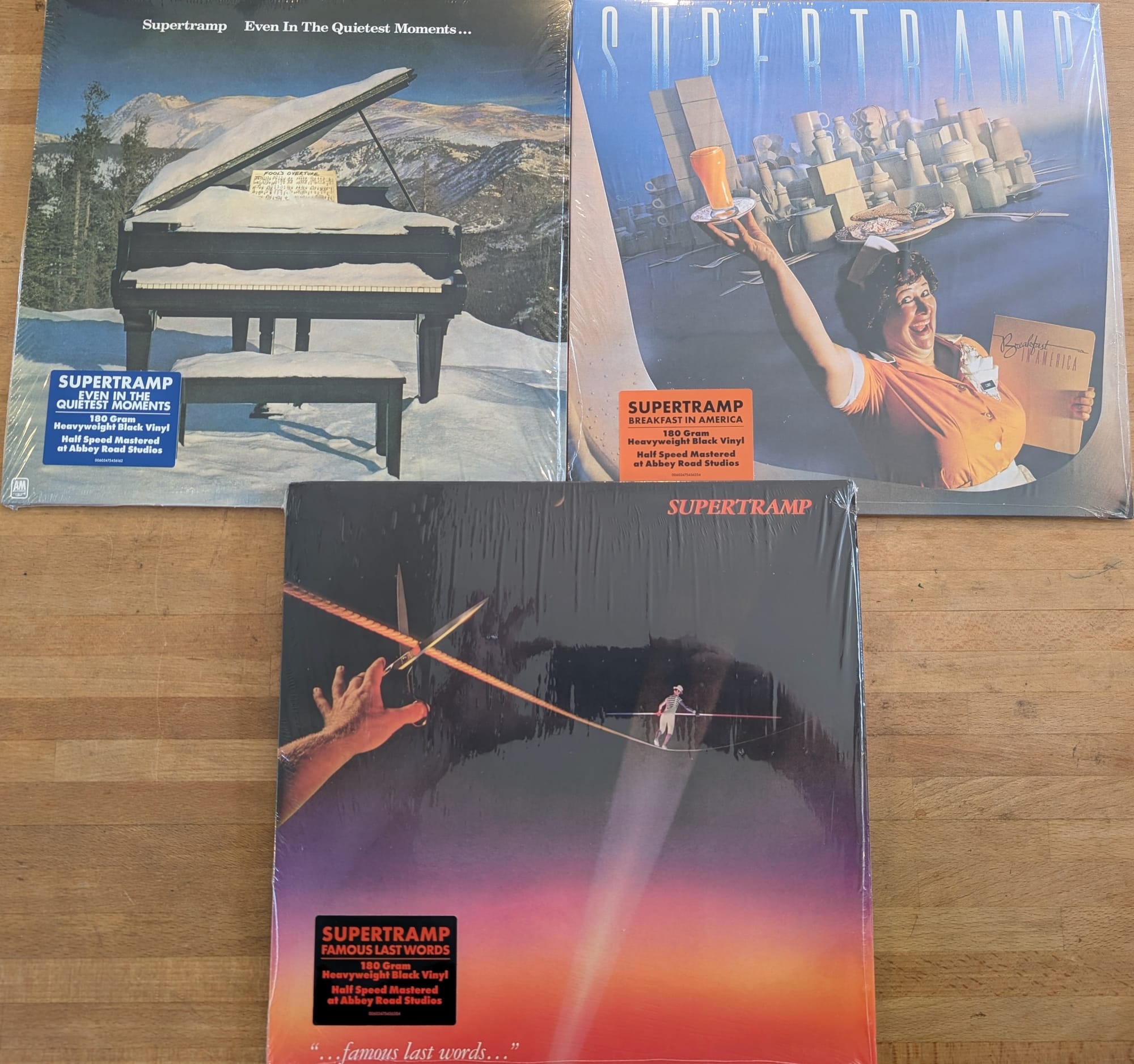
Supertramp: Even in the Quietest Moments...; Breakfast in America; ...Famous Last Words... [half-speed masters]
Review by Robert Ham
By the end of the ’70s, Supertramp had reached cruising altitude. The pressure from A&M Records to achieve some sort of commercial success had been lifted, thanks to their third album, 1974’s Crime of the Century and its Wurlitzer electric piano-led hits “Bloody Well Right” and “Dreamer.” The progress they had made on the charts carried over to 1975’s Crisis? What Crisis?, an album that sold respectably well although none of its singles quite caught on. The band was in a nice creative groove as well, with a solid lineup anchored in place by the two men responsible for the songwriting and lead vocals, Roger Hodgson and Rick Davies, who were both crafting material that was more immediate and grabby than what made up their first two albums.
At the same time that Supertramp was on the ascendent, tensions within the band were threatening to halt their momentum. Hodgson and Davies were barely on speaking terms, often exchanging little more than pleasantries in the studio or at live gigs. Much like the partnership between John Lennon and Paul McCartney, the songs on Supertramp’s albums were credited to both Davies and Hodgson, but the gent who sang the tune was generally the person who wrote it. And there were clear differences in the motivations of Supertramp’s two songwriters as well. Davies wanted to keep pulling the group back to its roots as a bluesy prog band, while Hodgson was happy to keep exploring a more pop-oriented approach.
Such were the circumstances under which their next three albums were made. In addition to 1977’s Even in the Quietest Moments…, this era of Supertramp was rounded out by the 1979 blockbuster Breakfast in America and 1982’s …Famous Last Words…, all of which have been reissued in new half-speed-mastered editions from Universal. (Similar half-speeds of Crime of the Century and Crisis? What Crisis? were released last year.) All three are primly produced documents, rendered in the magic-hour glow of the era and scrubbed free of any hints of discordance and dissonance. Much like Aja or Eye in the Sky, this is music perfect for testing out your high-end stereo equipment.
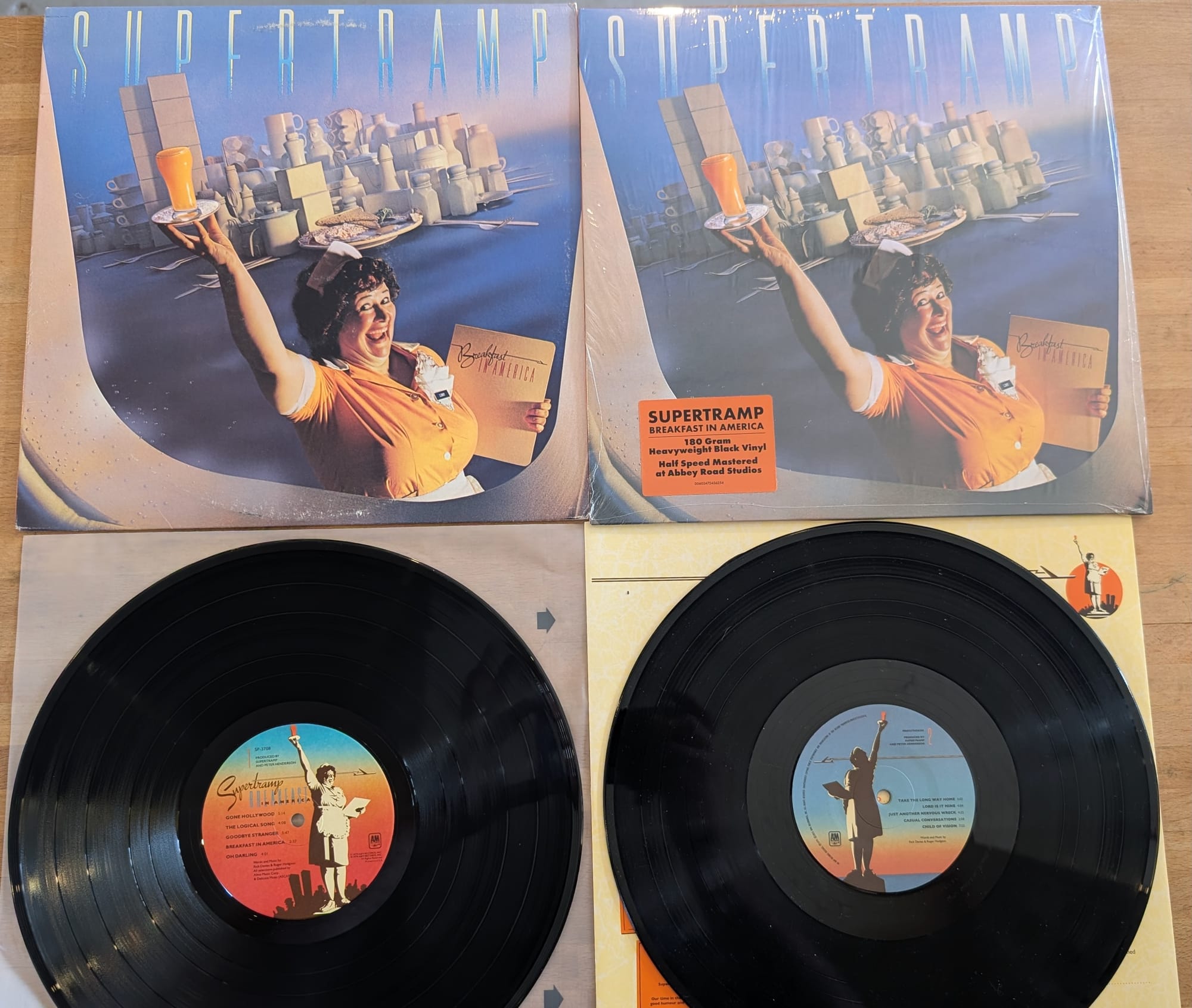
This run of albums is also a case of diminishing returns. Quietest Moments is the most fascinating of the three, with the gentle tug-of-war going on between the group’ two creative forces making for curious bedfellows. The arms-akimbo spirit of Hodgson’s “Give a Little Bit” nestles uncomfortably against Davies’s far more cynical “Lover Boy,” and the despair of Davies’s “From Now On” arrives soon after the spiritual yearning of Hodgson’s “Babaji.” The scales tip in favor of the group’s poppier ideas on Breakfast in America, but there’s a hollowness and bitterness that takes the joy out of even its catchiest songs. By this point, Supertramp had relocated to Los Angeles, and from the sounds of the album’s title track and “Gone Hollywood,” they weren’t adapting to their new environs well. Their expressions of this discontent couldn’t be more different; Hodgson tries to make some peace with his circumstances, while Davies just wallows. By the time of …Famous Last Words…, the two sides of the creative coin were completely in opposition, with neither songwriter able to come up with anything that had the immediate zing of the previous two albums. After a final tour with Supertramp, Hodgson left the group in late 1983.
All three of these albums have been put through the vinyl reissue ringer multiple times. Breakfast in America even got the Mobile Fidelity treatment in 1982 and again in 2018. And with sales tipping into the millions, the necessity for new pressings isn’t entirely clear, let alone in these new half-speed-mastered editions.
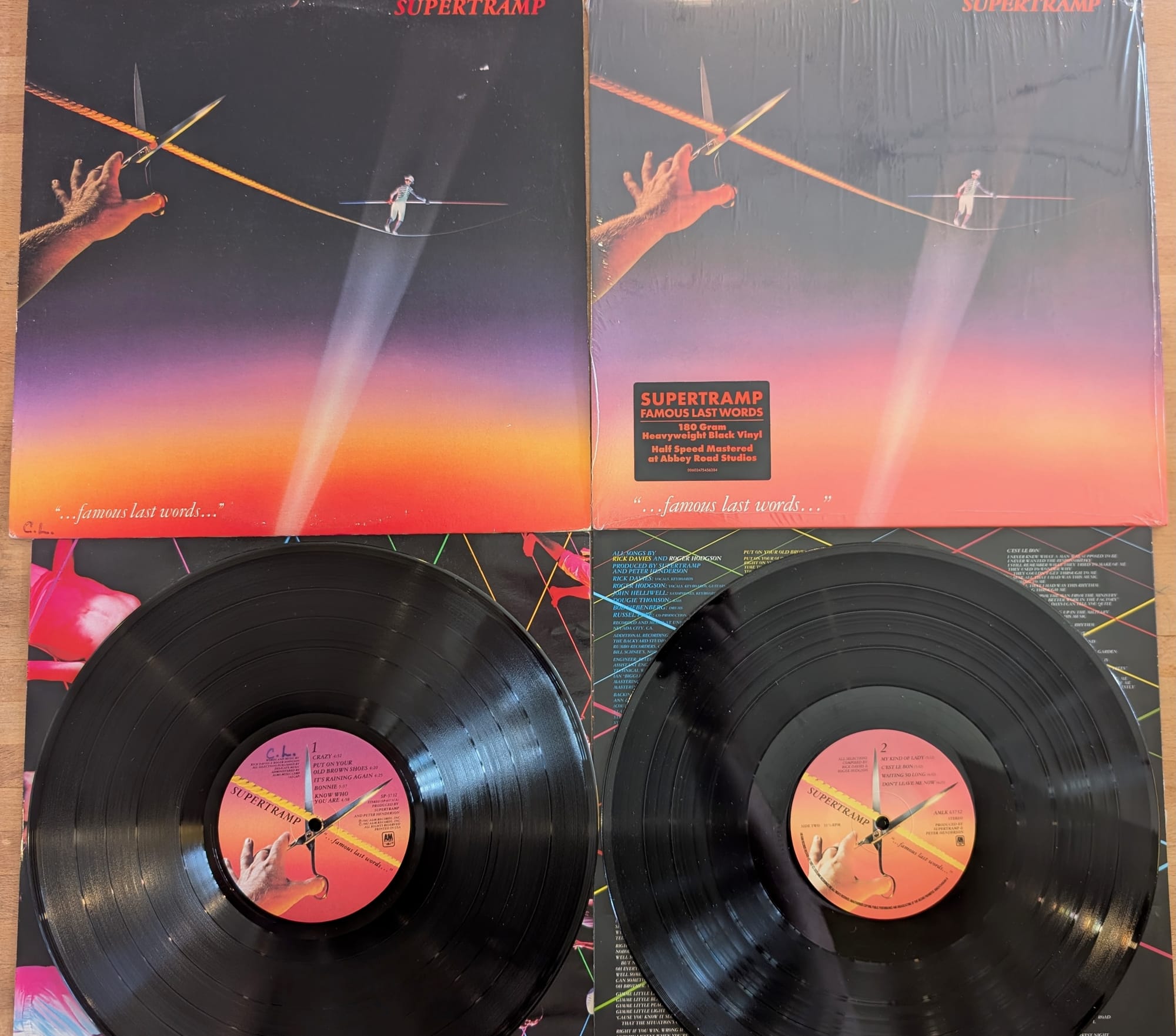
The half-speed-mastering process is a dubious one to us here at Vinyl Cut HQ, and these Supertramp reissues don’t do a great job of selling us on it. I spent some time comparing the new cuts of Breakfast in America and …Famous Last Words…with OG copies of each, and in both cases, the earlier presses won out handily. The copy of Breakfast I had on hand, mastered at A&M’s Mastering Studios and pressed at RCA’s Indianapolis plant, has the depth and richness we’ve come to expect from records of this era, particularly in the low end, where the drums and bass have an arresting punch and swing. All of those qualities are flattened out in the new cut from Abbey Road’s Miles Showell. It’s a perfectly fine pressing, with quiet backgrounds and flat vinyl, but the audio sounds dim and undynamic. Last Words fares better, with a brighter soundstage in Showell’s cut than the new edition of Breakfast has, but the 1982 pressing I had on hand—also pressed at Indianapolis from a lacquer cut at the Mastering Lab in Hollywood, California—comes across even wider and more brilliant. The songs may not be there, but they sound spectacular in this older edition.
My gut tells me that anyone that has an interest in these Supertramp reissues is already a long-standing fan of the group, but I do wonder how many are willing to take the leap into owning yet another new pressing of these very familiar albums. If the goal is to entice new listeners, the price point for these three re-releases will likely be a sticking point. If you’re still curious about Supertramp, take a day to dig around the dollar bins of your local record stores and I guarantee that you’ll turn up copies of all three of these albums that will more than satisfy.
Even in the Quietest Moments…: A&M/UMe 1-LP 33 RPM 180g black vinyl
• Half-speed-mastered edition of Supertramp’s 1977 album
• Jacket: Direct-to-board single-pocket
• Inner sleeve: Printed paper replicating original inner with lyrics and album credits
• Liner notes, insert, or booklet: None
• Source: Digital
• Mastering credit: Miles Showell, Abbey Road Studios, London
• Lacquer cut by: Miles Showell, Abbey Road Studios, London; “Miles. Abbey Road 1/2 Speed. Room 30” in deadwax
• Pressed at: Optimal Media, Germany
• Vinyl pressing quality (visual): A
• Vinyl pressing quality (audio): A
• Additional notes: None.
Breakfast in America: A&M/UMe 1-LP 33 RPM 180g black vinyl
• Half-speed-mastered edition of Supertramp’s 1979 album
• Jacket: Direct-to-board single-pocket
• Inner sleeve: Printed paper replicating original inner with lyrics and album credits
• Liner notes, insert, or booklet: None
• Source: Digital
• Mastering credit: Miles Showell, Abbey Road Studios, London
• Lacquer cut by: Miles Showell, Abbey Road Studios, London; “Miles Abbey Road 1/2 Speed Room 30” in the deadwax
• Pressed at: Optimal Media, Germany
• Vinyl pressing quality (visual): A
• Vinyl pressing quality (audio): A
• Additional notes: None.
…Famous Last Words…: A&M/UMe 1-LP 33 RPM 180g black vinyl
• Half-speed-mastered edition of Supertramp’s 1982 album
• Jacket: Direct-to-board single-pocket
• Inner sleeve: Printed paper replicating original inner with lyrics
• Liner notes, insert, or booklet: None
• Source: Digital
• Mastering credit: Miles Showell, Abbey Road Studios, London
• Lacquer cut by: Miles Showell, Abbey Road Studios, London; “Miles Abbey Road 1/2 Speed Room 30” in the deadwax
• Pressed at: Optimal Media, Germany
• Vinyl pressing quality (visual): A
• Vinyl pressing quality (audio): A
• Additional notes: None.
Listening equipment:
Table: Cambridge Audio Alva ST
Cart: Grado Green3
Amp: Sansui 9090
Speakers: Electro Voice TS8-2