Reviews: Otis Redding on Rhino Reserve

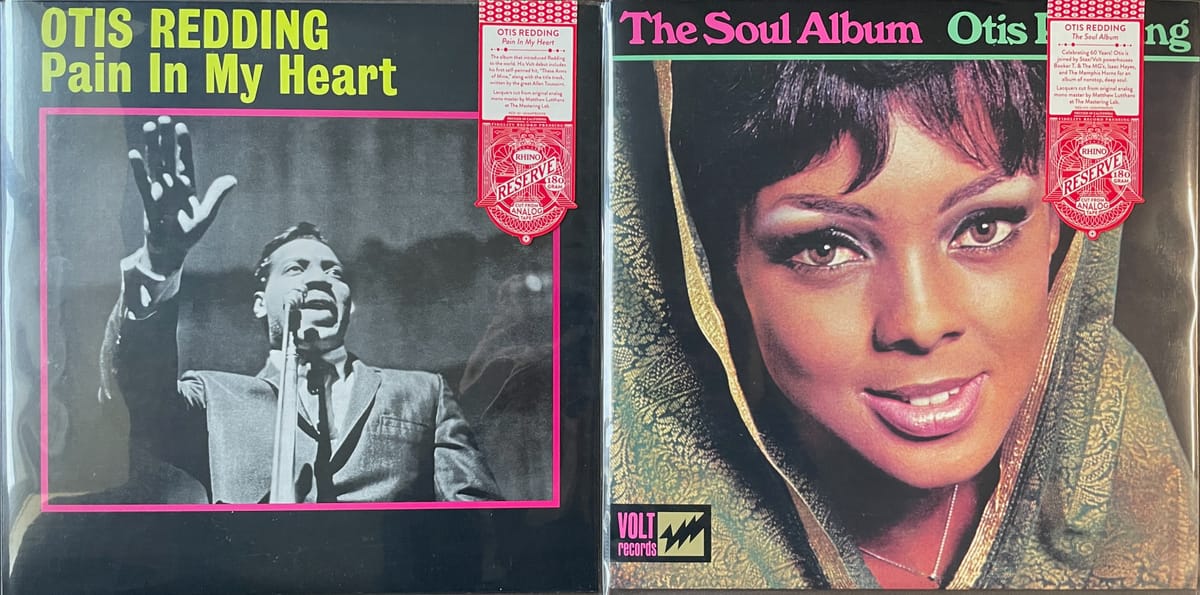
New analog cuts of the Stax classics Pain in My Heart and The Soul Album.
As our regular readers know all too well, we’re pretty high on Rhino Reserves these days. Rhino has used the line to carve out a more affordable alternative to their Rhino High Fidelity series of premium reissues. Rhino Reserves cost less, come in straightforward reproductions of the original album jackets without any supplements, and are available at brick-and-mortar stores as opposed to being initially only available at Rhino’s webstore. But they’re cut from the best sources (usually analog tape, whenever possible) and mastered at the best-regarded facilities currently operating. They’re also all pressed at Fidelity Record Pressing, a new plant opened by Mobile Fidelity in 2024—and the results have been nothing short of spectacular.
The most recent chunk of Rhino Reserves have all been cut by Matthew Lutthans at the Mastering Lab in Salina, Kansas, where it functions as part of the greater Acoustic Sounds/Analogue Productions conglomerate. This just-posted video interview with Lutthans provides a behind-the-scenes look at the facility and its equipment, which was shipped out from California following the death of Mastering Lab founder Doug Sax, one of the most respected mastering engineers in the business. The system, originally built by Doug Sax’s brother Sherwood Sax, is all-tube, and like anything that’s handmade with love and care, it has more than a few quirks. I highly recommend watching the video—there’s even a mystery knob that Lutthans initially didn’t know the purpose of. He eventually figured it out, and he explains it all in the video. Turns out there is some secret sauce in that system, indeed.
Rhino Reserves have generally been coming out in pairs every month or two, but in January 2026 they turned up the output, releasing nine titles in that month alone, all cut by Lutthans. February so far has seen four additional Reserves hit stores, all classic soul titles reissued as part of Black History Month, and again all cut by Lutthans. We’ll be diving into two of those recent releases today:
- Otis Redding: Pain in My Heart
- Otis Redding: The Soul Album
And we’ll have reviews for the other two—Sam & Dave’s Hold On, I’m Comin’ and Donny Hathaway’s Live—in the coming days. One further Reserve title is scheduled for February 27: Van Morrison’s Moondance, cut from a flat 24/192 digital file by Lutthans, as the original analog tapes are no longer usable. (Hence Moondance’s appearance in the Reserve series, as opposed to Rhino High Fidelity, which thus far has been exclusively analog.) The Reserve 33 RPM pressing will be an interesting counterpart to the 45 RPM 2-LP set that was just released on January 30 by Analogue Productions—it, too, was cut by Lutthans, so it should provide some definitive points of comparison for the 33 vs. 45 RPM debate.
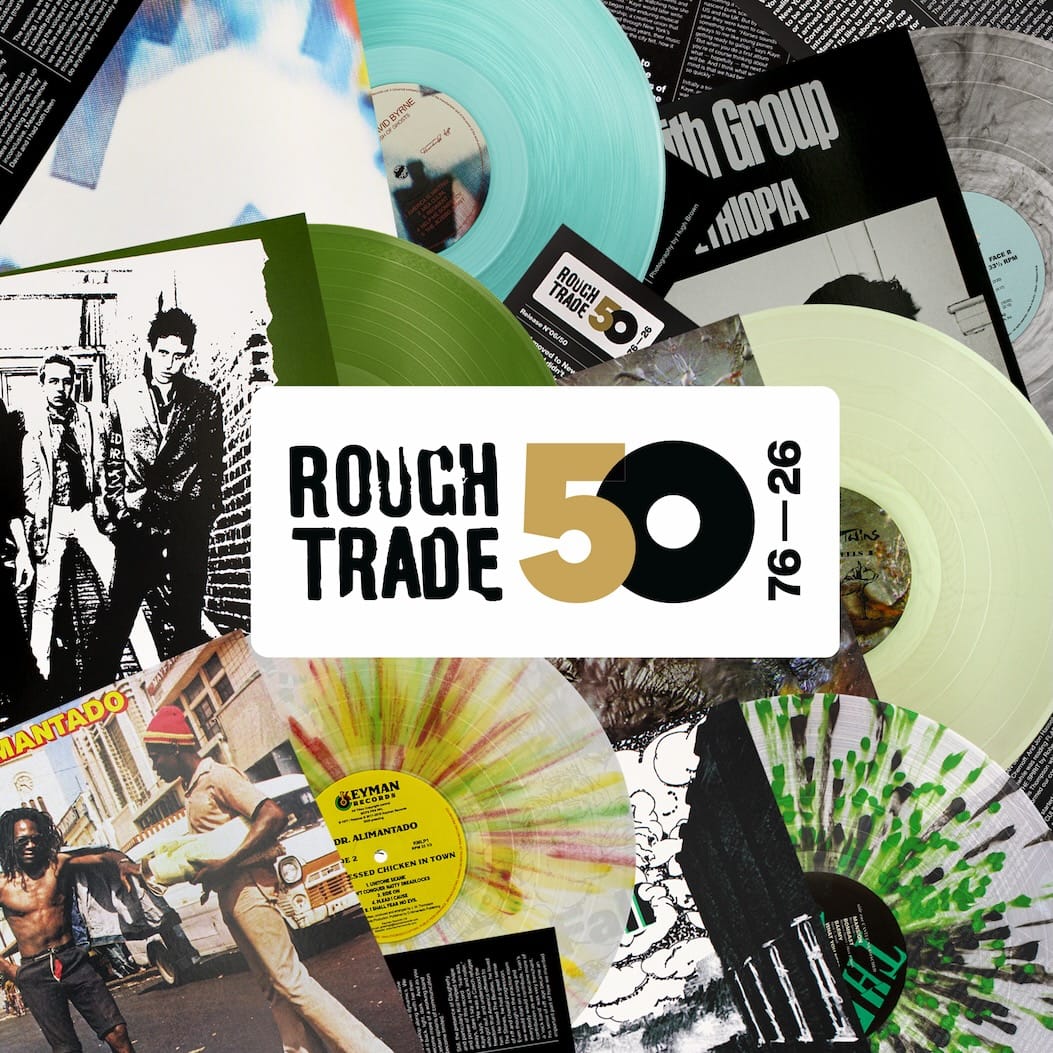
Before we get to the reviews, an additional bit of vinyl news: Rough Trade, the venerable UK record peddler, has announced a 50th-anniversary reissue series, aptly titled Rough Trade 50. They’re offering exclusive editions of 50 albums, one from each year of their history, in unique limited pressings and with newly written liner notes. More information about Rough Trade 50 is here, but they’ve announced the first 10 installments, almost all of which are already available in their webstore. The titles are:
1976 - Patti Smith: Radio Ethiopia
1977 - The Clash: The Clash
1978 - Dr. Alimantado: Best Dressed Chicken in Town
1979 - The Specials: The Specials
1980 - Young Marble Giants: Colossal Youth
1981 - Brian Eno & David Byrne: My Life in the Bush of Ghosts
1982 - Cabaret Voltaire: 2x45
1983 - Cocteau Twins: Head Over Heels
1984 - Sade: Diamond Life [shipping April 24]
1985 - The Fall: This Nation’s Saving Grace
Lastly, we wanted to tip you off to our February vinyl giveaway, which will shortly be made available to our paid-tier subscribers. This month’s free vinyl is a copy of Tom Petty and the Heartbreakers’ The Live Anthology: From the Vaults - Vol. 1. It’s a stellar collection of live tracks from all throughout Petty’s career that was made available in a limited edition last November as part of Record Store Day’s Black Friday (read our review here). You can’t find this one in stores anymore without doing some serious digging, so be sure to sign up for our paid tier and make yourself eligible! We’ll be opening up entries in just a few days—stay tuned for info on how to win. Not in our paid tier yet? You can upgrade right here.
Otis Redding: Pain in My Heart
Otis Redding’s first full-length entered the world slowly. Pain in My Heart was released in March 1964, but its earliest track, “These Arms of Mine,” dated from a year and a half earlier. That song, written by Redding, was recorded virtually by accident. Redding’s friend Johnny Jenkins had landed an opportunity to record a session at Stax, but Jenkins didn’t have a driver’s license, so Redding drove him out to Memphis from their home base in Macon, Georgia. Jenkins’s session didn’t go very well, so with some spare time left over, Redding was given a shot at the mic. “These Arms of Mine” was the result, and Redding was signed immediately.
The track became Redding’s first single on Volt Records, a subsidiary of Stax Records that was distributed by Atlantic. It slowly took off and grew into a massive hit, but the follow-up, “That’s What My Heart Needs,” was a flop. Redding regained momentum with the next single, “Pain in My Heart,” although it was determined that the song was a rewrite of Irma Thomas’s “Ruler of My Heart,” so Redding lost the songwriting credit to Naomi Neville (actually Allen Toussaint working under a pseudonym).
So it took Stax a bit of the time to amass enough Redding tracks to put out a full-length—which was eventually issued on Atco rather than Volt—and over these many months of sessions, the singer’s style had still not quite fully congealed. His singles had generally been tender, lovestruck ballads sung with pain and yearning, and Redding was well-positioned to corner that particular part of the market: romantic laments struck through with Southern grit. But several tracks on Pain in My Heart cast Redding as an all-purpose rhythm-and-blues man, with enjoyable but somewhat boilerplate covers of Ben E. King’s “Stand by Me,” Little Richard’s “Lucille,” Sam Cooke’s “You Send Me,” and Rufus Thomas’s “The Dog” indicating that Redding had not fully shed all of his influences.
That failed single, “That’s What My Heart Needs,” displays a potential alternate path for Redding, one more heavily influenced in particular by Sam Cooke and Little Richard. The song is a gospel-tinged slow burner, and Redding at first sings in extended, smooth phrases in the style of Cooke, before reaching into the upper registers and shredding his throat with some Little Richardesque hollers. Redding manages both styles remarkably well, but he soon struck upon a more individual vocal style that showcased his powerful, barking voice juxtaposed in tender, forlorn narratives. It was a blend that immediately struck dramatic tension, and Redding used it to open up a vein of soul music that had yet been untapped.
The developing Stax house sound is also in evidence, with backing band Booker T. and the M.G.’s still finding their grooves, quite literally. Some tracks are workmanlike while others locate that Stax sweet spot, with rhythm and melody meshing together like perfectly machined gears. The album’s many highlights make the LP strong enough to function as a launchpad for Redding as both a songwriter and a performer, and a big part of his sound is his blending with the eminently capable Stax musicians.
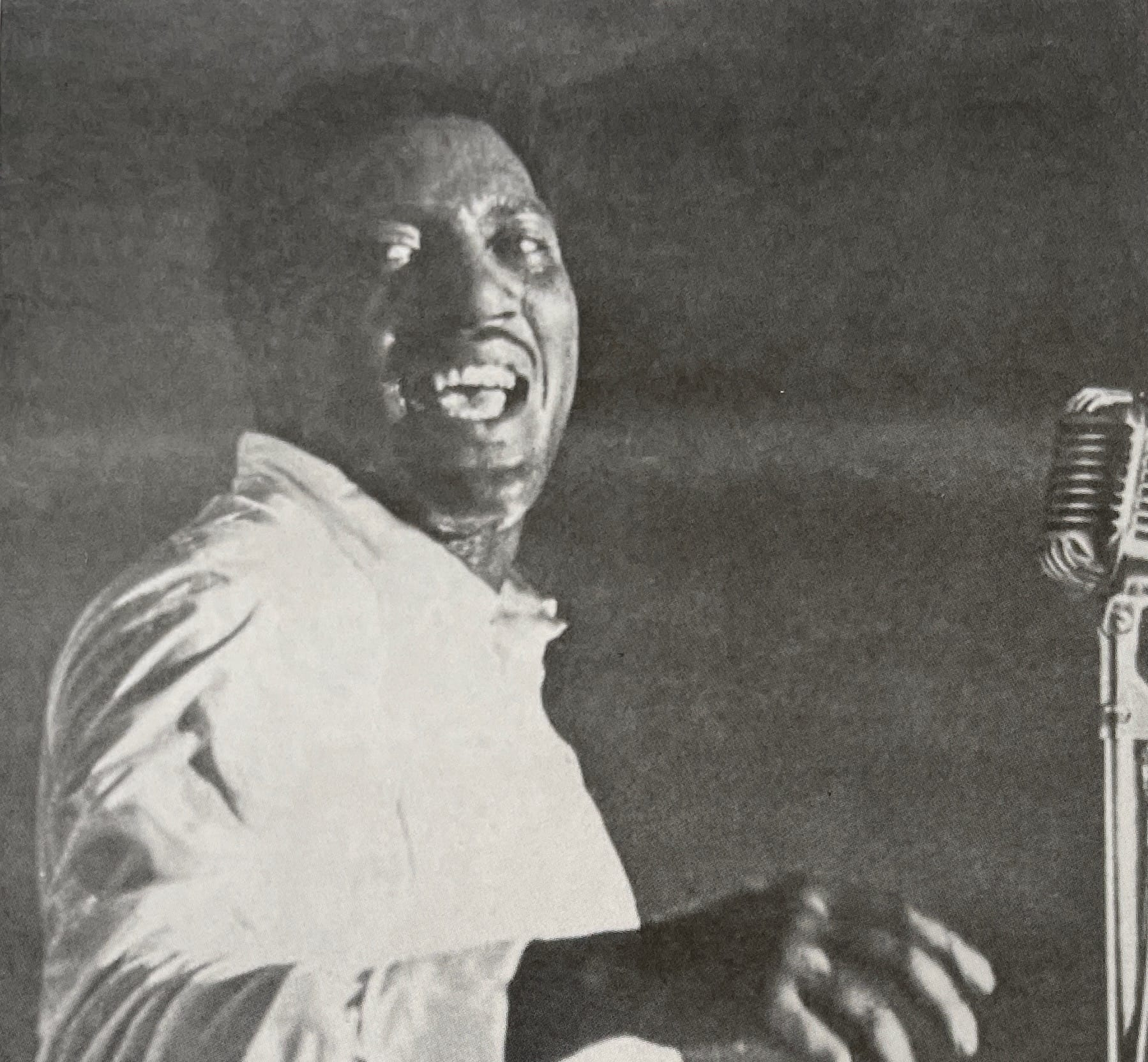
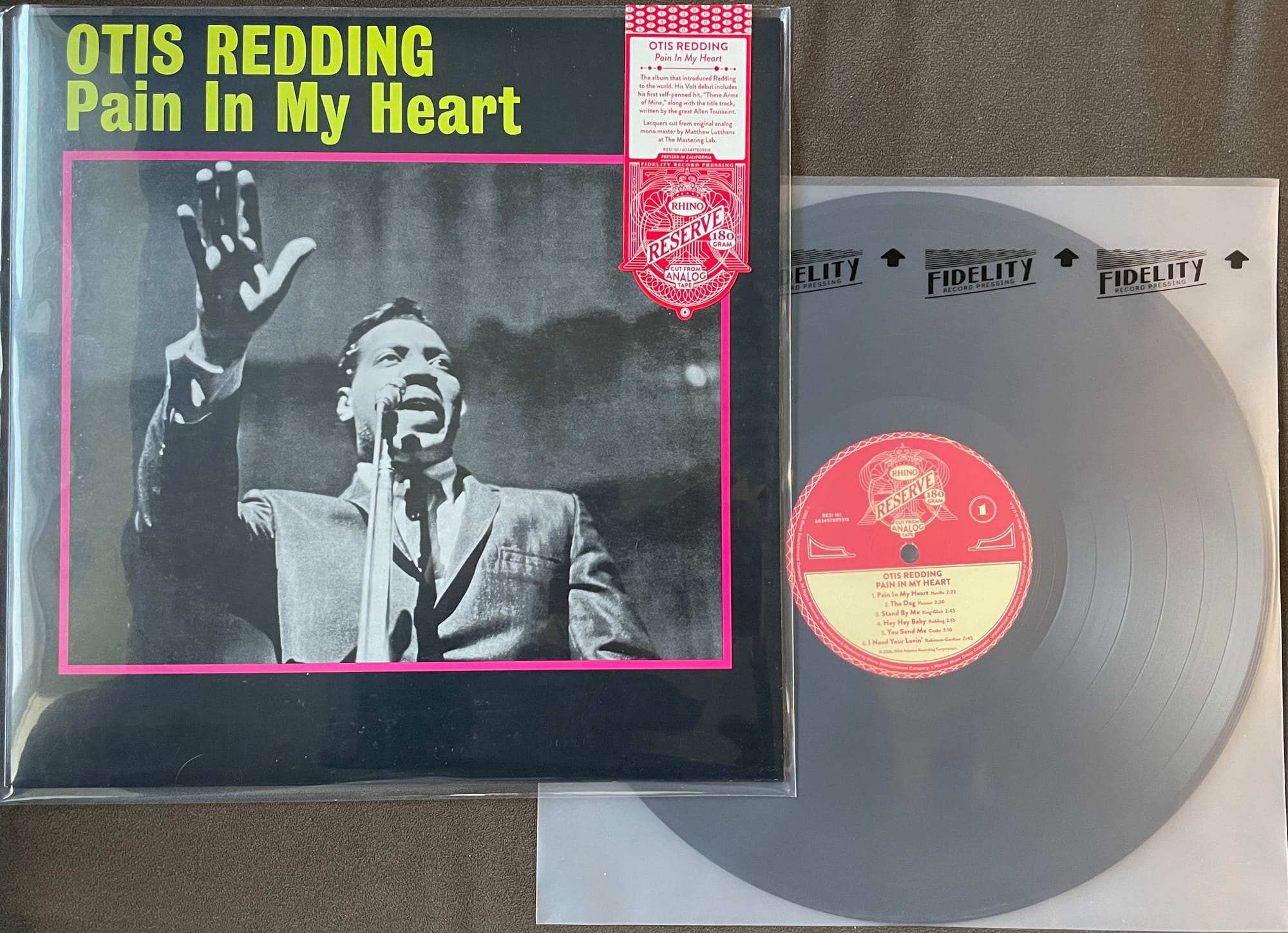
The new Rhino Reserve cut of Pain in My Heart, in its original mono, is surprisingly untamed. The tracks all sound intriguingly raw and fresh, with tons of air, heat, and sweat passing through them. Matthew Lutthans of the Mastering Lab cut the disc from the original mono tape, and it sounds like it hasn’t accumulated any dust or shed any particles in the past six-plus decades.
I compared it to another all-analog mono cut that appears in The Definitive Studio Album Collection, a 7-LP Rhino box from 2017 with all the albums released during Redding’s lifetime. That cut uses the same plates as the 2014 50th anniversary edition that was released as part of Record Store Day; it was also cut at the Mastering Lab, albeit before its relocation to Kansas, without an engineer credited in the deadwax. Interestingly, the official Otis Redding site says that the 50th anniversary version was cut by Bernie Grundman, although I have trouble imagining Grundman—who runs his own mastering facility in Hollywood—schlepping up to the Mastering Lab (then located in Ojai, California) to make this cut. Maybe he did, or maybe it’s incorrect info.
At any rate, the older cut sounds restrained in comparison. It’s a lovely-sounding disc, but everything fits within the frame, and there’s a bit of distance to elements of the sound that I would have attributed to the age of the recording. Lutthans’s cut, on the other hand, explodes out of the speakers, with expanded frequency range, much thicker bottoms, and a more saturated sound to all the instruments. I’d say this excitement comes at the expense of a certain amount of transparency and precision, but everything sounds substantially more natural and the record feels measurably more alive, which is the way you want your Southern soul to sound. There’s some occasional tape hiss, which only adds to the sense of realism, and you can hear the somewhat crummy fadeout jobs at the end of each track. Nothing is being filtered out of this experience; you are hearing this historic tape rolling before your ears. I did notice little spots of distortion that I think are on the original tape and may have been mitigated on previous masterings—I was very happy to have them rendered truthfully here—and a couple of plosives (noticeably on “Stand by Me” and “That’s What My Heart Needs”) that bottomed out the sound for a split-second, but that may have been due to the limitations of my setup.
Redding’s first album is a mixture of the impassioned soul he would become renowned for and some cosplay of his idols—and a couple of concessions to the contemporary market, best exemplified by the bland cover of “Louie Louie.” But even with its unripened qualities, its release placed Redding and Stax at the epicenter of ’60s soul, where grit and smoothness happily coexisted and drew out each other’s most musical qualities. A few of the tracks on here are among Redding’s very finest, and there are a handful of experiments that he wouldn’t replicate again. It’s staggering to think that less than four years after Pain in My Heart hit stores, Redding would be gone.
Rhino Reserve 1-LP 33 RPM 180g black vinyl
• All-analog mono remaster of Otis Redding’s 1964 debut album
• Jacket: Direct-to-board single pocket
• Inner sleeve: Fidelity Record Pressing–branded poly
• Liner notes, insert, or booklet: None
• Source: Analog; “Lacquers cut from the original analog mono master”
• Mastering credit: Matthew Lutthans at the Mastering Lab, Salina, KS
• Lacquer cut by: Matthew Lutthans at the Mastering Lab, Salina, KS; “MCL” in the deadwax
• Pressed at: Fidelity Record Pressing, Oxnard, CA
• Vinyl pressing quality (visual): A
• Vinyl pressing quality (audio): A- (brief, minor noise on the title track)
• Additional notes: Comes inside a reusable poly outer sleeve sealed by a hype sticker, as per other Rhino Reserve titles.
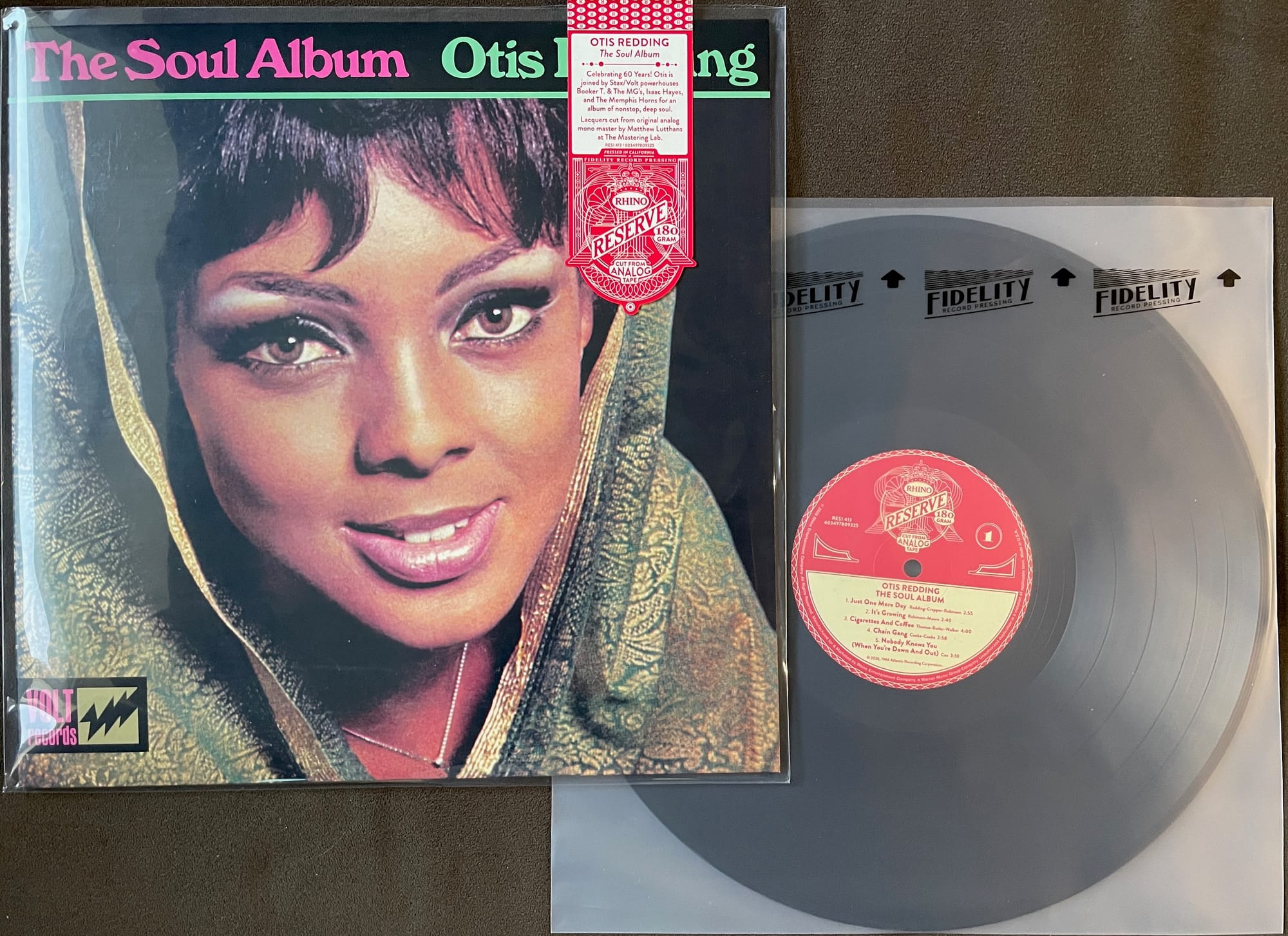
Otis Redding: The Soul Album
Two years later, Otis Redding released his fourth LP, The Soul Album. It was a bit of a step down commercially from the success of 1965’s Otis Blue, which contained a handful of Redding’s best-loved songs; The Soul Album, by comparison, contains only the minor hit “Just One More Day,” with no other recognizable hits to distinguish it. Yet it reveals Redding in full maturity, with a complete grasp on his talents and strengths, able to tackle covers and his own songs with peerless mastery. It also comes at the cusp of the soul music genre’s development—1966, when the scene was thriving, and its makers in Memphis, Detroit, and across the US were at the peaks of their powers. If The Soul Album falls in the shadow of some of Redding’s more high-profile works, it more than pulls its weight in terms of sheer musical enjoyment.
“Just One More Day” opens the record in a simple but stunning way—Steve Cropper blends his guitar with the horn section in a slow, deliberate chordal pattern, creating a beguilingly unfamiliar sound that has a warm churchlike resonance but is imbued with the spark of Southern soul. The ballad is one of the record’s high points, with Redding yearningly imploring a lover for a bit more time, turning a heartsick plea into a thrilling declaration of devotion. It’s the kind of thing Redding was so skilled at: making what could have been a generic take-me-back-baby song into something stirring and profound. “Just One More Day” accumulates additional meaning when you remember how few days Redding actually had left. Although “Sitting on the Dock of the Bay” became his posthumous calling card, I think “Just One More Day” is an equally befitting epitaph.
The rest of the album sees Redding playing to his powers as a showman. He covers Sam Cooke again with “Chain Gang,” but this time he makes the song his own, stripping off Cooke’s silky-cool veneer and adding a heated rhythmic drive. “It’s Growing” similarly locates the molten-hot core of the Motown song (it was written by Smokey Robinson and originally performed by the Temptations), drawing out its grit while still maintaining its immaculately designed grace. At this point, Redding was able to turn almost any song into his own, with a well-defined sound and an indelible passion in his voice that was impossible to obscure. The sound of The Soul Album is of Redding, Cropper, and the other Stax musicians thrilling each other and themselves with the unmatched competency of their hard-earned musical skills. They’re having a ball because they know they sound so good.
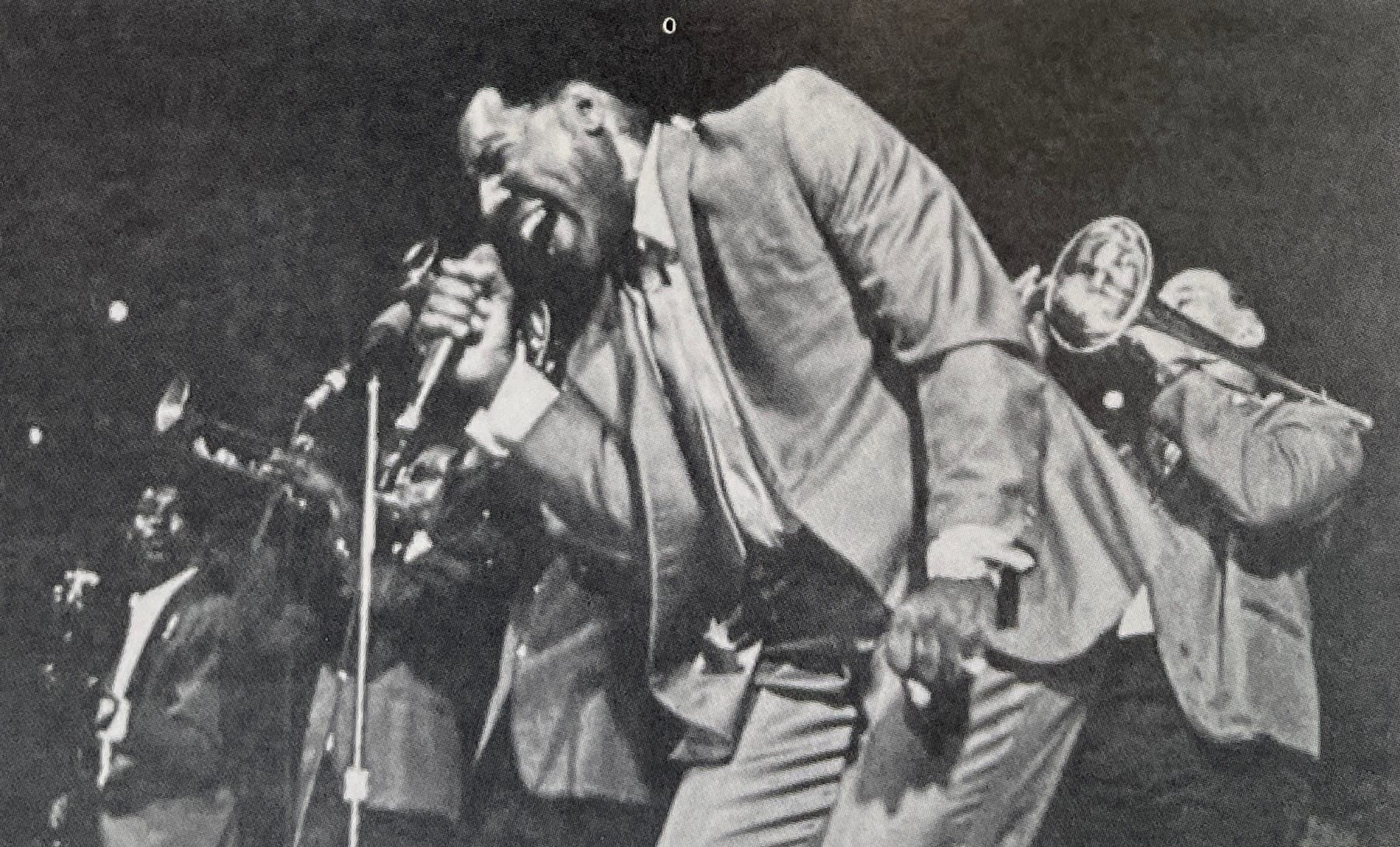
Matthew Lutthans’s cut of the mono version of The Soul Album is lively and crisp. The original analog tape source does not sound quite as fresh as Pain in My Heart does, for some reason, but it is still a strikingly living document that boasts a glowingly warm sound. Redding’s voice is better recorded here, or perhaps he knew how to get the most out of a microphone by this point. His phrasing, and his ability to pivot from honey to rasp within a single line, is a striking feature on the Reserve pressing. There’s a forceful softness—a pillowy punch—that comes from the Mastering Lab’s tube system; in the video I posted at the top of this page, Lutthans describes the sound as “gooey,” and I think that’s especially apt, but there’s simultaneously a bite and crunch that keeps the music sounding powerful.
I also compared this new cut to the version that’s in Rhino’s The Definitive Studio Album Collection box set. That cut is not analog; it was cut from high-res digital by Ian Sefchick as part of the Stax 60 vinyl series in 2017 and reused a few months later in the Rhino box. That version is also very good-sounding but has a graininess to the sound that this new Reserve pressing does not. The limitations of Stax’s recording equipment are more evident in the 2017 cut, and the result is that the music sounds older, further in the past. The Reserve has a bit more energy and color, with the tones of the instruments sounding more vivid and Redding sounding more present (he is never overemphasized in the mix, which is a bit unusual once you notice it, and his voice goes from soft to loud and back again quite quickly, meaning that your ears have to do a little work to catch all his subtleties). Lutthans was also able to impart a real snap to Al Jackson Jr.’s drums, which become a lead instrument on tracks like “Everybody Makes a Mistake” and “634-5789” (the latter features a charming count-in by Jackson at the start).
Soul fans will know this already, but there’s something alchemical about the combination of Stax soul and vinyl. Lutthans’s analog cut, done on an all-tube system, adds extra magic to that blend. This is music that just feels indescribably right while it’s playing, and the Rhino Reserve pressing removes any remaining obstacles between the ear and the music as the musicians recorded it. By the time of The Soul Album, Redding and the Stax musicians were in control of something that was greater than the sum of its parts, and this particular record showcases that legendary musical symbiosis, one that was unmatched by any other pairing of singer and session band.
Rhino Reserve 1-LP 33 RPM 180g black vinyl
• All-analog mono remaster of Otis Redding’s 1966 album
• Jacket: Direct-to-board single pocket
• Inner sleeve: Fidelity Record Pressing–branded poly
• Liner notes, insert, or booklet: None
• Source: Analog; “Lacquers cut from the original analog mono master”
• Mastering credit: Matthew Lutthans at the Mastering Lab, Salina, KS
• Lacquer cut by: Matthew Lutthans at the Mastering Lab, Salina, KS; “MCL” in the deadwax
• Pressed at: Fidelity Record Pressing, Oxnard, CA
• Vinyl pressing quality (visual): A
• Vinyl pressing quality (audio): A
• Additional notes: Comes inside a reusable poly outer sleeve sealed by a hype sticker, as per other Rhino Reserve titles.
Listening equipment:
Table: Technics SL-1200MK2
Cart: Audio-Technica VM540ML
Amp: Luxman L-509X
Speakers: ADS L980