Reviews: The Necessaries | Todd Rundgren's Utopia | Sly and the Family Stone


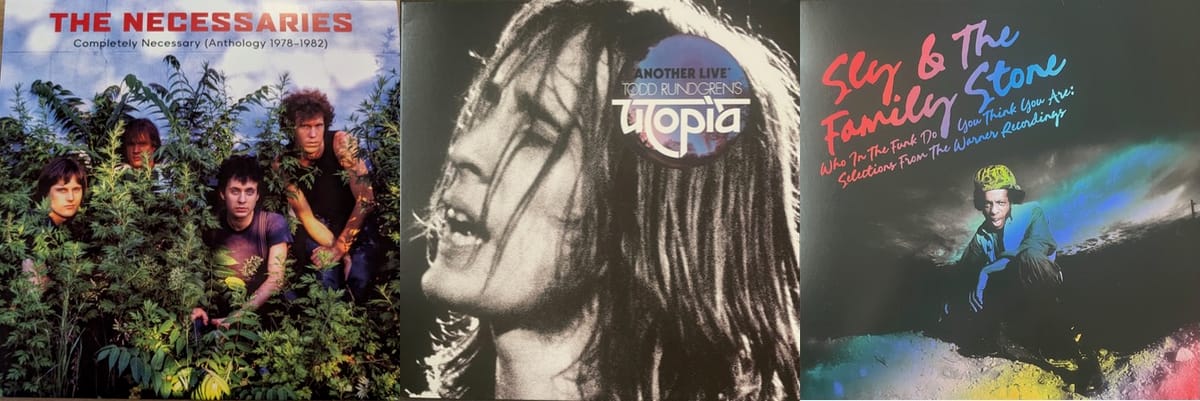
We’ve got three new reviews for you this weekend, as we catch up on a January that saw a lot more worthwhile reissues than we would have guessed. (February’s looking pretty loaded, too.) Here’s what’s inside:
- The Necessaries: Completely Necessary (Anthology 1978–1982)
- Todd Rundgren’s Utopia: Another Live
- Sly and the Family Stone: Who in the Funk Do You Think You Are: Selections from the Warner Recordings
Before we tuck in, here’s the usual mention of our sensational, world-acclaimed paid tier, where intelligent subscribers like yourself can upgrade and support our work. You know you’ve been meaning to.
And now, let’s listen to some records.
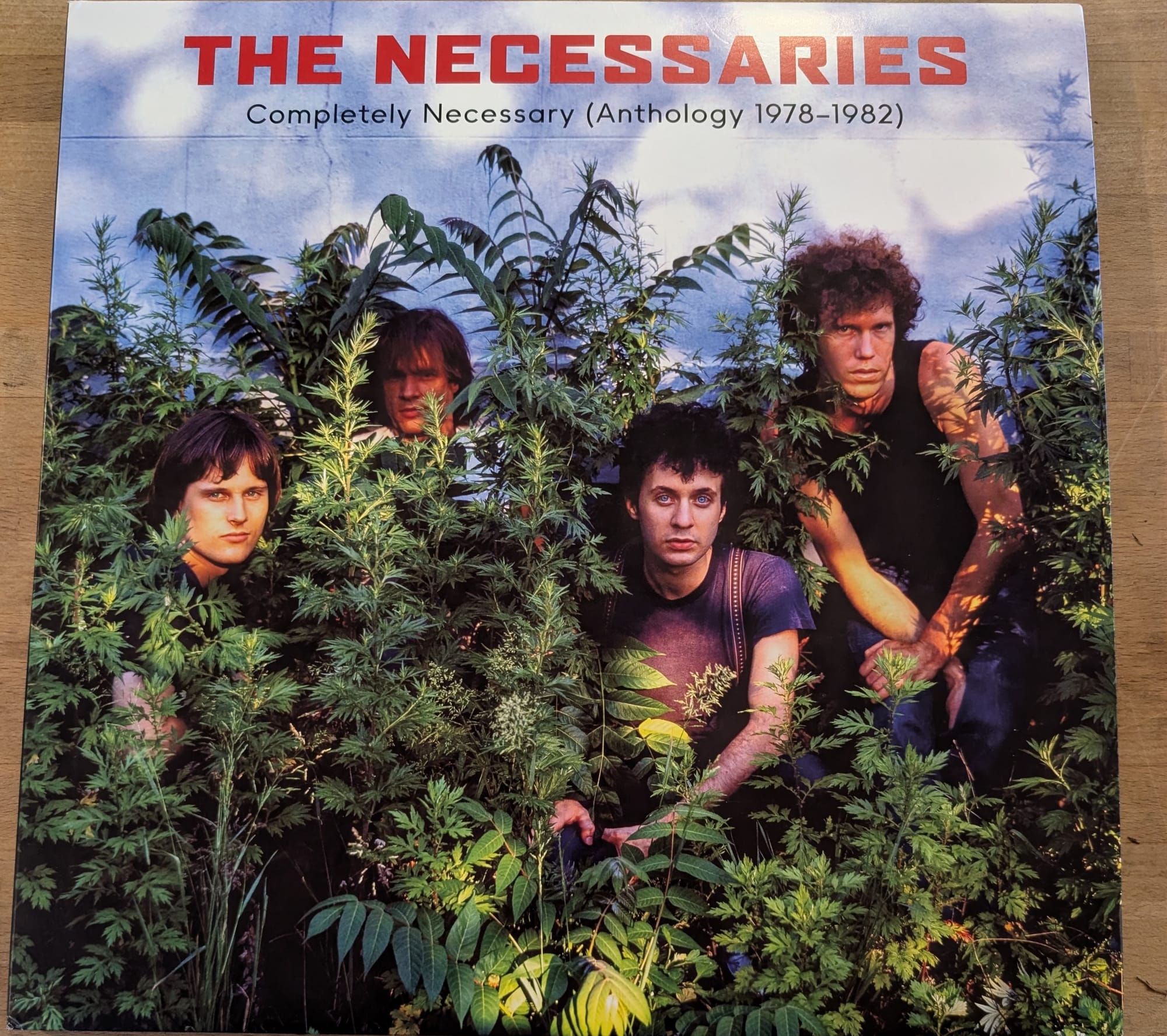
The Necessaries: Completely Necessary (Anthology 1978–1982)
Review by Robert Ham
With the amount of Arthur Russell material that has been re-released and compiled over the past 20 years, it’s genuinely surprising that it has taken so long for a label to fully explore the music of the Necessaries, the New York power-pop band that he joined in the early ’80s.
Viewed through one lens, it makes a small amount of sense that this chapter of the multifaceted artist’s career has been overlooked. The jangling guitars and snappy attack of the quartet don’t fit neatly next to Russell’s more celebrated work in the realms of disco, ambient, and contemporary classical. His time in the band was also not one of his happiest hours, as he brushed roughly against the directness and catchiness of the tunes he didn’t have a hand in writing and wanted to add more avant-garde elements into an already airtight mix.
But the picture of Russell’s 40 years on this planet (he passed away in 1992 from AIDS-related illnesses) would be incomplete without some kind of exploration of his short stint in the Necessaries. Omnivore Recordings, then, deserves all kinds of plaudits for this fantastic collection. The three-LP set is a nearly complete overview of quartet’s recorded work, including a remastered edition of their 1982 album Event Horizon and two discs packed with studio material, much of it never before released.
For as much as Russell is a key part of the Necessaries’ legacy, he is really only one part of a larger story. The seeds for the band were planted in 1975 when vocalist/guitarist Ed Tomney and drummer Jesse Chamberlain were introduced by a mutual friend. At the time, the latter was playing in Art & Language, an offshoot of Texas avant-rock group the Red Krayola, and the former was a member of punk group Harry Toledo and the Rockets. A little while after both of those projects dissolved, the pair roped in former Modern Lovers bassist Ernie Brooks and began the Necessaries, recording a one-off single for John Cale’s Spy Records (sadly not included in this set).
They started gaining enough momentum to welcome in Chris Spedding, an expat session musician from the UK who had recorded with the likes of Jack Bruce, Harry Nilsson, and Brian Eno. The new quartet spent the next year woodshedding tunes, serving as the opening act for the Pretenders’ first US tour, and trying to hunt down a record deal. Frustrated with the lack of momentum, Spedding left the fold… just in time for Seymour Stein to snap the Necessaries up for his label Sire. Looking to add another sonic element into the band, Brooks called on his friend Russell and the lineup responsible for the final iteration of the group was set.
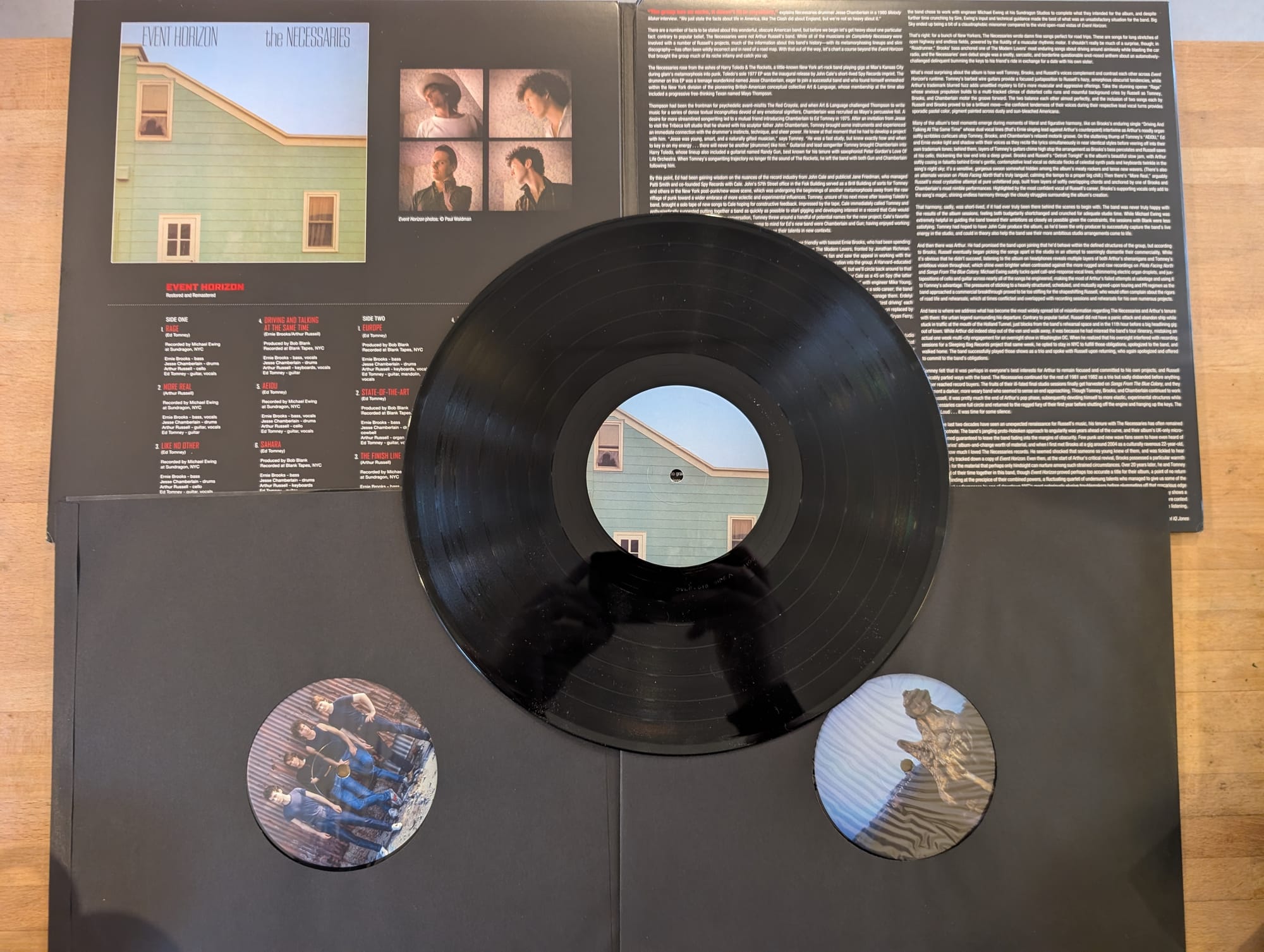
While no recordings of Spedding’s tenure in the band seem to exist, Completely Necessary covers every other era of the Necessaries, even including a pair of songs tracked with singer/guitarist Randy Gun in 1978. The rest come from the Russell era, bookended by those stretches when Tomney, Brooks, and Chamberlain made a go of it as a trio.
If there’s any minor gripe to be made about this set, it’s that the bonus material isn’t sequenced in chronological order, a move that would have allowed us to better track the evolution of the Necessaries before the project ended in 1982. Their first recording sessions in 1978 sound like the product of a band obsessed with the garage-glam chug of the Velvet Underground’s 1970 gem Loaded. A mere four years later, their self-produced work, including the hypnotic “3rd Generation Son,” is closer to the trippier sprawl of The Velvet Underground and Nico. The rest of the set falls comfortably between those two boundary markers, as the group played with slower tempos and disco grooves while finding ample room for Russell’s arch and artful contributions. It resulted in some scintillating material like “The Finish Line,” a loping gem that pivots around Russell’s searching cello parts and his sweetly insistent vocal turn, or “Sahara,” a dance-floor-ready jam lifted to weirder planes by synthesizer whorls and some trombone bursts played by avant-garde composer Peter Zummo.
Let’s not forget that this was Tomney’s group to begin with, and his creative vision was really the driving force even as he gladly accepted contributions from Russell and Brooks. Tomney’s material is excellent, wrapping his wounding criticisms of American culture up in wickedly catchy power pop and new wave tunes that were the equal of anything Devo and Talking Heads were producing at the time.
While I don’t have an original copy of Event Horizon or the reissue released on Be With Records in 2017, I can say that the album sounds wonderful on this new set. Mastering engineer Michael Graves and lacquer cutter Jeff Powell have done a marvelous job staying true to the punchy sound of the era while giving it all the breathing room to let each element of these tracks pop.
The tougher job was the bonus material included here. According to a credit on the back cover, the songs were “collected from numerous sources that entailed a variety of recording methods: 1/4” open reel home studio, 4-track open reel, 4-track cassette, 8-track studio, 24-track live studio performances, and transfer mixes from cassette recordings.” There are noticeable shifts in sound quality throughout the two bonus discs, including bits of audio dropout and an occasional dusting of tape hiss, but to Graves’s credit, those changes are far less jarring than they could have been. He keeps the balance just right so as not to break the unique spell the Necessaries cast throughout this outstanding anthology.
Omnivore 3-LP 33 RPM black vinyl
• Anthology including the Necessaries’ 1982 studio album Event Horizon and two LPs of additional studio recordings that include three tracks from the band’s 1981 release Big Sky and many unreleased tracks
• Jacket: Direct-to-board triple gatefold
• Inner sleeve: Black poly-lined
• Liner notes, insert, or booklet: Liner notes by Michael IQ Jones printed inside jacket
• Source: Unknown, likely digital
• Mastering credit: Michael Graves, Osiris Studio, Los Angeles, CA
• Lacquer cut by: Jeff Powell at Take Out Vinyl, Memphis, TN; “J POWELL” in deadwax
• Pressed at: Copycats Record Pressing, Osseo, MN
• Vinyl pressing quality (visual): A
• Vinyl pressing quality (audio): A
• Additional notes: None
Listening equipment:
Table: Cambridge Audio Alva ST
Cart: Grado Green3
Amp: Sansui 9090
Speakers: Electro Voice TS8-2
Todd Rundgren’s Utopia: Another Live
Review by Ned Lannamann
It’s fascinating to hear Todd Rundgren approach progressive rock like a commercial exercise. Prog, once the punchline of rock genres, was almost deliberately anti-commercial in its excess. And yet that was its appeal, not just to eggheads but stoned teens and adventurous rock listeners—prog records sold like hotcakes once upon a time, and Rundgren likely saw the format as another arrow he could put in his quiver.
Ever the challenge-seeker, Rundgren came to prog almost by default. The multi-faceted musical polyglot advanced at a breakneck pace through the ’70s, mastering entire subcontinents of musical styles with records like 1972’s Something/Anything? and then moving onto the next conquest before listeners had the chance to gather their wits. When it came time to reproduce the schizoid symphonies of 1973’s A Wizard, a True Star and 1974’s Todd for a live audience, Rundgren put together the most capable and diverse group of musicians he could find. And that ensemble, Utopia, lent itself very well to one of the prevailing musical fashions of the mid-’70s—prog.
Another Live, recorded in August 1975 and released two months later, is the second album credited to Todd Rundgren’s Utopia. It is indeed a live record, albeit one that’s more than half made up of new material; the remaining portion consists of covers and renditions of older Rundgren album tracks. (One of the tracks on Utopia’s 1974 studio debut was also recorded live, suggesting that the band typically premiered new material on the road.) Parts of Another Live are quite proggy indeed, such as the entangled, ping-ponging riffs that decorate “Another Life” and “The Seven Rays,” but a close listen reveals them to be musical cake frosting, there to merely enhance and sweeten the sturdy pop songs beneath. This type of ornamentation may have sounded more natural in 1975 than it does today, but it turns out Utopia’s musical gymnastics are still pretty darn fun to listen to in 2026.
If you choose to mentally filter out its proggier accoutrements—and I’m not saying you should—Another Live is a surprisingly soulful, melodic rock record, with R&B-style backing vocals from members of the band Revelation and anthemic choruses that must have gone over like gangbusters in the live setting. “The Wheel” is an acoustic hand-clapper that could have fit on CSNY’s 4 Way Street or even Bill Withers’s Live at Carnegie Hall, with Rundgren whipping off a few falsetto flourishes. Utopia’s take on “Something’s Coming” locates the inner prog within Leonard Bernstein—one wonders if Rundgren ever heard Yes’s version—and their stratospherically riffy cover of the Move’s “Do Ya?” was the kick in the pants Jeff Lynne needed to reclaim the song on Electric Light Orchestra’s 1976 album A New World Record.
Indeed, unlike a lot of live prog albums from the ’70s, the entertainment-for-entertainment’s-sake level is awfully high, without any of the ponderous showboating one might expect. “Mister Triscuits” makes the most of Utopia’s triple-keyboard attack, with Roger Powell’s Moog leading the triumvirate, while “Heavy Metal Kids” amps up the glam-rock sleaze, and the album-closing “Just One Victory” sounds custom-designed to get everyone in the crowd to flick their Bics.
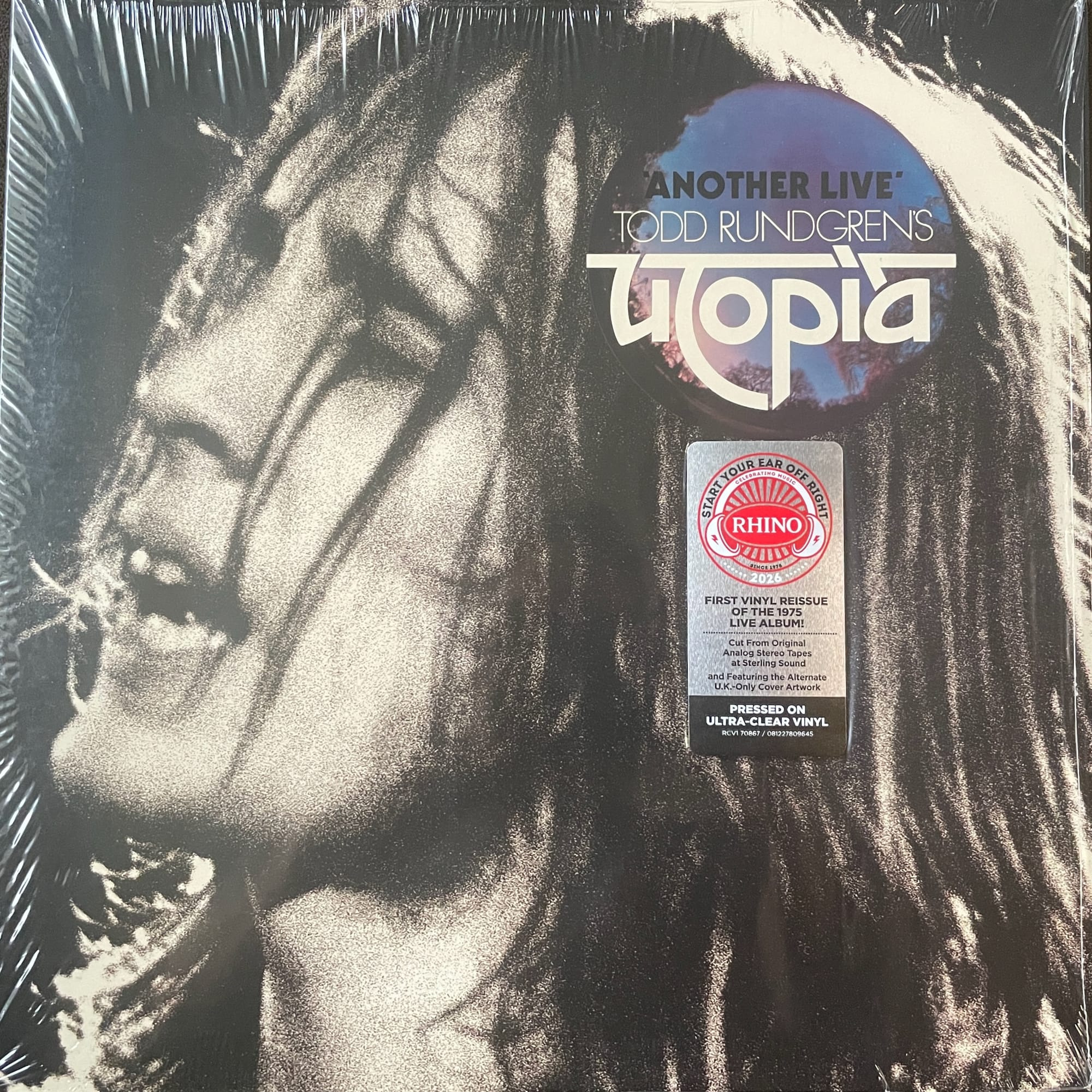
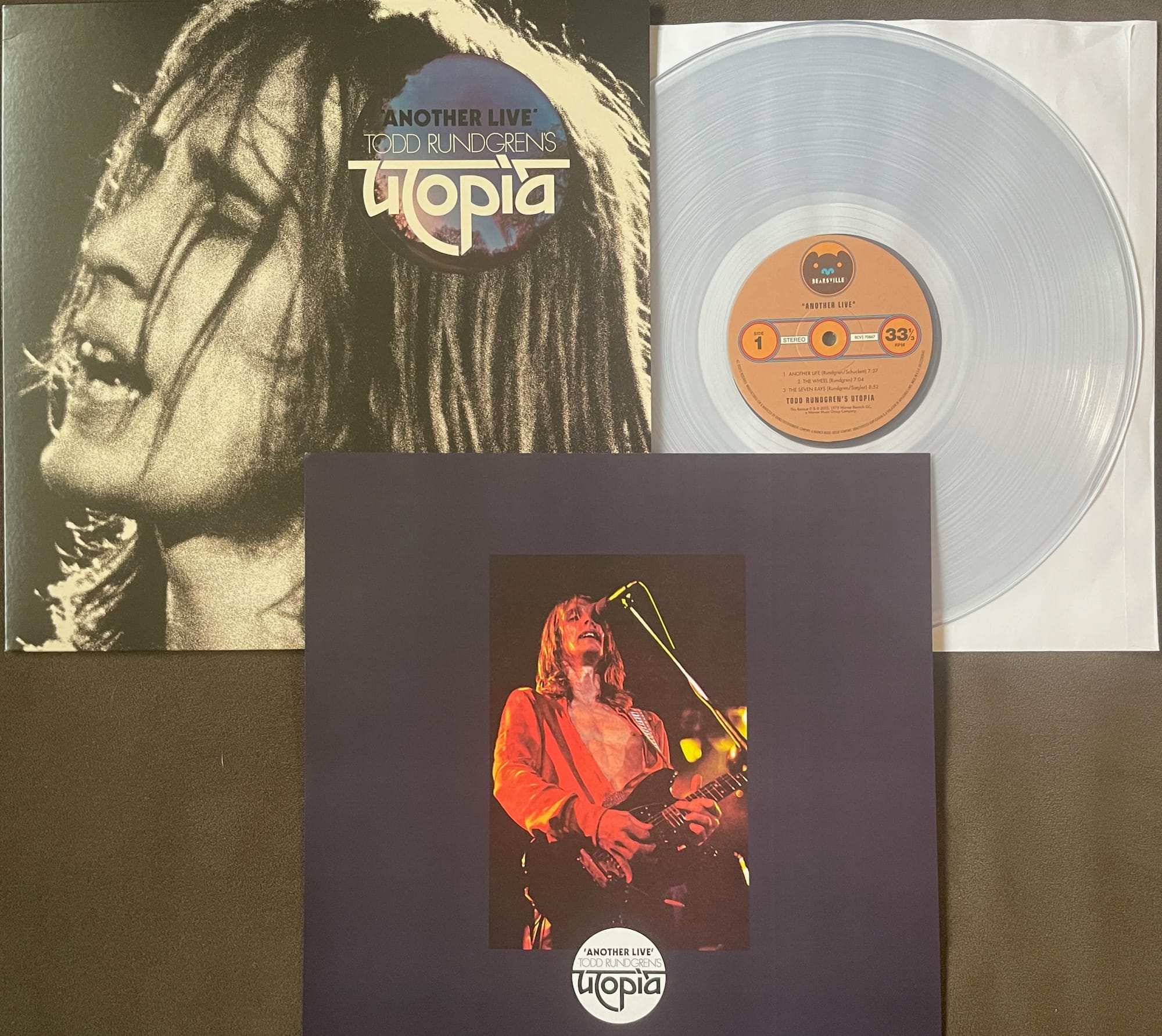
Per the hype sticker, the album has been cut from the analog tapes. Joe Nino-Hernes of Sterling Sound is credited with the lacquer cutting per the album insert, although peculiarly, neither his signature nor any mark from Sterling appear in the deadwax. The album is not a sonic marvel—it’s a mid-’70s live album, made up of deafeningly loud music recorded with mobile equipment at hockey rinks. So it sounds about par for the course. Nino-Hernes’s mastering is clear and true, with plenty of definition and a pleasing tonal and dynamic balance. The sides are lengthy, but not as lengthy as Rundgren was prone to pull off during this era; at no point does the LP sound compromised from the excess of musical information. My pressing was not flawless, but apart from a repeating tick during the acoustic “The Wheel,” it did not detract from my enjoyment. Warner/Rhino has chosen not to replicate the artwork that appeared on the 1975 version—a fantastical hand-drawn illustration of the band that is very much of its era. One understands why they went for the more palatable UK cover, but it’s a little disappointing not to have the US artwork anywhere in the package. (They could’ve made this a gatefold and tucked it on the inside, or something.)
It may be tough to convert current-day listeners to the prog gluttony of Todd Rundgren’s Utopia. But I think this record offers something not usually found in the grooves of Emerson, Lake & Palmer or King Crimson albums: a sense of fun, and a limber approach to the music that is surprisingly smile-inducing. Rundgren could’ve capitalized on the success of “Hello It’s Me” and churned out a lengthy catalog of intelligent, sober singer/songwriter fare, and he probably could’ve found substantially more chart and radio success than he ended up having. But he went weirder, and thank goodness for that. Another Live is a welcome trip through the pop-music looking-glass and what Rundgren found there.
Warner/Rhino 1-LP 33 RPM clear vinyl
• New analog remaster of Todd Rundgren’s Utopia’s 1975 live album
• Jacket: Direct-to-board single pocket
• Inner sleeve: White poly-lined
• Liner notes, insert, or booklet: Double-sided insert with lyrics and photo, replicating original 1975 insert of UK edition
• Source: Analog; “Cut from the Original Analog Stereo Tapes at Sterling Sound” on hype sticker
• Mastering credit: “Lacquer Cutting: Joe Nino-Hernes”
• Lacquer cut by: Joe Nino-Hernes at Sterling Sound, Nashville; no markings in deadwax
• Pressed at: Memphis Record Pressing, Memphis, TN
• Vinyl pressing quality (visual): A- (disc was slightly dished)
• Vinyl pressing quality (audio): B (minor background noise; repeating tick on “The Wheel”)
• Additional notes: Jacket and insert are replicas of the UK version. The original US edition had significantly different artwork. Released as part of Rhino’s Start Your Ear Off Right campaign for January 2026.
Listening equipment:
Table: Technics SL-1200MK2
Cart: Audio-Technica VM540ML
Amp: Luxman L-509X
Speakers: ADS L980
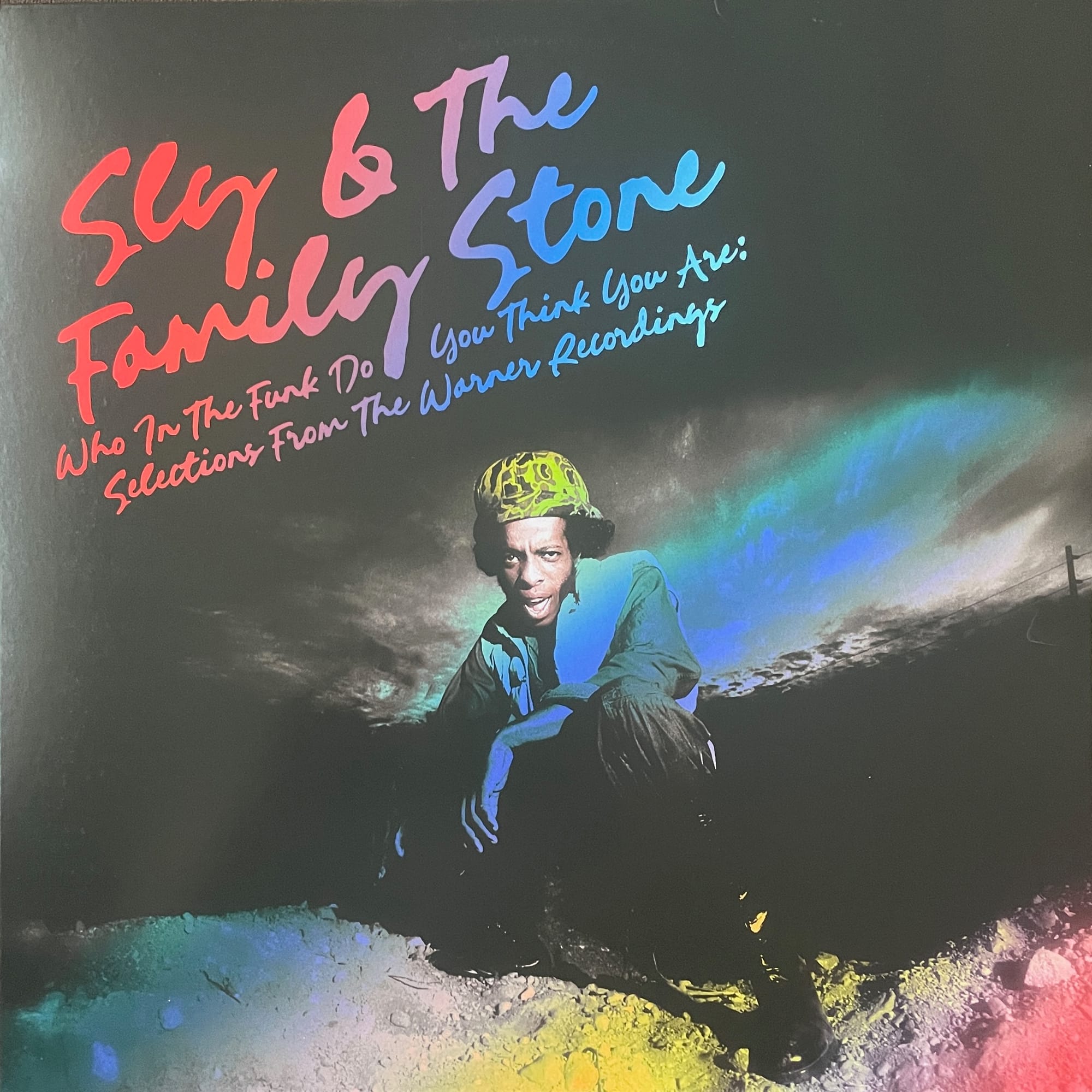
Sly and the Family Stone: Who in the Funk Do You Think You Are: Selections from the Warner Recordings
Review by Ned Lannamann
Like so many geniuses, Sly Stone eventually ended up competing with himself. By the late ’70s, Stone had achieved so much musically that there wasn’t anywhere left for him to go. Anything new he recorded would be pitted against the classic, genre-defining work he’d done with Sly and the Family Stone in the late ’60s and early ’70s. And so with plenty of drugs, even more studio time, and no frontier left to conquer, Sly spun his wheels.
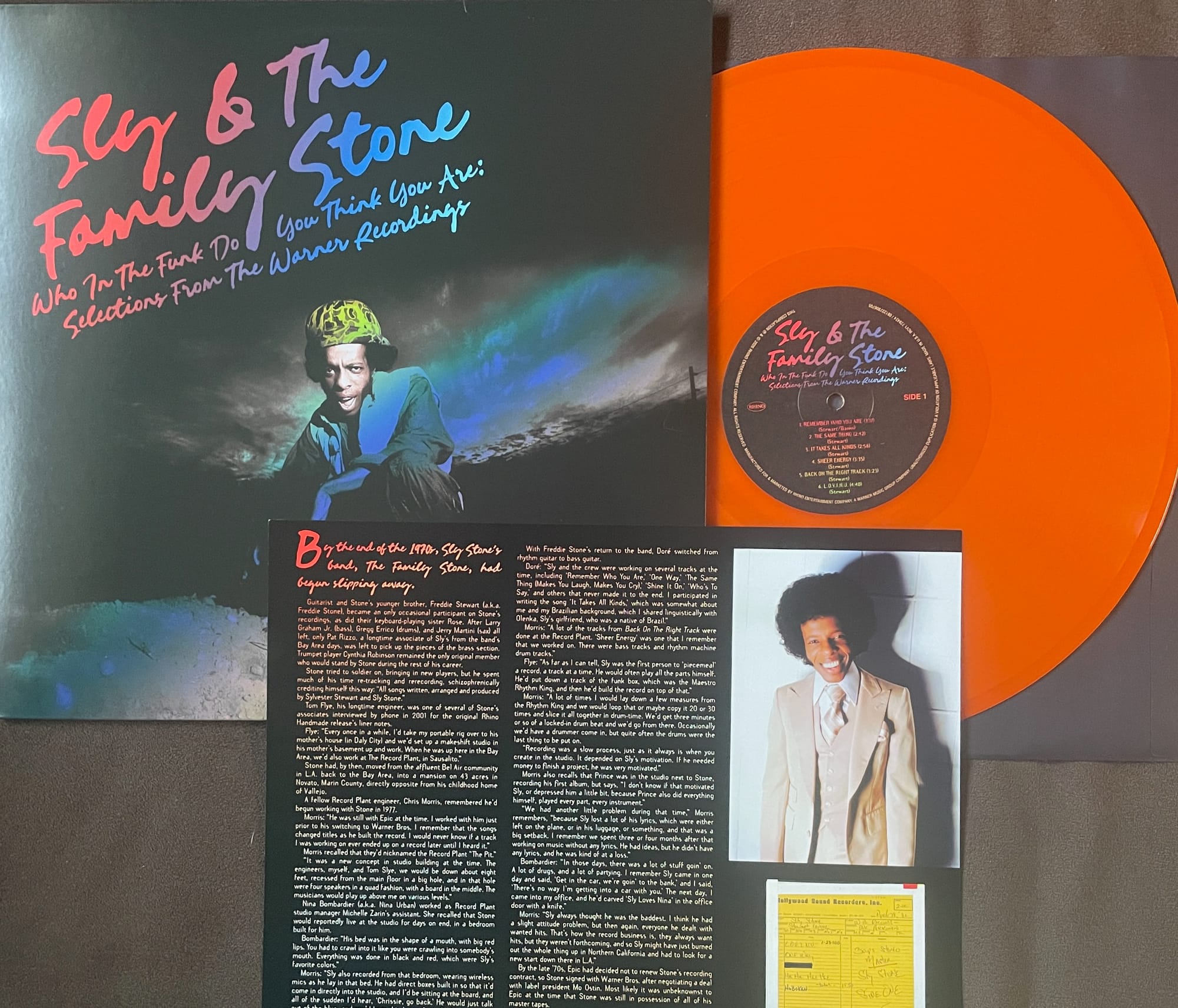
And spun. And spun. Per the liner notes on the new compilation, Who in the Funk Do You Think You Are: Selections from the Warner Recordings—itself a vinyl truncation of a longer CD released in 2001—Stone spent countless hours in the studio, racking up expenses and trying all kinds of experiments that led to little actual product. He took over a section of the Record Plant in Sausalito, naming it “the Pit,” where he placed the recording console down into an eight-foot hole in the center of the room and built a bed that could only be accessed through a pair of giant red lips, where he’d record his vocals lying down. Other recording sessions would be slowed down by Stone’s haphazard archiving methods: He’d bring in all of his masters via station wagon to a session—a hundred boxes of tapes, per one eyewitness—and pack them all up again at the end of the night, often failing to make notes of what tracks were on which tape.
Stone’s stint at Warner Bros., then, caught him on the steep downslope of a truly monumental career. Track by track, 1979’s Back on the Right Track is a pretty darn excellent collection of Sly doing what he does so well, even if it’s a bit derivative (“It Takes All Kinds” directly quotes “Everybody Is a Star,” for instance). But at a mere 26 minutes—and fully out of step with the disco fad, something that’s one of its strengths nowadays—it couldn’t help but feel like a curiosity, if not an outright letdown upon its release. The 1982 follow-up, Ain’t But the One Way, found Stone utterly lost amid the post-disco scene, having aborted his collaboration with George Clinton and now following musical trends rather than establishing them.
Back on the Right Track and Ain’t But the One Way were compiled onto a Rhino Handmade CD in 2001 called Who in the Funk Do You Think You Are: The Warner Bros. Recordings, with five previously unreleased tracks rounding out the package. Now as part of January’s Start Your Ear Off Right vinyl campaign, Rhino has truncated those 22 tracks down to an 11-track LP that collects five tracks from each album, plus one of the CD’s rarities for good measure. This is a decently condensed way to explore Stone’s last major recorded works, but it is frustrating that Rhino didn’t simply elect to release a double-LP package and include everything (particularly as the liner notes allude to songs that aren’t here).
The other problem is that Back on the Right Track is substantially better than Ain’t But the One Way, an album that either sounds weirdly anonymous (“Who in the Funk Do You Think You Are” has echoes of ZZ Top) or finds Stone cribbing from himself more than usual (“Ha Ha, Hee Hee” is a transparent rewrite of “Running Away,” and “High, Y’All” is yet another incarnation of “Higher”). So this LP is neither a comprehensive survey of the period nor an entirely satisfying listen in its own right.
Without any new mastering information included in the package (the original album mastering credits from 1979 and 1982 are included instead), I can only imagine that Rhino took the digital transfers they used to make the 2001 CD and shipped them over to GZ Media, where DMM plates were made. US copies were pressed at Memphis Record Pressing on orange vinyl, and everything sounds fine—this is very labored-over, drug-enhanced studio work, so there is an element to the production that is quite aggressive and brick-like. I can’t say for sure whether going back to the analog reels would have resulted in a more dynamic, balanced listen, but it’s entirely possible. My Memphis pressing is okay, with some minor crackle in a few places that remained after ultrasonic cleaning.
Still, this is probably the easiest way, short of scouring the used bins, for getting that last little taste of Sly Stone’s magic on vinyl. I’m a huge Sly and the Family Stone fan, and this material was pretty unfamiliar even to me. There are some songs on Side 1 that I think can stand proudly alongside his last two albums for Epic—1974’s Small Talk and 1976’s Heard Ya Missed Me, Well I’m Back—and there is nothing outright bad included in Side 2’s Back on the Right Track material, but it’s just lacking that spark that makes the majority of the Sly and the Family Stone catalog so absolutely brilliant. Sly Stone was essentially a one-man show by this point, and perhaps with lesser expectations foisted on him, he could have loosened up and made some pretty righteous records. As it is, this is the document of a fading star who didn’t turn supernova—he just faded into the firmament.
Rhino 1-LP 33 RPM orange vinyl
• One-LP distillation of Rhino Handmade/Warner Archives’ 2001 compilation, which collected Sly’s two LPs for Warner Bros. Records and added five unreleased tracks
• Jacket: Direct-to-board single pocket
• Inner sleeve: White poly-lined
• Liner notes, insert, or booklet: Two-sided insert with liner notes by Bryan Thomas, amended and updated from the 2001 CD compilation
• Source: Digital
• Mastering credits: Back on the Right Track tracks credited to Joe Hansch at Kendun Recorders, Burbank, CA; Ain’t But the One Way tracks credited to Bernie Grundman; both of these credits erroneously refer to the original vinyl releases and not this new package
• Lacquer cut by: Unknown; likely an anonymous DMM job done at GZ Media, Czech Republic
• Pressed at: Memphis Record Pressing, Memphis, TN
• Vinyl pressing quality (visual): A- (disc was dished)
• Vinyl pressing quality (audio): B+ (light noise/crackle sporadically in right channel)
• Additional notes: Released as part of Rhino’s Start Your Ear Off Right campaign for January 2026.
Listening equipment:
Table: Technics SL-1200MK2
Cart: Audio-Technica VM540ML
Amp: Luxman L-509X
Speakers: ADS L980