Reviews: Verve Vault reissues
A look at recent entries in Universal's all-analog reissue series.


Happy Friday to you, our wonderful readers and subscribers. It's been a busy, busy week for us over at The Vinyl Cut and it ain't over yet.
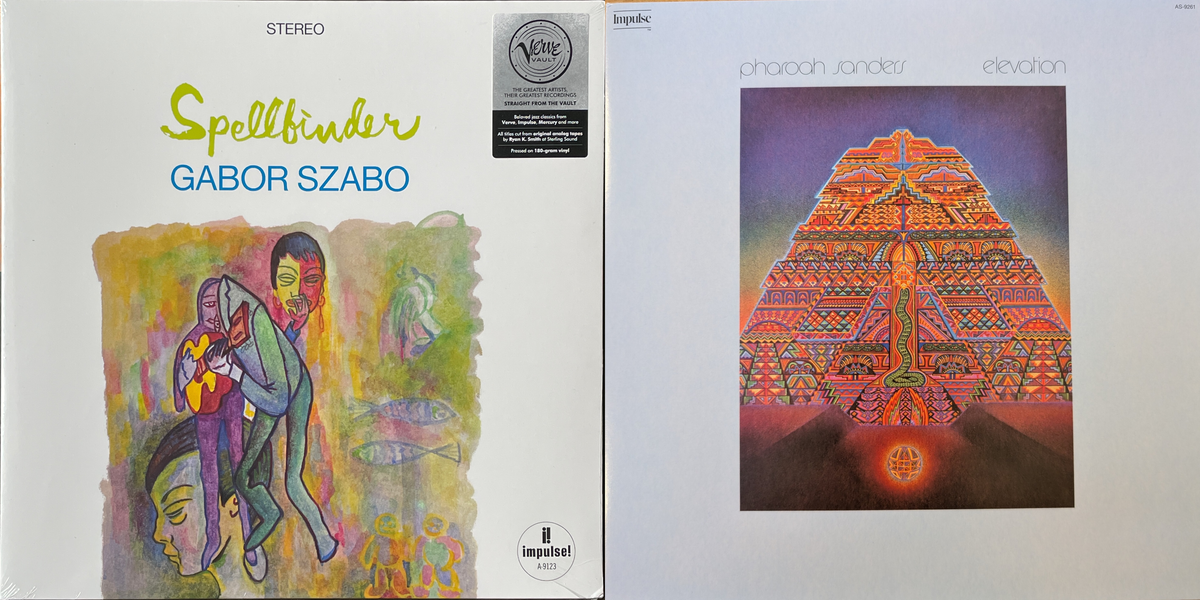
Today, we put the spotlight on Verve Vault, the jazz reissue series launched last year by UMG that has been digging into the vast back catalogs of Verve, Impulse!, Mercury, and other imprints and re-releasing key albums. Each one is an all-analog remaster on 180 gram vinyl pressed at Optimal Media in Germany from lacquers cut by Ryan K. Smith at Sterling Sound, and their price point (about $28 each) is quite enticing. And so far, our experience with these reissues has been great. We got our hands on eight releases in this series, including the represses of Gábor Szabó's 1966 album Spellbinder and Pharoah Sanders' 1974 LP Elevation, which are hitting shops today, and were very impressed with what we heard. You'll read all about that in a moment.
Before we dive into the reviews, I do have to remind folks that there are only a few more days to enter this month's vinyl giveaway. And if I may be so bold, I have to say this is our best one yet. One lucky entrant will win all four of the recent Vinylphyle releases that we covered in a recent edition of the newsletter. That's a lotta wax for a little effort. Again, you can only enter the giveaway if you are a paid subscriber to The Vinyl Cut. So, consider tossing a few coins our way to keep our turntables and laptops humming and you just may win some free vinyl.
 Ned Lannamann
Thanks to all of you readers, both paid and unpaid. Your support of an independent publication is so, so necessary right now. And now... on with the show...
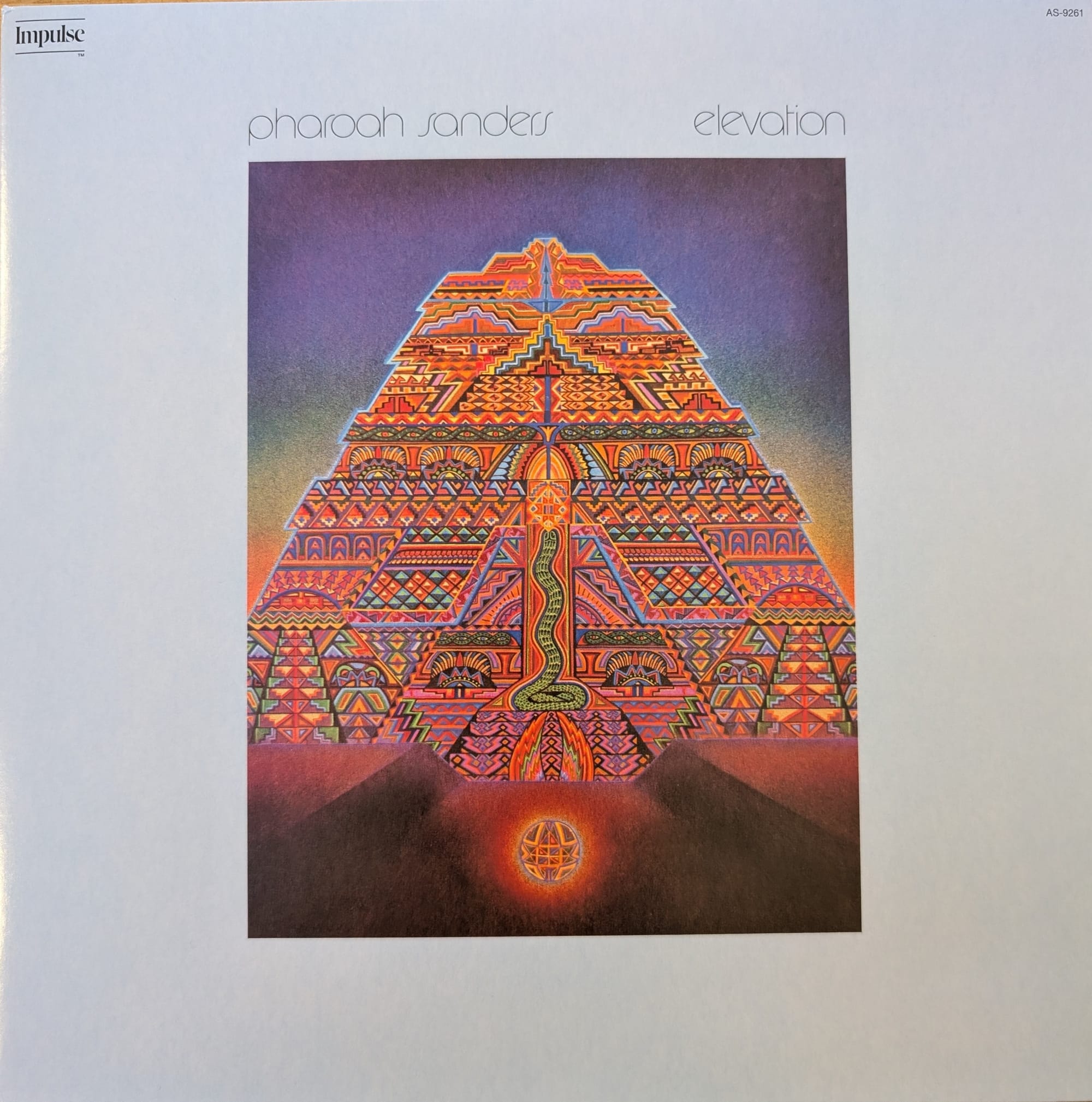
Pharoah Sanders: Elevation
Review by Robert Ham
When Pharoah Sanders took the stage at the Ash Grove, one of LA’s most open-minded venues, in September 1973, the saxophonist was on a legendary heater. By that point, he had played on albums by and performed live with Sun Ra, John Coltrane, Don Cherry, Ornette Coleman, and Alice Coltrane. And as a bandleader, Sanders had, since 1964, headlined a stunning series of spiritual jazz albums including his dual masterpieces Karma and Izipho Zam (My Gifts). His run of shows at the Ash Grove, then, felt like the culmination of all of his good works. Those performances, two of which were recorded for posterity and cherry-picked for the 1974 album Elevation, are as fierce, explosive, and playful as anything the saxophonist had put his name to.
Sanders and his large ensemble—a wild crew made up of bassist Calvin Hill, keyboardist Joe Bonner, drummer Michael Carvin, and percussionists Lawrence Killian, Jimmy Hopps, and John Blue—go for broke throughout. For example, the opening title track kicks off with a steady rolling groove in the mode of A Love Supreme before devolving into sheets of squalling noise. Side 2 aims for a more trance-inducing mode with repetitive rhythm lines and chanted vocals, or, in the case of album closer “Spiritual Blessing,” hypnotic drones produced by tamboura and harmonium that Sanders threads through with his soprano sax. While I don’t have an original copy of the album to compare it to, this repress mastered by Ryan K. Smith at Sterling Sound is an enveloping listening experience. The lustrous highs and mids whirl through the stereo field and fill any available space with lively energy and, especially on the one-two punch of the ensemble’s rendition of Ebenezer Obey’s “Ore-Se-Rere” and the Sanders original “The Gathering,” rapturous joy.
Verve/Impulse!/UMe 1-LP 33 RPM 180g black vinyl
• New all-analog stereo remaster of Pharoah Sanders’ 1974 album
• Jacket: Direct-to-board gatefold
• Inner sleeve: White poly-lined
• Liner notes, insert, or booklet: Album credits inside gatefold
• Source: Analog, “cut from the original analog tapes”
• Mastering credit: “Reissue mastered by Ryan Smith, Sterling Sound”
• Lacquer cut by: Ryan K. Smith, Sterling Sound, Nashville, TN; “RKS” in deadwax
• Pressed at: Optimal Media, Germany
• Vinyl pressing quality (visual): B+; slight edge warp
• Vinyl pressing quality (audio): A
• Additional notes: None.
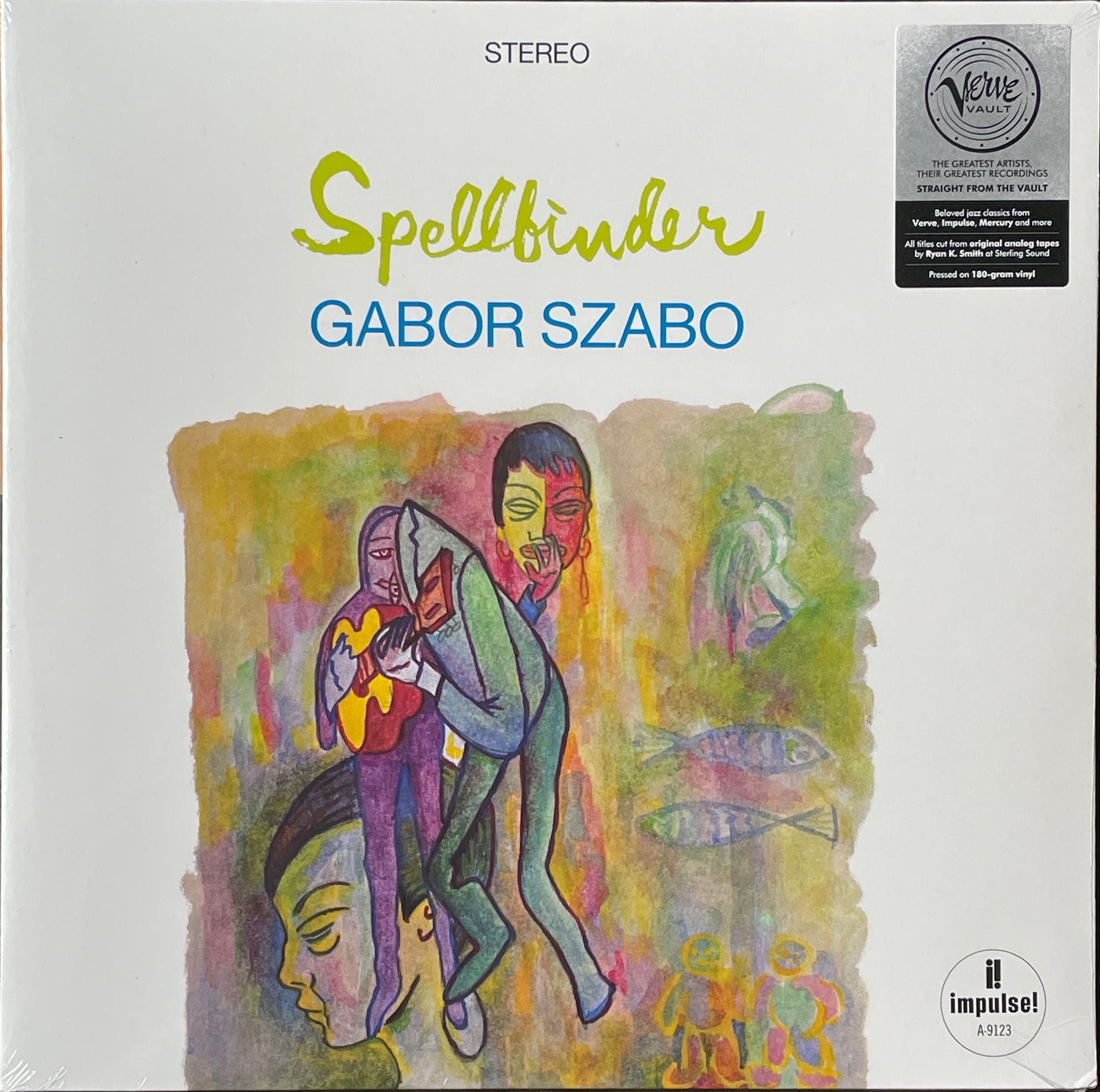
Gábor Szabó: Spellbinder
Review by Ned Lannamann
Like many jazz musicians, Hungarian guitarist Gábor Szabó burned hot and bright, recording a series of inventive and universally appealing LPs for Impulse! in the ’60s, then recording more middle-of-the-road material in the 1970s before his death in 1982. Spellbinder, his second solo album, came out in 1966 and further established Szabó as a unique voice in global jazz, incorporating Hungarian and Roma musical tropes into his work, which also involved Latin and Indian musics as well as the traditional American jazz school. The album is moody and hypnotic, existing at the fringes of the budding psychedelic rock movement while remaining definitively in the jazz realm by reworking standards like “It Was a Very Good Year” and “My Foolish Heart.” With Chico Hamilton on drums and Ron Carter on bass, the only other credited accompaniment is Willie Bobo and Victor Pantoja on percussion, resulting in a stark but rhythmically driven set of songs. Apparently Chick Corea played piano on the session, too, but I failed to notice his contribution.
Spellbinder even flirts with pop: Szabó sings in a flat, disinterested voice on his cover of “Bang Bang (My Baby Shot Me Down),” which also includes a guitar overdub—highly unconventional for a jazz recording at the time. “Gypsy Queen” might be the flagship moment here: a fragmented but undeniable lead guitar line over a mesmerizing, kaleidoscopic groove that’s heavily indebted to Latin jazz. You can hear why Santana decided to incorporate it into their version of “Black Magic Woman.”
I held the new Verve Vault pressing up to a 1967 disc mastered by recording engineer Rudy Van Gelder—the album was recorded at his studio in Englewood Cliffs, New Jersey—and pressed at an unknown plant. Van Gelder’s cut is lively and full, but I found the sound to be a little muted compared to the new cut by Ryan Smith. Smith’s cut is bigger sounding, with more rhythmic excitement and realism in the percussion and a deeply resonant low end; the stark low notes of Carter’s bass in “My Foolish Heart” even rattled a few fixtures around the house. The only setbacks with the Optimal pressing were a dish warp that fortunately did not affect play, and a small but deep scuff on Side 2 that resulted in several noisy pops during “Bang Bang.” These random flaws will likely not affect most people’s enjoyment of this fine new pressing.
Verve/Impulse!/UMe 1-LP 33 RPM 180g black vinyl
• New all-analog stereo remaster of Gábor Szabó’s 1966 solo debut album
• Jacket: Direct-to-board gatefold
• Inner sleeve: White poly-lined
• Liner notes, insert, or booklet: Original liner notes reproduced inside gatefold
• Source: Analog; “Cut from original analog tapes”
• Mastering credit: “Reissue mastered by Ryan Smith, Sterling Sound”
• Lacquer cut by: Ryan K. Smith at Sterling Sound, Nashville, TN; “RKS” in the deadwax
• Pressed at: Optimal Media, Germany
• Vinyl pressing quality (visual): B (disc was dish-warped and had half-inch scuff on Side 2)
• Vinyl pressing quality (audio): B- (scuff on vinyl made significant noise during “Bang Bang”)
• Additional notes: None.
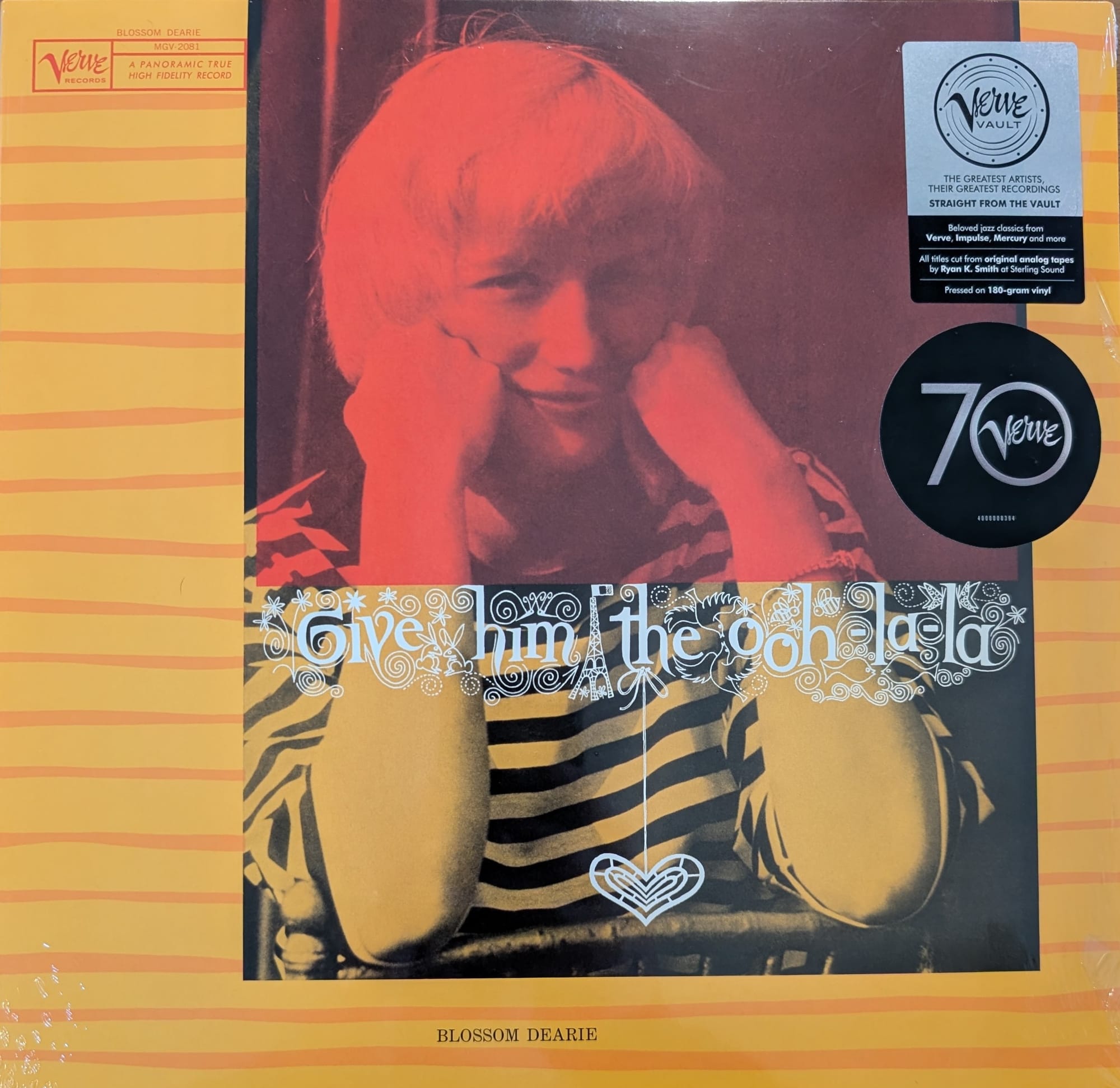
Blossom Dearie: Give Him the Ooh-La-La
Review by Robert Ham
According to some sources, the usually cantankerous Miles Davis had nothing but praise for Blossom Dearie, dubbing her “the only white woman who had soul.” I wouldn’t go quite that far, but there is something about the light, sweet tone of Dearie’s voice and piano that I find entirely entrancing. The clarity and simplicity of her singing is a far cry from the scat acrobatics of Ella Fitzgerald or the sultry passion of Lena Horne, but, to these ears, it’s as comforting as a warm drink on a cold day.
One of the finest representations of her skills is Give Him the Ooh-La-La, her 1958 album that was recently reissued as part of the Verve Vault series. Backed by a small ensemble consisting of bassist Ray Brown, guitarist Herb Ellis, and drummer Jo Jones, Dearie’s arrangements of songs by the likes of Cole Porter (“Just One of Those Things,” the title track), British songwriter David Heneker (“Bang Goes the Drum (And You’re in Love)”), and Bart Howard (“Let Me Love You”) have a pleasant coffeehouse vibe that fits nicely in the background or slips into the spotlight if you give it the attention. I’d wholeheartedly recommend you offer this fine album your consideration, especially on this new cut from Sterling Sound’s Ryan K. Smith. The quartet of players are placed perfectly in the mono mix and are balanced well to let individual solos pop out as needed. Dearie’s voice stays just above it all, with a chipper swing and a bell-like tone that will either tickle you greatly or send you scrambling to lift the tonearm.
Verve/UMe 1-LP 33 RPM 180g black vinyl
• New all-analog mono remaster of Blossom Dearie’s 1958 album
• Jacket: Direct-to-board single-pocket
• Inner sleeve: White poly-lined
• Liner notes, insert, or booklet: Original liner notes reprinted on back cover
• Source: Analog, “cut from the original analog tapes”
• Mastering credit: “Reissue mastered by Ryan Smith, Sterling Sound”
• Lacquer cut by: Ryan K. Smith, Sterling Sound, Nashville, TN; “RKS” in deadwax
• Pressed at: Optimal Media, Germany
• Vinyl pressing quality (visual): A
• Vinyl pressing quality (audio): A
• Additional notes: None.
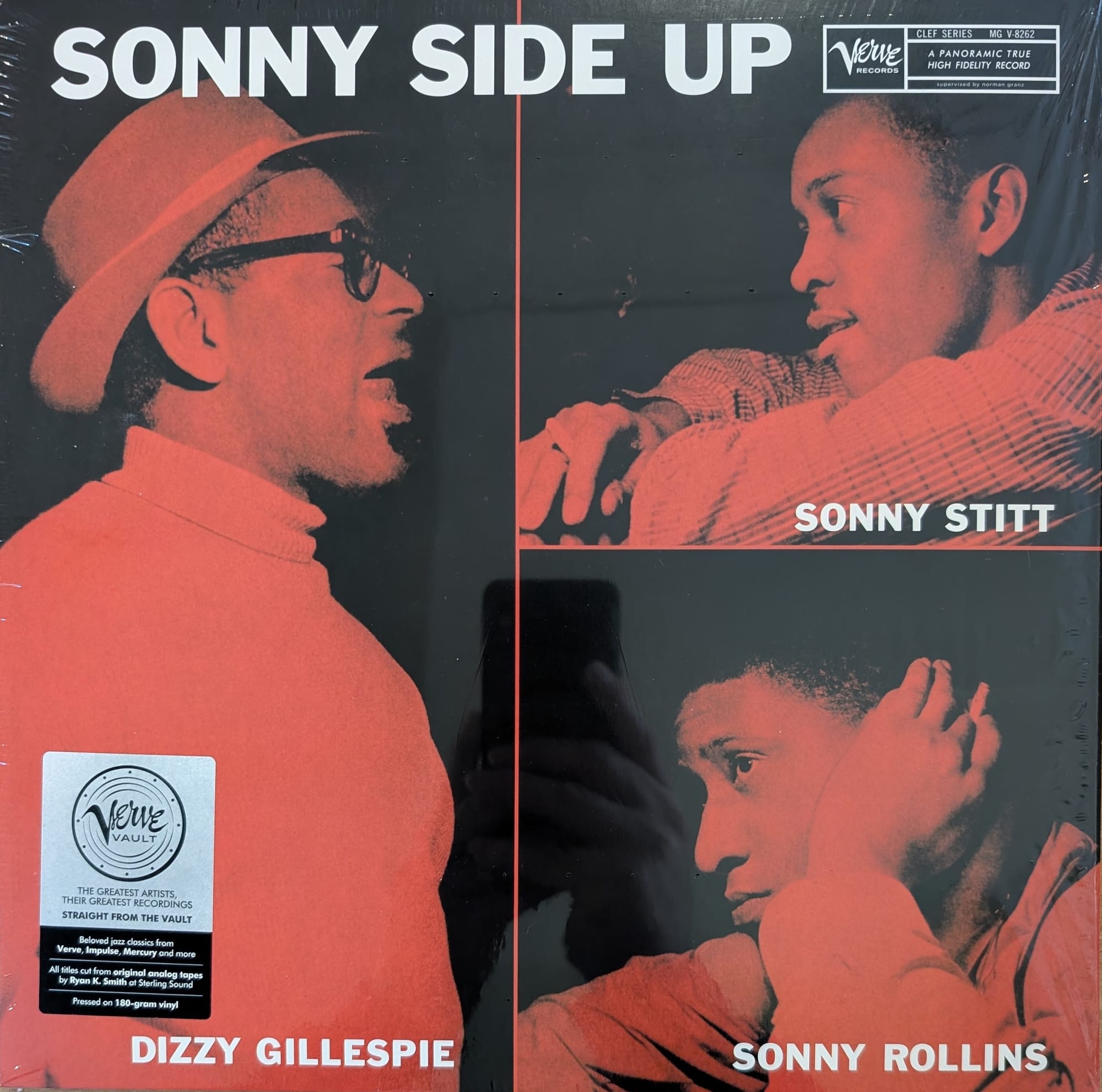
Dizzy Gillespie: Sonny Side Up
Review by Robert Ham
For a December 1957 session, trumpeter Dizzy Gillespie made the inspired decision to invite not one but two tenor saxophonists over to Nola Studios in Midtown Manhattan: Sonny Stitt and Sonny Rollins. The idea was to work with them individually (those recordings would be released on the 1958 album Duets) and then together. The tunes on which the two saxophonists appear together, compiled for the 1959 release Sonny Side Up, are nothing short of brilliant. The Sonnys challenge one another to reach greater improvisational heights, resulting in breathtaking moments like their blow-for-blow solos on Stitt’s “The Eternal Triangle” (listen for Gillespie’s delighted shouts as they continue to square off) and their fiery back-and-forth on Avery Parrish’s “After Hours.” Gillespie becomes something of a cooling force as he pushes his muted trumpet between the two to bring them back to the head or to inject his own relatively restrained solos.
Of all the Verve Vault releases I listened to for this run of reviews, this new cut of Sonny Side Up might well be my favorite. Cut from the original mono reels by Ryan K. Smith, this pressing bristles with vivacity and color. The soundstage is impressively deep, making enough space for the crackerjack rhythm section (pianist Ray Bryant, bassist Tommy Bryant, and drummer Charles Persip) to get their due. They were a perfect match for this meeting of three titans, and Smith keeps their presence strong in the mix even as the bright punch of the horns pulls focus.
Verve/UMe 1-LP 33 RPM 180g black vinyl
• New all-analog mono remaster of Dizzy Gillespie’s 1959 album
• Jacket: Direct-to-board single-pocket
• Inner sleeve: White poly-lined
• Liner notes, insert, or booklet: Original essay from Nat Hentoff reprinted on back cover
• Source: Analog, “cut from the original analog tapes”
• Mastering credit: “Reissue mastered by Ryan Smith, Sterling Sound”
• Lacquer cut by: Ryan K. Smith, Sterling Sound, Nashville, TN; “RKS” in deadwax
• Pressed at: Optimal Media, Germany
• Vinyl pressing quality (visual): A
• Vinyl pressing quality (audio): A
• Additional notes: None.
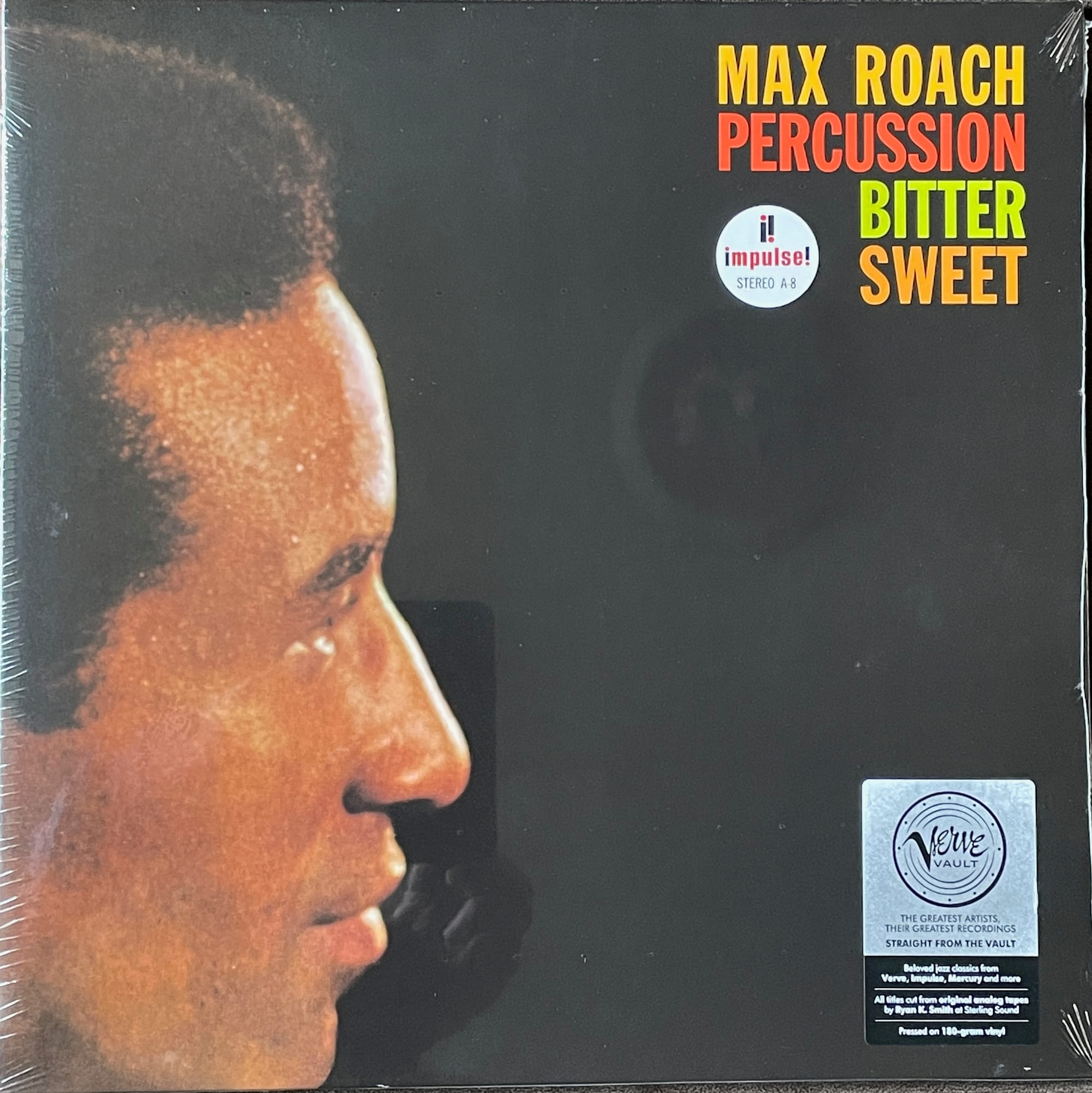
Max Roach: Percussion Bitter Sweet
Review by Ned Lannamann
Drummer Max Roach’s bold experimentalism and politically charged restacking of jazz’s building blocks often comes across as confrontational, a quality that is on full display on the dazzling, disorienting Percussion Bitter Suite, first released on Impulse! in 1961. Inspired by composers like Alban Berg, Roach is already circling around the concepts that would become formalized by free-jazz proponents like Ornette Coleman and Cecil Taylor. Yet the drummer—who played with Duke Ellington, Dizzy Gillespie, and Charlie Parker—keeps connected to the jazz continuum and a sense of black musical history, inverting the tropes of bebop (a style he helped create) instead of rejecting them.
That formalism is what makes the wilder moments of Percussion Bitter Sweet so exhilarating. Roach has gathered a murderer’s row of collaborators here, including pianist Mal Waldron, trumpeter Booker Little, and singer Abbey Lincoln, Roach’s future wife, offering vocalizations both conventional (“Mendacity”) and less so (the Yma Sumac-esque chanting on “Garvey’s Ghost”). But Roach’s most sympathetic partner is Eric Dolphy, whose bass clarinet solo during “Tender Warriors” is so unshackled and exploratory that it encapsulates the entire musical journey of the LP.
The recording, dotted with sharp horn bursts and Roach’s many solos on the drumkit, is meant to rattle bones rather than soothe nerves, and the new Verve Vault stereo pressing does that notion justice while also allowing the richness of each instrument’s voice to flower and creating a sense of space in the stereo spectrum. I had an original mono pressing on hand to compare to the new Verve Vault pressing but found they were two different experiences. The mono, cut at Bell Sound with a substantial bass punch, is a tighter, more square-in-the-jaw experience, while the stereo is expansive, at times extending over the listener’s head and offering remarkable dimensionality to the soundscape. Lacquer cutter Ryan K. Smith has done a wonderful job here, preserving all the inherent strife and agitation in Roach’s musical vision while also imbuing a sense of beauty to the recording.
Verve/Impulse!/UMe 1-LP 33 RPM 180g black vinyl
• New all-analog stereo remaster of Max Roach’s 1961 album
• Jacket: Direct-to-board gatefold
• Inner sleeve: White poly-lined
• Liner notes, insert, or booklet: Original liner notes—by Margo Guryan!—are reproduced inside gatefold
• Source: Analog; “Cut from original analog tapes”
• Mastering credit: “Reissue mastering: Ryan Smith, Sterling Sound”
• Lacquer cut by: Ryan K. Smith at Sterling Sound, Nashville, TN; “RKS” in the deadwax
• Pressed at: Optimal Media, Germany
• Vinyl pressing quality (visual): A- (disc not perfectly flat)
• Vinyl pressing quality (audio): B+ (whooshing in background during silent stretches)
• Additional notes: None.
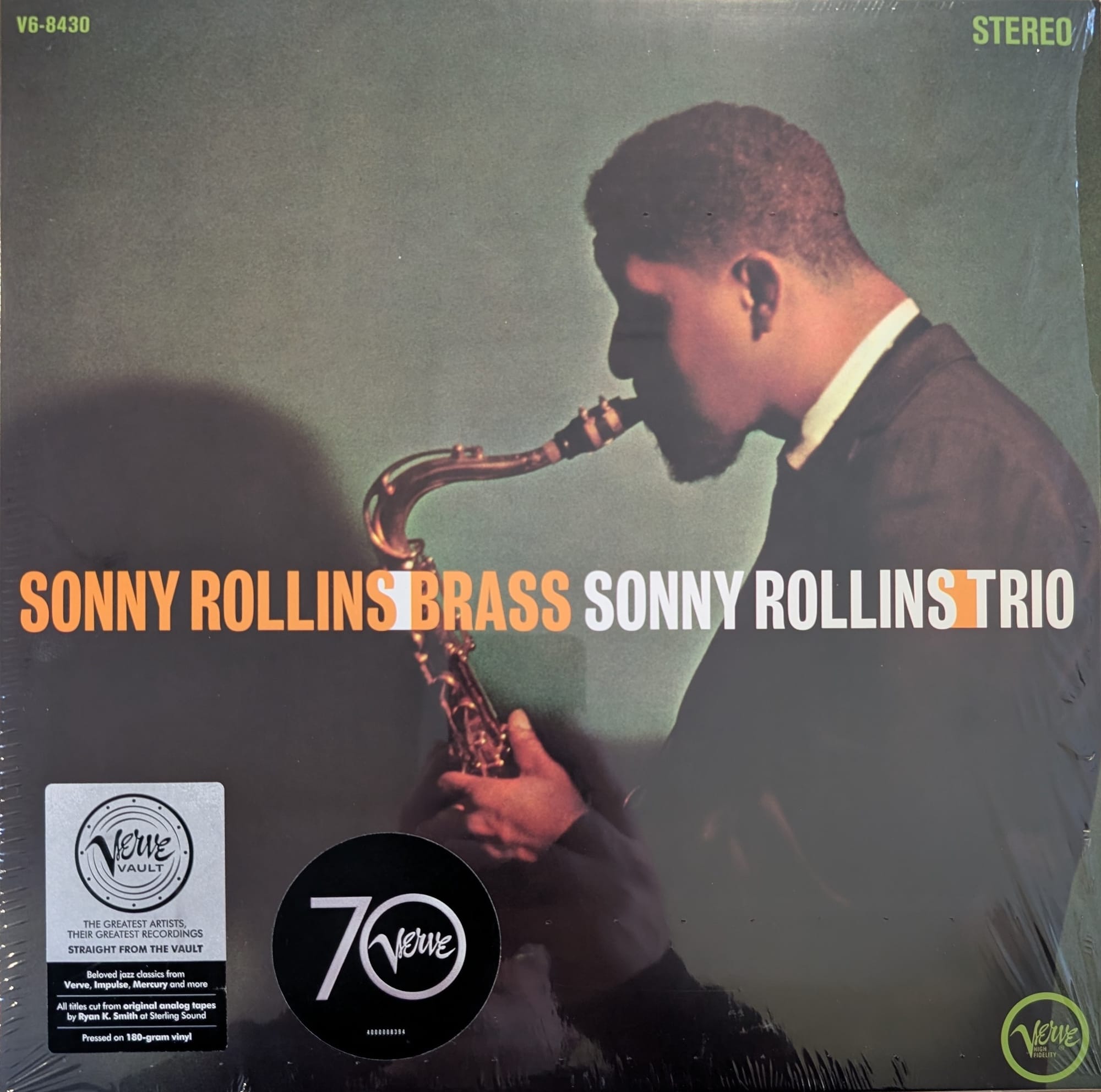
Sonny Rollins: Sonny Rollins/Brass - Sonny Rollins/Trio
Review by Robert Ham
Originally issued on MGM imprint MetroJazz as Sonny Rollins and the Big Brass, this album from the tenor saxophonist is better represented by the title it was given when Verve reissued it in 1962: Sonny Rollins/Brass - Sonny Rollins/Trio. The LP compiles two very different recording sessions that Rollins undertook in the summer of 1958. On the first day, Sonny Rollins and bassist Henry Grimes ventured to Metropolitan Studios where a big band and conductor/arranger Ernie Wilkins awaited. As the title of both albums spells out, the emphasis was on the brass section—an all-star ensemble that featured the likes of Nat Adderley on cornet, trombonists Jimmy Cleveland and Billy Byers, trumpeters Clark Terry and Ernie Royal, and tuba player Don Butterfield. The following day at Manhattan-based Beltone Studios, he laid down a quartet of tunes backed only by Grimes and drummer Charles Wright.
The two sessions are broken up nicely on the album, with the big band taking up all of Side 1 and the trio on the flipside. Both are great representations of Rollins’s strengths as a player and collaborator. He sits mostly in the pocket throughout the first four tracks, either doubling up on the head with Butterfield or sitting back and letting individual players take quick solo turns. But when he does break out for a solo, it is, as expected, breathtaking. My preference is for the trio tracks on Side 2, which is all Rollins. Grimes and Wright stick to support roles and let the saxophonist vamp away on tunes like the Saxon/Wells standard “What’s My Name?” and Rodgers & Hart’s “Manhattan.” Whatever side you choose, this album will serve you well, especially in this new Verve Vault pressing. The big band tracks are appropriately outsized and thick with the brassy highs pushing forward in the mix, but Ryan K. Smith’s mastering work shines on the trio side of the LP. Smith makes great use of the room tone and the open space available between the three players, making their contributions really pop. The snap of Wright’s drumming hits even harder and Rollins’s saxophone sails even higher.
Verve/UMe 1-LP 33 RPM 180g black vinyl
• New all-analog stereo remaster of Sonny Rollins’ 1958 album
• Jacket: Direct-to-board single-pocket
• Inner sleeve: White poly-lined
• Liner notes, insert, or booklet: Original essay from Leonard Feather reprinted on back cover
• Source: Analog, “cut from the original analog tapes”
• Mastering credit: “Reissue mastered by Ryan Smith, Sterling Sound”
• Lacquer cut by: Ryan K. Smith, Sterling Sound, Nashville, TN; “RKS” in deadwax
• Pressed at: Optimal Media, Germany
• Vinyl pressing quality (visual): A
• Vinyl pressing quality (audio): A
• Additional notes: None.
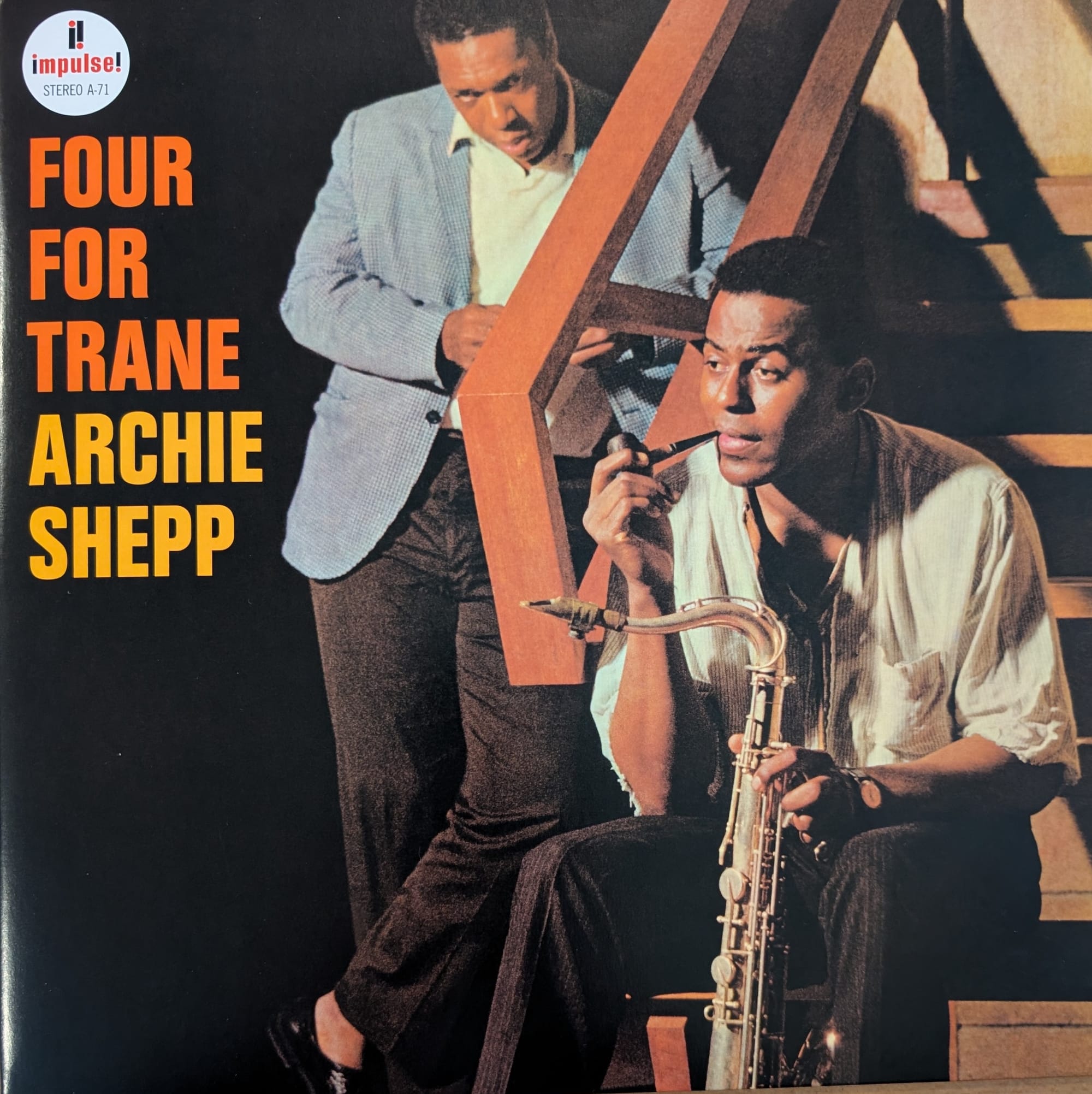
Archie Shepp: Four for Trane
Review by Robert Ham
Archie Shepp’s 1965 album Four for Trane isn’t simply a tribute to the titular jazz saxophonist and innovator. It was also an order from Bob Thiele, the head of Impulse! Records. As the story goes, Shepp had been trying to secure a deal with the label without much luck and asked his friend John Coltrane to intervene. Thiele agreed to take Shepp on, but with one instruction: His first album for Impulse! had to be all Coltrane compositions. “I had just been waiting for the chance to do that,” Shepp told writer Ashley Kahn in the book The House That Trane Built: The Story of Impulse Records. “I loved Trane’s music and I had my own ideas about how to work with it.”
The subsequent 1964 session found tenor saxophonist Shepp working with a fantastic ensemble—Alan Shorter on flugelhorn, John Tchicai on alto sax, Roswell Rudd on trombone, Reggie Workman on bass, and Charles Moffett on drums—and, yes, recording a quartet of Coltrane tunes. The sextet pulls the original compositions apart like taffy, stretching the wistful melody of “Naima” into a narcotic waltz and folding “Mr. Syms” into a wobbly-legged facsimile of its better-known recording on 1962’s Coltrane Plays the Blues. Capping off the album is a dizzying Shepp original, “Rufus (Swung, His Face at Last to the Wind, Then His Neck Snapped),” that sounds like the melody was made using a collage of pieces from the four Coltrane tracks that preceded it.
My previous copy of this album, a 1997 pressing made as part of the “Impulse! Reissue Series” and mastered by Ron McMaster at Capitol Studios, was serviceable enough. My suspicion, though, is that it was cut from a digital transfer, as there was a dimness to the music that robbed it of its power and angularity. Those qualities come roaring back on this new Verve Vault edition, with the splash and crack of Moffett’s drums pulled free from the sonic muck and the uncovering of new overtones and dissonance within the woozy interplay of the horns.
Verve/Impulse!/UMe 1-LP 33 RPM 180g black vinyl
• New all-analog stereo remaster of Archie Shepp’s 1965 album
• Jacket: Direct-to-board gatefold
• Inner sleeve: White poly-lined
• Liner notes, insert, or booklet: Original essay from Leroi Jones reprinted inside gatefold
• Source: Analog, “cut from the original analog tapes”
• Mastering credit: “Reissue mastered by Ryan Smith, Sterling Sound”
• Lacquer cut by: Ryan K. Smith, Sterling Sound, Nashville, TN; “RKS” in deadwax
• Pressed at: Optimal Media, Germany
• Vinyl pressing quality (visual): A
• Vinyl pressing quality (audio): A
• Additional notes: None.
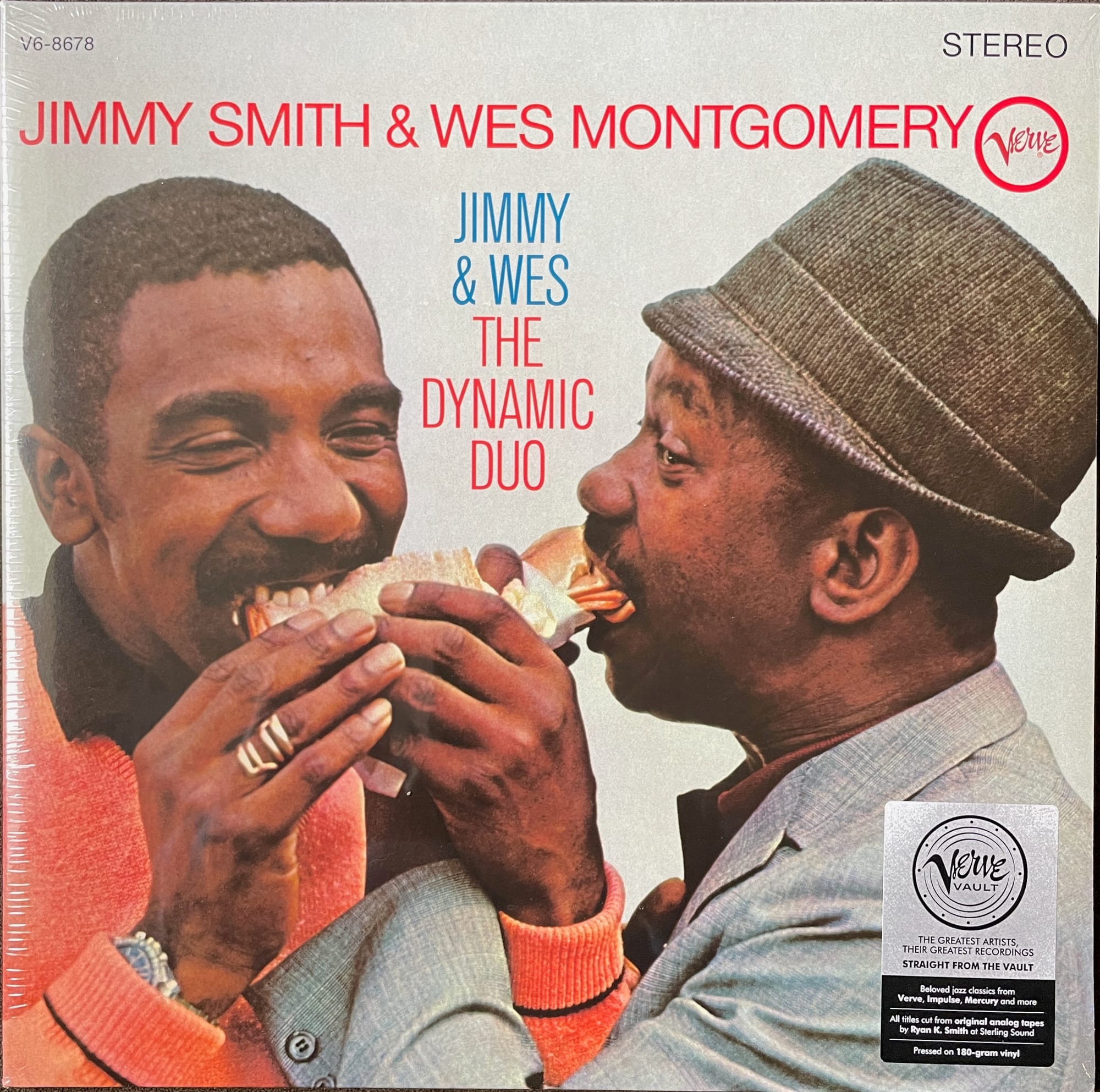
Jimmy Smith & Wes Montgomery: Jimmy & Wes: The Dynamic Duo
Review by Ned Lannamann
Pairing organist Jimmy Smith and guitarist Wes Montgomery was an inspired idea, and the two spent three nonconsecutive days playing together at Van Gelder Studio, resulting in 1966’s Jimmy & Wes: The Dynamic Duo as well as a 1968 collection of leftovers, Further Adventures of Jimmy and Wes. Smith’s lightning-quick fingers dovetail brilliantly with Montgomery’s far more economical, thumb-picked phrasing, ensuring that their extended solos become about cooperative interplay rather than one-upmanship. And while their names are on the front cover of Jimmy & Wes: The Dynamic Duo, arranger Oliver Nelson deserves equal billing, as his choreographed horn blasts turn several of the tracks into brightly lit big-band joyrides.
On two tracks—one of which, oddly, is “Baby, It’s Cold Outside,” which maybe was not thought of exclusively as a Christmas song back then (date rape is a year-round phenonemon!)—Smith and Montgomery front a smaller quartet, with Smith holding down the bass lines on the organ and Montgomery strumming cozily restrained chords. The pairing is ideal, as neither steps on the other’s toes, and the issue I sometimes have with Smith and Montgomery is solved entirely: that an entire album with either of them as the main soloist can sometimes wear out its welcome by the end of Side 2. It’s not a problem in this case.
For comparison’s sake, I played my weather-beaten deep-groove original stereo pressing that I believe was manufactured at H.V. Waddell, with engineer Rudy Van Gelder’s mastering stamp in the deadwax. It’s a fine-sounding thing (pops and ticks aside), but I prefer Ryan Smith’s newer cut, which has a bit more crispness and realism, with the instruments—particularly Grady Tate’s drums and Nelson’s horn section—sounding remarkably present and vivid. The only issue I had with the new copy was that my Optimal pressing was quite dished, although it did not affect playback, and I have every confidence my vinyl-flatting device can remedy it easily.
Verve/UMe 1-LP 33 RPM 180g black vinyl
• New all-analog stereo remaster of Jimmy Smith and Wes Montgomery’s collaborative 1966 album
• Jacket: Direct-to-board gatefold
• Inner sleeve: White poly-lined
• Liner notes, insert, or booklet: Original liner notes reproduced inside gatefold
• Source: Analog; “Cut from original analog tapes”
• Mastering credit: “Reissue mastered by Ryan Smith, Sterling Sound”
• Lacquer cut by: Ryan K. Smith at Sterling Sound, Nashville, TN; “RKS” in the deadwax
• Pressed at: Optimal Media, Germany
• Vinyl pressing quality (visual): B (disc was significantly dish warped)
• Vinyl pressing quality (audio): A (no playback issues)
• Additional notes: None.
Ned's listening equipment:
Table: Technics SL-1200MK2
Cart: Audio-Technica VM540ML
Amp: Luxman L-509X
Speakers: ADS L980
Robert's listening equipment:
Table: Cambridge Audio Alva ST
Cart: Grado Green3
Amp: Sansui 9090
Speakers: Electro Voice TS8-2