Reviews: Bill Plummer | Digital Underground


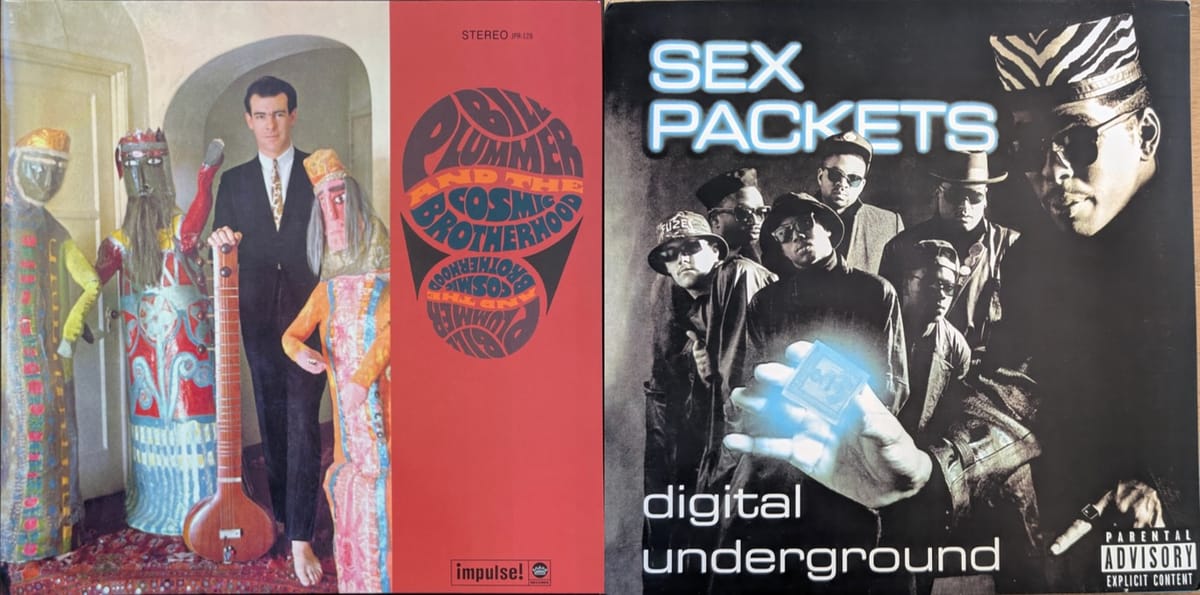
Two new reviews for you today, for a pair of pretty playful albums—one of which you will definitely know if you were listening to rap in the early ’90s, and one an indescribable jazz-Indian-fusion obscurity that even the most seasoned Impulse! Records collectors might not be familiar with.
- Bill Plummer and the Cosmic Brotherhood: Bill Plummer and the Cosmic Brotherhood
- Digital Underground: Sex Packets
In my Bill Plummer review, I include the brief detail that Oregon record pressing plant Cascade Record Pressing (based in the city of Milwaukie, just outside of Portland) has made the decision to close its doors. I wanted to call that out here up top simply because I haven’t seen it widely reported anywhere. This morning, Cascade told me via email:
Unfortunately, we have made the difficult decision to close the company and have stopped accepting new orders as of September 25. We are using the remainder of our time in operation completing the jobs still currently on our books.
I reported on Cascade’s opening way back in 2015 for my alma mater, the Portland Mercury. It feels sad to come full circle on this and report on their closure as well. We wish all those working at Cascade the best of luck and thank them for the many wonderful records they’ve pressed over the past decade-plus.
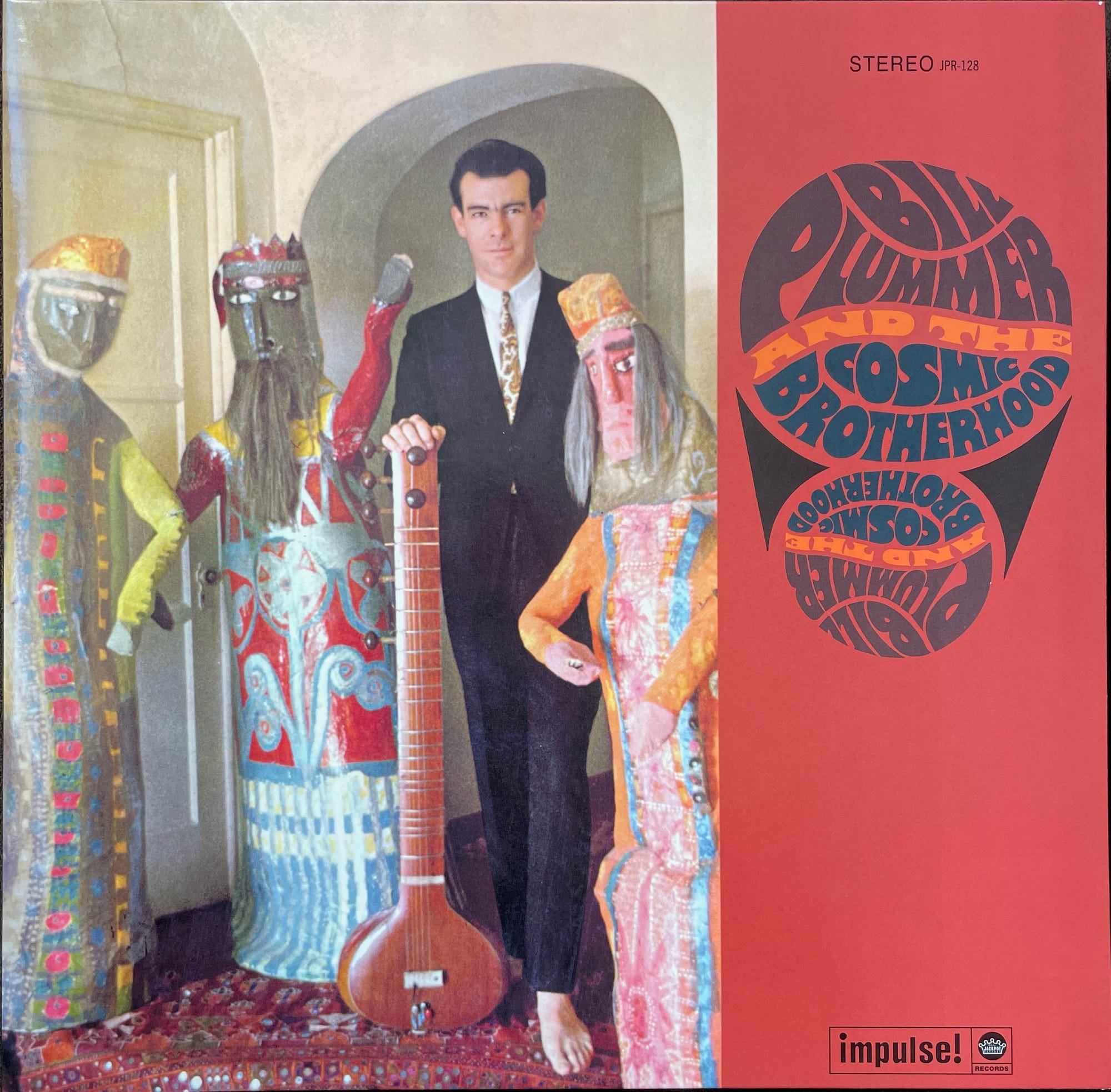
Bill Plummer and the Cosmic Brotherhood: Bill Plummer and the Cosmic Brotherhood
Review by Ned Lannamann
Who is Bill Plummer? That’s not the easiest question to answer. Casual observers may have spied his credits for upright bass on the Rolling Stones’ Exile on Main Street and Tom Waits’ Closing Time, while more eagle-eyed aficionados may know of his other session work, including for Quincy Jones, Gábor Szabó, Judee Sill, and the albums he recorded with wind player Paul Horn, including 1965’s Jazz Suite on the Mass Texts, composed by Lalo Schifrin. Hardcore jazzbos may even know of his time backing Miles Davis on California dates throughout the ’60s, as well as stints with singers Tony Bennett and Nancy Wilson.
But Plummer’s wild 1968 album for Impulse! Records, Bill Plummer and the Cosmic Brotherhood, reveals another side to the musician altogether. Newly reissued on vinyl by Portland label Jackpot Records, it’s a sitar-laden affair that includes trippy psychedelic rock, bossa nova-enriched jazz-pop, lounge music, Hindustani classic music, and what was called at the time the “new” jazz—the broader avant-garde movement that developed in the wake of post-bop, encompassing free jazz, spiritual jazz, and what eventually became fusion. It even includes contributions from the Los Angeles session legend Carole Kaye, who plays electric bass guitar alongside Plummer’s string bass.
The bassist/sitarist, who passed away in January 2022, clearly had diverse musical interests, and they all come to the fore on Cosmic Brotherhood, making for a fascinating listening experience that eludes easy categorization. The opening track, “Journey to the East,” is both a thesis statement for the album and a bit of a misdirection, as it’s written by fellow bassist/sitarist Hersh Hamel and features Hamel’s spoken-word lyrics about a spiritual journey to India. It’s a potent bit of ’60s incense-scented psychedelia, with a rock backbeat, Indian instrumentation, and Tom Scott’s saxophone treated to studio tricks not often found on a jazz record.

The second track, the Plummer-written “Pars Fortuna (Part of Fortune),” comes closer to spiritual jazz, heavily featuring Scott again, as well as piano from Mike Lang. Plummer’s upright bass plays a supporting role here, and the track features little in the way of non-traditional jazz instrumentation apart from some atmospheric percussion. Plummer’s rendition of the Bacharach/David chestnut “The Look of Love” blends a baroque-pop harpsichord with Plummer’s sitar and Milt Holland’s tabla, while the lovely, jasmine-infused take on the Byrds non-album single “Lady Friend” is a thick, chewy mix of vibes, flute, and tambura.
The album’s centerpiece is the 10-minute “Arc 294,” which where the album comes closest to traditional Indian music. Plummer combines Eastern and Western approaches to improvisation—the Indian raga with American jazz freeform—for a track that slowly builds into chaos. The album concludes with the defiantly avant-garde “Antares,” which features Plummer dueting with an overdub of himself on upright bass, at first plucking inquisitive melodic lines and then later using a bow to create creaks, scratches, and groans. The track concludes with percussion plonking and some vocal weirdness, ending the album on an unserious tone.
Even though it was produced by Impulse! label head Bob Thiele, Bill Plummer and the Cosmic Brotherhood doesn’t sound like any other jazz records from the period. It veers from easy-listening lounge pop to abrasive avant-garde experimentalism, at times within the same song, and the Indian component further complicates it stylistically and also serves to somewhat freeze it in time as a ’60s relic. In later years, Plummer would describe live shows with the Cosmic Brotherhood as “very fascinating because it was a crazy 14-piece band with three sitars, a tambura, two drummers, and four bass players. It was either absolutely incredibly great or absolutely incredibly horrible [laughs].”
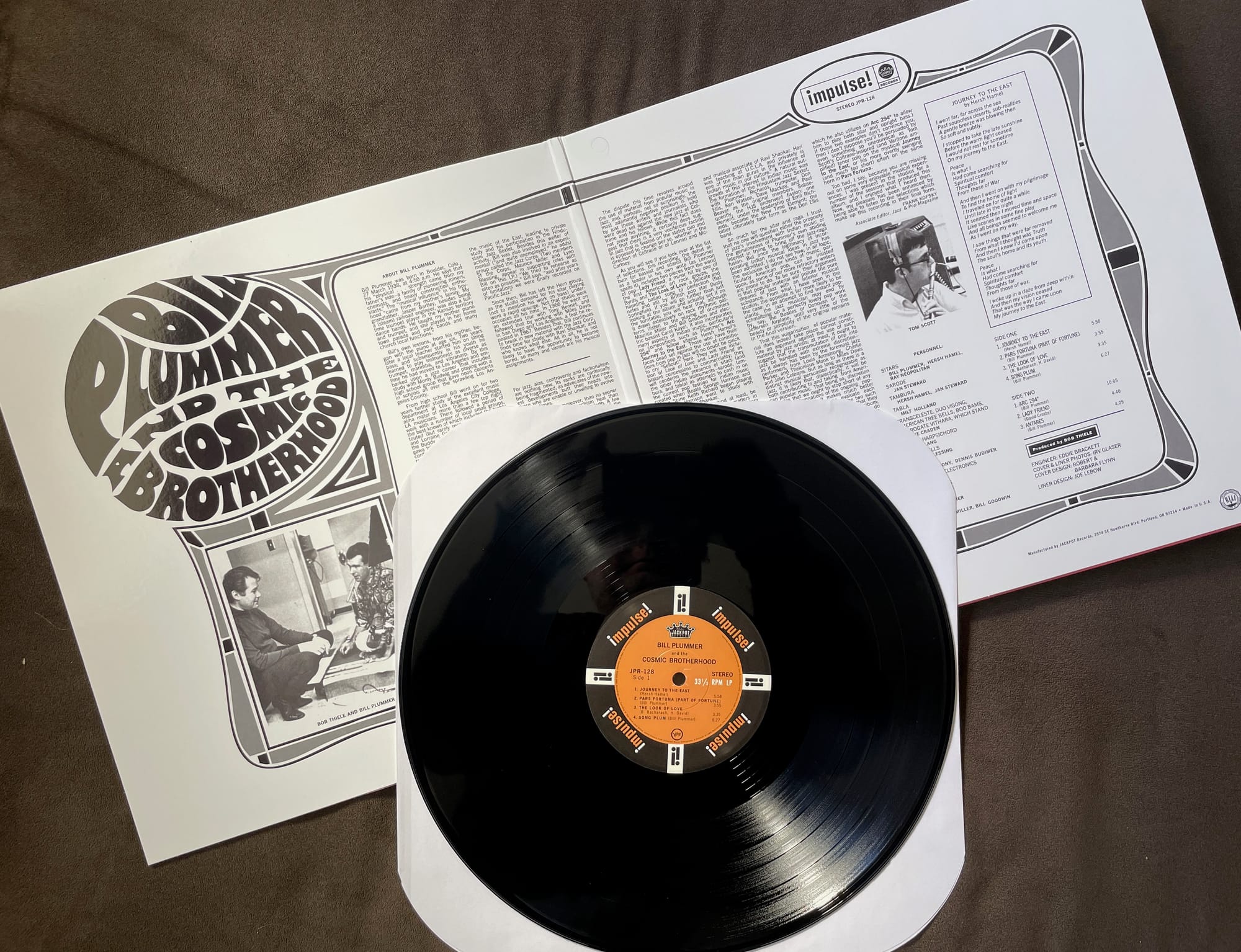
Jackpot’s reissue—which will be released on April 17—features a cut by Kevin Gray, perhaps enough of a selling point in itself. I am not sure what source Gray cut from, as the album does not tout an all-analog process, but the music is as clear and balanced as one would expect. The sitars and percussion often make for a dense thicket of sound, but the somewhat aggressive production is handled well, and the deeper voicings of the tabla come through in the bottom end. There are prominent bells and other percussion that make for a challenging high end as well, which is mitigated by Gray’s capable mastering; only on the track “Song Plum” does the incessant ding! of a triangle become annoying.
The pressing, too, is very good. It was pressed at Oregon’s Cascade Record Pressing before that plant made the decision to shut down, and the vinyl is flat, noise-free, and without any blemishes. It’s as fine a piece of vinyl as I’ve experienced from them. The jacket, too, is a high-gloss affair that does justice to the original Impulse! gatefold.
Bill Plummer and the Cosmic Brotherhood is a journey well worth taking, particularly for those intrigued by its commingling of late-’60s experimental jazz with sitar-augmented California hippie pop. Somewhat unusually for albums this iconoclastic, it doesn’t presage any later movements in music, where its breakthroughs would be distilled and ironed-out for broader public consumption. This is a unique, and uniquely challenging, work—all the more so because of its decidedly pleasant detours into pop (“The Look of Love” and “Lady Friend”) that serve to wrong-foot the less intrepid listener. The album-opening “Journey to the East” might have provided Cosmic Brotherhood with its mission statement, but the obscurities within are far more tangled and strange.
Jackpot 1-LP 33 RPM black vinyl
• Remaster of the 1968 album by Bill Plummer and the Cosmic Brotherhood
• Jacket: High-gloss direct-to-board gatefold
• Inner sleeve: White paper
• Liner notes, insert, or booklet: Original liner notes by Frank Kofsky reproduced inside gatefold
• Source: Unknown
• Mastering credit: Kevin Gray, Cohearent Audio, North Hills, CA
• Lacquer cut by: Kevin Gray, Cohearent Audio, North Hills, CA; “KPG@CA” in deadwax
• Pressed at: Cascade Record Pressing, Milwaukie, OR
• Vinyl pressing quality (visual): A
• Vinyl pressing quality (audio): A
• Additional notes: None.
Listening equipment:
Table: Technics SL-1200MK2
Cart: Audio-Technica VM540ML
Amp: Luxman L-509X
Speakers: ADS L980

Digital Underground: Sex Packets
Review by Robert Ham
Digital Underground will always be remembered for two very important contributions to hip-hop culture. For one, the Oakland-based group was the launching pad for the juggernaut career of Tupac Shakur. The late rapper contributed to a pair of Digital Underground albums around sessions for his solo debut, 1991’s 2Pacalypse Now. The other, of course, is that the group brought the world “The Humpty Dance,” the 1990 single that hit #11 on the Billboard Hot 100 and will forever be a staple of wedding DJ sets and streaming-service nostalgia playlists.
The song is also the lead track on Sex Packets, Digital Underground’s debut, first released in 1990 and getting an expanded reissue this week via New York label Tommy Boy Records. And much like “The Humpty Dance,” the full album is a funny, funky, and filthy ride built from samples of the foundational grooves of Parliament-Funkadelic and sweetened by live instrumentation. Or as Atron Gregory, the man who first signed the group to his TNT Recordings label, puts it in the liner notes he wrote for this new edition: “Sex Packets wasn’t just an album; it was a fully realized, funk-infused universe that felt like nothing else in hip-hop at the time.”
Leading both the band and the creative direction of their first album was Gregory Jacobs, the rapper and musician known as Shock G. He got the group going in his former home of Tampa, Florida, with DJ Kenny Waters, but set the wheels in motion toward their platinum-selling success after relocating to the Bay Area. Jacobs was joined by his brother, guitarist Kent Racker; Christopher Dright, the drummer who went by the name Chopmaster J; bassist Randy Brooks; Randy’s brother, the rapper Ronald Brooks, aka Money B; and DJ Fuze, the turntablist born David Elliot. (Shakur wouldn’t join the fold until after Sex Packets was released.)
All of those men made vital contributions to the early sound of the group, but it was Jacobs who left the deepest mark on Sex Packets. He played piano and keyboards throughout, wrote the arrangements for the majority of the songs, and helped craft the thematic concept of the titular miracle pill that gives its users the sensation of gettin’ some. Jacobs also handled the bulk of the vocals on Sex Packets, either in his own voice or in the guise of characters like MC Blowfish and, of course, Humpty Hump, the skeevy lothario with an oversized nose.
Due to Jacobs keeping a firm hand on the wheel, the album is tight and cohesive, smoothly sliding from the opening blast of “The Humpty Dance” into the quartet of tracks that reveal the secrets of the sex packets via the Prince-esque slow burn of the title track and “Packet Man,” a musical conversation between a street-level dealer of the drug and a potential customer, set to a deep-pocket groove. The second side of the LP plays out like the feverish imagination of a sex packet user with the hilariously nasty verses of “Freaks of the Industry” and the half-hearted warnings about the opposite sex on “The Danger Zone.” The whole affair closes out with an edited version of “Doowutchyalike,” a pure party-starter anchored by a flip of Parliament’s “Flash Light.”

The above running order is what appeared on the original vinyl release of Sex Packets. This new edition switches it up to follow the tracklist of the 1990 CD, which shuffled up the order and folded in “Gutfest ’89,” an account of an imaginary music festival where our heroes Shock G and Money B descend to meet girls, set to a hook that DJ Fuze borrowed from Ray Charles’s “What’d I Say” and the drums from the Shaft in Africa theme song. After spending time with both a promo copy of the original 1990 press and this new edition, I’m hard pressed to say which version is best thematically. I lean slightly in favor of the earlier tracklist, as I like the choice of ending the album on the high note of “Doowutchyalike,” but catch me tomorrow and I may change my mind.
I also have a tough time deciding which pressing sounds best. The differences between the two are negligible, which is striking considering my 1990 original—mastered by Tom Coyne at Digital Mastering Service, an arm of the legendary New York studio the Hit Factory, and pressed at Specialty Records in Olyphant, Pennsylvania—used the DMM process to squeeze 25-plus minutes onto each side of the single LP. The pressing sounds impressively robust, with the crack of the snare and the punch of the kick drum on each track taking charge while leaving enough room for the vocals and the squiggle of the keyboards (be it either a Jacobs performance or a sample of a Bernie Worrell lick) to spread comfortably throughout the mix. The new edition stretches the album over two LPs, leaving enough room to tack on some bonus tracks like the old-school jam “A Tribute to the Early Days,” which was previously only found on the 1990 cassette release. Theoretically, the extra space on each side of the new pressing should amp up those sonic qualities, but as I believe mastering engineer Joe Nino-Hernes was working with digital files, there was only so much he could do to make the music freshly pop. The album still sounds great, mind you, but there’s little to distinguish it from the previous pressing.
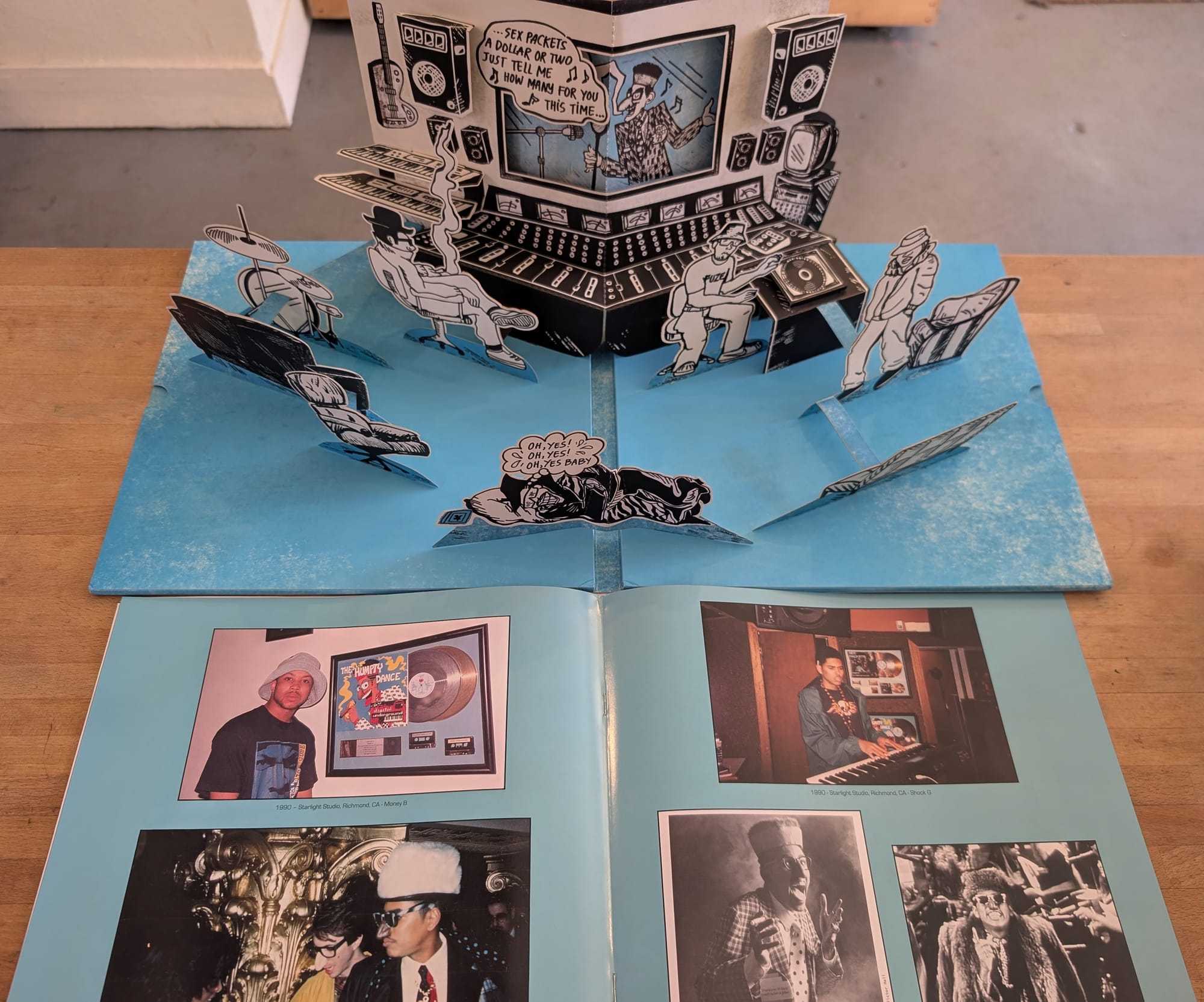
Where the new version of Sex Packets outshines the original is in its packaging. In addition to a wonderful booklet that includes Gregory’s essay and a trove of photos of the group, the thick gatefold sleeve opens up to reveal an elaborate pop-up featuring a cartoon version of Digital Underground in the studio, complete with Humpty Hump in the vocal booth and DJ Fuze working a turntable. It’s a nice visual homage to the group’s P-Funk forbears, whose album art often include outlandish illustrations of the group and the lyrics. And it’s the perfectly loony addition to an equally barmy, funky LP.
Tommy Boy/TNT Records 2-LP 33 RPM blue and black splatter vinyl
• Expanded reissue of Digital Underground’s 1990 debut album
• Jacket: Direct-to-board gatefold with pop-up inside gatefold
• Inner sleeve: Printed paper with album credits and acknowledgments
• Liner notes, insert, or booklet: 12-page booklet with essay from TNT Recordings president Atron Gregory and archival photos
• Source: Unknown, assumed digital
• Mastering credit: Joe Nino-Hernes, Sterling Sound, Nashville TN
• Lacquer cut by: Joe Nino-Hernes, Sterling Sound, Nashville TN; “JN-H” and “Sterling” in deadwax
• Pressed at: Conectiv, Guadalajara, Mexico
• Vinyl pressing quality (visual): A
• Vinyl pressing quality (audio): A
• Additional notes: None.
Listening equipment:
Table: Cambridge Audio Alva ST
Cart: Grado Green3
Amp: Sansui 9090
Speakers: Electro Voice TS8-2