Reviews: Love | Van Morrison

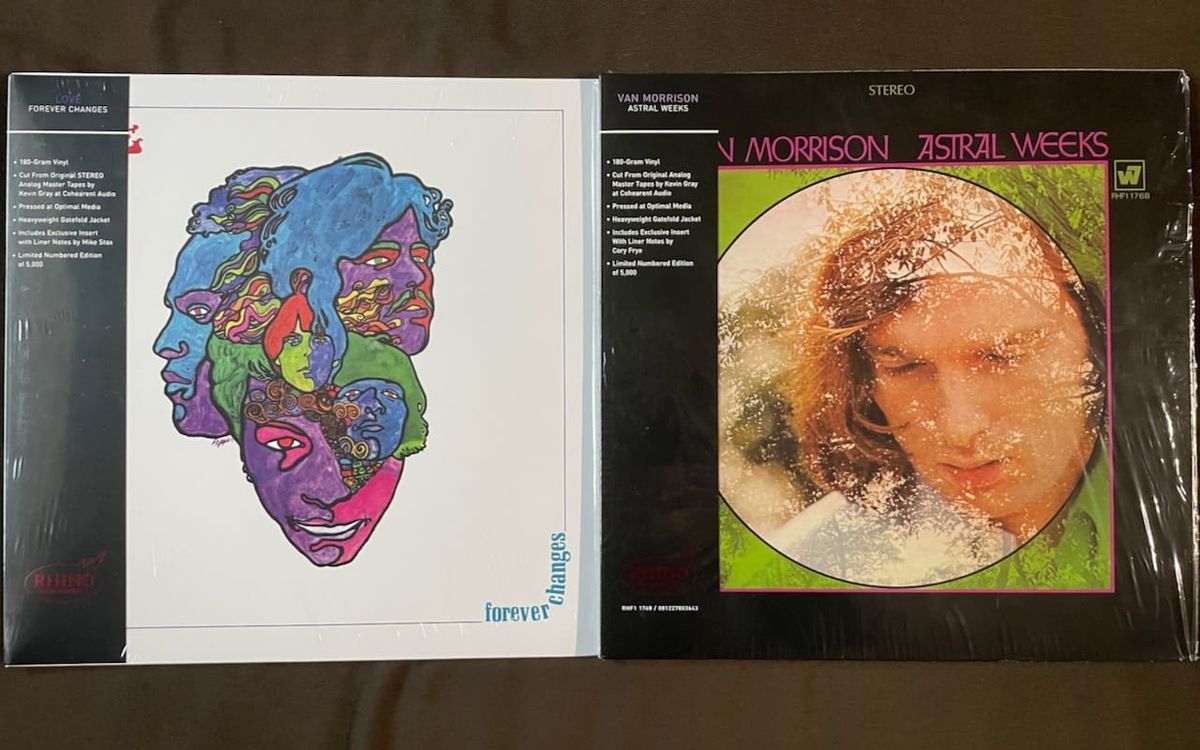
A close listen to two slightly controversial new Rhino High Fidelity pressings.
I’m diving into two recent Rhino High Fidelity reissues, both of which are for albums that came from the second half of the ’60s and reckoned with the social and musical upheavals that were going on at the time. Perhaps coincidentally, both albums dealt with those upheavals in similar ways—by turning their backs on the world at large, to different degrees and with very different musical results.
- Love: Forever Changes
- Van Morrison: Astral Weeks
Both of these new RHFs have been accompanied by minor controversies. In the case of Love’s Forever Changes, a mistake at the pressing plant resulted in the wrong weight of vinyl being shipped, although the record itself sounds perfectly wonderful. And in the case of Van Morrison’s Astral Weeks, questions around the source and the effectiveness of this new mastering made it a hot topic on the vinyl and audiophile forums a few weeks back. I’m not intending to rekindle any of those fires here but wanted to add my perspective after sitting with these new pressings for a bit.
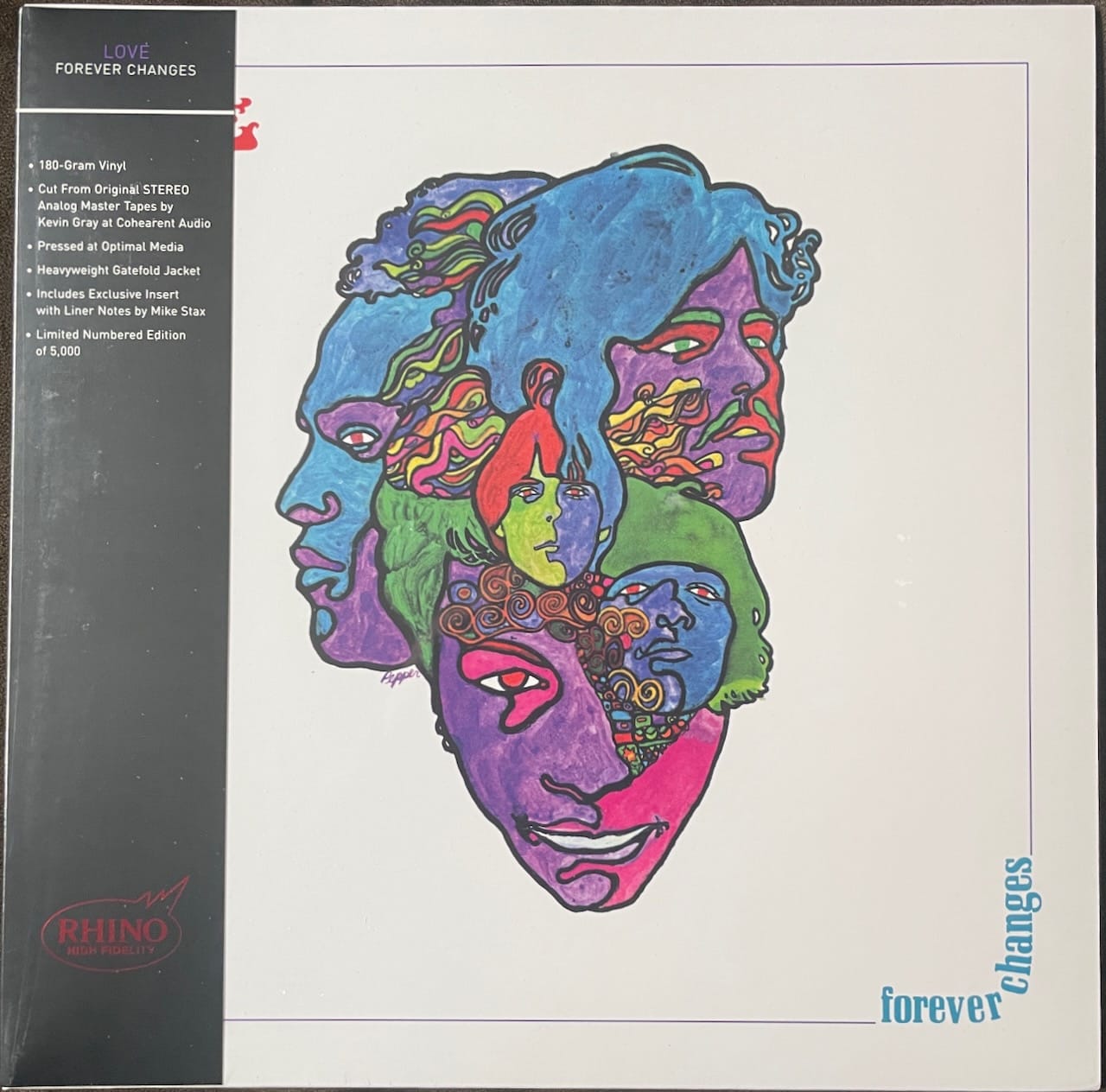
Love: Forever Changes
A “combination of beauty and dread”—there can be no better way to summarize the mood of Love’s 1967 masterpiece Forever Changes, as the great Detroit music writer Ben Edmonds did in his essay for the 2001 CD edition of the album. Recorded in the wake of the Summer of Love, Forever Changes was like a cool blade cutting through all of that warm, blossoming hope, depicting a druggy, melancholic Los Angeles that felt like it was the edge of the world about to fall off into the sea. Love frontman Arthur Lee said that Forever Changes was meant to be his epitaph, as he thought he was about to die. He didn’t, but that unease lies at the core of the album’s disorienting pull.
And despite the fatalism, it’s a really beautiful album, an elegantly wasted merging of folk, baroque pop, and the burgeoning sounds of psychedelic rock that Love helped invent, mixed in with the other strains and spices in the air in Los Angeles at the time. Love guitarists Johnny Echols and Bryan MacLean play primarily on acoustics, and arranger David Angel sweetens Lee’s bitter pills with primavera strings and Tijuana horns. The result is a little like wandering through Eden during its last days, with the awareness that all of the garden’s life, color, and verdancy is about to fade and rot. The name of the album—a response Lee gave to a girlfriend when she said she thought they would be in love forever—is a perfect encapsulation of its notion of the door closing on paradise.
The album, released on Elektra Records as that label was making a shift from folk to rock, was not a success at the time, but over the decades it has accumulated the admiration it deserves, now being regarded as one of the most important albums of the 1960s. As one of the crown jewels of the Warner catalog, it’s a fitting addition to the Rhino High Fidelity line (although it landed one year before the album’s 60th anniversary, which might have been a good opportunity to honor it). There have been some complaints that Forever Changes has already been released on vinyl enough times. I think this is misunderstanding the purpose of the Rhino High Fidelity line, which is to elevate the catalog’s finest works with uniform, high-quality pressings.
But indeed, Forever Changes has not been difficult to obtain on vinyl: A Chris Bellman analog cut of the stereo mix was released for the album’s 45th anniversary in 2012, and various Rhino pressings using that mastering have served record buyers well over the past decade-plus. A 50th anniversary 4-CD/1-LP box set from 2018 included a Bernie Grundman cut from hi-res digital and is still available for a good price. Mobile Fidelity also did a 45 RPM 2-LP version in 2016 that is still in print, and in 2020 the Electric Recording Co. released editions of both the mono and stereo mixes, offered at their usual ludicrous prices and now long gone. Most recently, the album was included in The Complete Elektra Albums, a 5-LP Love box set Rhino released for RSD Black Friday in 2025 featuring new analog cuts from Chris Bellman—including a new, different cut of Forever Changes.
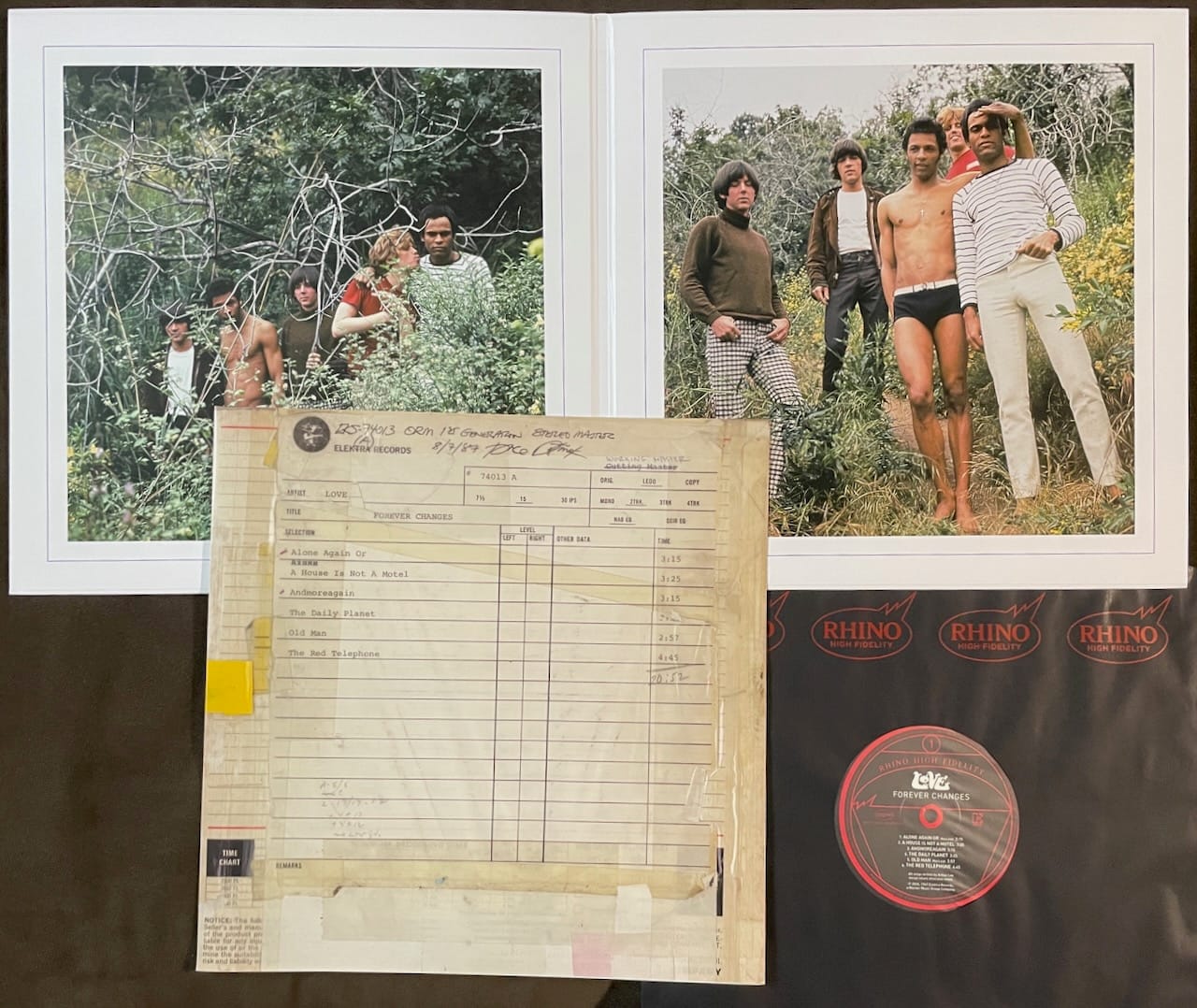
The new Rhino High Fidelity pressing was cut from the analog stereo master by Kevin Gray, and sales have already been put on pause by Rhino. As with all RHFs, it was advertised as a 180-gram pressing, but the initial run of copies was mistakenly pressed by Optimal Media at a lower weight (around 150 grams or so). The album will be available again as soon as corrected copies are pressed at the 180-gram weight, and customers who have already bought the mis-pressed copies will be given an opportunity to receive a corrected 180-gram disc once they are manufactured.
It is great to see Rhino address this mistake so quickly and effectively. It’s also a little silly, as the vinyl weight has virtually no bearing on the quality of sound. I have the 150-gram version here and it is every bit as good as any of my other 180-gram pressings from the Rhino High Fidelity series. Like I said, well done on Rhino for correcting this, as people should get what was advertised. But I doubt anyone will notice any difference in audio quality between the two pressings. It will take a couple of months before the 180-gram pressings are ready, so it’s looking like the main push for the Forever Changes RHF could in actuality land on the album’s 60th anniversary year after all.
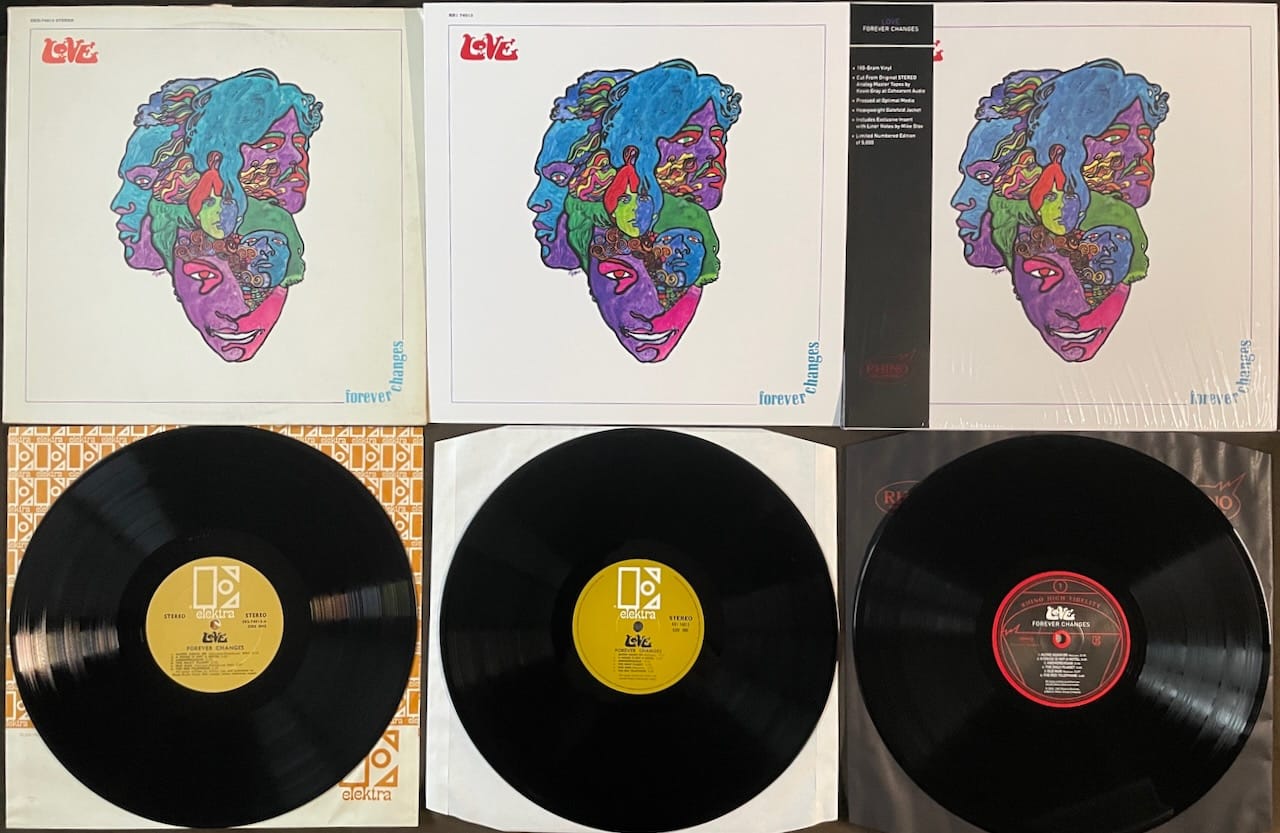
Be it 150 or 180 grams, the new RHF edition is a fantastic-sounding record. I was able to compare the new Gray cut to a 1968 Elektra pressing and the Chris Bellman cut from the 2025 box set (not his earlier Rhino cut from 2012, although I imagine they are pretty similar). All three are wonderful. The 1968 Elektra pressing, mastered by Ray Hagerty and pressed at Allentown Record Co., has freshness and bounce; there’s a sprung quality and naturalism to the instruments that works beautifully in the music’s favor. The sound is perhaps a bit more compressed than the other two masterings, with a focus on the mid-range and not an over-helping of bass, but with the acoustic backing, orchestral additions, and occasional nasal quality in Arthur Lee’s singing style, there’s an un-pushed, organic element that makes it feel like this music is emerging from the earth rather than constructed layer by layer in a recording studio. The drum break and lead guitar that come in toward the end of “A House Is Not a Motel” are positively electric, exploding out of the speakers like fireworks.
The Bellman 2025 pressing from the box is also excellent. This cut has some appealing grain and texture to it—such as during the opening track, guitarist Bryan MacLean’s “Alone Again Or,” where Nichols’s Spanish-style guitar, Michael Stuart-Ware’s drums, and the tremolo violins form a gorgeous, candlelit sound. There’s a bit more dimension and weight to everything, and a bit of added edge to the top end, noticeable during the mariachi trumpet solo. All around, it is a really great-sounding and pleasing listen, missing perhaps the naturalism of the Elektra but with its own sturdiness and appeal.
The RHF Kevin Gray cut has the most weight and size of the three. The bass is further extended, adding a nice anchor to the recording, only becoming muddled in a couple of places. The clarity and separation are really strong as well. The high end is surprisingly attenuated—not a huge detriment, but noticeable in direct comparison—and some of that indefinable magic from the Elektra cut is further reduced (that drum and guitar break on “A House Is Not a Motel,” for example, sounds fairly ordinary). But the flipside is that the RHF has a powerful, well-defined sound that emphasizes the structure of the arrangements and the individual timbres. “The Daily Planet” is particularly full of excitement, one of the best-sounding tracks on the disc.
In fact, this three-way shootout resulted in some minor tradeoffs between all three of my pressings, making it impossible for me to favor one over the other. If soundstage width and bass extension are things you value, it’s likely that the Kevin Gray cut will suit you well. I generally respond to those things, too, but I just don’t think they’re quite as important for Forever Changes, an album that’s meant to have a certain level of sneakiness and subtlety—as if things are coming out of the wallpaper. Still, the vibrancy and assertiveness of the RHF gives the album a well-roundedness and power that’s a notch above the other two pressings.
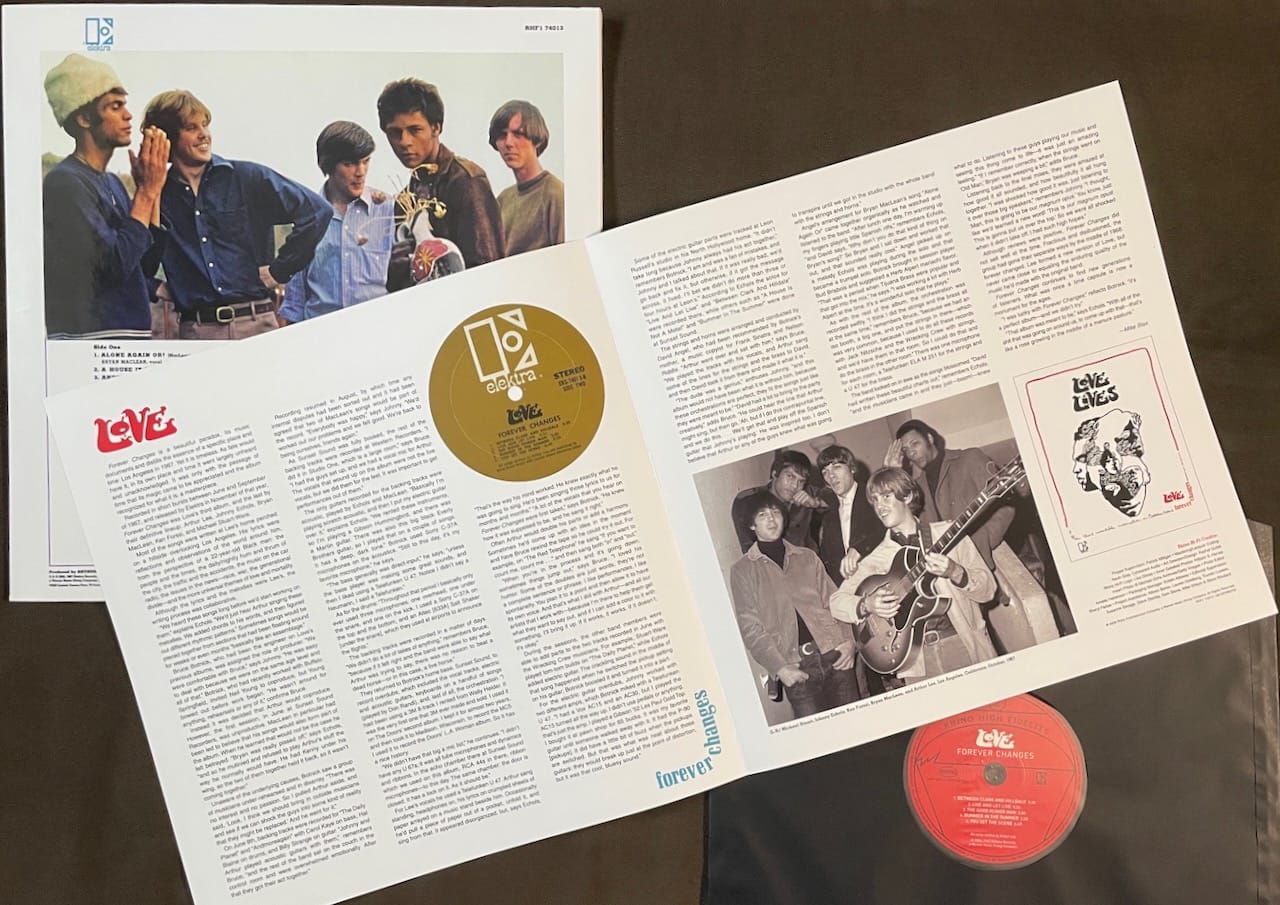
The Rhino High Fidelity pressing also comes with great liner notes by Ugly Things editor Mike Stax, who interviewed Johnny Nichols and album co-producer Bruce Botnick. The interview quotes are quite technical and gear-centric, detailing the microphones, amplifiers, instruments, and recording techniques used during the sessions. But Stax also provides worthwhile biographical and cultural context for the making of the album. The images of the tape boxes seem pretty straightforward and don’t reveal too many secrets, although interestingly, the words “Cutting Master” are crossed out and replaced with handwriting that says “Working Master.” (This suggests that this was not the flat album master—and it’s unclear whether any previous version has ever been mastered from the original master—but that perhaps that original master was lost or damaged and now this is the closest thing to it that exists. This is all guesswork and speculation, mind you.)
For all its impressive qualities, of course, the RHF Forever Changes is temporarily unavailable due to the vinyl-weight goof-up at Optimal. But as soon as the corrected 180-gram version is back on the market, this should be a go-to copy of Love’s masterwork.
Rhino High Fidelity 1-LP 33 RPM “180g” [sic] black vinyl
- New remaster of the stereo mix of Love’s 1967 album
- Jacket: Tip-on gatefold
- Inner sleeve: Black poly-lined paper with Rhino High Fidelity branding
- Liner notes, insert, or booklet: Four-page insert with essay by Mike Stax and images of the tape boxes
- Source: Analog; “Cut from Original STEREO Analog Master Tapes”
- Mastering credit: “Mastering/Lacquer Cutting: Kevin Gray, Cohearent Audio,” North Hills, CA
- Lacquers cut by: Kevin Gray at Cohearent Audio, North Hills, CA; “KPG@CA” in the deadwax
- Pressed at: Optimal Media, Germany
- Vinyl pressing quality (visual): A
- Vinyl pressing quality (audio): A
- Additional notes: With wrap-around obi. Vinyl weight is closer to 140 or 150 grams. Limited numbered edition of 5000.
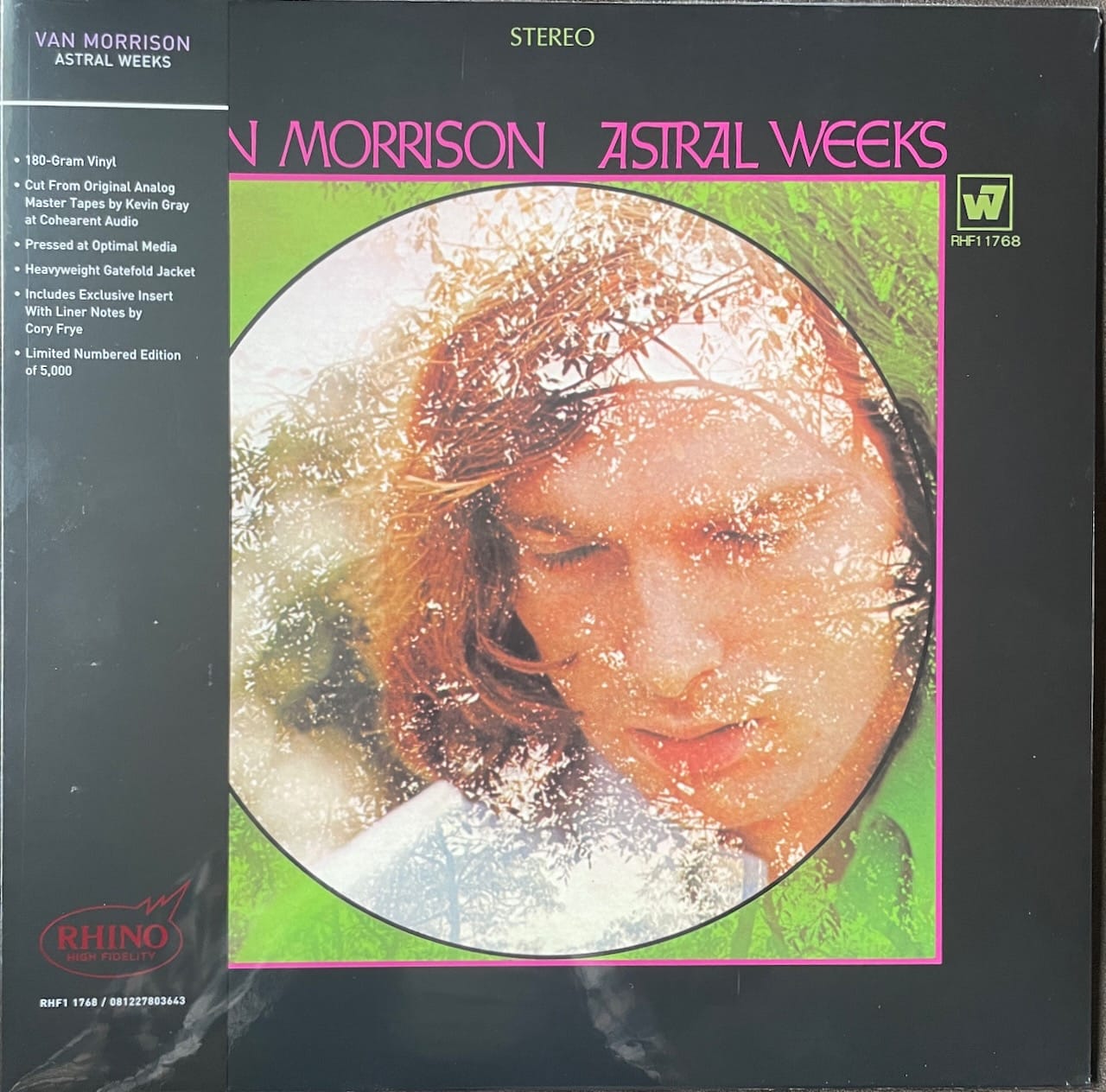
Van Morrison: Astral Weeks
I took my time sinking my teeth into the Rhino High Fidelity pressing of Van Morrison’s Astral Weeks, which was released D2C on Rhino’s website in July and which made its way to physical record stores at the end of October. There was a mini-storm of controversy surrounding this one, for two separate reasons, so maybe it’s for the best that I waited a few weeks for the heat to die down so that my opinion wouldn’t be influenced by the conversation. Or maybe what I have to say now is too little too late. Either way!
Astral Weeks’s origins are both well documented and shrouded in layers of myth. Ryan H. Walsh’s fascinating 2018 book Astral Weeks: A Secret History of 1968 is an excellent source to learn about the creation of the 1968 album. Walsh’s book provides a critical analysis of the album’s artistic merit threaded into a larger patchwork social history of Boston, Massachusetts—Van Morrison’s hiding place at the time, as well as ground zero for the failed Bosstown psych-pop scene and the home of cult leader Mel Lyman, whose clan grew out of the Jim Kweskin Jug Band. In short, Astral Weeks was an about-face from Morrison, who had fronted blue-eyed soul Belfast band Them and recorded some delicious candy-pop for Bang! Records, scoring big with “Brown Eyed Girl.” The shapeshifting folk-jazz of Astral Weeks had almost nothing in common with what Van Morrison had done up to that point but would newly set the parameters for the rest of his career.
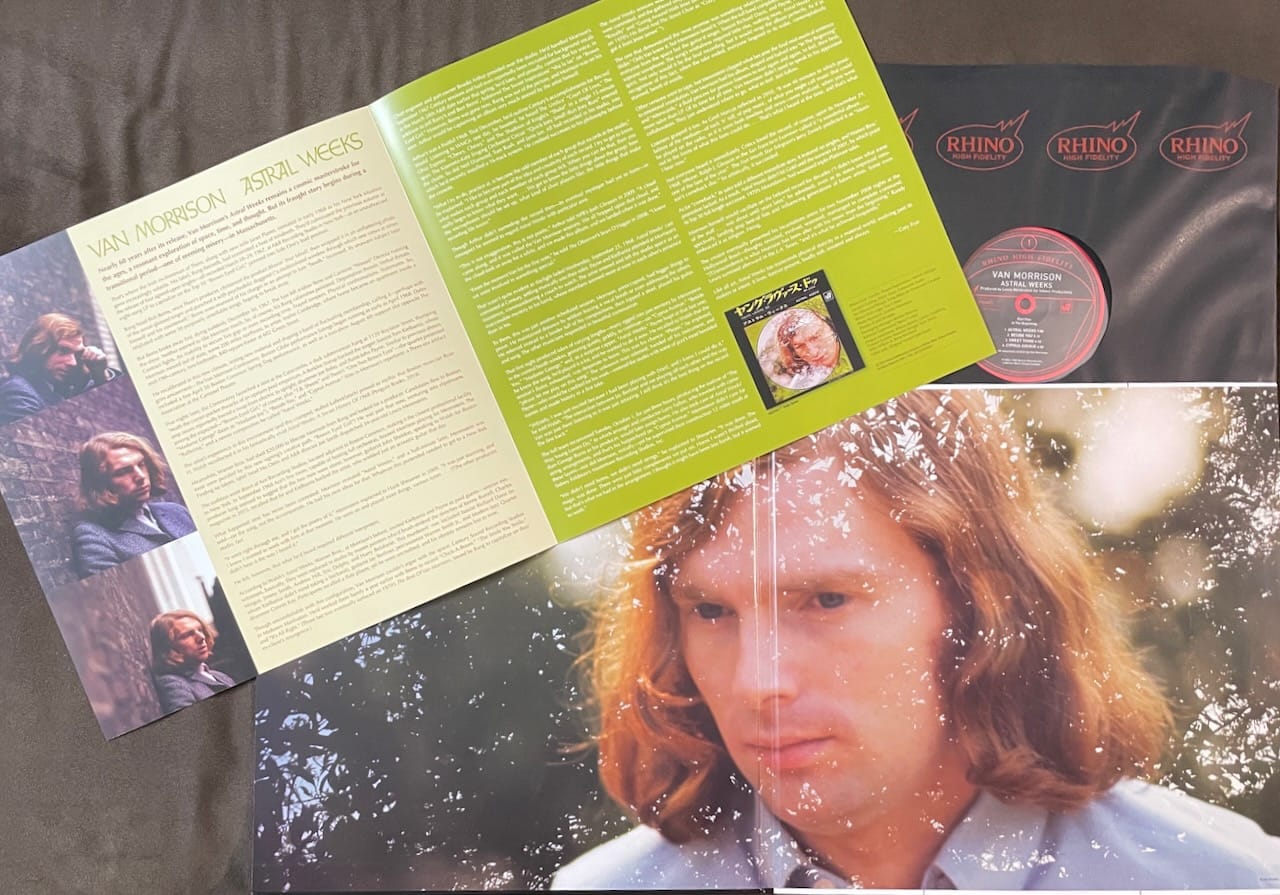
This new Rhino High Fidelity edition was cut from tape by Kevin Gray at Cohearent Audio, and it’s far from the only noteworthy vinyl pressing of Astral Weeks in the past few years. Most recently, in January, Analogue Productions released a double 45 RPM version that was cut by Matthew Lutthans from a 192/24 digital transfer of the original Warner Records master tape. The transfer was made some years ago when the master was still in usable condition—something it no longer was, Analogue Productions were told. True to their name, they would have preferred to release a version cut from analog tape, so Warner also gave them the option of cutting from an EQ’ed copy tape, but in direct comparison AP found the digital transfer to be more spacious and dynamic—a better-sounding source, in the end.
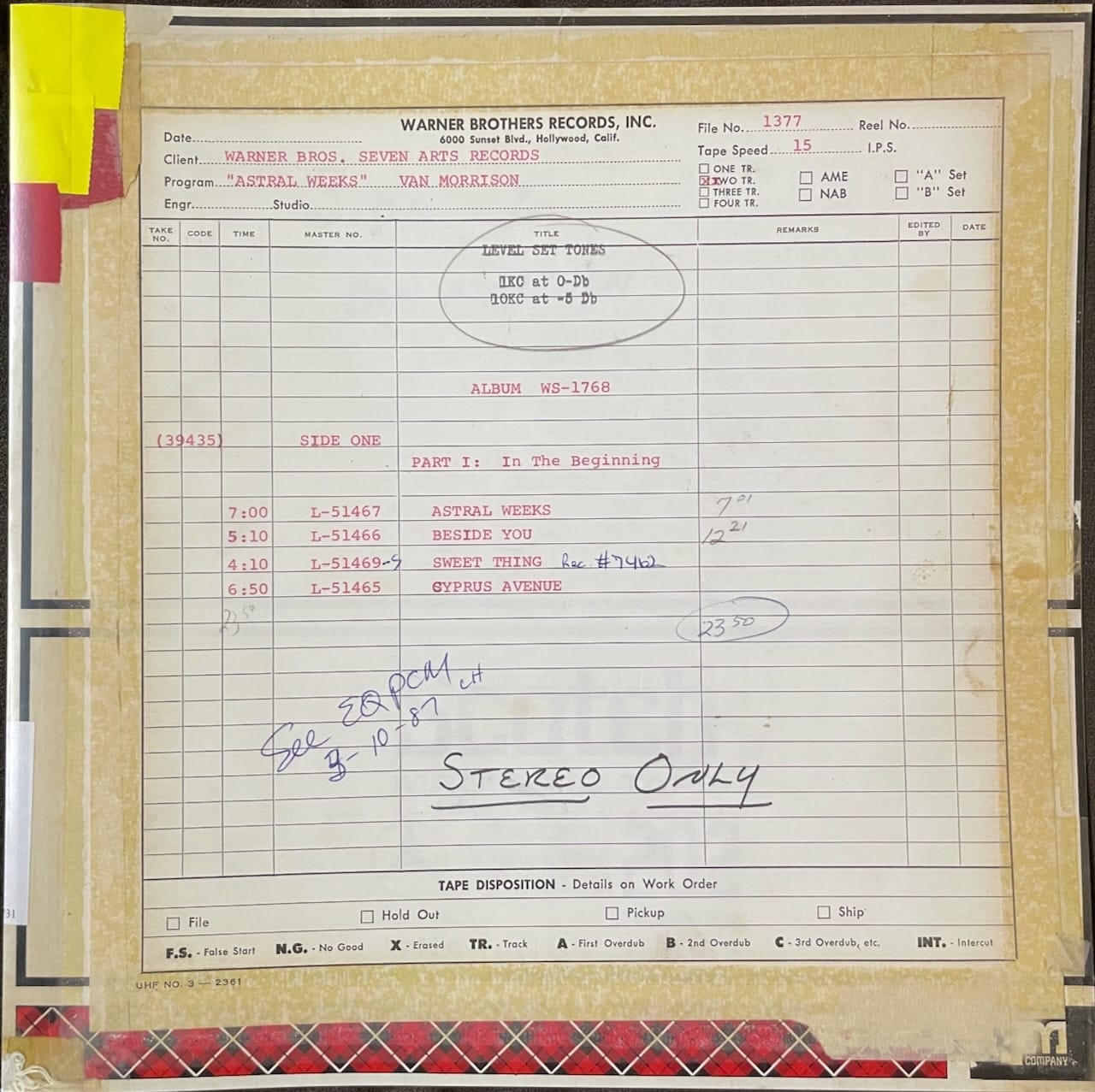
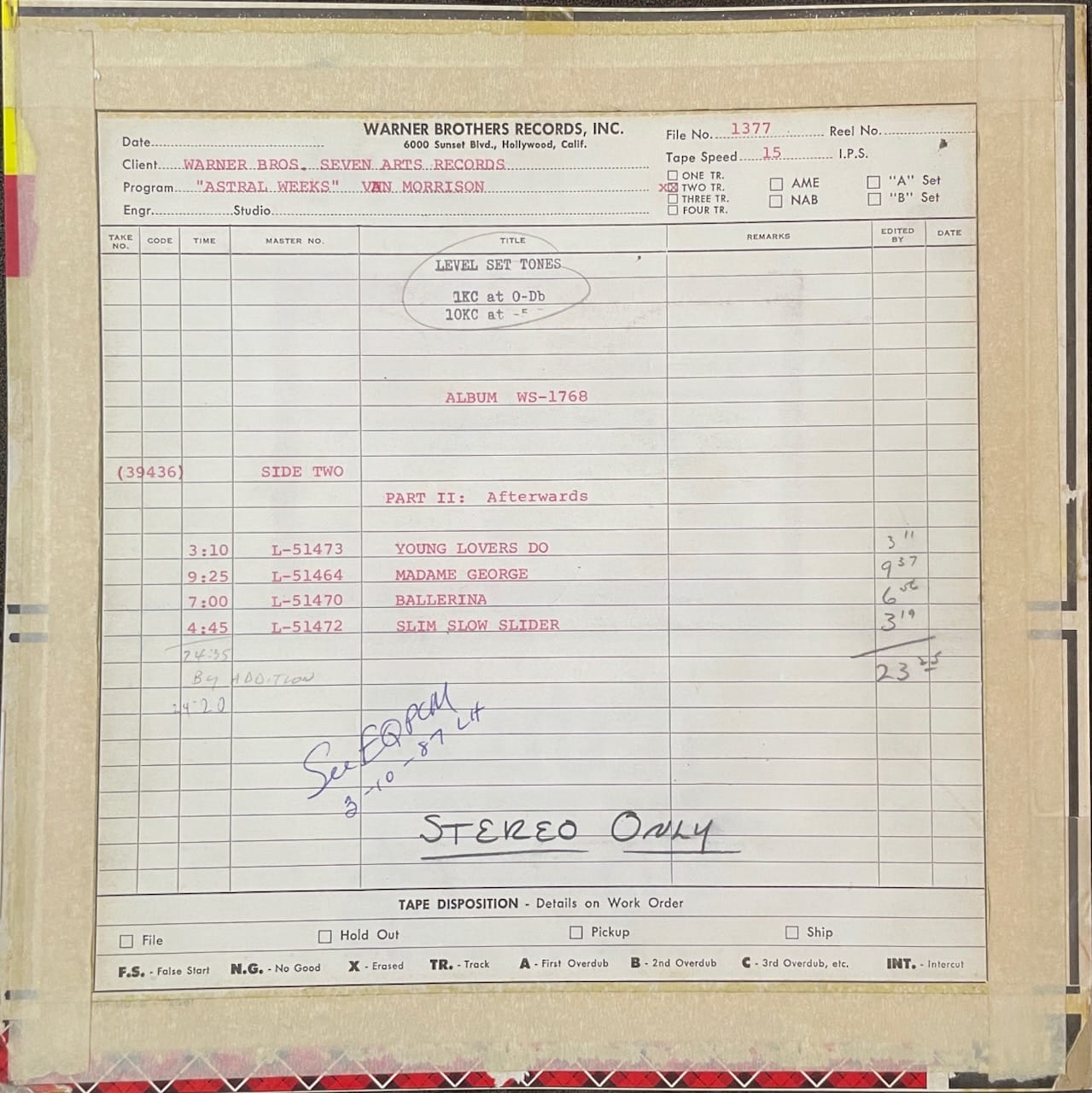
So when Rhino High Fidelity announced this version from “original analog master tapes,” it wasn’t clear which tape they were using. The “unusable” master, or the EQ’ed copy tape offered to Analogue Productions, or something altogether different? As with other RHF releases, images of the Side 1 and 2 tape boxes are included on the insert. Per audiophile journalist and vinyl expert Michael Fremer’s investigative work at his site Tracking Angle, his conversations with Analogue Productions’ Chad Kassem suggest that these particular tapes were not what Analogue Productions were offered for their double 45.
The tape box on the RHF insert looks like it could very well be the 1968 master tape, but it is undated, with the only actual date being a later scribble from 1987, likely added when this particular tape was transferred to digital for the first CD release. It does include a notation by the song “Sweet Thing” with the catalog number for the 1971 single for “Blue Money,” of which “Sweet Thing” is the B-side—so the tape, or its paperwork, is at least as old as that. For the purposes of this review, I am assuming this is indeed the 1968 master, and that Warner did not want, or was unable, to lend it to Analogue Productions at the time they needed it—for whatever the reason may be—but were able to use it for their own Rhino High Fidelity pressing. I don’t have any evidence that that is what actually happened, but it seems to me like the shortest way to get from point A to point B.
The other half of the controversy comes from Fremer’s review of this new RHF pressing, which he didn’t care for at all. His point of view is well-articulated and thorough; it’s an album he’s very familiar with, and he found this pressing lacking in the lower mid-range, without the warmth and beauty that he knew the album possesses. Fremer’s reputation is such that tentative buyers were likely to take heed of his critical pan, but there were also plenty of dissenters who have found the RHF Astral Weeks to be more than enjoyable.
My gut impression of the RHF was that it was a fine-sounding but not exceptional version of the album. It has a lot in its favor, with a broad soundstage, a laudable amount of clarity into the mix, and articulation provided to all of the different musical components. Morrison’s vocals in particular are pushed front and center, and some of the quirks of his vocal performance are more audible than on my older pressings. In fact, everything sounds quite crisp and clean and shiny and impactful. Everything sounds big.
But Astral Weeks has a subliminal magic that can’t quite be defined. It was something I was never able to draw out of my old CD, the first version of Astral Weeks I owned. It wasn’t until I listened to it on vinyl some years later that the music finally wove its spell on me, conjuring a foggy, oneiric Avalon, depicted in impressionistic patterns and green, dusky hues. And for whatever reason, the Rhino High Fidelity didn’t manage to send me there. The teleport machine malfunctioned.
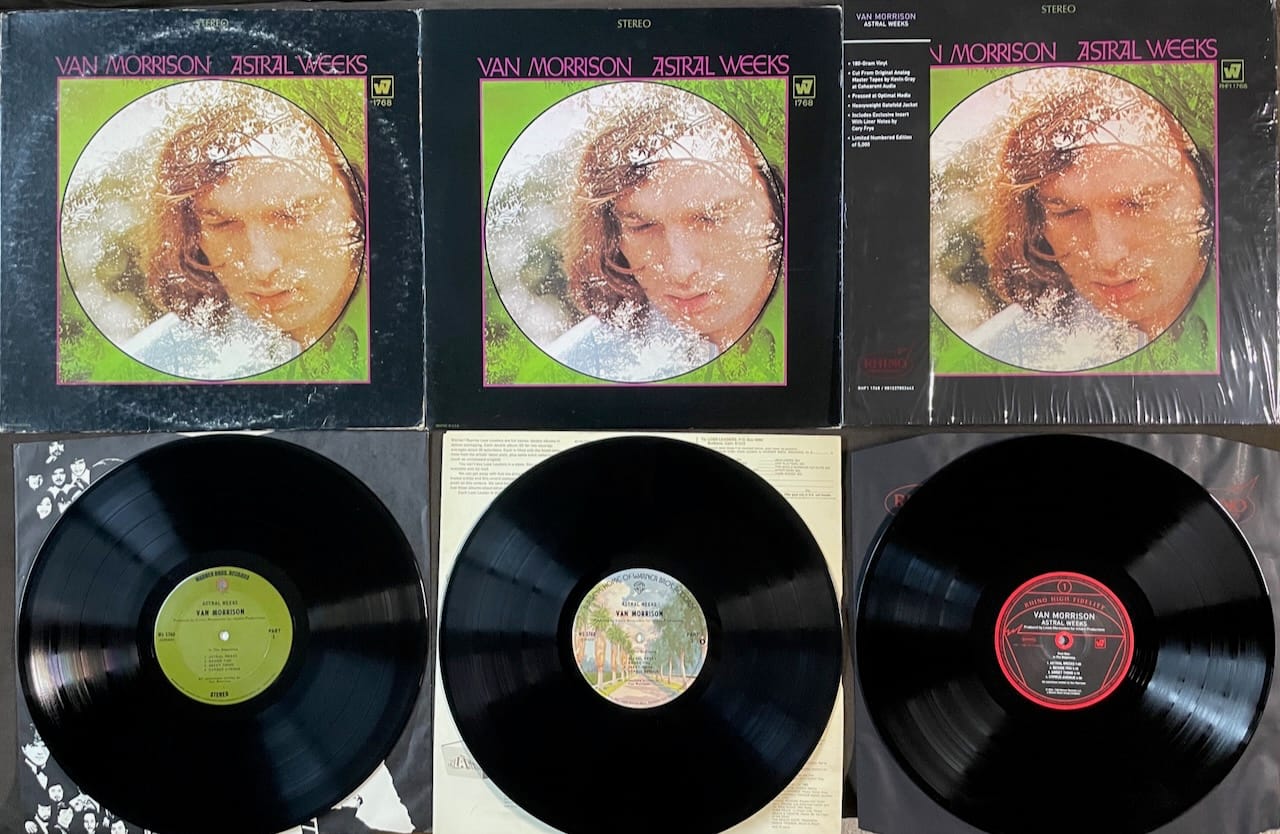
I have three older copies on Warner Bros. Records, all pressed at Columbia Records pressing plants, as Warner did not have a pressing plant of their own. I have a 1969 Santa Maria pressing (with -1B/-1B matrices), a 1970 Terre Haute pressing (with -1A/-1A matrices), and a 1975 Santa Maria pressing (again with -1B/-1B matrices). These were all sourced from the original lacquers that were cut in 1968; a 1C/-1C stamper was also provided to Columbia’s Pitman plant, making for a total of three. Some contend that the very first pressings—with the “W7” logo on the label and not the Warner Bros. shield—are the best-sounding. But because they used the same metalwork and the same pressing plants as the later represses, I can’t logically figure how there’s any substantive difference.
While I generally prefer Santa Maria pressings, my 1970 Terre Haute is the nicest sounding Astral Weeks of these particular three, perhaps due to the condition of the record and some other fairy-dust, such as stamper age, vinyl quality, and whatever else might have been in the ether when it was pressed. It is not as clear or as big as the new RHF pressing; parts of the mix are obscured, some of the blends are mushy, and the sharp focus on Morrison’s voice is measurably softened. The highs do not cut as sharply, and the bass does not spread out at the root of the sonic landscape as aggressively. There is murk. But it works.
And in fact, I think the clearer sound on the RHF draws attention to the rougher edges of the original recording in a way that is detrimental to the experience. Astral Weeks was recorded very quickly by pick-up musicians unfamiliar with both Morrison and the songs. There are tentative ad-libs and fluffed notes, impatient starts and biffed finishes; some musical lines are off-rhythm and some of the improvisations can get a bit sweaty. But on the 1970 Terre Haute—which I’ll use as shorthand for any of my three older pressings—everything is combined and seasoned just right. The “mistakes” simply don’t matter as much. Are sonic beer goggles involved, smearing the (aural) lens with Vaseline to put everything in soft focus, under a halolike glow? Maybe so, but in this case the unkemptness in the performances adds a level of spontaneity and camaraderie, as opposed to on the RHF, where it sounds a bit jarring.
Having said that, I found the RHF fascinating. The aperture is totally opened on the treble end—perhaps accounting for some of the lower mid-range scoop-out that Fremer mentioned in his review, although I heard it more as emphasis on the upper “air” and a deemphasis of everything else. Kevin Gray’s mastering allowed me to hear the individual performances much more clearly, taking me behind the curtain to see how the sausage was made. From an intellectual standpoint, I think it has quite a lot to offer, particularly for people wanting to do some sonic excavation and hear how all the pieces came together back in 1968. (Some of the 21st-century pressings, none of which I’ve heard, may already offer this quality in spades.) But this analytic approach does take away the magic. And it does not have the sprightly bounce of the older pressing—it sounds like it’s being mastered as a rock record, while Astral Weeks, as we know, is a bird of a different feather altogether.
I typically respond really well to these RHF pressings, and to Kevin Gray’s mastering in general. This is maybe only one of two that I can recall not being bowled over by, the other being Buckingham Nicks, for which I seem to be in the minority. There is a horn-like harshness to Morrison’s voice and a strident quality to some of the other featured instruments that suggest to me that everything is just goosed up a bit when it needs to be softened and emulsified; the sound needs to billow, to ebb and flow, and on the RHF it’s like it’s under a spotlight. Great for detecting details; not so great for touching the face of god, or whatever Morrison managed to do back in 1968.
Rhino High Fidelity 1-LP 33 RPM 180g black vinyl
- New remaster of Van Morrison’s 1968 album
- Jacket: Tip-on gatefold
- Inner sleeve: Black poly-lined paper with Rhino High Fidelity branding
- Liner notes, insert, or booklet: Four-page insert with essay by Cory Frye and images of the tape boxes
- Source: Analog; “Cut from Original Analog Master Tapes”
- Mastering credit: “Lacquer Cutting: Kevin Gray, Cohearent Audio,” North Hills, CA
- Lacquers cut by: Kevin Gray at Cohearent Audio, North Hills, CA; “KPG@CA” in the deadwax
- Pressed at: Optimal Media, Germany
- Vinyl pressing quality (visual): A
- Vinyl pressing quality (audio): A
- Additional notes: With wrap-around obi. Limited numbered edition of 5000.
Listening equipment:
Table: Technics SL-1200MK2
Cart: Audio-Technica VM540ML
Amp: Luxman L-509X
Speakers: ADS L980