Review: Tom Petty and the Heartbreakers

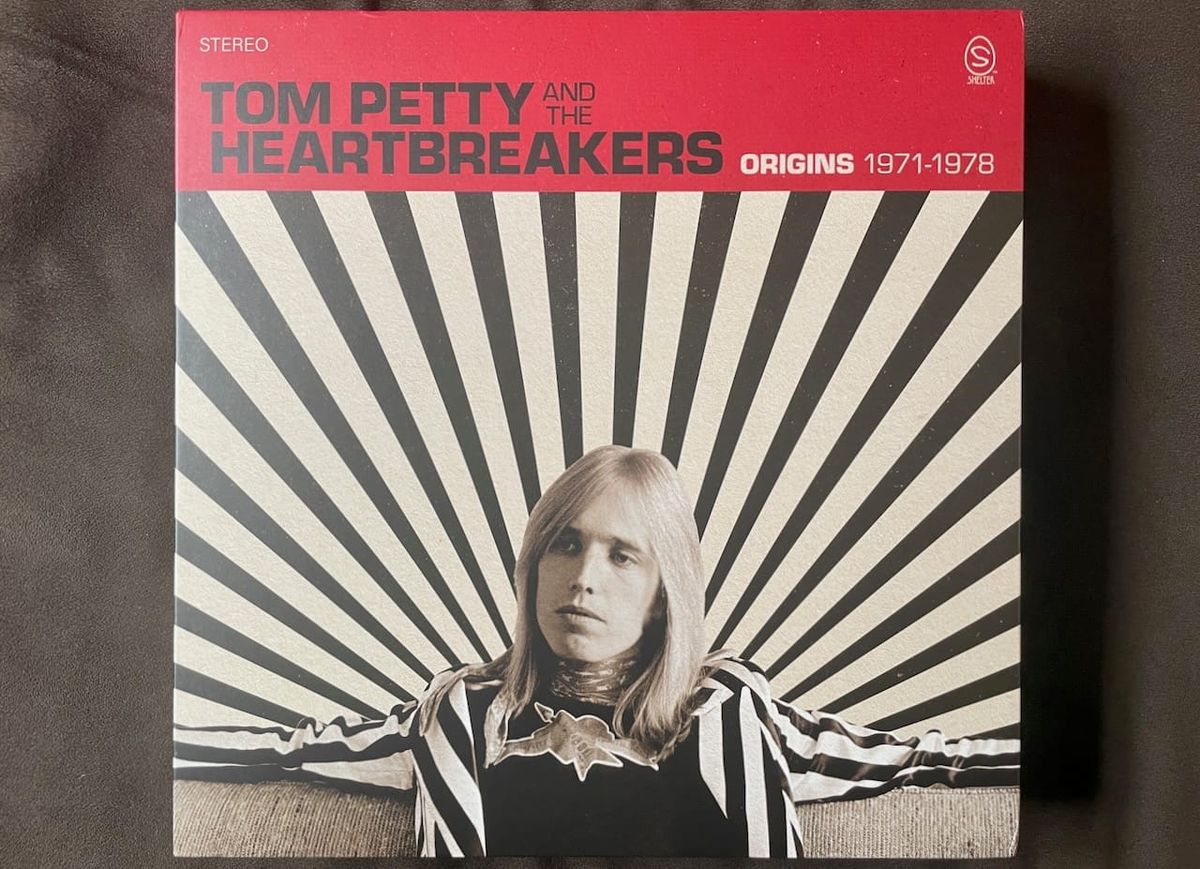
Origins 1971–1978 is four and a half LPs of killer vintage Petty.
I think any Tom Petty fan would agree that one of his greatest virtues was his consistency. From the 1976 self-titled debut album of his band, Tom Petty and the Heartbreakers, up through his unexpected death in 2017, Petty experienced very few dips or valleys in his recorded catalog and virtually never failed to deliver as a live performer. While some of his songs have endured better than others, the Tom Petty bar remained considerably high until the end—higher than most of his peers and virtually higher than any musician whose time in the spotlight lasted longer than a couple of decades.
It’s in that spirit that Origins 1971–1978 has been prepared by the Petty estate, with the participation of his family, the remaining members of the Heartbreakers, and Petty’s longtime archivist/engineer Ryan Ulyate, who restored and remixed the audio. The 5-LP box set covers the early years of the Florida-born, California-based musician and coincides with the 50th anniversary of the first Tom Petty and the Heartbreakers album, which seemed to come out of nowhere back in ’76 but was in fact the result of many years of toil and wrong turns.
Petty’s early band, Mudcrutch—which also included future Heartbreakers Mike Campbell on guitar and Benmont Tench on keyboards—were a bunch of Gainesville, Florida, kids who got signed to Shelter Records in 1974 under English producer Denny Cordell. Although they recorded more than an album’s worth of material at both Shelter’s home base in Tulsa, Oklahoma, and various Los Angeles studios, Mudcrutch only managed to release a lone 45 on Shelter and broke up just as Cordell had decided to drop them from the label. Cordell recognized the strengths of Petty’s songwriting, though, and kept him on as a solo act. More recordings ensued that featured Petty, Campbell, Tench, and the cream of LA’s session musicians. But Petty wanted to be in a band, and when he sat in on an after-hours jam with Tench, Campbell, and two other Gainesville expats, drummer Stan Lynch and bassist Ron Blair, he knew he had found the group to back him. Tom Petty became Tom Petty and the Heartbreakers, and the rest is history.
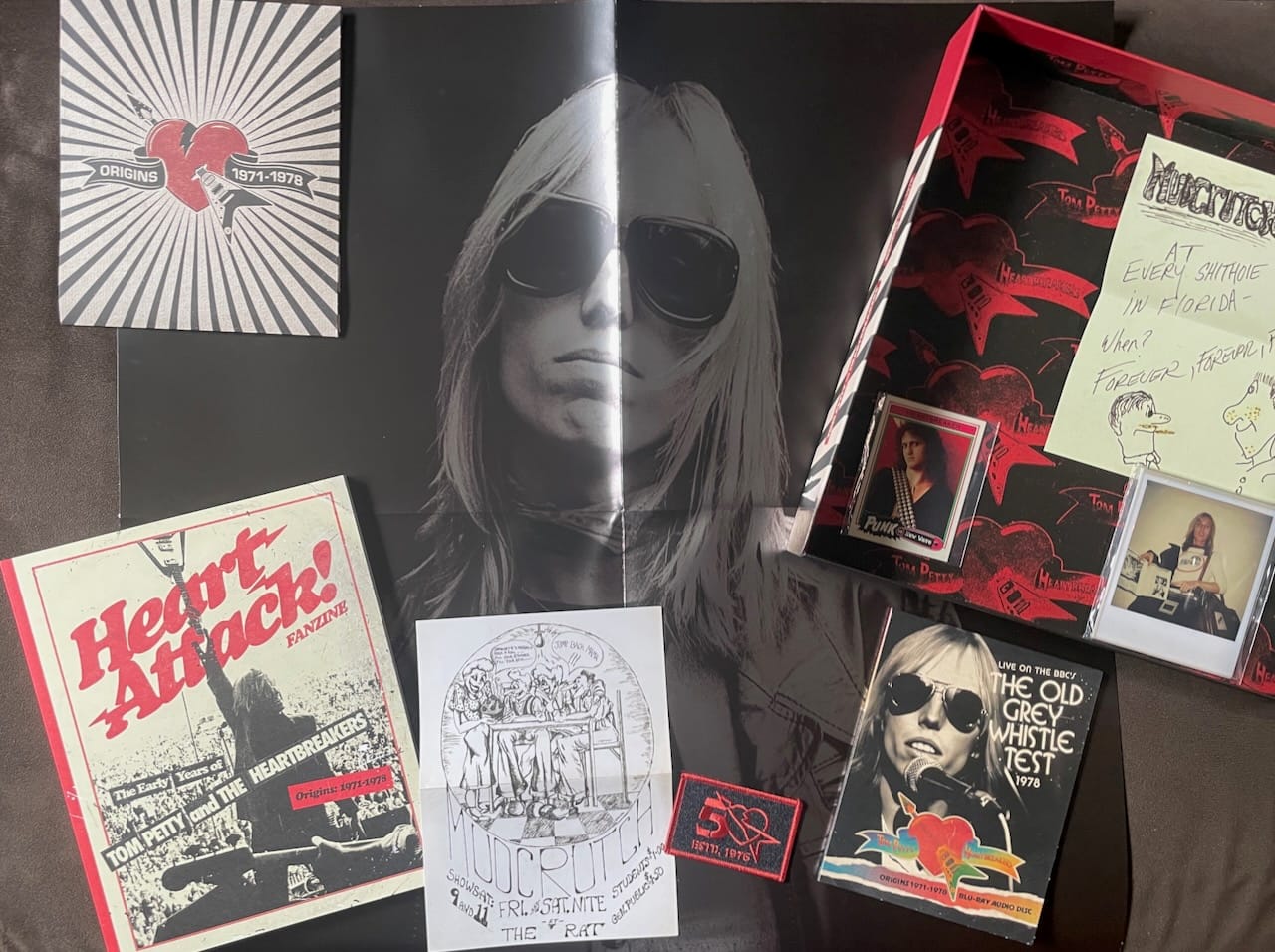
The Origins box contains a new LP of early tracks and outtakes called No Sleep Til L.A., as well as new remixes of the first two Heartbreakers albums, 1976’s Tom Petty and the Heartbreakers and 1978’s You’re Gonna Get It! A live radio session captured at the Record Plant recording studio in Sausalito, California, on April 23, 1977, makes up LP number four. And the fifth LP is single-sided, including five more pre-Heartbreakers tracks and a laser etching on the reverse side. The box also includes a Blu-ray with all of the audio in stereo, 5.1, and Dolby Atmos, and a DVD containing the Heartbreakers’ 1978 live performance for the BBC’s The Old Grey Whistle Test.
It’s important to know, going in, what this set is not. It’s not a comprehensive, scholarly interrogation of the period, nor is it a complete dumping out of all of the unheard archival material. It’s not an official documentation of the ups and downs of Mudcrutch’s ill-fated tenure at Shelter, nor is it a thorough accounting of Petty’s pre-Heartbreakers stab at a solo album. Rather, it’s a surprisingly tightly focused survey of Petty’s songwriting and recording career up through the end of his time with Shelter Records in 1978, spotlighting the highlights and assembling a consistent, high-quality listening experience. There will be grumbles about what’s missing or what could have been done differently (I have a couple of grumbles of my own, which I’ll save for later). But accepted at face value, it’s a scorching, vital blast through this period, centered around the No Sleep Til L.A. LP, which is designed as an all-killer, no-filler album that cherry-picks the best from the era and is designed to sit on the shelf alongside all of Petty’s other albums.
The new remixes of the first two Heartbreakers albums are surprisingly essential, too. Those albums rarely get mentioned in the same breath as Petty’s high-water marks (1979’s Damn the Torpedoes, 1989’s Full Moon Fever, or 1994’s Wildflowers, for instance), but the new Ulyate remixes makes a case for them to be considered as some of the best rock ’n’ roll albums of their day, or any day. Petty and the Heartbreakers, especially during these first years, sat noticeably apart from the day’s prevailing musical trends even as they were aligned with many of them. They were Southern boys making their way through the glitzy glam of Hollywood, and they were rock classicists breaking at the same exact time as punk, power-pop, disco, and new wave. They had chops, but they kept their songs tight, and Petty was a frontman whose influences were as disparate as Elvis Presley, Chuck Berry, and Bob Dylan. In retrospect, Tom Petty and the Heartbreakers make perfect sense as a near-centrifugal force located somewhere near the heart of classic rock, but at the outset they must have seemed like odd ducks indeed.
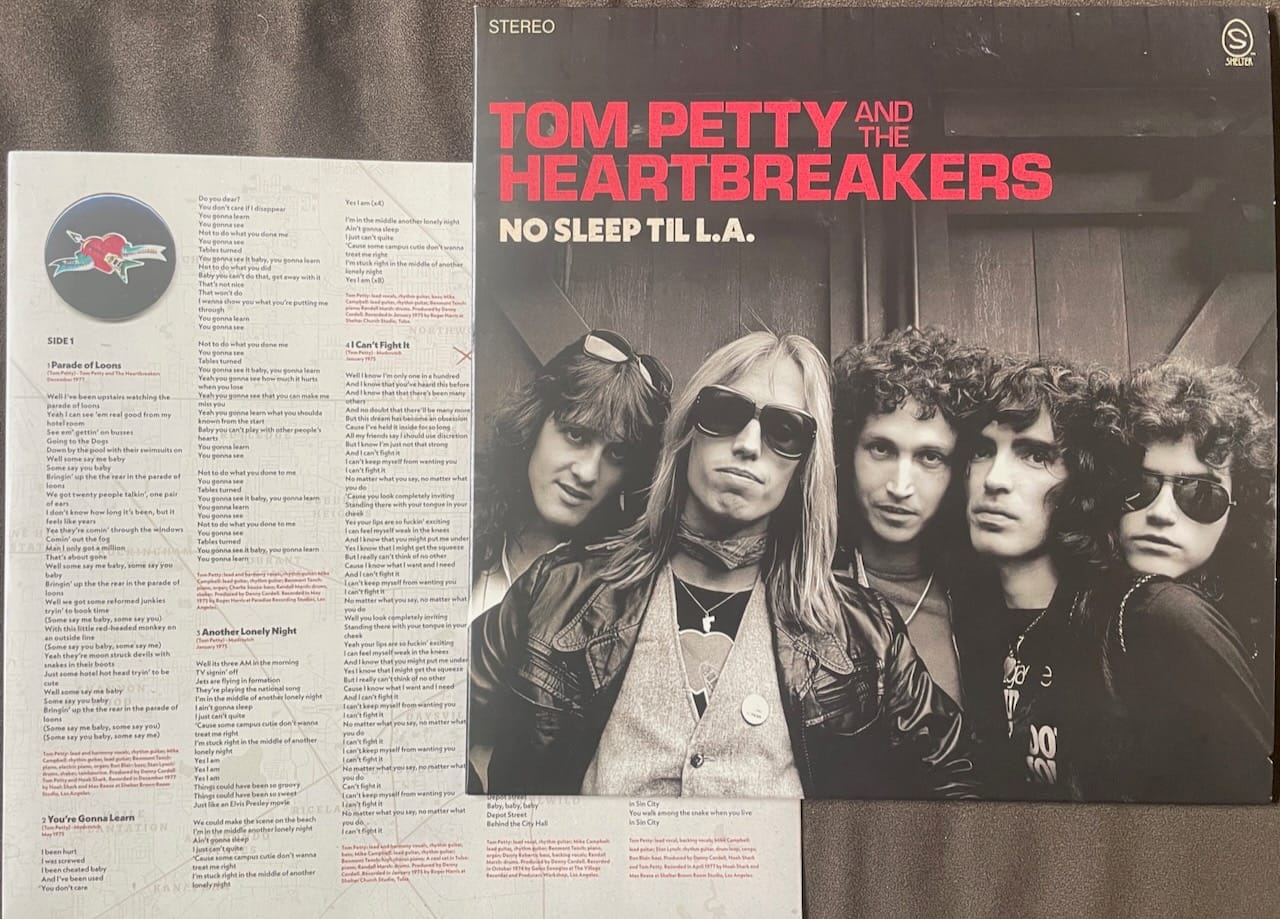
No Sleep Til L.A. has nine Mudcrutch songs, two Heartbreakers outtakes, and one track from the aborted Petty solo record; four of the 12 tracks previously appeared on the 1995 Playback box set (in different mixes). No Sleep is the only LP that’s currently available outside the box separately, and it should be a worthwhile pickup for any Petty fans who need to keep their end-of-year spending in check or want to avoid box-set bloat. It contains some really marvelous material—the kind that makes you wonder how on earth it managed to stay in the vaults for so long.
It kicks off with the one-two punch of “Parade of Loons,” a loveably nasty You’re Gonna Get It! outtake, and “You’re Gonna Learn,” a reggae-tinged heroic last gasp from Mudcrutch dating from just before the band fell apart. The rest of the album falls in line after this strong start, with the bluesy stroll of “Another Lonely Night” and the country cornpone of “Up in Mississippi Tonight” showcasing the other sides of the star-crossed Mudcrutch. “Sin City” is a psychedelic studio goof from Petty and Heartbreakers drummer Stan Lynch, but it manages to fit in well alongside some incredibly strong early songwriting from Petty in the Mudcrutch songs “Long Way,” “Wild Eyes,” and “Unheard of Kind of Hero”—that last one being essentially a Petty solo performance strummed on acoustic.
All told, it makes for a damn fine Tom Petty album, although it’s mostly Mudcrutch tunes and I can’t help but wonder if they had rejiggered it just a tiny bit so that it became the fabled “lost” Mudcrutch album. (That band had another lead singer and two other songwriters in addition to Petty, though, so such an undertaking might be a bit more complicated.) The Petty team opted to frame it as a Petty/Heartbreakers record, and the results are really strong, so perhaps I shouldn’t pick at it too much. As I said, the album is a worthy addition to the existing Petty catalog, and the array of musical styles it exhibits—rock, country, reggae, folk, and even a bit of soul—are impressive without being schizophrenic, as everything is anchored by Petty’s incontestable songwriting.
The remixes of the two Heartbreakers albums are astonishingly good as well, and Ulyate has found the sweet spot where the sound is richer, fuller, and clearer but the changes remain entirely tasteful. His tweaks are subtle but unmistakeable; at no point do you feel like you’re listening to a different album, nor do you feel like your precious memories are being futzed with. I’ve always loved both of these albums, but I’m now convinced they just might be five-star masterpieces. The debut had two instant classics, “American Girl” and “Breakdown,” of course, but has lots of other contenders as well, including the moody pop of “The Wild One, Forever,” the agitated sizzle of “Fooled Again (I Don’t Like It),” and the gentle moonbeam saunter of “Mystery Man.” And You’re Gonna Get It! might be even more jam-packed, with the excellent “Hurt,” “No Second Thoughts,” and title track every bit the equals of the familiar hits, the jagged “I Need to Know” and the warm, Byrds-y “Listen to Her Heart.”
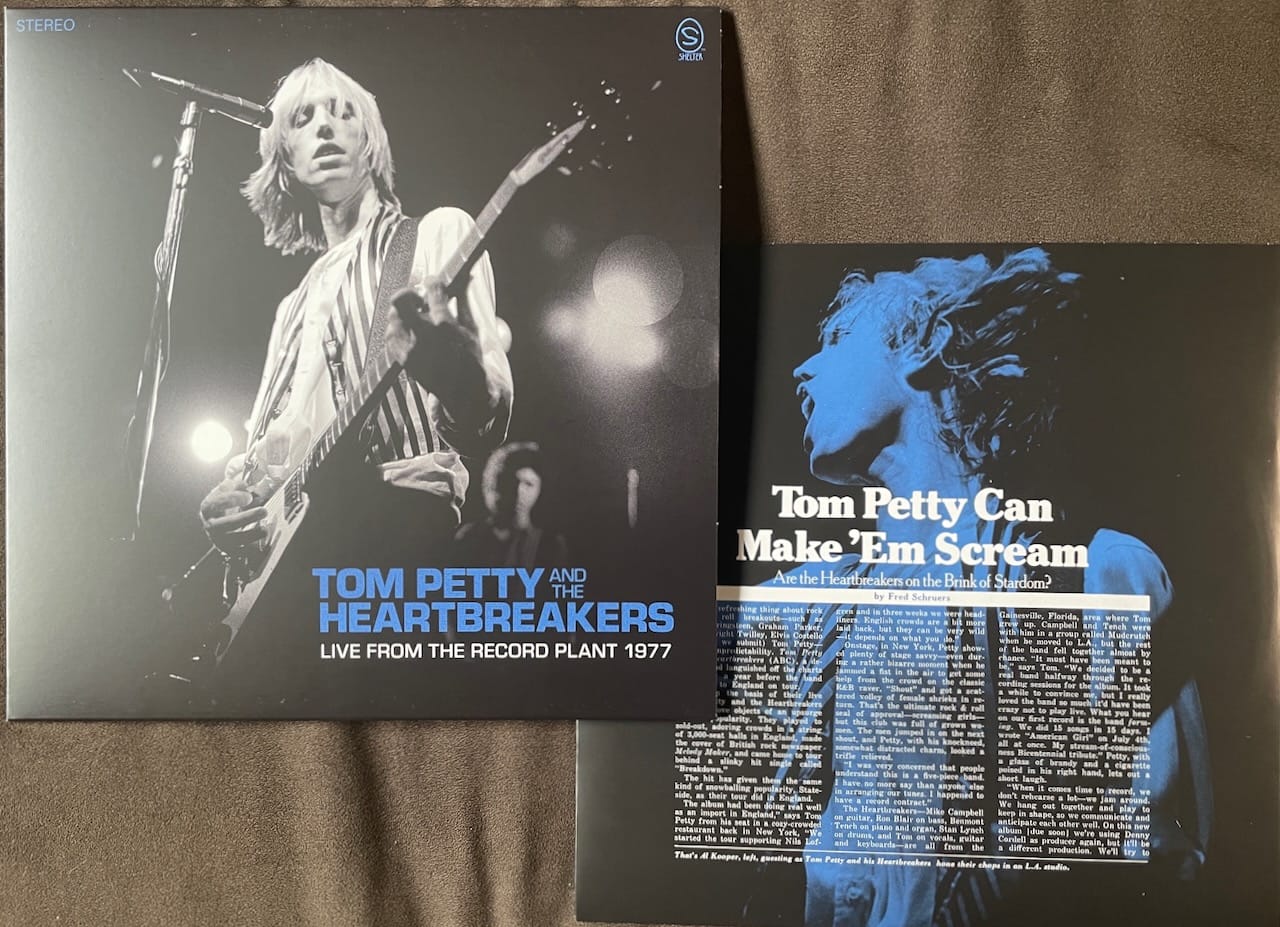
The live disc, Live from the Record Plant 1977, finds the band riding high off the release of their debut, on a tour that got them much acclaim if not a huge audience—not just yet, anyway. Featuring a brief guest spot from Al Kooper, the set includes covers of Chuck Berry’s “Jaguar and Thunderbird” and the King Cole Trio’s “Route 66” (by way of the Rolling Stones), as well as non-album tracks like “Surrender” and “Dog on the Run” (a different song from what ended up on 1985’s Southern Accents) and, of course, high-energy selections from the debut. It’s a great performance, full of puckish energy and punk-like sneer, but also upholding the line of tradition for old-fashioned rock ’n’ roll, 20-some-odd years at that point. And the sound is superb, coming across far better than most radio sessions of the era, likely due to the venue itself (the recording studio where chunks of Rumours and Songs in the Key of Life were tracked) and Ulyate’s superlative remixing.
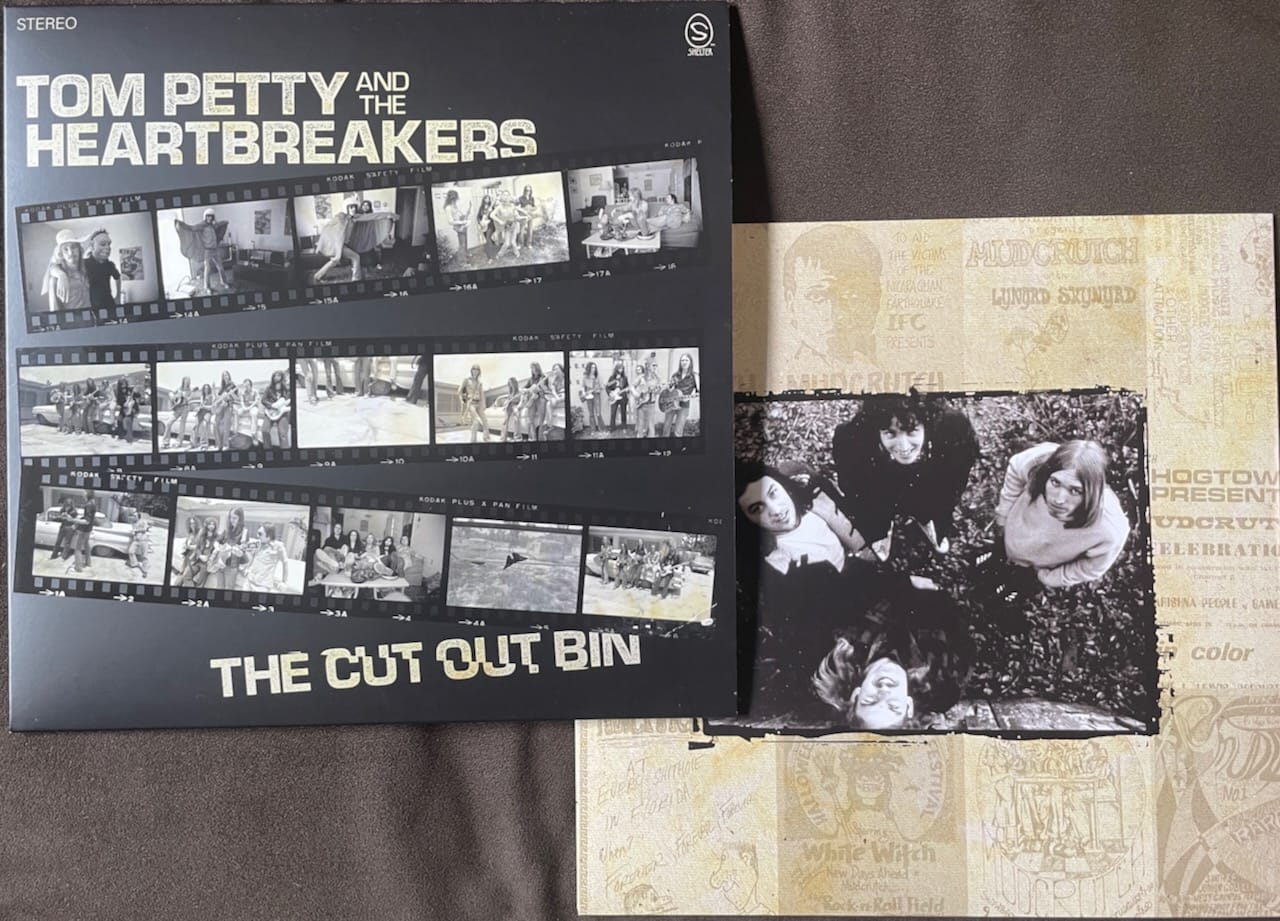
The final disc, the one-sided The Cut Out Bin, sweeps up five more studio outtakes, all of which were perhaps a little too offbeat to have meshed into the careful design of No Sleep Til L.A. (Two of them have been released before: Their cover of Solomon Burke’s “Cry to Me” was on Playback, and “Lost in Your Eyes” was on 2018’s An American Treasure set, although these are new mixes by Ulyate.) “Save Me” and “Lost in Your Eyes” come from the solo Tom Petty sessions and are blatantly commercial pieces that position Petty a little more toward shiny R&B-pop than nitty-gritty rock ’n’ roll. They’re good enough songs for anyone else—you can imagine Stevie Nicks doing some nice things with “Save Me”—but don’t quite sound right for Petty. And the three Mudcrutch songs are a bit ganglier, goofier, and more generic than the more striking songs that appear on No Sleep. Still, the mini-LP makes for an upbeat, fun listen.
The box also includes an 88-page book that’s meant to resemble a fanzine but is something much more substantial. It’s in actuality a well-curated scrapbook, stuffed to the gills with photos and press clippings, with room for track-by-track annotation from Bud Scoppa and an eight-page biographical essay by David Fricke, both of which feature extensive quotes from members of the Heartbreakers. The book is a superb object in its own right and a refreshing change from the overly glossy 12-by-12-inch booklets that sometimes end up in these kinds of sets. I have not fully investigated the multichannel mixes on the Blu-ray, but the DVD of the Old Grey Whistle Test performance from ’78 is more than solid, providing a crucial visual component to the Heartbreakers’ rise.
Everything here is really good, so I’ll carve out a little spot now to kvetch about what’s not here. I think making The Cut Out Bin a one-sided LP was a bad choice; there was more than enough material to fill out the remaining side with music. (In an interview with Billboard, Petty’s daughter Adria says that there was “five or six times” as much unreleased material to choose from—dozens of tracks, in other words.) One easy option would have been to slot the one-sided Official Live ’Leg promo LP on the flip. This 1976 live recording was included in the 2009 vinyl pressing of The Live Anthology box set, but it’s not any of that set’s repressings, so its inclusion here could have made a lot of fans happy. I suspect they were trying to avoid putting multiple versions of the same song across the five LPs, and all but one of the Live ’Leg tracks appear in the Record Plant set, so perhaps it was nixed for that reason. (“Surrender,” a great studio outtake from the first album, is also absent from this set, although a live version appears on the Record Plant disc.) I would have also liked to have seen more material on the DVD, which runs a scant 40 minutes. The Heartbreakers’ June 1977 Rockpalast performance would have made a perfect addition, as would their appearance on Top of the Pops from a couple of days later.
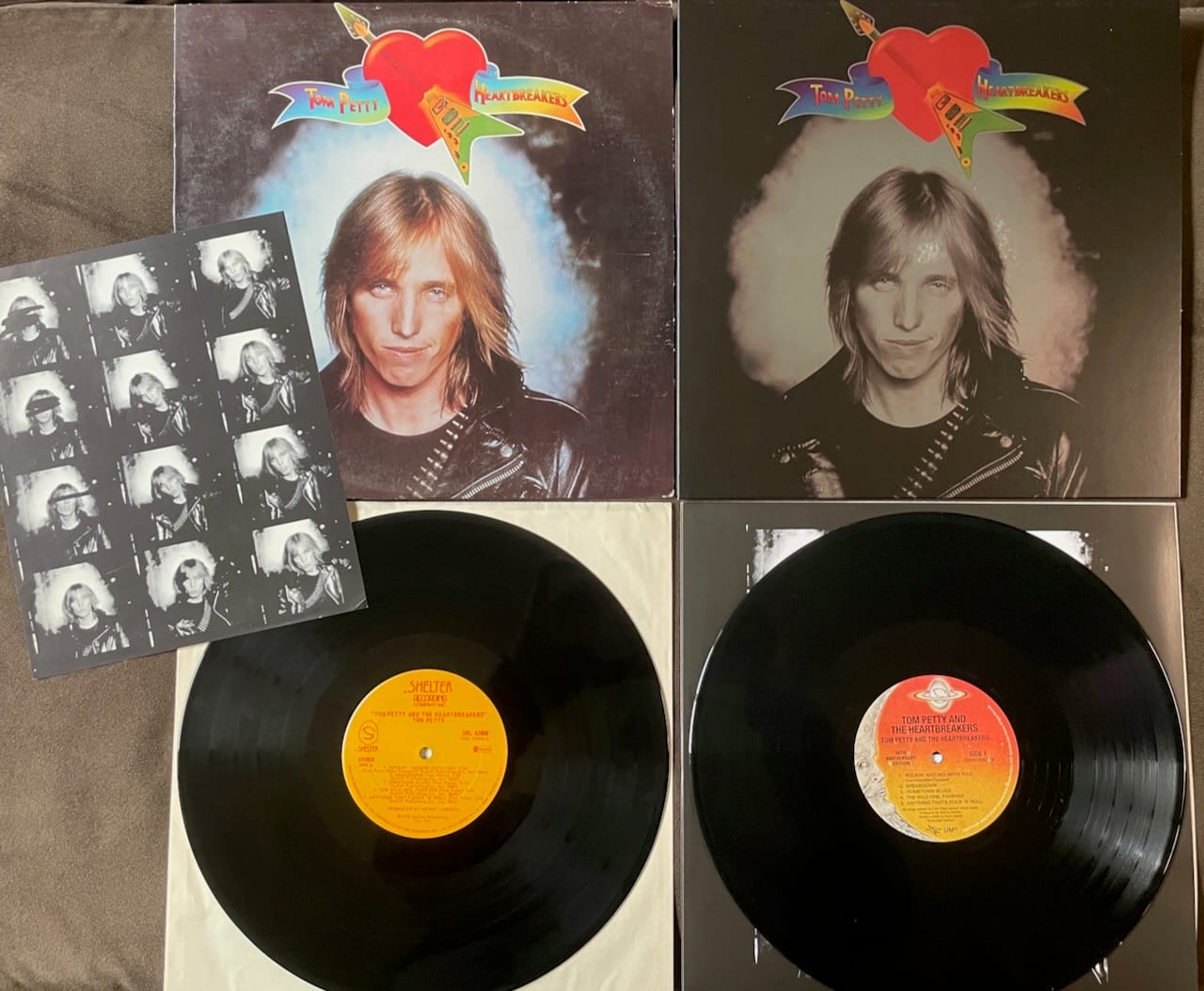
But the music that’s here is superb, and the design and packaging are really appealing and fun to pore over. As I mentioned, Ulyate’s remixing efforts are dynamite, and the vinyl mastering, done from a digital source by Chris Bellman, is excellent. Everything is full and rich, with superb clarity, a massive soundstage, deep but sensible bass, and no screechiness on the high end. While the mixes are different, I did a cursory comparison of the two Heartbreakers LPs to my Shelter Records original pressings, which were both cut by Ken Perry at Capitol Mastering at Hollywood and Vine, and pressed at Columbia’s Santa Maria pressing plant. Those are generally great-sounding records with a few peculiar stretches, such as some minor sibilance on “American Girl,” and a near bass-less, heavily compressed mix of “Baby’s a Rock ’n Roller” that’s virtually all transistor-radio treble. The new Ulyate/Bellman versions are every bit their match, and in some cases are clear improvements. (Note: The much-touted “extended” mixes are actually not much to crow about, as they are simply mixes without the fadeouts, allowing us to hear the musicians come to a full stop. They’re nice, but nothing to get too dizzy about.)
Sadly, the vinyl itself had some problems in my case. The discs were pressed at GZ Media (they also bear markings from RTI, who I am guessing did the plating), and they all come inside smooth card sleeves, not poly-lined inners. I experienced repeating clicks and other bits of noise on most of my discs, some of which went away after ultrasonic cleaning but a lot of which did not. Almost all of the LPs were dished to certain degrees as well—nothing that my flattener couldn’t handle, but still worth mentioning. My No Sleep Til L.A. LP was the worst of the bunch: The vinyl was pretty badly warped—much worse than the other discs, although still flatten-able—and a chunk of dirt or a splinter of wood or something was caught inside the sleeve with the disc, resulting in scratches across a section of the surface. The debris then embedded itself into the record, creating a locked groove, although I was able to clean out the debris and fix that problem. Unfortunately, the scratches remained and created audible clicks for about two minutes of playing time. I think all of this could have been avoided by using a different pressing plant and adding poly-lined sleeves to the package. It’s really too bad because the box is otherwise incredibly attractive and well-put-together, and the Bellman mastering is aces.
These issues were irritants, but in all honesty, they weren’t enough to seriously detract from my enjoyment of Origins 1971–1978, which boils down to a spirited collection of fierce, fantastic rock ’n’ roll. Most of the early roads not traveled are revealed here, but under the careful curation of the Petty team, they all sound of a piece with the man’s existing canon and representative of his high level of quality. It’s to Petty’s credit that once the Heartbreakers were off and running, he put most of this material in the rearview mirror—he could have easily drawn from this well and gotten a couple more albums out of it. But the fact that he kept moving forward is also the reason why these early tracks work so beautifully: Like many great artists, Tom Petty’s biggest thrill was in the act of creating something new, and his songs, simple as they might seem, were never tossed off but contained hidden depths and complexities that made them evergreen. Oh yeah, all right.
UMe 5-LP 33 RPM 180g black vinyl
- Four full-length LPs and a one-sided fifth LP containing remixes of the first two Tom Petty and the Heartbreakers albums, a 1977 live show, and studio outtakes from Mudcrutch, Tom Petty solo, and Tom Petty and the Heartbreakers.
- Jackets: Matte-finish box with lift-off top; records are inside direct-to-board single-pocket sleeves with some spot varnish and foil accents; the two Heartbreakers albums have a metallic sheen
- Inner sleeves: Card sleeves with artwork and track info
- Liner notes, insert, or booklet: 88-page “fanzine” with photos, press clippings, track-by-track annotation by Bud Scoppa, and essay by David Fricke
- Source: Digital
- Mastering credit: No credit on LPs 1, 4, and 5; the two Heartbreakers remix albums were “mastered by Chris Bellman at Bernie Grundman Mastering, Hollywood, CA”
- Lacquers cut by: Chris Bellman at Bernie Grundman Mastering, Hollywood, CA; “CB” in the deadwax
- Pressed at: GZ Media, Czechia
- Vinyl pressing quality (visual): B (C- for No Sleep Til L.A.)
- Vinyl pressing quality (audio): B- (clicks and ticks on all the discs)
- Additional notes: Comes with a Blu-ray, DVD, 24x36” poster, and pouch containing Polaroids, trading cards, two mini-reproductions of gig flyers, and sew-on patch.
Listening equipment:
Table: Technics SL-1200MK2
Cart: Audio-Technica VM540ML
Amp: Luxman L-509X
Speakers: ADS L980