Reviews: Mott the Hoople | Doug Sahm

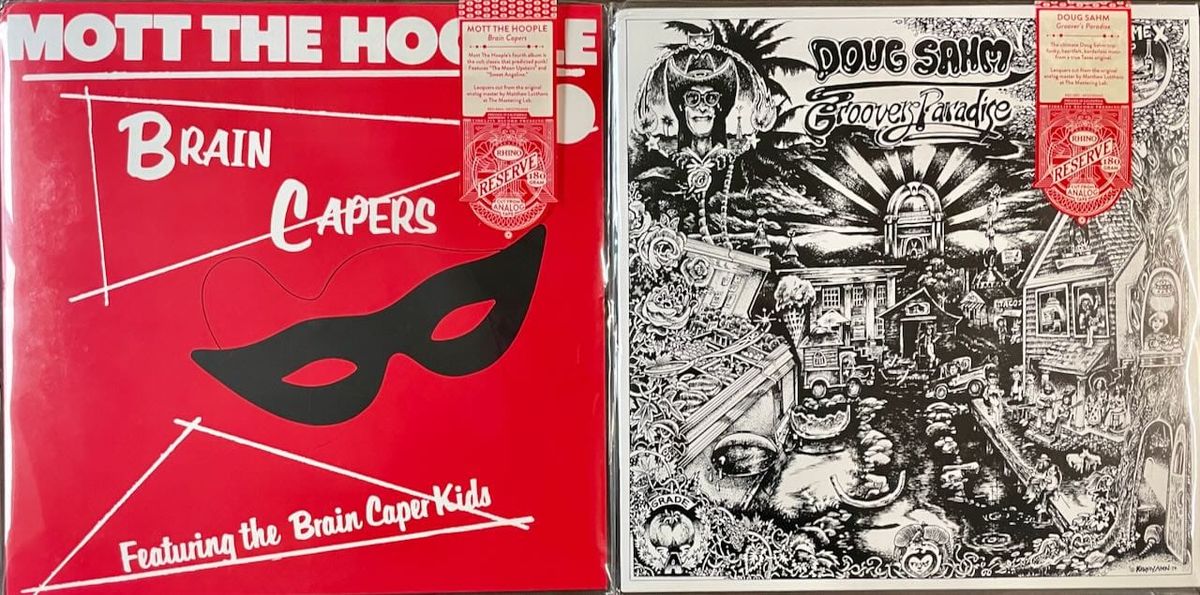
Two new Rhino Reserves present analog cuts of lesser-known ’70s greats.
This October—or, should I say, Rocktober—we’re getting a windfall of new Rhino Reserves. As part of their monthlong Rocktober campaign, Rhino is releasing a baker’s dozen of reissues in their terrific Reserve line, boasting new masterings by Matthew Lutthans (in most but not all cases) and premium pressings from Fidelity Record Pressing. This Rocktober batch of Reserves includes albums from the ’70s, ’80s, and ’90s, but today I’m getting into a pair of the ’70s reissues, from artists who didn’t quite become household names but are every bit the equal of their better-known peers.
- Mott the Hoople: Brain Capers
- Doug Sahm: Groover’s Paradise
The other Rhino Reserves already released for Rocktober thus far are Randy Newman’s Sail Away and Good Old Boys and Nada Surf’s High/Low. And this Friday, eight more will join them: the B-52s’ Cosmic Thing, the Chills’ Submarine Bells, Alice Cooper’s Goes to Hell, the Cramps’ Flamejob, Buddy Guy & Junior Wells’s Play the Blues, Porno for Pyros’s Good God’s Urge, and two from Todd Rundgren: Runt and The Ballad of Todd Rundgren.
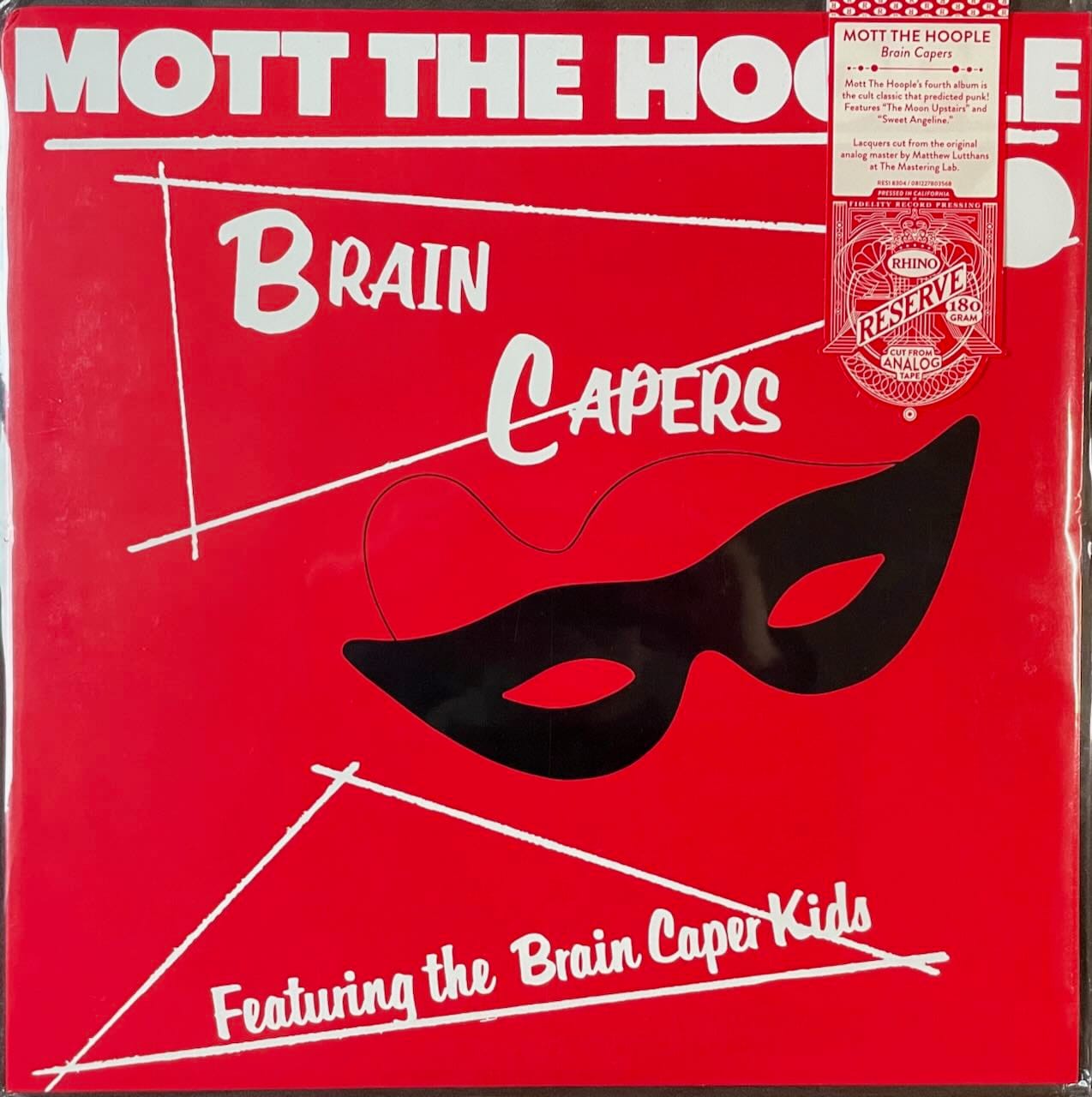
Mott the Hoople: Brain Capers
Brain Capers was very nearly an epitaph. The 1971 album was Mott the Hoople’s fourth in a succession of progressively less and less successful albums for Island Records (with Atlantic releasing their LPs in North America), and it directly followed their third, Wildlife, which had explored softer, folkier sounds and flopped hard. So when some exploratory recordings for Wildlife’s follow-up didn’t quite get the band where it wanted to go, they reckoned it was time to pull out the stops and reunite with madman producer Guy Stevens.
Stevens had discovered the Hereford-based band in 1969, when they were called Silence, and shaped them to his will: He enlisted frontman Ian Hunter, renamed them Mott the Hoople, and produced their first two albums in a fog of barely controlled chaos. With Brain Capers, Stevens and Mott were determined to capture the band’s live power, which had not led to much in the way of record sales but had resulted in a small but diehard fanbase whose fervency had led the group to be banned from the Royal Albert Hall due to the rowdiness of the crowd’s enthusiasm.
Inside Island Records’ studio in Basing Street, the goings for album number four were initially slow. So on the fifth and final day of recording, Stevens and engineer Andy Johns upped the chaos factor by deliberately creating an environment that would provoke the band into riotous, hurricane-force performances. The two started off the epic session by wearing Zorro-style masks and wielding water pistols, then upped the ante by getting the band disastrously drunk, throwing chairs into the walls, dancing on top of the recording console, and making a large pile of broken furniture, amplifiers, and half-eaten food in the center of the studio and setting it on fire. (Island Records head Chris Blackwell came by to see what the fuss was, heard that the disarray had resulted in five usable songs for the album, and departed without concern.)
For their part, the band responded by sounding like a massive train in the stage of high-speed derailment, with guitarist Mick Ralphs and organist Verden Allen doubling the distorted crunch of their instruments into a molten stew, drummer Dale “Buffin” Griffin thwacking away over lurching tempos, bassist Pete “Overend” Watts thickening the sludge, and singer/pianist/guitarist Ian Hunter roaring above it all like a crazed ringmaster. It was a brilliant, glorious mess.
And it was to be their least successful album yet. Brain Capers failed to gain virtually any notice whatsoever, and after the band trudged through some more desultory gigs, Mott the Hoople was ready to throw in the towel. Of course, that’s when David Bowie got involved and incited the band into a remarkable second act, but that’s a story for a different time.
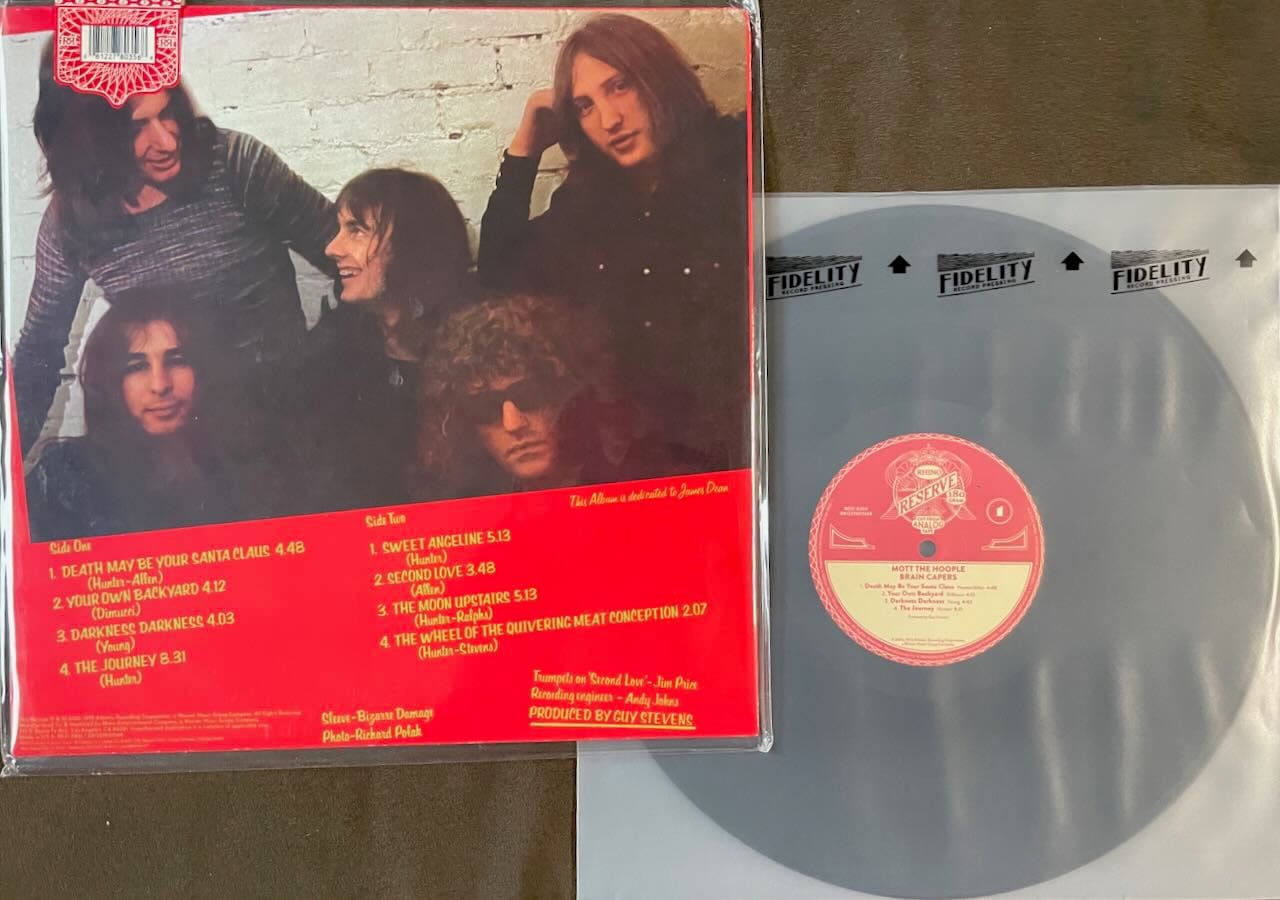
One can hear why Mott were so frustrated. Brain Capers was the heaviest, most uncompromising, and most honest album the original lineup of the band ever delivered. And despite the disinterest it met at the time, it would prove to be their most prophetic, too: The punk class of a few years later would cite the album as a major touchpoint, and the Clash would even draw Stevens out of his drug- and alcohol-induced wilderness to produce their seminal 1979 masterpiece London Calling. (Stevens would die in 1981 at age 38 as the result of a prescription drug overdose.)
The new Rhino Reserve pressing is a reproduction of the American edition of the album, released on Atlantic Records a couple of months after it first came out on Island Records in the UK in November 1971. The mixes are identical, but the US cover art is slightly altered, as per the Atlantic original, and the UK edition’s extras—a custom inner sleeve and a bonus Zorro mask—are not included. The UK version on Island was cut by George “Porky” Peckham, while the US Atlantic version was cut by George Piros. I assume mastering engineer Matthew Lutthans had the US tapes from the Atlantic vault to work with. These presumably would have been the same master tapes Piros used to cut the 1972 Atlantic lacquer for Atlantic, one generation removed from the Island master, although this is speculation on my part. Between Peckham and Piros, this means that the new Rhino Reserve is going up against cuts by two of the most highly regarded mastering engineers of all time.
The convenient truth is that all three sound incredible, and frankly, they’re similar enough that favoring one over the other is splitting hairs. The Porky pressing has all the magic of his fabled ’70s classic-rock cuts, with punch, dynamism, and a startling amount of power. The bass kicks, the treble breathes, and everything sounds fab all around. There’s just a tiny layer of sparkle that doesn’t transfer over to the US Piros cut or the Rhino Reserve, such as the way Hunter’s piano glistens at the start of “Sweet Angeline” or the interlocking textures of Mick Ralphs’s and Hunter’s guitars on the cover of the Youngbloods’ “Darkness Darkness.” There’s also a slightly compressed quality that charges up the overall excitement, albeit at the expense of some richness to the bottom end. (My first-pressing Island/Porky was manufactured at EMI with A-1U/B-1U matrices in the runout.)
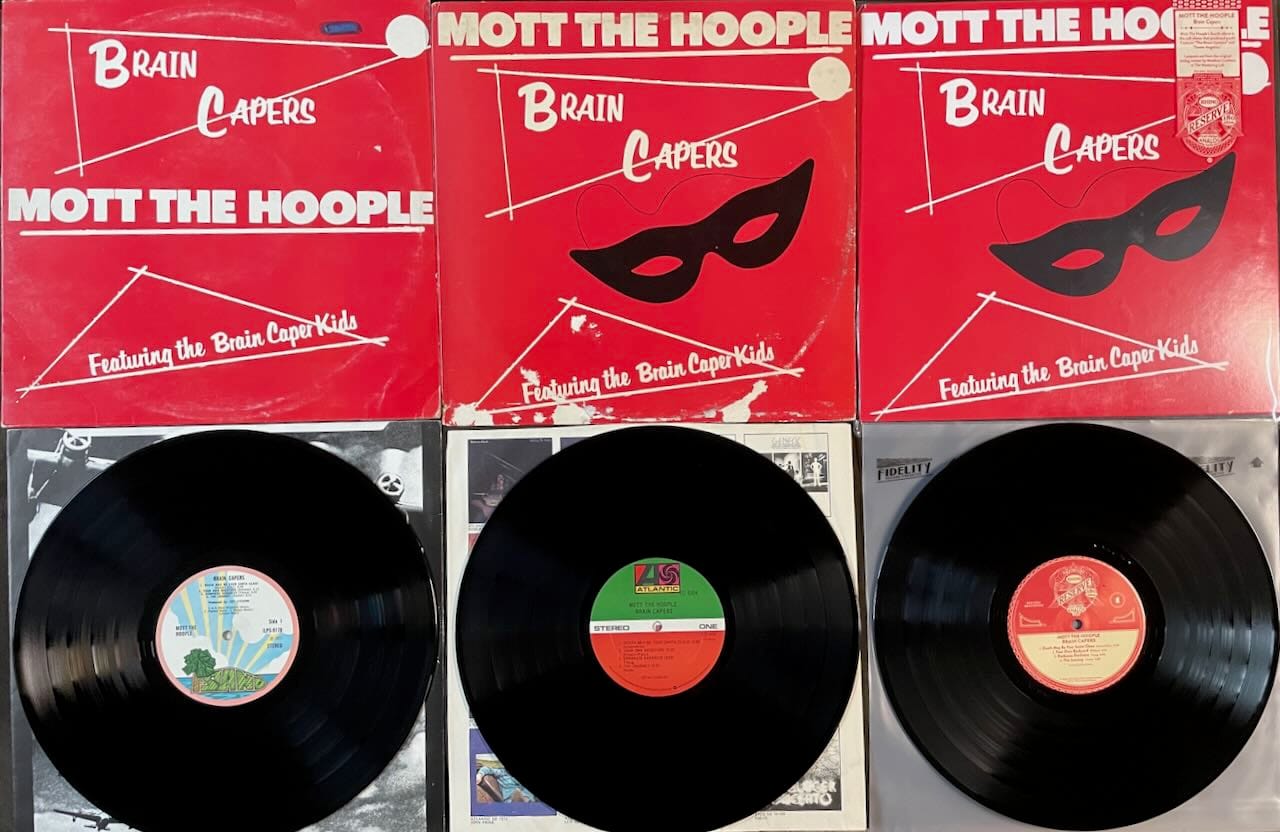
The Piros cut is fabulous in its own right. It is the most treble-forward of the three, with a slight edginess to the cymbal crashes. The mariachi trumpets on “Second Love” have a bit more zest, and Allen’s high notes on the organ cut through the ooze a bit more effectively. Interestingly, I thought it had a bit more body on the bass end of things, too, with Watts’s bass rumbling more assertively. If a bit harder on the ears than the Porky cut, the Piros also opens things up in both directions. (My copy is a circa-1975 pressing made at PRC Richmond using Presswell plates; all US cuts use the same Piros mastering with “712401A/712402A” in the deadwax, although additional “A” or “AA” suffixes are added to the matrix detail on some copies.)
The Rhino Reserve pressing, cut by Lutthans at the Mastering Lab, is as fulfilling as its two predecessors, with a vivid, muscular bottom end and a heavyweight sensibility that suits the album perfectly. It may be the most powerful of the three, the tradeoff being that some of the negative space in between the instruments is scaled back as a result of the saturated sound. There’s slightly less “air,” as they say, but there’s a vigor and gravity that simply makes the album rock harder. And there’s also just a slightly elevated level of crispness to the detail, such as the delay on Buffin’s hi-hat on “Darkness Darkness” and “The Moon Upstairs.”
I’m not sure whether pronouncements like this are helpful, but since people seem to like to have things boiled down, I’ll say this: If you already have a pressing of Brain Capers that you love, then picking up the Reserve probably isn’t necessary. But it’s wonderful that new audiences can discover this impertinent, ferocious album pressed on flawless, fresh wax (the Fidelity pressing is pristine). The worst thing a new pressing could have done to Brain Capers is tame its rough edges and make it sound clean and clear for the high-end audiophile audience. I’m pleased to report that Lutthans and Rhino Reserve have done nothing of the kind. This new Brain Capers sounds as wasted and frenzied and thick and meaty as ever—if not more so.
Rhino Reserve 1-LP 33 RPM 180g black vinyl
• New remaster of Mott the Hoople’s 1971 album
• Jacket: Direct-to-board single pocket
• Inner sleeve: Fidelity Record Pressing–branded poly
• Liner notes, insert, or booklet: None
• Source: Analog; “Lacquers cut from the original analog master”
• Mastering credit: Matthew Lutthans at the Mastering Lab, Salina, KS
• Lacquers cut by: Matthew Lutthans at the Mastering Lab, Salina, KS; “MCL” in the deadwax
• Pressed at: Fidelity Record Pressing, Oxnard, CA
• Vinyl pressing quality (visual): A
• Vinyl pressing quality (audio): A
• Additional notes: Comes inside a reusable poly outer sleeve sealed by a hype sticker, as per other Rhino Reserve titles.
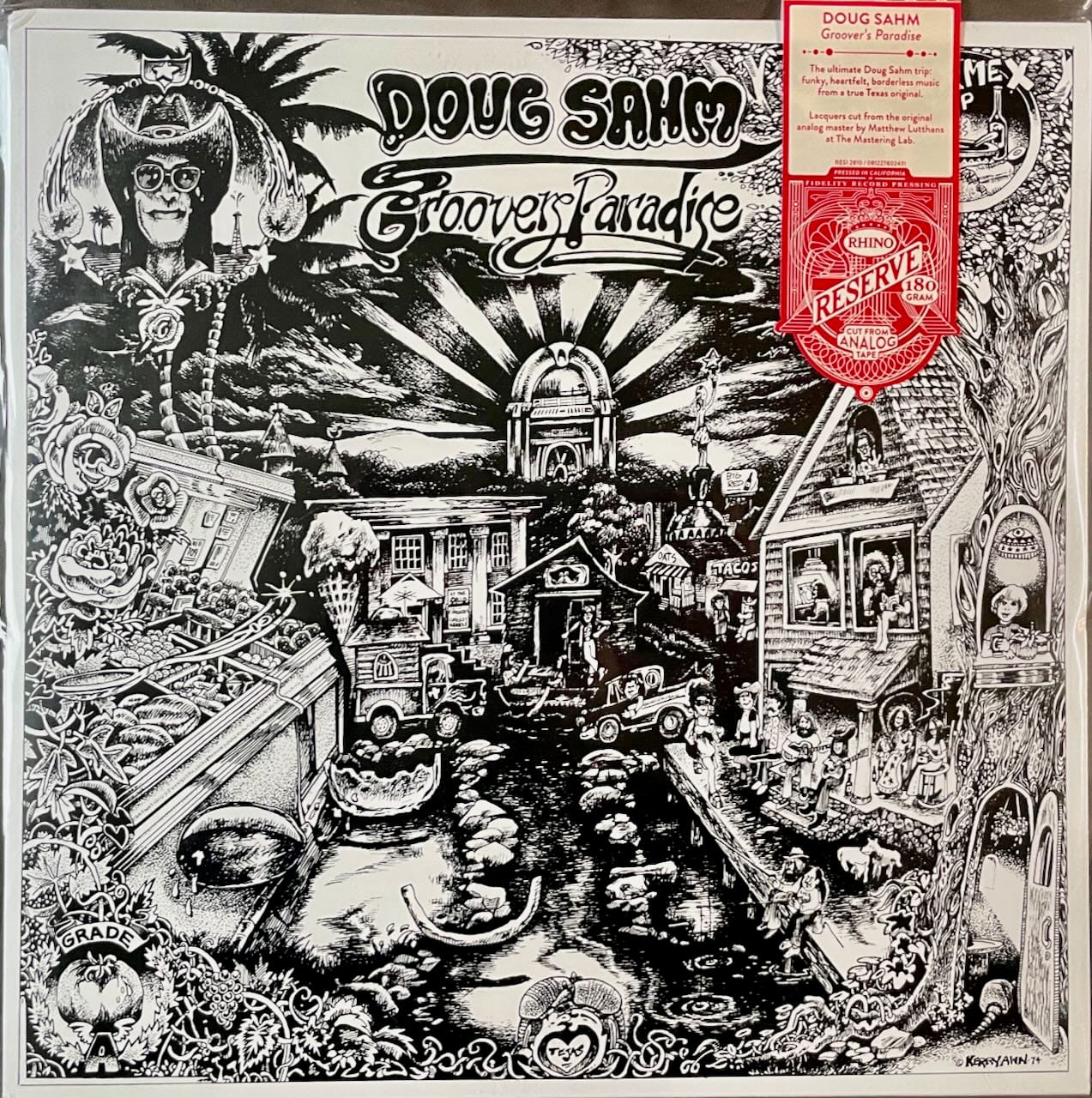
Doug Sahm: Groover’s Paradise
By the time of his 1974 solo album Groover’s Paradise, Doug Sahm had already had enough rock ’n’ roll adventures to fill several biographies. With his band Sir Douglas Quintet, the Texas-born musician had pioneered a blending of Tex-Mex and country musical styles with the British beat, garage rock, and psychedelic fashions of the 1960s. Drug busts and an extended California sojourn had marked the band’s trajectory; in the wake of their breakup, Sahm recorded with Bob Dylan, Willie Nelson, and the Grateful Dead. He also became a lynchpin of the burgeoning music scene in Austin, Texas, characterized by misfits and outsiders seeking an alternative to the “three coasts” of the American record business: New York, Los Angeles, and Nashville.
In 1973, Sahm released two terrific albums for Atlantic Records, Doug Sahm and Band and Texas Tornado. The fabled label was attempting to launch a progressive country division, with a focus on the “outlaw” scene in Austin; Willie Nelson’s classic Shotgun Willie and Phases and Stages albums were also part of the initiative. But the division folded in short order, with Sahm’s records having failed to set the charts on fire. So in 1974 he reconnected with two friends from his years in California: Doug Clifford and Stu Cook, the drummer and bassist for Creedence Clearwater Revival. Sahm came up to Berkeley and recorded Groover’s Paradise at the former CCR rehearsal space, Cosmo’s Factory, with Clifford and Cook serving as rhythm section and Clifford as producer. Through a deal with Clifford and Cook’s DSR Productions, the resultant album came out on Warner Bros. Records.
It’s a genial, warm-hearted record that, despite its Berkeley origins, is a loving document of the hippie-outlaw scene back home in Austin. Songs like “Beautiful Texas Sunrise,” “Houston Chicks,” and the title track are love letters to Sahm’s home state and its vast wellspring of music. The album’s a smorgasbord of Texas sounds, with straightforward rock ’n’ roll, bluesy ballads, ample tinges of country, an R&B horn section, and even a Tejano instrumental cover of “La Cacahuata.” Sahm’s way around a melody is intuitive, and his songs are easygoing pleasures that reveal hidden complexities and strengths with multiple listens. In that way he reminds me a lot of Tom Petty and—perhaps not coincidentally on this album—CCR songsmith John Fogerty.
Sahm is also a playful magpie, using familiar launch points to riff on, such as the “Louie Louie” fake-out that starts “For the Sake of Rock ’n’ Roll” and his reworking of the opening line from Ritchie Valens’s cover of Ersel Hickey’s “Bluebirds Over the Mountain” as “Bluebonnets on the hillside” at the start of “Beautiful Texas Sunrise.” “Houston Chicks” revisits the vibe of the Animals’ “House of the Rising Sun,” and “Catch Me in the Morning” inverts Diana Ross’s “Touch Me in the Morning” into a song of hangover regret that, over the course of five minutes, becomes a surprisingly optimistic benediction. In seconds, Sahm whisks all of these reference points into his bag of tricks, turning them into his own particular brand of sun-drenched, Texas-style rock ’n’ roll.
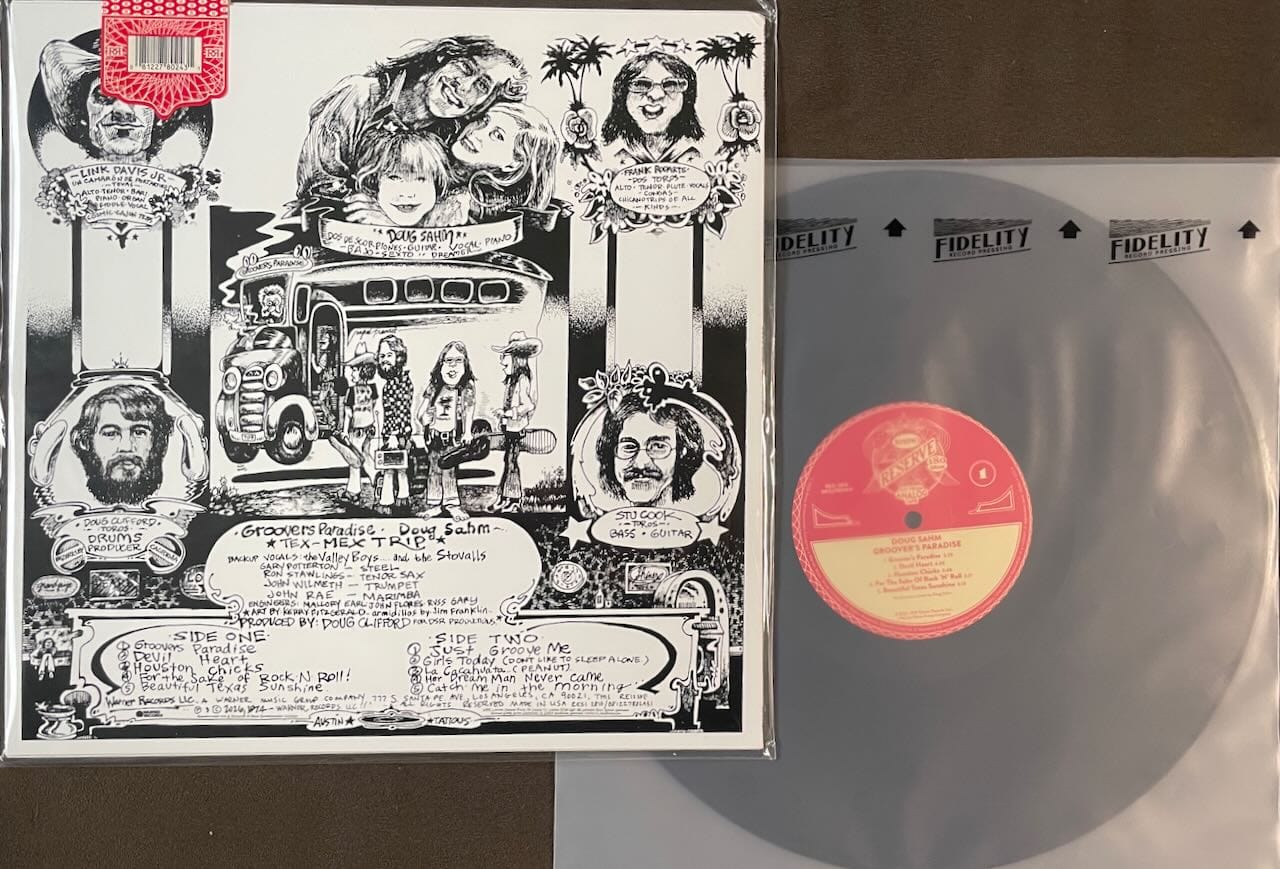
With a rootsy, broken-in sound, Groover’s Paradise is a perfect match for Matthew Lutthans’s mastering on the new Rhino Reserve pressing. The thump and kick have just the right amount of rambunctiousness, and the warmth from the Mastering Lab’s tube system seeps into every last detail, from the cathouse guitar yowls in the slinky strut of “Devil Heart” to the Leslie-processed saxophone on “Just Groove Me” to the Texas two-step of “Girls Today (Don’t Like to Sleep Alone).” Clifford’s production emphasizes the basic ingredients of each track, but there are little touches and flourishes within the arrangements that allow the album to reveal hidden depths on repeat listens.
Apart from its initial release in the US and UK in 1974, Groover’s Paradise was unavailable on vinyl for nearly half a century, until Vinyl Me, Please released a version cut from tape by Ryan K. Smith in 2022 as part of its country series. (Groover’s Paradise isn’t really country music—it’s Texas music, and there’s just as much soul and rock ’n’ roll and Tejano as there is country music in its grooves—but we don’t need to quibble with VMP here.) This new Reserve marks its third vinyl iteration and its third all-analog cut. I haven’t heard the previous two pressings, but the master tape sounds like it’s in phenomenal shape, and the detail and punch of this Reserve pressing are awfully satisfying. The proportions, depth, and soundstage are plenty big, but unlike Texas, nothing here is oversized.
The front and back cover’s wonderful black-and-white psychedelic illustrations by legendary Austin poster artist Kerry Awn (aka Kerry Washington) are reproduced clearly enough to convey all of the details and humor within the drawings. My pressing was a bit dished—one of the only times I’ve gotten a pressing from Fidelity that was anything less than perfect—but it played fine, and the dishing became a non-issue with my flattening device.
This is likely among the lower-profile Rhino Reserve releases in this Rocktober batch, which is a shame. Groover’s Paradise is a total sleeper, a fantastic record that doesn’t announce its delights too presumptuously. I think fans of Southern rock, country, and even basic rootsy rock ’n’ roll like CCR and Tom Petty will fall into this record effortlessly and wonder where it’s been their whole lives. Sahm was the kind of talent who knew not to make things too complicated. Groover’s Paradise is good-time music elevated to an art form, with all of the hidden ingenuity and hard work that goes into making something sound effortless. We get to do the easy part—drop the needle and bask in the vibes.
Rhino Reserve 1-LP 33 RPM 180g black vinyl
• New remaster of Doug Sahm’s 1974 album
• Jacket: Direct-to-board single pocket
• Inner sleeve: Fidelity Record Pressing–branded poly
• Liner notes, insert, or booklet: None
• Source: Analog; “Lacquers cut from the original analog master”
• Mastering credit: Matthew Lutthans at the Mastering Lab, Salina, KS
• Lacquers cut by: Matthew Lutthans at the Mastering Lab, Salina, KS; “MCL” in the deadwax
• Pressed at: Fidelity Record Pressing, Oxnard, CA
• Vinyl pressing quality (visual): B (dish warp)
• Vinyl pressing quality (audio): A
• Additional notes: Comes inside a reusable poly outer sleeve sealed by a hype sticker, as per other Rhino Reserve titles.
Listening equipment:
Table: Technics SL-1200MK2
Cart: Audio-Technica VM540ML
Amp: Luxman L-509X
Speakers: ADS L980