Review: Al Stewart

Share
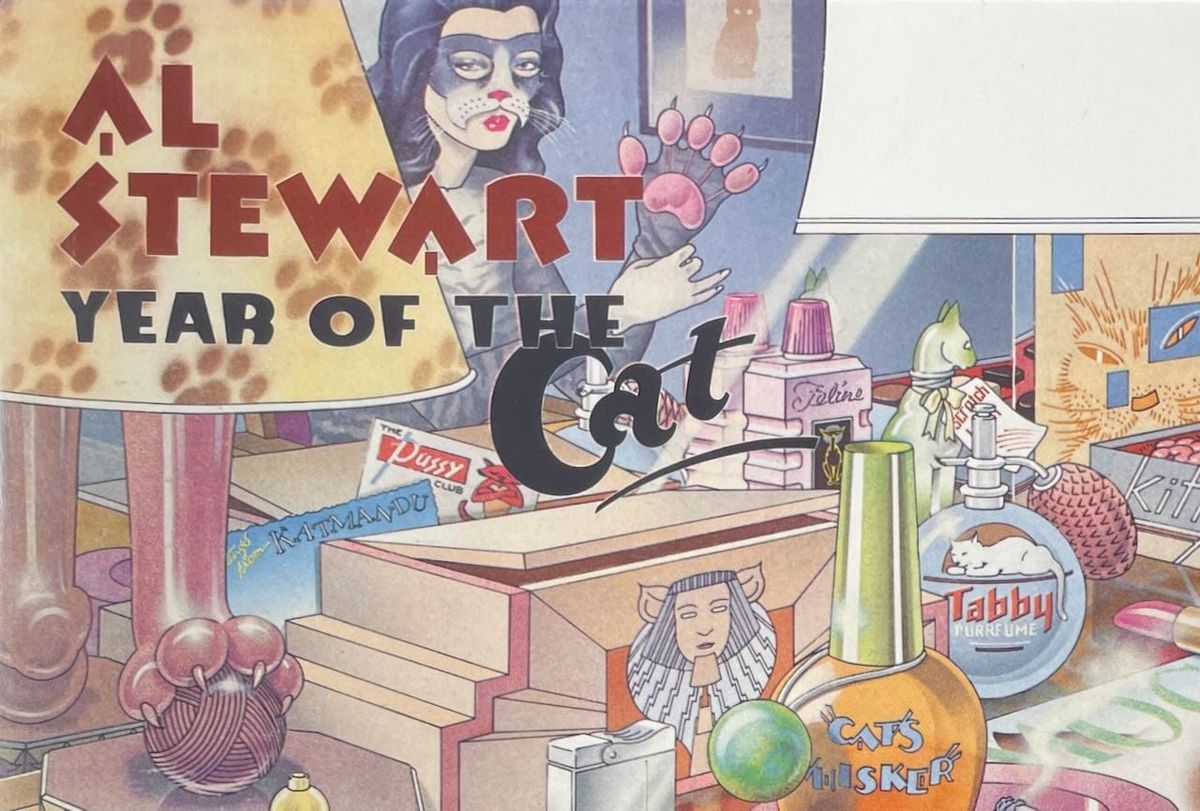
A crop of the cover art for Al Stewart's Year of the Cat.

A new Rhino Reserve pressing marks Year of the Cat’s 50th anniversary.

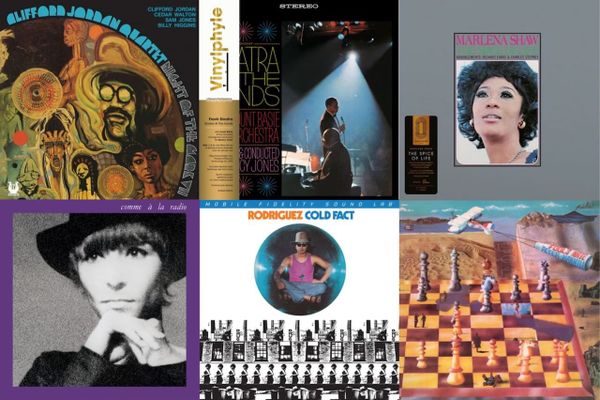
I’ve got another review from Rhino’s Spirit of ’76 campaign today... but first, the big vinyl news this morning was that Mobile Fidelity has announced a 45 RPM 2-LP pressing of Rodriguez’s Cold Fact. The debut album of Sixto Rodriguez, it seemed to disappear without a trace upon its 1970 release—but slowly became a massive cult classic in South Africa and Australia. Rodriguez experienced a career revival in his later years, thanks to the hugely successful (and Oscar-winning) documentary Searching for Sugar Man, so anyone who pleads ignorance as to this album’s quality simply hasn’t been paying attention. It’s a cool choice for MoFi, and definitely not one of the usual audiophile-label suspects. They have not set a release date yet, but it is available for pre-order.

And before I get into Al Stewart, I wanted to remind readers about The Vinyl Cut’s paid tier. You can upgrade quite easily, and by doing so, you support a small, independent publication that doesn’t rely on ad sales, referral traffic, or paid promotions to generate revenue. All the funds that make this site function (and, y’know, pay for my food and healthcare) come from readers like you. So if you have been weathering the financial storms of 2026 with relative success and are in a position where you can comfortably contribute, it makes a huge difference. Thank you very much.


Cover art for Al Stewart.

Al Stewart: Year of the Cat

Year of the Cat isn’t the album innocent bystanders mistake it for. Al Stewart’s 1976 full-length, the British songwriter’s seventh, is often regarded as a plushly produced soft-rock pleasure cruise—an impression the oversized lapels on Stewart’s blazer in the back-cover photo does little to dispel. While there is a well-known (and positively sultry) saxophone solo on the title track—actually, there are two—Year of the Cat is a far more rambunctious, acerbic, and stylistically varied album than it appears at first blush. 

Stewart would delve further into the smooth, sophisticated sounds of adult contemporary with 1978’s Time Passages, but Year of the Cat sits right on a fault line that marks the point when the singer/songwriter movement that dominated the first part of the 1970s ultimately gave way to the breezier, more jazz-inflected sounds that have retrospectively come to be known as yacht rock. As such, it’s an elegant outlier, with a peculiarly inviting and intoxicating atmosphere that has adhered it to devoted listeners even as countless used copies litter the cheap bins.

What Year of the Cat and all of Stewart’s albums have on their side is his remarkable songwriting pen. Scottish-born, Dorset-raised Alastair Stewart came up in the British folk-club scene of the late ’60s alongside acts like Fairport Convention, Roy Harper, and the Incredible String Band; heavily influenced by Dylan, Stewart realized that his lack of guitar virtuosity and his limited vocal range meant that his songs had better be damned clever. His early work is verbally driven—the 18-minute title track of 1969’s Love Chronicles is a thorough chronicling of young Stewart’s romantic life thus far, controversially including the word “fucking” alongside some electric guitar noodling from Jimmy Page—and each subsequent album found Stewart further migrating his sound from its straightforward folk origins to more multifarious rock trappings.

The back cover of Year of the Cat. Cat puns (and lapels) abound.

On 1973’s Past, Present and Future, Stewart tackled historical subjects instead of more personal ones, and it proved to be a good match for his analytical prose and conversational singing style. And on 1975’s Modern Times, Stewart joined forces with producer Alan Parsons, the Abbey Road stalwart who cut his teeth recording the Beatles and Pink Floyd and would shortly embark on his own career as a headline recording artist with the Alan Parsons Project. Year of the Cat continued the Stewart/Parsons collaboration, where the marriage of the former’s gimlet-eyed songwriting and the latter’s expansive, cinematic sound reached its apotheosis.

And while Year of the Cat’s title track is its best-remembered tune, I find that its overfamiliarity makes it among the lesser of the album’s pleasures. In fact, part of the album’s enduring appeal is how consistently good all of the songs are. The opening, “Lord Grenville,” features the finest use of strings to evoke a windswept ocean in a pop song since Procol Harum’s “A Salty Dog,” while “Sand in Your Shoes” belies its bouncy exterior with a bittersweet character study. “If It Doesn’t Come Naturally, Leave It” sets a hook-laden pop melody atop a galloping tempo and logorrheic lyrics, and “One Stage Before” is ornamented with a galactic-sounding electric piano (or is it pedal steel, or an Omnichord?) under never-ending ice-castle reverb, with Tim Renwick’s fiery guitar solo slicing through the frost.

The instrumental tracks were laid down at Abbey Road, and as such, the recording quality is beyond reproach. Parsons not only dialed in the best-sounding tones for each instrument, he also arrayed them into sturdy, stunning structures where their balance and weight worked perfectly in tandem with Stewart’s songs. The vocals and final mixes, however, were done at Davlen Sound Studios in Los Angeles, perhaps because of that studio’s ample assortment of vintage tube microphones, although it’s likely that Stewart simply felt the need for a change of scene to sunny California to inspire him to complete the album’s long-gestating and frequently changing lyrics. Stewart’s fascination with Southern California dated back to “Electric Los Angeles Sunset” from 1970’s Zero She Flies, and he had become enamored with America’s West Coast in the way those raised in the damp climes of the British Isles often can be. He would move to LA not long after the release of Year of the Cat and record the entirety of his next two albums at Davlen.

An image of Davlen Sound Studios master reels for Year of the Cat as they appear in the booklet for the 45th anniversary box set. This image is a screengrab from SuperDeluxeEdition's unboxing video—photos of the tape boxes are not included in the new Rhino Reserve pressing.

A new Rhino Reserve vinyl pressing heralds Year of the Cat’s upcoming 50th anniversary—the album was released on October 22, 1976—and as such, Rhino has incorporated it into their Spirit of ’76 retail campaign as part of a clutch of reissues celebrating their half-century mark. This being a Rhino Reserve pressing, it boasts new cut-from-analog-tape mastering by Matthew Lutthans of the Mastering Lab, with the vinyl manufactured at the peerless Fidelity Record Pressing, owned by Mobile Fidelity. The album is a longtime favorite of Lutthans; in fact, in the deadwax of his new cut, he’s written “For Terry”—a reference to his brother, a particular fan of the album and the person Lutthans credits for getting him interested in audio at a young age. Lutthans reports that he cut this new lacquer from the original Davlen Studios master tapes.

But as I mentioned, this is an album with no shortage of older vinyl pressings still in circulation. There isn’t much consistency among the assorted online opinions about which one’s the best. This puts the Rhino Reserve in pole position to vault to the front of the pack. I did a lot of comparison between the pressings I had at hand and found a lot to love in the new Reserve, but I am hesitant to crown it the outright victor. The older pressings are simply too good to be dismissed.

My main point of reference was a 1976 US pressing on Janus Records that I’ve listened to for years. It was mastered by Allen Zentz (with “AZ” in the deadwax on Side 2) and pressed at Columbia’s Santa Maria, California, plant. Since the album was completed and mixed in Los Angeles, it stands to reason that Zentz’s Hollywood mastering facility would have had access to the original master reels rather than a dub or duplicate. My copy sounds incredible, with richness, body, balance, and clarity.

Why, then, do opinions vary wildly on the Janus pressing, with some people agreeing with me and others saying it’s trash? My theory is that because the album became a runaway hit in 1976—going platinum within its first year, vastly outperforming expectations—Janus and its contracted pressing plants were perhaps not fully prepared to meet demand. I think it’s possible the stampers were overused in many cases, resulting in significant inconsistency in between different copies that nevertheless bore the same matrix information. You can find a similar phenomenon with albums like Fleetwood Mac’s Rumours, where the stampers could barely keep up with output, resulting in some vintage ’70s copies sounding fabulous and others sounding anemic and muted.

Fifty years, nine lives, and three different US pressings of Year of the Cat: A 1976 Janus pressing, a c.1979 Arista pressing, and the 2026 Rhino Reserve edition.

For the purposes of this review, I also acquired a later US repress on Arista Records, who signed Stewart in ’78 and reissued this album following Janus’s closure in 1979. (Coincidentally, my Arista copy was also pressed at Columbia’s plant in Santa Maria; I think it must date from either 1979 or the early ’80s.) Per the stamped “TML” in the deadwax, it was cut at the Mastering Lab, also in Hollywood, although the hand-etched matrix numbers in the deadwax do not, to me, look to be a match for Doug Sax’s telltale handwriting (his well-known slanted “8”s, for example), indicating that a different in-house mastering engineer cut the lacquer. 

Puzzlingly, the Arista reissue’s inner gatefold actually includes a mastering credit that doesn’t appear on the Janus copy: “Re-mastered by Chris Bellman at Allen Zentz Mastering, Inc.” I don’t know what to make of that. Bellman was employed at Allen Zentz at the time, and there is no record I could find of him doing any work at the Mastering Lab. Did Bellman pop over for some mercenary work (the two mastering suites were merely a half-mile away from each other), or maybe Zentz’s lathe was down that day, and Sax, like a mensch, said, “Come on by and do it here”? Maybe Bellman actually mastered the Janus version, and this is a leftover, erroneous credit from that? (This doesn’t explain why it says “re-mastered,” although the runouts of all of the Janus pressings have a suffix of “RE-1,” suggesting that there an initial cut was made and rejected—and the “AZ” in the Janus deadwax might simply refer to it being cut at Zentz’s studio and not that he made the cut himself.) Or is the jacket credit a total fabrication?

At any rate, the Arista TML pressing might be even stronger than the Janus. The bass is more anchored and prominent, and the top end is gently tamed. The way it presents Parsons’s mix is both lush and lively; the musical tonality of the individual instruments is noticeably sweet to the ear. I think the earlier Janus has a slight patina that, while coloring the finished product ever so slightly, happens to jibe excellently with the album’s overall sound, and the Janus also boasts a freshness and pliancy that might be the result of super-fresh tapes. But the Arista has just a tiny bit more transparency and life; the patina is gone, and everything sounds unvarnished in the best possible sense.

Inner gatefold and disc for the 2026 Rhino Reserve pressing.

Which means that Matthew Lutthans had his work cut out for him. (Although I’m sure Lutthans would be among the first to acknowledge that it’s not a competition.) Lutthans’s involvement means that this is the second time Year of the Cat has been cut using Mastering Lab equipment, as Sax’s trusty gear is now relocated to the new Mastering Lab in Salina, Kansas. I’d guess that enough time has gone by and enough components have been updated for there not really to be any intrinsic “house-sound” similarities in the Arista and Rhino Reserve pressings, but it is fun to note that “TML” is stamped in the deadwax of these two different cuts, more than 45 years and 1300 miles apart.

(As this point, I need to point out that UK first pressings and West German pressings—both on RCA—are highly regarded, but I did not have access to a copy of either. Additionally, one of Mobile Fidelity Sound Lab’s very first releases was a cut they made in 1978—MoFi’s ninth-ever release, if the catalog number of 1-009 is anything to go by. It was half-speed mastered by Stan Ricker; there’s also a 1981 repress with some updated font on the cover whose musical contents are the same. This MoFi pressing has received a similarly confounding spread of opinion, with many saying it’s the best and others finding it lacking. I haven’t heard it myself—apologies.)

Lutthans’s cut on the new Rhino Reserve pressing does everything right. It offers superior bass, which sounds anchored and firm, and it harnesses the at-times piercing high-end sizzle that’s on the earlier pressings (the Janus more than the Arista). There’s clarity and separation between the instruments, as well as some of the 3D holographic quality that I perceive on the Janus and, particularly, Arista cuts. I also detect a bit of muscle that is slightly at odds with Parsons’s production, with a tiny portion of the album’s laidback charm and landscape-painter quality scaled back in favor of immediacy and punch. 

In other words, finicky longtime lovers of the album might find this is not the quite the Year of the Cat they’re used to—a situation I think I found myself in—but I do believe that listeners who are new to Stewart’s raconteur-troubadour style will be quite pleased with its definition and power. Having recently become enamored with my mysterious Arista pressing, I don’t think I’ll let it go in favor of the Rhino, but it will be fun to continue to compare them over the next several months and see which way I lean.

Twenty-plus used copies of Year of the Cat recently spotted in a local record store.

Used copies of Year of the Cat are everywhere—one of my locals had more than 20 copies stashed in a box beneath the display bins—so that does make this new pressing a tougher sell. In its favor, the new Rhino Reserve offers an immaculate, never-before-played copy on excellent vinyl from Fidelity. But if you’ve already got a copy that suits you, I don’t think you’ll need to rush out and get the Rhino Reserve, unless you enjoy comparing masterings the way some of us sickos do. And yet, Stewart’s songs and Parsons’s production are so rich and layered that I think the new pressing will allow me to make additional discoveries as I continue to listen.

And let’s go back to that enduring title track, which unwinds like a pulp paperback after a glass of wine. On Lutthans’s cut it’s more of a page-turner than ever, building from its cocktail-bar piano introduction to full-blown orchestral melodrama, with Phil Kenzie’s saxophone, Peter White’s nylon-string guitar, and Renwick’s electric all making cameos like suspects in a whodunnit. (The sax did it, with the candlestick in the conservatory.) It all sounds pretty phenomenal on the new Rhino Reserve, with locked-down bass and a superior command of the track’s continually shifting dynamics than either my Janus or Arista pressings. Year of the Cat has never been an easy album to pin down, and this new pressing suggests that there’s more of the story to tell.

Rhino Reserve 1-LP 33 RPM 180g black vinyl
• New remaster of Al Stewart’s 1976 album
• Jacket: Direct-to-board gatefold
• Inner sleeve: Fidelity Record Pressing–branded poly
• Liner notes, insert, or booklet: None
• Source: Analog; “Lacquers cut from the original analog master”
• Mastering credit: Matthew Lutthans at the Mastering Lab, Salina, KS
• Lacquer cut by: Matthew Lutthans at the Mastering Lab, Salina, KS; “MCL” in the deadwax
• Pressed at: Fidelity Record Pressing, Oxnard, CA
• Vinyl pressing quality (visual): A
• Vinyl pressing quality (audio): A- (just a touch more incidental noise than I usually encounter on Fidelity pressings)
• Additional notes: One of the credited keyboardists is the dubiously named “Don Lobster.” Could that be a pseudonym for producer Alan Parsons?

Listening equipment:
Table: Technics SL-1200MK2
Cart: Audio-Technica VM540ML
Amp: Luxman L-509X
Speakers: ADS L980