Review: Buena Vista Social Club

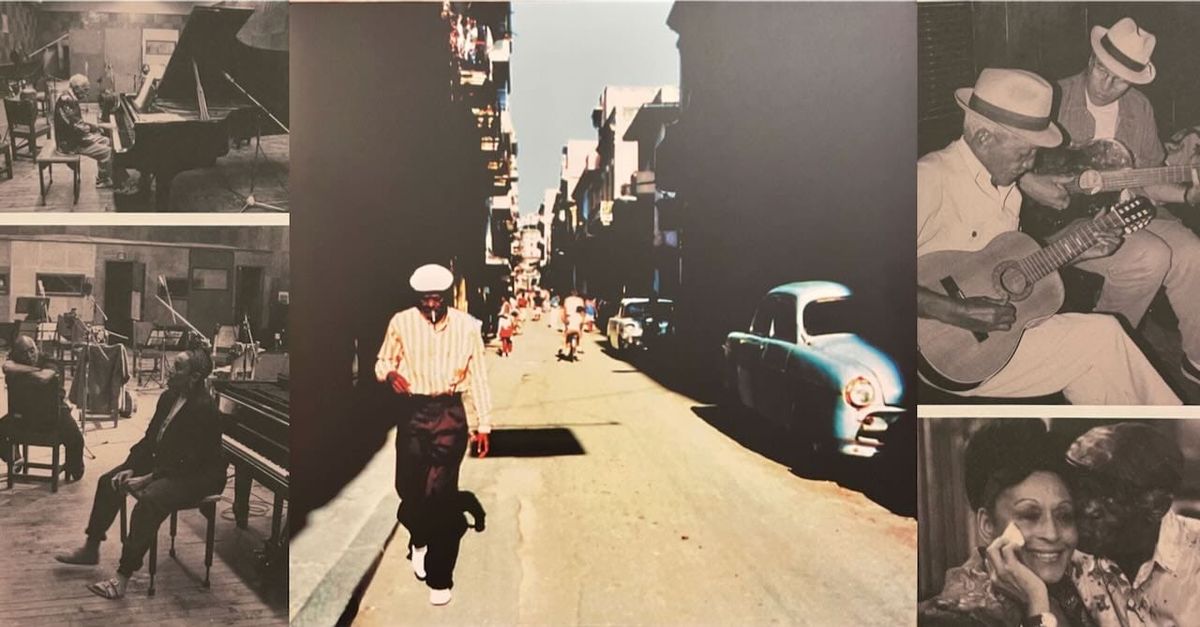
Today I’ve got a review of the new 30th-anniversary edition of Buena Vista Social Club, which actually came out 29 years ago, not that trifling details like that matter a whole lot. It’s true that the sessions in Havana, Cuba happened in the spring of 1996, which makes the 30th-anniversary pressing more than justified.
Speaking of anniversaries, today is the 50th for Stevie Wonder’s Songs in the Key of Life, which came out on September 28, 1976. The double album also included a lengthy bonus EP (called A Something’s Extra), making for an overstuffed collection of Wonder at his peak and bringing his remarkable imperial phase to a close. (1973’s Innervisions is my personal favorite from the remarkable five-album run Wonder made from 1972 to 1976—which also includes 1972’s Music of My Mind, 1972’s Talking Book, and 1974’s Fulfillingness’ First Finale—but it’s hard to dismiss any cases made for Songs in the Key of Life as Wonder’s best.)
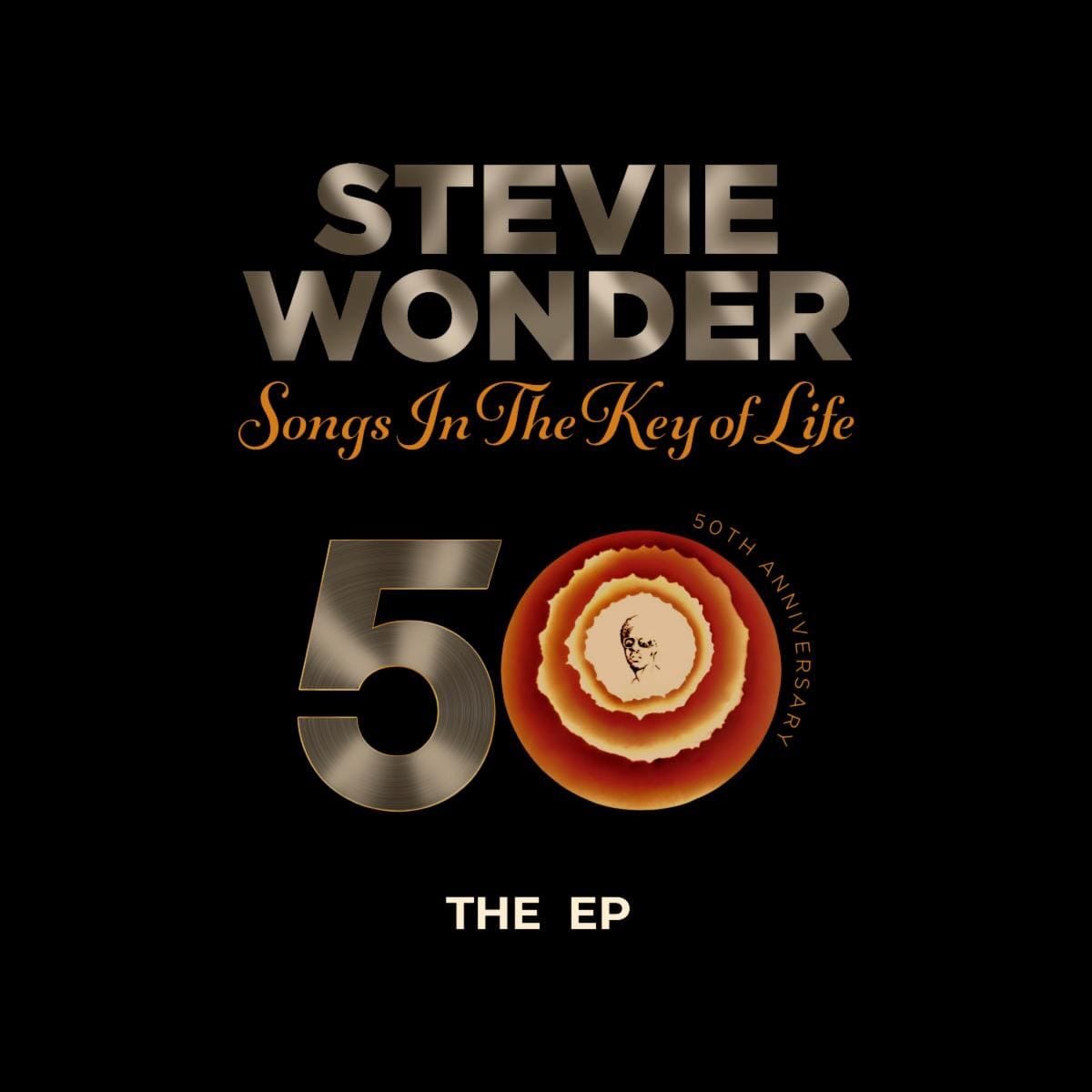
While a 50th-anniversary vinyl edition of Songs in the Key of Life does not seem to be in the cards, today Wonder unveiled four previously unreleased songs from the original album sessions, released as a digital EP on streaming services. These songs do indeed to be finished tracks of mid-’70s vintage and not merely unfinished demos given a spit-polish in ProTools. While it’s too soon to say they’re the equal of what made it to the album, they certainly at first blush sound like more than mere curios. Which makes it all the more disappointing that we aren’t getting a Songs 50th anniversary edition, with the original A Something’s Extra EP tracks and these four new songs added on as a third LP. Oh well. I’m sure Universal tried, and Stevie wasn’t interested.
Congrats to paid-tier subscriber Andy for winning a shiny new vinyl copy of War’s Greatest Hits 2.0! Each and every month, we give away a free vinyl album to one of our paid subscribers. Plus, a paid subscription also gets you full access to the site’s complete archives, as well as commenting privileges and a weekly playlist of all the most interesting vinyl reissues.
Again, big congrats, Andy, and thank you for supporting The Vinyl Cut.
If you’d like to upgrade and join the paid tier—where all the cool kids are hanging out—click the button above. Please do consider it: This newsletter is entirely reader-supported, so if you enjoy The Vinyl Cut and want to support a tiny independent music publication making its way in the world, it’s easy to do so. Thank you, genuinely.
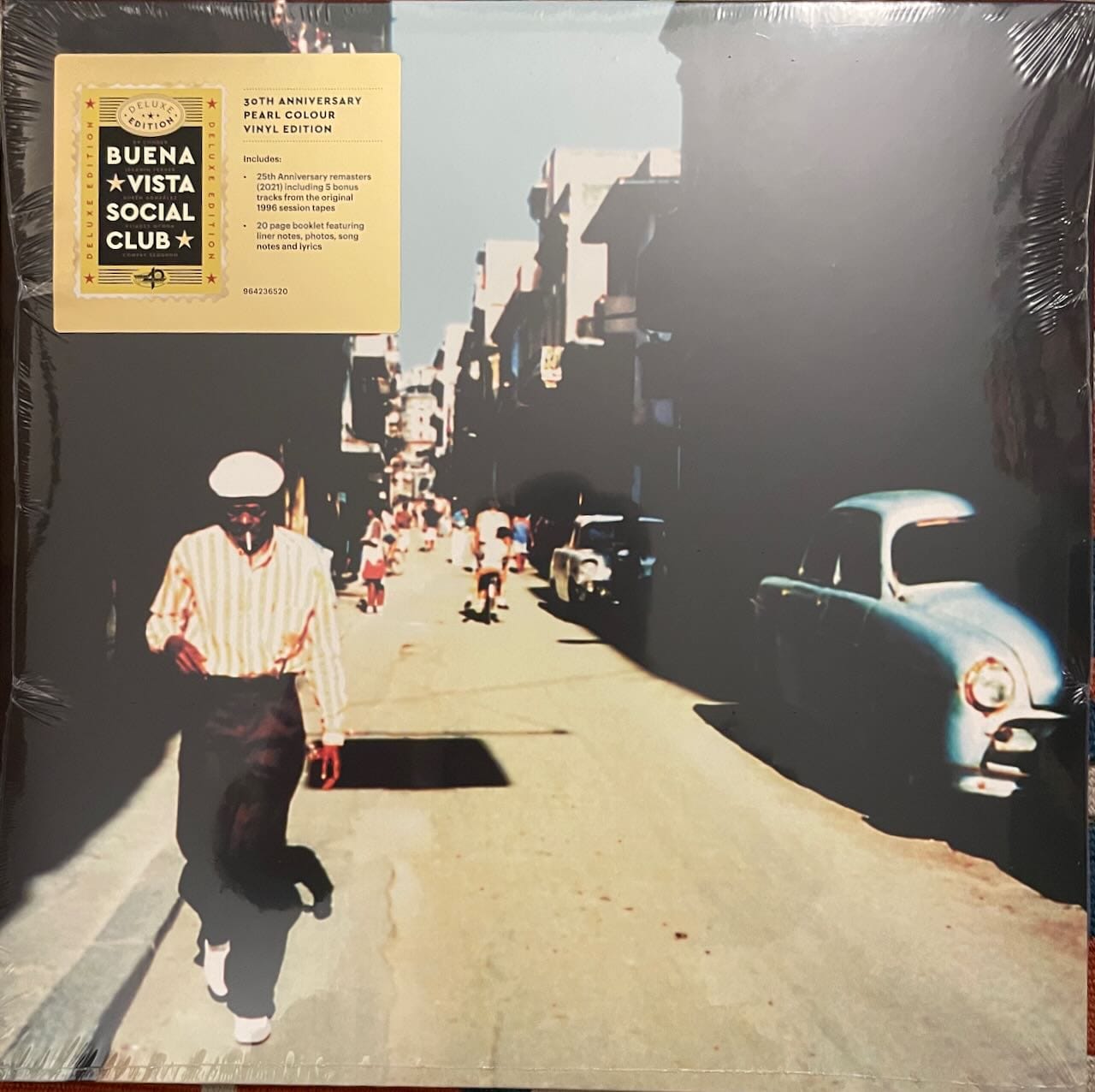
Buena Vista Social Club: Buena Vista Social Club 30th anniversary edition
Buena Vista Social Club was originally supposed to be something very different. When guitarist Ry Cooder and Nick Gold, the head of the British world-music label World Circuit, went to Havana, Cuba, in March 1996, the plan was to record a collaboration of Cubans playing with a group of musicians visiting from Mali. But at the last minute, the Malians were unable to secure their work visas, leaving Cooder, Gold, and the assembled Cuban musicians to quickly turn their focus onto making an album of purely Cuban music. (Buena Vista Social Club was actually one of three albums made in quick succession in Havana during the spring of 1996, the other two being Afro-Cuban All-Stars’ A Toda Cuba le Gusta and pianist Rubén González’s Introducing… Rubén González, all released by World Circuit in 1997, with the US releases handled by Nonesuch Records.)
Buena Vista Social Club became a surprise bestseller, moving more than eight million copies worldwide and leading to a cottage industry around midcentury Cuban popular music, resuscitating the careers of several of the aged musicians who participated in the sessions, like Compay Segundo, Ibrahim Ferrer, and Omara Portunondo. Solo albums ensued, as did a documentary film and eventually a stage musical that made its way to Broadway (a staging for London’s West End is scheduled for 2027). A new 30th-anniversary edition of the original Buena Vista album was released on vinyl this month by World Circuit—now administered by BMG—and while it may have jumped the gun on the album’s official release date, the reissue marks three decades since those quickly assembled but remarkably fertile recording sessions led to one of the more surprising musical revivals of the late 1990s.
The enormous success of Buena Vista Social Club can’t be entirely explained, perhaps—it’s just one of those magical phenomena that happens in the record biz sometimes—but I imagine a large part of it was due to the music’s sparkling fusion of elements that were both familiar-sounding and entirely new to western ears. Cuban music provided the raw DNA for a detonation of styles across the globe in the first half of the 20th century, including all manner of Latin musics throughout the Americas and even components of African music as well. But due to trade blockades and enforced cultural isolation from the west, the Cubans spent the rest of the 20th century separated from the world at large—left to develop their own style of voicings, rhythmic logic, and collaborative interplay for close to a half-century before the spotlight happened to turn to them again.
Another factor in the mammoth response to Buena Vista was the sound of the record itself. In his excellent 2006 memoir White Bicycles, legendary producer Joe Boyd writes, “I have seen people enter pubs and bars where the Buena Vista Social Club CD is playing and look around for the source of the music; they seem startled to be entering a three-dimensional acoustic space… Not only is it music from another era, magically preserved in the time capsule of Castro’s communism, but it was recorded using equally outdated techniques… The recording captures the full sound of the three-dimensional space in which the musicians performed—live.”
That three-dimensional space was Havana’s EGREM Studios, and the recording took place in the building’s large, wood-paneled room with microphones positioned to catch plenty of the ambient room sound in addition to the individual instruments and singers. Jerry Boys, who started as a teenager at Abbey Road working on Beatles records, was the engineer for the album sessions, which served as a reunion for many of the older musicians who hadn’t performed together in decades. Cooder’s slide guitar adds an American coloring to certain tracks, including “Chan Chan,” “Orgullecida,” and “Murmullo,” but otherwise the album is a celebration of the son style that flourished in Cuba in the 1940s and ’50s. Apart from Cooder’s contributions, I believe the album is entirely acoustic.
The hype sticker on this 2026 edition clearly states that it used the 2021 remaster for this pressing—a clarification that I would like to commend most highly. Thank you, World Circuit, for making this information plain and easy to find. This is, in essence, a repress of the 25th-anniversary edition from 2021. For that mastering, the analog tapes were transferred digitally by Bernie Grundman, who also cut the lacquer, which is reused here. On the 2021 version, five bonus tracks were added to Side 4 of the double LP set, and it included an informative 20-page booklet with ample liner notes and track info. This is all true for the 2026 edition; in fact, the only real difference is that this new pressing is on “pearl”-colored vinyl, pressed at Optimal Media in Germany. Again, kudos to World Circuit for not trying to pass this off as an entirely new mastering—if you already have the 2021 version, you won’t need this.
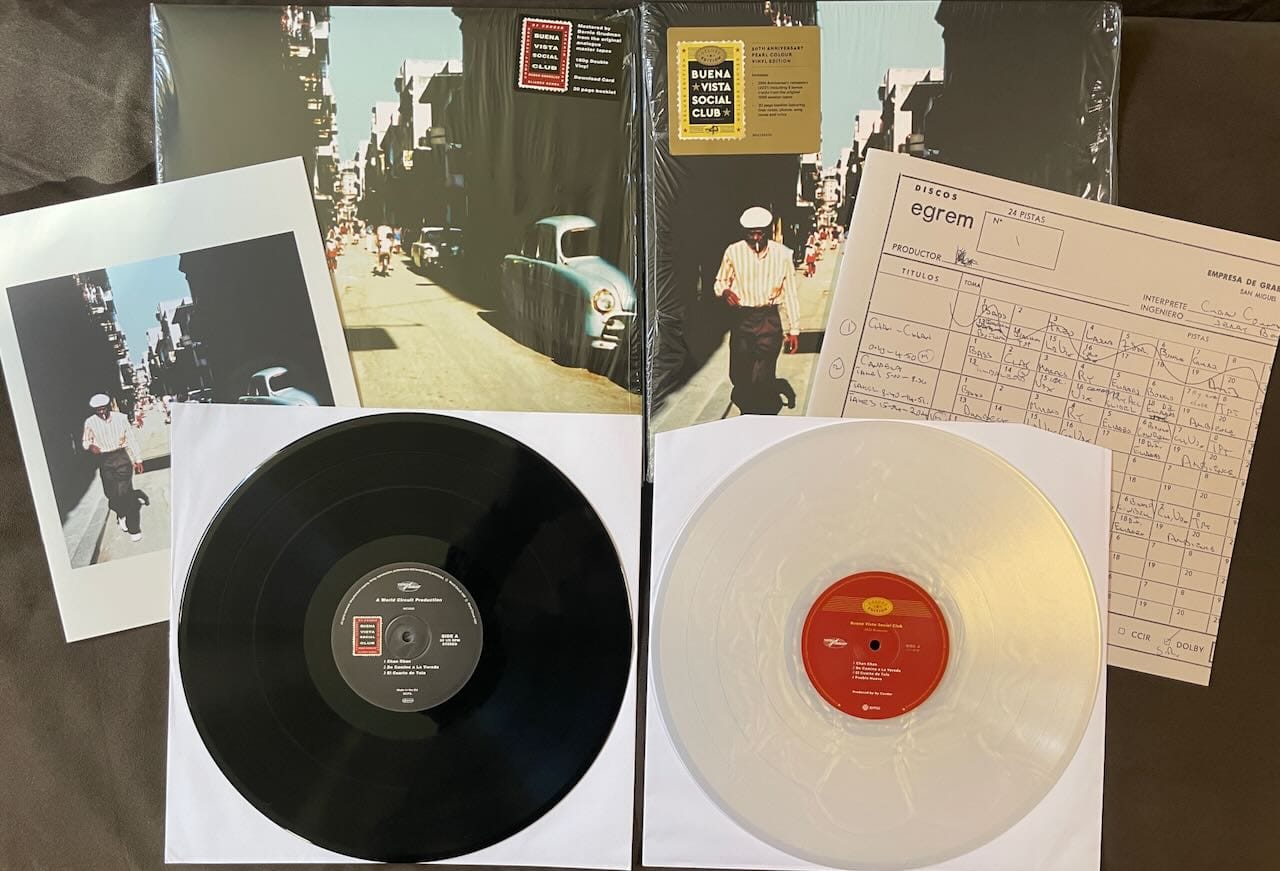
I was able to compare this new pressing not to the 2021 version but to the 2015 version, which has a different mastering—also by Bernie Grundman, with his initials in the deadwax. The 2015 version, pressed at Record Industry in the Netherlands, purports to be sourced from the original analog tapes, unlike the 2021 and 2026 versions; the 2015 hype sticker says, “Mastered by Bernie Grundman from the original analogue master tapes,” which I am choosing to accept at face value. So this turned into a straight shootout of a (presumably) analog cut versus a digital cut, from the same mastering engineer.
Differentiating between the two was not cut-and-dried. I was surprised to find myself initially favoring the 2021/2026 digital cut, because some of the elements are crisper and more pronounced, particularly the lead vocals. But as I went back and forth, I found that the 2015 analog cut had a warmer, deeper sound that was more in line with my system and taste. The bass had a fuller presence, and the 3D holographic quality from the EGREM room was more perceptible, with González’s piano filling the far corners of my listening space. There was a softness to the sound—as opposed to the more chiseled, focused sound on the 2021/2026 cut—but overall it had a naturalness, depth, and ambient temperature that I liked just a whisker better. It’s a close call.
The 2026 pressing still conveys all of the magic that took place in that Havana studio. The strummed acoustic guitars have a brilliance and rapturousness that drives the music, and the percussion instruments—maracas, claves, bongos, congas, and more—create the irresistible pulse and momentum that would fuel activity on Cuban dance floors for decades. The increased articulation that Grundman was able to illuminate on the singers in his 2021 cut may in fact be preferable to some listeners, especially those studying the vocal techniques of Ibrahim Ferrer or Eliades Ochoa, or for those with mellow, warm systems that need a bit of sonic edge for certain sounds to stand out. I should add, in no way is the 2026 digital cut harsh; it is actually crisper and more defined, just a bit lacking in body when directly compared to the 2015. Also, full caveat: I have not heard the 1998 Classic Records version or the 2025 45 RPM version from Analogue Productions (both also cut by Bernie Grundman, believe it or not). Those versions have high marks online and may be superior to all of the pressings I’ve mentioned already.
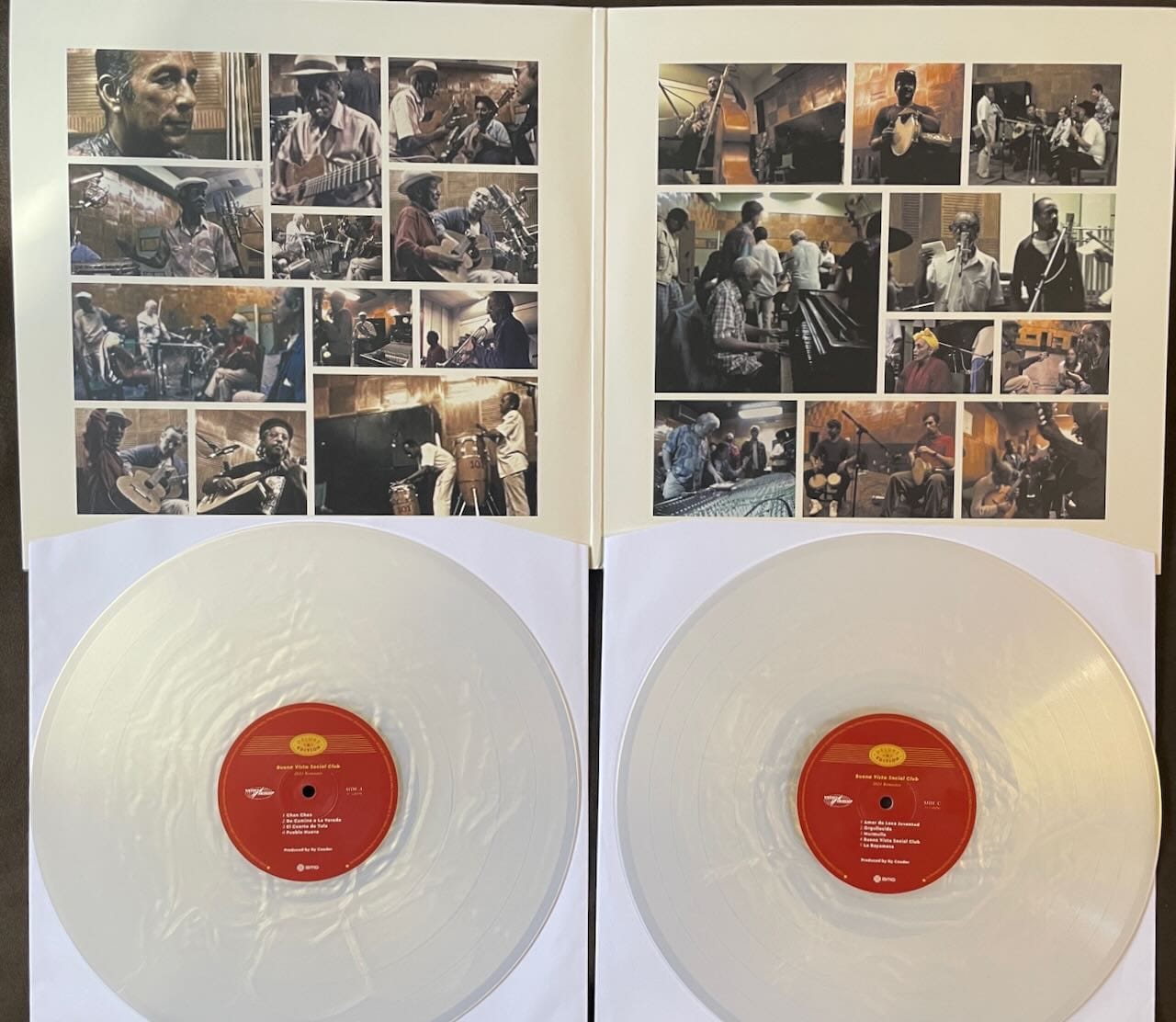
The Optimal pressing of this new edition is less successful. The discs come inside plain paper sleeves, not poly-lined, and the pearl-colored vinyl is unfortunately on the noisy side of things. I heard quiet but persistent static or crackle in the left channel across all four sides, which I attribute to the blend of colors that went into this pearl variant. And the first disc had a substantial edge warp that, while fully playable on my table, led to minor additional noise during each rotation. (The second disc was much better but was not quite perfectly flat either.) Sadly I think the 20-page booklet is the culprit—having this chunky bit of reading material jammed inside the shrink alongside the 2 LPs has led to some warpage, I’m afraid. However, since The Vinyl Cut has always been and forever will be pro-liner notes, I refuse to get too mad about it, and my flattening device should make short work of the warps in any case.
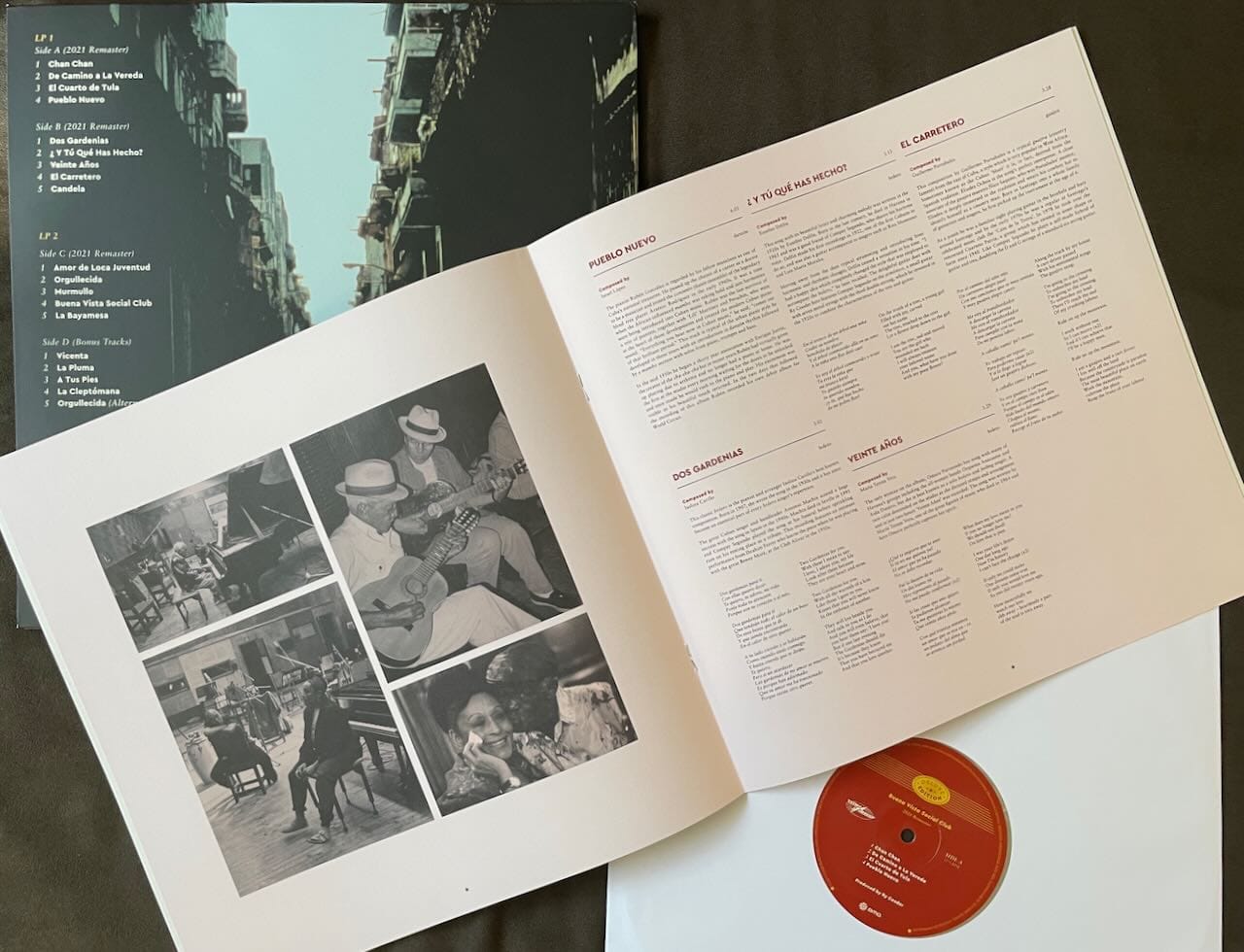
The booklet is an expansion of what came inside earlier editions, with lyrics, photos, and ample liner notes, including the illuminating essay by Rosa Marquetti Torres that first appeared in the 2021 edition. Oddly, the musician credits in the back of the book are a bit frustrating, as they’re not broken down track by track but rather under the name of each individual musician, meaning that you have to scan through the entire list of performers to find out who is doing what on each song. A small annoyance, but previous editions had the credits in a format that was easier to parse. The gatefold jacket is printed reverse-board style, giving it a nice matte finish that is pleasing to hold.
On the whole, this 30th anniversary edition of Buena Vista Social Club does not bring anything new to the table but should be more than serviceable for anyone who doesn’t already have the album on vinyl. The 2026 edition also has those five extra tracks, which dovetail seamlessly with the existing album. I do think the pearl color variant is a detriment, and the packaging in my case led to an unlucky warp. But the Grundman mastering is more than solid, and that wonderful in-the-room sound that Jerry Boys and the technical team were able to get from EGREM Studios is fully present in this new edition. Buena Vista Social Club was described by some as a portal to the past, but the truth is that this music contains an eternal quality that was undeniable in both the 1950s and the 1990s—and this 30th-anniversary pressing is evidence that the music sounds just as timeless in the 2020s.
World Circuit/BMG 2-LP 33 RPM pearl vinyl
• Repress of the 2021 remaster of Buena Vista Social Club’s 1997 album, with five bonus tracks
• Jacket: Direct-to-board reverse-board gatefold
• Inner sleeves: White paper
• Liner notes, insert, or booklet: 20-page booklet including essay by Rosa Marquetti Torres and original album song notes by Nick Gold and Nigel Williamson, plus photos, lyrics, and musician credits
• Source: Digital; “25th Anniversary’s remasters (2021)”
• Mastering credit: “Remastered by Bernie Grundman” at Bernie Grundman Mastering, Hollywood, CA
• Lacquer cut by: Bernie Grundman at Bernie Grundman Mastering,
Hollywood, CA; “BG” in the deadwax
• Pressed at: Optimal Media, Röbel/Müritz, Germany
• Vinyl pressing quality (visual): C+ (edge warp on disc 1, smaller warp on disc 2)
• Vinyl pressing quality (audio): B- (faint but continual background noise throughout)
• Additional notes: 30th anniversary edition.
Listening equipment:
Table: Technics SL-1200MK2
Cart: Audio-Technica VM540ML
Amp: Luxman L-509X
Speakers: ADS L980