Reviews: Allen Toussaint | The Time

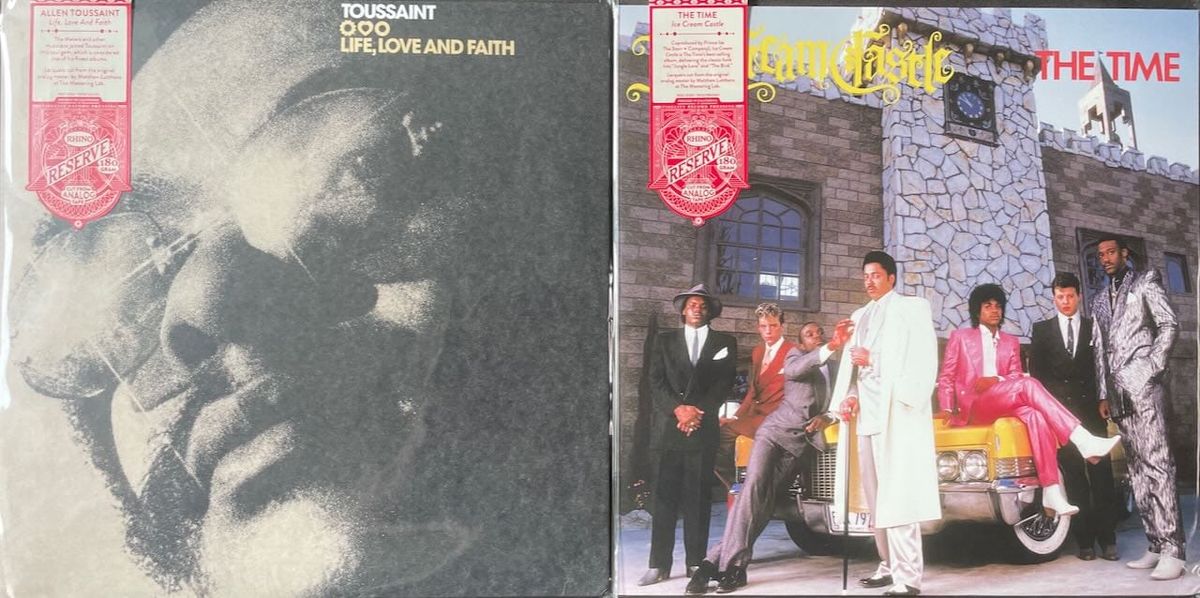
Hi everyone—two reviews this evening, as I catch up on a pair of Rhino Reserves that came out a few weeks back.
- Allen Toussaint: Life, Love and Faith
- The Time: Ice Cream Castle
Before we get to that, though, the big vinyl news today is that a 5-LP version of the Mothers of Invention’s 1966 debut album Freak Out!, one of rock’s first double albums, is coming on September 25 from UMe and Zappa Records to celebrate the album’s 60th anniversary.
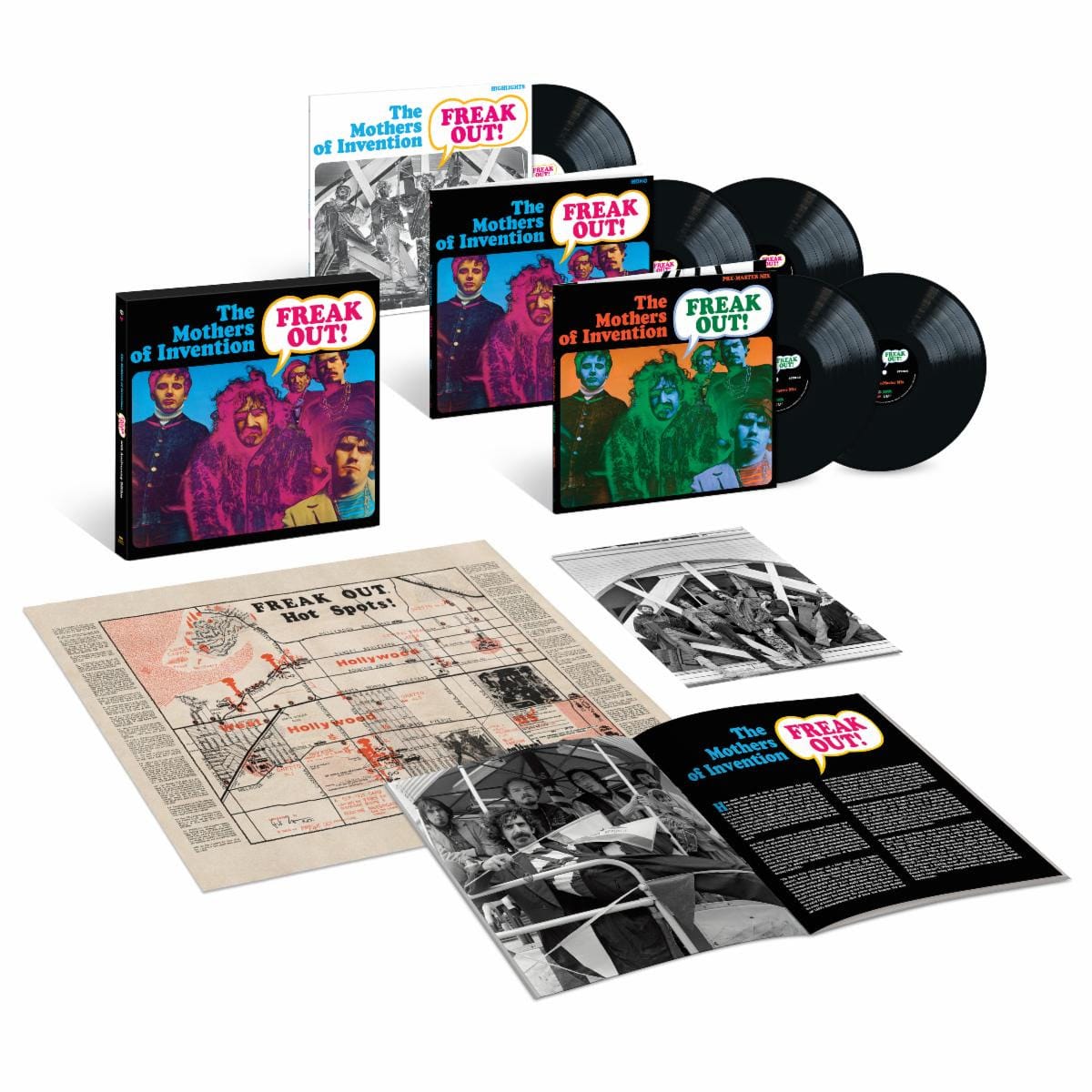
The set includes a version of the double album taken from a 1966 pre-master tape, which is an early alternate stereo mix of the album before the final treatments were added by producer Tom Wilson; it also includes the original mono mix, sourced from a needledrop except for three tracks where the mono tapes were located. The fifth LP contains an assortment of demos, outtakes, and live tracks, culled from the 5-CD/1-Blu-ray box, which contains two full discs of that material as well as the original stereo album mix, plus a Blu-ray with an Atmos mix and the stereo mix in hi-res. The original stereo LP is being reissued separately on colored vinyl, sourced from the new 192/24 transfer that also makes up the backbone of the 5-CD/1-Blu-ray set. More info and preorders are here.
Also, I wanted to congratulate Christian, the winner of our July vinyl giveaway! Christian will be receiving a copy of Rokk Í Reykjavík, the soundtrack to the 1982 documentary that covered what was happening in Icelandic music in the early ’80s. It’s chock full of punk, post-punk, and new wave bands that made for an exciting, eclectic scene; the album also features a couple of songs featuring a teenaged Björk. Read the review here.
If you’d like to be eligible to win future vinyl giveaways, simply join our paid tier. You’ll also get complete access to everything published here going back to the beginning, as well as commenting privileges and weekly playlists featuring tunes from the week’s latest vinyl reissues. Plus, you’ll be supporting a small, independent music publication that relies on reader support instead of ad revenue or affiliate links. It’s all very cool, and you will be too when you upgrade.
Now, let’s crack open some Reserves.
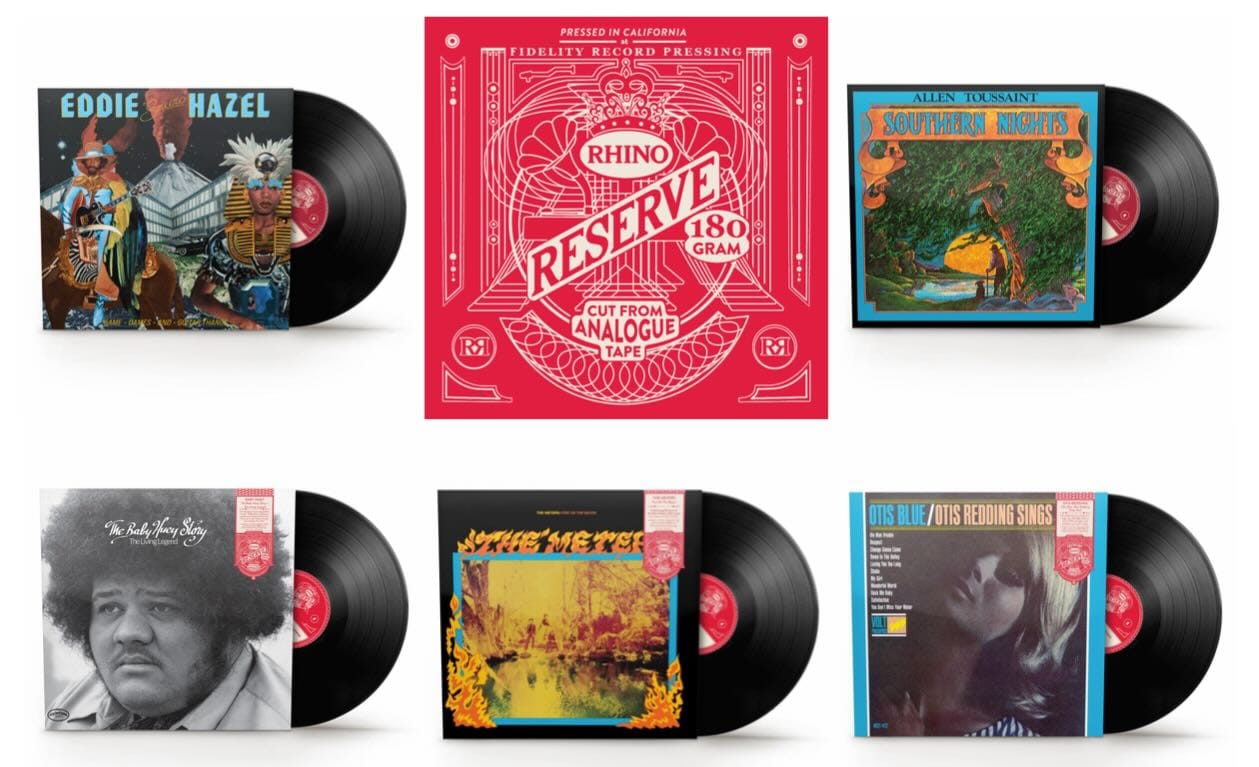
When Warner Music launched its Rhino Reserve series in January 2025, the first two titles were Eddie Hazel’s solo album Games, Dames and Guitar Thangs and Allen Toussaint’s lovely Southern Nights. The next three Reserves came a few months later to celebrate June’s Black Music Month, with albums by Baby Huey, the Meters, and Otis Redding.
Although Rhino Reserve has since expanded its purview to include rock, folk, and jazz albums, I quickly internalized the idea that the Reserve line’s specialty is soul, R&B, and funk from the ’60s and ’70s—and while it seems that anything in the Warner catalog is fair game for the Reserve treatment, those soul, R&B, and funk albums can often be the most crucial and exciting reissues in the series, as originals can be hard to find in good condition, or at least more so than some of the easily obtainable rock albums that have also come out under the Reserve banner. To make matters better, that particular vintage of R&B is often full of warmth, thump, spirit, and sweetness, which means it sounds especially good in the hands of the Mastering Lab’s Matthew Lutthans and the all-tube system that he works on, assembled over the years by Doug and Sherwood Sax.
In June, Rhino Reserve reissued five further R&B albums as, once again, part of Black Music Month. I have tackled three of these so far—you can read my review for Charles Wright and the Watts 103rd Street Rhythm Band’s Express Yourself here, and my reviews for Betty Wright’s I Love the Way You Love and Little Beaver’s Party Down here—but I’ve fallen behind on reviewing the other two. So today I’m making up for lost time with reviews for The Time’s 1984 Ice Cream Castle (an outlier in this batch in that it comes from the ’80s, when R&B was embracing drum machines and synthesizers) and the album that was New Orleans maestro Allen Toussaint’s first headlining release for Reprise, 1972’s Life, Love and Faith. The latter feels especially fitting, as the Reserve series launched with a Toussaint record; perhaps Rhino will soon round out the trilogy with Motion, Toussaint’s 1978 album for Warner Bros. Records.
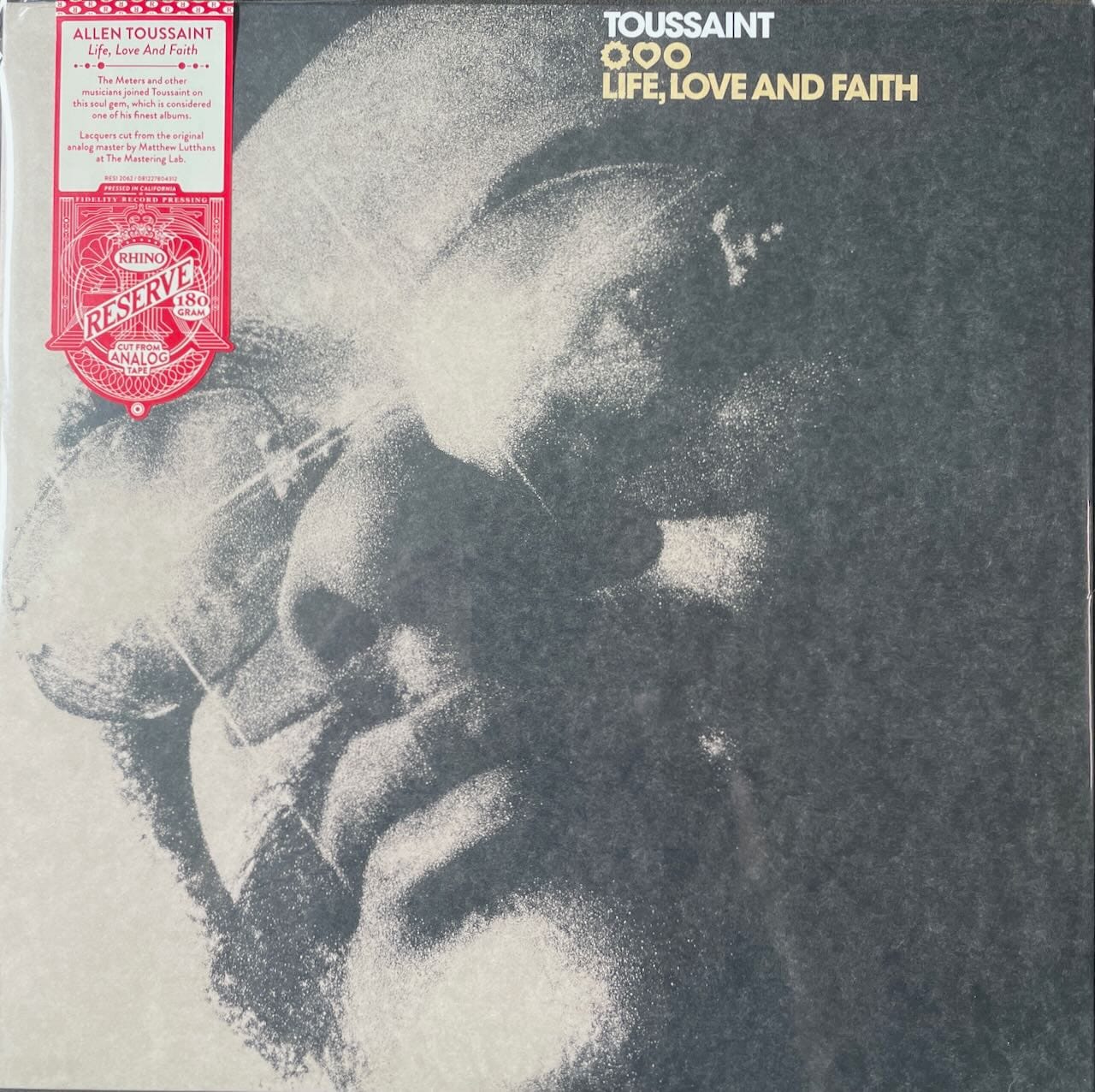
Allen Toussaint: Live, Love and Faith
No wellspring of American music is more fertile than the city of New Orleans, and it has its share of musical titans: Louis Armstrong, Fats Domino, Jelly Roll Morton, Professor Longhair… the list goes on like an absurdly well-populated and virtuosic second line. But in terms of diversity of skills and well-rounded talent, the late, great Allen Toussaint might be the most titanic of all. His songbook is among the finest in American popular music, his arrangement skills were nonpareil, his producing résumé can go toe-to-toe with anyone from George Martin to Quincy Jones, and his piano chops exhibited his deep and abiding knowledge of all kinds of music, from classical to boogie-woogie to jazz to rock ’n’ roll.
Starting with his earliest recordings in the 1950s and continuing through to his death in 2015, Toussaint was a tidal force in R&B, helping shape the trajectory of soul music with his sides for Irma Thomas, Lee Dorsey, and Ernie K-Doe in the 1960s and defining New Orleans funk with the Meters, Dr. John, and the Wild Tchoupitoulas in the 1970s. And while Toussaint’s name was usually found on the back covers of the records he was involved in—listed among the songwriting, producing, and arranging credits—the handful of albums where his name is emblazoned on the front are some of the most rewarding and pleasurable records of any era and genre.
Toussaint is an assured and charismatic frontman, and if his vocals aren’t as impassioned as, say, those of Irma Thomas or Aaron Neville, he wields a dapper wisdom in his delivery and the musical instincts to know how to push a line or shape a melody around his range. Even if the rest of his career had never happened—if he hadn’t written “Fortune Teller” or produced Labelle’s “Lady Marmalade” or done the arrangements for the Band’s Rock of Ages and The Last Waltz or given Herb Alpert’s Whipped Cream and Other Delights its title track—the two full-lengths that Toussaint recorded for Reprise Records, 1972’s Life, Love and Faith and 1975’s Southern Nights, would be more than enough to warrant a serious cult following.
I guess I’ve already shown my hand, but this is all to say that I think Allen Toussaint’s solo albums are just flat-out fantastic, and I was delighted when Southern Nights appeared as one of the first Rhino Reserve titles. And now I’m even more delighted that Life, Love and Faith has joined it in the series, as it’s my favorite of the two. It’s a dozen tuneful songs without a trace of fat on their bones; every one of the songs sounds like a hit to me, and the performances are tight, soulful, efficient, and naturally, effortlessly funky. Toussaint knew how to make not just the rhythms spring but how to make the entire production bounce like a perfectly tuned drumskin so that everything snaps just right.
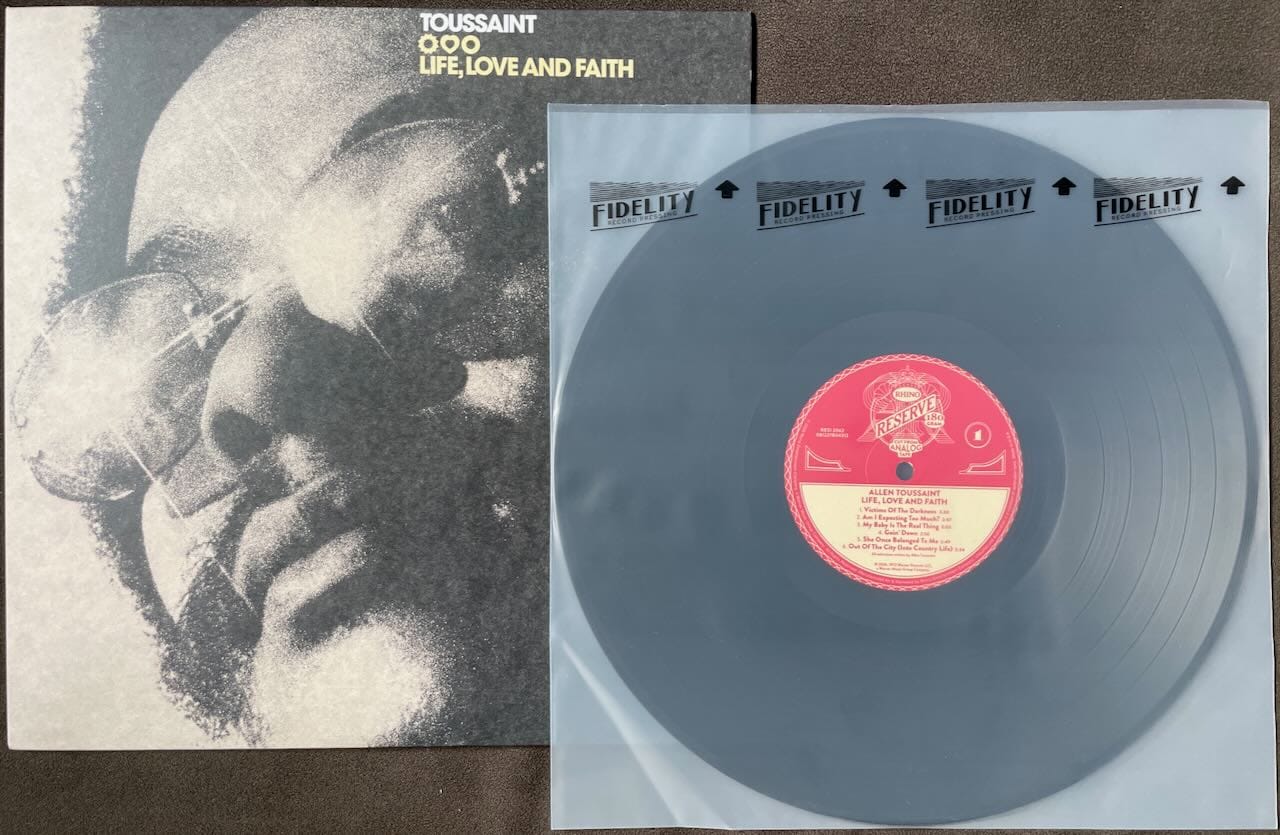
I’ve never actually owned the album on vinyl before, but the versions I’ve heard always sounded poor to me, particularly on streaming. There’s a muted, stepped-on quality to the streaming versions of his Reprise albums that had me wondering if that’s simply what the records sounded like. When the Southern Nights Rhino Reserve pressing came out, it was eye-opening; this new pressing of Life, Love and Faith is even more so, revealing that the album is capable of sounding pretty darn fantastic.
The opening bars of the opening track, “Victims of the Darkness,” are a bit of a red herring. The piano’s high notes distort, and the opening passages sound dull and muddy. But once the song gets going, everything convulses to life with ambience, texture, and vitality. “Am I Expecting Too Much” builds on top of a thick kick drum and some ragged chicken-scratch guitar, with the bass slaloming effortlessly through it all. And the vocal arrangement for “My Baby Is the Real Thing” displays a level of artistry and ingenuity that is on the level with Brian Wilson or the Staple Singers.
Several of the songs on Life, Love and Faith work because of their outward simplicity, concealing Toussaint’s more complex compositional concepts. “Soul Sister” is a joyous rhapsody to Black women everywhere that initially seems to ride a simple “Louie Louie”-style three-chord hook and rising falsetto harmonies, but the structure occasionally remaps itself within unexpected vamps and the occasional jazz chord. “Goin’ Down” seems like a forthright potboiler, but it marries New Orleans funk to the city’s Dixieland jazz traditions in surprising ways. And “Gone Too Far” is built around a laidback country-blues hook and vocal arrangement that would be more than enough to carry the groove for any other song, but the bridge shifts the song’s gear to melancholy, making room for either Toussaint’s rapped words or an unexpected nylon-string guitar solo (likely played by Toussaint himself).
“On Your Way Down” may well be the album’s centerpiece, a slow, swampy funk with plenty of empty space in between the notes. Bluesy guitar, harmonica wails, and trumpet garnishes color the palette, but the song’s bedrock is its slow-swaggering groove, carved by the drums, congas, bass, and Toussaint’s barrelhouse piano, creating a relentless, deathless stride that mirrors the song’s theme of reaping what you sow: “The same people that you misuse on your way up, you might meet up on your way down.” Like virtually every song on Life, Love and Faith, its only shortcoming is that it ends too soon.
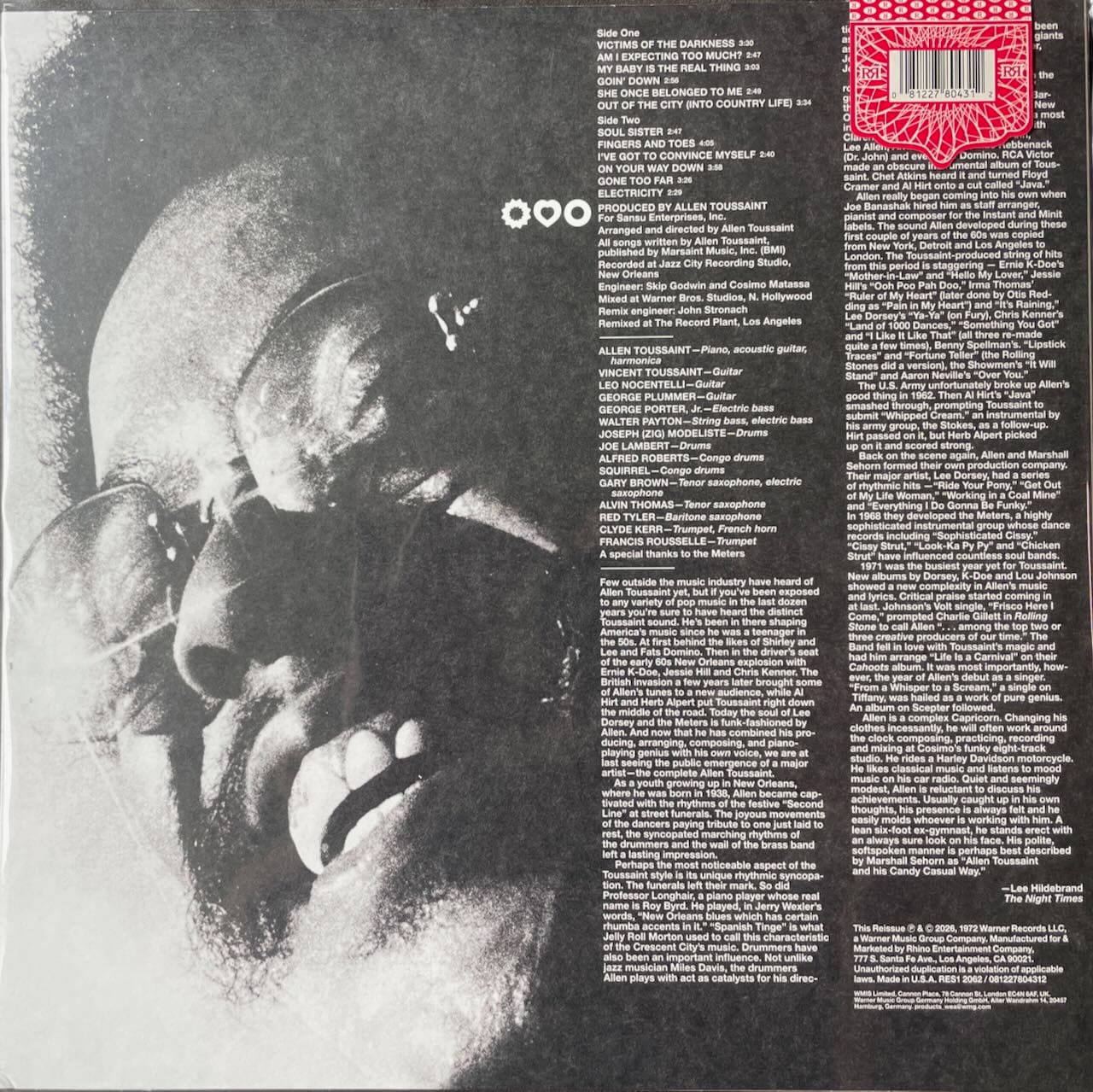
Toussaint’s musicians include three-fourths of the Meters along with a fine cross-section of additional New Orleans talent, although the backing vocalists aren’t credited. The performances are loose and spontaneous-sounding, and Toussaint keeps his mixes uncluttered, without excess reverb or processing. Everything is straightforward and unvarnished, revealing the level of craft in the arrangements that undergird the melodies, harmonies, and rhythms. The album was recorded at Jazz City, where Toussaint had been recording since 1967, when the studio opened as the new outpost of Cosimo Matassa’s legendary Cosimo Recording Studio before changing its name in 1969. (Matassa and his right-hand man Skip Godwin were the recording engineers for Life, Love and Faith.) Toussaint would record at Cosimo’s/Jazz City regularly until he opened his own Sea-Saint Studios in 1973, and the studio—located in the second floor of a warehouse above the Superior Plastics record pressing plant—had a dry, slaphappy signature sound that can be heard on those early Meters records, as well as Lee Dorsey’s Yes We Can and, of course, Life, Love and Faith.
Matthew Lutthans of the Mastering Lab cut the Rhino Reserve pressing from the analog master tape, and he draws out the sinew and punchiness of the recording. For whatever reason, the pressing really comes alive when you turn up the volume and allow for maximum impact from the bass and drums. At lower volumes, certain elements get swallowed up in the mix, which relies heavily on attacks and transients and doesn’t offer much sustain for the different components of the sound. That’s all remedied at the correct volume, where the full body and texture of the music is properly displayed. There’s actually a ton of breath and energy in the recording, but there’s very little sparkle or chirp. Instead, the record thumps, and is all the better for it.
Original US pressings of Life, Love and Faith in solid condition usually cost around $100, and I’ve never had the good fortune to come across one in the wild. There was a best-avoided 2012 reissue from 4 Men with Beards, a label notorious for using inferior sources on diabolical-sounding pressings, and in 2021 the German label Speakers Corner did a reissue cut from tape by Kevin Gray that sold out quickly. I’m not able to provide a shootout of the various pressings here, but with the easy availability and obvious quality of the Rhino Reserve so readily apparent, I’m not sure what purpose it would serve. For an album that I had long sought on vinyl, I find the Rhino Reserve more than satisfying, and if it’s an album you don’t possess but would like to, I have certainty that it will satisfy you too.
Toussaint’s brief stretch as a headlining recording artist was one of many tributaries in his remarkable career. He would eventually settle back into writing, producing, and arranging, with collaborations with Paul McCartney, Elvis Costello, Bonnie Raitt, and countless others on the horizon. Indeed, Toussaint was one of those all-purpose musicians who could literally perform every trick in the book, and his versatility made him an ideal collaborator for hundreds of other performers. But for a short while, Allen Toussaint was the man in the spotlight, and Life, Love and Faith makes the incontrovertible case that he absolutely belonged there.
Rhino Reserve 1-LP 33 RPM 180g black vinyl
• New remaster of Allen Toussaint’s 1972 album
• Jacket: Reverse-board single pocket
• Inner sleeve: Fidelity Record Pressing–branded poly
• Liner notes, insert, or booklet: None; original sleeve note by Lee Hildebrand is reproduced on the back cover
• Source: Analog; “Lacquers cut from the original analog master”
• Mastering credit: Matthew Lutthans at the Mastering Lab, Salina, KS
• Lacquer cut by: Matthew Lutthans at the Mastering Lab, Salina, KS; “MCL” in the deadwax
• Pressed at: Fidelity Record Pressing, Oxnard, CA
• Vinyl pressing quality (visual): A- (one very slightly discolored pinkie-sized blotch in the vinyl, which did not affect playback)
• Vinyl pressing quality (audio): A- (one super-brief “zzzt” of noise, possibly nonfill)
• Additional notes: Comes inside a reusable poly outer sleeve sealed by a hype sticker, as per other Rhino Reserve titles.
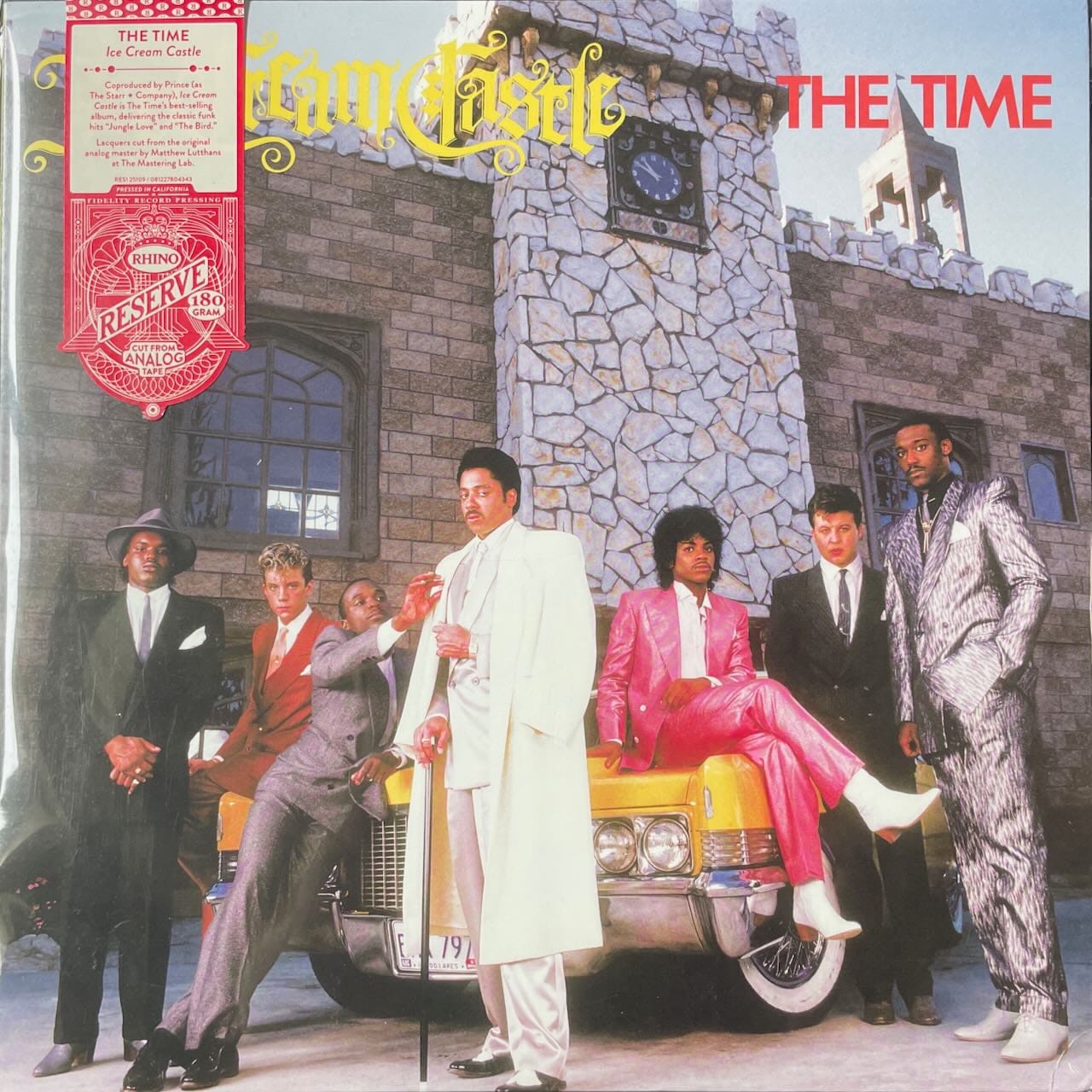
The Time: Ice Cream Castle
By 1984, funk and R&B were sounding very different. The disco explosion and the introduction of synths and drum machines had given rise to electro-funk, boogie, and early forms of hip-hop, with a particular vanguard happening in Minneapolis spearheaded by Lipps Inc. and Prince. This danceable form of R&B/funk reached an apex with Prince and the Revolution’s 1982 album 1999, and by the time of their 1984 follow-up, the film/album juggernaut Purple Rain, the singularly talented Prince had become a megastar.
The Time were along for the ride, and they featured extensively in the Purple Rain movie. 1984’s Prince-produced Ice Cream Castle was essentially their half of the soundtrack, with the album’s “Jungle Love” and “The Bird” included in the film. The Time were a band Prince repurposed a few years earlier from an existing group called Flyte Time, with that band’s singer, Alexander O’Neal, replaced by Prince’s friend from childhood, Morris Day. Prince’s hand was heavy on the reins with Ice Cream Castle, and his guitar and synth playing, vocals, and production style are audible on every track. In fact, Prince was so involved that there does not seem to be consistent agreement about the songwriting credits, with the album label itself crediting Day for most of the tunes while the Wikipedia page insists that Prince wrote most of the material, citing the ASCAP registry.
The album is decidedly uneven, with two lengthy, unsuccessful comedy pieces masquerading as slow-jams loitering among the four fine funk pieces. They must have been a hoot to record, with Day, Prince, Sharon Hughes, and the other members of The Time all throwing themselves fully into character. But “Chili Sauce” and “If the Kid Can’t Make You Come” aren’t really worth repeated listens, sounding like B-side goofs taking up valuable album real estate. The former is essentially just a comedy sketch on top of a sex-charged musical vamp, but the latter track contains some glimmers of musical interest, devolving from a slow-funk romancer into an extended sexual dialogue between Day and Hughes as the band heats up the tempo. It’s fun once, but it wears out its welcome quickly.
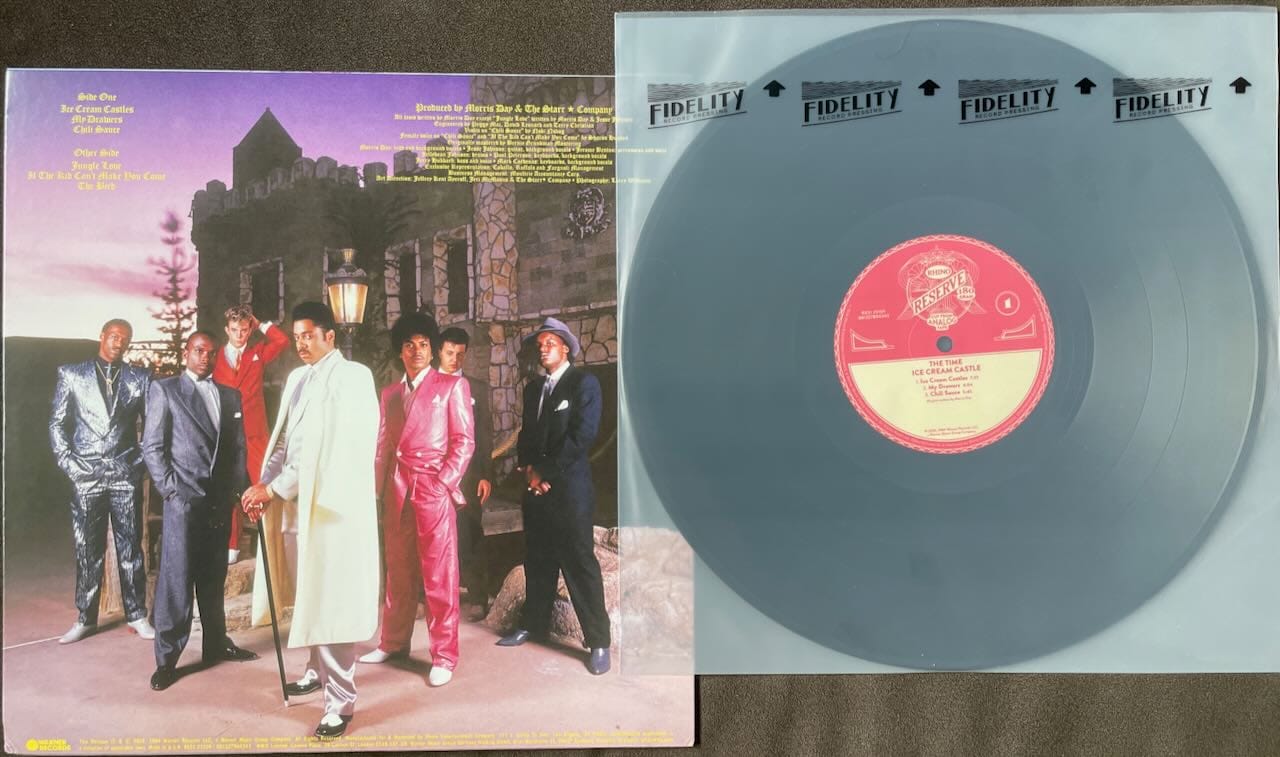
Fortunately, the remaining four tracks—the two aforementioned songs from Purple Rain, plus “Ice Cream Castle” and “My Drawers”—are all party-ready jams that deliver. “Ice Cream Castle” is the gentlest and poppiest tune here, with a wistful melody over a steady new-wave backing. “Jungle Love” and “My Drawers” are harder-nosed funk that could’ve easily fit on 1999 or Purple Rain, and “The Bird” was recorded live at First Avenue, showing The Time’s formidable power as a post-disco dance-funk act.
Bernie Grundman mastered the original 1984 LP, and he also mastered Purple Rain around this time. Both original pressings share an aggressive, top-heavy sound with a sharp, exciting treble presence that was very characteristic of its day, emphasizing the synths, artificial snare hits, and occasionally shrieking vocals. This component has been noticeably reduced on the Rhino Reserve pressing, cut by Matthew Lutthans, in favor of a more balanced sound, with a thicker bottom end and less transparency into the mix, particularly during the dialogue sections in the two comedy tracks. I think dyed-in-the-wool Time fans might find that something is missing from the Rhino Reserve, but to my ears it’s actually an easier listen musically, as it’s far less piercing and fatiguing, with more information delivered through subliminal vibrations to the body as opposed to toppy edge sent to the eardrums. Still, I’m not sure it’s authentic to the original pressing—which, fortunately, is not difficult to find in used condition.
Ice Cream Castle is an essential part of the Prince canon, especially in that it comes from his imperial 1999/Purple Rain period. But it’s an odd album all told, with the comedic bits not hanging especially well together with the funk workouts. This Rhino Reserve pressing emphasizes its attributes as a dance album, designed to connect with the lower half of the body and get it moving on the floor.
Rhino Reserve 1-LP 33 RPM 180g black vinyl
• New remaster of The Time’s 1984 album
• Jacket: Direct-to-board single pocket
• Inner sleeve: Fidelity Record Pressing–branded poly
• Liner notes, insert, or booklet: None
• Source: Analog; “Lacquers cut from the original analog master”
• Mastering credit: “Originally mastered by Bernie Grundman Mastering”
• Lacquer cut by: Matthew Lutthans at the Mastering Lab, Salina, KS; “MCL” in the deadwax
• Pressed at: Fidelity Record Pressing, Oxnard, CA
• Vinyl pressing quality (visual): A
• Vinyl pressing quality (audio): A
• Additional notes: Comes inside a reusable poly outer sleeve sealed by a hype sticker, as per other Rhino Reserve titles.
Listening equipment:
Table: Technics SL-1200MK2
Cart: Audio-Technica VM540ML
Amp: Luxman L-509X
Speakers: ADS L980