Reviews: Grupo Um | The Emotions


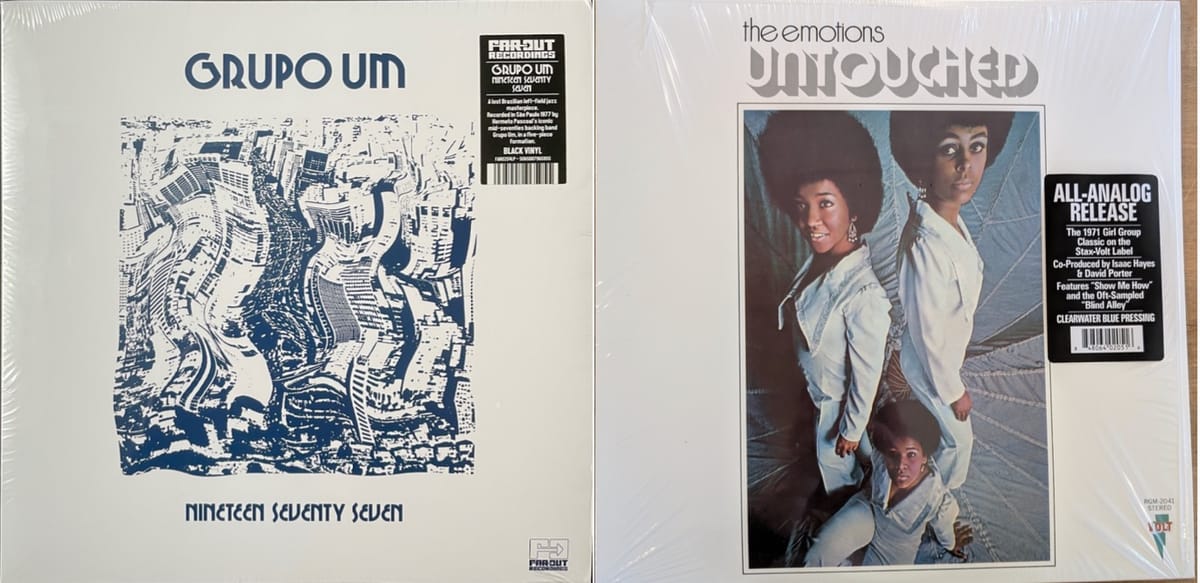
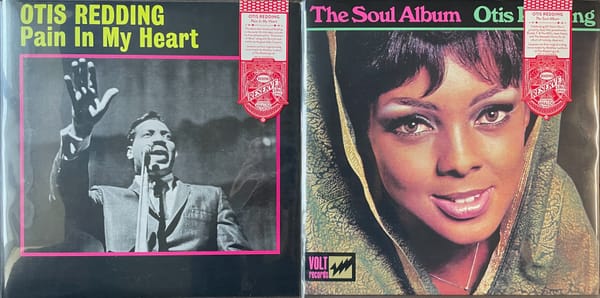
What do a Brazilian jazz fusion band and a Chicago vocal-soul trio have in common? Not a whole lot, as it turns out, except that we’re reviewing reissues of both of them this week. First up, we’ve got a never-before-released 1977 recording from Grupo Um, the intensely ambitious São Paolo band made up of Hermeto Pascoal’s backing musicians; squelched at the time, the album has now finally been made available by the Brazilian-music historians at Far Out Recordings. And second, we've got a reissue from the Emotions, of a 1971 LP that was recorded during their stint at the Memphis-based Volt Records, a sublabel of Stax. This all-analog reissue comes from the folks at Real Gone Music.
 Ned Lannamann
But first, here’s just a quick reminder that our February vinyl giveaway is now live. You can click the box above to learn all about it—and to upgrade to our paid tier to be eligible to enter! If you’ve been enjoying The Vinyl Cut but haven’t yet made the leap to a paid subscription, just remember that doing so supports our work to come, keeps the site ad-free, and generally makes you an all-around great person.
With that out of the way, let’s spin some records.
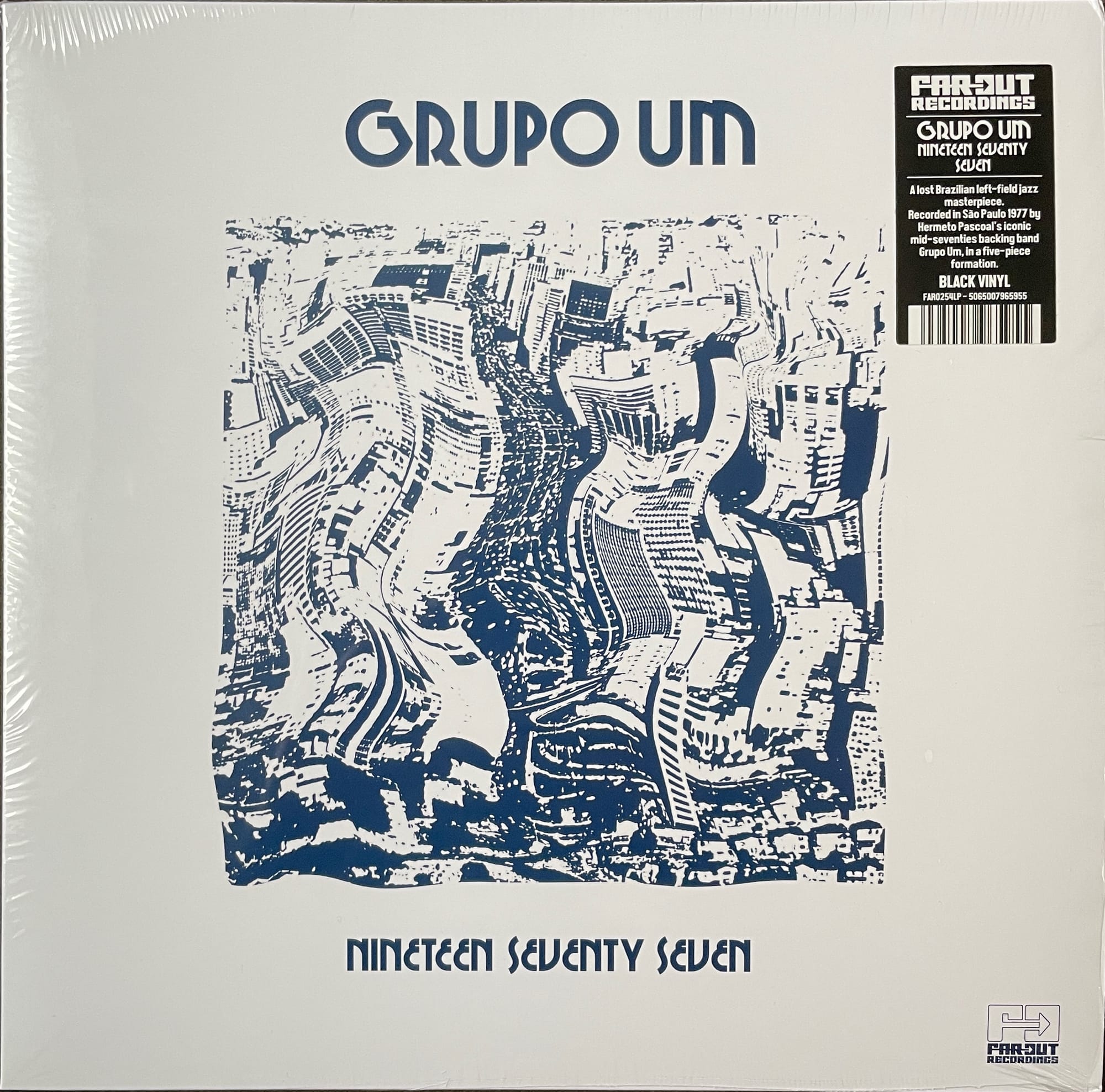
Grupo Um: Nineteen Seventy Seven
Review by Ned Lannamann
It took the world only half a century to catch up to Grupo Um. The Brazilian instrumental jazz fusion band, formed around a core of musicians who backed the legendary Brazilian composer Hermeto Pascoal, recorded their first album in 1975 but couldn’t find a label brave enough to release their freeform music, which was deemed too subversive for popular consumption under the military dictatorship at the time. Far Out Recordings, a UK label devoted to Brazilian music, released the lost album in 2023 as Starting Point—and now they have done the same for a second unreleased Grupo Um album, titled Nineteen Seventy Seven after the year it was recorded.
This sophomore effort has been unheard by the public until now, and it finds the ensemble with an expanded lineup and incorporating exploratory new sounds into their repertoire. The disc contains some of the most densely psychedelic music imaginable, as the band deconstructs rhythms, sonics, and melodic phrases through virtuosity and sheer, perverse willfulness. No wonder it terrified the censors.
The nucleus of Grupo Um—whose name literally translates to Group One but whose meaning suggests the idea of unity—was a pair of brothers, Zé Eduardo Nazario and Lelo Nazario. The older Zé became an in-demand drummer while in his teens, and his virtuosity quickly led him to becoming one of the most esteemed musicians in Brazil. The younger Lelo played piano but initially thought he would pursue a career in math or physics. His exposure to Zé’s music and his brother’s musical collaborators led Lelo to take his own playing more seriously, eventually becoming interested in electronics, engineering, tape manipulation, and avant-garde composition. The Nazario brothers formalized Grupo Um with old friend and bassist Zeca Assumpção while all three were members of Pascoal’s backing band; initially just a casual collaboration, Grupo Um became a going concern when Pascoal relocated to Rio de Janeiro, while the musicians stayed behind in São Paolo.
By the time of the Nineteen Seventy Seven recording—made in a single day at Rogério Duprat’s Vice-Versa Studio in São Paolo—Grupo Um had added saxophonist Roberto Sion and percussionist Carlinhos Gonçalves, diversifying their sound and pushing their cutting edge even further afield. Lelo was the primary composer, and by this time he had begun to incorporate electronics into his palette. The centerpiece of the album is “Mobile/Stabile,” a 10-minute transgressive voyage into magnetic tape manipulation, with Lelo’s prepared sounds augmented by the ensemble’s interplay. It’s a heady, disorienting experience, marrying free jazz with musique concrète and blending it with a particularly potent Brazilian blend of psychedelia. When it was performed live at a 1978 music festival, the organizers literally pulled the plug on the band—perhaps accidentally adding a meaningful layer of context to the piece in an era of government censorship and cultural repression.
Elsewhere on the record, Grupo Um takes on the trappings of a more conventional jazz-fusion band of the era, but one that always emphasizes the farthest reaches of the sounds they’re conjuring up. Zé and Gonçalves are continually recontextualizing the beat within every bar, creating a tropically infused, kaleidoscopically percussive backing for the other musicians. Samba, maracatu, and other Afro-Brazilian rhythms weave in and out of the maelstrom, while Lelo’s electric piano and Sion’s soprano sax provide the late-’70s timbres we’re used to but placing them within uncharted musical terrain.
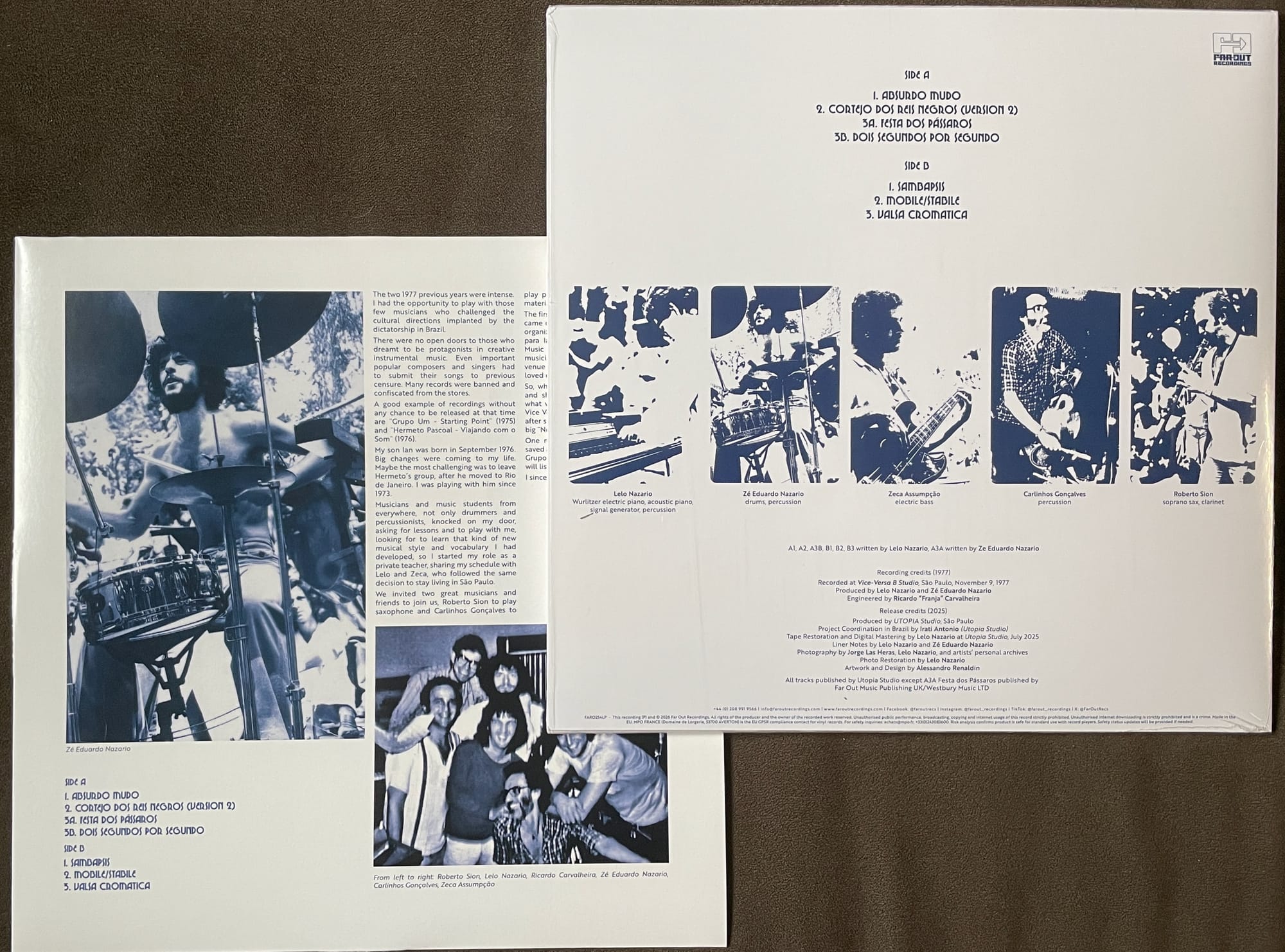
The album was recorded live to four-track in the smaller of Vice-Versa’s two studios. Fortunately, engineer Ricardo Carvalheira was on hand, and the band’s sound is richly complex and never cluttered. It’s a significantly better-sounding recording than Starting Point, with Zé’s virtuosity in particular coming to the fore. Lelo handled the digital-to-analog transfer of the archival tape, and it sounds like the recording did not suffer one bit during the near 50-year interim between its creation and its release. The lacquer was cut by Caspar Sutton-Jones at Gearbox Records in London, and it makes for a full-blooded listen with ample separation and articulation of sound. The pressing, done at MPO, is excellent, with silent backgrounds and no obtrusive noise whatsoever. Both Zé and Lelo have contributed liner notes, and the entire reissue package has been expertly handled by Far Out Recordings.
Grupo Um would go on to successfully release their third album independently in 1979, with two more following in 1981 and 1983 before the band dissolved at more or less the same time as the military regime. That an album of this artistic vision, virtuosic skill, and unparalleled boundary-pushing was cast aside at the time of its making only further emphasizes the power of art—even when, as in this case, it’s wholly instrumental music without anything explicitly subversive articulated in lyrics, song titles, or anywhere else. But though their method of communication was not language-based, Grupo Um’s activating philosophy itself may have been too troublesome for the oppressive regime. And in the act of being censored, suppressed work like this accumulates additional power. Under ordinary circumstances, the tracks on Nineteen Seventy Seven would simply be the fruits of adventurous musical expression. But when framed as something either unsuitable or outright dangerous for the public to hear, it becomes representative of the power of free thought—and thus it becomes a threat to those attempting to assume control.
Nineteen Seventy Seven is also a worthwhile reminder that jazz fusion—which became thoroughly domesticated in the US when performers like George Benson and Spyro Gyra flattened it out entirely—did indeed once possess the power to freak out and stupefy. This is arrestingly unconventional music that wholly embraces the avant-garde in its constant search for undiscovered waters. Even after being hermetically sealed off from the world for nearly five decades, Grupo Um’s 1977 sonic odysseys have not lost one ounce of their power.
Far Out Recordings 1-LP 33 RPM black vinyl
• First-ever release of a lost 1977 album from the Brazilian band Grupo Um
• Jacket: Direct-to-board single pocket
• Inner sleeve: Custom printed inner sleeve with notes and photos
• Liner notes, insert, or booklet: Inner sleeve contains essay by drummer Zé Eduardo Nazario and keyboardist Lelo Nazario
• Source: Digital
• Mastering credit: “Tape Restoration and Digital Mastering by Lelo Nazario at Utopia Studio, July 2025”
• Lacquer cut by: Caspar Sutton-Jones at Gearbox Productions, London, UK; “CASPAR @ GEARBOX” in the deadwax
• Pressed at: MPO, Villaines-la-Juhel, France
• Vinyl pressing quality (visual): A
• Vinyl pressing quality (audio): A
• Additional notes: None.
Listening equipment:
Table: Technics SL-1200MK2
Cart: Audio-Technica VM540ML
Amp: Luxman L-509X
Speakers: ADS L980
The Emotions: Untouched
Review by Robert Ham
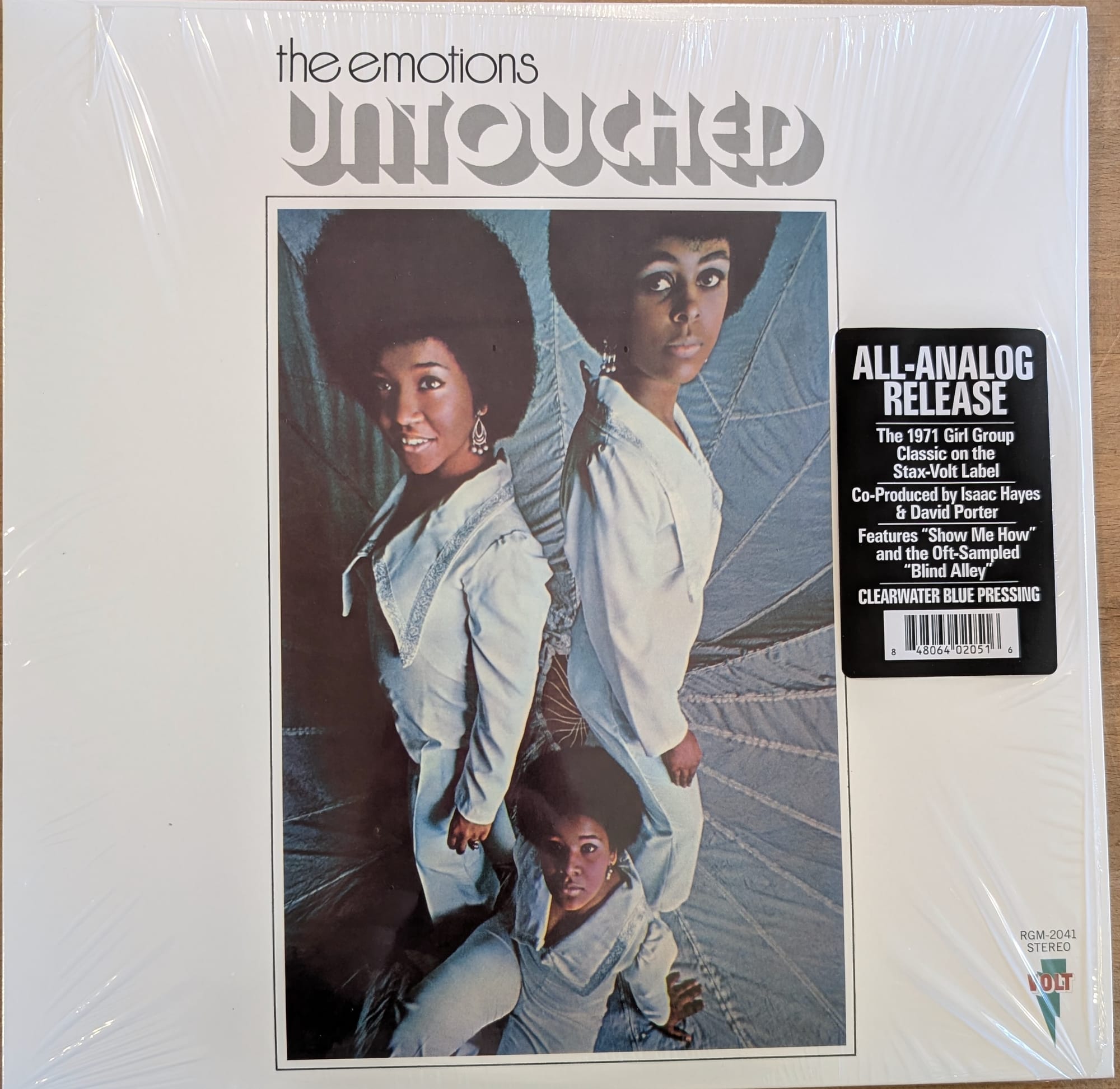
The Emotions, the Chicago-based vocal group, may have hit their commercial peak in the late ’70s with “Best of My Love” and “Boogie Wonderland,” but it could be argued that they reached greater creative heights earlier in that decade when they were signed to the Stax Records subsidiary Volt.
It was through that label that sisters Wanda and Sheila Hutchinson and their friend Theresa Davis (brought on in 1970 to replace the other Hutchinson sister Jeanette) had their gospel-trained harmonies molded to fit the Stax sound by no less than Isaac Hayes and his writing/producing partner David Porter. The results of their combined labors were two albums that set the sweet voices of the Emotions against some greasy Memphis funk and soul: 1969’s So I Can Love You and 1971’s Untouched, the latter of has been reissued in a spectacular all-analog pressing from Real Gone Music.
The key to the success of Untouched is the juxtaposition of the angelic tenderness of the three Emotions and the earthbound grind provided by three of the best session groups of the era: the Bar-Kays, the band that had survived the loss of four members in a plane crash and went on to record dozens of sessions for Stax; the Muscle Shoals Rhythm Section, the Alabama studio outfit that accepted a number of assignments from the financially strapped Stax; and David Porter’s hand-picked ensemble of Memphis players known as the Soul Spacemen. The mix of musicians and studios could have made for a messy or, at the very least, unbalanced album, but the singular purpose of turning these young women into superstars holds it all together.
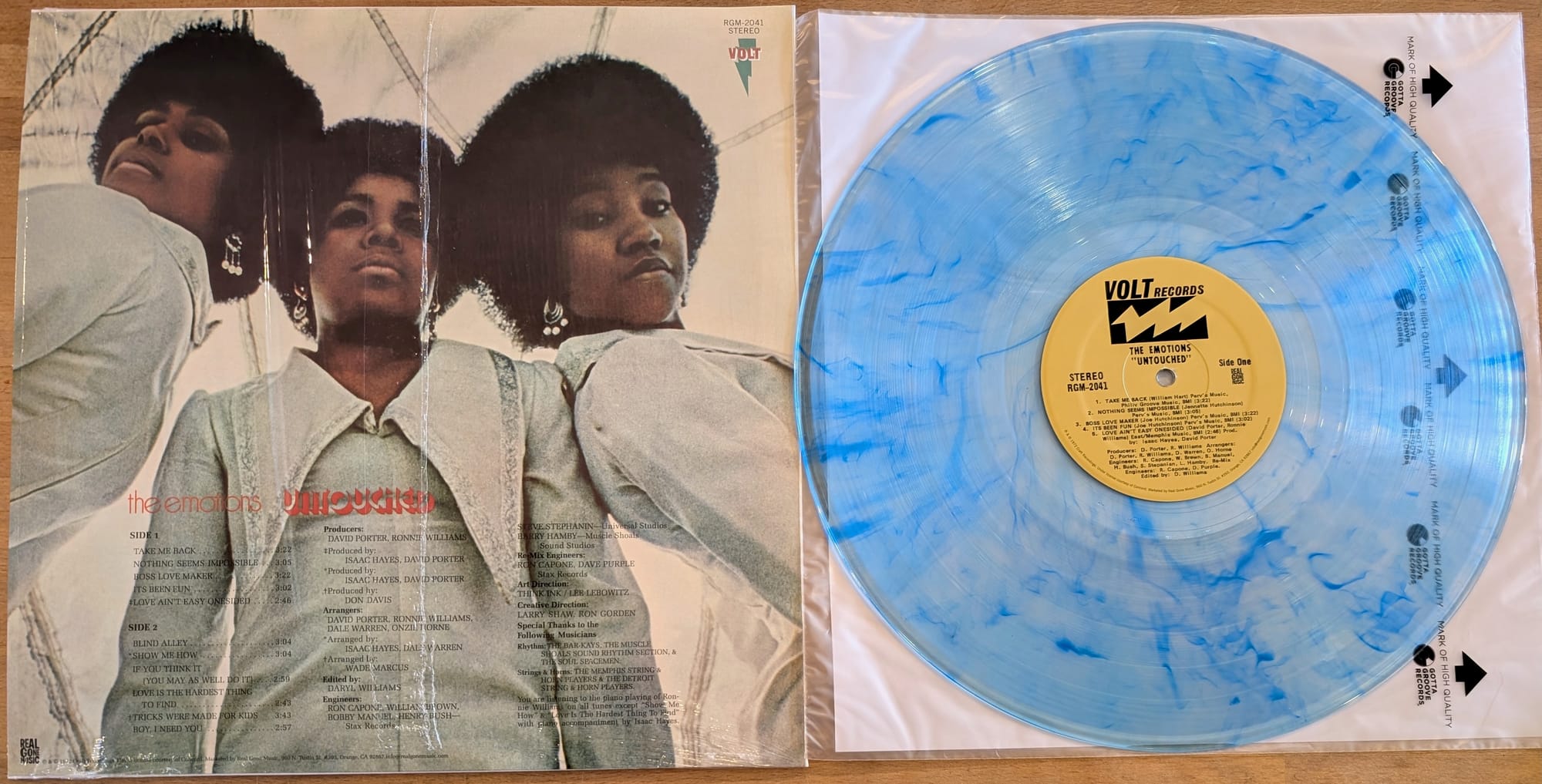
The most notable sonic shifts are the result of the different songwriters involved. “Show Me How,” a co-write from Porter and Hayes, is of a piece with the languorous, string-drenched sound of the latter’s mega-successful 1969 album Hot Buttered Soul, while Porter’s own “Blind Alley,” a song that has been sampled a few dozen times by hip-hop artists like Big Daddy Kane and Ras Kass, is a throwback to Stax’s steady stream of gut-bucket soul classics. The tunes written by Joe Hutchinson, Wanda and Sheila’s father and the manager of the Emotions, like “Boss Love Maker” and “It’s Been Fun,” sound as though he was tapped into the space jams coming out of Detroit via Funkadelic at that time. No matter the approach, the three vocalists float through it all, raising the temperature or cooling things down with subtle shifts within their harmonies or in Wanda’s gorgeous, resounding leads.
As with all the other two all-analog reissues that Real Gone just released, this LP sounds magnificent. The pressing from Cleveland plant Gotta Groove Records is flat, clean, and free of noise or any other flaws, even on the “clearwater blue” edition I spun and re-spun for this review. Mastering engineers Clint Holley and Dave Polster did a marvelous job balancing out the sounds from the three studios (Stax and Universal Recording Studio, both in Memphis, and Sheffield, Alabama’s Muscle Shoal Sound Studios) where the album was recorded, while also ensuring that no single element of each track gets lost in the mix. When the Emotions aren’t singing, the rhythm section rightfully takes the spotlight, as this is music meant to serve the hips as much as the spirit. But when those ladies swoop in, every player falls in line behind them, lifting their voices and their words to the skies.
Real Gone/Volt 1-LP 33 RPM “clearwater blue” vinyl
• All-analog remaster of the Emotions’ 1971 album
• Jacket: Direct-to-board single pocket
• Inner sleeve: Gotta Groove–branded rice-paper-style poly
• Liner notes, insert, or booklet: None
• Source: Analog; “All-Analog Release” on hype sticker
• Mastering credit: None
• Lacquer cut by: Clint Holley and Dave Polster at Well Made Music, Bristol, VA; “CJIII + dP” in deadwax
• Pressed at: Gotta Groove Records, Cleveland, OH
• Vinyl pressing quality (visual): A
• Vinyl pressing quality (audio): A
• Additional notes: Also available on black vinyl and a limited Wax Mage colored-vinyl edition.
Listening equipment:
Table: Cambridge Audio Alva ST
Cart: Grado Green3
Amp: Sansui 9090
Speakers: Electro Voice TS8-2