Review: Dr. K. Gyasi and His Noble Kings

A groundbreaking Ghanaian highlife classic from 1974 gets a sweet reissue from Strut.
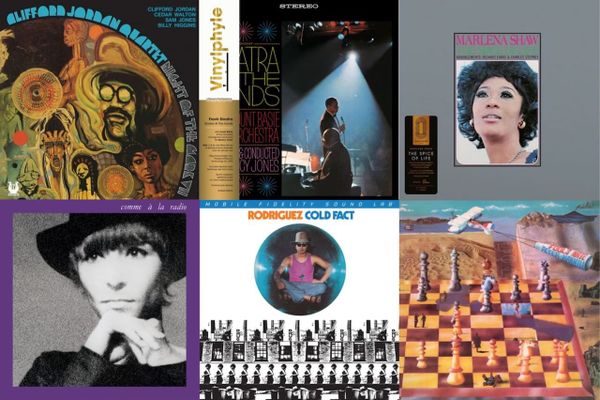
Before I get into today’s review, here are some “What We Did on Our Holidays” pics. I went up to Seattle over Memorial Day weekend and dropped by the renowned Easy Street Records in West Seattle. Despite having been the city countless times, I never managed to make my way over to Easy Street until now. And earlier this year, the store got its hands on a massive stash of copies of The Velvet Underground and Nico, bought from a record collector who was more of a visual art aficionado than a fan of the band. He collected album artwork by Andy Warhol (of course) as well as Banksy, Basquiat, Keith Haring, Raymond Pettibon, and others.

The collection has been trickling into the store over the past three months or so, with a huge pile of Smiths records being the first batch to make its way to shelves (many of those Smiths records are still in the shop). The Warhol pieces soon followed, and while quite a few had been sold by the time I got there, I still was able to goggle at more original banana peels than I’ve ever seen before. Prices ranged from quadruple digits down to a more manageable $100 or so, and the collection naturally also included other Velvet Underground albums and the similarly Warhol-designed Sticky Fingers by the Rolling Stones.

One thing I didn’t spy were any of the album covers Warhol designed in the 1950s, including several classical LPs for Columbia, some jazz albums for Blue Note, and some for RCA Victor. Those were posted by Easy Street on Instagram as part of the initial collection, and some of those discs may still have been around, but I didn’t think to look for them specifically until later. Nevertheless, there was plenty to check out.
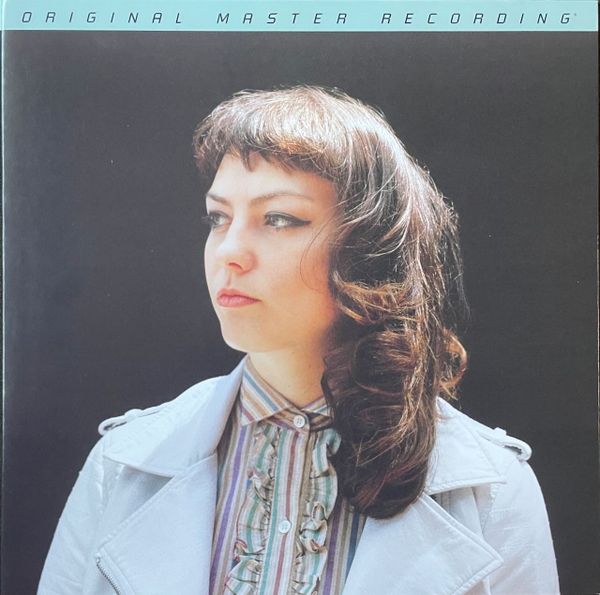
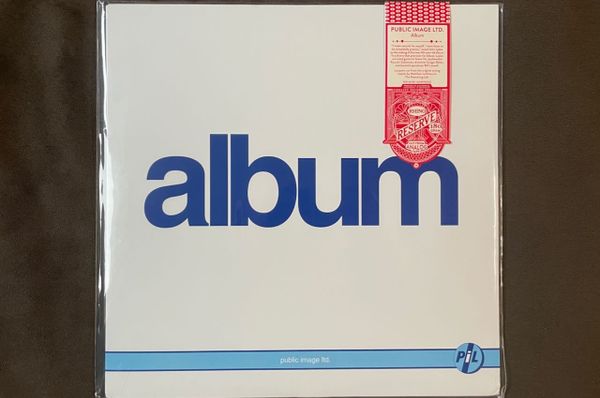
The "Bananas" section at Easy Street Records in Seattle.
I decided not to go home with any of the records you see here—my recent Vinylphyle pressing is plenty satisfying—but it was still a neat treat to see these all in one place. You can see more of the original collection on Easy Street’s Instagram—there are posts here, here, here, here, and here.
One more thing before we get to today’s review: Here’s a quick reminder that our May vinyl giveaway for paid subscribers is still live! Be sure to upgrade your subscription and enter the drawing before 11:59 pm on Sunday, May 31. Click here for all the details:


Dr. K. Gyasi and His Noble Kings: Sikyi Highlife
In 1974, Dr. K. Gyasi and His Noble Kings released Sikyi Highlife, a long-player that became a huge hit in Gyasi’s home country of Ghana. The album married the popular guitar-oriented highlife style of the day with the older rhythms of sikyi music, which originated in the 1920s as a romantic dance style for young lovers sneaking away from their watchful parents. But sikyi and highlife’s origins went even further back than that, as they were built on vocal and chordal styles from the traditional music of the Akan people from the southern and central regions of Ghana and Côte d’Ivoire. With Gyasi’s pioneering developments in the highlife genre, including instrumentation like horns and organ, Sikyi Highlife wielded a remarkable sound for its time, carrying on old traditions while carving out entirely new ones. For listeners more than 50 years later—and for those not fully immersed in Ghanaian musical history—the album remains a joyous blend of lustrous rhythms and exuberant playing. It’s a fantastic dance record of undying momentum and excitement, and Strut Records have just reissued it for the first time since its initial appearance on the Essiebons label in the 1970s.
The new Strut Records edition features a comprehensive essay by musicologist John Collins, which diagrams the development of the musical styles that all converged on Sikyi Highlife. Kwame Gyasi formed the Noble Kings in 1952, when the guitarist/composer was in his early 20s. He had been reared on the palm-wine style of popular music that was a precursor to highlife, as well as the hugely popular calypso songs that came across the Atlantic from the Caribbean. But perhaps most significantly, Gyasi was influenced by the odonson sound, which transposed Akan harp music to guitar, where it was sometimes called the “native blues.” Indigenous styles of Ghanaian music were always forefronted in Gyasi’s music, and he spent many years in the 1960s and 1970s serving as a cultural ambassador for Ghana alongside his bandleading duties.
This entrenchment in Ghanaian musical history sets Sikyi Highlife apart from the forms of African highlife that may be most familiar to western ears. The album is one continuous medley of 13 tunes, split in half at the album’s midsection; it sounds to me like the music fades out at the end of Side 1 (with a comical overdubbed announcement spoken in Akan Twi) and fades right back in on Side 2, as if the performance never halted for an instant. All the songs are played in the same key—B flat major, I think—and generally follow the Akan style of alternating two root chords a full tone apart. (It might be easiest for western audiences to think of it as a V-IV chord progression, quite different from our typical I-IV-V, although it might be closer to something like I-VII, occasionally expanding into a I-VII-vi-v pattern.)

Gyasi’s compositions presented in this medley form, then, initially sound like a series of variations on a single theme, but his compositional depth is gradually uncovered, and one of the pleasures of Sikyi Highlife is how the Noble Kings’ extended groove flits from melody to melody, with occasional flourishes to emphasize a melodic line or rhythmic pop. At that time, the Noble Kings were led by guitarist Eric Agyeman, and his sinewy, continuously moving guitar is the group’s bushwhacker, charting the forward movement and threading the craftily shapeshifting rhythms of the tunes through the ensemble’s steady backbeat. I believe Gyasi is on lead vocals here, although this is not explicitly stated in the musician credits; I presume he is also playing guitar, but if so, it is difficult to pick out from Agyeman’s. Two other vocalists are credited—K. Twumasi and Thomas Frimpong, who is also the ensemble’s drummer—and I hear three voices at times, which makes me think Gyasi is the lead singer and the other two are harmonizing. But Gyasi is only credited as the composer and arranger, which, if taken literally, means he doesn’t actually perform audibly on the recording at all. I don’t think that can be the case.
As far as the other musicians go: Bassist Ralph Karikari doesn’t do the usual root-anchoring of the chords; rather, he takes his cue from the role of the talking drum in traditional music, making for an inventive and danceable variation. Kofi Tawai on congas, Candido on maracas, and Paul Willie on claves reinforce the mesmeric rhythms, adding complexity and insistence to the beats. But is the presence of Ofori (Ernest Aubrey Honney) on electric organ and the three-piece horn section of Tommy King on lead trumpet, Kelly Koomson on second trumpet, and Atta Kennedy on alto saxophone that set Gyasi and His Noble Kings apart from other highlife bands of their day. Organ and horns were not typically part of a highlife ensemble, and Gyasi’s incorporation of this instrumentation, coupled with his use of the Akan sikyi style, made for something wholly new that was still rooted in tradition.
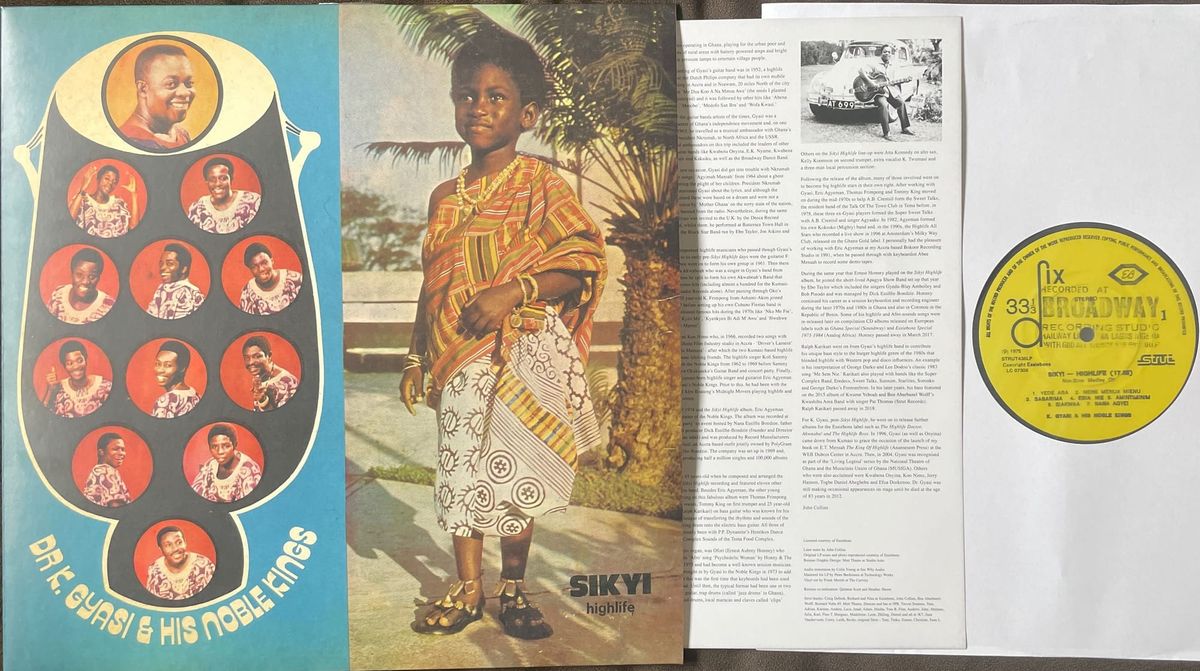
The Strut Records reissue is rich, thumping, and full of life. The recording is mono, captured live at a sikyi dance party in Accra, with the crowd’s presence occasionally noticeable but not a significant part of the soundscape. The bass is full and warm, and the soundstage, while centered, feels substantial, with some layering and depth to the live blend of instruments. There’s light harmonic distortion here and there, which in my opinion evokes the time and mood of the recording and does not detract from the sound of the album. This album has a few shoddy streams kicking around the internet, and the new reissue cleans the sound up immeasurably. While the pedigree of the source is not fully disclosed, the liner notes credit Colin Young at See Why Audio with audio restoration; Peter Beckmann at Technology Works prepared the digital master for vinyl and Frank Merritt at the Carvery cut the lacquer.

Interestingly, the album was cut at Germany’s Sonopress using their EcoRecord technology. This uses a recyclable polyethylene terephthalate (PET) compound rather than the widely used PVC, which is similarly petroleum-based but costs more to recycle. The record is then pressed using high-pressure injection moulding, as opposed to the high-energy-consumption steam-driven method traditionally used in vinyl production. I found the EcoRecord pressing to be dead silent and virtually flawless, easily the equal of any conventionally pressed LP on the market these days. Considering all of the added environmental benefits, I hope to see many more records manufactured using this or a similarly conscientious method. The days of noisy “eco vinyl” may not be fully over, but this alternative is an excellent indication that sustainable vinyl production has truly arrived. I hereby challenge each of the well-known American audiophile imprints to be the first to market using this technology. It is looking more and more like a game-changer.
Perhaps the manufacturer’s embrace of new technologies for an old medium is an apt metaphor for the music, which is both progressive and reverent of Akan musical traditions. The reissue has a clear, lively, and hot-blooded sound while also serving as a respectful act of musical preservation. Strut’s cover scan comes directly from an original jacket that may have seen better days, but even that adds a vintage feel to the package (the reproduced labels are a nice touch). With fine mastering, a superb pressing, and a package whose liner notes function as an act of scholarship, this is an excellent presentation of an ensemble performing at the peak of their abilities. And as Gyasi’s songs gradually emerge from the group’s relentless rhythms, they reveal themselves to be melodies of insistent beauty.
Strut/!K7 1-LP 33 RPM black vinyl
• Remaster of Dr. K. Gyasi and His Noble Kings’ 1974 album
• Jacket: Direct-to-board single pocket
• Inner sleeve: White poly-lined
• Liner notes, insert, or booklet: Two-sided insert with essay by John Collins
• Source: Digital; “Audio restoration by Colin Young for See Why Audio,” London, UK
• Mastering credit: “Mastered for LP by Peter Beckmann at TechnologyWorks,” London, UK
• Lacquer cut by: “Vinyl cut by Frank Merritt at The Carvery,” Leyton, East London, UK
• Pressed at: Sonopress, Germany
• Vinyl pressing quality (visual): A
• Vinyl pressing quality (audio): A
• Additional notes: Comes in a reusable poly outer bag with hype stickers.
Listening equipment:
Table: Technics SL-1200MK2
Cart: Audio-Technica VM540ML
Amp: Luxman L-509X
Speakers: ADS L980