Review: Golden Earring

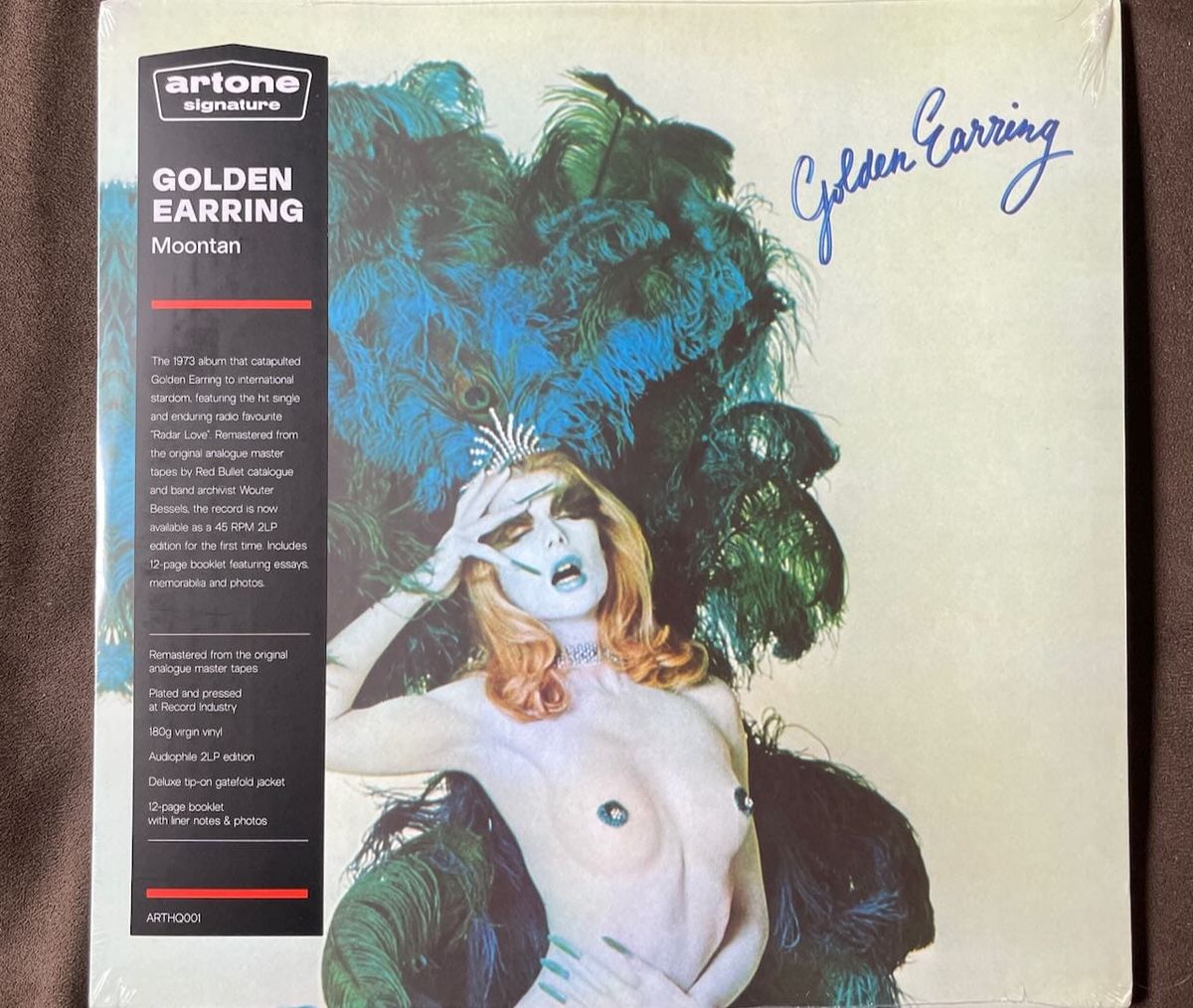
The Dutch band’s 1973 breakthrough Moontan receives the deluxe treatment from Artone Signature.
When Golden Earring officially called it a day in 2021, the Dutch group was at that point one of the longest-lived continuously active bands of the rock era. Having first formed in the Hague by guitarist George Kooymans and his bassist neighbor (and future brother-in-law) Rinus Gerristen in 1961, the band’s origins stretched as far back as those of the Beach Boys, who also formed in 1961. They even predated the 1962 formations of both the Hollies and the Rolling Stones. (Quick dinosaur check-in: The Stones, of course, are still plugging away, while the Hollies only just announced their official disbandment a couple of weeks ago; meanwhile, Mike Love is still calling his group of hired hands the Beach Boys, although based on grim reports from concert dates this summer, the formal end for that institution may finally be nigh. For their part, the surviving members of Golden Earring played a series of reunion shows in Rotterdam this past January to raise money for ALS research; Kooymans passed away from ALS in July 2025.)
Golden Earring went through some personnel shifts and a couple of name changes during the 1960s, but by 1970 Kooymans and Gerristen had settled on a stable lineup with singer Barry Hay and drummer Cesar Zuiderwijk that would see them through the next five decades. By that point they were already superstars in their home country, but during the ’70s they became perhaps the single most successful and influential rock band in Netherlands history. To many casual American listeners, though, Golden Earring remains a two-hit wonder, having first climbed the US charts in 1974 with a dynamite driving song, “Radar Love,” then not managing to connect with American record-buyers again until 1982’s “Twilight Zone.” The relative obscurity of the rest of their work in the States, and the diversity and quality of their material, makes hunting down Golden Earring records an easy and rewarding journey of discovery—like charting an alternate, undiscovered course through the prevailing classic-rock trends of the ’60s, ’70s, ’80s, and beyond.
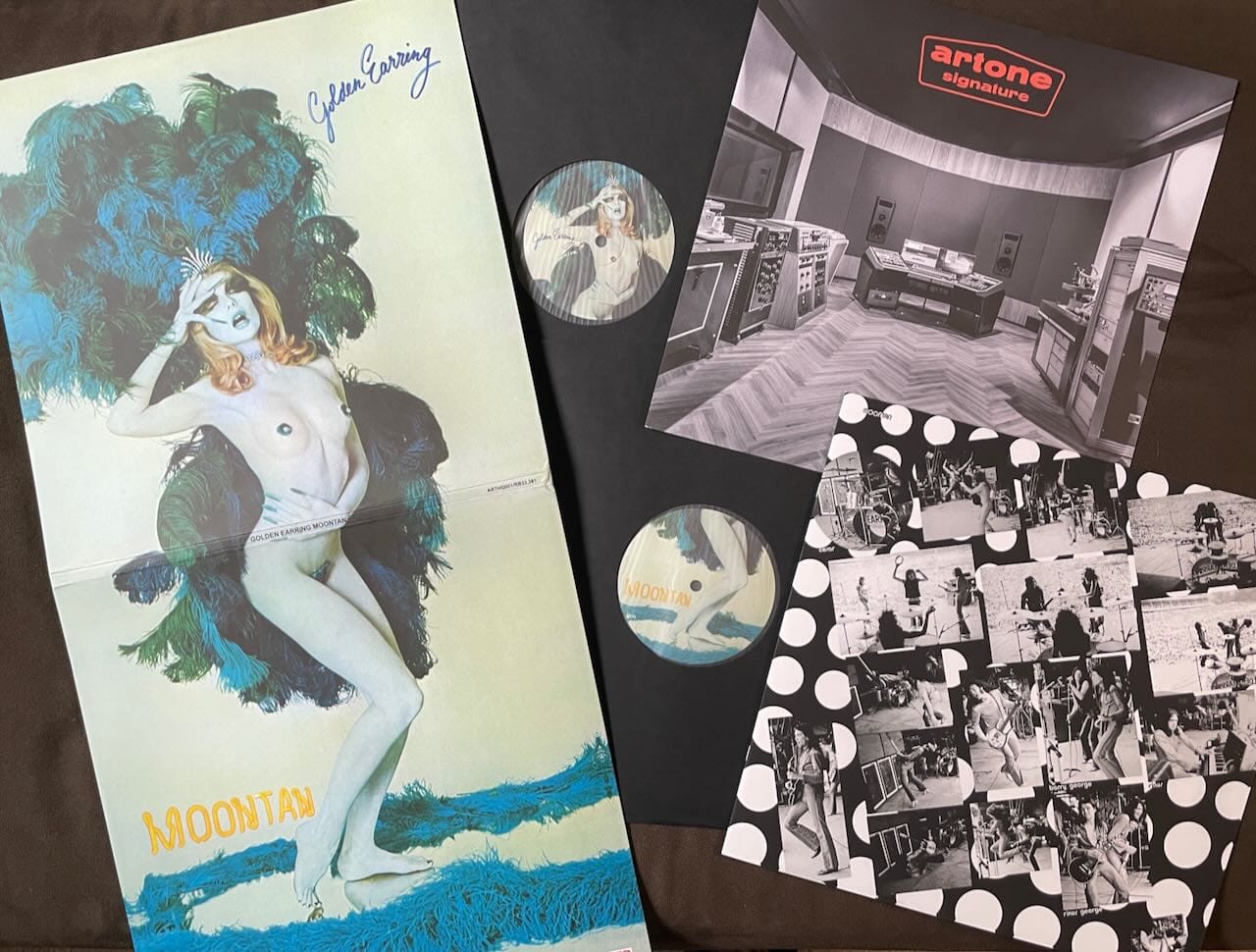
Artone Signature launched earlier this year as a premium vinyl imprint under the Artone Label Group and its affiliated label Music on Vinyl, working in close partnership with the Record Industry pressing plant, all of which are located in Haarlem, Netherlands. Artone Signature collects the resources of these interconnected companies to create audiophile-level vinyl, and for its inaugural release, they’ve fittingly chosen the biggest album from the biggest Dutch band: Golden Earring’s 1973 effort Moontan, which contains “Radar Love” and remains their highest-profile release on an international level. As luck would have it, it’s a flat-out terrific record, not just Golden Earring’s best but one of the most enjoyable in the ’70s rock canon. The new Artone Signature pressing is a 45 RPM version of the album spread across two LPs, cut from a digital master and housed in an oversized gatefold jacket with a 12-page booklet.
Moontan was purposefully designed by Golden Earring to be their international breakthrough. It made use of all the experience the band had accrued on the road and in the studio since the early ’60s, with instrumental chops and pop songwriting hooks in service of an aggressive but never hostile strain of heavy, guitar-driven rock. And the material that Kooymans and Hay devised for Moontan was up to the challenge of taking them to the next level commercially, as it was a shrewd, proficient album that reflected the tendencies of the day—not just in the form of Anglo-American hard rock but also in the prog, krautrock, and space-rock elements that were coursing through the European rock scene.
As such, the album contains several extended pieces, like “Radar Love” and “Candy’s Going Bad,” which each last over six minutes, as well as two nine-minute opuses, “Vanilla Queen” and “Are You Receiving Me?” Each song has discernable verses and choruses but is spiced with an instrumental digression that allows the band members a brief solo spot or—better yet—the occasion to jam together. The interaction and synchronization among the instrumental team of Kooymans, Gerristen, and Zuiderwijk and their mastery of slow-tension breakdown/buildup dynamics are what makes Moontan such a fun ride.
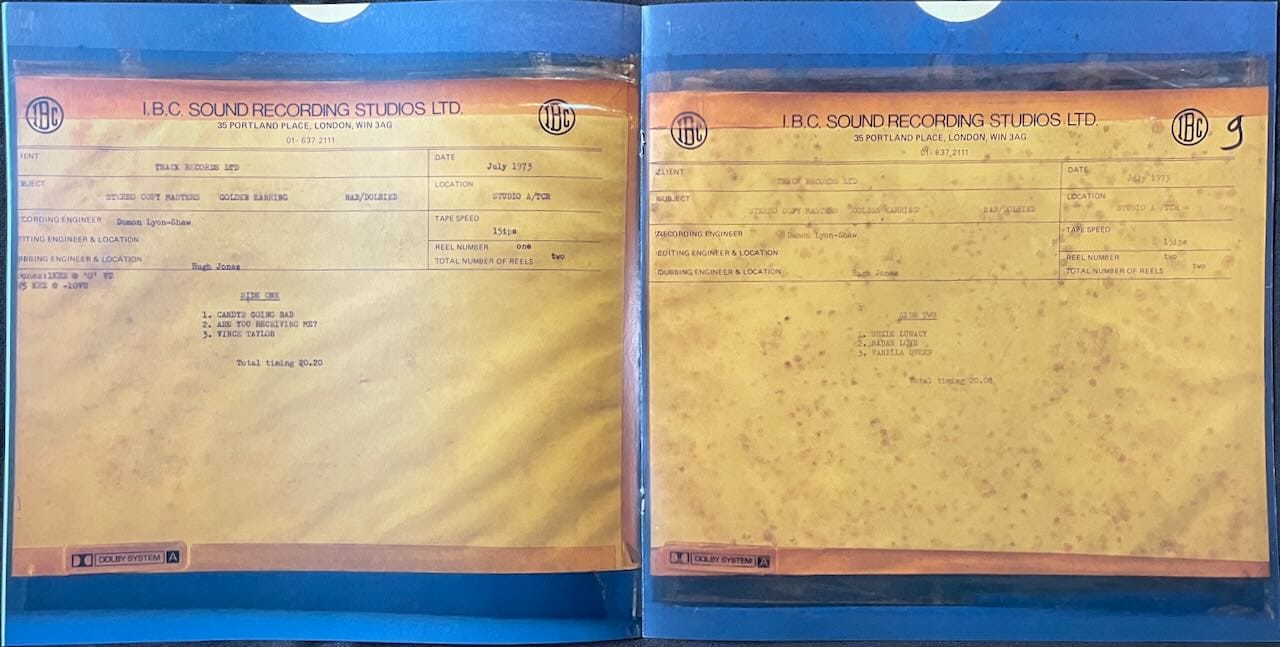
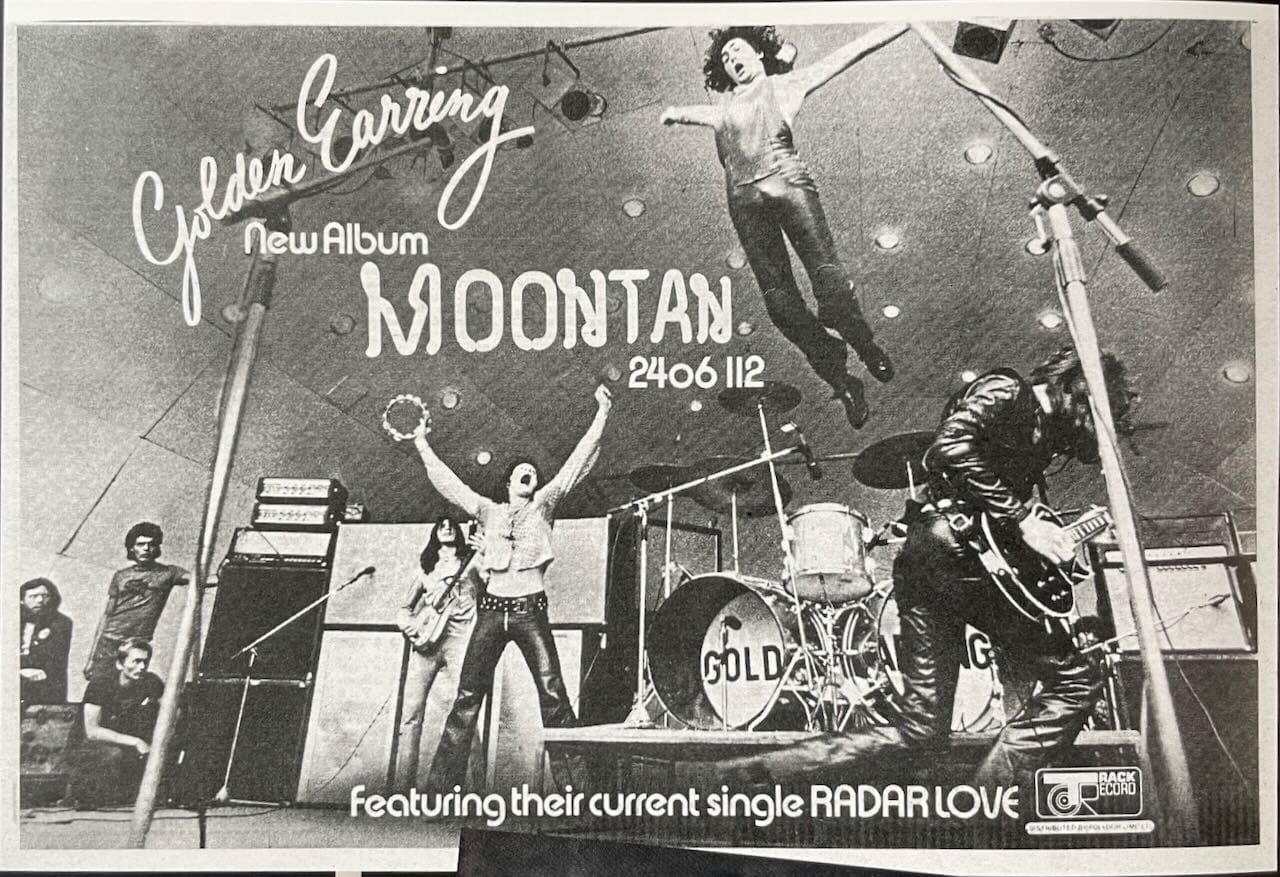
The album was recorded at Phonogram’s eight-track studio in Hilversum, with overdubs and mixing done on the 16-track machine at IBC Studio in London. When it was released in the Netherlands in August 1973 on Polydor, it contained six songs, but when the album was released a little bit later in the UK, the group decided to jettison its two shortest tracks—“Suzy Lunacy” and “Just Like Vince Taylor”—in favor of another long one, a newly re-recorded version of “Big Tree, Blue Sea,” a tune first attempted on their 1970 self-titled album. This five-song version of Moontan was released in the UK on Track Record, the independent label run by the Who’s managers Kit Lambert and Chris Stamp and distributed by Polydor; Golden Earring had opened for the Who on several occasions in 1972 and had impressed the band and their team enough to earn their support in breaking through to the US and UK markets. The five-song version of Moontan was then released in the US in April 1974, also on Track, which at that time was administered by MCA Records.
Because of the different versions, Moontan has always seemed like a somewhat structureless and malleable album to me, centered around the indestructible hit single (“Radar Love”) but with all of the other pieces shifting freely around it. Despite having roughly 75 percent of the same components, the European version and the UK/US version have quite different dramatic arcs, making for substantially different listening experiences in my opinion. The new Artone Signature solidifies my impression of the album’s nebulousness by making a further change: It follows the Dutch six-song tracklist but rejiggers the order to better fit the four-sided 45 RPM format, with “Suzy Lunacy” and “Are You Receiving Me” swapping places in the run of show.
I’m loath to say which version’s tracklist is the best—or, I suppose I should say I don’t really favor one over the other. “Are You Receiving Me” and “Vanilla Queen” both make for excellent album closers, and I suppose I think “Candy’s Going Bad” is a better album opener than “Radar Love,” which opens the US/UK version but in the Dutch version is perfectly positioned at the start of Side 2. (“Candy’s Going Bad” kicks off Side 1 on the Dutch version.) But “Big Tree, Blue Sea,” “Suzy Lunacy,” and “Just Like Vince Taylor” are all on equal ground in my book. Perhaps it would have been neat if Artone Signature had included a third 45 RPM disc with “Big Tree, Blue Sea” and the Moontan-era B-side “The Song Is Over,” although this double-LP package is expensive enough as it is. Those tracks, along with a 1974 non-album single (“Instant Poetry”/“From Heaven, from Hell”) and three early versions of Moontan tracks, were released by Music on Vinyl on a 2-LP version in 2022, so anyone looking for a more thorough plunge in the pool can track that edition down.
That 2022 Music on Vinyl pressing used a 2021 digital remaster of Moontan that was also released on CD, with even more alternate mixes, on Red Bullet in 2021. And that 2021 remaster, undertaken by Wouter Bessels, marked the first time the original master tape—and not an EQ’ed production copy tape—was used as the source for any released version of the album. This same Bessels remaster is used for the Artone Signature 45 RPM pressing, and the technical details of how the master tape was transferred digitally are included in a thorough explainer by Bessels in the liner notes. Four of the songs ran at a slightly lower pitch on the master, so Bessels and tape transferrer Wout de Kruif corrected the speed for the digital transfer. (I couldn’t really tell a difference, except on “Just Like Vince Taylor,” which is significantly faster on this pressing.) They also discovered that the original master had a different track order than the finished product—further emphasizing the album’s impermanent running order. This alteration revealed a brief snatch of guitar at the end of “Just Like Vince Taylor” that was trimmed off the album as it was originally released but is reinstated on the Artone Signature.
In short, this new pressing uses the same source as the 2022 Music on Vinyl 33 RPM pressing, but is newly cut at 45 RPM. It sounds like no adjustments needed to be made to the digital remaster for this Artone Signature edition, although I’m not clear if the 2021 CD and 2022 vinyl versions included that extra little tail at the end of “Just Like Vince Taylor.”
I had at my disposal a 1973 UK Track Record first pressing (pressed by Phonodisc), a 1974 US Track first pressing (pressed by MCA), and a mid- to late-’70s French pressing on Polydor, all of which I was able to compare to the new Artone Signature. In no way did the Artone suffer from the comparisons. The UK and US versions did not make for one-to-one shoot-outs with the Artone, obviously, because of their inclusion of “Big Tree, Blue Sea” in the place of “Suzy Lunacy” and “Just Like Vince Taylor.” But I was able to compare Moontan’s core four tracks—“Candy’s Going Bad,” “Are You Receiving Me,” “Radar Love,” and “Vanilla Queen”—across all four pressings.
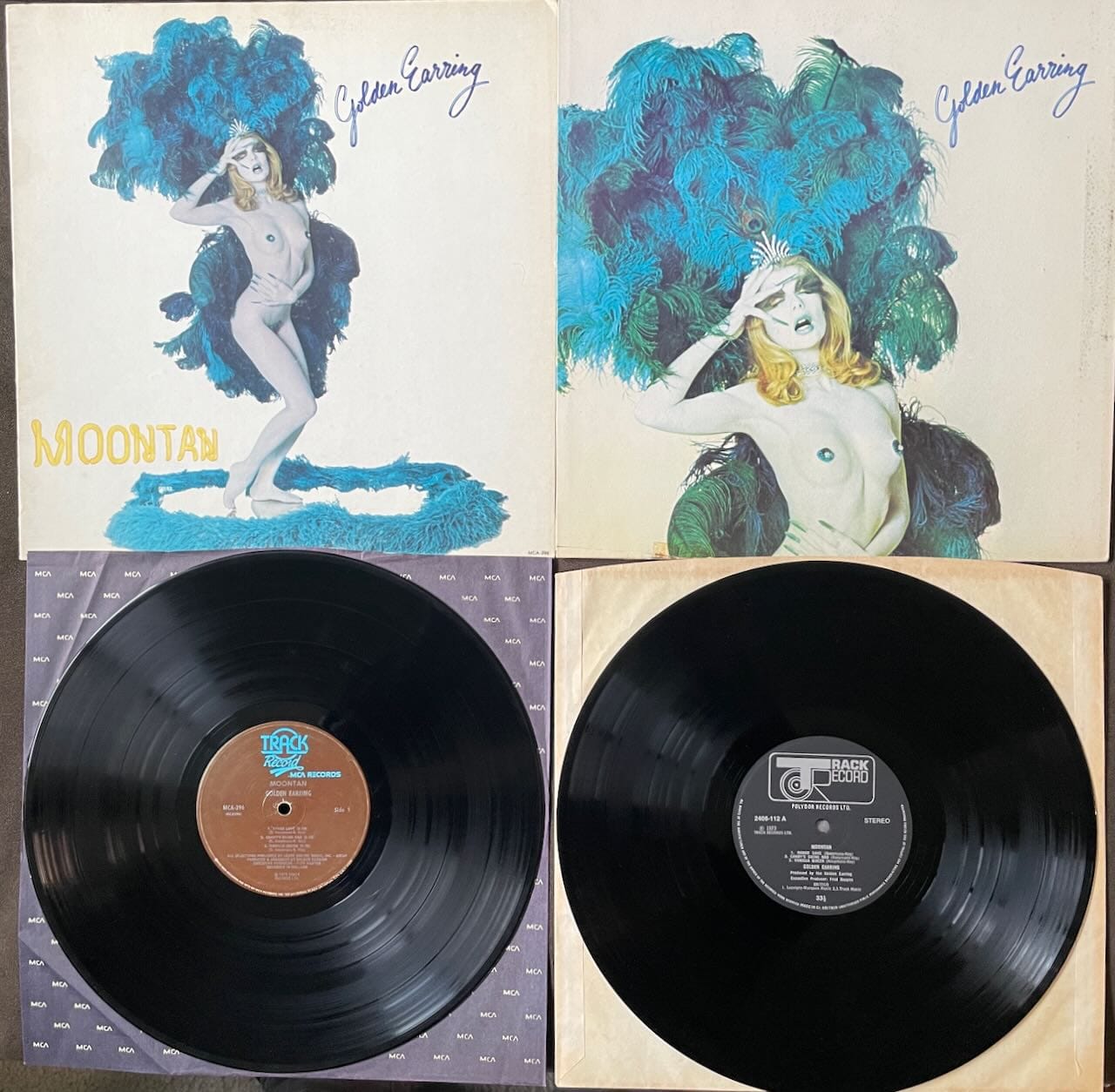
I’ll start with my US Track/MCA pressing, which is the least essential. With “W2”/“W2” in the deadwax, it’s not clear who cut it, but it has markings of MCA’s pressing plant in Pinckneyville, Illinois. The mastering is boxy and noticeably confined, with the bass, drums, and Hay’s vocal occupying the same central chunk of the soundstage like they’ve been compacted together like an uncooked brick of ramen. Cesar Zuiderwijk is quite aggressive on the cymbals, and the high end swarms with his crashes, which often sonically degenerate on this mastering. There is a powerful, lean quality to this MCA pressing, but not a ton of detail, and the vinyl itself is of lousy quality. Next.
The UK Track pressing is significantly better, with a lacquer cut by Melvyn Abrahams (“MELS” in the deadwax) and the vinyl pressed at Phonodisc’s Chingford/Walthamstow plant, which went on to become PRS in the 1980s. There’s not a ton of low-end presence, but Gerristen’s bass remains fully legible throughout, and his synthesizer work at the start of “Vanilla Queen” has great mood and shape, as does the orchestral build-up at that song’s conclusion, which is not overblown but remains surprisingly subtle and unobtrusively done. Interestingly, I find the sound to be almost sleek and streamlined on “Are You Receiving Me,” giving me the sensation of a quick-swimming shark during that song’s instrumental section; this is not a negative impression, as it makes the song feel much more quick-paced and pulse-pounding than its tempo would suggest. Overall, the pressing is perhaps a bit bass-shy, but its crispness, clarity, and excitement are undeniable.
The French pressing is about neck-and-neck, then, with some stronger qualities than the UK and some that are just barely worse. It certainly does the UK one better with a more locked-down, firmer bass presence and a unity and impact to the collective sound. Overall it’s darker, and resultantly easier on the ears, handling the piercing elements of Zuiderwijk’s cymbal crashes better than both the UK and the US. But it also has a slight level of murk that isn’t on the UK Track pressing and just very slightly dials down the excitement and energy even as it’s a bit more soothing to the ears.
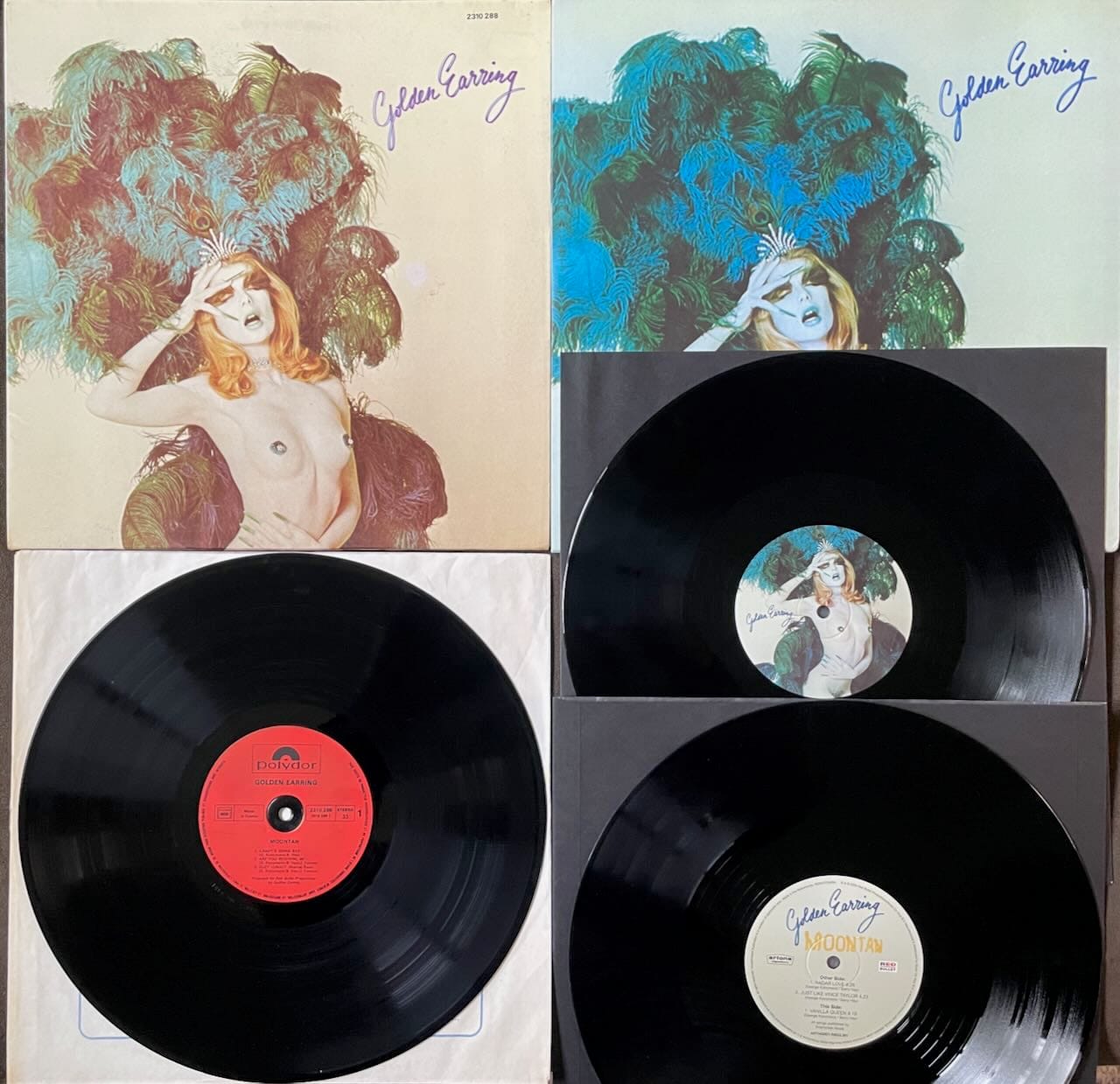
In almost all regards, then, the Artone Signature is the best of this particular bunch. The soundstage is substantially enlarged and the bass is expanded without altering the overall sonic balance. The high end is still on the edgy side of things, at least on my system, but the sound remains clear and never disintegrates or breaks up despite Zuiderwijk’s fervent devotion to his cymbals. And the instruments are all rendered in utmost clarity, with a fully illuminated, almost glossy sheen that is likely the result of the un-EQ’ed master tape. Previously undetected elements arise out of little corners of the mix, like the give of the skins on Zuiderwijk’s toms in addition to their punch and pop, or the grace-note details around Hay’s synth-augmented moaning at the end of “Candy’s Going Bad.” And I could further appreciate Kooymans’s various guitar overdubs on “Are You Receiving Me” as he thickens the sound into a fantastic collision of tones.
The centerpiece, “Radar Love,” is particularly well done on the Artone, full of impact, power, and toe-tapping groove. The song travels an immense amount of territory in its six minutes, evolving from a simple bass and drum vamp into a full rock ’n’ roll conflagration, while also finding room for a horn-and-synth fanfare, a quick drum solo, a riff on the Dragnet theme, and multiple buildup/breakdown sections. “Vanilla Queen” is also full of action and drama, gorgeously presenting the song’s first bridge section, where an almost medieval-like acoustic guitar arpeggio builds into a symphony of Leslie’d guitar and thunderous drums. And the second instrumental section incorporates musique concrète, varispeed voice, and samples of Marilyn Monroe before the brass and strings send everything into the stratosphere.
I did find the brightness to be excessive on the Artone Signature for a few isolated instances on “Suzy Lunacy,” where the cymbals and acoustic guitars make for quite an assertive double attack. “Just Like Vince Taylor” also had excessive midrange and high end, at times sounding a little like the center was scooped out. And I couldn’t quite put the Artone Signature’s digital element out of my head, either noticing or imagining a slight rigidity in place of the elastic bounce that was present on my UK and French pressings. I am never certain to fully trust those impressions, as they could be wholly rooted in my bias for analog, so take that for what it’s worth, or ignore it outright. But I do wonder what this reissue might have sounded like cut straight from the master tape without the digital step, even if it means that some of the songs would’ve played back at the wrong speeds (albeit at the speeds that we’re all used to). I would also be interested in hearing what a lacquer cut might have done for Moontan and if it would have warmed up the sound at all. This pressing is from DMM (direct metal mastering), which has advantages of precision and accuracy, to be sure—and it’s certainly possible that Artone Signature tried both methods and preferred the DMM.
My discs were very well pressed but not quite perfect. The lead-in grooves on all four sides were a bit too small for my taste (and clumsy fingers), and both of my discs had a small warp that was accentuated by the 45 RPM playing speed. It didn’t really affect the sound except during the opening guitar part of “Are You Receiving Me” as well as during that song’s bass solo, where a rotational noise could be heard beneath the music. Otherwise, the discs offered essentially silent backgrounds and had no other pressing flaws.
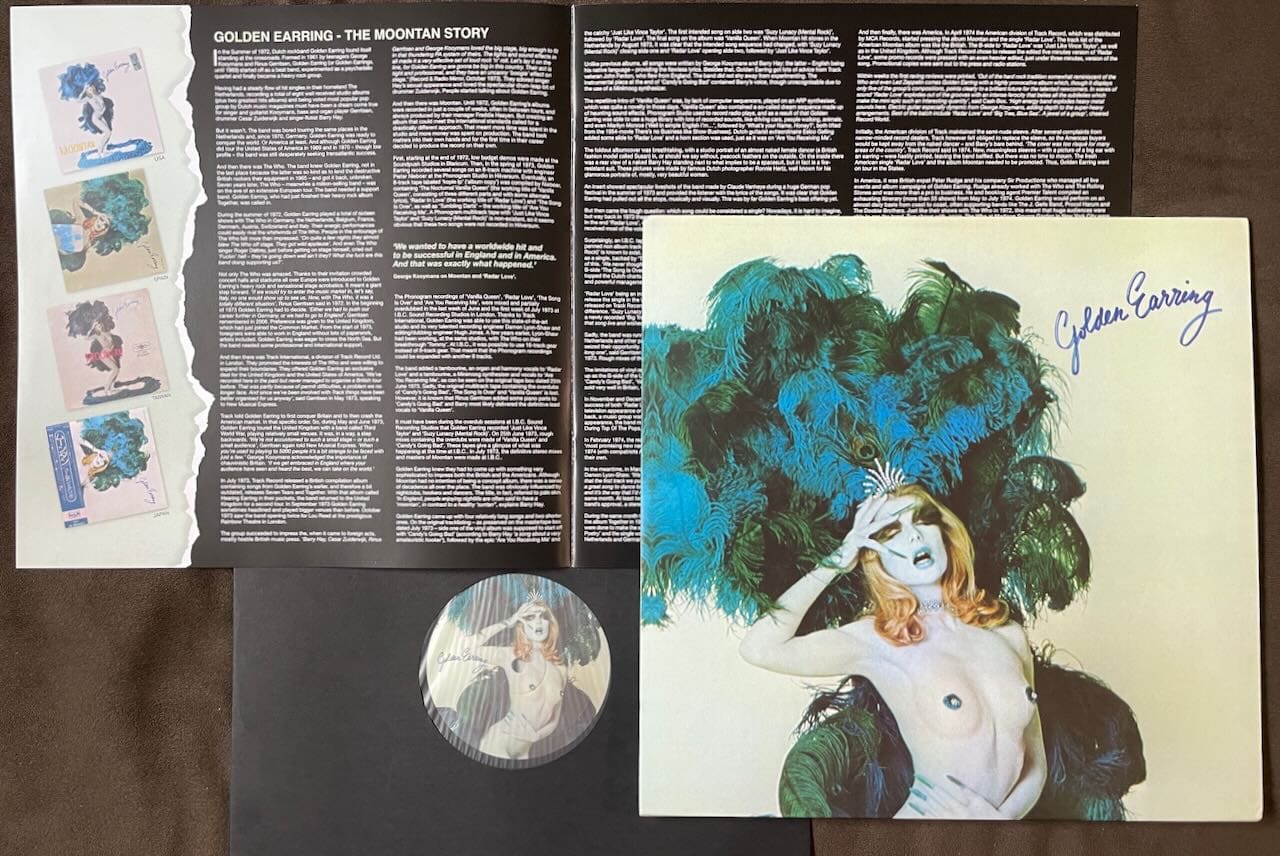
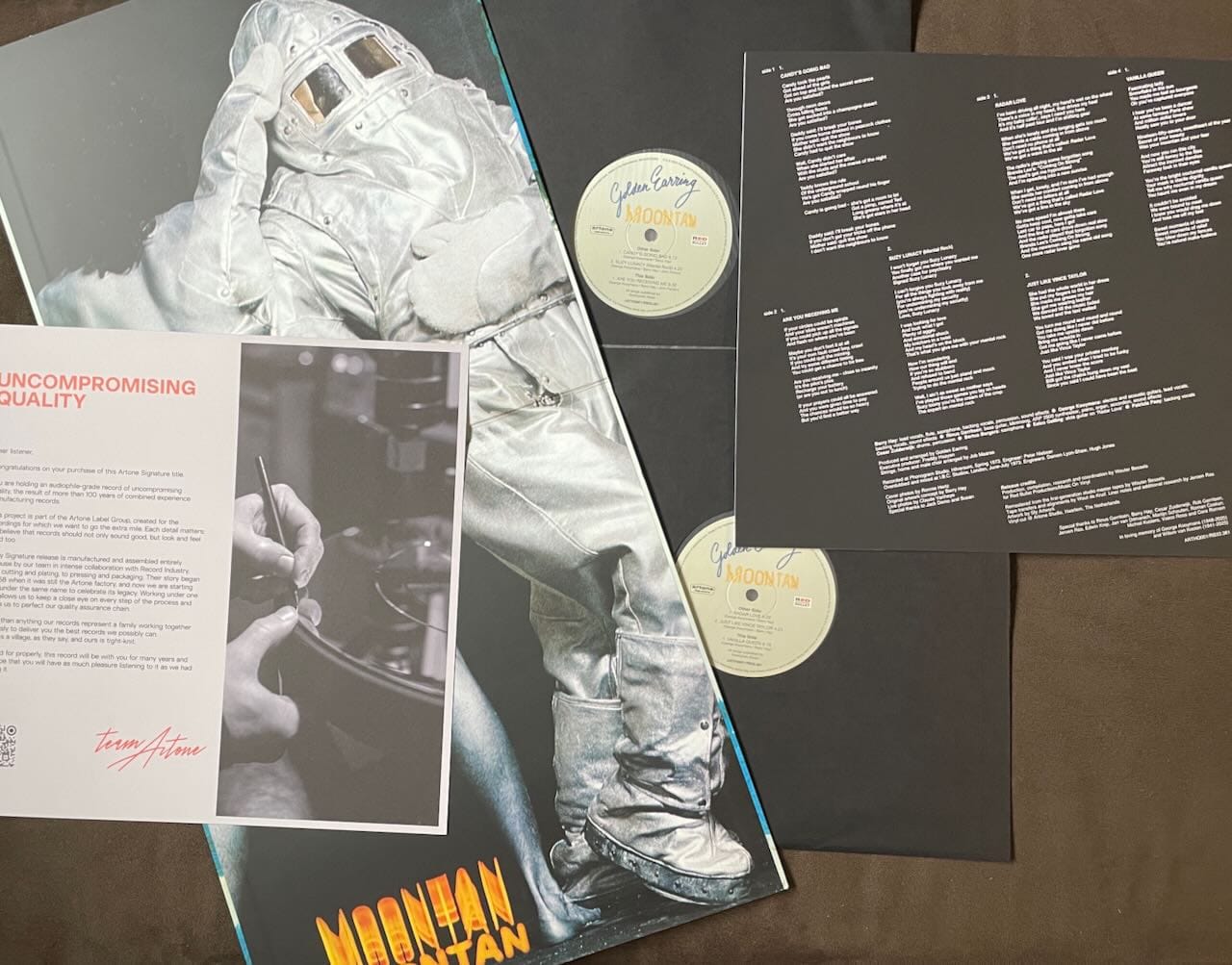
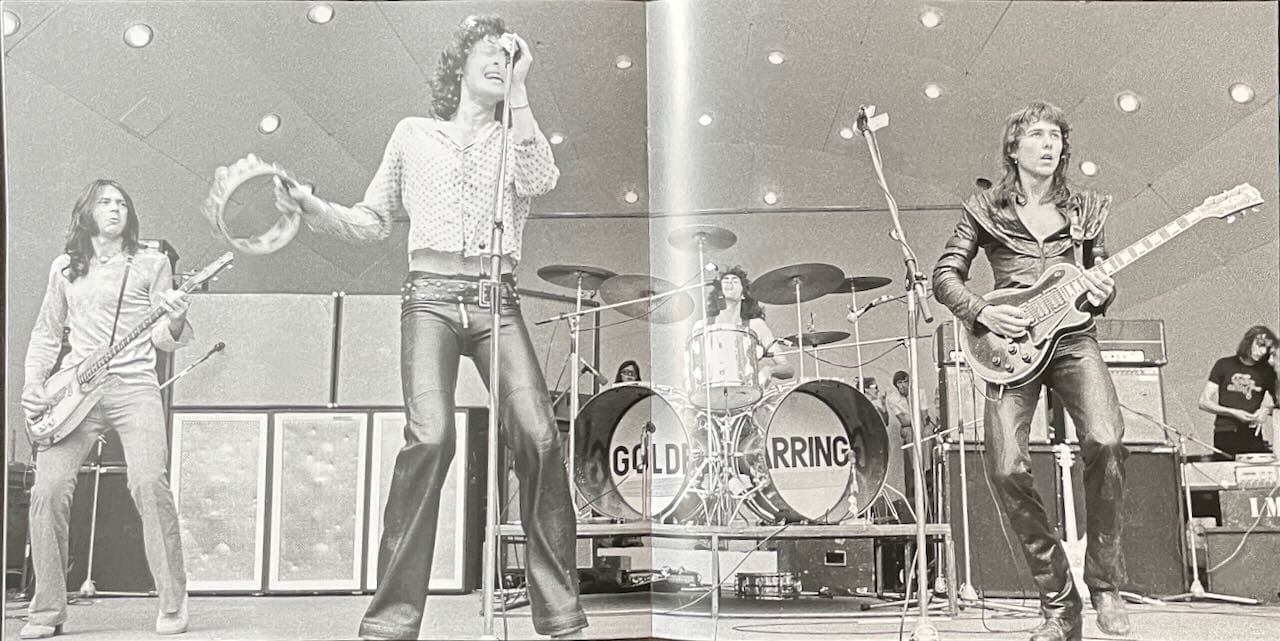
The 12-page booklet is simply wonderful, with the lyrics and photos that appeared on the album’s original insert, plus images of the master tapes, lots of additional pictures from the period, a great in-depth essay about the making of the album, and Bessels’s comprehensively detailed mastering notes. While some of the material is reused from the 2022 Music on Vinyl 2-LP pressing, the addition of Bessels’s notes and the overall sumptuous presentation make it far and away the best-in-class booklet I’ve seen out of all the current audiophile reissue labels. Maybe you don’t care about those kinds of things, but The Vinyl Cut definitely does, and I’ll be happy to start a petition that the inclusion of mastering notes like Bessels’s should be mandatory for all vinyl reissues.
Moontan may rightly be under the shadow of the magnificent “Radar Love,” but songs like “Are You Receiving Me,” “Vanilla Queen,” and “Candy’s Going Bad” are very nearly its equal. And the album is the perfect place to begin an exploration of Golden Earring’s long, historic career. Despite the extended track lengths, the album shoots by like a bullet. And the album’s blend of prog, pop, and boogie-ready hard rock means that the band is continually stirring its own recipe, moving throughout different musical sections while keeping their ears on the overall shape of the song.
The album may have been Golden Earring’s transparent bid for international stardom, but fortunately for them, they delivered the goods. And apart from the minor issues I enumerated above, this Artone Signature pressing makes good on the series’ impressive mission statement of delivering authoritative reissues of important works in the highest possible quality. I don’t know if they’ll be able to top Moontan with their future releases, but I can’t wait to find out.
Artone Signature 2-LP 45 RPM 180g black vinyl
• 2021 remaster of Golden Earring’s 1973 album, newly pressed at 45 RPM with a slightly reconfigured track order
• Jacket: Oversized tip-on gatefold with matte finish
• Inner sleeves: Black poly-lined paper
• Liner notes, insert, or booklet: Two inserts; one is a 12-page booklet including an essay by Jeroen Ras, mastering notes from Wouter Bessels, photos, lyrics, and other images; the other is a double-sided insert introducing/promoting the Artone Signature line
• Source: Digital; 192/24 digital transfer of original master tapes
• Mastering credit: Wouter Bessels at Artone Studio, Haarlem, Netherlands
• Lacquer cut by: N/A; this was a DMM cut done at Artone Studio, Haarlem, Netherlands
• Pressed at: Record Industry, Haarlem, Netherlands
• Vinyl pressing quality (visual): B+ (small warp in both discs)
• Vinyl pressing quality (audio): A- (silent backgrounds, apart from some rotational surface noise during “Are You Receiving Me,” most likely due to the warp)
• Additional notes: None.
Listening equipment:
Table: Technics SL-1200MK2
Cart: Audio-Technica VM540ML
Amp: Luxman L-509X
Speakers: ADS L980