Review: The Beach Boys’ Pet Sounds

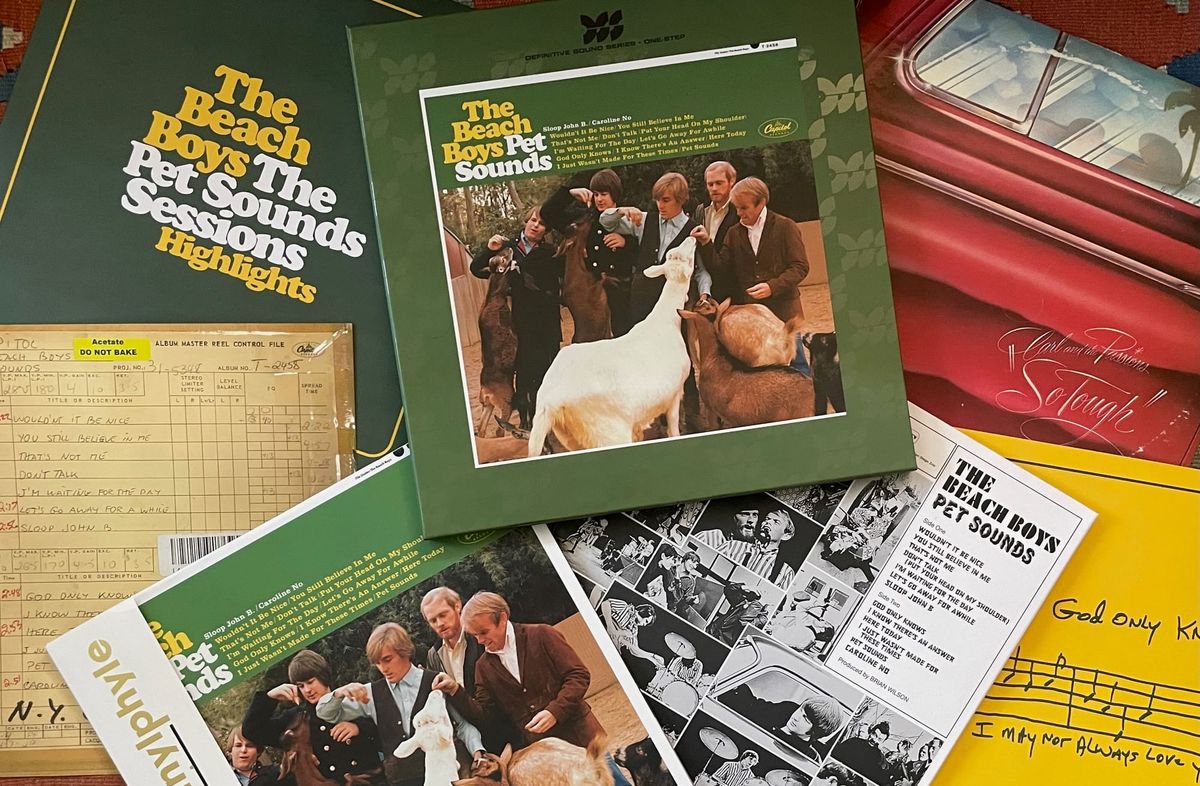
Brian Wilson’s 1966 masterpiece comes to DSS and Vinylphyle, plus other 60th-anniversary goings-on.
Hello, readers—at long last, here is my coverage of the recent reissues of Pet Sounds. I hope by now you are not sick of reading about the album. There was a lot of to-do around the various pressings, and I wanted to break down the differences as well as address the conversations that stemmed from the release of all of these new editions. It’s a lot—7500 words’ worth (gulp)—and I apologize for both the length and tardiness of this piece. But the extra time and space helped me sort out my own thoughts and make sure I had my facts straight. Some of what I discuss here may be remedial for those who have been closely following the Pet Sounds reissue saga, but my hope is that this report/review can function as a more permanent record of a discourse that chiefly took place in comments sections and message boards.
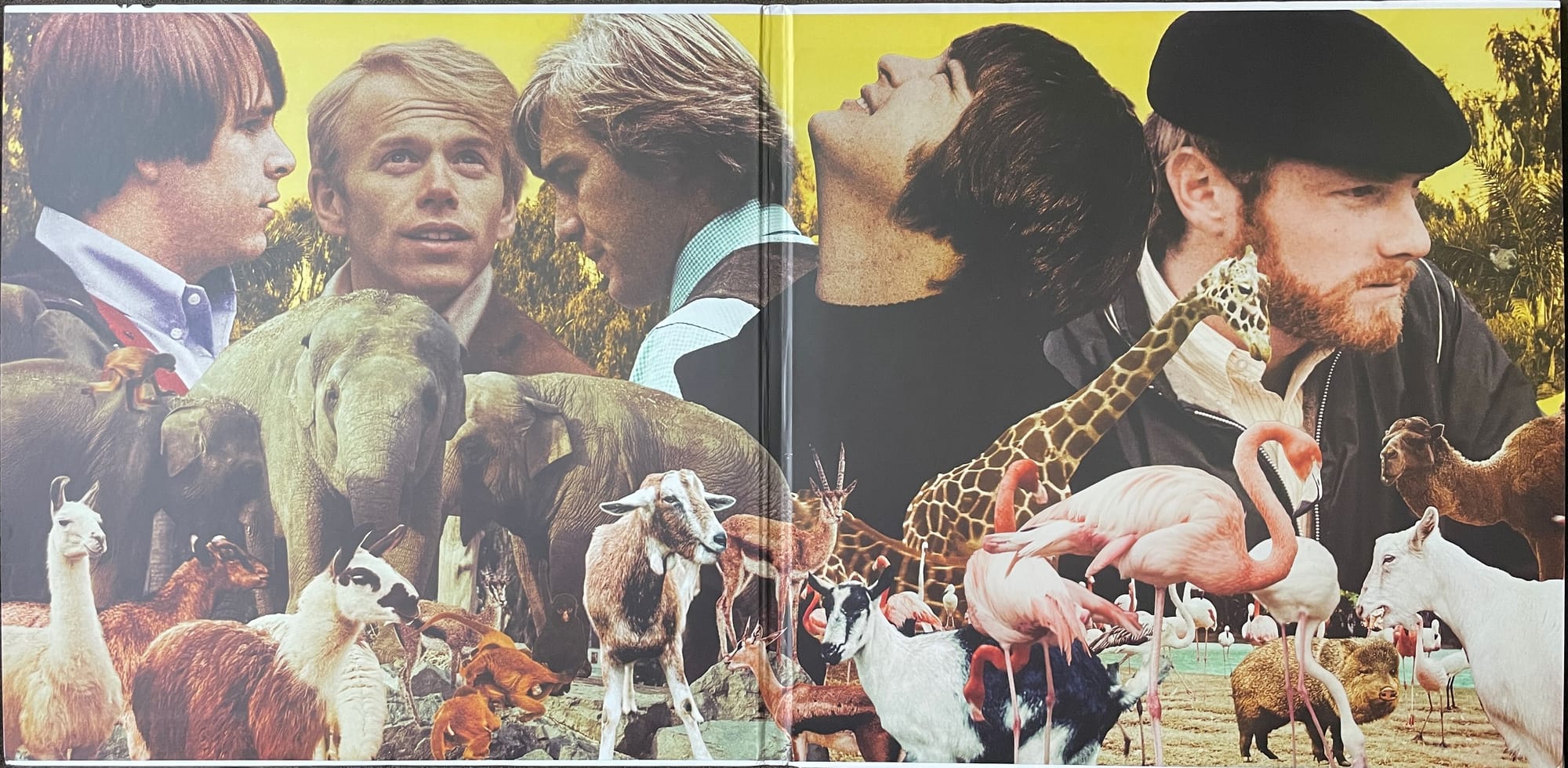
ON MAY 15, 2026, Pet Sounds reached its 60th anniversary. Now commonly regarded as the Beach Boys’ finest 37 minutes—and the magnum opus of its songwriter, producer, and sonic architect Brian Wilson—it was released in 1966 to an initially muted response in the US. (In the UK, it was quickly identified as a massive step forward in the development of pop music and would heavily influence the Beatles during their most creatively fertile period of recording—1966’s Revolver, 1967’s “Strawberry Fields Forever”/“Penny Lane” single, and 1967’s Sgt. Pepper’s Lonely Heart’s Club Band.)
Sixty years later, everyone’s more or less caught up to where Brian Wilson and his Beach Boys bandmates—brothers Dennis and Carl Wilson, cousin Mike Love, and family friend Al Jardine, as well as touring member Bruce Johnston—were during those first few months of 1966. Today Pet Sounds is widely considered one of the best pop albums ever made, and its 60th birthday set the stage for the biggest vinyl reissue event of the year... and perhaps the most controversial.
Universal Music Group, across its various subsidiaries, saw fit to drop a pile of new configurations of Pet Sounds on fans and curious newcomers. Most prominently, the Interscope-Capitol division released a one-step pressing of the original 1966 mono mix on its Definitive Sound Series imprint, featuring analog mastering, high-quality vinyl, deluxe packaging, and a price tag to match. Meanwhile, Universal’s catalog branch, UMe, released as part of their premium Vinylphyle series a double LP that included the 1966 mono mix (cut from a different analog tape; I’ll explain) and a 1996 digital stereo remix by Mark Linett that was first released on the 1997 CD box set The Pet Sounds Sessions. Capitol Records also released a separate double LP of highlights from that same box set, appropriately titled The Pet Sounds Sessions Highlights, with 24 studio run-throughs and alternate mixes making their first appearance on vinyl. (That 2-LP set has also been released on CD.) Lastly, Capitol released the mono mix of the album, cut from a digital file, as a zoetrope picture disc.
That’s a lot for Beach Boys fans to keep track of, and what should have been a bounty for vinyl collectors turned into something of a firepit amid online arguments about sourcing, artist intent, transparency, and record-label greed. The ugliest parts of the discourse generally took place in various YouTube comments sections—always treacherous places to be—although threads on the Steve Hoffman Music Forums, Reddit, Facebook, Discogs, and elsewhere amplified the debate as well. I’ll try to sketch out the broad outlines of the conversations without stirring them up again, as one month later, the flame-up does indeed seem to have finally died down. But my overlying takeaway is a plain one: All of these vinyl reissues are very good indeed. (Except for the zoetrope picture disc, which I don’t own, don’t want to own, haven’t played, and won’t ever listen to.) There are also peculiarities with each of these that I’ll get into.
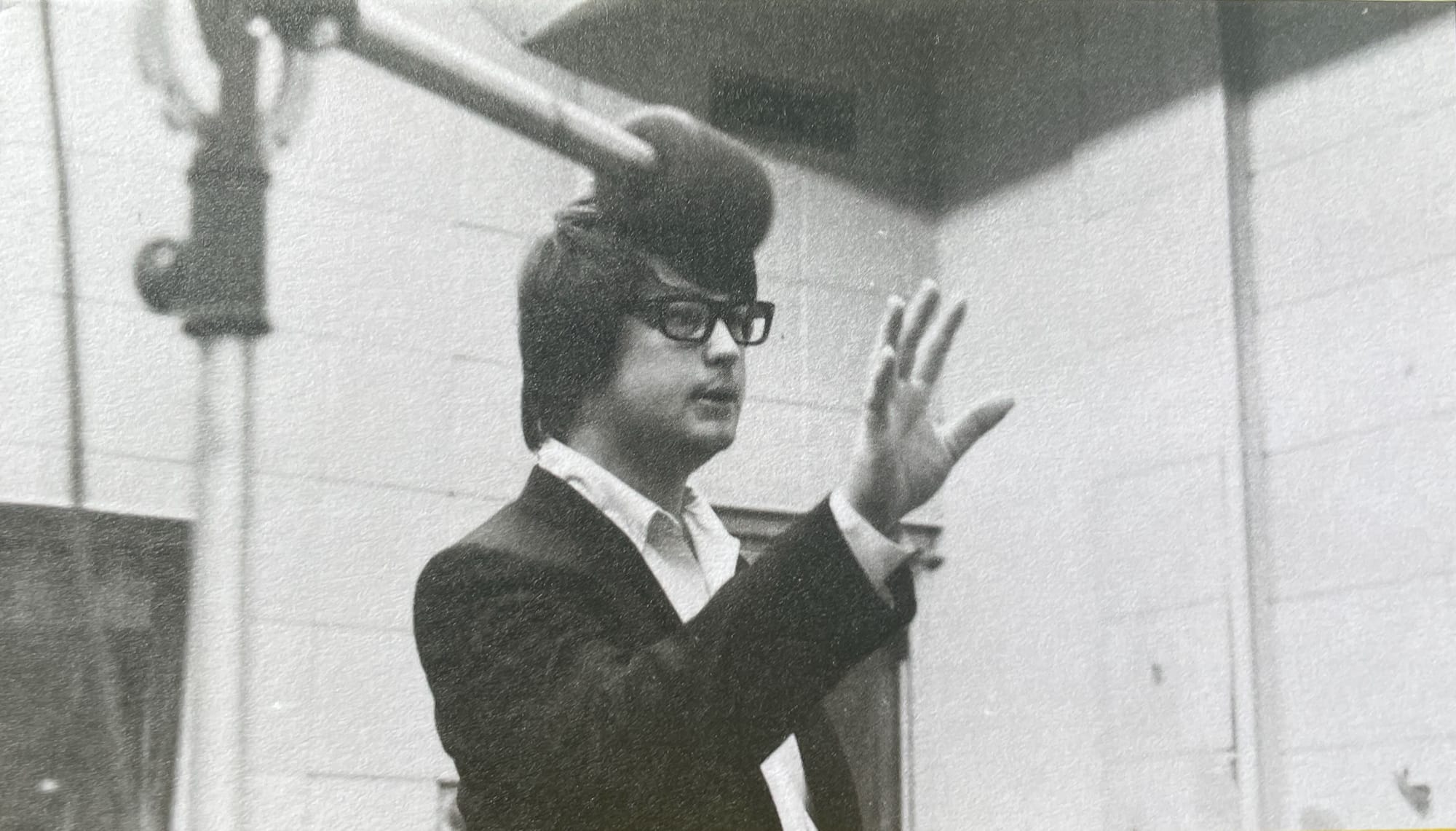
Discussing Pet Sounds, its making, and its influence in broad terms seems a bit unnecessary here. This is one of the most talked- and written-about albums ever made, conceived almost entirely by Brian Wilson and his new lyricist/co-writer Tony Asher in Los Angeles while the other Beach Boys were on tour. (The album’s back cover photos show the touring band during a Japanese tour leg, accompanied by a couple of shots of Brian back in California at his piano and in his car.) And it seems impossible to consider Pet Sounds without mentioning what came after: Brian’s dismay at the label’s and the American public’s indifference to the album, a brief rally for the smash follow-up single “Good Vibrations,” and the unfinished Smile sessions that precipitated Brian’s mental health challenges and the end of the Beach Boys’ prominence at the artistic vanguard of popular music. But this background info has already filled dozens if not hundreds of books and a galaxy of print and online articles, some looking to puncture the myths around the music but most serving to inflate the mystique.
The album remains an object of inexhaustible fascination because it is a paradox in so many ways. Its eccentric arrangements are sui generis—unique-sounding to this day, even as every other sound in popular music has been rehashed and replicated over and again—and Wilson’s vocal and instrumental arrangements are among the most breathtaking ever devised. Simultaneously, the playing of the musicians, a seasoned group of Los Angeles session players known as the Wrecking Crew, knocked down boundaries of what was thought possible for pop and rock ’n’ roll. But the recording, as elaborate as it was for the time, was initially only mixed to mono, and for decades, stereo pressings of Pet Sounds contained an electronically manipulated “duophonic” reprocessing of the mono mix, with horrendous results. (To make matters worse, the UK mono version was actually the duophonic “mix” folded back down to mono, truly the worst-case scenario in terms of audio.)
What’s more, Brian’s mono mix, with its rich harmonies and incredible blend of timbres, is typically not thought of as a high-quality recording by audiophiles. To my thinking, this is putting the cart before the horse, like saying Shakespeare would have been better if he’d had spellcheck, or that those Picasso paintings shouldn’t have used so much blue. Brian’s mono mix IS Pet Sounds, for better or worse; while the finished product may not reach the upper echelons of the highest fidelity, its limitations are intrinsically part of its artistry and beauty.
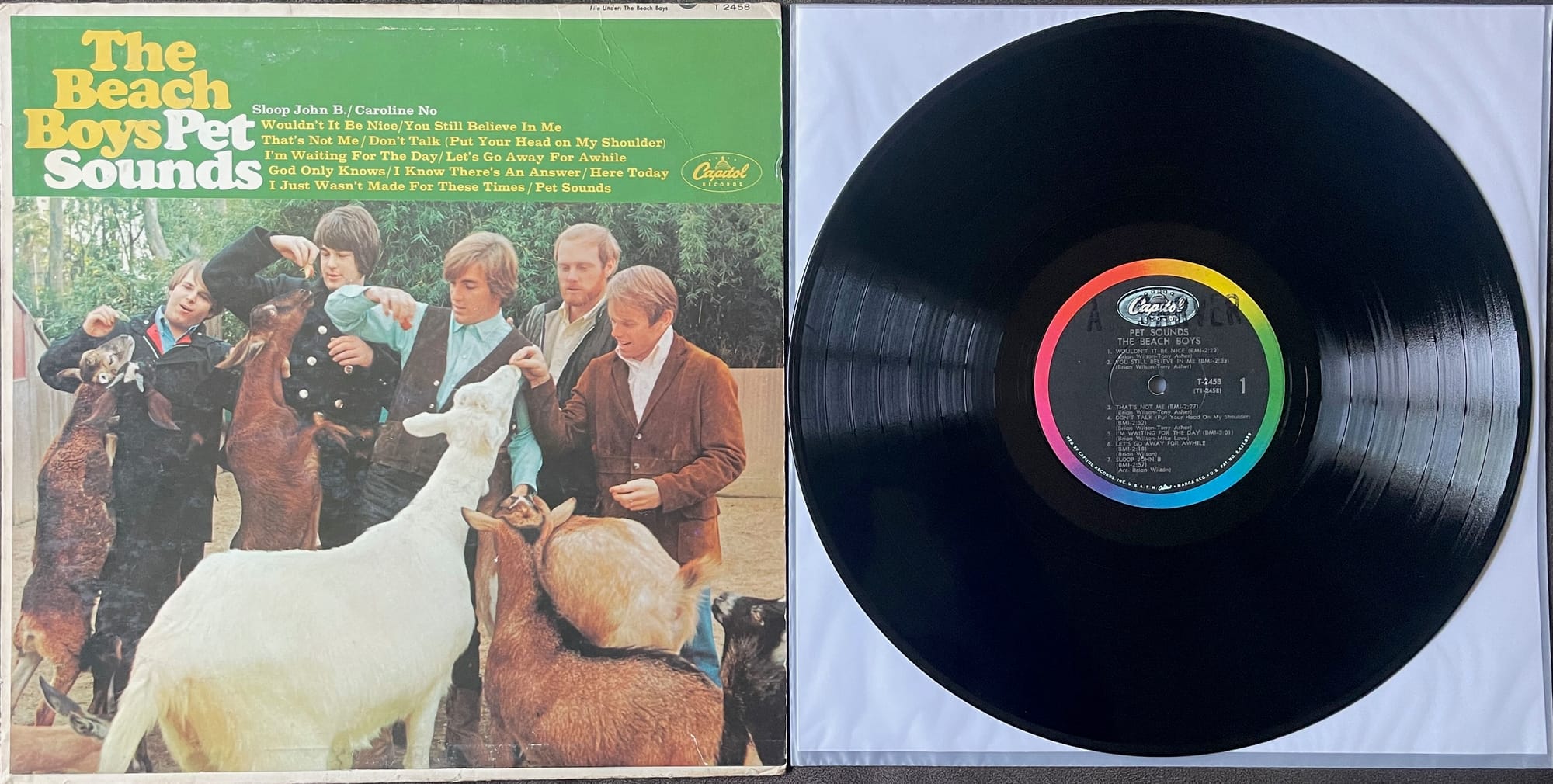
PART OF THE ISSUE was that original pressings of Pet Sounds never sounded especially good. With a mix designed for the times—suitable for transistor radios and suitcase record players—the Capitol Records LP mastering was similarly designed for widespread consumer use, decades before high-end equipment became commonplace. This led to an indistinct, irregular sound, with occasionally screeching highs, muddled mids, and a displaced, carved-out bottom end. Capitol was not pressing especially good-sounding records during this time period anyway—best exemplified by the subpar quality of their classical sub-label, Angel Records, which marooned world-class recordings from parent company EMI on noisy, substandard vinyl with indifferent mastering. It would take a few years for Pet Sounds to sound good on vinyl at all.
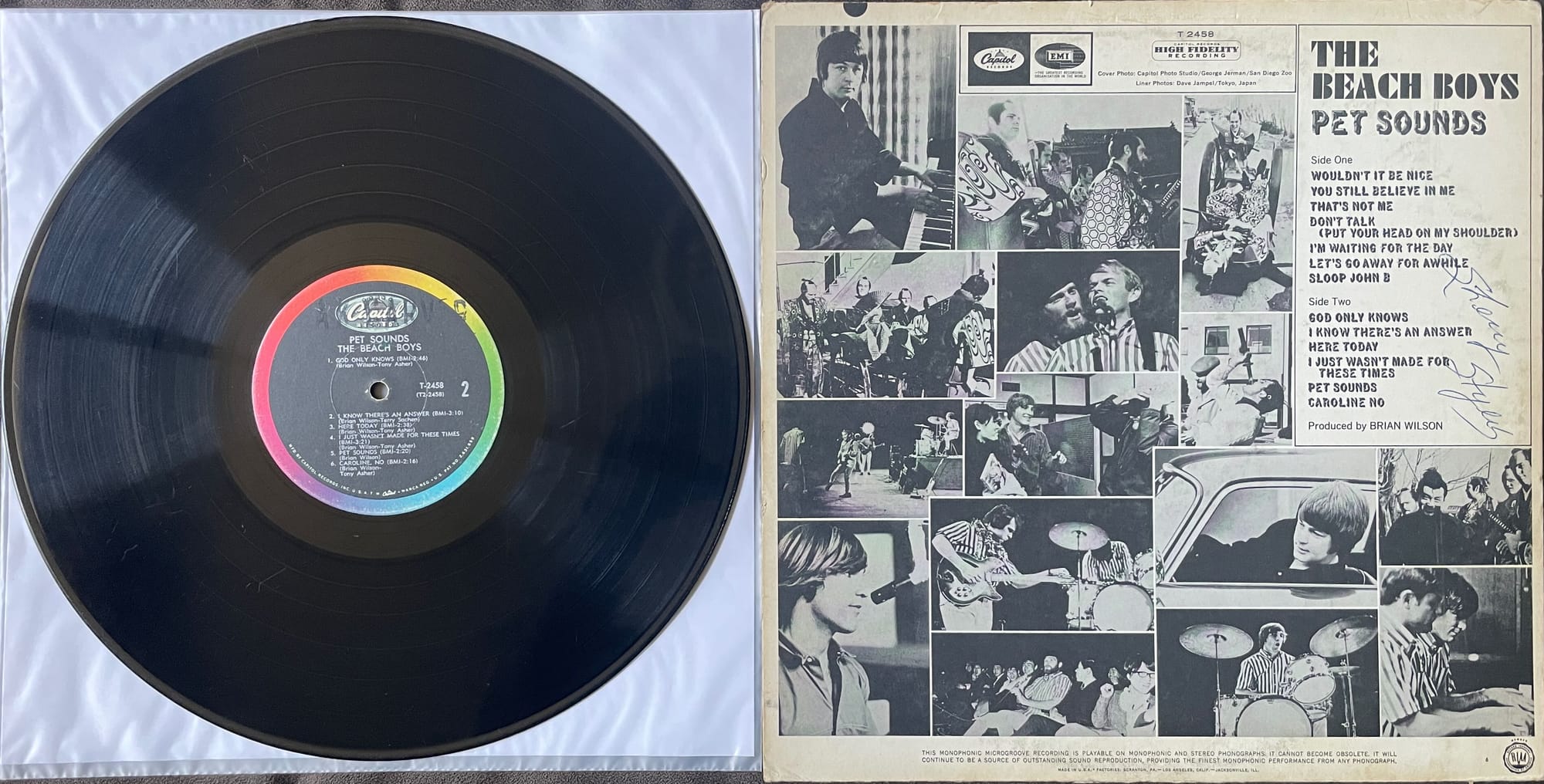
My careworn and crackly 1966 pressing, with F-27/F-27 matrixes and pressed at Capitol’s Los Angeles pressing plant, is shrouded in a foggy sound that’s both boxed in and distant. The lead vocals are generally well rendered, but the harmonies and instrumental accompaniment almost sound pedestrian—something Pet Sounds assuredly wasn’t. Not just lacking in full body, there’s an extra element that makes everything sound filtered and colored a certain hue, likely due to the choices made in the mastering suite and the properties of the equipment used. Some songs sound better than others; the instrumental “Let’s Go Away for Awhile [sic],” for example, has a richer tonic blend and more sonic depth. But on the whole, this record sounds designed to keep the special qualities of Pet Sounds at arm’s length from the listener.
Thematically, the album’s songs are about young adulthood, the burden of responsibility, the desire for spiritual exploration, and the painstaking process of romance turning into something more substantial (or fizzling out altogether). Because of Brian’s melodies and the textured vocal harmonies from the rest of the band, there’s a nostalgic wistfulness to all of it, and the unorthodox instrumentation suggests a pre-psychedelic escapism that exists outside of day-to-day experience. To put it all into a larger and more abstract context, the 1960s served as America’s cultural adolescence following its rebirth after World War II, and with Pet Sounds, the Beach Boys announced a new stage of maturity following a few years of songs about surfing, cars, and girls on the beach—but moony, youthful qualities still lingered in the music.
It’s a wonderful album, but I don’t think it’s a perfect one. I think the inclusion of three drowsy, slow-melt songs like “Don’t Talk (Put Your Head on My Shoulder),” “I Just Wasn’t Made for These Times,” and “Caroline, No” is perhaps one too many, and the instrumental title track is a slice of exotica-flavored kitsch that hasn’t aged as well as the rest of the music. Perhaps most blasphemously, I’ve always found “Caroline, No” to be a weak dismount for such an important album—“God Only Knows” should have been moved from its place at the start of Side 2 to the closing slot. With “God Only Knows” as the grand finale, I’d wager Pet Sounds would have found the acclaim it deserved much more readily.
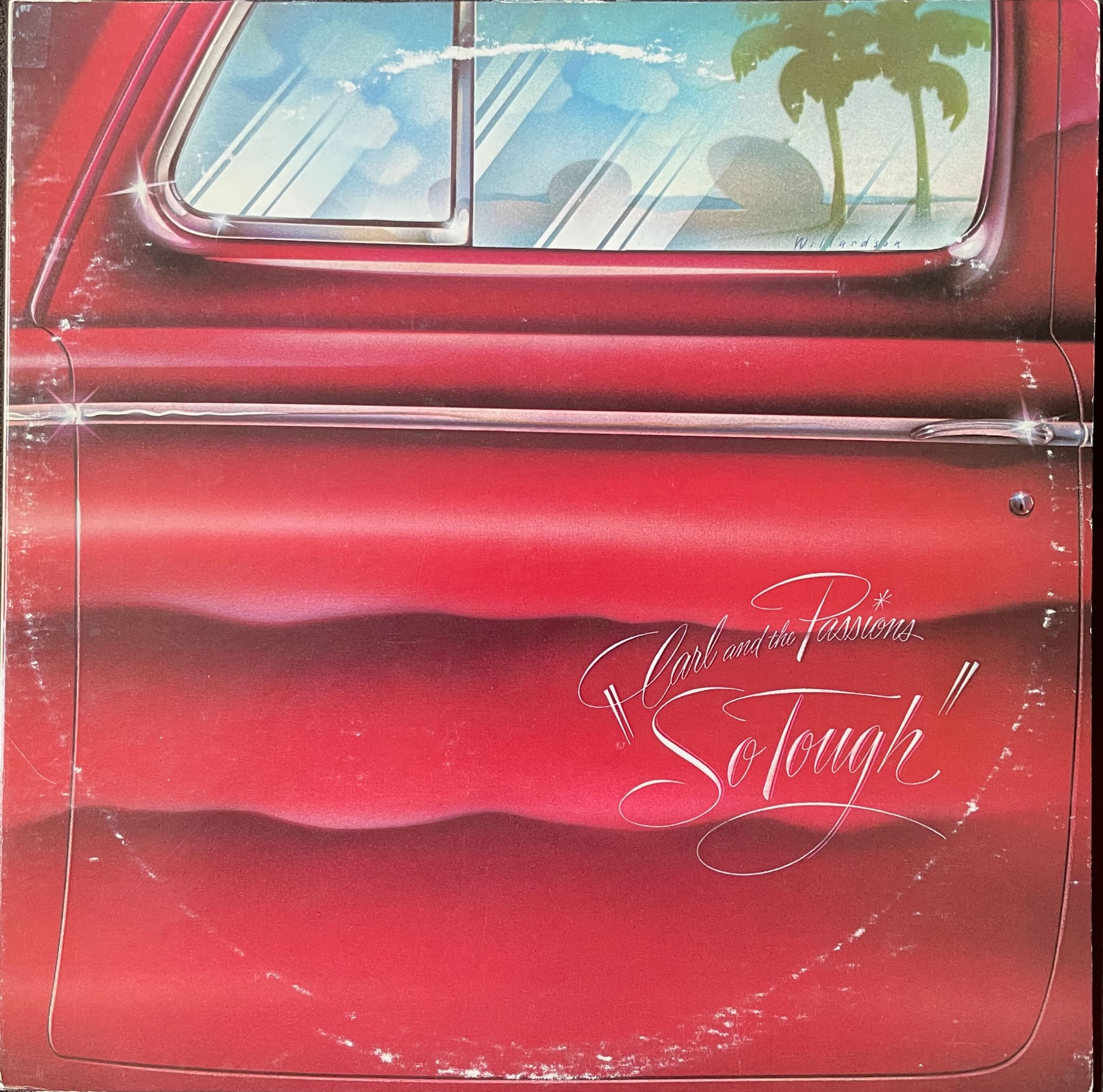
SOME OF THAT RESPECT belatedly arrived when Pet Sounds was reissued as a bonus disc to the Beach Boys’ 1972 studio album Carl and the Passions - “So Tough”. By this point, the group had started their own imprint, Brother Records, in part due to Capitol’s mishandling of Pet Sounds, although legal tape prevented several subsequent Beach Boys albums from bearing the Brother brand. In late 1969, the band left Capitol altogether and signed Brother Records to a distribution deal with Reprise Records (owned and operated by Warner Bros. Records). With their newfound artistic freedom, it seemed a fine opportunity to re-release the album that never seemed to get its fair due, although tacking it onto their brand-new studio album was a curious choice, to say the least. (Pet Sounds would also be re-released as a stand-alone LP two years later, in 1974.)
The Carl and the Passions pressing of Pet Sounds was greatly improved. First of all, Warner’s vinyl was of generally higher quality, with much of their vinyl pressing outsourced to Columbia Records at the time. (Capitol would eventually get it together and start pressing decent records by the second half of the 1970s.) Secondly, a new master tape may have been made and used, although details around this are not really known—it’s more likely that the existing Capitol master tape was EQ’ed and tweaked for sonic improvements, or perhaps a new master reel was assembled from cleaner sources. Most significantly, though, was the mastering job, performed at Artisan Sound Recorders via an unknown engineer (the suspects include Greg Fulginiti, John Golden, and Bob MacLeod, who all worked at Artisan at the time). Artisan was one of the best-respected mastering houses of its day, and whoever was responsible did superb, conscientious work in transferring Brian’s tour de force accurately to disc.
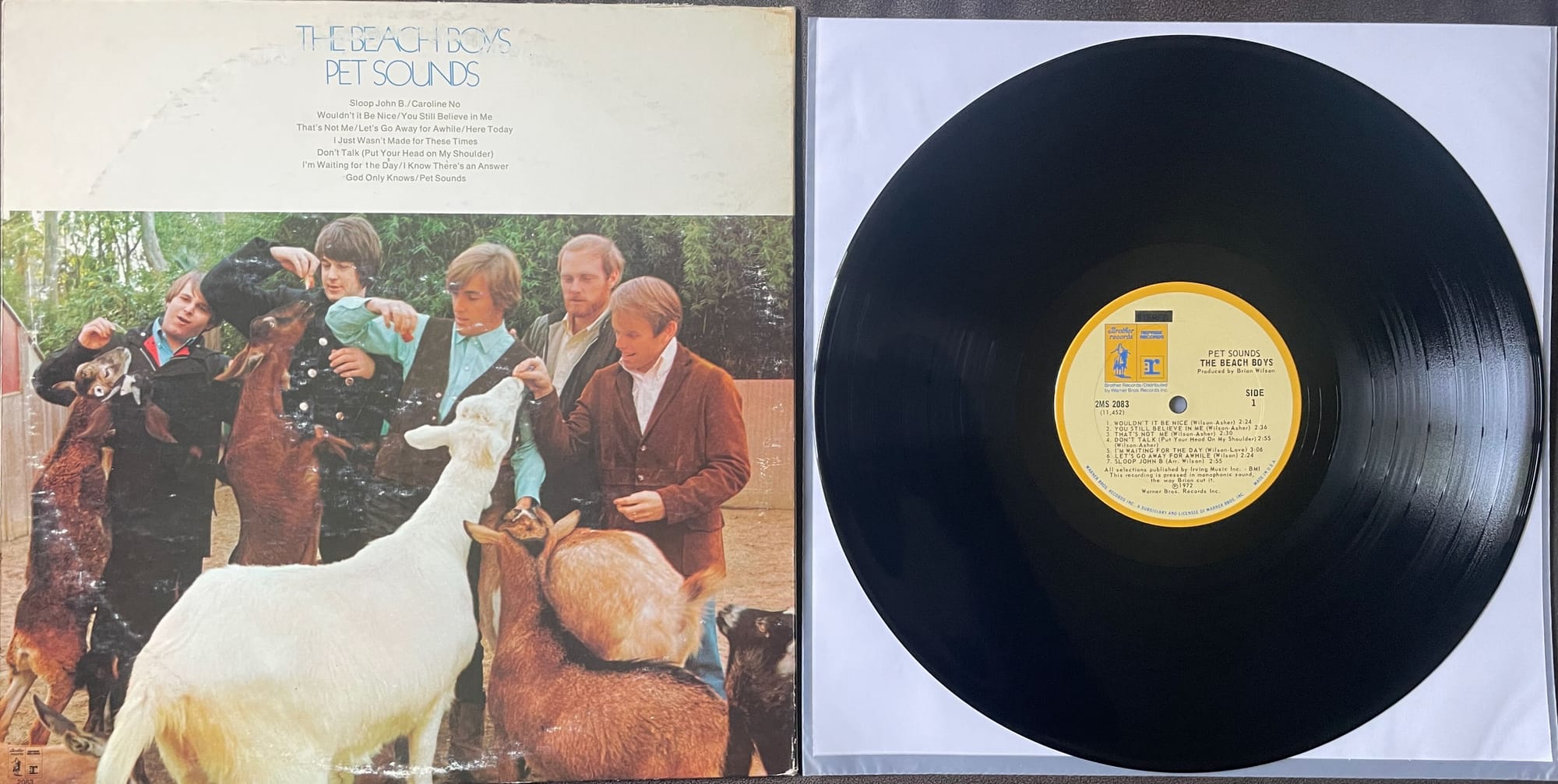
My 1972 Carl and the Passions copy of Pet Sounds—manufactured at Columbia’s Santa Maria pressing plant—has been my go-to copy of the album. The sound, still in mono, is much more dimensional, full-figured, and inviting. The high end is quite prominent, with plenty of air and excitement around the vocal harmonies. But the arrangements are more legible and even three-dimensional. No single element jumps out or jars my ear, and there’s a beautiful lushness and tonality that makes the album sound, in its various moments, joyous, bittersweet, melancholy, wistful, and heavenly. After years of listening to the 1990 Capitol CD and my 1966 original pressing, this pressing finally clued me into why Pet Sounds was so universally well regarded—an opinion I admit had eluded me before then.
Brian’s production techniques were of the “Wall of Sound” school, most famously epitomized by Phil Spector and characterized by instruments amassing to make one big, blended flavor of noise; it was a brilliant approach during the era of AM radio and the 45 RPM single, where nuances of performance were easily lost but the overall impact could still make a record sound dynamite. The notion of an individual instrument’s sonic properties being less important than the whole, of course, has origins in orchestral music, particularly from the Impressionist and late Romantic eras, where composers like Ravel emphasized color and tonality, and those like Mahler sought to harness the sheer power of vast multitudes of musicians.
This is all to say that clarity was never part of Pet Sounds’ design. But my Carl and the Passions disc is shockingly lucid-sounding, where I can perceive the components that made up Brian’s aural blend and marvel at how the layers were constructed. You can hear Brian’s other influences, too, such as Nelson Riddle’s arrangements for Frank Sinatra, or the work of Burt Bacharach. Brian was a much more instinctual and unschooled artist, though, and his odd production decisions—his emphasis on accordions, his eschewing of the typical rock ’n’ roll backbeat, and his unconventional use of guitar, emphasizing either its percussive properties or its harp-like sonority—are what made the end result so ingenious. The Carl and the Passions pressing of Pet Sounds puts all of this in wonderful, revealing light. In my opinion, it is the gold standard.
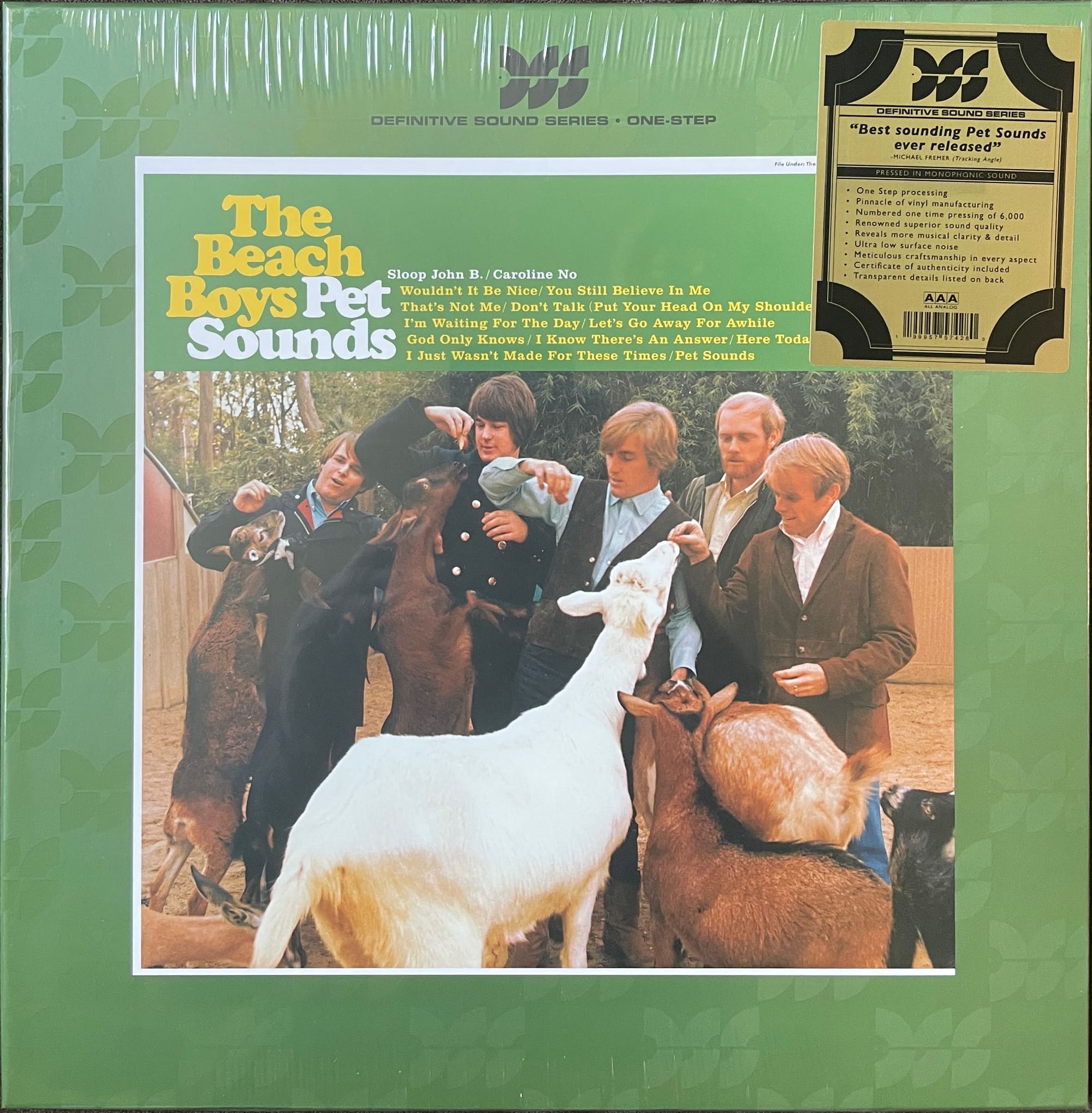
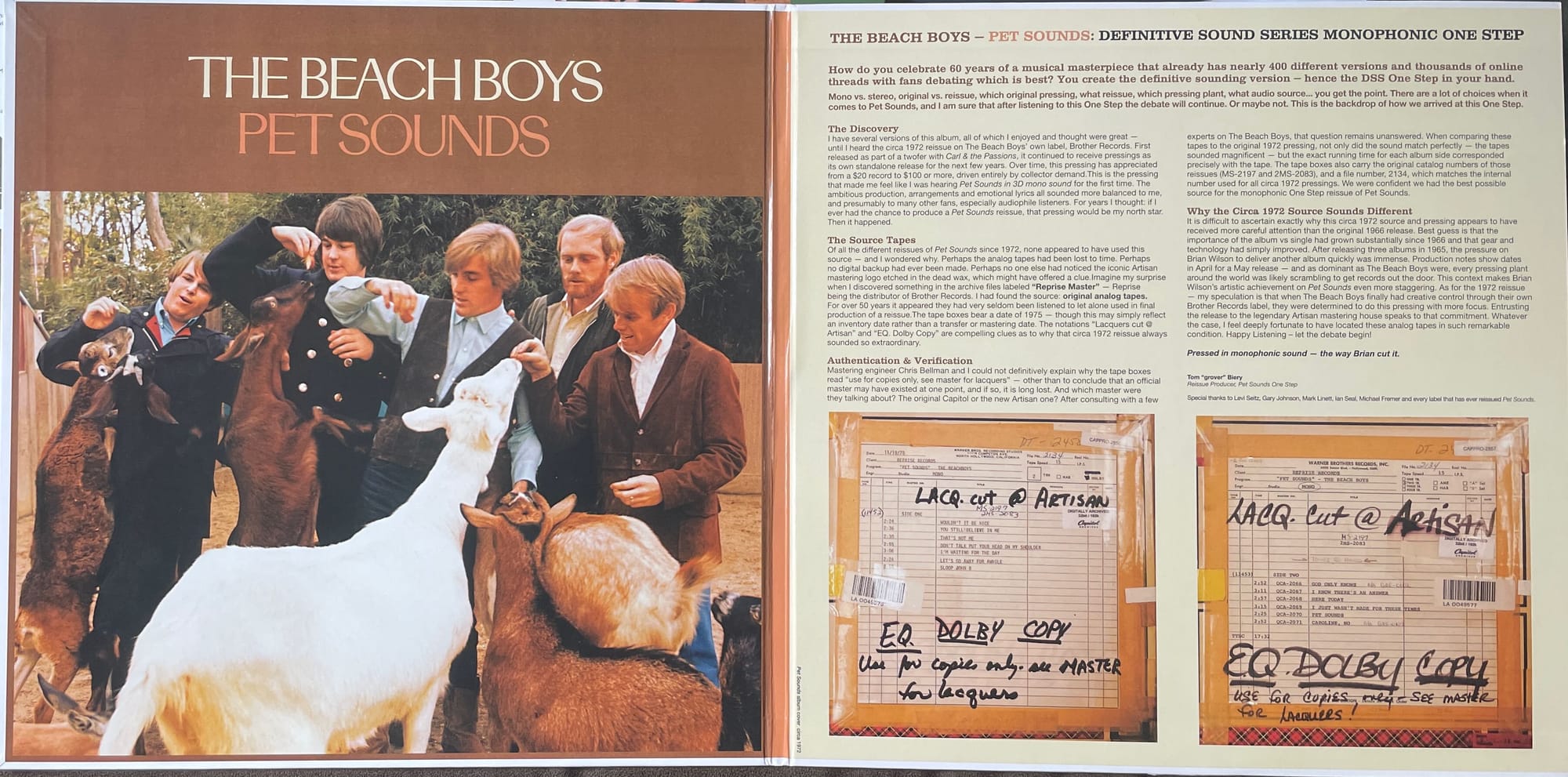
TOM “GROVER” BIERY agrees. He’s the producer of Interscope-Capitol’s Definitive Sound Series, a collection of one-step vinyl pressings of notable albums from the Universal Music Group catalog. (We’ve reviewed them here and here; Biery also produces a similar line of one-steps for Warner Music called Because Sound Matters, which we’ve covered here.) In his liner notes for the new Definitive Sound Series (DSS) pressing of Pet Sounds, Biery writes: “For years I thought: if I ever had the chance to produce a Pet Sounds reissue, [the Carl and the Passions] pressing would be my north star.”
Biery was able to locate a “Reprise Master” set of tapes in Universal’s archives, and he and mastering engineer Chris Bellman sought to do some detective work as to what these tapes actually were. With somewhat confusing notation that stated, “E.Q. Dolby Copy; Use for copies only - see master for lacquers” and a date of 1975, Biery and Bellman couldn’t 100-percent verify that these were the tapes used to cut the Carl and the Passions version of Pet Sounds. But they found that the tapes sonically matched the properties of the Carl and the Passions Artisan pressing; a few other additional factors led Biery to determine these were, if not the actual tapes used, then close descendants of the Carl and the Passions master.
Mastering engineer Steve Hoffman worked on CD and vinyl Pet Sounds reissues back in the 1990s for DCC Compact Classics (not to be confused with DSS) and had handled master tapes of the album during that process. On the popular music and mastering forum that he runs, Hoffman hypothesized that the tapes the DSS team had were, as the notation indicates, cutting dubs made at the time of the album mastering to be used as reference and safety copies, and not actually the masters used in the process. As Biery’s notes state, the actual Los Angeles master tape is long gone. The date of “1975” is another confusing element—why was it not dated 1972, if the mastering was done around that time? However, Hoffman pointed out, interestingly, that only one of the tape boxes is dated. The other not only bears no date, its notation has a completely different typeface and template, which strongly suggests it came from a different time, place, and—potentially—source altogether. (Or, as Hoffman proposed, it could simply be the wrong photo, but I would be surprised if that were the case.)
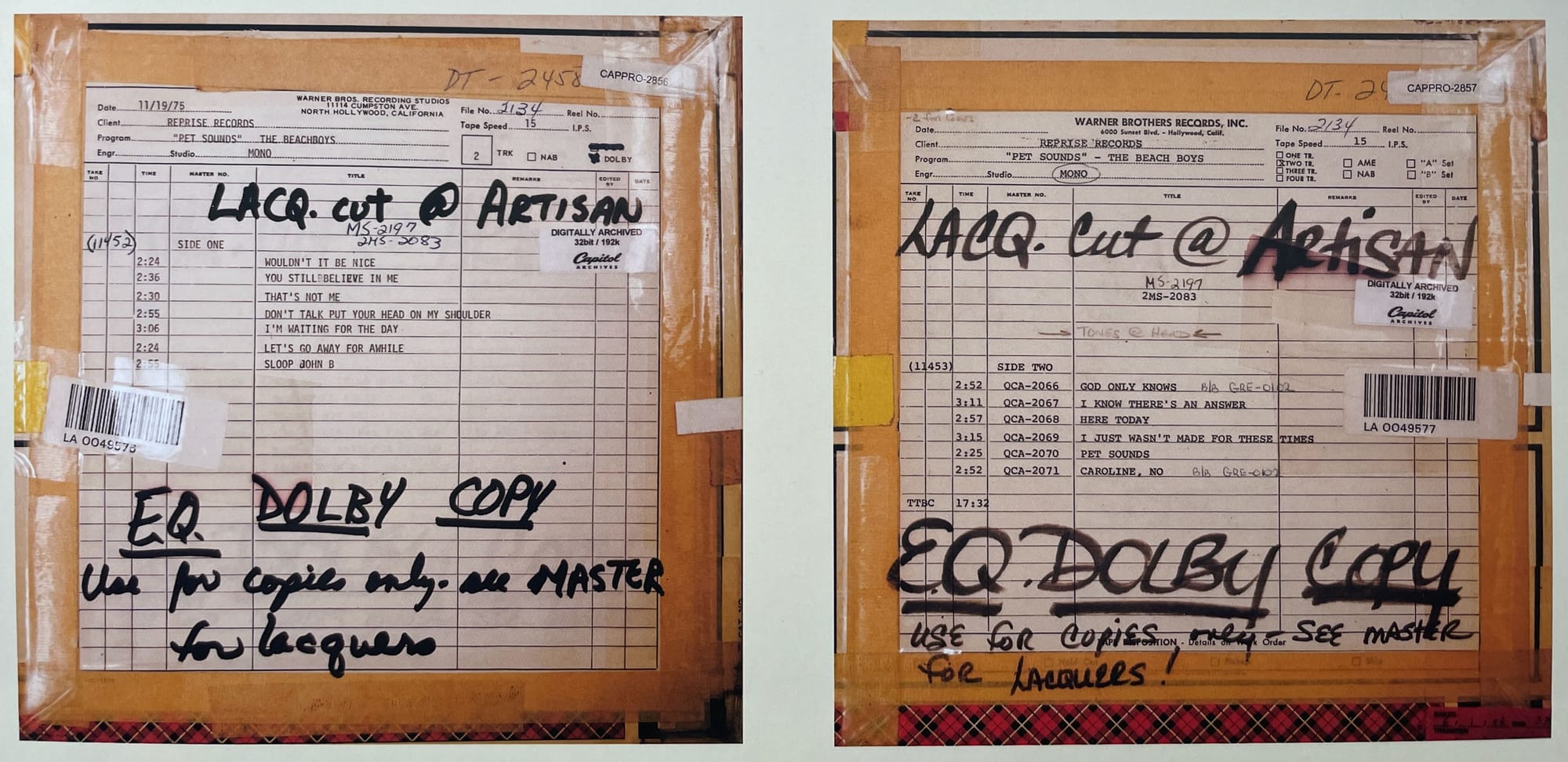
The short and long of it is that this particular “1975” master tape that Biery discovered, while very good-sounding and—more importantly—in spectacular condition, is a bit of a mystery. No one can state with absolute surety where it came from and what its origins were, or even when it was created. Much of the online criticism has centered around this slight leap in assumptions, mostly made for marketing purposes, but in Biery’s liner notes, he is clear not to definitively state that these are the actual tapes used to make Carl and the Passions. Perhaps the only disputable assertion in his notes is his theory that the tapes were basically untouched for more than 50 years. Online sleuths have pointed out that those tapes were indeed used for a digital conversion that was then released on the 50th anniversary vinyl edition in 2016, so while Biery’s initial statement might not be wholly true, the DSS is very likely the first cut-from-tape vinyl version from this particular master in more than half a century.
However, an appearance Biery and Bellman made on Steve Westman’s Live Audiophile Roundtable program on YouTube on March 24, 2026, led to more online consternation. They were joined by longtime audiophile journalist and vinyl advocate Michael Fremer, who contributed the pull quote on the DSS hype sticker (“Best sounding Pet Sounds ever released,” from his review of the test pressing on his Tracking Angle site; he’d also later write a post about the finished product that reiterated that position).
Through the conversational nature of the Roundtable (full disclosure: I have also appeared on Westman’s program as a guest), the discussion led to the group seeming to collectively agree with Fremer’s theory that the new Pet Sounds could be close to what Brian Wilson might have wanted. I’m paraphrasing, but you can watch the full episode for context. Of course, everyone knows that Brian—who passed away just over a year ago—was not involved with the DSS, but the shared excitement for the project may have led to some hyperbole. There was also discussion about Carl Wilson, who was more or less in charge of the Beach Boys in 1972, as Brian was in full decline; it’s suggested that Carl’s contributions could also have led to Pet Sounds sounding so good in the Carl and the Passions two-fer.
The truth is that no one can say for sure exactly what Brian or Carl Wilson would have wanted or what their contributions were to the sound of the 1972 Pet Sounds. Furthermore, barring the discovery of new documentation, no one can be wholly certain about the origins of the “1975” master reel that the DSS pressing used. The facts, such as they are, can be reduced to these: 1) Biery did thorough research in locating what he thought was the best-sounding source for the DSS and made good-faith efforts to identify what the tape actually was. 2) Chris Bellman treated the sonic properties of the tape with respect and accuracy; in the Roundtable conversation, he says that he “hot-rodded” the mastering chain so that the tape machine ran straight to the cutting lathe, bypassing a console and any other kind of EQ, filter, or compressor. 3) The DSS pressing sounds fabulous, so much so that Fremer’s claim that it’s the “best sounding” holds plenty of water, even if at the end of the day your opinion differs from Fremer’s.
A YouTuber who goes by The Beach Boyman (a handle that cracks me up every time I see it; his real name is Jeremy) posted a pair of thoughtful, considered evaluations of the DSS and the Vinylphyle reissues. Here is his initial review, and here is a follow-up video that disputes some of the hyperbole and wishcasting that cropped up around the DSS discussion. He pokes holes in the widely accepted Beach Boy theory that Carl and the Beach Boys’ go-to recording engineer Stephen Desper worked on the ’72 version of Pet Sounds. Warner Bros. documentation indicates that it was mastered on April 21, 1972, but as it turns out, Desper had left the band’s employ in January, and on April 21, records show that Carl boarded a flight to Kentucky for a concert; additionally, Desper’s replacement Stephen Moffitt (who later changed his name to Shiva Shanti) is on the record as having no involvement. Through these pieces of evidence and the lack of definitive documentation for the “1975” tape, The Beach Boyman makes a strong case that the Carl and the Passions master actually used the original 1966 Los Angeles master tape.
Somewhat unfortunately, there were a number of comments beneath The Beach Boyman’s first video and elsewhere that turned the conversation toxic; I won’t go into the dirty details here, as I don’t want to resurrect any of the discussion. But it all turned into an internet flame war of a very unpleasant kind. The Beach Boyman, for his part, offered measured and well-researched conclusions based on conversation with experts like John Brode, the assistant archive manager for the Beach Boys/Iconic Artists Group, and Will Crerar, a researcher, writer, and sessionographer whose work has been a part of previous Beach Boys archival releases. Credit is due to The Beach Boyman for rising above the crumminess of the discourse. (No comment about the behavior of some of the other participants.)
This was all a tempest in a teapot, but it goes to show just how emotional some people get over Pet Sounds, even six decades later. It’s the kind of album people hold close to their hearts, and a premium $100 pressing of the album (as the DSS is) demands attention from its most fervent fans, as well as vinyl collectors looking to have a well-rounded collection of end-all-be-all pressings. The sticker price itself makes the assertion that this is a major reissue; the cost also makes the DSS edition a massive target for the skeptical. Quite simply, many people don’t want to pay $100 for a record and will look for any reason to take potshots at it. And the nature of the internet only exacerbates all of this, through FOMO, comment trolling, and easily trackable price spikes via sites like Discogs.
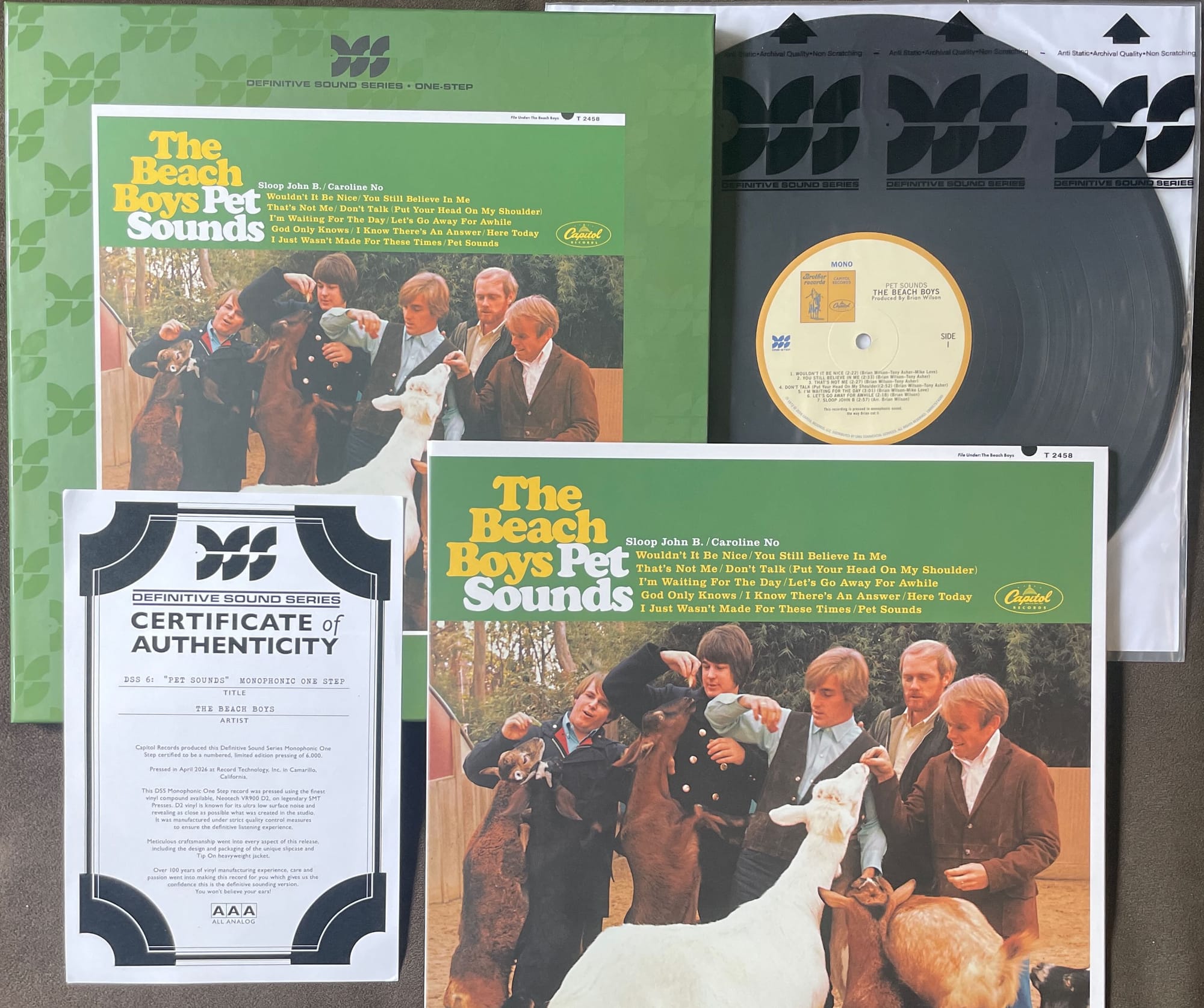
When all is said and done, the DSS will simply be another very good pressing of Pet Sounds. (Biery’s sign-off in his liner notes puts it perfectly: “Let the debate begin!”) Before I discuss the sound, I should explain—not defend—the elevated price tag. The album features a one-step pressing, which in an edition of 6000 meant that Bellman had to cut multiple lacquers, running the tape to the lathe nine separate times, as each lacquer was only good for making between 500 and 750 copies, roughly. The disc itself is made from a superlative vinyl compound (Neotech VR900-D2, if you want to get technical) that results in virtually silent playing surfaces. And the album is presented in a tip-on gatefold jacket that’s housed inside a sturdy slipcase. All of this makes the presentation something different, if not special; whether these garnishes are something you want to pay extra for is entirely up to you.
It’s a terrific-sounding version of the album. It shares many characteristics with my beloved Carl and the Passion pressing, especially the ripeness and full bloom of the sound. The window into Brian’s production is similarly transparent, with the melodic and harmonic lines discernible and the instrumental components fully legible. Certain passages sound positively exquisite, like the strings on “Don’t Talk (Put Your Head on My Shoulder)” or the a cappella vocal section on “Sloop John B.” Elsewhere, the DSS is slightly less smooth, with just a touch of edginess in the highs or a chunkiness to the midrange that is somewhat lumbering; there’s also an overall grain to the sound that I don’t perceive on my Carl disc. Occasionally, the monophonic sonic picture breaks up a tiny bit, such as the toppy treble of the tambourine on “That’s Not Me” that seems to wander around the stereo spectrum, although this phenomenon could simply be a limitation of my system.
My takeaway is this: There are sections on my DSS that sound better than the Carl and the Passions pressing and sections that don’t. I think it is a worthy competitor but it is just a little less consistent, and absent that tiny sprinkle of fairy dust that makes the Carl and the Passions pressing such an ultra-sweet delight for my ears. However, the DSS has dead-silent backgrounds and the pressing from Record Technology, Inc. (RTI) is, on my copy, pretty close to flawless—certainly a selling point in its own right. Also, a one-step pressing of this size means that your mileage may vary, quite literally: With Chris Bellman having performed nine separate lacquer cuts, there may be subtleties and minuscule differences between individual copies pressed from all those different cuts. Those should be negligible, of course, but no variable can be ignored completely. For the record, my copy has plate number 47876 on Side 1 and plate number 47862 on Side 2.
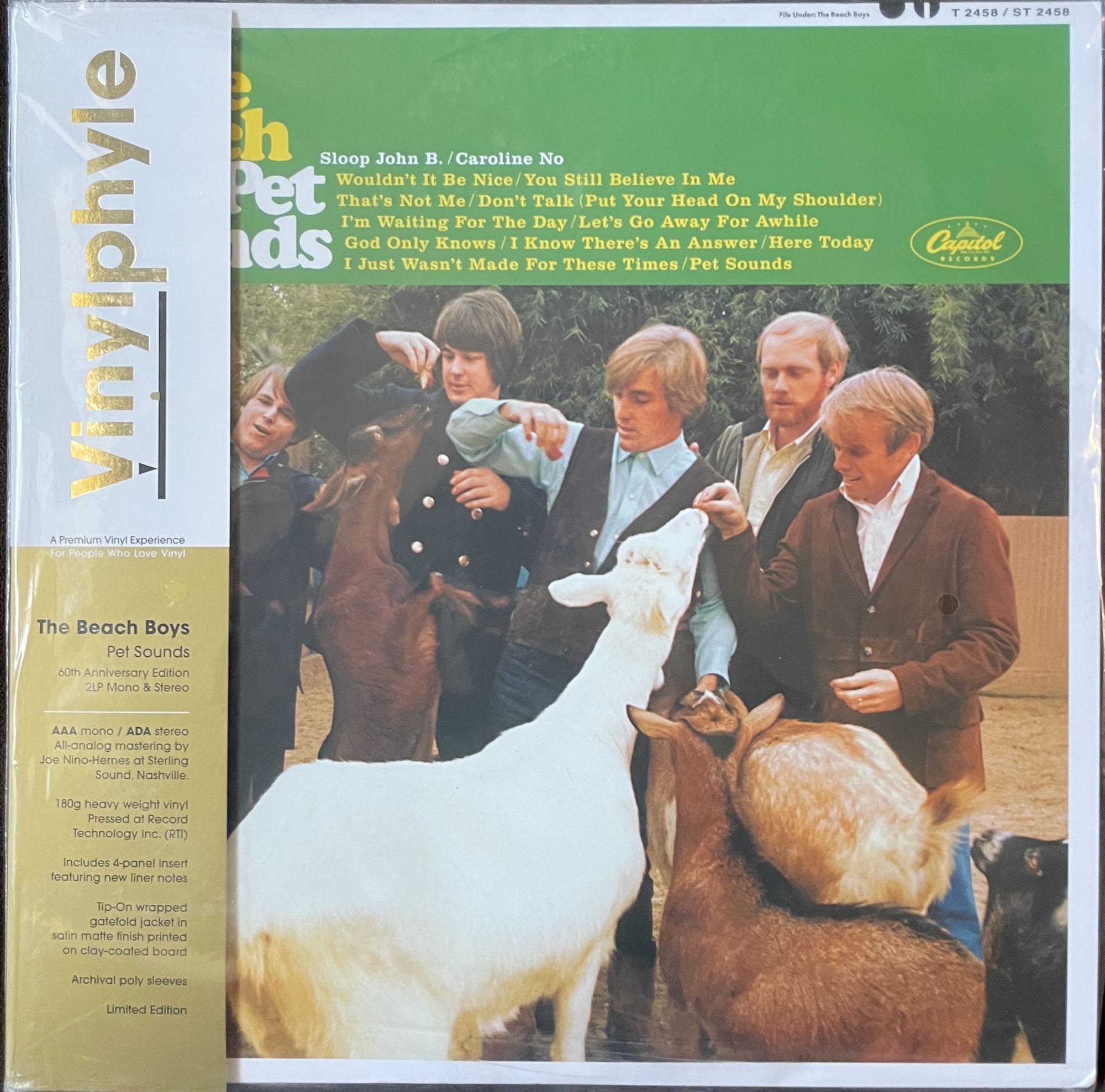
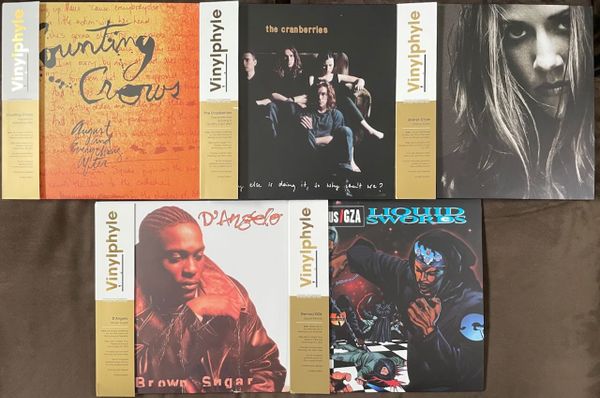
AS ALL OF THE preparation for the DSS was going on, a different wing of Universal was readying its own Pet Sounds for release in the Vinylphyle series. Since launching last year, Vinylphyle has quickly vaulted to the forefront of the vinyl reissue scene with high-quality masterings from Joe Nino-Hernes of Sterling Sounds and superb pressings from RTI. Without the distraction of the DSS, a Vinylphyle edition of Pet Sounds would be big, big news on its own. But these two competing and/or complementary editions hit the market at the exact same time, leaving vinyl buyers spoilt for choice (and putting those trying to cut costs during Trumpflation ’26 in a bit of a pickle).
To make matters infinitely more interesting, the Vinylphyle version did not use the same tape that Biery and Bellman did for the DSS; rather, it uses a “N.Y. COPY” tape that was dubbed at the time of the initial album preparation in 1966 and shipped from Capitol’s Los Angeles headquarters to their East Coast offices. This tape is believed to have been used to make separate lacquer cuts that were the basis for many—but not all—of the original LP pressings made at Capitol’s pressing facilities in Scranton, Pennsylvania, and Jacksonville, Illinois, for distribution in the eastern half of the United States.
The NY tape—which is one generation removed from Brian’s LA master—later became the basis for several more recent Pet Sounds reissues, as the LA master suffered damage over the years before disappearing altogether sometime in the 1990s. First, “Wouldn’t It Be Nice” was removed from the LA tape so that it could be used to cut the single; some sources state that instead of being reinstated to the reel, it was mistakenly replaced with the dreaded duophonic “mix.” Then, the very end of “Caroline, No” was lopped off, during the dog bark/train whistle section. Steve Hoffman’s DCC remaster used elements of the NY copy to compensate for what was missing on the LA tape; Kevin Gray’s 2015 mastering for Acoustic Sounds used the NY tape in full, as the LA master was lost by then.
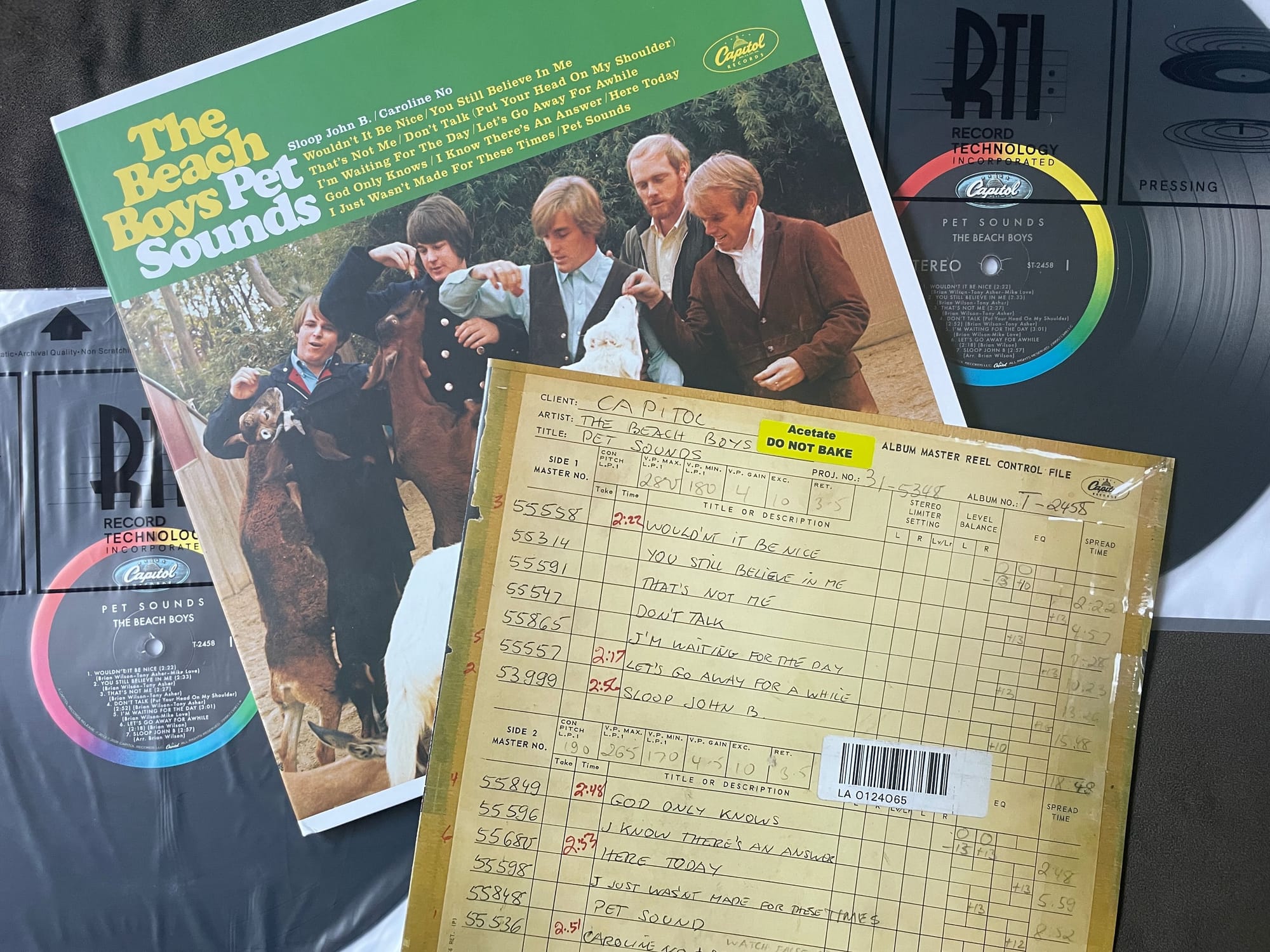
(This is where I get confused—more confused, I should say. It’s not clear to me when “Wouldn’t It Be Nice” was replaced with the duophonic version, as the Carl and the Passions LP clearly uses the original mono version. But whatever the reason, that track suffers from slightly lower fidelity on many reissues, some of which is due to the recording’s inherent nature. This is noticeable on both the DSS and the Vinylphyle mono LP. As an additional side note and point of confusion, Hoffman has also stated that he used other sources in the Capitol archives for his DCC, such as their phono reels—a separate catalog of archival tapes that provided the sources for the recent Blue Note Tone Poet reissues of Frank Sinatra; read our reviews of those here and here. Those phono reels, to my knowledge, have not been part of any recent conversation about available sources for Pet Sounds.)
What this all boils down to is that we now have two brand-new, prime treatments of Pet Sounds, taken from two different tapes, cut by two different mastering engineers, and pressed on two different vinyl compounds (although both come from the same pressing plant, RTI). The great news is that the more affordable Vinylphyle holds its own against the high-end properties of the DSS. Nino-Hernes is a phenomenal vinyl mastering engineer, and the package is superb, with a tip-on gatefold, an insert with thorough liner notes, and a gorgeously smooth and silent pressing. To make the Vinylphyle package even more essential, it includes a second LP with the 1996 stereo mix. This remix, made by Mark Linett for the Pet Sounds Sessions CD box set, became possible once digital technology allowed for the individual elements on the master multitracks to be synchronized across all of the various bouncedowns and mixes. So while the mono LP is cut entirely from analog, the stereo LP is sourced from a digitally created mix that was transferred to an analog assembly reel and then cut to lacquer.
The mono mix will be most people’s point of comparison for the Vinylphyle, especially when the DSS is part of the conversation. I wish I could tell you the two sounded drastically different. I think the NY tape, perhaps as a result of seeing a bit more usage over the years, is a little more frail, without as much muscularity and power as what’s on the DSS. But the tones are exquisite, and Nino-Hernes’s mastering is really a work of art. The bass extension is large but never overwhelming, and the soundstage is big but not bloated. The 3D quality that people talk about is present and perhaps even more perceptible than on the DSS. But there is just a slight rickety quality, and the tape has a greater emphasis on the upper mids and treble, resulting in a subtle transistor-radio quality that was very much the fashion in 1966, when this tape was made. Nino-Hernes has also tailored the sound to be more well-rounded and even, as opposed to the “hot-rodded” cuts from Bellman, which are enjoyably brash.
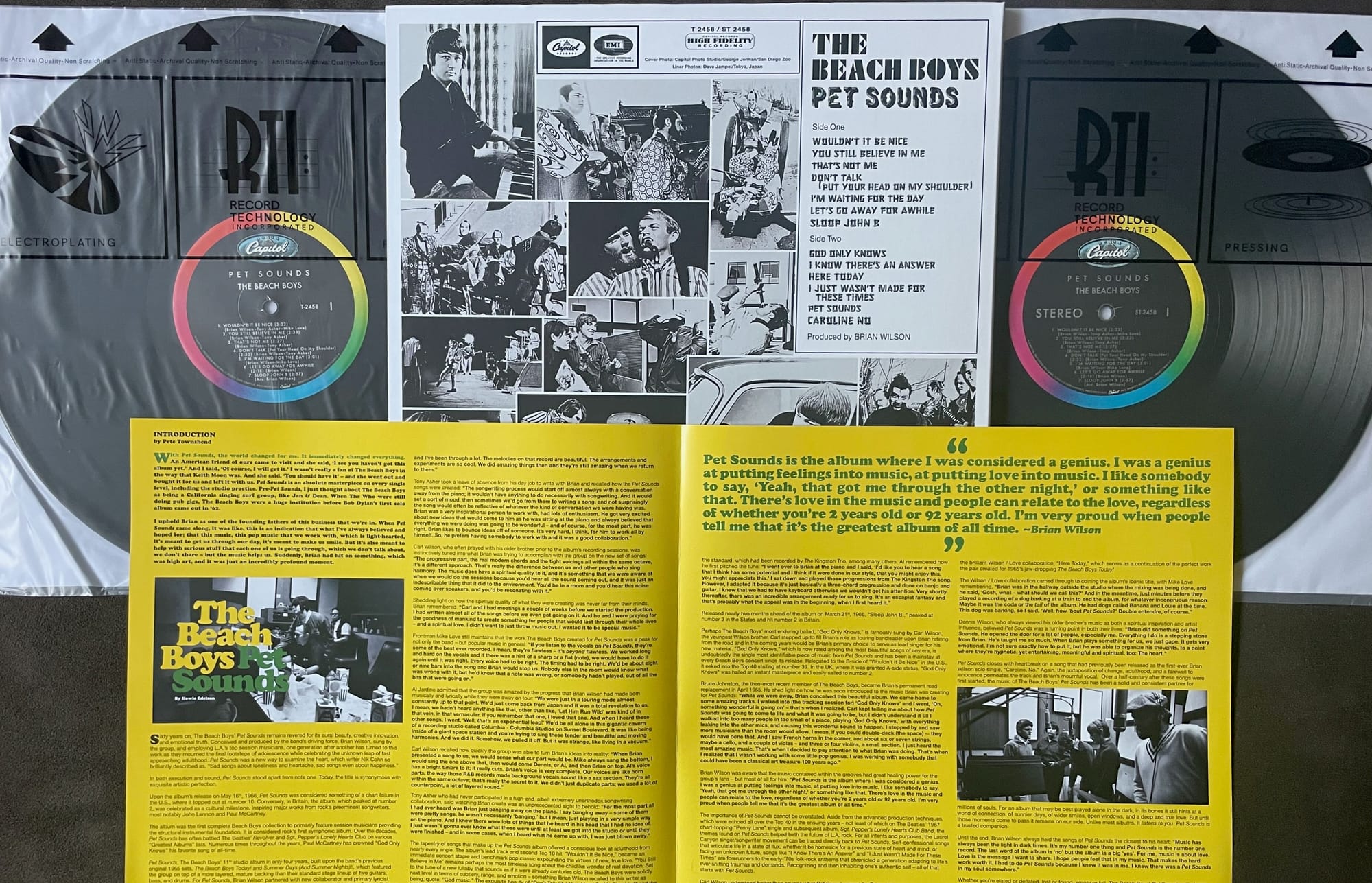
Linett’s stereo mix on LP 2 is an entirely different kettle of fish. To me, it’s tastefully done but can’t avoid a slightly unnatural, clinical sound. Perhaps that’s the point: We’re meant to be able to peel apart Brian’s carefully constructed wall of sound like it’s string cheese (Linett’s mix, of course, had Brian’s full approval at the time). In stereo, and with deliberate separation of the voices and instruments, we can examine each element, follow each harmonic line, and gape at how Brian put the whole thing together. As an academic exercise, it’s a revelation. As a listening experience, it has its qualities, but I think it’s simply missing the magic of the mono. I find it a little too modern-sounding, bearing some traits of its 1990s origin, and without the benefit of a unified sonic blend, Brian’s ambitions can occasionally sound a bit scattered and busy. Furthermore, I can’t shake the feeling that we’re glimpsing behind the curtain at a few things we probably weren’t meant to hear. But it remains a fascinating thing, especially when you’ve been listening carefully and repeatedly to the mono mix, as I have.
And the stereo mix sounds great on the Vinylphyle pressing. Once again, Nino-Hernes has elevated things splendidly, so that the music sounds as fulsome and expressive as possible. The bass has been fully excavated and given plenty of room to roam, and the piercing bits in the mono mix’s high end (vocals and tambourine, mostly) are mellowed and integrated into the rest of the sonic spectrum. The sound is appropriately cushiony and kind to the ears, and the presentation serves the music, as it should. The stereo Pet Sounds LP will appeal to the mind, while Brian’s mono mix on the other disc will connect with the heart.
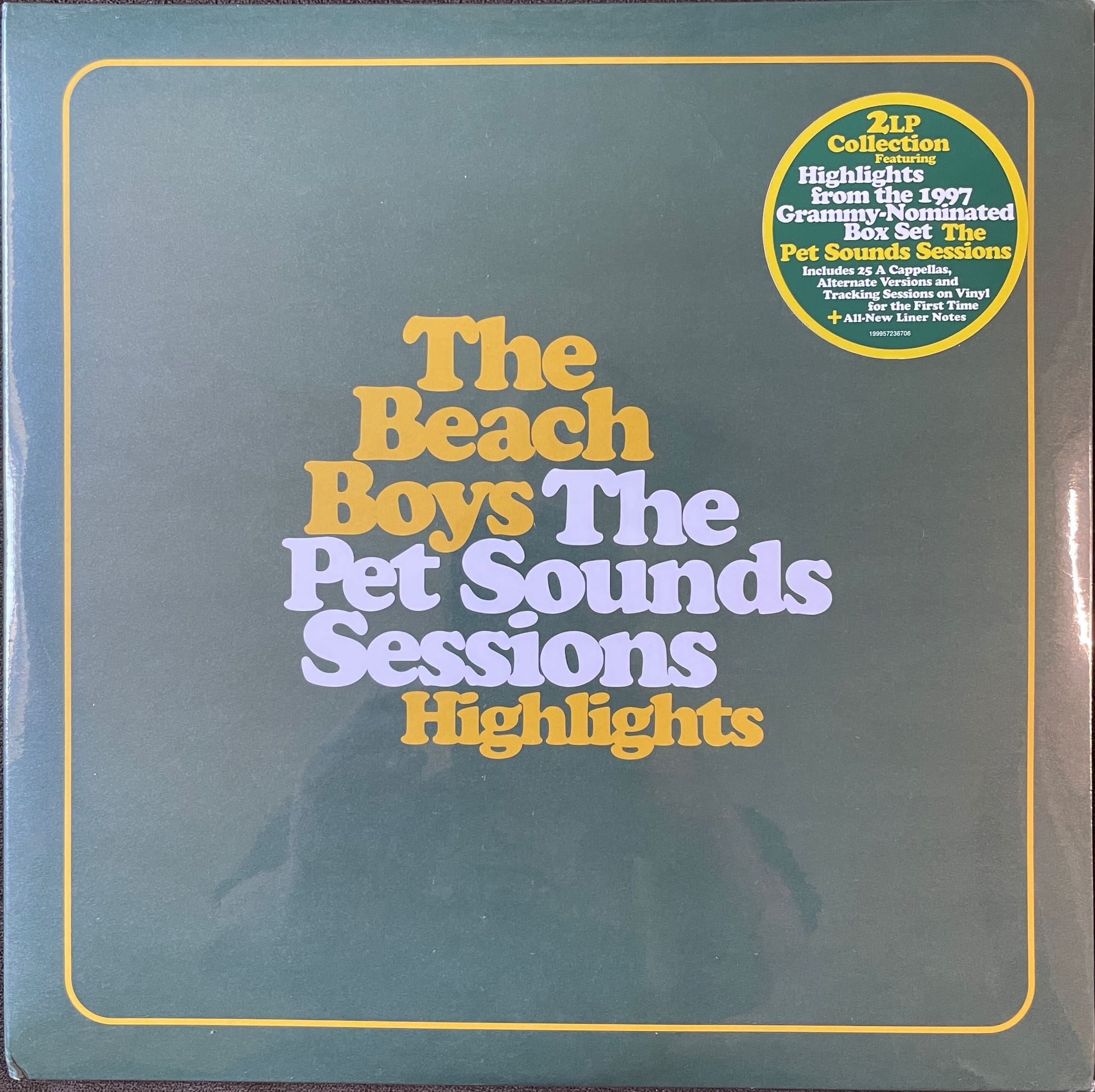
THE CHERRY ON TOP of all of this Pet Sounds activity is a separate double LP that collects a bunch of the alternate mixes and tracking sessions from the 1997 box set The Pet Sounds Sessions, which was meant to commemorate the album’s 30th anniversary, delayed slightly after Mike Love disputed some of the songwriting credits. This new The Pet Sounds Sessions Highlights compilation includes vocal-only mixes of many album tracks, to emphasize Brian’s arrangements and the Beach Boys’ mind-blowing harmonies, as well as alternate takes that didn’t make it to the final album, such as a Carl-sung verse on “Sloop John B,” a rejected saxophone solo on “God Only Knows,” and a version of “I’m Waiting for the Day” with Mike Love on lead vocals instead of Brian.
My favorite parts are the “Highlights from Tracking Date” selections, which simply let the tape run while the Wrecking Crew works their way through various takes of “Wouldn’t It Be Nice,” “That’s Not Me,” and “God Only Knows.” With false starts, note fluffs, and quick alterations—and Brian shouting enthusiastic instruction from the control room—we hear Pet Sounds being built in real time. What’s striking is how rigorous a taskmaster Brian was and how decisive he was about the arrangements he wanted, adjusting them on the fly once he heard them demonstrated by the musicians. You also get a sense of how exciting the sessions must have been for the players, where their skill and quick thinking was employed in the service of groundbreaking music.
There are also snippets from the “Good Vibrations” sessions, which began during the Pet Sounds period but not finished until after the album was released. A tracking session for album outtake “Trombone Dixie” is also included, as is an alternate mix for “Hang On to Your Ego,” which was an early version of “I Know There’s an Answer” with discarded lyrics. It would have been nice if the compilation included the Beach Boys’ 1965 single “The Little Girl I Once Knew,” which was recorded in between the “Sloop John B” single and the rest of the album; as such, it is part of the Pet Sounds continuum, although it doesn’t really fit in musically with the album, and one can see why the song, after flopping on the charts, was taken out of the running for album consideration. (“Trombone Dixie” incorporates some elements of “The Little Girl I Once Knew” but doesn’t really function as a substitute.)
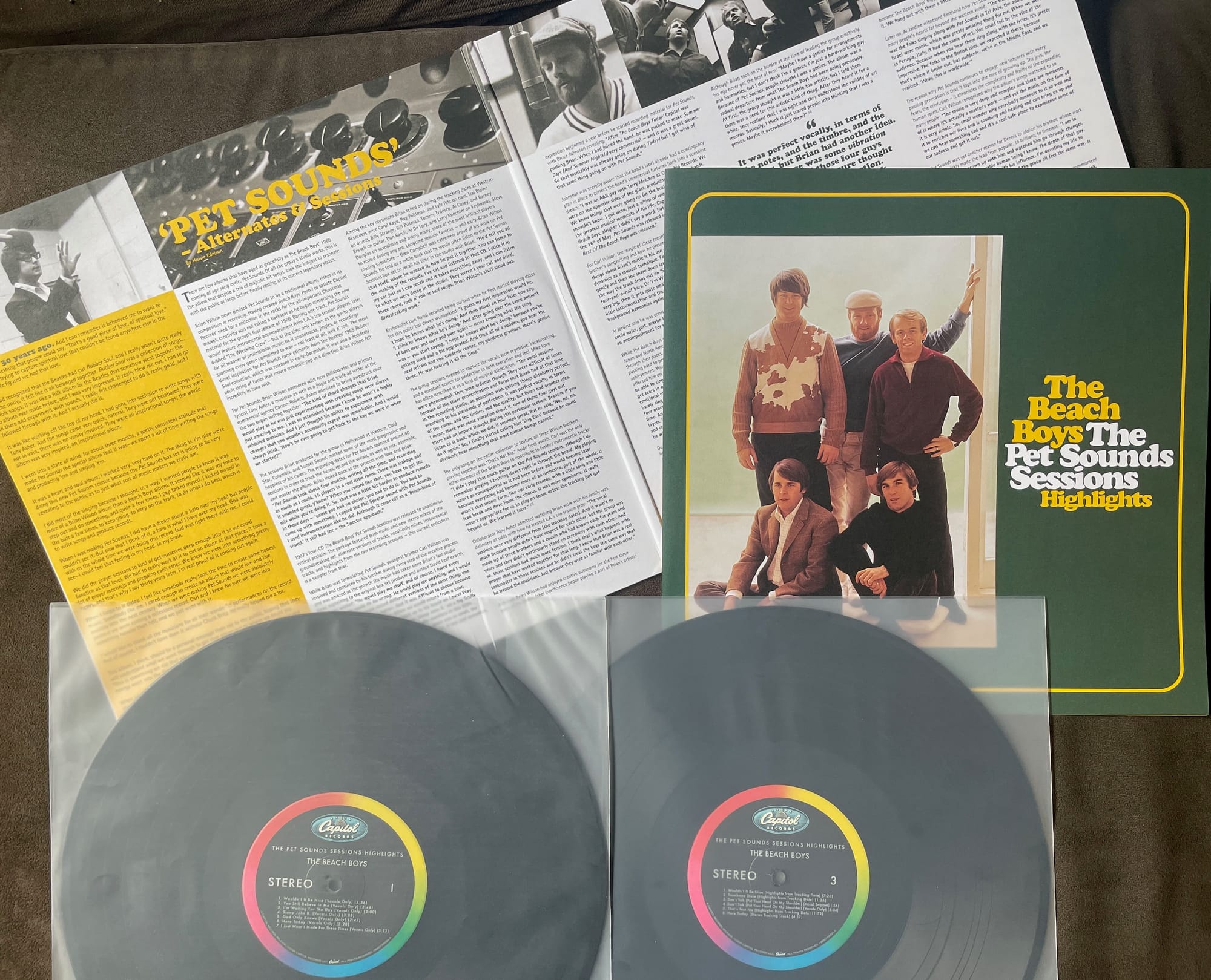
The only real problem with the double LP is the bizarre inclusion of a duplicate track: The “Vocals Only” version of “I’m Waiting for the Day” appears here twice and seems to be identical. This is a conspicuously weird oversight for a package that otherwise seems well thought-out. The inner gatefold includes a terrific new essay by Howie Edelson, and an additional insert includes tracking information for all of the songs on the album. (It’s interesting to note how incomplete the studio documentation is: “God Only Knows” does not credit any flute players, who are clearly audible on the finished track, nor is the 12-string mando-guitar that plays the opening arpeggios on “Wouldn’t It Be Nice” mentioned specifically, although one imagines one of the four credited guitarists is responsible.) It’s great to see the musicians credited here, as none of their names appear on the other reissues.
It’s a fun listen, and maybe not essential to own on vinyl if you already have the Sessions box or are content to stream it. These work-in-progress recordings are more an act of scholarship than musical enjoyment and might not demand frequent rotations on your turntable. But the liner notes are worthwhile in their own right, and the sound is very fine, taken from Evren Göknar’s new digital master. The US vinyl was pressed at Guadalajara, Mexico’s Conectiv pressing plant (European copies were pressed at Optimal); my Conectiv copy was very good, with flat, centered vinyl that had silent backgrounds and only a short flurry of extraneous noise at the start of each side.
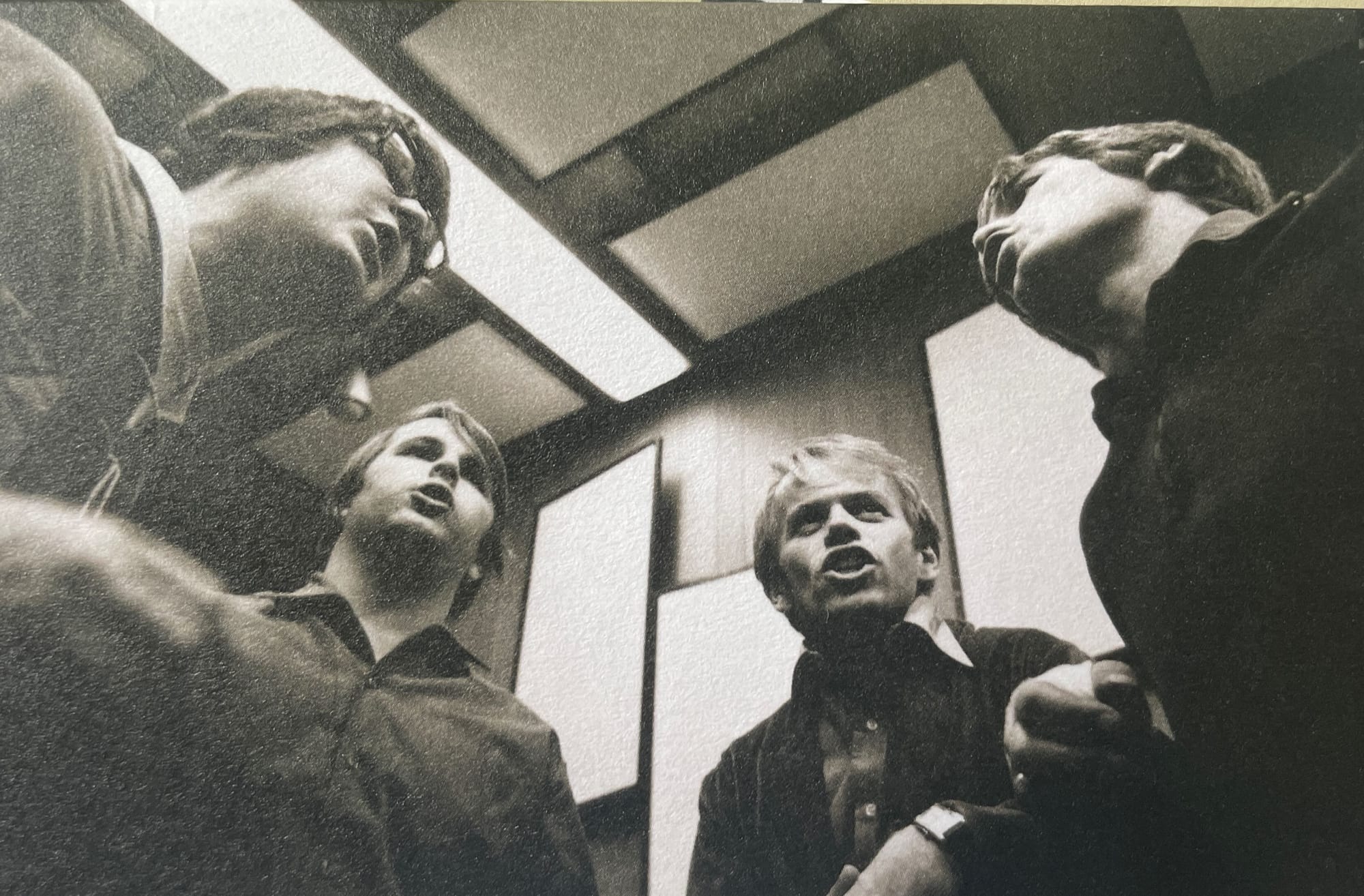
ALTOGETHER, THIS IS A lot of hoopla around a collection of three-minute pop songs about love and life, but Pet Sounds is an album that’s taken on legendary proportions and has more or less lived up to them. That said, I don’t think any of these new releases drastically reframes our understanding of the work Brian Wilson, his Beach Boys compatriots, and the more-than-game instrumentalists in the Wrecking Crew did more than 60 years ago. Instead, the DSS, Vinylphyle, and Pet Sounds Sessions Highlights discs all serve as mementos to enforce our affection for the music. The Vinylphyle is the intelligent purchase from a financial perspective, and it really is a smart buy if you’d like great-sounding versions of the mono and stereo mixes. On the other hand, the DSS is an extravagant, fun splurge that offers a few spine-tingling moments you can’t get anywhere else. But I found my trusty Carl and the Passions copy still delivered all of the things I like best about Pet Sounds.
This is probably as good a place as any to note that there were two significant reissues of Pet Sounds that I haven’t played and can’t use as points of comparison. I discussed Steve Hoffman’s DCC remastered mono LP from 1995 earlier in the text, but I haven’t heard it—nor have I listened to Kevin Gray’s masterings for Analogue Productions, for which both the mono and stereo mixes were cut to 33 RPM and 2-LP 45 RPM; the first of these was released in 2015 and all four configurations are still currently available. Many have argued that one or another of these is the best of all Pet Sounds, and I can’t dispute that; I also think anyone deciding that the DSS or Vinylphyle is the champ certainly has a leg to stand on, even though I still like my 1972 Artisan pressing best. In other words, there is no shortage of good Pet Sounds pressings, and that’s a fine thing.
The DSS one-step should be coming to independent record stores in limited quantities on June 26, along with several other titles in Interscope-Capitol’s Definitive Sound Series line. This is a welcome development, as record stores are the lifeblood of the vinyl revival and deserve to be involved in the burgeoning high-end reissue market. We’re still waiting to see if Vinylphyle will ever break out of its direct-to-consumer model and become available anywhere other than UMG’s uDiscover Music store.
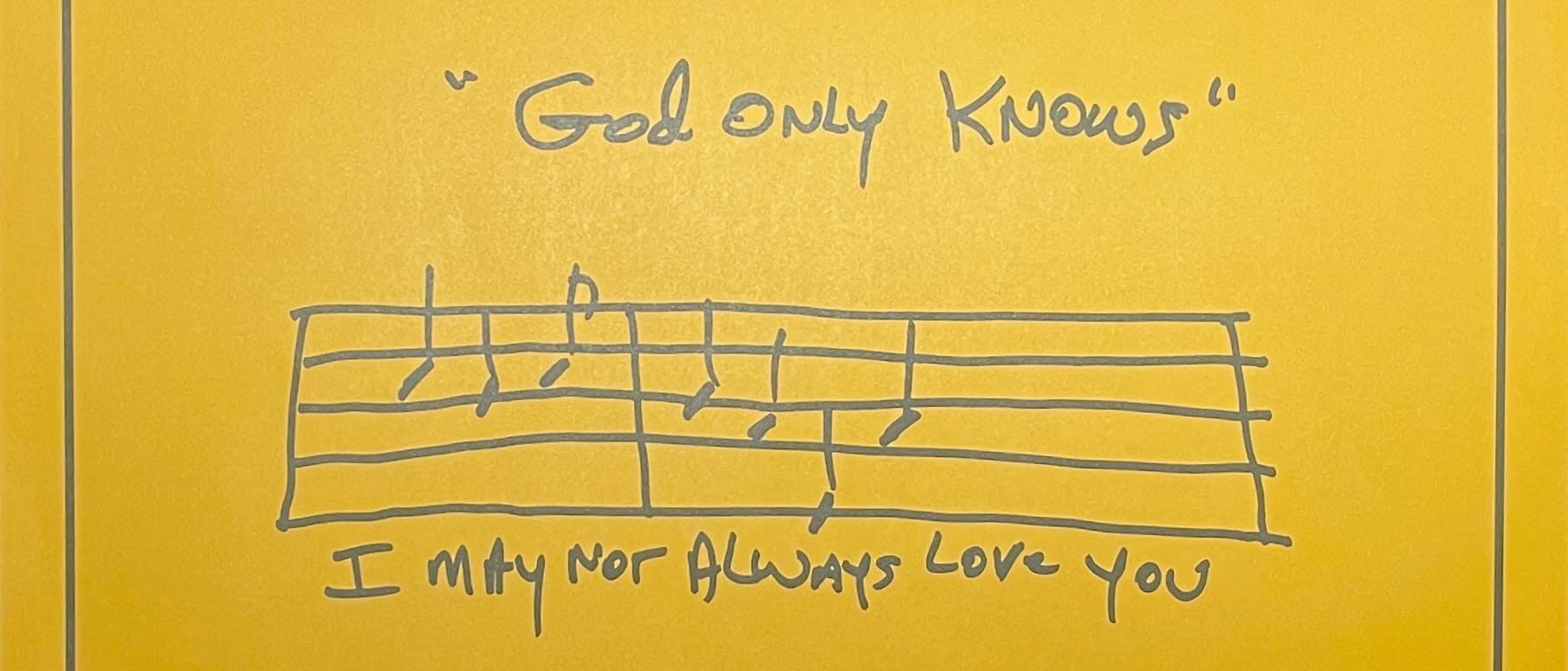
I’ll end by letting go of my lingering disappointment over the rotten aspects of the online discourse around these different Pet Sounds campaigns. People are often quick to type out their complaints but rarely take the time to express their joy, their wonder, their curiosity, and their sense of discovery. All of that stuff lives outside of these rectangular windows, as it rightly should. And it’s just as right that so many listeners had strong responses to how Pet Sounds was treated; as I said earlier, it’s an album that a lot of people feel very connected to. “This album is your album,” Brian Wilson wrote in the introduction to the Pet Sounds Sessions box set 30 years ago. And there’s no wrong way to listen to it, or love it.
Pet Sounds: Definitive Sound Series 1-LP 33 RPM 180g slightly translucent vinyl
• One-step pressing of a new mono mastering of the Beach Boys’ 1966 album
• Jacket: Tip-on gatefold with outer slipcase
• Inner sleeve: DSS-branded rice-paper-style poly
• Liner notes, insert, or booklet: Essay by reissue producer Tom “grover” Biery in the inner gatefold; a DSS certificate of authenticity is also included
• Source: Analog; “EQ’d original mono analog tapes, circa 1972”
• Mastering credit: “Chris Bellman of Bernie Grundman Mastering,” Hollywood, CA
• Lacquer cut by: Chris Bellman of Bernie Grundman Mastering, Hollywood, CA; “CB” in the deadwax
• Pressed at: Record Technology, Inc. (RTI), Camarillo, CA
• Vinyl pressing quality (visual): A
• Vinyl pressing quality (audio): A
• Additional notes: Pressed on Neotech VR900-D2 vinyl compound. Limited numbered edition of 6000.
Pet Sounds: Vinylphyle 2-LP 33 RPM 180g black vinyl
• New mono and stereo masterings of the Beach Boys’ 1966 album
• Jacket: “Tip-on wrapped gatefold jacket in satin matte finish printed on clay-coated board”
• Inner sleeve: RTI-branded rice-paper-style poly
• Liner notes, insert, or booklet: Four-page insert with photos of the tape boxes, liner notes by Howie Edelson, and an introduction by Pete Townshend
• Mono source: Analog; “1966 assembled master reel”
• Stereo source: Digital; “1996 assembled master reel - 2025 sequenced 1/2” 30IPS copy”
• Mastering credit: “Vinyl mastering: Joe Nino-Hernes at Sterling Sound, Nashville”
• Lacquer cut by: Joe Nino-Hernes at Sterling Sound, Nashville; “JN-H” in the deadwax
• Pressed at: Record Technology, Inc. (RTI), Camarillo, CA
• Vinyl pressing quality (visual): A
• Vinyl pressing quality (audio): A
• Additional notes: Comes in a perforated reusable poly outer bag with wraparound obi. Limited edition per obi.
The Pet Sounds Sessions Highlights: Capitol/UMe 2-LP 33 RPM black vinyl
• Selections from the 1997 The Pet Sounds Sessions CD box set on vinyl for the first time
• Jacket: Direct-to-board textured matte-finish gatefold
• Inner sleeve: Poly
• Liner notes, insert, or booklet: Essay by Howie Edelson and introduction by Brian Wilson on the inner gatefold (Brian’s intro reproduced from the CD box set); four-page insert includes photos, tracking information, and credits for the album
• Source: Digital
• Original The Pet Sounds Sessions mastering credit: “Mastered by Joe Gaswirt”
• The Pet Sounds Sessions Highlights mastering credit: “Mastering: Evren Göknar”
• Lacquer cut by: Unknown; no initials in the deadwax
• Pressed at: Conectiv, Guadalajara, Mexico
• Vinyl pressing quality (visual): A
• Vinyl pressing quality (audio): B+ (some minor noise at the start of each side)
• Additional notes: The track “I’m Waiting for the Day (Vocals Only)” mistakenly appears twice. Also available in white/green splatter and translucent yellow vinyl.
Listening equipment:
Table: Technics SL-1200MK2
Cart: Audio-Technica VM540ML
Amp: Luxman L-509X
Speakers: ADS L980