Review: Uncle Tupelo

Share
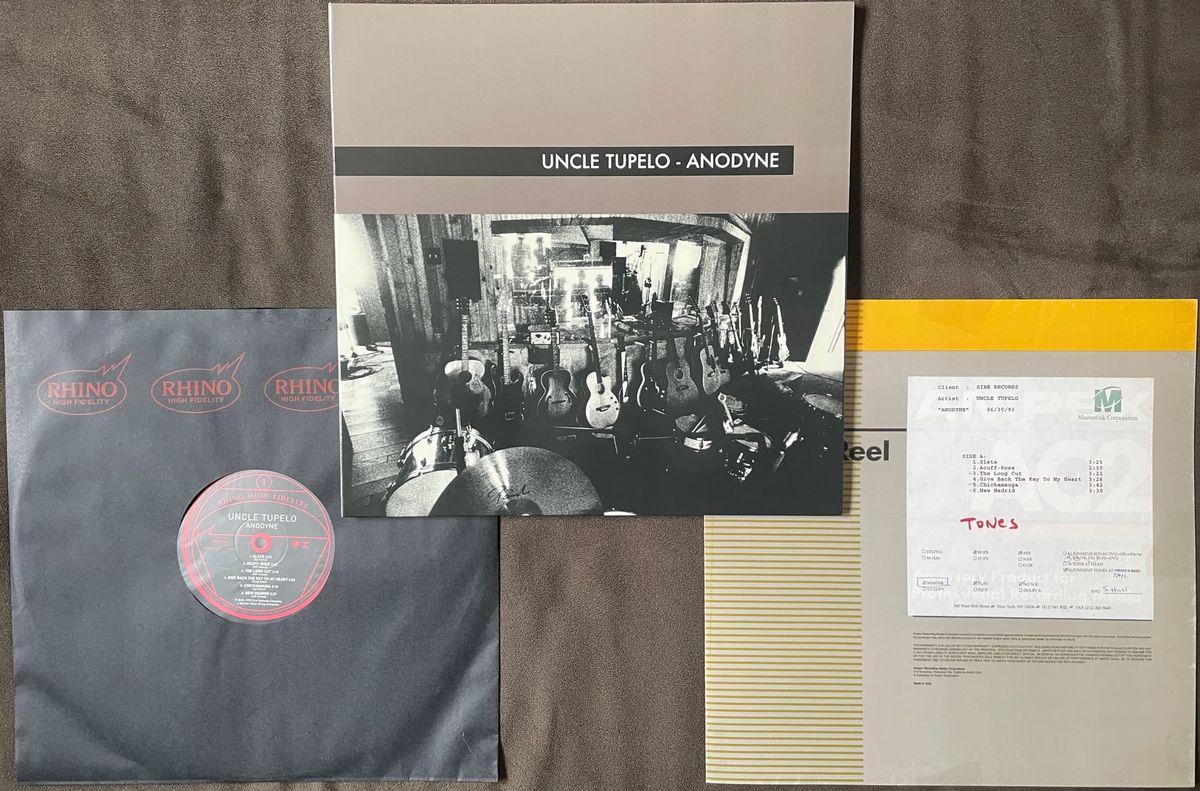
Cover art and contents of the Rhino High Fidelity reissue of Uncle Tupelo.

1993’s Anodyne on Rhino High Fidelity.

Today we sink our teeth into the final album from Uncle Tupelo, the St. Louis-area band that is often credited with spearheading the alt-country movement of the 1990s. In April, the album was given a fancy re-release on the Rhino High Fidelity imprint, which is worth taking stock of right now, as it has been quite busy in recent weeks. We’ve just seen RHF reissues of the J. Geils Band’s 1972 live album Full House, the Grateful Dead’s 1970 gem Workingman’s Dead, and INXS’s 1987 blockbuster Kick. This is coming after a quiet couple of months for Rhino High Fidelity, which had a busy January but kept quiet during February and March.

Meanwhile, RHF’s sister series, the excellent Rhino Reserve line, just dropped two Dio titles and has some really exciting stuff on the horizon. Here’s what they’ve got in store so far:

May 29—The Monkees: Good Times!
June 5—Little Beaver: Party Down
June 5—The Time: Ice Cream Castle
June 5—Allen Toussaint: Life, Love and Faith
June 5—Betty Wright: I Love the Way You Love
June 12—Charles Wright & The Watts 103rd Street Rhythm Band: Express Yourself
July 10—The Doobie Brothers: Takin’ It to the Streets

That’s a lot to look forward to—the Allen Toussaint and Betty Wright records are particularly exciting—but for now, let’s dig into Uncle Tupelo and see what Rhino High Fidelity and their trusty cutting engineer, Kevin Gray, have done with the band’s 2003 swan song, Anodyne.


Cover art for Uncle Tupelo.

Uncle Tupelo: Anodyne

“Watching the label spinning on my turntable
There’s no call waiting in my headphones”

—Uncle Tupelo, “We’ve Been Had”

When Jeff Tweedy sang those lines, he probably thought he was swimming against the tide by embracing Luddite pleasures—the retro charm of the outdated record player as an escape from newfangled technological advancements like call waiting. At the time, it would’ve made sense: The album those lyrics appeared on, Uncle Tupelo’s Anodyne, wasn’t even pressed to vinyl upon its initial release in October 1993. It’s funny to think that more than three decades later, the turntable is fully back in vogue while call waiting now seems more like a thing of the past. And Anodyne, which was eventually released on wax for the first time in 2010, is now on its third and most significant vinyl iteration via a new mastering and pressing from Rhino High Fidelity.

“We’ve Been Had” is both blithe and disillusioned, with Tweedy professing his love for rock ’n’ roll even though it’s left him with many of its promises unfulfilled. At the time of recording, Uncle Tupelo was still a young group, just a few years after their formation in Belleville, Illinois—located just outside of St. Louis, Missouri—in the mid-’80s, when the musicians were still teenagers, and only three years on from the release of their debut album, 1990’s No Depression. Anodyne would be their fourth album, and their last. Tweedy’s blitheness was about to be undercut when his bandmate, Jay Farrar—nominally the leader of Uncle Tupelo, but only by a whisker—pulled the ripcord on the group during the tour that followed Anodyne. Tweedy’s songs, personality, and growing artistic dominance had begun to grate on Farrar’s nerves, and the band split irrevocably in 1994, with Farrar reteaming with a former Tupelo drummer to form Son Volt, and Tweedy and the remaining band members relocating to Chicago and creating Wilco.

As such, Anodyne has the unusual distinction of not just being a precursor to one of the great band rifts of the 1990s but also as the source code for two remarkably influential and successful spin-offs, both of which are still active today. And to that extent, Anodyne is better known by many for its historical role rather than for its actual music, which is—not to put too fine a point on it—magnificent. There are probably tens of thousands of Wilco fans (and some Son Volt fans, too, but less of them) who still haven’t bothered to backtrack to Uncle Tupelo and discover one of the most important bands of the era; there’s a reason why a foundational publication covering American roots music named itself after No Depression. And while Anodyne became Uncle Tupelo’s farewell statement, it also is the consolidation and acme of their songwriting, arranging, and performing skills, and an entirely realized statement from a band that had reached full maturity. Personality conflicts aside, maybe Farrar realized there was nowhere left for them to go.

Inner gatefold, insert, and disc for Uncle Tupelo.

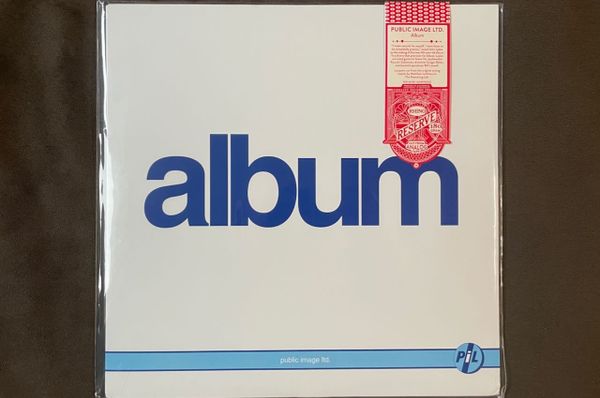
Rhino/Warner have reissued Anodyne as part of their Rhino High Fidelity premium vinyl series, making it the second-most recent selection they’ve chosen for that analog-focused line, which historically has leaned heavily on albums from the 1970s. (The youngest Rhino High Fidelity is Wilco’s 1995 debut, A.M.) But even though it’s an album whose blend of punk and country sensibilities could have only come from its particular era, it also hearkens back to the country-rock movement of the late ’60s and early ’70s. Like all previous RHF entries, this new Anodyne is sourced from analog tape, with engineer Kevin Gray cutting the lacquer from the original master prepared by Scott Hull at Masterdisk for the original Sire Records release. The new analog cut is accompanied by all the RHF accouterments: 180-gram vinyl, a heavyweight glossy tip-on gatefold, an informational obi, poly-lined sleeves, and a four-page insert that includes liner notes by journalist Mark Deming.

It’s a well-placed vote of confidence for an album that has an esteemed if minor reputation and deserves a far greater one. Uncle Tupelo’s alt-country, while rooted in familiar sounds, pointed the direction for a passel of similarly minded bands to venture forth in the years that followed: mildly twanging folk-rock that could go in either acoustic or electric directions, with callbacks to Appalachian folk, English and American punk, Bob Dylan and Neil Young in their various permutations, college rock, and outlaw country. And Anodyne might be the finest alt-country statement of the entire ’90s, rivaled only by the record Farrar recorded next, Son Volt’s 1995 debut album Trace.

Anodyne is more or less evenly split between acoustic and electric modes, although the opening dyad of “Slate” and “Acuff-Rose” is a slightly misleading place-setter of rootsier folk, leading the listener to think this could be an album of campfire strum-alongs and making the hot-forge electric guitars of “The Long Cut” all the more startling. Uncle Tupelo rolls between those two poles for the remainder of the album, bolstered by a superb appearance from Doug Sahm on his song “Give Back the Key to My Heart” (originally from Sir Doug and the Texas Tornados’ 1976 album Texas Rock for Country Rollers). Sahm’s presence establishes the parameters of the country-rock continuum that Uncle Tupelo is operating inside, and the band’s spikier tendencies—as evidenced on their first two albums—are tempered but still in full force.

Photo of Uncle Tupelo that appears on the insert to the Rhino High Fidelity edition of Anodyne. PHOTO CREDIT: Dan Corrigan.

Listening for harbingers of the acrimony that was to follow Anodyne is maybe more an exercise in confirmation bias than anything else. To my ear, they sound like a healthy, fully functioning band, with both songwriters coming into their own and the group’s collective confidence in blending an array of folk, country, and rock styles reaching a notable high. What hindsight does make it easier to pick apart is the DNA of the bands that came later: “No Sense in Lovin’” sounds a lot like an early Wilco song to me, while Farrar’s contributions across the entire album are very much in line with where he’d go with Son Volt. The title track is Farrar’s crowning achievement here, and the song sounds like the efforts of a group of musicians far older and wiser than the twentysomethings who recorded it. Featuring cloudwash guitar sweeps and an ambling, world-weary instrumental “refrain,” the piece is impressionistic, lightly melancholy, and positively shattering. And because of its simmering restraint, “Anodyne” alone hints at the trouble to come—one can imagine Farrar’s frustration at the upstart Tweedy getting the lion’s share of the record company’s attention when the far more rambunctious “The Long Cut” was picked as the single.

The album was recorded entirely live in an Austin studio, and as such, it’s more straightforward-sounding than almost any album of its era. Plainly played, unfussily produced, and driven by the excellent songwriting, it has always sounded good if a trifle thin on my original CD. (Rhino has given Anodyne two prior vinyl releases, in 2010 on black vinyl and 2020 on clear vinyl, although I haven’t heard either pressing.) Kevin Gray’s new cut does not work wonders with its modest charms, but this is a selling point: Everything sounds truthful and well-positioned, with no overemphasis on any of the album’s down-to-earth qualities. Farrar and Tweedy’s guitars have a slight mid-range edge that was likely part of the original mix’s intent to keep things lively. Meanwhile, Ken Coomer’s drums remain in the background, cordially providing backbone as the guitars supply the forward momentum; the muted snare is content to thump along furrily rather than crack through. John Stirratt and Tweedy trade off on bass, which affably lopes amid the higher-stringed instruments, while Max Johnston’s fiddle and lap steel and Lloyd Maines’s pedal steel provide appropriately bright glints to offset the band’s amber tones. Best of all, Gray’s cut provides a ton of openness and space to the sonic image, letting fresh air move between the musicians even as the blend of live instruments consolidates into rich harmonic layers.

Insert, disc, and back cover to Uncle Tupelo.

Mark Deming’s accompanying essay is excellent as well, offering a great summation of the period and providing context for what came both before and after Anodyne. It’s rich in biographical detail and conveys an understanding of Uncle Tupelo’s distinctiveness and significance. The pressing from Germany’s Optimal Media, in my case, wasn’t quite as successful. My copy had several small marks on the disc, each about the size of a small grain of rice; they looked like they had the potential to severely impact the sound, but happily they did not lead to any major problems. A handful of isolated pops remained after an ultrasonic cleaning, but they were nothing serious. More importantly, the vinyl background was entirely silent, which turns out to be crucial on an album with Anodyne’s delicate acoustic stretches.

I think the thing I like about this new Rhino High Fidelity is how it maintains the album’s original character while simultaneously opening up and broadening the sound. Gray has not tried to make Anodyne sound like Tonight’s the Night or The Gilded Palace of Sin or any of the touchstones that were likely on the band’s mind while they were making it. Rather, this is an independently spirited album that turns the established conventions of country and punk inside out, capitalizing on—and merging—both genres’ inherent candor rather than focusing on either one’s external signifiers. With the demise of Uncle Tupelo now intertwined with its creation, it’s easy to think of the album as the end of something. But with its sonics given a fresh lift, Anodyne’s openness and warmth sound like the beginning of not merely Son Volt and Wilco but also a million musical possibilities.

Rhino High Fidelity 1-LP 33 RPM 180g black vinyl
• Analog remaster of Uncle Tupelo’s 1993 album
• Jacket: Glossy tip-on gatefold
• Inner sleeve: Black Rhino High Fidelity–branded poly-lined
• Liner notes, insert, or booklet: Four-page insert with essay by Mark Deming and images of master tape boxes
• Source: Analog; “Cut from original analog master tapes”
• Mastering credit: None; per tape boxes, the original master was prepared by Scott Hull at Masterdisk
• Lacquer cut by: “Lacquer cutting: Kevin Gray, Cohearent Audio,” North Hills, CA; “KPG@CA” in the deadwax
• Pressed at: Optimal Media, Germany
• Vinyl pressing quality (visual): C (several marks on disc, and disc was slightly dished)
• Vinyl pressing quality (audio): B+ (occasional pops, silent backgrounds)
• Additional notes: With obi. Limited numbered edition of 5000.

Listening equipment:
Table: Technics SL-1200MK2
Cart: Audio-Technica VM540ML
Amp: Luxman L-509X
Speakers: ADS L980