Reviews: Guppyboy | Mazarin

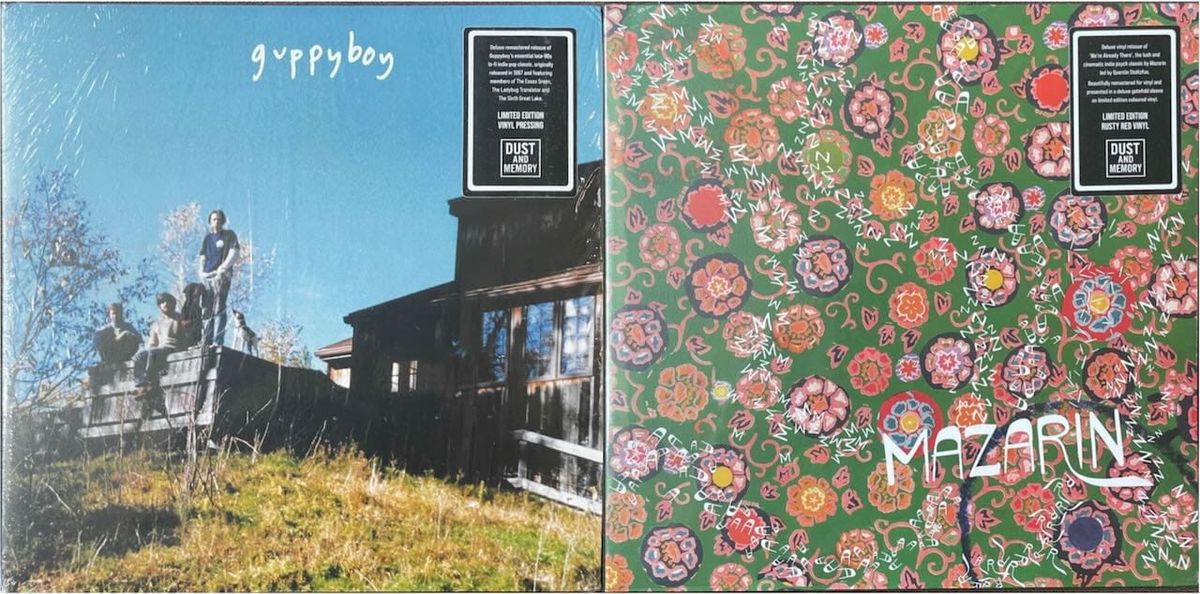
Today I’m reviewing the two latest releases from Dust and Memory, a new reissue label from Bilbao, Spain, run by Álvaro Lissón, who’s also responsible for the excellent Meritorio Records. So far, Dust and Memory has focused on off-the-radar American indie rock and pop from the ’90s and ’00s with a bent towards psych and jangle and whose presence on vinyl has been limited thus far. With only eight releases under their belt, the label has already shown a particular focus on the lesser-known strands of the Elephant 6 collective, releasing work by the Essex Green and the Ladybug Transistor—two bands interconnected with Guppyboy, one of the bands I’m writing about today. Dust and Memory has also reissued an album by the Sixth Great Lake, which shares members with all of the above-mentioned bands. The other review today is for Philadelphia’s Mazarin, the brainchild of songwriter Quentin Stoltzfus, also of Black Stoltzfus and Light Heat.
- Guppyboy: Jeffersonville
- Mazarin: We’re Already There
These Dust and Memory reissues come in handsome, matte-finish sleeves that are pleasantly textured, and the discs are excellently pressed, sourced from Press Play Vinyl, a pressing plant located a few miles outside of Bilbao. But what’s most exciting to me about Dust and Memory is the label’s curatorial sense, as Lissón has selected albums that have been overlooked by the majors and audiophile labels but are more than worthy of being reinstated to the vinyl canon.
Check out Dust and Memory’s website for more info; their Bandcamp page also has streaming music and ordering links. US distribution is available through Midheaven/Revolver.
Guppyboy: Jeffersonville
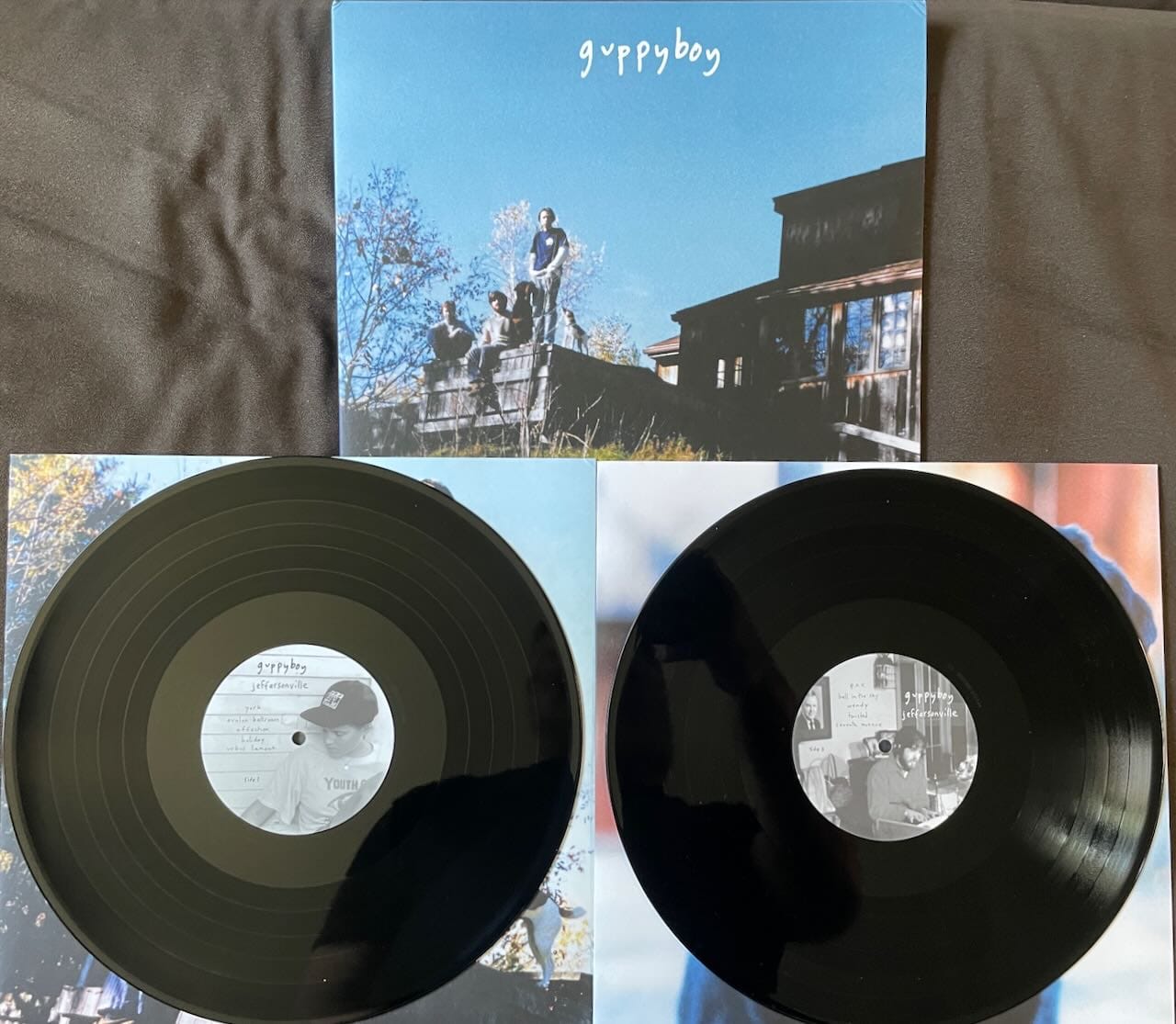
It’s too bad rock genealogist Pete Frame never drew up a family tree for the Elephant 6 collective, the many-tentacled network of American indie bands that included the Apples in Stereo, Neutral Milk Hotel, Olivia Tremor Control, the Essex Green, and the Ladybug Transistor. As a Frame family tree would show, those last two bands have roots in the Burlington, Vermont, group Guppyboy, formed when its members were students at the University of Vermont in the early ’90s. Jeff Baron, Michael Barrett, Zach Ward, and Chris Ziter first started making Tascam four-track recordings together around 1992, with each member writing and singing the material and band members rotating instruments for each song. Their lone full-length, 1997’s Jeffersonville, was recorded after Sasha Bell joined the fold and was released on LP and CD by the Vermont indie label Sudden Shame. The new Dust and Memory edition expands the tracklist by five songs and spreads it across two LPs.
The band occasionally found themselves at odds with the Burlington music scene in the early ’90s, which I can only imagine was dominated by jam bands modeled after local heroes Phish. Guppyboy’s bummed-out, lo-fi aesthetic was the polar opposite, with influences in ’60s pop and British Invasion bands as well as folk-rock from the likes of Bob Dylan and Fairport Convention. Their early live shows could sometimes be confrontational or disorienting—per John Flanagan’s 2013 article on the band for Seven Days, one appearance at a local music festival included a 25-minute drone that alienated most of the crowd. After graduation, the band relocated to Chicago for 18 months, where they recorded an estimated 22 cassettes’ worth of music before they resettled back in Vermont, where they recorded Jeffersonville piecemeal over many months.
An abridged selection of the Chicago tapes was released on cassette in 2015 and also appears on Guppyboy’s Bandcamp page, and I imagine the endless hours of recording were their Beatles-in-Hamburg moment, refining their songwriting and focusing their sound. Resultantly, Jeffersonville is full of modest but inventive tunes that show a significant alt-country influence, some Crazy Horse crunch, and, most notably, the inspiration of ’60s antecedents like the Kinks and the Velvet Underground. The band’s delivery is always low-key and offhanded, and several of the tracks take unexpected detours within their pop-song frameworks; meanwhile, the rotating vocal mic makes Guppyboy’s identity continually in flux, with a sound that’s focused inward rather than upward and outward. The atmosphere is all quietly shimmering silver, evoking the forested hills and mountains of Vermont, with its fire-leafed autumns, liquid-mud springs, and buggy, too-brief summers. And there’s a weed-scented pillow of haze over everything, softening Jeffersonville’s tales of youthful frustration, dead-end jobs, and dislocation with a blurry, blissed-out resignation.
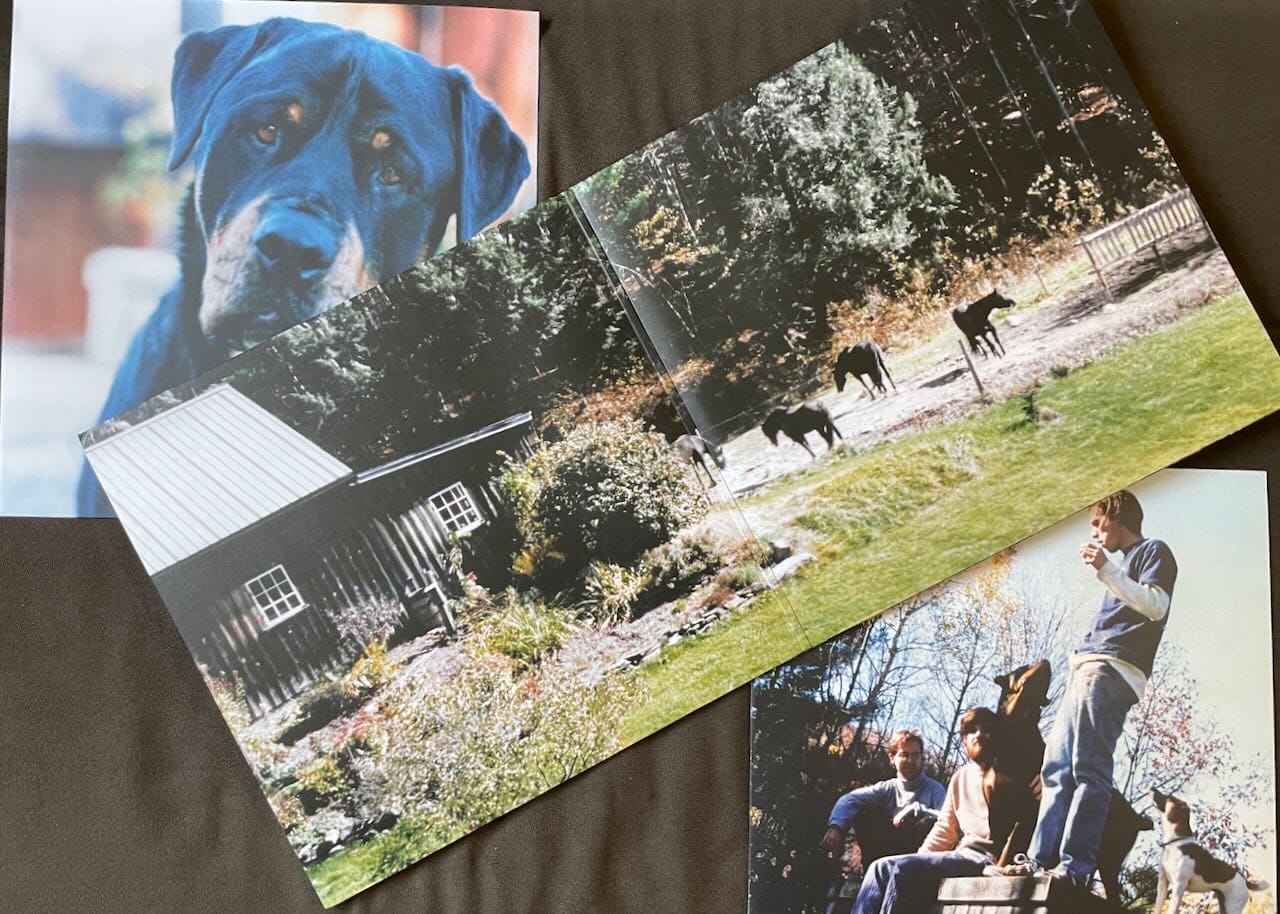
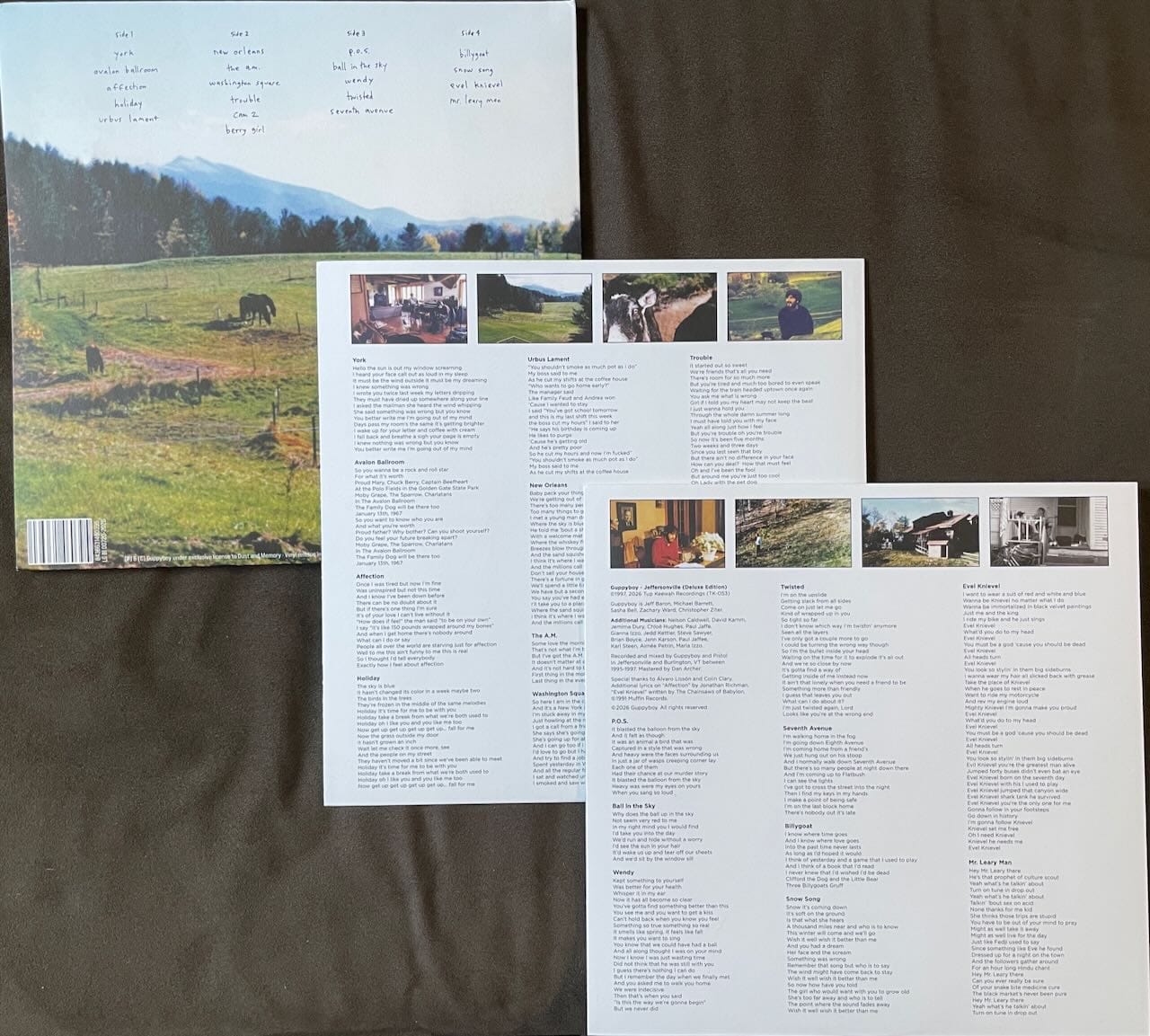
The new 2-LP reissue from Dust and Memory follows an expanded digital release that appeared on Guppyboy’s Bandcamp page in February, with five extra tracks added to the album. (A sixth extra track on the Bandcamp version, “Baird,” is not included on the vinyl.) Significantly, the album’s original track order is completely discarded, and the revised tracklist makes the album flow much more strongly. On the original version, the gorgeous “Washington Square” opened the album—and I can understand why the band originally placed it there, as it’s one of Jeffersonville’s best songs. But it’s far too delicate and winsome a piece to kick-start the momentum of an entire LP, and subsequently the original album never quite managed to get out of first gear.
The new Jeffersonville remedies this, opening with a song that was initially only released as a single—“York,” an odd, lumbering tune with a low monotone lead vocal and a glacial beat that nevertheless sets the stage, kind of like a slacker-rock “Tears of Rage.” It’s followed by the contrastingly, shamblingly upbeat album track “Avalon Ballroom,” establishing the goalposts of a playing field where Guppyboy’s elusive sound can comfortably roam around. There’s space for the meandering, exploratory “Cam 2,” with its slow-burn instrumental introduction, and the happy-go-lucky “Holiday,” with its “la-la-la” refrains, and the poised, twanging “Trouble,” which would have been the backbone of a lesser band’s repertoire but here simply finds Guppyboy getting their Dillard & Clark ya-yas out.
The extra songs are mostly of a piece with the original Jeffersonville, although “Evel Knievel” is a cover of a song by fellow Burlingtonians the Chainsaws of Babylon, and “Mr. Leary Man” is a trudging, feedback-strewn track that gives way to a sparse, experimental interlude of solitary piano notes, creaking drones, flickering static, and other mysterious noises that send the closing stretches of the double album to the outer reaches. There are more than a dozen guest musicians and singers on the album, lending Jeffersonville a communal vibe, and the co-ed vocal blend and the textures of trumpet, violin, and vibraphone occasionally make the album’s livelier numbers sound like a Green Mountain State version of Belle and Sebastian.
The new mastering, from Dust and Memory label head Álvaro Lissón, is remarkably good. (The album also bears a credit for Vermont engineer Dan Archer, who mastered the original 1997 release.) This new vinyl version contains complexity and power, elevating the album’s occasionally watery DIY sound into a soundstage with real luster in the guitars and a driving, cohesive thrust in the band interplay. Some songs are better recorded than others, but the hodgepodge nature of Jeffersonville is part of its melancholy appeal, and this Dust and Memory edition holds its assorted pages together like an immaculately bound scrapbook. The pressing, from Press Play Vinyl, was very good in my case, with only a quiet repeating tick during “Mr. Leary Man” interfering with the sound.
Four of the five members of Guppyboy would go on to form the Essex Green, while the five-piece continued to record together as the Sixth Great Lake, with Baron and Bell also contributing to the Ladybug Transistor. (All three bands have reissues on Dust and Memory.) It’s not surprising that this group of musicians continued working together after Guppyboy’s dissolution, as the overarching philosophy of Jeffersonville seems to be that of a band of equals, where ideas can come from anywhere and don’t need to fit in a certain style or format. Slumped-shoulder pop, fresh-country-air drawl, and deep-winter hibernation meditations are all part of the album’s unassuming jigsaw. And this new Dust and Memory edition opens up the band’s strengths, emphasizing their captivating songcraft and peculiarly winning sound.
Dust and Memory 2-LP 33 RPM black vinyl
• Remastered expanded edition of Guppyboy’s 1997 album
• Jacket: Matte-finish reverse-board gatefold
• Inner sleeves: Card with photos, lyrics, and album credits
• Liner notes, insert, or booklet: None
• Source: Unknown
• Mastering credit: “Mastered by Dan Archer” credit on inner sleeve; “Mastered by Álvaro Lissón” credit on back cover
• Lacquer cut by: Unknown
• Pressed at: Press Play Vinyl, Urduliz, Biscay, Spain
• Vinyl pressing quality (visual): A
• Vinyl pressing quality (audio): B+ (quiet repeating tick for about a minute during last song of Side 4)
• Additional notes: Limited edition, per hype sticker.
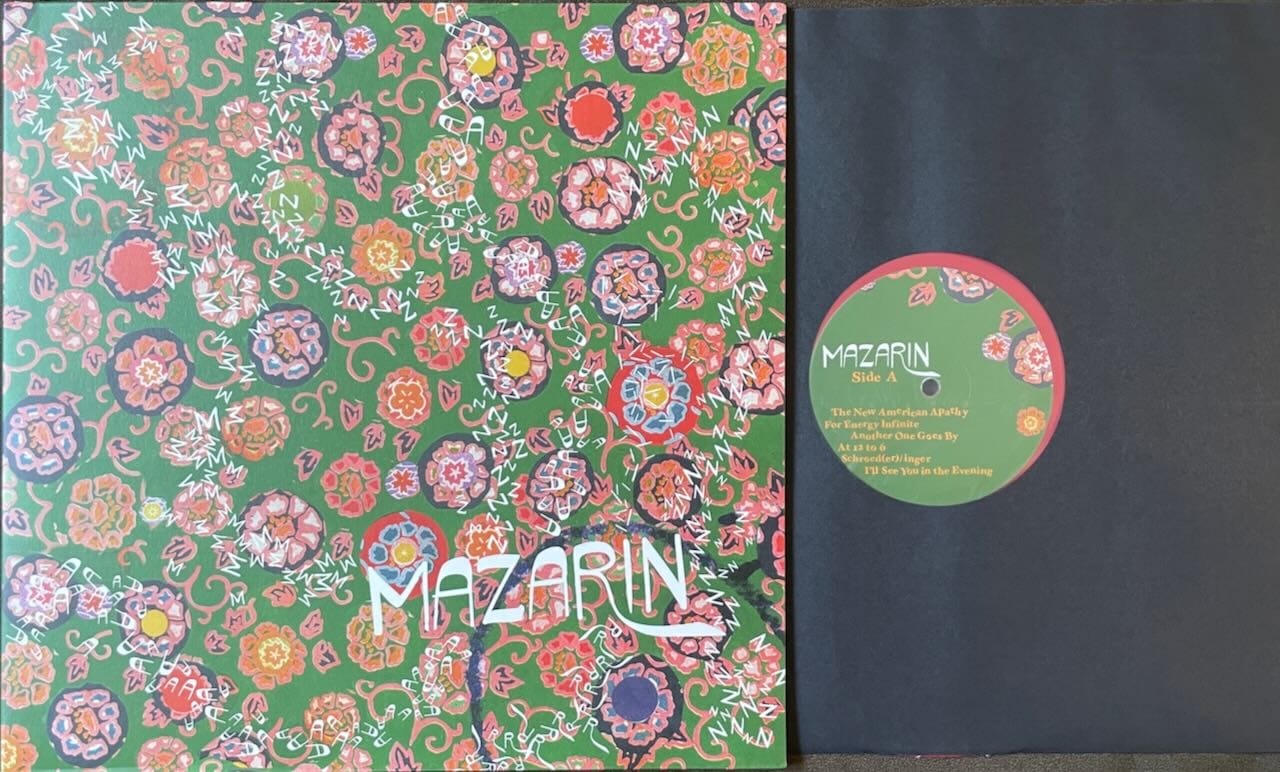
Mazarin: We’re Already There
It could be argued that if Mazarin’s third full-length, We’re Already There, had been a worse album, Mazarin would still be around today. The 2005 LP got glowing reviews, if not exactly abundant record sales—but it may have been enough to have attracted the attention of a long-running Long Island bar band of the same name, which threatened to sue the other Mazarin into oblivion. “That destroyed my career,” Mazarin mastermind Quentin Stoltzfus told Magnet magazine in 2013. “I lost my name, and I lost my record deal as a result. It basically imploded all the forward momentum that I had going at that point.”
While We’re Already There ended up being Mazarin’s epitaph, it’s also lived on as a cult favorite, having been reissued by Stoltzfus on vinyl in 2020 and now in a red-vinyl edition from Dust and Memory. The album is the sort of indie-rock album that got saddled with terms like “psychedelia” and “avant-pop” simply for having a production-forward approach that made its cozy, instantly lovable melodies sound surprising and unconventional. But those melodies are what has lasted, and We’re Already There stands due to the durability of Stoltzfus’s songcraft.
Stoltzfus formed Mazarin in his hometown of Philly in the late ’90s, and the band formed around a nucleus of Stoltzfus on singing, songwriting, and guitar duties, Sean Byrne on drums, and Brian McTear as keyboardist and producer. Bassist Mickey Walker had joined by the time of We’re Already There, which was recorded at McTear’s Miner Street Studio, then operating as part of Cycle Sound, inside a 7000-square-foot warehouse with a corrugated metal roof that resulted in a unique sonic character. (The previously nomadic Miner Street Studio—and its MCI board, originally used at Sigma Sound’s New York outpost—would relocate to Philly’s Fishtown neighborhood shortly after We’re Already There’s release, where it remains to this day, having been home to countless high-profile projects including the War on Drugs, Kurt Vile, Aaron Dessner, and Zach Bryan.) Some additional recording was also done at Blair Studios in the Kensington neighborhood of Philadelphia.
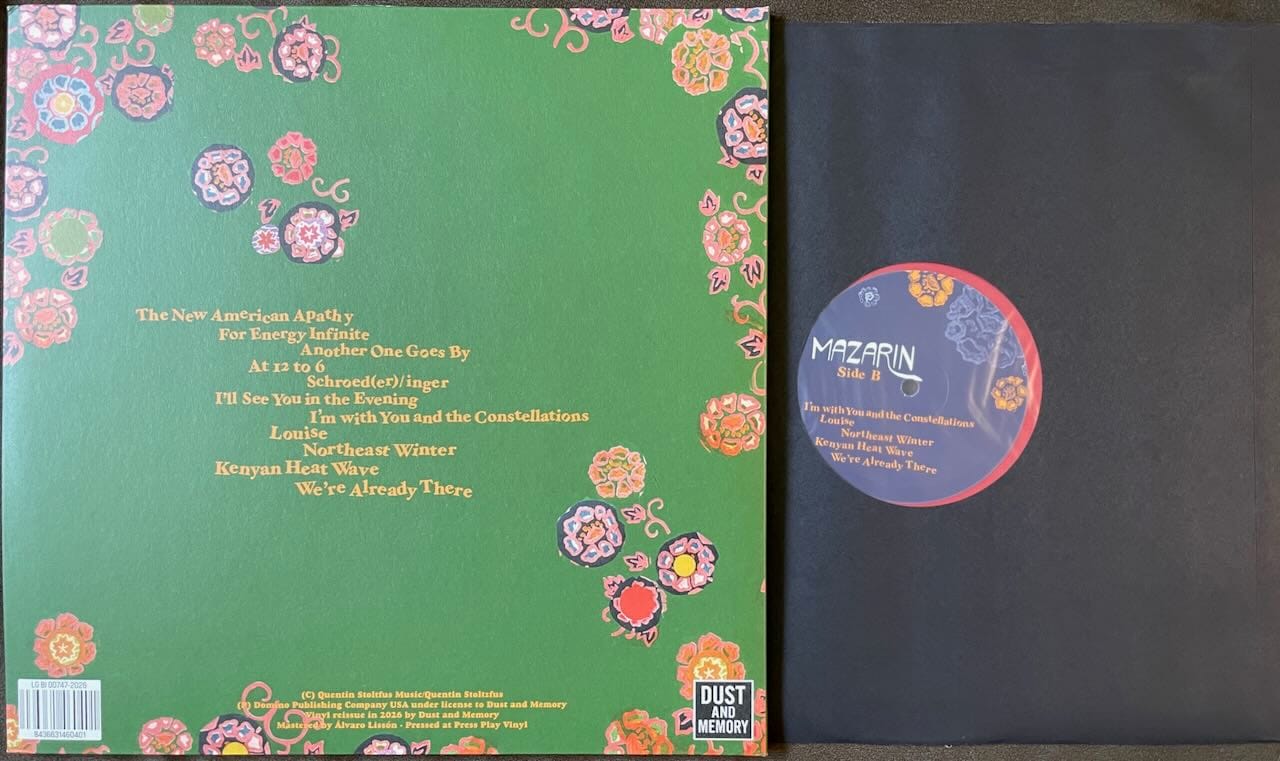
The album gets off to a remarkably strong start, and the first four tracks are unassailably great. “The New American Apathy,” is camouflaged inside a jackhammer drum-machine pattern, emitting a lenticular beat that keeps shifting beneath the song’s sanguine vocal line. “For Energy Infinite” is similarly cloaked, with chiming, tastefully distorted guitars slashing beneath Stoltzfus’s graceful melody, which gets swatted around like a shuttlecock by the garage-band melee. “Another One Goes By” leavens the sonic flavors with autoharp and a more relaxed, downtrodden tone, and “At 12 to 6” is built on a kaleidoscopically shifting 12-string that gives the album its first traditionally psychedelic elements.
The album isn’t uniformly consistent, though. “Shroed(er)/inger” is a repetitive instrumental built on a crushed-out drum plugin and Juno 6 synth preset that wears out its welcome quickly. And “I’ll See You in the Evening” boasts a marriage of rigid electro beats and grimy guitar chug that in the end sounds a bit too derivatively Strokes-y. But the album recovers in its back half, with the Can-isms of the instrumental “Kenyan Heat Wave” and the supersonically paced rocker “Northeast Winter” mapping out previously uncharted territory. “I’ll See You in the Constellations” is joyously upbeat noise pop, and the album-closing title track takes stock of everything that’s come before, with a meditative melody and a sonic-collage component that’s lightly reminiscent of “Tomorrow Never Knows,” although far less frantic in its presentation.
The album was first released on I And Ear Records in the US and on Bella Union in the UK, on CD only; its first appearance on vinyl wouldn’t come until Stoltzfus’s self-released edition in 2020. The album was originally mastered by Paul Hammond and Paul Sinclair at Sinclair’s Fat City Studios in the Philly suburb of Blue Bell. Dust and Memory’s Álvaro Lissón has handled this new vinyl remaster; the promotional blurb on Bandcamp touts the “warm analog production,” although I would not consider the album’s sonic characteristics especially warm or even notably analog-sounding.
The individual instruments are all well represented, and the arrangements are clearly rendered and narratively appealing. But there is an overall saturated element to the production that, in my opinion, is symptomatic of this mid-’00s era, when dense productions by the likes of Interpol and the Killers were in vogue. This was also when computer recording became easily accessible, and the infinite options that recording software offered resulted in some artistically shallow choices—best emblemized by “Shroed(er)/inger,” although I need to add that I don’t know any technical details about how We’re Already There was recorded. On vinyl, the album has power and drive, with a weight that differentiates it from the version currently on streaming. But in my opinion, each track is presented as a thick jetstream of sound without a ton in the way of dynamics nor much variance within the audio frequency spectrum. The bass and treble are all tucked within the propulsive mids, making for an assertive listening experience that is nevertheless somewhat lacking in subtlety.
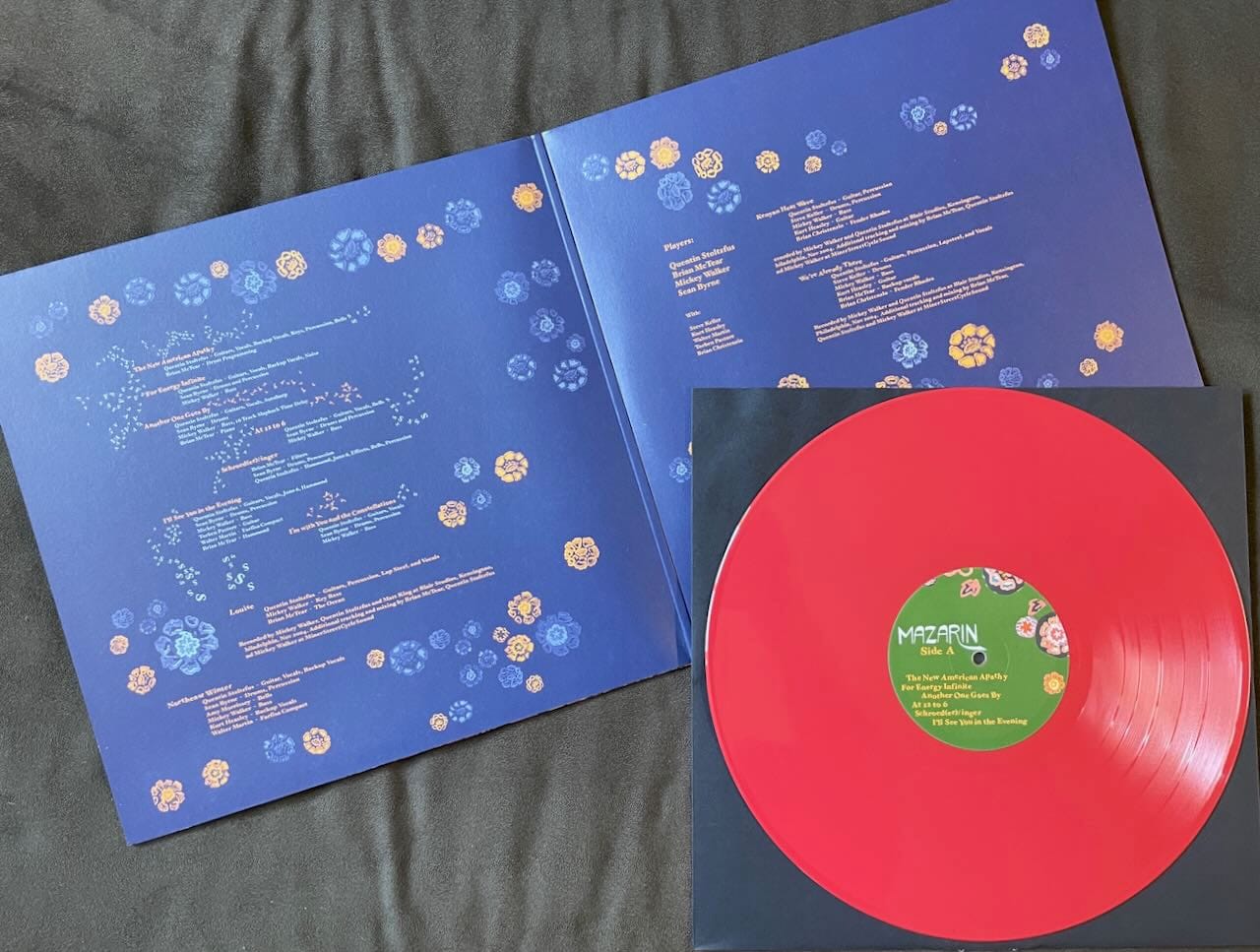
Its muscular, full-box sound notwithstanding, We’re Already There does translate well to vinyl, especially via the slightly orange-tinged “rusty red” pressing from Spanish plant Press Play Vinyl, which was nearly flawless in my case. The album is a series of ingeniously designed earworms, with the catchiness of Stoltzfus’s melodies echoing in your brain long after the needle is lifted. It feels on a continuum with other long-players like Revolver, Forever Changes, Faust IV, and Here Come the Warm Jets, and this handsomely designed new pressing from Dust and Memory allows We’re Already There to worthily take its place beside them on the record shelf.
Dust and Memory 1-LP 33 RPM “rusty red” vinyl
• Remastered edition of Mazarin’s 2005 album
• Jacket: Matte-finish reverse-board gatefold
• Inner sleeve: Black poly-lined paper
• Liner notes, insert, or booklet: None; original album credits appear inside gatefold
• Source: Unknown
• Mastering credit: “Mastered by Paul Hammond and Paul Sinclair at Fat City Studios, Blue Bell, PA” credit on inner gatefold; “Mastered by Álvaro Lissón” credit on back cover
• Lacquer cut by: Unknown
• Pressed at: Press Play Vinyl, Urduliz, Biscay, Spain
• Vinyl pressing quality (visual): A
• Vinyl pressing quality (audio): A- (faint surface noise)
• Additional notes: Limited edition, per hype sticker.
Listening equipment:
Table: Technics SL-1200MK2
Cart: Audio-Technica VM540ML
Amp: Luxman L-509X
Speakers: ADS L980