Reviews: Record Store Day 2026, Batch 4

Including Ween, David Bowie, Ramones, Rod Stewart, Muse, the Sisters of Mercy, Bad Brains, Motörhead, the Stranglers, Todd Rundgren’s Runt, Primal Scream, John Frusciante, and Westbound Records.
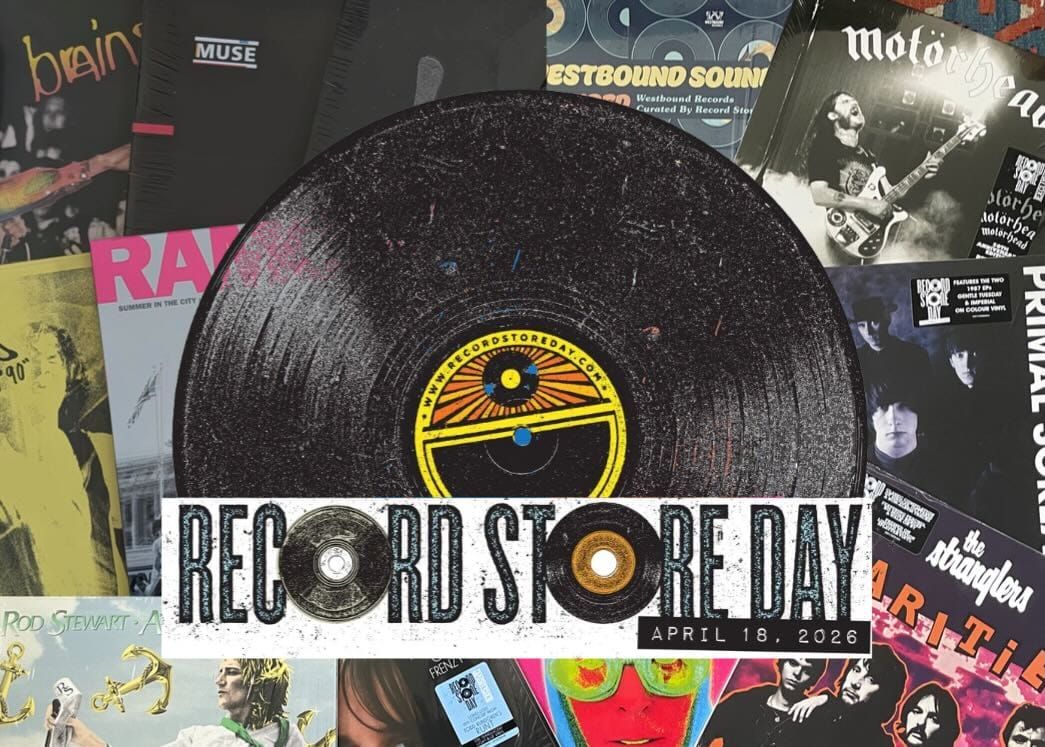
Welcome back to our continuing onslaught of Record Store Day reviews. We’ve been deep in the RSD vinyl trenches, spinning every last record we could get our hands on and letting you know our impressions. This is the fourth installment out of five; the fifth will be coming to you on Friday, just in time for you to finalize your shopping list for Saturday, April 18.
I realize not all of our readers care about Record Store Day. Thank you for bearing with us during this crazy period. We’ve found a lot of pretty wonderful discoveries in this year’s crop, but if we can’t persuade you to come aboard, hopefully the reviews make for entertaining reading in their own right. And if not, it will all be over come Saturday. Thanks again for sticking it out with us.
For those that do care about Record Store Day, get a load of today’s reviews:
- Bad Brains: Live
- David Bowie: Hallo Spaceboy
- John Frusciante: To Record Only Water for Ten Days
- Motörhead: On Parole (Steven Wilson Remix)
- Muse: Muse EP; Muscle Museum EP
- Primal Scream: Gentle Tuesday / Imperial
- Ramones: Summer in the City: Live in San Francisco, 1979
- Runt: Live: The Necessary Cosmic Frenzy
- The Sisters of Mercy: First and Last and Always
- Rod Stewart: Alternate Atlantic Crossing
- The Stranglers: Rarities
- Ween: Europe “90”
- Various Artists: The Westbound Sound: Singleminded
And for those just joining us, here are the three previous installments in our Record Store Day 2026 review series. Collect ’em all!


Two quick bits of news before we get started: Rumors are pointing toward the next Vinylphyle release to be a reissue of Gang Starr’s 1994 album Hard to Earn. This is via a Reddit post that has since been deleted, although photos from that post were reposted to the Steve Hoffman Forums and can be viewed here.
The second bit of news is that another Rhino Reserve is coming our way: The Monkees’ 2016 album Good Times!, which is celebrating its 10th anniversary with an expanded CD edition and a new vinyl pressing cut by Matthew Lutthans. The blurb on the Rhino site says that it was cut from analog, but the sticker in the actual image does not contain such language—I would trust the sticker and assume that the 2016 album was recorded digitally. That’s available for preorder now and will also be in stores on its release date of May 29.
But for now, let’s look at the RSD smorgasbord right in front of us.

Bad Brains: Live
Review by Robert Ham
Henry Rollins famously said that when he saw Bad Brains in concert for the first time, he went straight home and tossed out his Led Zeppelin and Black Sabbath records. The future Black Flag vocalist thought he knew what heavy music was, but those four Rastafarians from DC cleaned his proverbial clock.
Rollins’s likely apocryphal anecdote illustrates an important factor about Bad Brains: As great as the band’s studio albums could be, they were nothing compared to the live act. In their prime, they were a torrent on stage, cranking out vicious punk and weighty reggae with equal amounts of energy and volume. The 1988 SST album Live bottles the experience of being face-to-face with Bad Brains almost perfectly. Recorded during the 1987 tour in support of I Against I, the album finds the band ripping through their most breakneck jams (“At the Movies,” “F.V.K. (Fearless Vampire Killers)” and veering off to lay into some molten slow rockers and loping reggae grooves (“I and I Survive”). The audiences are with them through every moment from the sounds of their vocal responses to every song.
The greatness of Live only makes the disappointment with this new pressing that much more acute. In recent years, Bad Brains have regained control of their catalog and have been reissuing their albums on their own label, in conjunction with Org Music. And each one of these new editions has been serviceable but has never provided the kind of revelatory sonic experience I was hoping for.

Live continues that trend. Most albums cut from digital masters tend to trend on the quieter side, but this LP is crazily hushed. I had to crank the volume on my receiver to get any kind of sense of the dynamics of the music. It didn’t result in blown-out sound or blown-out speakers, but it all came across so flatly. The crowd sounds were washed into the distance, and the interplay between the guitars of Dr. Know and the bass of Daryl Jenifer became muddled. Only vocalist H.R. came properly tearing out of the soundstage, but he sounded fairly separated from the rest of the band.
I can’t drop the blame squarely in Dave Gardner’s lap here. The LA-based mastering engineer was responsible for the incredible sound of last year’s reissue of the first Funkadelic album. I’m assuming then it has everything to do with the digital files he had to work with, and potentially Furnace Record Pressing, the plant that works regularly with Org, who pressed up this otherwise lovely-looking piece of wax. With Bad Brains unlikely to ever play live again, documents like this become more important not only for archival reasons but also for the potential to blow future young minds for generations to come. This new pressing is, sadly, not up to the task.
Bad Brains/Org Music 1-LP 33 RPM “solar flare” vinyl
• New remaster of Bad Brains’ 1988 live album
• Jacket: Direct-to-board single-pocket
• Inner sleeve: Clear poly
• Liner notes, insert, or booklet: None
• Source: Digital
• Mastering credit: “Mastered by Dave Gardner at DSG Mastering,” Los Angeles, CA
• Lacquer cut by: Dave Gardner at DSG Mastering, Los Angeles, CA; “DSG” in deadwax
• Pressed at: Furnace Record Pressing, Alexandria, VA
• Vinyl pressing quality (visual): A
• Vinyl pressing quality (audio): A
• Additional notes: Limited to 3,000 copies according to the hype sticker

David Bowie: Hallo Spaceboy
Review by Ned Lannamann
The two David Bowie records for this year’s Record Store Day branch off from his 1995 album Outside, which found Bowie reuniting with Brian Eno and making what might be the most challenging, convoluted thing he ever recorded. Outside is a 75-minute concept album that’s simultaneously a murder noir and a cyberpunk techno-thriller, and it’s held up very well over the years, containing many excellent Bowie gems for those willing to roll their sleeves up. Those less inclined might do well with this year’s RSD reissue of the vinyl edition, which slices off the third of the album in order to fit it onto a single LP. We don’t have a review copy of Excerpts from Outside to tell you about, but we do have the other Bowie RSD release: a maxi-single of sorts for Outside’s “Hallo Spaceboy,” which was remixed by Pet Shop Boys to strip back its pseudo-industrial sound in favor of a club-friendly beat. The remix turned into one of Bowie’s higher charting UK singles in the ’90s, although most American listeners have probably never heard it before.
Pet Shop Boys’ 7-inch and 12-inch mixes are both here, which can obviously be differentiated by their length; both feature Neil Tennant dropping in an original vocal line about Major Tom, tying the song into the “Space Oddity”/“Ashes to Ashes” continuum. A further three remixes—the “Lost in Space” mix, the “Double Click” mix, and an instrumental mix—come from Soft Cell’s David Ball and producer Ingo Vauk, who built on PSB’s work but toned down their inherent sunniness to revert back to Bowie and Eno’s darker sound. The final track here is a previously unreleased remix from Bomb the Bass’s Tim Simenon, and it’s a moody deconstruction of the album version, stripping back certain elements and emphasizing its power-drill four-on-the-floor beat.
In other words, the disc contains six consecutive dance remixes of “Hallo Spaceboy,” none of which are as good as the album version in my opinion. It seems like a funny thing for anyone other than a professional DJ to own, but I am reminded of the maxi-singles of the CD era, which were often this very sort of thing: a string of remixes, sometimes 30 or 40 minutes’ worth, of the same song over and over. These were endemic to Bowie collectors, starting with the CD single for “Fame ’90” and extending to “Real Cool World” and well beyond; to his credit, Bowie always seemed not just willing but eager for remixers to bend his work to their will.

That doesn’t mean you’ll spin this Hallo Spaceboy EP (or 12-inch, or maxi-single) more than a couple of times in your life. Record Store Day is all about collecting, and so for certain Bowie fans—and actually, some Pet Shop Boys fans too, come to think of it—nabbing this on the big day might just fit the bill. But for the less demented, this is probably one of the least essential discs of the day. I’d recommend Excerpts from Outside instead, but even there, you’re better off holding out for a copy of the entire album. I guess it wouldn’t be Record Store Day without these types of tchotchkes—the souvenir popcorn buckets of the vinyl experience.
The pressing is fine; however, there is a small but egregious glitch in the “Instrumental Mix” where a split-second is missing, and the track hiccups forward in a lurch, ruining the relentless beat that has been grinding for the previous four minutes. Were this played in the club, people might feel like a tremor just hit or the designer drugs kicked in. I don’t know where the problem originated—it sounds like it comes from the source file, or it could simply be a calamitous edit—but it is an unfortunate black eye on this otherwise vividly pink disc.
Parlophone 1-LP 33 RPM “neon pink” vinyl
• EP including six remixes of David Bowie’s 1995 song “Hallo Spaceboy”
• Jacket: Direct-to-board single pocket
• Inner sleeve: Black poly-lined
• Liner notes, insert, or booklet: None
• Source: Digital
• Mastering credit: None
• Lacquer cut by: John Webber at AIR Studios, London; “JWM” in the deadwax
• Pressed at: Optimal Media, Germany
• Vinyl pressing quality (visual): A
• Vinyl pressing quality (audio): A
• Additional notes: None.

John Frusciante: To Record Only Water for Ten Days
Review by Robert Ham
When John Frusciante set about recording what would become his third solo album, 2001’s To Record Only Water for Ten Days, the guitarist and songwriter was two years removed from a stint in rehab to deal with a crippling heroin addiction. Around that same time, he had also returned to the fold of the Red Hot Chili Peppers, his one-time favorite band, whose ranks he joined in 1988 at age 18.
Though his contributions to 1991’s Blood Sugar Sex Magik and 1999’s Californication helped usher the group to superstardom, Frusciante and fame were uncomfortable bedfellows—so much so that the music he made on his own was far removed from the funk-rock of the band. Early efforts like 1994’s Niandra LaDes and Usually Just a T-Shirt were wonky, lo-fi affairs cobbled together from years of home recording. For To Record Only Water, Frusciante upgraded to a Yamaha MD8, a digital recording system that gave him eight tracks to work with rather than the four he had on his TASCAM Portastudio or the one track on his boombox. Not that it made the music sound any better, mind you. Pieces of some tracks sound blown-out and pixelated, and none of it is as sharp and crystalline as the tracks Frusciante laid down at Rick Rubin’s Mansion studio.

The rough-hewn quality of this album, which mixes acoustic guitar with programmed synths and drum machines, fits well with the spiritual yearning and personal trials Frusciante wrestles with in each song. The mood of the music is decidedly upbeat, but the lyrics and vocals drip with confusion and gentle concern. At times, Frusciante’s work on this album reminds me of Alan Sparhawk of Low, both sonically and in his expressions of deep-seated disquiet and wonder. The tone of the music also meant that I didn’t mind so much when the pressing tipped a bit toward the distorted on Side 3. For the most part, the pressing sounds as crisp and chilled as an autumn afternoon, so those small bits of fuzziness are glaring but not a dealbreaker.
The added bonus for this set is the inclusion of Going Inside, a five-track EP previously only available on CD in Europe. The music is back-to-basics, generally just Frusciante and his acoustic guitar, and it sounds spectacular on this pressing. There’s not a huge contrast between those tunes and the other three sides of this 2-LP release, but there’s something about the gentle comedown after 42 minutes of fluttering and floating along with him that felt damn great.
Warner/Rhino 2-LP 33 RPM blue (Disc 1) and orange (Disc 2) vinyl
• New remaster of John Frusciante’s third solo album and Going Inside EP, both from 2001
• Jacket: Direct-to-board gatefold
• Inner sleeve: White poly-lined
• Liner notes, insert, or booklet: Lyrics and album credits printed inside gatefold
Source: Digital
• Mastering credit: “Mastered by Vlado Meller at Sony Music Studio, New York” NY
• Lacquer cut by: “Vinyl lacquers cut by Bernie Grundman, Los Angeles” CA; “BG” in deadwax
• Pressed at: Memphis Record Pressing, Memphis, TN
• Vinyl pressing quality (visual): A
• Vinyl pressing quality (audio): B (some distorted audio on Side 3)
• Additional notes: None

Motörhead: On Parole (Steven Wilson Remix)
Review by Ned Lannamann
This is the sort of thing Steven Wilson should be working on. The Porcupine Tree musician has developed a prolific second career as a remixer of well-loved albums, often working in the classic-rock and prog canons—his reshuffles of King Crimson, Jethro Tull, and Yes are much ballyhooed—although he’s also branched out into the ’80s pop world by tackling albums by the likes of Frankie Goes to Hollywood and Phil Collins. Ordinarily, the stuff Wilson gets his hands on is already pretty immaculate sounding; they’re typically heavily involved productions with complicated mixes and lots of moving pieces to fine-tune. One wouldn’t expect Motörhead’s rejected first album to be worthy of such technically advanced attention. But Wilson has taken it on, with new stereo and Atmos mixes for a CD/Blu-ray box set out this week; his stereo remix has also been cut to vinyl for Record Store Day.
And the album sounds if not reborn, then at least refreshed, like an Instagram video of a dog with matted fur that just needed to be washed and groomed. On Parole is the neglected older half-sibling in the Motörhead catalog; it was recorded as their first album in 1975 but rejected by their label United Artists and unreleased until 1979, when Motörhead had already achieved success on Bronze Records. As such, it contains early versions of tracks that turned up on Motörhead’s 1977 self-titled album and a few later releases. It was recorded directly in the wake of bassist Lemmy Kilmister getting kicked out of Hawkwind, and he teamed up with Pink Fairies guitarist Larry Wallis for a hard-rock band that merged the sensibilities of their previous bands and upped the speedfreak factor, not quite declaring themselves metal and not yet aware of the seismic shift of punk just around the corner.
They had problems with their producer, Dave Edmunds, who got bored and quit; they also had issues with their drummer, Lucas Fox, who couldn’t really keep the beat. Once they jettisoned Fox, they enlisted Phil Taylor, who re-recorded most of the drum parts; “Philthy Animal,” as he came to be called, became the permanent drummer, but after Motörhead brought a second guitarist, “Fast” Eddie Clarke, on board, Wallis left the band and returned to the Pink Fairies.
On Parole has always sounded dense and compacted, not lo-fi but perhaps missing that extra bit of polish that might have convinced United Artists to release it. It’s always been an underrated collection of hard-rocking tunes—it’s their only record with Wallis, who was a talented songwriter, so much so that they kept a few of his songs in the repertoire after his departure—and the band sounds more limber and stoned than they ever would with the classic Kilmister/Taylor/Clarke lineup.

With the new Wilson remix, the record’s finally punching above its weight, able to match the power and heft of any classic ’70s hard rock album. The spacier Hawkwind elements are just that much spacier, and the post-psych Pink Fairies flavor is just that much more genially trippy. The blend of the instruments is more natural, and the drums are clarified, while the bass is given free range to stomp wherever it pleases. The kick drum is fully excavated and virtually becomes a lead instrument in the new remix. The only drawback is that you can now hear more clearly the awkwardness of some of the revised drum work, where Fox’s inadequate playing was replaced—in part or in full, depending on the track—by Taylor recording his parts after the rest of the track had been laid down.
This vinyl pressing has real power. Elder-statesman mastering engineer Barry Grint cut the lacquer for this one, and his sympathy for the sound of the group—and Wilson’s reimagining—is audible in the grooves. The sound pummels the listener without bruising; the guitars snarl and snap and wail, and Kilmister’s hoarse vocals charge through the maelstrom. The soundstage is sufficiently broad, and the mix is both precise and chewily thick, sounding even better when the volume knob is tapped upward.
It’s not a reinvention of On Parole. And that’s to Wilson’s credit. It’s merely been given a shampoo and a haircut. This is the heavy-duty rock ’n’ roll album that Kilmister and Wallis likely had in their heads but couldn’t quite get across the finish line, and United Artists weren’t able to hear it in their minds’ ears either. Wilson was, and he’s transformed On Parole into a thunderous stampede that deserves to be reinstated as the proper start to the Motörhead saga.
Parlophone 1-LP 33 RPM black and white marbled vinyl
• New Steven Wilson remix of Motörhead’s rejected first album, recorded in 1975–76 and released in 1979
• Jacket: Direct-to-board single pocket
• Inner sleeve: White paper
• Liner notes, insert, or booklet: None
• Source: Digital
• Mastering credit: None
• Lacquer cut by: Barry Grint at AIR Studios, London; “BAZZA” in the deadwax
• Pressed at: Optimal Media, Germany
• Vinyl pressing quality (visual): A- (small warp)
• Vinyl pressing quality (audio): A
• Additional notes: None.

Muse: Muse EP; Muscle Museum EP
Review by Robert Ham
The first two EPs from Devon-born alt-rockers Muse—the 1998 self-titled release and 1999’s Muscle Museum—are essentially rough drafts. When the band set about making their first full-length album (1999’s Showbiz), they re-recorded several tracks from those two EPs, approaching them with far more restraint and dynamics. “Cave,” as heard on Muse, is a brusque affair, led primarily by Dominic Howard’s drums and some showy basslines from Chris Wolstenholme. The version found on Showbiz opts for more steady bass, toned-down drums, and a greater emphasis on guitarist/songwriter Matt Bellamy’s impassioned vocals. “Uno” from Muscle Museum undergoes a similar transformation, with the band slashing through the song in its earliest iteration and giving it a touch more swing and fierceness when they recorded it later.
Fans are likely well aware of those small and large changes that both the band and their music went through in their earliest days, and it’s those folks that will surely have the first-ever vinyl releases of these two EPs on their Record Store Day shopping lists. And I do believe they are going to be plenty satisfied by what they hear. Mastering engineer Giovanni Versari spiffed these recordings up with care. He tamped down the low end on Muse just enough to let the finer details of Bellamy’s keyboard and guitar have more room to blossom and brought some added punch to the mids on Muscle Museum. They aren’t dramatic changes to the finished recordings, but the subtle adjustments Versari made result in a soundstage that’s widened just so to let more air into the mix.

The pressings, on the other hand, could be stronger. Both EPs had a good amount of surface noise in the quieter stretches that didn’t disappear after an ultrasonic cleaning. They each look great, with nice colors and free of any scuffs or marks. But there were enough distracting crackles and pops to draw attention away from the music at certain moments. At the same time, I don’t think those minor flaws will do anything to dissuade Muse’s legions of fans from grabbing these EPs and keeping them in heavy rotation while they wait for the release of the group’s next full-length this June. Rough drafts and rough audio be damned, as these early statements by the group are finally in much wider circulation and much more affordable than their original CD versions. Even I can suffer a little crackle here and there if it means not having to drop hundreds of dollars on an OG copy.
Muse EP: Warner Records 1-LP 33 RPM neon red vinyl
• First official vinyl press of Muse’s 1998 EP
• Jacket: Direct-to-board single-pocket
• Inner sleeve: Printed paper with lyrics and credits
• Liner notes, insert, or booklet: None
• Source: Unknown, assumed digital
• Mastering credit: Giovanni Versari, La Maesta Mastering, Tredozio, Italy
• Lacquer cut by: Matt Colton, Metropolis Mastering, London; “MATT @ METROPOLIS” in deadwax
• Pressed at: Optimal Media, Germany
• Vinyl pressing quality (visual): A
• Vinyl pressing quality (audio): B (occasional bits of surface noise)
• Additional notes: Limited edition, according to hype sticker
Muscle Museum EP: Warner Records 1-LP 33 RPM electric teal vinyl
• First official vinyl press of Muse’s 1999 EP
• Jacket: Direct-to-board single-pocket
• Inner sleeve: Printed paper with lyrics and credits
• Liner notes, insert, or booklet: None
• Source: Unknown, assumed digital
• Mastering credit: Giovanni Versari, La Maesta Mastering, Tredozio, Italy
• Lacquer cut by: Matt Colton, Metropolis Mastering, London; “MATT @ METROPOLIS” in deadwax
• Pressed at: Optimal Media, Germany
• Vinyl pressing quality (visual): A
• Vinyl pressing quality (audio): B (occasional bits of surface noise)
• Additional notes: Limited edition, according to hype sticker

Primal Scream: Gentle Tuesday / Imperial
Review by Ned Lannamann
Depending on where you start counting, this disc surveys either the second or third incarnation of the shape-shifting Scottish band Primal Scream, who over the years have shed more skins than all the snakes in the Well of Souls combined. This was their Elevation Records period, which saw the release of their 1987 debut full-length Sonic Flower Groove, which followed a pair of singles on Creation Records and their presence on the epoch-defining C86 compilation. This disc compiles the two 12-inch singles (you could call them EPs in a pinch, as the hype sticker does) Primal Scream released in 1987 to accompany Sonic Flower Groove, meaning we get two album tracks and five B-sides on one handy 45 RPM disc.
If you haven’t heard Sonic Flower Groove, you can pretty much imagine what it sounds like just from the title. At this stage Primal Scream were interested in a retro-psych sound, recalling not just the Byrds and other ’60s bands but also the Paisley Underground and jangle-pop waves from the first part of the ’80s. The album’s recording was fraught with difficulty, and the recording’s price tag infamously ballooned to £100,000. But the music itself is quite modest, as it’s really just the sound of a band finding its footing by emulating some of their favorite records.
“Gentle Tuesday” is anchored by Jim Beattie’s Byrdsian 12-string guitar, but he blows away some of the flower petals for a heavy solo at the end of the track, turning it into something much more fiery. The two B-sides that follow showcase two distinctly opposed ’60s-echoing modes: “Black Star Carnival” is a drowsy sun-shower, recalling the lemon-yellow sound of the era’s AM pop, while the fuzzed-out, far more aggressive “I’m Gonna Make You Mine” is actually a cover of a ’60s band—the Shadows of Knight in this case. Primal Scream get their garage-band kicks out, and it suits them well.
On the flipside, “Imperial” is a moodier song that feels more closely aligned to the contemporary indie scene at the time, with a viola providing counterpart to a circular guitar figure. But the B-sides that follow dive back into the past again. “Star Fruit Surf Rider” is a happy-go-lucky ’60s pop song that could’ve been written by Tommy Boyce and Bobby Hart, while the cover of the Who’s “So Sad About Us” displays the creativity that would serve Primal Scream well in the coming years. They turn Pete Townshend’s song into a magisterial slow-burning dirge, complete with tympani and a genuinely moving vocal from the often disaffected Bobby Gillespie. The set concludes with “Imperial (Demo),” which is really just an earlier version of the song recorded to secure the financing for the Sonic Flower Groove sessions; it’s quite similar to the album version and sounds fully formed in its own right. It loses some of the reverbed turmoil of the album take in favor of a crisper, more limber sound.

The disc sounds terrific. It’s cut at 45 RPM from an unknown source; the initials of AIR Studios’ Henry Rudkins are in the deadwax, but otherwise no other details are forthcoming. The ’80s gloss is evident in the sound but it’s not too overly lustrous, and the guitars sparkle with the right amount of incandescence. Without having originals of either 12-inch to compare this to, I’m quite pleased with the way it sounds, and my Optimal pressing on blue vinyl came without any issues.
The concept behind this disc is a worthwhile one, combining two short EPs into a slightly longer EP in order to collect all the B-sides from the era. And B-sides or not, they’re all worthy of their groove space; “So Sad About Us” in particular is a fantastic track that I’ll keep coming back to. It’s tough to know if Primal Scream fans will go for this, though. The band’s Sonic Flower Groove era is quite different from what came after, when Primal Scream’s radical reinventions allowed acid house, neo-psych, krautrock, post-shoegaze, electronica, Memphis soul, and countless other genres to infect their groundbreaking albums. Taken on its own, though, this double-pack of early singles makes for a pleasant, jangling sesh of ’80s indie rock. Everyone’s gotta start somewhere.
Warner 1-LP 45 RPM slightly translucent blue vinyl
• The two singles, and their B-sides, that Primal Scream released on Elevation Records in 1987; the A-sides were also released on their 1987 album Sonic Flower Groove; all tracks were released on the 1994 Japanese CD edition of the album
• Jacket: Direct-to-board single pocket
• Inner sleeve: Printed paper replicating the back cover of each single
• Liner notes, insert, or booklet: None
• Source: Unknown
• Mastering credit: None
• Lacquer cut by: Henry Rudkins at AIR Studios, London, UK; “H.R” in the deadwax
• Pressed at: Optimal Media, Germany
• Vinyl pressing quality (visual): A
• Vinyl pressing quality (audio): A
• Additional notes: None.

Ramones: Summer in the City: Live in San Francisco, 1979
Review by Robert Ham
When the Ramones ambled onto the makeshift stage in front of San Francisco City Hall on June 8, 1979, they had plenty of pent-up energy and anxiety to burn off. The New York punk quartet were anxiously awaiting the release of Rock ’n’ Roll High School, the Allan Arkush–directed teen comedy that they starred in, and they had just wrapped up the arduous sessions for their fifth album, the Phil Spector–produced End of the Century, which would come out eight months later. A lesser band would have folded under the pressure, but Joey, Johnny, Dee Dee, and Marky let it fuel them. When they kicked into their set for the Summer in the City Festival, they took off like a shot.
For the better part of an hour, the quartet hardly took their collective feet off the gas. The songs flew by, with the next one kicking in before the dust had settled on the one before. Joey Ramone did his due diligence, hyping up the group’s forthcoming movie and the next record, but otherwise, he was all cocksure attitude and coiled rage. The rest of the Ramones were in peak form, well-oiled and unbreakable. They sound watertight through every minute of this set even as they ampeup the tempos and ferocity. To hear exactly what I mean, head right for the final side of this 2-LP set, which features the quartet of songs the group played as their encore that day: “Suzy Is a Headbanger,” their cover of Chris Montez’s “Let’s Dance,” “Judy Is a Punk,” and “We’re a Happy Family.” All four blow by like a flash flood, leaving the impressively large crowd breathless by the end. I’ve spun that side multiple times since getting my hands on a copy of this album and it makes my heart race every time.

I’m unsure about the provenance of the recording used for Summer in the City. The set was broadcast live on FM radio, and it has been bootlegged and issued on grey-market releases over the years, so I imagine that the source tapes or files sounded pretty good to begin with. But I still have to tip my cap to Dave Schultz and Bill Inglot of d2 Mastering in LA for their work on this archival release. Every second of this set is clear and vibrant, crackling with the energy of the moment. The rhythm section shoves its way forward to be heard right in line with Johnny’s heavy-handed power chords, and the balance of Joey and Dee Dee’s vocals is right on the money. We’ve been blessed with a number of fine live recordings of the band in recent years, including last year’s Record Store Day release of a 1977 set from CBGB’s. To these ears, Summer in the City blows them all away. If this isn’t already at the top of your RSD shopping list, you should put it there immediately.
Sire/Rhino 2-LP 33 RPM “neon pink” vinyl
• Live recording of Ramones playing the Summer in the City Festival at City Hall Plaza, San Francisco, CA on June 8, 1979
• Jacket: Direct-to-board single-pocket
• Inner sleeve: White poly-lined
• Liner notes, insert, or booklet: None
• Source: Digital
• Mastering credit: Dave Schultz and Bill Inglot at d2 Mastering, Los Angeles, CA
• Lacquer cut by: Joe Nino-Hernes at Sterling Sound, Nashville, TN; “JN-H” in deadwax
• Pressed at: Memphis Record Pressing, Memphis, TN
• Vinyl pressing quality (visual): A
• Vinyl pressing quality (audio): A
• Additional notes: None

Runt: Live: The Necessary Cosmic Frenzy
Review by Ned Lannamann
It may be obligatory to first clear up what this record actually is. The blurb on the Record Store Day site gives the impression that this 1971 set comes from the first-ever concert of Todd Rundgren’s post-Nazz solo career. That is not the case; when “We Got to Get You a Woman” from his 1970 solo debut Runt became a surprise hit, the road beckoned, and Rundgren put together a touring group named for that album. What this disc actually contains is the earliest known live recording from Runt, but even that requires a qualification, because the group at this juncture was quite a collaborative outfit, not merely Rundgren’s backing band. That’s the second point to clear up: This isn’t a Rundgren solo record, and to Rhino’s credit, they give Runt the proper billing on the front cover, even though it’s Rundgren’s face we’re looking at.
This was the second incarnation of Runt, put together to promote 1971’s Runt. The Ballad of Todd Rundgren, and the group at this time included keyboardist Martin “Moogy” Klingman, drummer Norman “N.D.” Smart, guitarist Tom Cosgrove, and bassist Stu Woods. In the liner notes, the late Klingman is quoted: “For some reason I don’t remember us being called Runt. I believe the band was called Todd Rundgren with Klingman, Cosgrove, Smart and Woods or something.”
That name is a better reflection for what’s actually on this disc, which is a band where the lead vocal and songwriting responsibilities shift from song to song. Klingman takes the lead on his own “We Gonna Rock,” and also shares vocals with Rundgren on “Tonight I Want to Love Me a Stranger,” a song the pair wrote for James Cotton’s 1971 album Taking Care of Business, which they also arranged and produced. Cosgrove performs three songs that he originally recorded with his band Brethren: “Lady on the Terrace,” “Everybody in the Congregation,” and “Provided For.”
Unfortunately the songwriting credits on the insert are incorrect, giving Rundgren the credit for the Brethren songs. That group released two albums in 1970 and 1971 on Tiffany Records and featured Cosgrove and Woods as well as drummer Rick Marotta and future David Bowie pianist Mike Garson. Their sound is one of laidback, gospel-tinged country rock that has little in common with Rundgren’s style when he’s left to his own devices, but Rundgren finds his place in these tunes with some supercharged guitar heroics and sweet falsetto harmonies. Rundgren, for his part, takes the lead on his own “Broke Down and Busted,” as well as a blues goof called “I Got My Pipe.” The set is rounded out by a trio of Rundgren-led covers: Fats Domino’s “Before I Grow Too Old,” Smokey Robinson and the Miracles’ “Ooo Baby Baby,” and the Beatles’ “Hold Me Tight,” which was incomplete on the tape and fades out early here.
The set was recorded on June 30, 1971, at Philadelphia’s Sigma Sound Studios, which was on the precipice of becoming ground zero for the Philly soul explosion. A small audience was in attendance and the recording aired on local radio station WMMR two days later. The LP does not seem to contain the entire recording; when it was released as part of the 3-CD set Box o’ Todd on Purple Pyramid Records in 2016, it included four additional songs, including a preview of Rundgren’s 1972 breakthrough album Something/Anything? in the form of “It Wouldn’t Have Made Any Difference.”

Once I got my bearings and got a grasp on what I was listening to—which is essentially a hydra-headed blend of Rundgren, his partner-in-crime Klingman, and the remnants of the band Brethren, with a few cover songs mixed in to get the kids dancing—I really enjoyed the performance. The band pivots from style to style with ease, going from the credible piano-led gospel of “Everybody in the Congregation” to the gnarled blues of “I Got My Pipe” without missing a beat. Their harmonies are note-perfect, and each instrumentalist is at the top of his game.
The recording is not the best-sounding thing to come out of Sigma Sound, and perhaps some of the detail on the tape hasn’t survived over the years, but it has a thick, woolly, analog presence that’s really likable. Indeed, there’s a natural glow to everything, perhaps the result of some Sigma magic, that trumps any audio shortcomings. The low end is right where it needs to be to hit you in your gut, the drums have snap and thump, and the echo on the instruments decays just right, especially on “Ooo Baby Baby.” My vinyl pressing was solid, with some light noise in the opening grooves of Side 1 but otherwise satisfactory all the way through.
This will be high on the priority list for Rundgren fans, but this is a swampier, bluesier, twangier affair than I was expecting, with the presence of the Brethren material and the blues pastiches of “I Got My Pipe” and “Tonight I Want to Love Me a Stranger.” It’s quite a good listen, though, leading me to lament the missing songs that didn’t make the cut. I think very particular audiophiles may turn their nose up at the sound of the set, but I found it totally enjoyable, capturing the energy and excitement of the band at this juncture. Rundgren would of course function as both a one-man band and the leader of many live ensembles; it’s a treat to hear him here, where he’s just one of the boys.
Rhino 1-LP 33 RPM “translucent light blue” vinyl
• A portion of a live-in-the-studio performance of Runt recorded at Sigma Sound on June 30, 1971, broadcast on WMMR and also released on CD in 2016
• Jacket: Direct-to-board single pocket
• Inner sleeve: Black poly-lined
• Liner notes, insert, or booklet: Double-sided insert with credits and liner notes by Todd Rundgren biographer and Record Store Day Podcast host Paul Myers
• Source: Digital; “Digital transfers of the original stereo 1/4-inch analog tapes by Daniel Trollinger”
• Mastering credit: “Mastered and edited by Pete Weiss at Panoramic House, West Marin Country, CA”
• Lacquer cut by: Jeff Powell at Take Out Vinyl, Memphis, TN; “J POWELL” in the deadwax
• Pressed at: GZ’s Memphis Record Pressing, Memphis, TN
• Vinyl pressing quality (visual): A
• Vinyl pressing quality (audio): B+ (minor noise)
• Additional notes: None.

The Sisters of Mercy: First and Last and Always
Review by Robert Ham
What version of the Sisters of Mercy’s debut First and Last and Always you got to hear when it was released in 1985 depended on where in the world you bought your copy.
After sessions for the album were completed in late 1984, mixing the tracks took a long time, with the group’s leader Andrew Eldritch futzing over the granular details. When he was out of the studio, producer Dave M. Allen and engineer Reinhold Mack would swoop in and readjust the mixes to their liking. For reasons that have never been made entirely clear to me, when the album was issued in Europe and North America it used Eldritch’s preferred mixes, but the version released in Japan included four alternate mixes from Allen and Mack.
For the most part, the changes that Allen and Mack made weren’t huge. “No Time to Cry,” for example, has some added effects, and the intro and outro are slightly tweaked, and “A Rock and a Hard Place” has a much thicker guitar sound and a minor change to the drum machine track. The album’s title track on the other hand was substantially changed. The version on the Japanese release has a completely different rhythm track that alters the mood of the song, turning it from a whirling psychedelic ride into a simple but pleasurable drive on a flat, straight road.
Confusing matters even more, when First and Last and Always was first issued on CD in 1988 around the world, Elektra and Eldritch’s boutique label Merciful Release used the Japanese mixes. Eldritch’s version eventually saw release on CD in 2006 and on vinyl as part of a 2015 box set, but until now the only way to get the Japanese edition on vinyl was to pay top dollar for an OG copy.

Your chances of owning this alternative version of the album greatly improve this week. Rhino and Elektra are, for the first time in over 40 years, releasing the Japanese edition of First and Last and Always on wax. It’s a lovely piece of vinyl: flat, centered, and pressed on appropriately spooky-looking “ice black” wax. The music sounds as good as ever, too. Engineers Barry Grint and Henry Rudkins took a measured approach to the job of transferring the Japanese masters to vinyl, putting the instrumentation on level ground while lifting Eldritch’s dramatic vocals just so in the mix. The effect is akin to hearing a voice calling out from within a fog bank on a dank moor, or at least through a cloud of dry ice in a dark nightclub. I did detect a bit of surface noise in the quieter parts, especially between songs on Side 2 of the LP, but that is quickly washed away when the band kicks in.
I can’t say for certain which version of First and Last and Always is best. I appreciate both for different reasons. The Eldritch mix of the title track puts me in a more contemplative headspace, but I also enjoy hearing the extra sonic whorls and the longer outro on “No Time to Cry.” But I will insist that this is the only version of the Sisters of Mercy that I want to bother with. First was the only album to feature the lineup of the group that included guitarists Wayne Hussey and Gary Marx, both of whom deepened the band’s ’60s and ’70s influences through the former’s chiming 12-string and the latter's biting, punk-inspired tones. After the album was released, Marx would leave the group; Hussey and bassist Craig Adams would follow a few months later. From there, the Sisters of Mercy opted for a more thudding industrial sound, as exemplified by their best known song “This Corrosion.” It wasn’t a hard left turn, but it was enough of a shift to make the Sisters of Mercy a far less fascinating project and a lot less exciting to listen to.
Elektra/Warner 1-LP 33 RPM “ice black” vinyl
• Remaster of the Sisters of Mercy’s 1985 album using the mixes found on the Japanese edition
• Jacket: Direct-to-board single-pocket
• Inner sleeve: Printed paper with album credits
• Liner notes, insert, or booklet: None
• Source: Digital; “Remastered from the Japanese masters”
• Mastering credit: “Remastered by Barry Grint at AIR” Mastering, London
• Lacquer cut by: Henry Rudkins at AIR Mastering, London; “H.R” in the deadwax
• Pressed at: GZ Media, Czech Republic
• Vinyl pressing quality (visual): A
• Vinyl pressing quality (audio): B (some surface noise in the quiet parts of Side 2)
• Additional notes: None.

Rod Stewart: Alternate Atlantic Crossing
Review by Ned Lannamann
Well, this is a surprise. I’ve never paid close attention to Rod Stewart’s 1975 album Atlantic Crossing, his first solo album for Warner Bros. and the last of his solo albums recorded while the London-born singer was still a member of Faces. (The band would officially call it quits a few months later.) The album’s name comes from Stewart’s relocation from the UK to sunny California, and it signals the start of his period as an uber-pop star, many degrees of taste and sincerity removed from his spectacular early albums for Mercury Records, 1971’s Every Picture Tells a Story probably the best among them.
But here is an alternate version of every track on the far less substantial Atlantic Crossing, culled from early takes, rough mixes, and in some cases demos, and it turns out there was a darn fine Rod Stewart album buried beneath Tom Dowd’s overachieving production all along. With all of the backing singers, violins, and other unnecessary accessories stripped away, this is, while not the equal of Every Picture, more than worthy of sharing shelf space with it.
The album was recorded in a number of studios across the US, but many of the tracks were recorded with the Muscle Shoals Rhythm Section—aka the Swampers—in northern Alabama and with Booker T. and the M.G.’s in Memphis, Tennessee. Other contributors include guitarist Jesse Ed Davis, bassist Leland Sklar, and drummers Willie Bobo and Nigel Olsson. It turns out that these musicians gave the Atlantic Crossing backing tracks more grit and soul than was easily perceptible in the finished product, and this disc of alternates is testament to their phenomenal playing.
It will take a more dedicated forensic Stewartologist than I to determine exactly what all the differences between the versions are, but my gut tells me these are actually quite close to the finished album versions, just with some of the unnecessary bunting pulled down. These versions were all initially released on a 2009 double-CD expanded edition of Atlantic Crossing, and that set also included a handful of additional outtakes that don’t appear here; perhaps they’ll be rounded up for another vinyl collection in the future. I certainly hope so, as there are three further tracks recorded with Booker T. and the M.G.’s that are really quite special; their in-the-pocket Southern serenity is an exquisite match with Stewart’s husky tenor.

The album is split into a “fast” side and a “slow” side (the relaxed, reggae-fied take on “Drift Away” is considered “fast”), and it’s an idea that works better than you might expect, with the concentration of Stewart’s two modes heightening the impact of each. The slow side is particularly improved in this revised version, as the ballads are now pared down to folky acoustic numbers that are far more affecting than their relatively mushy album counterparts. The string-less version of “This Old Heart of Mine” here is flat-out gorgeous, an absolutely spine-tingling rendition driven by MG’s drummer Al Jackson Jr.’s perfect, patient drums—recorded mere months before his tragic murder later that year.
The disc is a good listen but not a transcendent-sounding one. The recordings are clear, but there’s a slight haze over everything that I think must have been a necessary addition to keep the tracks from all the different studios sounding unified. It actually suits these versions well, adding a burnished quality that is a welcome antidote to the released Atlantic Crossing’s almost generically commercial sound. The disc was mastered by Chris Bellman from the mixes made in 2008 by Brian Kehew; the blue vinyl is quite good, with only a speck or two of noise.
It had me going back to the original Atlantic Crossing to see what I’d missed. Quite a lot, as it turns out, as the album is a lot better than I gave it credit for; Stewart’s self-written songs are especially good, making it all the more unfortunate that he relied more and more on other songwriters going forward. But I am going to go out on a limb and say that I think this Alternate LP is the superior version of the album—at least to my tastes—as it’s more in keeping with Stewart’s great early solo work and the down-home rootsy quality he’d achieve in Faces. “Sailing” is still treacle, but everything else here is worth a fresh listen, which this bizarro version of Atlantic Crossing happily provides.
Warner/Rhino 1-LP 33 RPM “Drift Away blue” vinyl
• Alternate versions of all 10 tracks from Rod Stewart’s 1975 album Atlantic Crossing, first released on the 2009 2-CD expanded edition; this their first time on vinyl
• Jacket: Direct-to-board single pocket
• Inner sleeve: Printed paper with credits
• Liner notes, insert, or booklet: None
• Source: Digital
• Mastering credit: “Mastered by Chris Bellman at Bernie Grundman Mastering, Hollywood, CA, 2025”
• Lacquer cut by: Chris Bellman at Bernie Grundman Mastering, Hollywood, CA; “CB” in the deadwax
• Pressed at: GZ’s Memphis Record Pressing, Memphis, TN
• Vinyl pressing quality (visual): A
• Vinyl pressing quality (audio): A- (minor noise)
• Additional notes: None.

The Stranglers: Rarities
Review by Ned Lannamann
Wrapping one’s vinyl-collecting arms around the Stranglers’ sprawling discography is absolute heaven for a certain kind of music fan and a nightmare for others. That’s because it’s littered with non-album singles, compilation-only tracks, radio edits, translated versions for foreign markets, and all manner of things to track down once you’ve gotten the core catalog. Those with the fortitude for endless digging will never reach the bottom; those who just want everything in one easy place will find no quarter. (Even the 1992 CD box set The Old Testament, which covered the band’s first five years, was missing a couple of key tracks from the period.)
You’d think the 1988 collection Rarities would tick several boxes, but true to the English band’s perverse form, there’s a lot the Stranglers could have put on here than they didn’t, leaving out several obvious tracks that would have allowed latter-day fans to gather up the many A-sides that had since fallen out of print. Instead it’s an arbitrary collection with some definite rarities and more than a few curveballs, but even this lumpy collection is shot through with the Guildford band’s art-punk sensibilities, making for a pretty enjoyable side trek through the Stranglers’ years with the Liberty and United Artists labels. This collection was originally issued on vinyl in 1988 in the UK and a handful of other countries, the US not among them. The CD version included six extra B-sides that sadly don’t appear here, further stymieing Stranglers completists.
Opening track “Choosey Susie” was first issued as a bonus 7-inch with their classic 1977 debut album Rattus Norvegicus, and it’s a charming new-wave number that could have been an A-side but probably would’ve given the world the wrong impression about the Stranglers—not that the punk/etc. band didn’t do that themselves any number of times over the years. There’s a censored version of their first major hit, the delightfully sleazy “Peaches,” and edits of “No More Heroes,” “La Folie,” and their deviant cover of Burt Bacharach/Hal David’s “Walk On By.” There’s also the Swedish-language version of their 1978 track “Sweden,” and a French translation of 1980’s “Don’t Bring Harry.” The 12-inch extended versions of “Bear Cage” and “Shah Shah a Go Go” provide an interesting counterpoint to the disc’s briefer punk- and new-wave-informed tracks.
But the thing here that will likely get Stranglers fans the most heated up are the two tracks the band recorded backing up singer Celia Gollin, a cover of “Mony Mony” and the band-composed “Mean to Me,” both taken from Gollin’s 1977 single, which was billed to Celia and the Mutations. Gollin didn’t go on to much in the way of a recording career, and it’s easy to hear why, but the Stranglers do their garage-punk cosplay thing pretty well.

The tracks all sound good. There’s a note concerning the censored version of “Peaches,” which says, “The difficulty in obtaining this particular version has resulted in the quality of reproduction not being quite up to the standard of the other tracks.” It does sound like it was sourced from a needle-drop, but mastering engineer Barry Grint has done fine work with it, and had they not drawn attention to it, I bet they would’ve gotten away with it. (The note is likely a leftover from the 1988 edition, anyway.) The other songs come from a variety of recording situations but there are no real problems with this motley group of odds ’n’ sods. The edit of “Walk On By” maybe sounds a bit distant, but otherwise Jean-Jacques Burnel’s growlingly bulbous bass and Dave Greenfield’s leftfield keyboards come across cleanly.
The pressing, however, is really frustrating. It’s a colored splatter job from GZ Media that plays with quiet enough backgrounds but has enough intermittent clicks to become a distraction. It gets really bad at the end of Side 2, when a loud repeating tick dominates the entirety of the final track (“La Folie”). I’m holding true to my theory that multicolored vinyl is just not worth it; it makes for click-filled pressings more often than not. Prove me wrong, record companies! (Actually, don’t. Just stop using it.)
At any rate, this will plug some holes in Stranglers’ fans collections even as it reveals other ones. The band have always been difficult to pin down, as they were opportunists who took advantage of the British punk explosion while sneaking a particularly nasty art-rock switchblade up their collective sleeves. This ragtag bunch of orphans from their back catalog only accentuates the group’s nonconforming versatility. Certain Stranglers fans will be thrilled with this reissue of Rarities, while more casual ones will be nonplussed. As for me, I’m just pleased that there’s more readily available vinyl of the Stranglers’ superb, baffling golden era.
Parlophone 1-LP 33 RPM white vinyl with purple and orange splatters
• Reissue of the Stranglers’ 1988 rarities collection that compiled tracks from 1977 to 1980
• Jacket: Direct-to-board single pocket
• Inner sleeve: White poly-lined
• Liner notes, insert, or booklet: Original liner notes included on the back cover.
• Source: Unknown but likely digital
• Mastering credit: Barry Grint at AIR Studios, London, UK
• Lacquer cut by: Henry Rudkins at AIR Studios, London, UK; “H.R” in the deadwax
• Pressed at: GZ Media, Czech Republic
• Vinyl pressing quality (visual): A
• Vinyl pressing quality (audio): C+ (minor noise throughout, then a loud repeating tick on the last two tracks)
• Additional notes: None.

Ween: Europe “90”
Review by Robert Ham
The story of Ween’s first tour of Europe reads like a fable from a bygone era. The duo’s debut album 1990’s GodWeenSatan: The Oneness was released by Twin/Tone Records and racked up some nice critical notices and decent sales. To support it, Gene and Dean Ween decamped to Holland in September 1990, where they lived in the apartment of their tour manager and took regular trips to other parts of the continent to play gigs. The pair didn’t return home until March 1991.
There aren’t many artists that could get away with such a lengthy sojourn, but then again there aren’t many artists like the boys in Ween. Aaron Freeman and Mickey Melchiondo (Gene and Dean, respectively) started out trucking in scrappy, lo-fi rock that often sounded like the tape it was recorded on had been warped after sitting on a car dashboard all summer. Shades of psychedelia, punk, and metal crept into the mix, but their first few albums often sounded like no other music out there.
Eventually that sound would earn Ween a global fanbase, but they were a long way from that when they were tooling around Europe in their tour manager’s Le Car. In fact, according to the essay that Dean wrote for Europe “90”, a document of this international era of the band, when they played in Basel, Switzerland, in January 1991, the room was completely empty. (A few curious folks supposedly showed up at the end.) True or not, the boys gave the show their all, playing as if they were faced with a sold-out audience. The soundboard recording that takes up two of the discs in this 3-LP set finds the duo daring to rip out a solo guitar version of “The Star-Spangled Banner” before kicking into a run of originals that highlighted their weird chemistry, impressive instrumental chops, and juvenile sense of humor. The set leaned heavily on their debut album, with fantastic takes on the Funkadelic-inspired “L.M.L.Y.P.” and a hopped-up “Papa Zit,” but sprinkled throughout are tunes from their yet-to-be-released second LP The Pod, from 1991, and a couple of tunes that would eventually turn up on 1992’s Pure Guava. I’ve never counted myself as the biggest Ween fan, yet I still found myself caught up in the energy and goofy joy of the set.

The set is rounded out with four tracks Ween recorded on Christmas Day 1990 at Tango Studio in Eindhoven, Holland. Co-produced by Theo Van Rock (a sound engineer best known for his work with Rollins Band) and Pieter Kloos (credited here as Pidah), the set sounds like a precursor to their future approach to their material, with Dean and Gene rearranging songs and twisting them into new shapes. “Push th’ Little Daisies” was eventually recorded for Pure Guava as a bit of mirthful synthpop complete with squeaky vocals, but at this session, the song is a groovy little slice of power pop with Gene approaching the vocals like a drunken interloper. In 1990, “Albino Sunburn Girl” was all doom-metal trudge, but when the group started adding it to their live sets post-2000, it became a slow psych-rock melter.
For unclear reasons, Ween and Rhino opted to release this collection as a 3-LP 45 RPM set. My rough math shows that this could have been reduced down to two discs, with the studio material taking up one side and the live set fitting comfortably onto the other three. The added fidelity throughout is quite nice, to be sure—especially on the Tango Studio recordings, particularly when Melchiondo rips into a juicy guitar solo—but it’s not enough of a bonus to lessen the annoyance of having to frequently return to the turntable to flip over or switch out the record. I also don’t love having to squeeze all three LPs into a single-pocket sleeve, but there’s something about that aesthetic choice that fits with the scrappy spirit of the band at the time this music was made.
Rhino 3-LP 45 RPM black vinyl
• Live recording of Ween performing in Basel, Switzerland, on January 19, 1991, and a studio session recorded on December 25, 1990 at Tango Studio in Eindhoven, Holland
• Jacket: Direct-to-board single-pocket
• Inner sleeve: Black poly-lined
• Liner notes, insert, or booklet: Double-sided insert with essay from Dean Ween and album credits
• Source: Digital
• Mastering credit: “Mastered by Justin Perkins at Mystery Room Mastering, Madison, WI”
• Lacquer cut by: Joe Nino-Hernes at Sterling Sound, Nashville, TN; “JN-H” in deadwax
• Pressed at: GZ Media, Czech Republic
• Vinyl pressing quality (visual): A
• Vinyl pressing quality (audio): A
• Additional notes: None

Various Artists: The Westbound Sound: Singleminded
Review by Ned Lannamann
This is the third annual LP of tracks from the Westbound Records archives curated by Record Store Day—meaning they were “selected by the people who work in real live record stores,” according to a note on the back cover. The first volume from 2024 was a taster of some choice tracks that were to come from Org Music’s comprehensive reissue campaign of the Westbound catalog, an impressive if glacially paced series that has seen some excellent pieces of vinyl thus far, particularly their remaster of the first Funkadelic album. (Mark your calendar for their reissue of Funkadelic’s second album, Free Your Mind… and Your Ass Will Follow, which is coming May 1.) The second Westbound Sound installment in 2025 gathered the most-sampled tracks in Westbound’s history, a competitive list considering the Detroit label released some of the most crucial and influential funk and R&B in the 1970s, virtually creating the building blocks of hip-hop in the process.
This third volume, Singleminded, is the most essential. It collects singles, B-sides, and other non-album material, meaning it will be tough to track down these tracks anywhere else. And good god, they are all absolutely killer. Many of these acts never graduated to a full-length album, their legacy being a trail of one or two 45s that nevertheless contain multitudes. The only marquee name here is Funkadelic, whose 1970 B-side “Fish, Chips & Sweat” alone is worth the price of admission, a stone-cold groover that sounds like a Motown track with the Funk Brothers replaced by cavemen. Meanwhile, Bobby Franklin’s Insanity sound every bit as wild and creative as their labelmates on the 1970 acid-soul jam “Don’t Lose What You Got (Trying to Get Back What You Had),” which has enough grit, sweat, and stank for an entire double album.
Freddy Wilson’s “Promised Land” from 1972 is a fine James Brown knockoff, with a tight groove that will get any rear in gear, while Pleasure Web’s 1973 single “Music Man (Part 1)” traffics in a much looser version of funk, a perambulatory stroller driven by clavinet and horns. The only thing remotely conventional on the LP is the oldest track here, Detroit Emeralds’ 1969 B-side “Things Are Looking Up,” a glistening uptempo soul number that suggests that in Motor City, the Motown traditions were still looming large.
I could sit here and type great things about all 11 songs, but the fun of compilations like this is dropping the needle and not knowing where it’ll take you, so I feel like it might defeat the purpose to go track by track. It should be enough to say that you’ll have difficulty finding these songs otherwise without spending weeks and weeks scouring the 7-inch bins, and once you’ve heard them, you’re not going to want to live without them.

The mastering is by Dave Gardner of DSG Mastering, who handles all of Org’s Westbound stuff. He has done a stellar job thus far, and Singleminded is no exception, with a big soundstage for even the mono tracks, a fully extended bass, and a consistent presence and warmth across the board. Even the relatively lo-fi recording of Alvin Cash and the Registers’ “Stone Thing (Part 1)” ends up sounding pretty righteous once the groove locks in. Org Music’s Westbound reissues have all been pressed at the Metallica-owned Furnace Record Pressing, and while there are no telltale marks in the deadwax to say that’s where this was pressed, I feel pretty confident this was done there as well. My vinyl was flat and blemish-free, with no pressing problems whatsoever.
Like the previous two installments, The Westbound Sound: Singleminded should be priced significantly lower than most Record Store Day vinyl. This is because of a sponsorship deal with Tito’s Vodka, who have placed advertising on the inner sleeve. Don’t let that put you off. Since you will be transferring the disc into a poly sleeve anyway (right?), that branding stuff can be easily ignored, and with a lower price point, this is looking more and more like an absolutely essential RSD pickup. If you’re a fan of rare ’70s funk and R&B, don’t leave the store without it.
Org Music/Westbound 1-LP 33 RPM black vinyl
• Singles, B-sides, and non-album tracks from the Westbound Records catalog, dating 1969–1976
• Jacket: Direct-to-board single pocket
• Inner sleeve: Printed paper with promotional material from Tito’s Vodka
• Liner notes, insert, or booklet: None
• Source: Digital
• Mastering credit: “Mastering by Dave Gardner at DSG Mastering”
• Lacquer cut by: Dave Gardner at DSG Mastering, Los Angeles, CA; “DSG” in the deadwax
• Pressed at: Furnace Record Pressing, Alexandria, VA
• Vinyl pressing quality (visual): A
• Vinyl pressing quality (audio): A
• Additional notes: None.
Ned's listening equipment:
Table: Technics SL-1200MK2
Cart: Audio-Technica VM540ML
Amp: Luxman L-509X
Speakers: ADS L980
Robert's listening equipment:
Table: Cambridge Audio Alva ST
Cart: Grado Green3
Amp: Sansui 9090
Speakers: Electro Voice TS8-2