Review: Robin Trower
Share
Review: Robin Trower
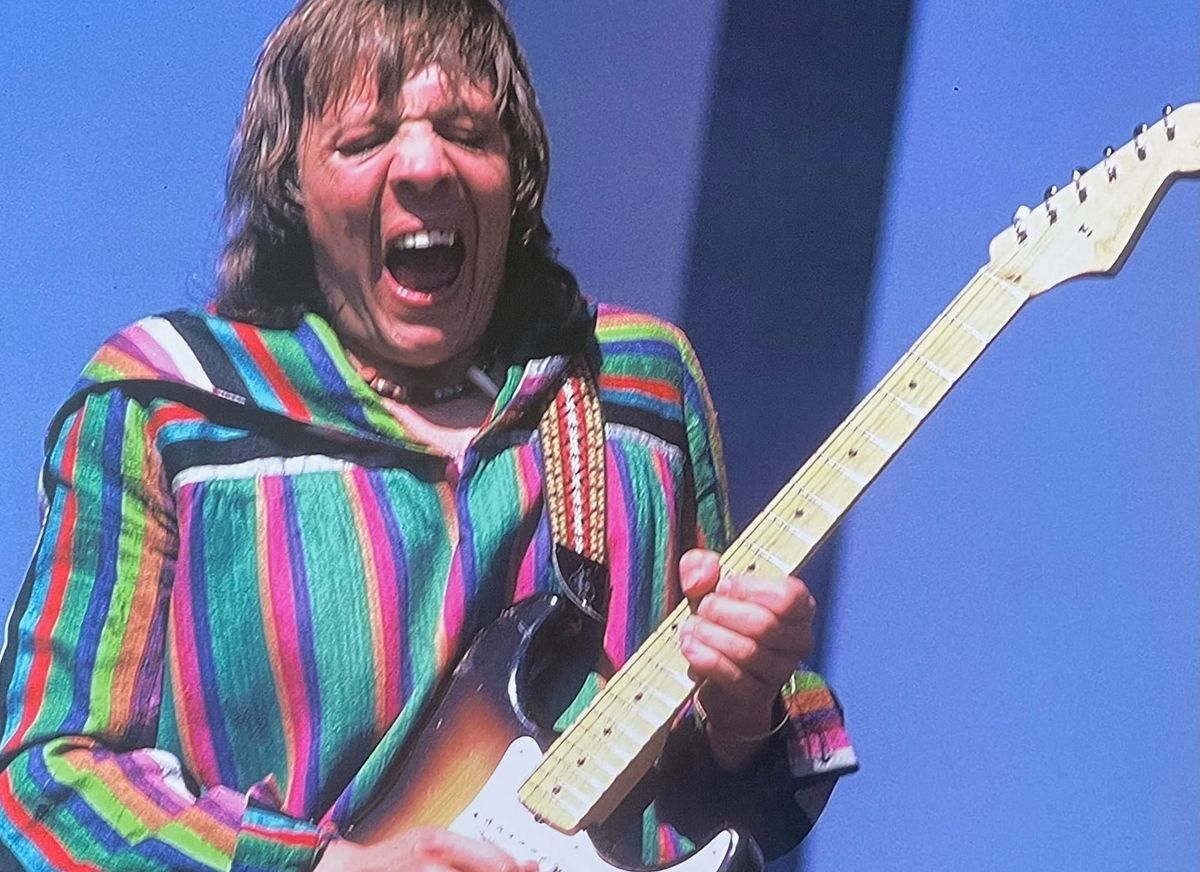
PHOTO CREDIT: RON DRAPER. Photo of Robin Trower taken from the inner sleeve of the new 50th anniversary edition of Robin Trower: Live!

The 50th anniversary edition of 1976’s Live! now includes the complete show, fully remixed.

The theme of 1976 is going to be a recurring one this year at The Vinyl Cut, as the 50th anniversary reissues are coming fast and strong. (Will we get one for Songs in the Key of Life, I wonder? No pun intended.)

Today we’re looking at the 1976 live album from Robin Trower, the former Procol Harum guitarist who broke away from that band’s groundbreaking work in the psychedelia and prog-rock spheres to focus on the blues. It wasn’t a stretch for Trower, as he and most of his Procol Harum bandmates actually cut their teeth as an R&B band called the Paramounts in the early ’60s. But Trower took significant steps forward in the blues-rock realm and fronted one of the defining power trios of the ’70s.

Before we get into that, here’s a quick reminder about our April vinyl giveaway! We’re giving to one lucky paid subscriber a copy of the Rhino Reserve pressing of John Coltrane’s Giant Steps. This giveaway closes at 11:59 pm Pacific Time tonight, so you only have 12 hours or so to get your entry in—and upgrade your account to our paid tier if you still need to do that. Go here for all the details and get your entry in lickety-split!

Win a Rhino Reserve pressing of John Coltrane’s Giant Steps!
Don’t worry, we didn’t forget—our April monthly vinyl giveaway is now live. Each month we give away free vinyl to one cherished subscriber on our paid tier. But first we’d like to welcome all the new subscribers that have joined us in the past week or

And now, it’s Trower time.

Robin Trower: Live! (50th Anniversary Edition)

Unlike some of the opportunistic expanded editions that we get, the concept behind the 50th anniversary overhaul for Robin Trower’s first live album is entirely sound. The original Live!, released on Chrysalis Records in 1976, cherry-picked seven songs from a show recorded in Stockholm, Sweden, that was broadcast on Swedish radio; the English guitarist didn’t even know his performance was being committed to tape at the time, only to happily discover its existence some weeks later. Now the album has been enlarged to include the five other songs played that night, with a new mix and a redesigned track order to recreate the concert as it was originally performed.

The album caught Trower’s trio—with bassist/vocalist James Dewar and drummer Bill Lordan—on a particularly fiery night at the handsome Stockholm Concert Hall, a well-appointed room acoustically designed for classical music. (The front cover photo, with Trower in front of a vast crowd at the Oakland Coliseum, was taken from a different show.) In David Sinclair’s liner notes, Trower remembers the venue: “The sound was very good, very musical sounding. There was a lot of wood.” It was the first night of the tour, and the band was fresh, energetic, and in good spirits. The Swedish broadcasters caught the Trower trio at just the right moment.

The new Live! is very much designed to be the complete experience, and to the reissue’s credit, the additional tracks and the revamped order do nothing to disturb the strengths of the original album. The five new songs—which, interestingly, almost entirely appear early in the setlist—are wholly of a piece with the more familiar tracks, in which the Trower band locks into a blues-rock power-trio format. The three-piece reworks the template of Cream and the Jimi Hendrix Experience, stripping out any lingering hints of psychedelia and updating the raw, lean blues elements; Trower in particular was influenced by not just Hendrix but Albert King, B.B. King, and other electric blues guitarists. His relocation of the blues to within a thundering, heavy-rock format led to substantial success in the US in the 1970s, where his popularity eclipsed that of his former band, Procol Harum.

Inner gatefold and sleeves for Robin Trower.

Dewar’s vocals were a big part of the appeal. The former Stone the Crows bassist possessed a throaty, soulful singing voice that was ideally textured for British blues rock, with a muscularity and a tonality that was able to cut over the top of the dense, low-toned sound of Trower’s guitar. Trower used thick-gauge strings, resulting in a burly sound that operated quite close to the bass frequencies even when his fingers slid up to the high end of the fretboard. Hendrix is the most obvious point of comparison, and Trower adopted his trills, tiny runs, and grace notes, as well as his use of sustain. But Trower also has a stormier, more bruised quality to his playing, which may have come from his years with Procol Harum, where his guitar was used more sparingly and atmospherically amid that band’s already daunting blend of piano and organ. Lordan, meanwhile, had just joined the trio for the recording of 1975’s For Earth Below, which was on the cusp of being released at the time of the Stockholm show. He fits in effortlessly with the other two, playing with conviction and power—and only a little bit of extraneous flash, such as during the drum solo on “Althea.”

The new mix has its ups and downs. Most promisingly, it returns to the original eight-track tape and digs out bassist James Dewar’s original vocals. At the time, the vocal track was rendered useless by the drums bleeding overwhelmingly into the mic, which necessitated Dewar re-recording all of his vocals at AIR Studios in London. Now digital technology can separate some of those original live vocals—but not all, as remixer Richard Whittaker explains. “I tried to retain as much of the original vocal performance in the new mix but some of the re-recorded parts had to be used,” he tells David Sinclair. “However, the songs that weren’t on the original album did not have re-tracked vocals, so they’re all ‘as performed on the night.’”

The new mix opens up the stereo image slightly, pulling Trower’s guitar subtly over to the right speaker, and it nudges up Dewar’s bass guitar so he can be more clearly heard. Trower’s guitar is as well-defined as before, present in all of its color and shade, and Lordan’s drums are precise, with his cymbals in particular adding a lot of excitement. But I also hear a central denseness to the new mix that isn’t on my 1976 copy of the album, a sort of thick, dark clot in the middle of everything. The ambient vibration from Lordan’s snare might be playing a part in this, as may be the reincorporation of Dewar’s original compromised vocal track and any extraneous noise that came with it. It may also be a more accurate representation of Trower’s mammoth guitar sound as it was actually heard in the concert hall. But it’s not something I can pinpoint. I hasten to add that I don’t think the mix is ruined by any stretch, and in many ways it’s superior to the 1976 mix, with a broader soundstage, a clearer sense of articulation, and a very welcome bass presence. The new mix is heavier, more powerful, and more rocking, which is what many will want from this live album.

An original 1976 US pressing next to the 2026 50th anniversary edition.

And the newly added tracks are nothing but gravy. “Bridge of Sighs” in particular is a highlight, but it’s also a treat to hear three additional songs from the brand-new For Earth Below: “Gonna Be More Suspicious,” “Fine Day,” and “Confessin’ Midnight.” The package is very well done, with a new gatefold that has a photo of Trower on the inner spread. The two inner sleeves contain the superb liner notes as well as additional images, including photos of the original tape boxes, which are always a treat to see. The thick card of the sleeves doesn’t do the vinyl any favors, so listeners will want to migrate them immediately into poly sleeves, preferably after giving the discs a good cleaning. My pressing, from GZ, was surprisingly excellent, without a single flaw. The mastering by Phil Kinrade is strong and thorough, although the sleeve erroneously claims he also cut the lacquer, but Henry Rudkins, his fellow engineer at AIR Mastering, is the one whose initials are in the deadwax.

Chrysalis has been updating Trower’s classic ’70s albums on both CD and LP, and Live! continues their good work in that regard. (The 2-CD edition of Live! contains the new, complete remixed album on Disc 1 and the original seven-song version in its 1976 mix on Disc 2.) In my mind, this new 2-LP Live! is exactly how an expanded reissue should be handled. Everything on the double album is entirely new—not just the previously unreleased songs, but also the new mixes for the previously released tracks with Dewar’s original live vocals—giving Trower fans ample reason to invest in the new package. But it also does not disrupt or erase the original album in any way, merely adding additional layers to explore. This new edition answers a question that Trower fans have had for half a century: What if Live! had been a double album, as so many live albums were in its day? The answer, happily, is that it would have been just as good. And what’s even better is that the new Live! gives the listener a sense of what it might have actually been like at the Stockholm Concert Hall that night in 1975.

Chrysalis 2-LP 33 RPM 180g black vinyl
• 50th anniversary remix of Robin Trower’s 1976 live album, recorded at Stockholm Concert Hall, Stockholm, Sweden, on February 3, 1975, expanded to two LPs with five previously unreleased tracks and resequenced to follow original setlist order; recording was originally done by Swedish Broadcasting Corporation and broadcast on Swedish radio in 1975
• Jacket: Direct-to-board textured matte gatefold
• Inner sleeve: Thin printed card
• Liner notes, insert, or booklet: Liner notes by David Sinclair and remembrance by Bill Lordan printed across the two inner sleeves
• Source: Digital
• Mastering credit: “Mastered and cut by Phil Kinrade at AIR Mastering,” London, UK; despite this credit, Kinrade did not cut the lacquer, as Henry Rudkins’s initials are in the deadwax
• Lacquer cut by: Henry Rudkins, AIR Studios, London; “H.R” in the deadwax
• Pressed at: GZ Media, Czech
• Vinyl pressing quality (visual): A 
• Vinyl pressing quality (audio): A
• Additional notes: Comes with a wraparound obi.