Reviews: The Zombies | Aerosmith

Share
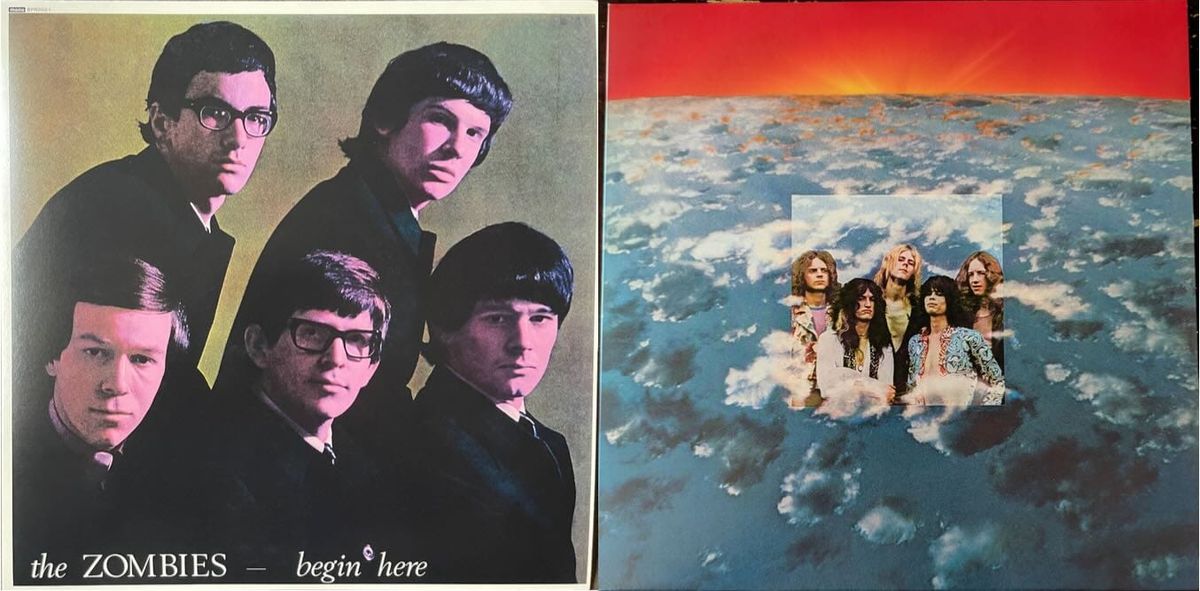
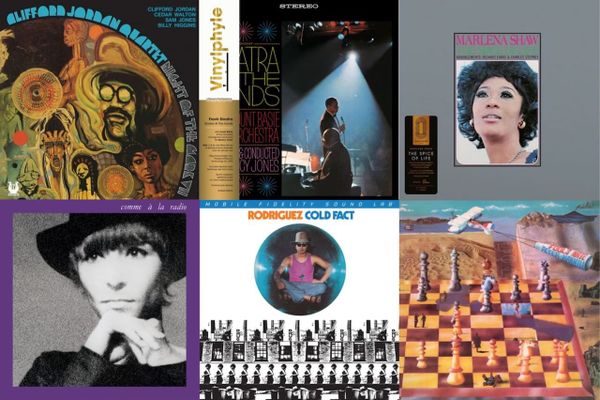
Cover art for the Zombies and Aerosmith.

We have two vinyl reviews for you today, for two debut albums from groups that went on to become well-known to rock fans everywhere. But these albums—separated by less than a decade—couldn’t be more different. Both bands were greatly influenced by American blues music, but the fashions and mores of their times, not to mention their own personal tastes, took them in wildly different directions.

Interestingly, the reissue treatments of these two albums are pretty different, too. One is a modest remaster of the original album with three tracks unobtrusively added, while the other is a shelf-crowding box set with a full album remix, live tracks, a hardcover book, and all kinds of gewgaws and gizmos.

And both were a lot of fun to revisit. Let’s get into it.


Cover art for the Zombies.

The Zombies: Begin Here

Review by Ned Lannamann

I can’t help but wonder if the members of the Zombies, as they were forming in Hertfordshire nearly 65 years ago, had a sense of how prophetic their name would be. The group’s slender ’60s catalog—two LPs and a string of singles—has over the years proved itself to be veritably undead, with their big hits becoming bona fide pop classics and their lesser-known work forming a treasure trove for generations of new fans to discover. The group even resurrected itself after decades of dormancy, revitalizing their back catalog and adding five new albums to stand alongside those initial two. And in 2023, the story became even happier: The four surviving members of the original Zombies and the estate of their late guitarist, Paul Atkinson, gained collective control of their back catalog for the first time. The initial fruits of this development came last year with a band-sanctioned reissue of the mono mix of their 1968 masterpiece, Odyssey & Oracle (read our review here). And now they’ve reissued their debut LP, 1965’s Begin Here (also in mono), on vinyl, CD, and streaming. It’s the second in a series of four definitive reissues that will encompass the Zombies’ groundbreaking work from the first decade of their career. Unkillable, indeed.

Begin Here is very much a debut, with all of the positive traits that suggests. It’s full of youthful vigor that offsets its more callow moments, and the band’s exuberance and sheer charm turns any naïveté into an asset rather than a liability. Most of the band were still in their teens when it was recorded; bassist Chris White was the only one in his 20s. The group had won a high-profile band competition in May 1964, which led to them signing with Marquis Enterprises, who then secured a recording deal with Decca. Their first effort was among the greatest debut singles ever recorded: “She’s Not There,” written by keyboardist Rod Argent and delivered with pre-Raphaelite color and shade by lead singer Colin Blunstone. Had the Zombies’ recording career ended there, their status in the rock firmament would have been assured.

“She’s Not There” was a huge hit at home and abroad—hitting number one on Cashbox and becoming the second-ever US chart-topper by a British group (following a little band called the Beatles), signaling the true start of the British Invasion. Naturally, a full-length followed, and Begin Here showcases the band’s surprisingly multi-faceted sound, even in its developing stages. There is probably not another song on the album as good as “She’s Not There,” but what is here is a young group metabolizing their influences in real time, just as their individual creativity is beginning to blossom. 

There are high-energy covers of the R&B songs that first lit a fire under the young musicians, like Bo Diddley’s “Road Runner,” Titus Turner’s “Sticks and Stones,” made famous by Ray Charles, and “I Got My Mojo Working,” popularized by Muddy Waters. There are slower tunes, too, like Solomon Burke’s “Can’t Nobody Love You,” and a soulful medley of Smokey Robinson’s “You’ve Really Got a Hold on Me” and Sam Cooke’s “Bring It on Home to Me.” Most distinctively, there’s the band’s inventive take on Gershwin’s “Summertime,” turned into a jazzy, dusk-lit waltz fueled by Blunstone’s breathy intonation and Argent’s glowing Hohner Pianet.

The Zombies in 1964. Photo taken from the album insert for Begin Here. Photo credit: Davis/Copyright Associated Newspapers/Shutterstock.

But the real meat of Begin Here come from the original songs by Argent and White, who were just embarking on their long careers as songwriters. White’s “I Don’t Want to Know” has more meat on the bones than the typical beat fare of the period, and Argent’s “I Remember When I Loved Her” builds upon a minor key and basic Latin syncopation to become something positively haunted, a ghostly breakup song that gestures at passing spirits. Meanwhile, White’s angsty, slightly subdued “I Can’t Make Up My Mind” and his shape-shifting, near-progressive “What More Can I Do” both point the way forward to Odessey

Argent’s “The Way I Feel Inside” has become the album’s second-best known tune thanks to its use in Wes Anderson’s The Life Aquatic with Steve Zissou. It’s an unlikely song to become a latter-day hit: Beginning with Blunstone singing in hushed a capella, he’s joined midway by Argent’s minimal organ. It’s the most stripped-down number on the album, but its plaintiveness and direct, clear-eyed emotion sum up Begin Here’s appeal in under two minutes. “Should I try to hide the way I feel inside?” sings Blunstone, his hope overridden by caution. The song merges hymn with pop song in a way that suggests an upbringing where musical life was very much tied in with churchgoing—perhaps an indelible influence from the band’s roots in the cathedral city of St. Albans—and the theme of repressed emotions reflect what was likely an intrinsic part of English teenhood in the early ’60s. It’s tough to imagine a man just a few years older pulling off the song with such conviction and winning appeal.

And then there’s “She’s Not There,” a song that contains multitudes. At first it appears to be a minor-key ballad with a slope-shaped beat, with lyrics that ruefully lament a dishonest lover. But White’s insistent bassline suggests the earthquake to come, when the chorus transfigures into an explosion of emotion. Argent plucked the opening line from a John Lee Hooker song, but what he came up with doesn’t sound like anything that came before—not the band’s R&B influences, not the long shadow of Motown, not even the benignly oppressive weight of the ever-present Beatles. The song was not only ground zero for baroque pop, but it also opened a beaded curtain on the psychedelia that was to come, with traces to be found in the Doors and the Byrds, and its merging of jazz and rock foreshadowed bands like Colosseum and Soft Machine.

This heavy arm of influence might be a bit much to put on an album as modest-sounding as Begin Here. The overall impression it gives is of a group of youths given free rein in the recording studio, akin to Bee Gees’ 1st or From Genesis to Revelation. The glimmers of brilliance it contains are just that—glimmers, not bright shafts of blinding light. But it’s to the credit of the other 13 tracks on Begin Here that they’re not crushed under the weight of “She’s Not There”; unlike a lot of other LPs of the period, it doesn’t come across as one big single and a remainder of filler.

Back cover, insert, and disc for the Zombies.

The new Zombies-approved remaster includes three additional songs that appeared on the US version of the album, released on Decca/London subsidiary Parrot Records and titled either The Zombies or Featuring She’s Not There/Tell Her No, depending on which way you read the album cover. The Argent-written “Tell Her No” was the Zombies’ third UK single, and a big hit in the States, where it was the direct follow-up to “She’s Not There.” The verse strides forward with jazzy chords influenced by Burt Bacharach, while the chorus supplies a barrage of “nos” delivered on syncopated off-beats, marrying youthful frankness with sophisticated compositional ideas. The other two tracks from the US LP were released in the UK on an EP in early 1965: “It’s Alright with Me” and “Sometimes” are both upbeat potboilers, the former being the first song Argent ever wrote and an engaging marriage of blues and jazz, and the second featuring the group harmonizing on an a capella opening phrase.

The vinyl version puts the bonus tracks at the ends of each side, rather than bunching them all up at the end of Side 2, thus preserving the original flow of each album side (purists can lift the needle before the bonus tracks kick in, if they must). I don’t have an original 1965 Decca pressing to do a shootout with—please feel free to send me one if you have one to spare—but this new pressing sounds fantastic, better than any of the digital editions I’ve heard as well as the adequate pressing inside my 2019 In the Beginning… box set from Demon Records. The album has not received a ton of legitimate vinyl pressings over the years: The only other significant points of comparison one could make would be with the 1984 Decca reissue and the 2013 half-speed master cut by Miles Showell at Abbey Road and released on Repertoire; I wasn’t able to compare the new version to either of these but I don’t feel like I’m missing an integral part of the picture.

Like the 2025 Odessey mono reissue, the archival tapes were handled by Chris White’s sons, Matthew and Jamie, working with Zombies experts and historians Alec Paleo and Nick Robbins. Reuben Cohen assembled the new master in the digital domain, and Jeff Powell cut the lacquer. The album sounds pure, clean, and free of any sonic issues. The mono image is immediate and transparent; Hugh Grundy’s drums have snap and clap throughout, White’s bass is subliminally powerful, and Argent’s organ solo on “Sticks and Stones” has a kaleidoscopic richness. Blunstone’s voice is always rendered with utmost clarity, framing his emotiveness as the band’s leading charge. There’s a compression inherent to these beat recordings from the first half of the ’60s, but the Zombies had better recording situations than the Stones and the Kinks, for instance, and these performances are well-captured and sound more lifelike than I’ve heard them before.

Despite their meteoric success at the start, the Zombies found it tough going through the rest of the ’60s. Their subsequent singles failed to match the magic of “She’s Not There,” and Decca didn’t give the group the chance to release a second full-length. The trials that accompanied the eventual follow-up, Odessey & Oracle, make for too long a tale to detail here. What’s worth mentioning is the way Begin Here introduced this significant, and significantly unique, band to the world at large. Capable of R&B pounders and melancholy minor-key confections, the Zombies may have seemed like precocious youths who struck gold with “She’s Not There.” But all the hints of their future brilliance are evident from the get-go, and their fresh, bushy-tailed charisma makes Begin Here an invigorating tonic for listeners of any age.

Beechwood Park 1-LP 33 RPM black vinyl
• New remaster of the Zombies’ 1965 UK debut album in mono with three additional tracks from the US configuration
• Jacket: Direct-to-board single-pocket
• Inner sleeve: White poly-lined
• Liner notes, insert, or booklet: Liner notes by David Fricke on back cover. Double-sided insert includes photo and original album liner notes by Rod Argent.
• Source: Digital; “Archive and restoration by Matthew White, Jamie White, Alec Palao, and Nick Robbins”
• Mastering credit: “Remastered by Reuben Cohen at Lurssen Mastering, Los Angeles, CA”
• Lacquer cut by: Jeff Powell at Take Out Vinyl, Memphis, TN
• Pressed at: Furnace Record Pressing, Alexandria, VA
• Vinyl pressing quality (visual): A
• Vinyl pressing quality (audio): A
• Additional notes: Also available in gold marble, “Road Runner” orange/yellow, and clear vinyl.

Listening equipment:
Table: Technics SL-1200MK2
Cart: Audio-Technica VM540ML
Amp: Luxman L-509X
Speakers: ADS L980

The pop-up inside the Aerosmith box set.

Aerosmith: Aerosmith [Legendary Collectors’ Edition]

Review by Robert Ham

Aerosmith’s status in the world of rock music is so elevated that it’s a wonder that it has taken this long for Universal to give one of the band’s studio albums the deluxe reissue treatment. The thinking may have been that such a legacy project was premature while the band was still an active recording and live act. But while Steven Tyler and Joe Perry, the principal creative forces within Aerosmith, did collaborate on a few songs with British alt-rock artist Yungblud for a 2025 EP, the band has been quiet since the end of their Las Vegas residency in 2022, with no new tours or studio time on the books. What better time, then, for the five members of the band to take stock of their past achievements. 

The group’s first big foray into the nostalgia marketplace has arrived: a remastered edition of their 1973 debut, available in a number of different formats ranging from a single LP to a big, multi-disc box set complete with pop-up art, poster, and a sheet of stickers. It’s a perfect assortment of products to fit every budget and level of Aerosmith fandom. If you have the money and the interest, my recommendation is the Legendary Deluxe Edition, a fantastic 4-LP set that includes two versions of the album—a remastered edition and a revelatory new mix overseen by Tyler, Perry, and producers Zakk Cervini and Steve Berkowitz—and a 1973 recording of the band playing live at the Boston club Paul’s Mall. Although I’m reviewing a copy of the Legendary Collector’s Edition—aka the one with all the extra trimmings—it feels like overkill. The music is all that matters and it all sounds spectacular. 

This new version of the album is a substantial and welcome improvement over the early pressings I’ve heard. Though I didn’t have a copy on hand to reference directly, the ’70s pressings are, if memory serves, fairly thin-sounding records that bury Tom Hamilton’s bass for long stretches and blur some of the finer bits of guitar interplay between Perry and Brad Whitford. 

Mastering engineer Chris Athens, who sadly passed away in March, did eye-opening work on this new edition, pulling all the instruments into focus and widening the soundstage considerably. The rhythm section now has the right levels of flex and muscle, especially on the sleaze blues of “Movin’ Out” and opening track “Make It.” And the two guitars, often hard-panned to the two channels, are now more easily discernible, with the subtleties of Whitford’s lines becoming particularly clear. As with groups like the Yardbirds and AC/DC, the spotlight tends to be dominated by the flashy lead guitarist, but in every case, including with this band, it’s the rhythm guitarist that is the band’s spine, holding everything up one solid, meaty hook at a time. And when Whitford does rip out a solo of his own, as on the strutting “One Way Street,” he rises to the occasion handily. 

LP jackets and discs for Aerosmith.

When writing these reviews, I tend to stay away from the comments section on Discogs and the threads on the Steve Hoffman Forums, lest that influence my own read on a particular album or pressing. But I’m dying to find out how folks are responding to the new mix of Aerosmith. It's correctly subtitled as the “2024 Mix,” as the four cooks in this particular kitchen attack the album with a modern sensibility. They apply layers of reverb to the drums, throw some new effects onto the guitars, push up the faders on the piano and Mellotron overdubs, and generally make everything louder and fuller. It’s nowhere near as ear-straining and exhausting to listen to as many modern rock albums, but the sonic lift that Cervini (a young engineer who has worked with artists like Clutch and Limp Bizkit) and Berkowitz give these tracks is pleasantly grabby. 

If it had been released on its own, I don’t know that I would like it as much as I do, but in a shootout, the 2024 mix draws out details in the recording that I’m then able to focus on when listening to Athens’s remaster of the 1973 mix. I never gave much attention to David Woodford’s sax playing on “Mama Kin,” but hearing it boosted in this fresh remix helped me appreciate its presence on the original. My next step is to grab an earlier pressing of the LP so I can dig even deeper into the minutiae of these various pressings and masters. 

The other jewel of the box is the March 1973 live set. Originally broadcast on WBCN, Boston’s big rock station, a few months after the release of their debut LP, it captures Aerosmith at their most well-oiled and locked-in. The set was one that the quintet had been honing for years as they slugged it out in the New England circuit and likely similar to the one that they played at Max’s Kansas City in 1972 at a showcase attended by Columbia Records president Clive Davis that secured the band a deal with the label. 

In other words, it’s a set meant for maximum, immediate impact. You won’t hear a live version of “Dream On,” the power ballad that helped turn the group into superstars, but you will get taut renditions of Calvin Carter’s “I Ain’t Got You,” James Brown’s “Mother Popcorn,” and all of the band’s uptempo, blues-rock originals. (The recordings of those aforementioned covers from Paul’s Mall were originally released on 1978’s Live! Bootleg.) It’s a fun listen even though the sound quality isn’t the best. The tape is damaged in spots, and the whole recording has the airless tone of most radio broadcasts of the time. Less interesting is the smattering of studio outtakes tacked onto the end of the live album. There is a nice Yardbirds-inspired run at “Train Kept a-Rollin’” that Aerosmith would re-record for their next album, 1974’s Get Your Wings, and an extended jam that revealed the band working out the rough structure of future Toys in the Attic single “Sweet Emotion.” Otherwise, the songs feel like extra padding to an already well-stuffed set. 

Contents of the Legendary Collector's Edition box set.

The Legendary Collector’s Edition I had on hand for this review goes even further. The wonderful hardcover book included with the set has a lengthy piece from writer Rick Florino with copious quotes from the band members about their early days and the making of Aerosmith. Everything else stuffed into the flip-top box is there to gild the lily. Open it up and there’s a pop-up version of the album’s cover art. Dig deeper and there’s the poster and sticker sheet. And at the bottom of the box is a single-sided LP featuring both the remastered version and the 2024 mix of “Dream On,” pressed on clear vinyl with clouds silkscreened on the record. The idea, it seems, is to place the LP atop the sky blue slipmat that’s also in the box so it looks kind of like the design on the cover. 

I sort of understand the logic of highlighting this particular song in this way. “Dream On” was Aerosmith’s first big success, even if it did take nearly three years for it to become a major hit. The song was huge in their home market, getting regular spins on Boston radio, but stuck at the lower rungs of the Billboard Hot 100 in 1973. When Columbia reissued the single in an edited form in 1975 after Toys in the Attic became a big seller, their gambit paid off and it cracked the Top 10. The label responded by reissuing Aerosmith with altered artwork that added “Featuring ‘Dream On’” on the cover. Much like that calculated move sold a few million more copies of the album, all the fluff and nonsense stuffed into each deluxe set serves to squeeze a few extra dollars from the band’s fans. If you’re of the ilk to want the most elaborate reissue of a favorite album, you will no doubt love this handsomely designed package and all the extras. For the rest of us folks who just want to home in on the music, the frills-free version has all you could ask for. 

Capitol/UMe 5-LP 33 RPM transparent red, clear, and black vinyl
• “Legendary Collector’s Edition” of Aerosmith’s 1973 debut album featuring a new mix (transparent red vinyl) and a remaster of the original album mix (clear vinyl), a live recording of the band playing at Paul’s Mall in Boston, MA on March 20, 1973 with a handful of unreleased studio outtakes (black vinyl), and a single-sided LP with two versions of “Dream On” (clear vinyl with silkscreened clouds)
• Jacket: Album and live recording in tip-on single-pocket sleeves; single-sided disc in plastic polyvinyl sleeve
• Inner sleeve: Printed paper with photos of tape reels and tape boxes
• Liner notes, insert, or booklet: 40-page hardback book with liner notes by journalist Rick Florino; reflections from various artists including Dolly Parton, Pearl Jam’s Mike McCready, the Black Crowes’ Chris Robinson, and Slipknot’s Corey Taylor; lyrics; photos; and album credits 
• Source: Digital; “Analog to digital tape transfers of Paul’s Mall recordings by Carl Plaster”
• Mastering credit: “Chris Athens at Chris Athens Masters, Austin, TX”
• Lacquer cut by: Unknown
• Pressed at: GZ Media, Czech Republic
• Vinyl pressing quality (visual): A
• Vinyl pressing quality (audio): A
• Additional notes: Legendary Collector’s Edition comes in flip-top box with pop-up diorama replica of front cover imagery, slipmat, poster, and sticker sheet. Also available as a Legendary Deluxe Edition with four LPs (remastered album, new mix, live set and bonus tracks) and 16-page book in slipcase, or as a 1-LP remastered album on black or red vinyl. 

Listening equipment:
Table: Cambridge Audio Alva ST
Cart: Grado Green3
Amp: Sansui 9090
Speakers: Electro Voice TS8-2