Reviews: Record Store Day 2026, Batch 5

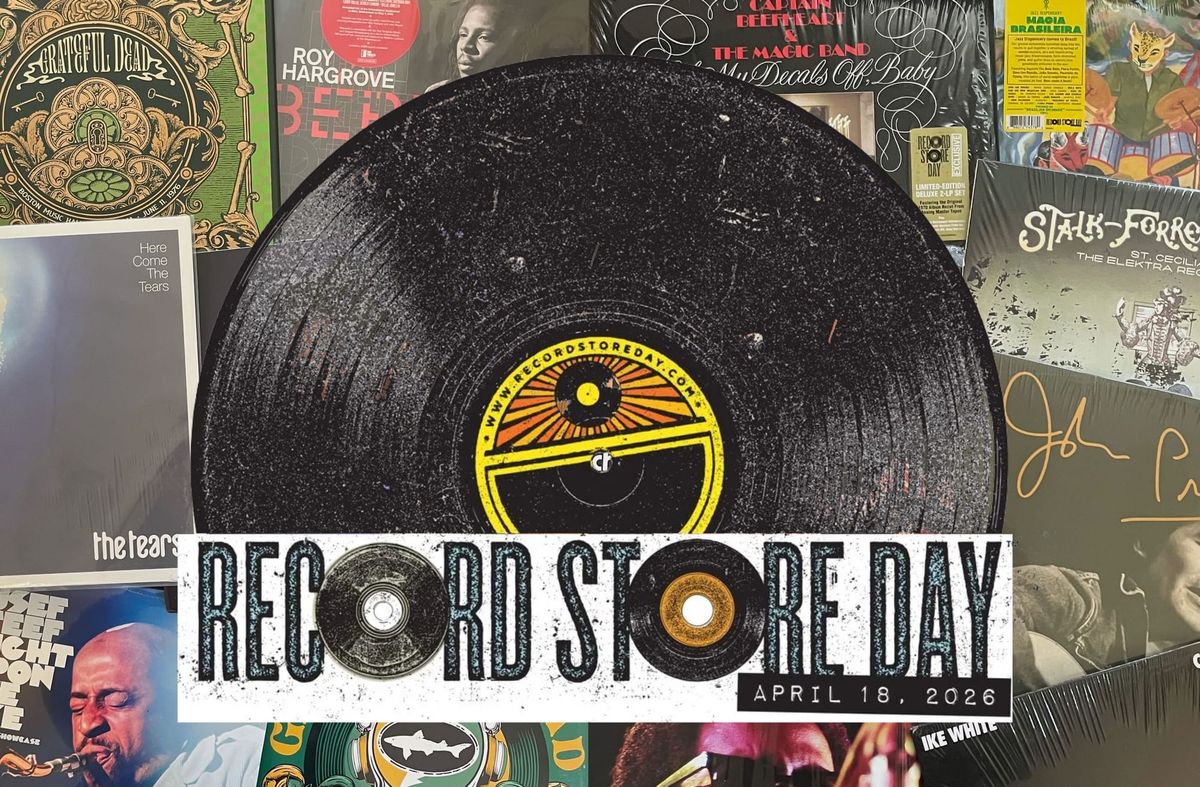
Including the Grateful Dead, John Prine, the Tears, Yusef Lateef, Captain Beefheart and the Magic Band, Mal Waldron, Stalk-Forrest Group, Ahmad Jamal, Roy Hargove, Ike White, Joe Henderson, and Magia Brasileira.
We did it. We’ve reached the last batch of our Record Store Day vinyl reviews, in which we plowed through an immense stack of records and typed out our feelings.
And just in time. Record Store Day starts in a matter of hours (for some of you around the globe, it may already have begun), so here’s our final push over the edge in terms of what’s great, what’s less so, and what deserves to be on your “gimme-dat” list for the big event on Saturday, April 18.
Today’s post has a special section devoted to the four RSD releases from Resonance Records, which delve into the vast archives of jazz aficionado Joe Segal. These live recordings were captured at Segal’s Chicago club the Jazz Showcase by Segal himself, and the handsome packages were curated and masterminded by Zev Feldman, a name you will know if you’ve ever thought about buying a jazz record on Record Store Day.
Here’s today’s rundown:
- Captain Beefheart and the Magic Band: Lick My Decals Off, Baby
- The Grateful Dead: Boston Music Hall, Boston, MA, June 11, 1976; On a Back Porch Vol. 3
- Roy Hargrove: Bern
- John Prine: BBC Sessions
- Stalk-Forrest Group: St. Cecilia: The Elektra Recordings
- The Tears: Here Come the Tears
- Ike White: Changin’ Times
- Various Artists: Magia Brasileira
Resonance Records’ Jazz Showcase Series
• Joe Henderson: Consonance: Live at the Jazz Showcase
• Ahmad Jamal: At the Jazz Showcase: Live in Chicago
• Yusef Lateef: Alight Upon the Lake: Live at the Jazz Showcase
• Mal Waldron: Stardust & Starlight: Live at the Jazz Showcase
Thank you for everyone who’s come on this RSD journey with us. Be sure to check out Batches 1, 2, 3, and 4 if you haven’t already. If you’re a new reader, please sign up for a subscription so you can stick with us once Record Store Day has come and gone. If you’re already a free subscriber, we’d love for you to consider joining our paid tier, where you’ll gain full access to our archives, weekly playlists, and a free vinyl giveaway contest every month.
In the meantime, we wish you a happy and safe Record Store Day, and may you get everything you wished for, even if it’s the chance to sleep in and skip it all together. As for the rest of you—see you at the record store.

Captain Beefheart and the Magic Band: Lick My Decals Off, Baby
Review by Ned Lannamann
Sometimes I like to think of musicians as cartographers who explore the farthest reaches of the musical wilderness and provide us with intricately drawn maps to navigate it. Some musicians choose to go to places with beautiful rolling plains or generous contours of coastline, filling in the pages of the atlas with the types of locations where we can build roads and harbors and cities—where we can live our lives. Captain Beefheart, however, is the type of cartographer-musician who goes to the places sailors dare not even speak about; upon his return, he pulls out a fresh sheet of map-drawing paper and merely scribbles, “Here be dragons.”
Lick My Decals Off, Baby is indeed a roadmap to unspeakable landscapes, where the terrain is not just impassable but melting before your feet, where ground and sky don’t stick to their fixed positions, and where the compass points are actively conspiring against you. The 1970 album—performed by Beefheart (aka Don Van Vliet) and his long-suffering cohort in the Magic Band—was the follow-up to 1969’s genre-shattering double album Trout Mask Replica, a record that deconstructed blues and garage rock and merged them with free jazz and avant-garde experimentation. Decals doubles down on that record’s disquietude, each song an arrhythmic lurch toward something resembling rock ’n’ roll, but chopped up into gangrene-imparting shards of sound. It’s the type of music where after a minute or two, the unconditioned listener will look aghast and wonder, “Are they doing that on purpose?”—only to look even more stricken when informed that yes, they are doing that on purpose.
In any case, Decals is neck and neck with Trout Mask Replica as one of the most confounding and challenging albums ever released by a major label, and its re-release on Record Store Day has softened none of its discombobulating effect. The album is supplemented with a second disc of unreleased instrumental versions of the album (13 out of the 15 songs, as the other two were already instrumental to begin with) and four alternate versions. I believe these instrumental mixes have circulated before in bootleg form—there is no source or mixing information about them in the package—but they sound top-notch, very much the equal of the album proper. One might wonder about the appeal of the instrumentals, but Magic Band scholars will surely relish the ability to closely study each musician’s contribution, line by stuttering line.
It stands to reason that this newly assembled second disc is cut from digital, but the album itself is cut from tape per the hype sticker, which says, specifically, “recut from analog master tapes.” I believe this is in response to the 2014 box set Sun Zoom Spark, which contained Decals and two other Beefheart albums in what were explicitly announced as analog cuts but were in fact digital. That box was cut by Chris Bellman, and that digital mastering of Decals was released on its own in 2016. (In a coincidence that’s going to keep me up at night, the matrix number on that pressing was 541728, while the number on this new pressing is 728514.)

Bellman is on board again with this new analog cut as well; he’s credited with the lacquer cut in the album credits, and his initials are in the deadwax, too. But Dan Hersch and Bill Inglot of d2 Mastering also receive a mastering credit, so it looks like some responsibilities were shared. As far as describing the resultant sound… that’s a difficult proposition, as the usual signifiers one listens for are nowhere to be found. This music was intended to sound like a series of grunts and thumps, with no sustain in the guitar notes, no warming reassurance from the bass, and the junkyard spasms from the drums and cymbals serving to disorient. Even Beefheart’s harmonica has a razor’s edge to it. But now and then there’s a crisp rat-a-tat from a snare drum, or a particularly conciliatory line from Bill Harkleroad’s guitar, or a pattern from Art Tripp’s marimba that carries some color and resonance. More often, the subliminal effects of the sounds will take their toll—for example, the subterranean thuds in “Japan in a Dishpan” will have you wondering if your house is resettling on its foundation. The real indicator, however, is Beefheart’s massive voice, which fills up a huge chunk of the soundstage, the fire roaring forth from his belly with presence and realism. By that metric, this mastering is well done indeed.
The new version comes in a gatefold sleeve with a handful of black-and-white photos on the inner spread; the original folded lyric sheet is now a double-sided single sheet, with the two extra sets of lyrics included, as on the original. The labels are reproductions of the standard orange/brown Reprise label, not the pink Straight Records labels that were on original pressings.
Otherwise, this is a worthy edition of a very prickly album, and it’s likely that those picking it up will already be quite familiar with its contents, adding it to their RSD haul for the extra disc of instrumentals and the promise of a fresh cut from tape. Nonetheless, it’s amusing to think of someone picking it up on a blind whim, maybe as something to check out after they spin their new Tate McCrae 7-inches. To those poor souls, let me just say two things: Yes, they are doing that on purpose, and here be dragons.
Reprise/Rhino 2-LP 33 RPM black vinyl
• New remaster of Captain Beefheart and the Magic Band’s 1970 album with a second LP of instrumental mixes and alternate versions
• Jacket: Direct-to-board gatefold
• Inner sleeve: Black poly-lined
• Liner notes, insert, or booklet: Double-sided insert with lyrics
• Source: LP 1 analog, LP 2 digital; “Featuring the original 1970 album recut from analog master tapes”
• Mastering credit: “Mastered by Dan Hersch with Bill Inglot at d2 Mastering,” Los Angeles, CA; “Vinyl lacquer cut by Chris Bellman at Bernie Brundman [sic] Mastering”
• Lacquer cut by: Chris Bellman at Bernie Grundman Mastering, Hollywood, CA; “CB” in the deadwax
• Pressed at: GZ’s Memphis Record Pressing, Memphis, TN
• Vinyl pressing quality (visual): A
• Vinyl pressing quality (audio): A
• Additional notes: None.

The Grateful Dead: Boston Music Hall, Boston, MA, June 11, 1976; On a Back Porch Vol. 3
Review by Robert Ham
Deadheads have it pretty good this Record Store Day. In addition to a 50th-anniversary deluxe reissue of Jerry Garcia’s 1976 solo album Reflections, two exclusive Grateful Dead releases hit the racks at your local indie shop this weekend: Boston Music Hall, the second in a series of breakout vinyl releases from the 2020 CD box set June 1976, and On a Back Porch Vol. 3, the latest in a series of compilations of live Dead material to promote Dogfish Head Brewing’s Grateful Dead Juicy Pale Ale.
Obviously the jewel of the pair is Boston Town Hall, a full concert by the band captured on tape in Boston during the band’s 1976 US tour. The run of shows, which included multi-night stands in Oregon, New York, Pennsylvania, New Jersey, and Chicago, was the first tour they’d undertaken in nearly two years. The group had been on extended break from the road, citing exhaustion and the continued expense of setting up and maintaining their legendary “Wall of Sound” PA system. While they played the occasional gig around the Bay Area, they concentrated on folding Mickey Hart back into the mix after his long sabbatical from the group and working on their 1975 studio album Blues for Allah.
The Dead were none the worse for wear when, following a trio of warm-up gigs at Portland’s Paramount Theatre, they trucked across the US for a short East Coast tour in June 1976. In fact, the band is fighting fit in every recording that I’ve heard from this stretch of shows. Donna Jean and Keith Godchaux had further developed into fantastic support players, with the former adding an astringent tang to the group’s vocal harmonies. And the jazz-prog sound they had begun to experiment with on Allah were turning their onstage jams into mini-fireworks displays of improvisation.

The gig presented on this new vinyl set was the third of four shows the Dead played at Boston Music Hall, and it’s perhaps the most easygoing of the bunch. The performances from June 9 and June 12, as heard on 2011’s Road Trips Vol. 4 No. 5 CD set, are speedy and boisterous, with usually ambling tracks like “Crazy Fingers” and “Looks Like Rain” sounding as though they were on the verge of dissonant collapse. This June 11 show, on the other hand, has a relaxed quality that frees the band to stretch out the start of “Eyes of the World” into a pleasant detour along a country road and to lend their covers of Merle Haggard’s “Mama Tried” and Chuck Berry’s “Johnny B. Goode” a comfortable air. The rest of the setlist seems to have been built around this mood, as heard in the loping blues of “Tennessee Jed” and the slow, melting ballad “It Must Have Been the Roses.” Even the usually god-awful cover of “Dancing in the Street” sounds pretty great here, with Hart and co-drummer Bill Kreutzmann setting a nice deep-pocket funk groove that the rest of the players happily slip and slide within.
As with last year’s Record Store Day Black Friday release of the Dead’s 1980 performances at the Warfield in San Francisco, the source tape for this set came from the archive of Betty Cantor-Jackson, a sound engineer and archivist who recorded dozens of the group’s shows. I wasn’t able to suss out what kind of equipment she used on this particular evening, but the recording is astonishingly detailed. All the instruments are given a clear picture that let us better appreciate the joyously tangled interplay of Garcia, Bob Weir, and Phil Lesh, and how Keith Godchaux was able to tastefully poke his keyboards into whatever bits of daylight he could find in each song. The credit for the sound quality needs to be shared with mastering engineer Jeffrey Norman, who obviously understands the dynamics of a Dead set. He fans the embers of the recording just so to give it all a warm, snuggly glow. The vinyl, too, was cut and pressed with care and packaged in a gorgeously designed lift-top box. It’s a jewel of the 2026 RSD lineup.

The other Dead release hitting record stores is a nice addition to the discography, but doesn’t feel quite as essential as Boston Music Hall. The PR copy for On a Back Porch Vol. 3 encourages folks to “support indie record stores while enjoying easy-listening live Dead and easy-drinking beer”—in this case the juicy pale ale from Delaware-based microbrewers Dogfish Head that carries the Dead’s name and skull logo. The selection of recordings and the laid-back spirit of this disc does dovetail rather nicely with the breezy vibe of the Boston set, but the six songs are a little more scattershot, as they come from different shows and different eras of the band. A version of “Cumberland Blues” from a May 1970 gig at Harpur College in Binghamton, New York, for example, sits between two performances from the ’80s.
There’s still plenty to love with this collection, like the fun spin through “Touch of Grey,” the group’s surprise hit from 1987’s In the Dark, that came from a 1989 show at Rich Stadium in Orchard Park, New York, and their cover of “Rockin’ Pneumonia and the Boogie Woogie Flu” recorded during the group’s 1972 tour of Europe. But as all six tracks have been previously released, chances are most fans already have them in some format or other. For folks looking for the doorway into the group’s vast archives, this is a fine passkey, but I don’t see many Deadheads making it a priority purchase.
Boston Music Hall: Grateful Dead/Rhino 5-LP 33 RPM 180g black vinyl
• First vinyl pressing of the Grateful Dead’s performance at Boston Music Hall, Boston, MA on June 11, 1976, taped by Betty Cantor-Jackson and first released in 2020 as part of the June 1976 CD set
• Jacket: Hard cardboard lift-top box
• Inner sleeve: Black poly-lined
• Liner notes, insert, or booklet: Four-page booklet with essay from author Jesse Jarnow and album credits
• Source: Digital; “Tapes provided through the assistance of ABCD Enterprises, LLC”; “Plangent Processes Tape Restoration and Speed Correction by Jamie Howarth and John Chester”
• Mastering credit: “Newly mastered by Jeffrey Norman” at Mockingbird Mastering, Petaluma, CA
• Lacquer cut by: Chris Bellman at Bernie Grundman Mastering, Hollywood, CA; “CB” in deadwax
• Pressed at: Optimal Media, Germany
• Vinyl pressing quality (visual): A
• Vinyl pressing quality (audio): A
• Additional notes: Limited edition of 7,600.
On a Back Porch Vol. 3: Grateful Dead/Dogfish Head/Rhino 1-LP 33 RPM 180g black vinyl
• Third compilation album of live Grateful Dead material released as promotion for Dogfish Head Brewing’s Grateful Dead Juicy Pale Ale
• Jacket: Direct-to-board single-pocket
• Inner sleeve: White poly-lined
• Liner notes, insert, or booklet: None
• Source: Digital
• Mastering credit: “Mastering by David Glasser at Airshow Mastering, Boulder, CO”
• Lacquer cut by: Chris Bellman at Bernie Grundman Mastering, Hollywood, CA; “CB” in deadwax
• Pressed at: Memphis Record Pressing, Memphis, TN
• Vinyl pressing quality (visual): A
• Vinyl pressing quality (audio): A
• Additional notes: Limited edition of 8,000, according to hype sticker.

Roy Hargrove: Bern
Review by Robert Ham
Zev Feldman’s recently created imprint Time Traveler Recordings has, to date, focused on recordings and live performances from many decades in the past. But this release, one of two that the label is releasing for Record Store Day, is of a much more recent vintage.
Bern is a recording of trumpeter Roy Hargove and his ensemble onstage in May 2000 at the International Jazzfest in Bern, Switzerland. At the time, Hargrove was coming off multiple collaborations with the Soulquarians, the musical collective led by Questlove, including playing three dates in New York as part of funk/soul artist D’Angelo’s Voodoo tour. And Hargrove would soon release Moment to Moment, a beautiful album on which he and his band are backed by a string ensemble.
The live set that he played on this date in 2000 falls somewhere between those two musical poles. Hargrove’s original composition “Caryisms” is a New Orleans funk burner on which he goes toe-to-toe with saxophonist Sherman Irby, joining in harmony and splitting apart to trade off solo lines in the spirit of a rap battle. “Never Let Me Go,” a standard written in the ’50s by Ray Livingston and Jay Evans, is given a lush treatment here, cushioned tenderly by pianist Larry Willis’s solo that evokes Erroll Garner’s fluidity and Bill Evans’s opulence. The rest of this set is maximalist bop, with the quintet taking off like a shot and keeping a breathless pace for long stretches. It sticks to the typical jazz pattern of head-solos-head, but that doesn’t make it any less dazzling when Hargrove goes for broke in his fleet-fingered solo on “Stranded” and drummer Willie Jones III truly cuts loose on the vertiginous “Circus.”

Though it doesn’t make mention of it in the liner notes, Bern was originally recorded for a TV broadcast by 3sat, a public television network that broadcasts in Austria, Germany, Liechtenstein, and Switzerland. It helps explain some of the inconsistencies in the mix of this otherwise wonderful release, including some wowing during Hargrove’s solo in “Stranded” and a slightly noisy background that may have come from the video this was sourced from. Matthew Lutthans, who restored, mixed, and mastered the LP, did a remarkable job eliding that light layer of sonic turbulence by giving a little juice to the low end and mids. The rough details are still there, but when the heat of this fantastic set by one of the great modern jazz ensembles is at its peak, you’ll be too far gone to notice.
Time Traveler Recordings 1-LP 33 RPM 180g black vinyl
• Live recording of Roy Hargrove’s performance on May 4, 2000, at International Jazzfest, Bern, Switzerland
• Jacket: Direct-to-board single-pocket
• Inner sleeve: Time Traveler–branded rice-paper-style poly
• Liner notes, insert, or booklet: Eight-page booklet featuring liner notes by critic Nate Chinen and photographs by Alan Nahigian and John Rogers
• Source: Digital
• Mastering credit: “Restored and mastered by Matthew Lutthans at the Mastering Lab,” Salina, KS
• Lacquer cut by: Matthew Lutthans at the Mastering Lab, Salina, KS; “MCL” in the deadwax
• Pressed at: Optimal Media, Germany
• Vinyl pressing quality (visual): A
• Vinyl pressing quality (audio): A
• Additional notes: Limited to 3000 copies worldwide; a CD version also available.

John Prine: BBC Sessions
Review by Ned Lannamann
One of the highlights of John Prine’s third LP, 1973’s Sweet Revenge, is the live recording of “Dear Abby” that comes partway through Side 1. Unlike the rest of the album, which was recorded with a muscular country-rock studio band, “Dear Abby” is just Prine and a guitar—and an audience, who vocally respond to Prine’s comic timing and note-perfect delivery. That was the first live recording of Prine most people heard, and pretty much everyone who did hear it instantly wished there was more where that came from.
Many years later, a full-length 1973 live recording is here, sourced from the BBC in the months before Sweet Revenge, when he was touring on his second album, 1972’s Diamonds in the Rough. BBC Sessions is on vinyl for Record Store Day (a CD version will likely materialize at some point too), and it’s a skimpy-feeling artifact that is nevertheless rich in Prine’s piquant songwriting and winning crowdwork.
The recording details are scant, simply stating that the tracks were recorded for the BBC in 1973. It doesn’t say on what date, nor does it even specify whether they were recorded for radio or television. Most online accounts believe this was either recorded or broadcast on April 21, 1973, but I can’t verify that. Bob Harris introduces the performance, and he was host of The Old Grey Whistle Test, so there’s a pretty good chance that’s where this performance comes from, but I can’t make any promises. There also may be more than one source, as Prine was a frequent guest at the BBC during these formative years. Only the BBC and Rhino know what’s actually on this disc, and they aren’t sharing.
The songs come almost entirely from Prine’s immortal self-titled debut album from 1971, including classics like “Hello in There” and “Illegal Smile,” with two Diamonds in the Rough tunes for good measure. Like “Dear Abby”—which was played on Prine’s 1973 Old Grey Whistle Test appearance but is confoundingly not included here—it’s just Prine and his guitar, and he’s nudging up his folksy drawl (a bit of an affectation for the Chicago-area-born singer) for the benefit of the English crowd, who are delighted by it. Either the audience knows these songs by heart or there’s an “applause” sign in the room, because Prine takes several dramatic pauses that aren’t interrupted by an audience reaction.

The sound is simple, of course, but it’s full and warm, and sounds quite a bit better than, for example, Neil Young’s 1971 BBC appearance. I’ve heard Prine’s guitar sound more healthy on other recordings, but his voice here is rendered in full definition, and you can hear every little crack and rasp in his wonderfully raw singing. I can’t imagine anyone being disappointed with the sound quality of this straightforward-sounding artifact.
My pressing was quite dished, but that may not be a widespread problem (I had some seam splits in my copy, too, suggesting that it may have had some misadventures on its way to Vinyl Cut HQ). Otherwise, the pressing is solid, with little in the way of noise except for a very faint repeating tick during the spoken introduction and first verse of “Rocky Mountain Time”; more importantly, the backgrounds are silent, which is necessary for a solo acoustic performance like this.
Any Prine is good Prine, but it’s especially good Prine when it’s coming from the beginning of his career, when he seemed to appear out of nowhere with a catalog of spine-tingling songs and a demeanor that seemed ageless but still contained a lot of youthful fire during this early stretch. My overall impression of BBC Sessions is that what’s here is wonderful, but I wish it were more. Side 1 is only around 15 minutes or so, and I feel like there’s more to this performance that isn’t included on the disc. (There are some fadeouts between tracks to back up this theory.) Some actual information about the date and source would’ve been helpful, too. In the end, though, what’s here are the songs, and they’ll do just fine.
Rhino/Atlantic 1-LP 33 RPM black vinyl
• Nine songs John Prine recorded at the BBC in 1973
• Jacket: Direct-to-board single pocket
• Inner sleeve: Black poly-lined
• Liner notes, insert, or booklet: None
• Source: Digital
• Mastering credit: “Mastered & edited by Pete Weiss,” Jade Cow Music Services, Somerville, MA
• Lacquer cut by: Jeff Powell at Take Out Vinyl, Memphis, TN; “J POWELL” in the deadwax
• Pressed at: GZ’s Memphis Record Pressing, Memphis, TN
• Vinyl pressing quality (visual): B- (major dish warp)
• Vinyl pressing quality (audio): B+ (faint repeating tick during “Rocky Mountain Time”)
• Additional notes: None.

Stalk-Forrest Group: St. Cecilia: The Elektra Recordings
Review by Ned Lannamann
The short answer to the question “what is this?” is simple: This is the first Blue Öyster Cult album. It wasn’t given a proper release at the time, and they weren’t called Blue Öyster Cult then—they were called Stalk-Forrest Group, but I should probably stop right there, because if I say anything more I’ll start dipping into the long answer.
The album’s titled St. Cecilia, and it’s a charming psychedelic rock record from 1970 that contains some expert playing and really excellent songwriting, but not a whole lot in the way of the heavy-metal elements that Blue Öyster Cult would capitalize on in their more familiar and successful incarnation. Rather, it has plenty of exciting, San Francisco–inspired psychedelia—think Jefferson Airplane and Quicksilver Messenger Service, not so much the Grateful Dead—and the busily interweaving guitars that the Long Island band would soon make their trademark.
I suppose we should get into the long answer, which is pretty damn long. Stalk-Forrest Group were already on their third name by this point, having jettisoned earlier band names like Soft White Underbelly and Oaxaca. Their manager and occasional lyricist Sandy Pearlman (pioneering rock journalist Richard Meltzer was their other lyricist) got them signed to Elektra Records, who brought them out to California to make an album; the label rejected the first version, recorded when they were going by the name Oaxaca, and then some months later rejected a second attempt, at which point the group was going by Stalk-Forrest Group.
Here’s where it starts to get confusing. There are two discs in this set. The first contains the second, final version of St. Cecilia that Elektra declined to release. The second disc contains alternate versions of eight of the album tracks, plus a ninth song, “Bonomo’s Turkish Taffy” that wasn’t part of the finished album. Six of these alternate versions come from the first rejected draft, while two (“What Is Quicksand?” and “Arthur Comics”) are the mono single mixes that were put out as a promotional 45 but not given a wide release. It’s tough to pinpoint the differences between the album versions and the alternate ones, largely because most of them are simply earlier mixes and not different takes altogether. This Discogs page has a convenient breakdown of what was remixed and what was re-recorded. Simply put: The first LP is the album proper, while the second contains six alternate mixes, two alternate takes, and an outtake (“Bonomo’s Turkish Taffy,” which the band dropped when they reworked the album).

Having combed through both LPs and all the different mixes and takes they offer, I’m absolutely bewildered as to why Elektra rejected one version of this fantastic album, let alone two. Perhaps this kind of psychedelic music was getting a little long in the tooth by 1970. But I hear traces of country-rock, which was still going strong, as well as perhaps a foreshadowing of the Southern rock boom that was about to hit; mostly I hear a young band with a great repertoire and excellent chops stepping up to the plate and delivering if not a home run then a solid base hit. These are brisk, stoney, fleet-of-foot songs that verge into twang and jam but keep the melodies at the forefront. I’m reminded of the band Cat Mother, but a bit more hard-nosed and a bit less Muppet-y. “What Is Quicksand?” and “Gil Blanco County” have terrific pop-adjacent melodies that could have done wonders on the radio, while the title track has a krautrock-type jam that feels well ahead of its time. “Gil Blanco County” even occasionally sounds a little like an early manifestation of “(Don’t Fear) The Reaper.”
But it was not to be; Elektra shook their heads and folded their arms, and Stalk-Forrest Group changed their name again, soon to find great success with Columbia Records back in New York.
St. Cecilia and all its attendant bonus tracks were released as a CD in 2001 by the Rhino Handmade imprint. It was rereleased in 2013 by Wounded Bird and in 2016 by Saga Records; a few vinyl versions have popped up over the years as well, although the hype sticker on this RSD edition says this is its first “legitimate” appearance on wax. It was cut from the analog master by Chris Bellman and it sounds absolutely splendid. The album has the warm, genial sound of analog rock pressings from the era; the mix occasionally creates a thicket of sound that is tough for the ear to pick apart, but tonally everything sounds wholly pleasing. My pressing, from Memphis, is also exemplary, with no visual or sonic issues at all—not always the case with Memphis vinyl.
This isn’t a record I was familiar with at all before sinking my teeth into it for this review. But I’m finding I really love it, and part of me laments that I haven’t ever found Blue Öyster Cult as rewarding as I’m finding St. Cecilia. But now that I know the component parts that the band is built out of, I’m excited to go back and rediscover what I missed.
And despite all the back-and-forth with mixes and re-recordings and whatnot, there is simply a great, neglected psych-rock record at the center of all this. It must have been so disheartening for the band to have Elektra drop the ball not once but twice. The 2001 CD righted some of those wrongs; it’s nothing short of a triumph to have this legitimate, cut-from-tape vinyl version to right the rest of them.
Rhino 2-LP 33 RPM light-blue vinyl
• First vinyl release of a 2001 Rhino Handmade CD by Stalk-Forrest Group, an early incarnation of Blue Öyster Cult; the disc contains their unreleased 1970 album for Elektra Records, plus a second disc of alternates and outtakes
• Jacket: Direct-to-board single pocket
• Inner sleeve: White poly-lined
• Liner notes, insert, or booklet: Double-sided insert with photo, lyrics, and an informative “Discographical Annotation”
• Source: Analog; “Cut from the analog master”
• Mastering credit: “Remastering: Dan Hersch and Bill Inglot” (from 2001 credits)
• Lacquer cut by: Chris Bellman at Bernie Grundman Mastering, Hollywood, CA; “CB” in the deadwax
• Pressed at: GZ’s Memphis Record Pressing, Memphis, TN
• Vinyl pressing quality (visual): A
• Vinyl pressing quality (audio): A
• Additional notes: None.

The Tears: Here Come the Tears
Review by Robert Ham
During the making of Suede’s 1994 album Dog Man Star, founding guitarist Bernard Butler left the group, frustrated with their musical direction and the antics of singer Brett Anderson. The rest of the band weathered this storm and went on to make some fantastic music with new guitarist Richard Oakes. But even the most dedicated Suede fans were left wondering what those subsequent albums might have sounded like had Butler opted to stick around.
For a brief period in the early ’00s, those Suedeheads got a taste of what could have been. Around 2004, when Suede started an extended hiatus, Anderson reached out to Butler, reconnecting with his old friend and eventually floating the idea of collaborating again. The guitarist was surprisingly up for it, and soon the two men had a healthy batch of fresh material to choose from. Dubbing this project the Tears, Anderson and Butler brought other friends into the fold, including keyboardist Will Foster, a former member of Britpop group Delicatessan; bassist Nathan Fisher, a well-regarded session player; and drummer Makoto Sakamoto, who had played on several of Butler’s solo albums.
The album that came out of this project, 2005’s Here Come the Tears, sounds exactly like an older, wiser Suede. Where 1993’s Suede and Dog Man Star were concerned with heated couplings, desperate romanticism, and various shades of hedonism, the songs Butler and Anderson created for this new band take on a more weathered and slightly cynical tone. While the music churns with a splashy, glitter-soaked drive and Butler’s Mick Ronson-esque guitar squeals, Anderson tosses off some sneering political commentary on tracks like “Brave New Century” and “Two Creatures” and paints pictures of his lovers as the flawed people they are. Even the breakup songs have an exhausted air to them.

Here Come the Tears wasn’t released in North America when the album first arrived in 2005, and the vinyl version of the record was, until now, only released in the UK. This week, fans on both sides of the Atlantic will have a renewed chance of getting hold of a copy with a vinyl reissue from Craft Recordings. The new edition is fantastic to look at, pressed on lovely clear wax and packaged in a nice glossy reproduction of the original album art. But listening to the album is a different story. There’s nothing overtly bad about the pressing, but the uncredited master and the lacquer cut by Mike Hillier at Metropolis flatten everything out, shrinking the soundstage and deadening the music as a result. The arrangements and performances are clear and balanced, but there’s a dimness to it all that restrains the emotional thrust of the songs. Make no mistake, the album is still going to have pride of place in my collection and will be part of my regular Britpop listening diet, but it will always leave me wanting a little bit more.
Craft Recordings 1-LP 33 RPM clear vinyl
• Vinyl reissue of the Tears’ 2005 album
• Jacket: Direct-to-board single-pocket
• Inner sleeve: Printed paper with lyrics, photos, and album credits
• Liner notes, insert, or booklet: None
• Source: Digital
• Mastering credit: None
• Lacquer cut by: Mike Hillier at Metropolis Studios, London, UK; “MH” in deadwax
• Pressed at: Memphis Record Pressing, Memphis, TN
• Vinyl pressing quality (visual): A
• Vinyl pressing quality (audio): B (a little surface noise in quieter moments)
Additional notes: None

Ike White: Changin’ Times
Review by Ned Lannamann
The story’s so interesting that the record almost doesn’t matter. A fellow named Ike White released a record in 1977 that showcased a prodigious musical talent: a gifted guitar player, an excellent keyboardist, and a singer with a fine, expressive tenor—and capable of playing many other instruments to boot. He wrote and arranged his own material, and the album, Changin’ Times, even had an endorsement from Stevie Wonder on the back cover. Who was this guy? He was an inmate in the California penal system, doing a life sentence for murdering an Oakland shopkeeper during a stick-up gone wrong in 1964, when White was just 19.
Born Milton White, Ike was the son of a talented musician who also had several brushes with the law. While serving out his sentence at San Quentin, Ike was enlisted to be part of a group of prisoners backing Animals/War frontman Eric Burdon and blues singer Jimmy Witherspoon at a special event called Soul Day, held at San Quentin on May 22, 1971, in commemoration of Malcolm X’s birthday. Curtis Mayfield, Muhammad Ali, and Ben Vereen were among the assembled talent, but all eyes were on White when he took a guitar solo during Burdon and Witherspoon’s performance of “Goin’ Down Slow.”
Producer Jerry Goldstein was on hand to record the event; “Goin’ Down Slow” turned up on Guilty!, a collaborative album by Burdon and Witherspoon released later that year. Goldstein became obsessed with White’s talent and began to see if there was a way to make a record with him. Over the next couple of years, Goldstein corresponded with White and began to hear more of his music; after negotiating with various prison administrators, it was determined that White should be transferred to Tehachapi, where he and Goldstein could record an album in one of the facility’s recreation halls. The sessions transpired during 1973 and 1974, and White recorded between 20 and 30 of his own songs, with Goldstein co-producing alongside former Sly and the Family Stone drummer Greg Errico, who also played on the album. One-time Santana bassist Doug Rauch held down the low end, and singing sister trio the Waters came to the prison to lay down vocals for “Love and Affection,” which also has a section of uncredited horn players.
But most of Changin’ Times is White, a display of his exceptional abilities on a rich blend of consummate guitar and layered keyboards, playing a blend of rock, soul, and jazz. Two of the album’s tracks are instrumentals, and they are the strongest stretches of the six-song LP: “Antoinette” is an atmospheric jaunt over a midtempo groove with wah-wah guitar, glistening electric piano, and synthesized strings; it’s like a top-down coastal drive during magic hour, with a virtuosic double-time breakdown midway through. And “I Remember George” is a more experimental piece, growing slowly out of simple phrases and White’s cascading guitar, which is a little reminiscent of Shuggie Otis, before a melodica enters the picture.

The vocal tracks are a bit more conventional. White was a capably elastic if not wholly convincing singer, and the title track, a lengthy ballad that delves into the plight of the prisoner—White’s fellow inmate Rico Fanning wrote the lyrics—dips into the maudlin. Meanwhile, “Comin’ Home” is a bright, peppy pop song that could have easily ridden its I-V-IV major-chord progression all the way to major success on the radio, although it too doesn’t dig its claws into a real sense of emotion. “Happy Face” is another overly syrupy ballad, and “Love and Affection” is an upbeat bumper driven by Rauch’s slap bass, but it occasionally feels like funk-by-numbers.
Uneven though the album may be, the reissue is great across the board. There’s an extensive essay from Cory Frye that gives ample details about White’s life and the recording of this unusual project. Bernie Grundman handled the mastering; the hype sticker says it was remastered from the original tapes but does not outright say it was cut from these tapes, so I’m hesitant to say whether it is an analog or digital cut. Either way, it sounds incredible, with White’s instrumentation sounding lush and ornately weaved. Every instrument is well-defined but there is nothing clinical about this red-blooded presentation, which offers warmth and plenty of color at every turn. Although it was recorded under unusual circumstances in a maximum-security prison, it sounds every bit as good as a studio product.
It took a couple of years for Changin’ Times to come out, but from there White’s story takes a mysterious turn. After getting dozens of people to vouch for him, including Goldstein, Goldstein’s assistant Deborah Wilson—who had met, married, and had a child with White over the course of the project—and none other than Stevie Wonder himself, White was released early for good behavior in 1979. In almost no time at all, he was under suspicion of robbery and forgery and abandoned his new family. His later years are a blank, with many tall tales about his whereabouts and his doings, but other than an extensive interview White gave for a documentary in 2014, there is no real account of his life. (White died by suicide shortly after being filmed.)
I said it was a good story. And it’s a pretty good album, though it’s certainly not a lost masterpiece. I found the two extended instrumentals to be the real heart of the record, where White’s musical abilities are able to speak in their own language. When White’s sentiments are set to words, they can ring a bit hollow. His versatility and skill are undeniable, though, and one can see why White was able to enlist so many to help with his rehabilitation.
Far Out/Rhino 1-LP 33 RPM black vinyl
• Remaster of 1977 album by Ike White, an inmate of the California correctional system
• Jacket: Direct-to-board single pocket
• Inner sleeve: White poly-lined
• Liner notes, insert, or booklet: Double-sided insert with essay by Cory Frye
• Source: Unknown; “Newly remastered by Bernie Grundman from original tapes”
• Mastering credit: “Bernie Grundman for Bernie Grundman Mastering, Hollywood, CA”
• Lacquer cut by: Bernie Grundman at Bernie Grundman Mastering, Hollywood, CA; “BG” in the deadwax
• Pressed at: GZ’s Memphis Record Pressing, Memphis, TN
• Vinyl pressing quality (visual): A- (minor dish-warp)
• Vinyl pressing quality (audio): B (light noise; repeating tick on “Antoinette”)
Additional notes: None.

Various Artists: Magia Brasileira
Review by Ned Lannamann
The red-eyed folks behind Craft Recording’s Jazz Dispensary series have always played loosely with the term “jazz”—and frequently with great results, as their catalog of reissues have explored the vertiginous effects of truly out-there playing. Their expertly curated compilation albums, too, are fine amalgams of funk, fusion, soul, and jazz that turn the notion of a common playlist into a full-on sensory experience, with well-pressed vinyl, handsome packaging, and track selections that put any algorithm to shame.
With Magia Brasileira, Jazz Dispensary pushed the boundaries further to incorporate samba, bossa nova, MPB, and the music of Brazil in general, with an eight-song selection of seductive tracks, mostly instrumental, from the Brazilian section of the Concord Music catalog. While many of these pieces were recorded in the States, they mostly—mostly—bear a fidelity to Brazilian music in terms of the performances and styles. As far as I can tell, none of this stuff is currently in print on vinyl or CD (although it can all be found on streaming), making this collection that much more essential for physical-media whack-jobs like you and me.
Several of the tunes were originally released on Muse Records in the ’70s, but the earliest track comes from Bola Sete’s 1966 Fantasy Records album Authentico. “Soul Samba” is a relatively stripped-down setpiece for Sete’s nylon-string guitar, over a gentle but insistent backing from bassist Sebastião Neto and drummer Paulinho Magalhâes. Conversely, the other pieces are quite ornately arranged, boasting larger ensembles, with the only exception being Dom Um Romão’s “Shake (Ginga Gingou),” which the album sleeve says features 10 musicians but as far as I can tell is just Romão and percussionist Portinho overdubbing themselves on percussion and vocals, resulting in a skeletal carnival parade.
Cal Tjader and Charlie Byrd’s “Samba de Oneida” is played with the hushness of bossa nova but with the briskness of samba, with Tjader’s vibes and Byrd’s nylon guitar trading off on a composition by the ensemble’s electric pianist, Michael Wolff. Trombonist Raul de Souza’s “Dr. Honoris Causa” is a fusion-funk piece with wah-wah electric piano from Ted Lo, while João Donato and Eumir Deodato’s collaboration on “Whistle Stop” is a groovy funk strutter that could soundtrack a particularly cool children’s cartoon. Dom Salvador’s “Suddenly” is maybe the most straightforward jazz piece in the bunch, with solos from Salvador on piano and Justo Almario on saxophone, although they’re exercising over a particularly frenetic samba backing from the ensemble.

The low point is the overly slick “Carnival of Colors” from percussionist Paulinho da Costa, recorded in Los Angeles with an absurdly large collection of session rats, including Greg Phillinganes, Larry Carlton, Nathan Watts, and vocalist Deborah Thomas. The disco tune is jarringly out of step with the other songs and decidedly less Brazilian-sounding to boot. The LP concludes with another vocal piece, from Flora Purim, who’s joined by Stanley Clarke, Joe Henderson, Airto Moreira, and George Duke for a free-flowing miasma of tones. These last two songs veer a considerable distance away from what came before, not just in terms of adding vocals but in their faithfulness to the Brazilian concept and in the use of Brazilian musicians. Purim and da Costa are Brazilian, to be certain, but there are an awful lot of Americans playing on these two tracks, and some of that Southern-Hemisphere feeling is lost.
The package is beautiful, with a lovely wraparound cover painting by Fernanda Peralta and a handsomely textured, full-color inner sleeve. The vinyl itself is a blend of green and yellow to match the Brazilian flag, and while I don’t typically go for colored vinyl jobs, this one is really very impressive. The sound, too, is generally good, without the persistent noise that I often find in color-blended vinyl. Jeff Powell from Take Out Vinyl has cut the lacquer from a digital master prepared by Joe Tarantino, and they both have done fine work, retaining the full fidelity of these recordings and providing a consistent sound for the entire disc. Despite the different musicians and recording situations, the compilation sounds completely integrated.
Jazz Dispensary now has the name recognition that this will be an automatic purchase for many Record Store Day buyers. I think some of them might be thrown by the more samba-forward tunes chosen here, with only a couple of them containing the stoned-out funk of previous installments. That said, there’s plenty for discriminating listeners to dig into here. Forget the weed-friendly concept—this really is music to move one’s feet to, and not for soundtracking another night of couch lock.
Craft/Jazz Dispensary 1-LP 33 RPM “Brazilian shimmer” green and yellow vinyl
• Compilation of Brazilian music from 1966 to 1979
• Jacket: Direct-to-board single pocket, with yellow interior
• Inner sleeve: Printed paper with musician credits
• Liner notes, insert, or booklet: None
• Source: Digital
• Mastering credit: Joe Tarantino, Joe Tarantino Mastering, Berkeley, CA
• Lacquer cut by: Jeff Powell at Take Out Vinyl, Memphis, TN; “J POWELL” in the deadwax
• Pressed at: GZ’s Memphis Record Pressing, Memphis, TN
• Vinyl pressing quality (visual): A
• Vinyl pressing quality (audio): A-
• Additional notes: None.
* * * Special Review Section * * *

Resonance Records’
Jazz Showcase Series
From the Archives of Joe Segal
Review by Robert Ham and Ned Lannamann
The Jazz Showcase is a jazz institution at this point, but it’s difficult to say when or where the legendary nightclub first opened. Joe Segal, a devoted jazz lover and the owner and founder of the Chicago venue, began hosting a series of showcases around town back in 1947. At one point he estimated there had been as many as 63 locations over the years. But in the ’70s, the Jazz Showcase was a brick-and-mortar establishment located in the basement of the Happy Medium nightclub on Rush Street, where it hosted jazz greats five nights a week. For many of those nights, Segal had a tape running, and his private archive of recordings is brimming with countless hours of performances from jazz legends that have never been heard before.
Enter Zev Feldman. The “jazz detective” worked with Segal before his death in 2020 to bring those recordings to the world, and has since continued that work with Segal’s family. This Record Store Day, four never-before-released Segal recordings of Jazz Showcase performances are coming to limited-edition vinyl via Resonance Records; they’re also available on CD, if that’s your speed. (But why are you reading a vinyl newsletter?... No, come back. Only joking. We’re happy to have you here.)
These recordings are all in mono and were not the result of a high-tech recording setup. Tape hiss is sometimes a factor but rarely a nuisance. Indeed, neither Segal’s recording methods nor his equipment are mentioned anywhere in the otherwise copious liner notes that come with each of these deluxe packages from Resonance. My guess is that Segal had one good mic placed in the room’s sweet spot, ready to go on any given night. At any rate, these recordings are about the equivalent of a good radio broadcast—not to be mistaken for an audiophile experience, but with all the performances rendered clearly and the musicians represented via the room’s live mix, rather than with any soundboard intermediary or mixing station involved.
Segal’s archives went beyond the stuff he recorded at his nightclub to other shows he taped around Chicago. For example, a 1968 Terry Callier live set from the Earl of Old Town folk club is also getting a release this RSD. Meanwhile, the Jazz Showcase is still going strong. Segal’s son Wayne currently operates it from its digs on S. Plymouth Court, the venerable venue’s home since 2008.

Joe Henderson: Consonance: Live at the Jazz Showcase
This epic set of performances from the tenor saxophonist’s 1978 stint at the Showcase are full of vision-questing, with Henderson turning both his mouth and his instrument inside out in terms of getting a variety of sounds. At several points, he vacillates between two distinctly different voices on his tenor, making his solos sound like a conversation between two players. Henderson’s joy in music-making and his adventurousness in sonic exploration are the recurring themes of these lengthy performances, which often stretch to nearly 30 minutes a side. (Credit mastering engineer Matthew Lutthans that the sound never suffers, even when the grooves are at their most jam-packed.)
It’s a lot to take in all at once. Oftentimes Henderson sounds like he’s frittering around looking for the next path to follow. But at the best moments, he locates a freedom that he extends to his fellow players, which include drummer Danny Spencer, bassist Steve Rodby, and pianist Joanne Brackeen. Brackeen was a frequent and beloved collaborator of Henderson’s, although this recording is one of the few documents of their work together; the two are decidedly on the same wavelength, which makes their interplay a particular joy. Rodby’s bass has a gliding tone that grates a little, but otherwise the ensemble have no qualms about taking their sound to uncharted territory. And Henderson is the most fearless of all. NL
Resonance 3-LP 33 RPM 180g black vinyl
• Live recordings from the Jazz Showcase, Chicago, recorded February 1978
• Jacket: Direct-to-board gatefold
• Inner sleeve: White poly-lined
• Liner notes, insert, or booklet: 12-page booklet with essay by John Koenig, plus remembrances from Wayne Segal, Stu Katz, Joanne Brackeen, Steve Rodby and Danny Spencer, plus an intro by Zev Feldman
• Source: Digital; “Transferred from Joe Segal’s original master tapes”
• Mastering credit: “Sound restoration by George Klabin at Resonance Studios, Matthew Lutthans, and Joe Lizzi”; “LP mastering by Matthew Lutthans at the Mastering Lab, Salina, KS”
• Lacquer cut by: Matthew Lutthans at the Mastering Lab at Salina, KS; “MCL” in the deadwax
• Pressed at: Le Vinylist, Québec City, Quebec, Canada
• Vinyl pressing quality (visual): A
• Vinyl pressing quality (audio): A
• Additional notes: Hand-numbered limited first pressing of 3000.

Ahmad Jamal: At the Jazz Showcase: Live in Chicago
From the opening phrases of this two-LP set, you can tell Ahmad Jamal was classically trained. The keyboard-spanning rhapsodies that set the stage for this recording call back to the pianist’s childhood of studying Liszt’s etudes. Throughout the set—even once bassist John Heard and Frank Gant join in—Jamal’s flavor of jazz, or “American classical music,” as he called it, always makes use of those limber finger exercises.
The impressionistic start gives way to a continually evolving performance that finds Jamal valiantly attempting to touch every key on the piano and occasionally reaching inside to strike the strings himself. But never does he overplay; his phrases are like ocean waves, crashing with violence, then subsiding in a beautiful, naturalistic rhythm, in a diverse repertoire that includes his own work as well as Herbie Hancock, Antonio Carlos Jobim, “God Rest Ye Merry Gentlemen,” and the M.A.S.H. theme “Suicide Is Painless.” Under his expressive, continually reaching fingers, they all become explorations of grace and poetry. NL
Resonance 2-LP 33 RPM 180g black vinyl
• Live recordings from the Jazz Showcase, Chicago, recorded March 20 & 21, 1976
• Jacket: Direct-to-board gatefold
• Inner sleeve: White poly-lined
• Liner notes, insert, or booklet: 8-page booklet with essay by Eugene Holley, Jr., plus remembrances from Wayne Segal, Stu Katz, Joe Alterman, Fred Hersch, and Sonny Rollins, plus an intro by Zev Feldman
• Source: Digital; “Transferred from Joe Segal’s original master tapes”
• Mastering credit: “Sound restoration by George Klabin at Resonance Studios, Matthew Lutthans, and Joe Lizzi”; “LP mastering by Matthew Lutthans at the Mastering Lab, Salina, KS”
• Lacquer cut by: Matthew Lutthans at the Mastering Lab at Salina, KS; “MCL” in the deadwax
• Pressed at: Le Vinylist, Québec City, Quebec, Canada
• Vinyl pressing quality (visual): A
• Vinyl pressing quality (audio): A- (one minor spot of noise on Side 1)
• Additional notes: Hand-numbered limited first pressing of 2850.

Yusef Lateef: Alight Upon the Lake: Live at the Jazz Showcase
Yusef Lateef was a regular presence at the Jazz Showcase. The inside of the gatefold sleeve for this live recording features photos of five posters, each one announcing a multi-night showcase by the multi-reedist and his quartet, and the booklet included in each copy features a photo of a sixth, with the ensemble listed as playing for five nights over the first week of June 1975. This recording comes from that ’75 run with Joe Segal’s tape recording capturing Lateef with a killer rhythm section: Kenny Barron on piano, Bob Cunningham on bass, and Albert “Tootie” Heath on drums.
If this 3-LP is anything to go by, Lateef was in something of a transitional phase as he moved further away from the exploration of Asian and Middle Eastern traditional music into a mode that vacillated between funk-infused spiritual jazz and frills-free bop. On the nearly 30-minute “Opus 1 & 2” and “Golden Goddess,” the musician is in an exploratory frame of mind, opening the latter piece with a poetry recitation before the band settles into a floating groove led by Lateef’s flute. The rest of this set is pure crowd-pleasing swingers, including a swinging take on Nat “King” Cole’s “Straighten Up and Fly Right” and a closing vamp, dubbed “Yusef’s Mood,” during which you can hear the audience at the Showcase singing along as Barron goes on a boogie-woogie-inspired roll. RH
Resonance 3-LP 33 RPM 180g black vinyl
• Live recordings from the Jazz Showcase, Chicago, recorded June 1975
• Jacket: Direct-to-board gatefold
• Inner sleeve: White poly-lined
• Liner notes, insert, or booklet: Eight-page booklet with liner notes Lateef biographer Herb Boyd and reflections from Wayne Segal and Bennie Maupin, plus an intro by Zev Feldman
• Source: Digital; “Transferred from Joe Segal’s original master tapes”
• Mastering credit: “Restored by George Klabin at Resonance Records Studios, Matthew Lutthans, and Joe Lizzi”; “LP mastering by Matthew Lutthans at the Mastering Lab, Salina, KS”
• Lacquer cut by: Matthew Lutthans at the Mastering Lab, Salina, KS; “MCL” in the deadwax
• Pressed at: Le Vinylist, Quebec City, Quebec, Canada
• Vinyl pressing quality (visual): A
• Vinyl pressing quality (audio): A
• Additional notes: Hand-numbered limited first pressing of 2500.

Mal Waldron: Stardust & Starlight: Live at the Jazz Showcase
When Mal Waldron visited Chicago for a multi-night run of shows in the basement of the Happy Medium nightclub, the pianist was in the midst of his annual return to the States, having relocated to Europe in 1967. By that point, he had recorded for ECM and its sublabel JAPO, as well as working with another German imprint, Enja. The impact of having performed and recorded on that side of the Atlantic was clearly having an effect on his playing. The swing and boogie had been tamped down, and a stately, classically influenced approach to the instrument had taken over. The standards that he chose to perform, like Thelonious Monk’s “’Round Midnight” and the Johnny Mercer/Jerry Van Heusen classic “I Thought About You” are chilly in their reserve, with Waldron playing clean chords and unhurried solos that let every note ring out.
Both of those tunes I highlighted are played solo by Waldron. Things heat up nicely when his accompanists step into the picture. Waldron’s original “Fire Waltz” is a spirited little post-bop number here, with bassist Steve Rodby adding in a rubbery solo and drummer Wilbur Campbell shuffling through it all with small blasts of angularity. The best moments of this set come at the end, when saxophonist Sonny Stitt joins Waldron for a pair of duets. Both tunes are familiar parts of the jazz playbook, Willard Robison’s “Old Folks” and Hoagy Carmichael’s “Stardust,” but the two musicians play them as if they’re carefully unfolding a delicate piece of origami art. The recognizable shapes and melodies are flattened, stretched apart, and turned beautifully inside out. RH
Resonance 2-LP 33 RPM 180g black vinyl
• Live recordings from the Jazz Showcase, Chicago, recorded August 1979
• Jacket: Direct-to-board gatefold
• Inner sleeve: White poly-lined
• Liner notes, insert, or booklet: Eight-page booklet with liner notes by journalist Howard Mandel and reflections from Wayne Segal, Stu Katz, Lafayette Gilchrist, Sonny Rollins, and Steve Rodby, plus an intro by Zev Feldman
• Source: Digital; “Transferred from Joe Segal’s original master tapes”
Mastering credit: “Restored by George Klabin at Resonance Records Studios, Matthew Lutthans, and Joe Lizzi”; “LP mastering by Matthew Lutthans at the Mastering Lab, Salina, KS”
• Lacquer cut by: Matthew Lutthans at the Mastering Lab, Salina, KS; “MCL” in deadwax
• Pressed at: Le Vinylist, Quebec City, Quebec, Canada
Vinyl pressing quality (visual): A
Vinyl pressing quality (audio): A
• Additional notes: Hand-numbered limited first pressing of 3000.
Ned's listening equipment:
Table: Technics SL-1200MK2
Cart: Audio-Technica VM540ML
Amp: Luxman L-509X
Speakers: ADS L980
Robert's listening equipment:
Table: Cambridge Audio Alva ST
Cart: Grado Green3
Amp: Sansui 9090
Speakers: Electro Voice TS8-2